
Namaste,
You probably think Ayurvedic food means Indian food. A hundred spices, a shelf full of things you can’t really pronounce, and a slow goodbye to everything you want to eat. I understand why. That’s mostly how it gets presented. Ayurveda originated in India and so the ancient texts talk about food in the context of ingredients from that region. But the principles were never meant to stay there.
A few weeks ago I wrote about this — Ayurvedic food’s image problem, the beige reputation, the sense that it was designed for someone else’s life. There is a place for that approach, for some people. But my tastes and cooking style are varied. I don’t want to eat what I see in many Ayurvedic books every day, and I am not alone in that. Ayurveda is meant to be relevant anywhere in the world, using ingredients found wherever you actually live. Many of you wrote back after that post. It hit a nerve in the best possible way. So today I want to go one step further. I want to show you how the principles travel across any cuisine.
A personal note: I haven’t posted for nearly a month. I’ve been finishing the first draft of my book — working title As You Are: A Grounded Introduction to Ayurveda for Real Life. It is, in the most literal sense, the book I wish someone had handed me years ago. I’d love to know what you think of the title. More on the book soon. For now, back to your kitchen.
The Four Questions I Ask Every Meal
Ayurvedic food is not a cuisine. It’s a lens — a way of asking different questions about what you eat, how it’s built, and what it does inside your body once it gets there. That lens works whether you’re cooking dal or pasta, a Japanese broth or a North African stew. The principles don’t care what language the recipe is written in. They just care whether the food is warm, balanced, alive, and digestible.
I think of it as invisible architecture. The structure is underneath. The pleasure is very much visible.
When I’m building a meal — any meal, from any cuisine — I’m asking a few questions. Not running through a checklist. Just asking.
❓Is there warmth?
In the cooking method, the fat, the spices. Warmth is not optional in Ayurveda. It’s what makes food accessible to the body rather than a burden to it.
❓Is there balance?
Something grounding and something bright. Something substantial and something that lifts. A dish that’s all heaviness sits. A dish that’s all lightness doesn’t satisfy. The conversation between the two is where good food lives.
❓Is there something supporting digestion?
A spice, an acid, a fresh herb added at the end. The Ayurvedic kitchen has always understood that flavor and digestibility are not separate conversations.
❓Is the food alive?
Made with real ingredients, cooked with some attention. Prana — life force — is not a mystical concept. It’s the difference between a meal that nourishes and one that merely fills.
These questions don’t require a single Indian ingredient to answer. Every great food culture has been answering them for centuries, in its own language, with its own pantry. Ayurveda simply gives the framework a name.
A Tagine That Doesn’t Know It’s Ayurvedic
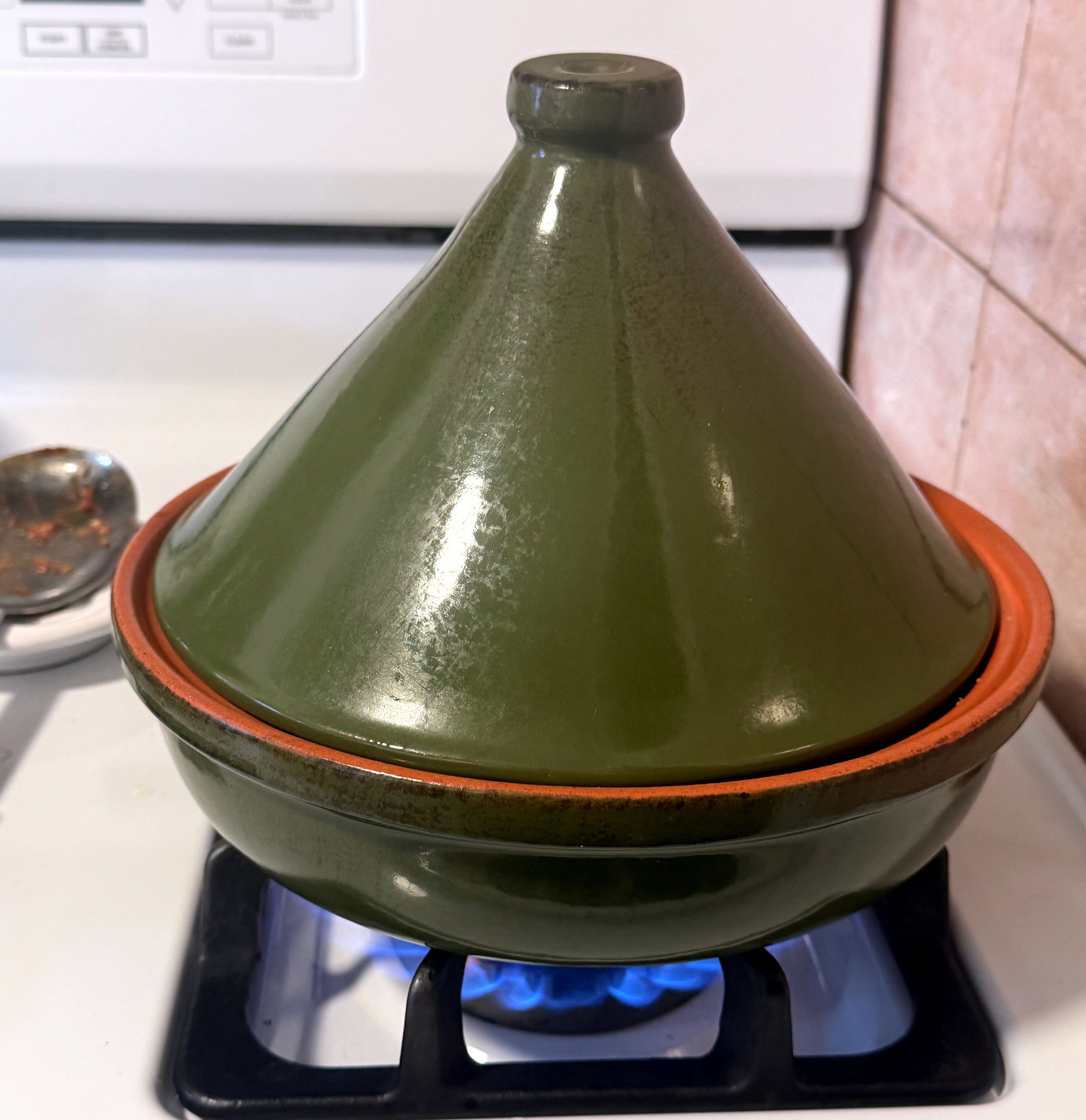
There’s a clay tagine on my stove that I use for almost anything requiring slow, moist heat. A whole chicken with ginger and soy. A paella for two. Last week, a vegetable tagine — a whole cauliflower nested into chickpeas, carrots, potato, red onion, tomato, finished with fresh mint and a dusting of paprika. I live in a Manhattan kitchen the size of a generous closet, so everything I own has to earn its place. The tagine earns it every time.
Nothing about this meal announced itself as Ayurvedic. And yet.
Start with the vessel. A tagine’s conical lid is not decorative. It’s an engineering decision — steam rises, condenses, and falls back down over the food continuously. The result is slow, enveloping, even heat. Ayurveda has always preferred this kind of cooking over high, aggressive heat. So, it turns out, has North Africa.
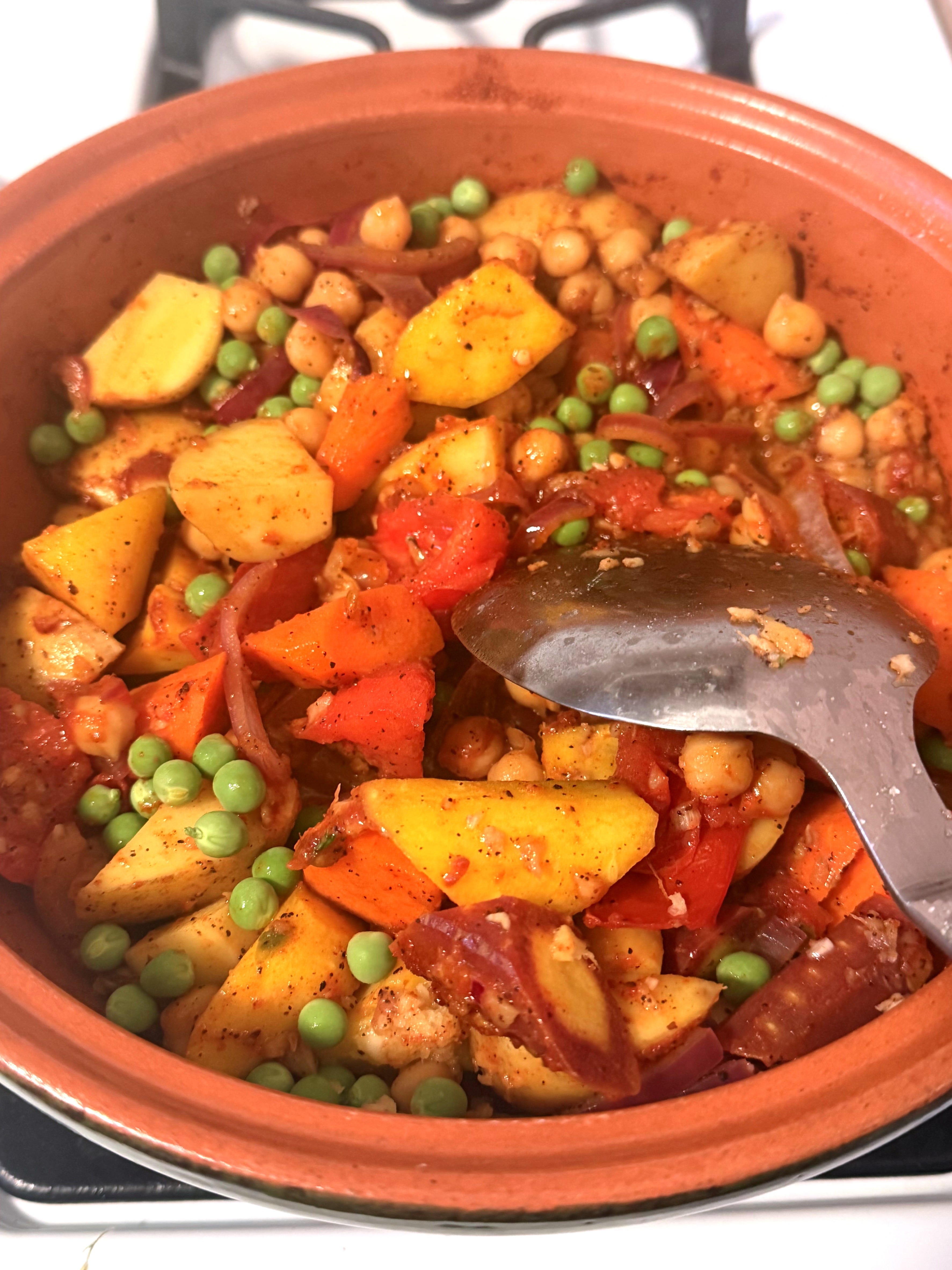
Then the layering. Root vegetables at the bottom — potato, carrot — grounding and stabilizing, the kind of ingredients that become genuinely easy to digest when given enough time and gentle heat. Chickpeas for substance. Tomato for acidity, which brightens the whole dish and quietly stimulates digestion. The cauliflower whole on top, steaming in the trapped moisture, absorbing everything rising from below.
The spices — paprika, warming aromatics in the base. Not because they appear on any Ayurvedic approved list, but because they’re warming, they’re digestive, and they do the same work that cumin and coriander do in an Indian kitchen. Different names. Same intelligence.
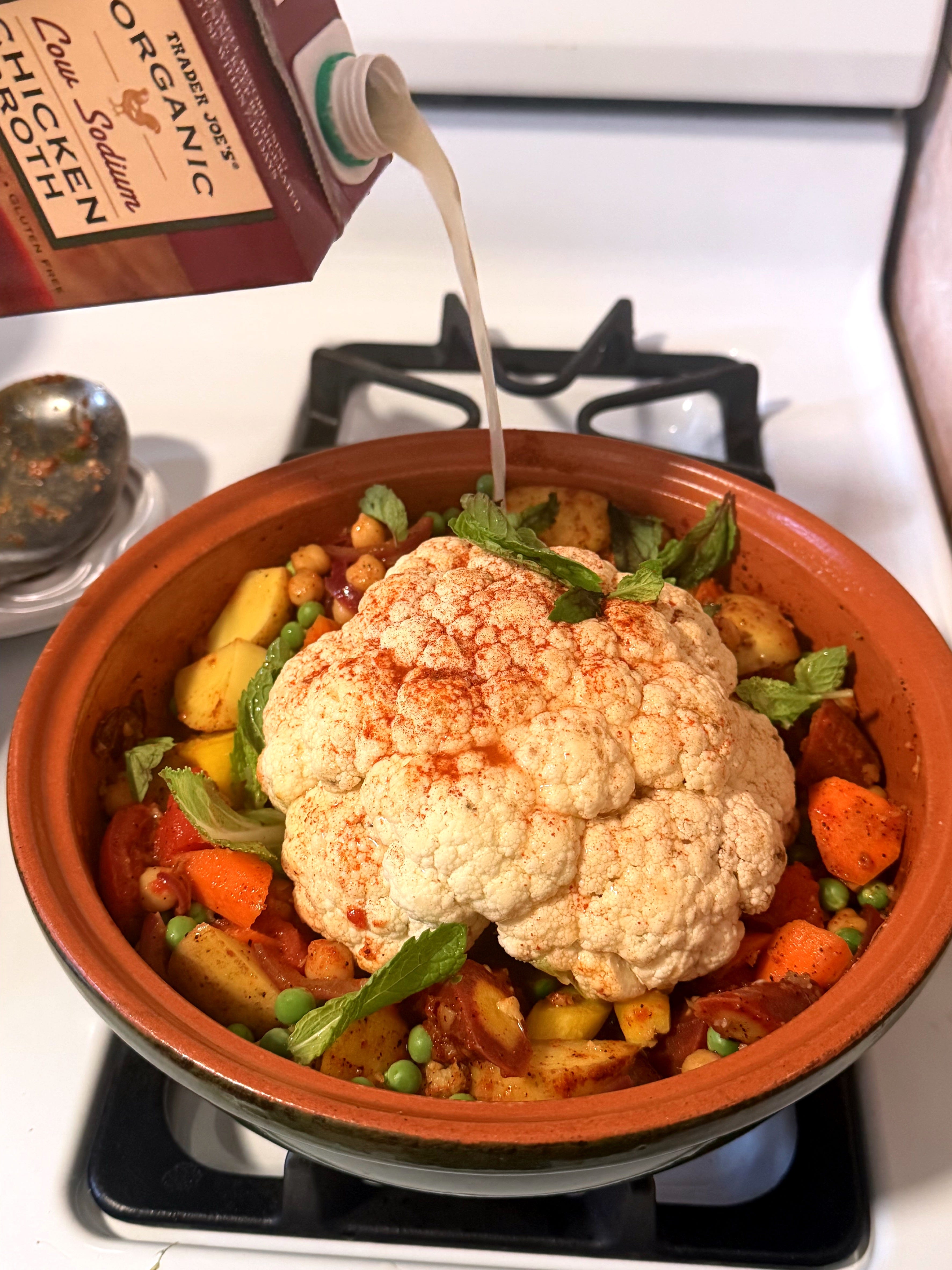
The mint at the end. Fresh, cooling, aromatic. This is the counterpoint — the brightness that keeps a rich, slow-cooked dish from becoming too heavy. Moroccan cooks know this. Ayurveda knows this. They arrived at the same answer from opposite ends of the world.
This is what I mean by invisible architecture. The tagine has never heard of Agni. It’s been supporting it for centuries anyway.
The Pattern Is Everywhere, Once You See It
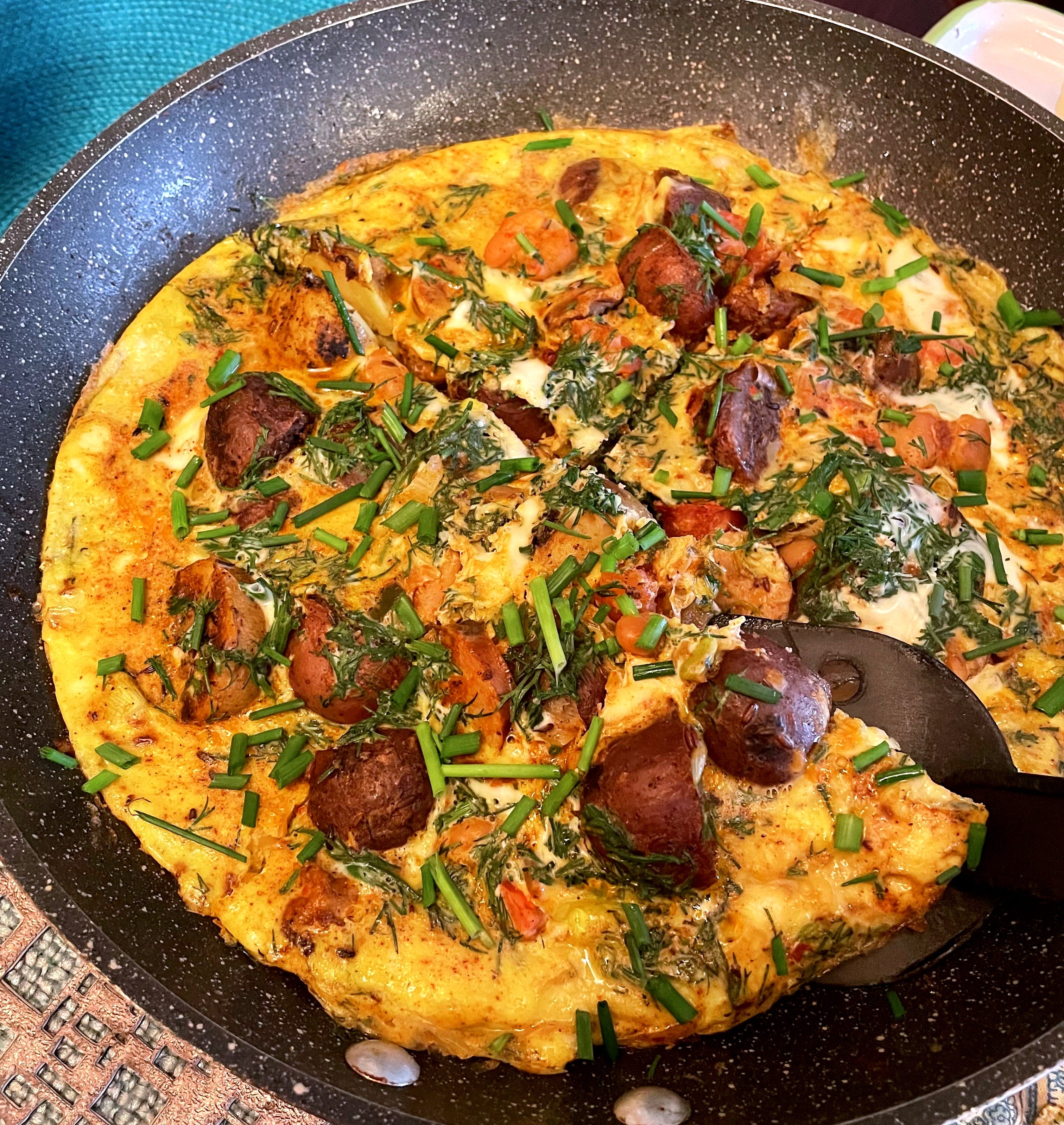
A frittata with roasted potatoes, dill, and chives — eggs cooked gently, grounding ingredients, fresh herbs to lift and aid digestion.
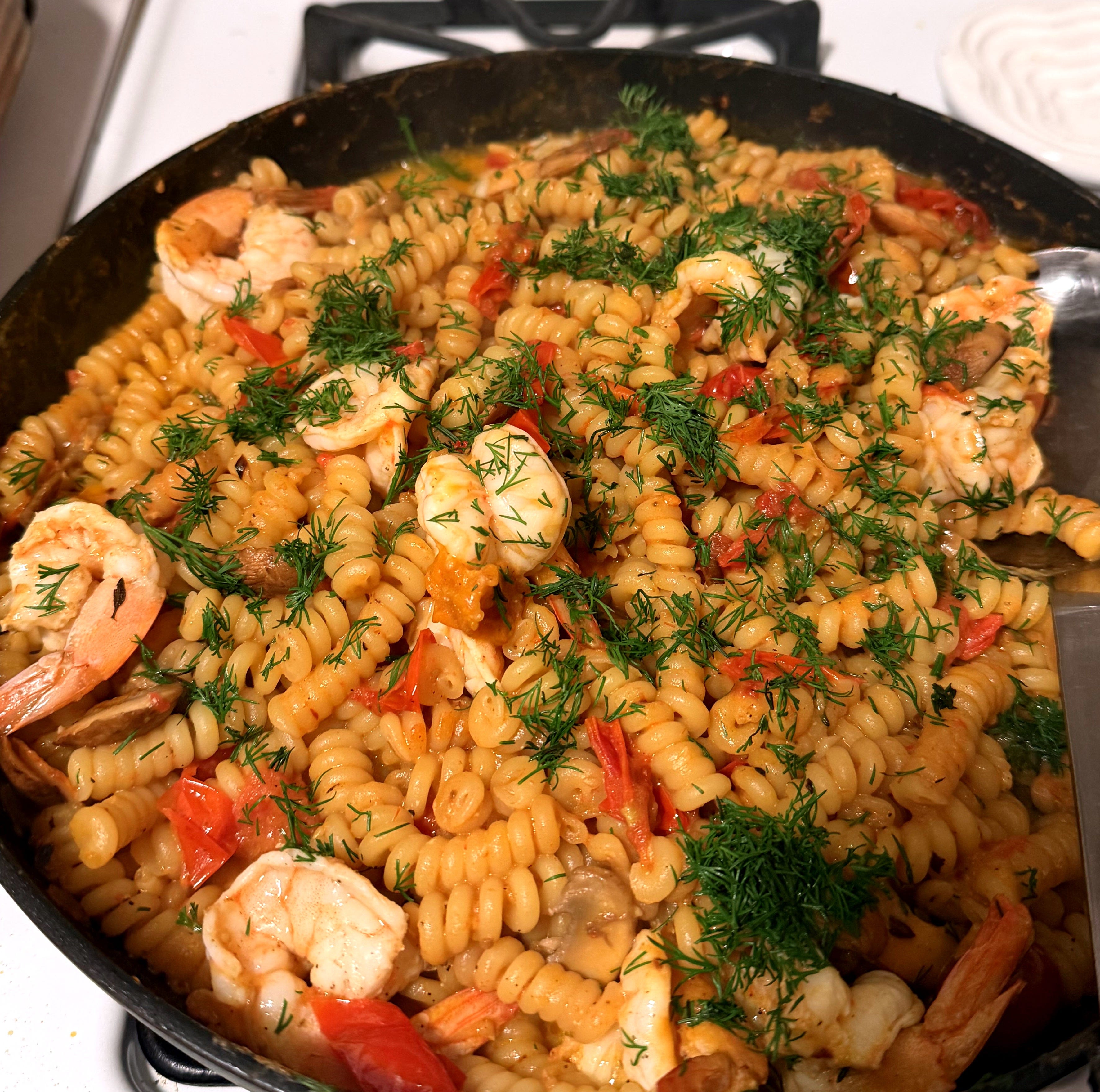
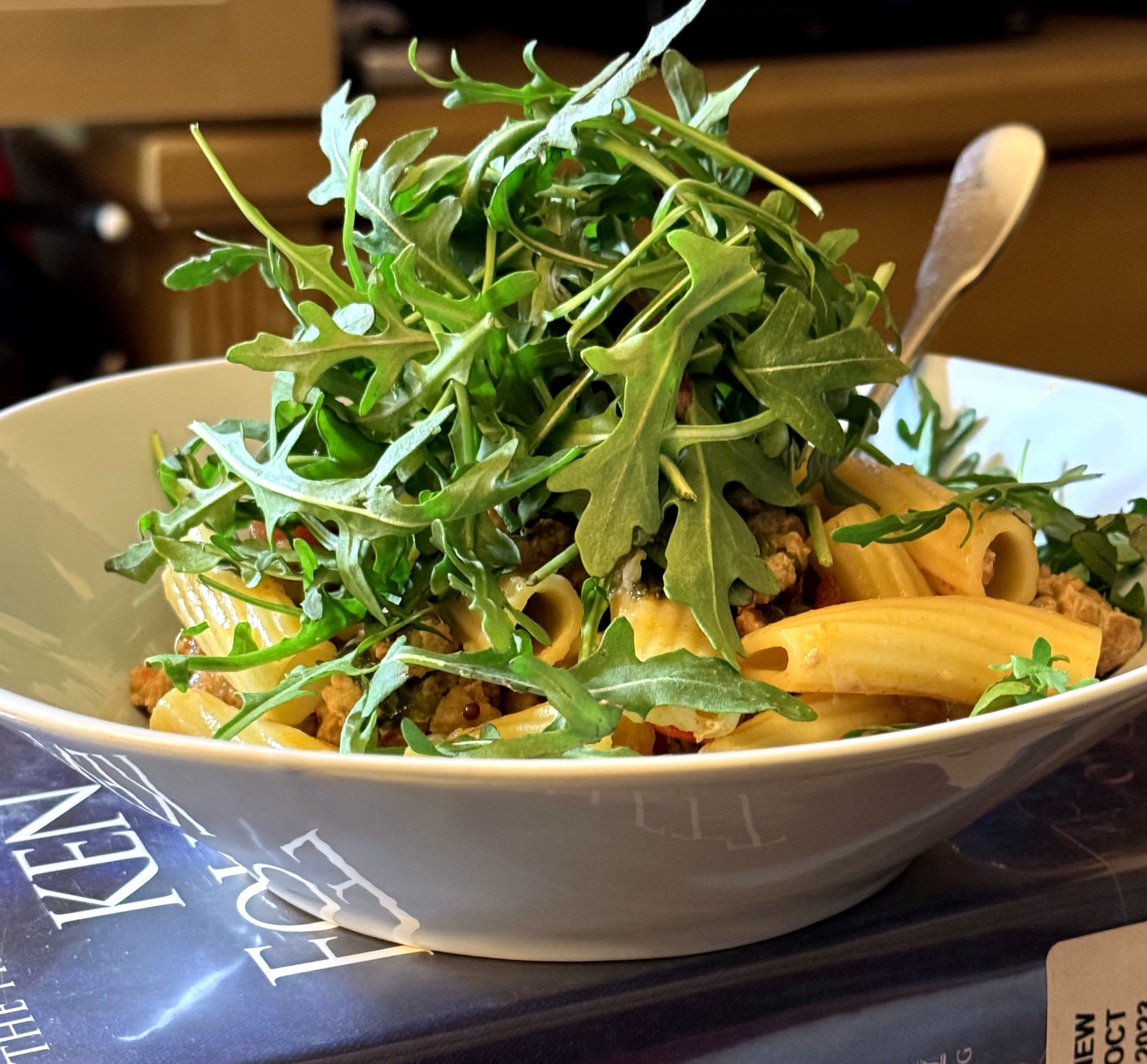
A shrimp pasta with tomato, mushroom, and a generous handful of dill scattered over the top — seafood cooked quickly to preserve its lightness, acid to balance richness, something fresh and green at the end. Neither of these is an Ayurvedic recipe. Both are well-built meals. The architecture is there whether or not anyone named it.
Once you start seeing the pattern, you can’t unsee it. And then something shifts. You stop asking “is this Ayurvedic?” and start asking something more useful — is this warm, balanced, alive, and digestible? Does it have contrast? Does it have brightness? Will I feel well after eating it?
That’s a question any kitchen can answer. In any language. With any pantry.
Between Posts
A window into the kitchen and the life between posts.
🪴The tagine. I’ve had mine for years and I use it for everything — North African, Asian, whatever needs low, slow, moist heat. If you’ve been thinking about getting one, don’t overthink it. A simple clay one works beautifully on a gas flame with a diffuser underneath.
🪴Spring produce is arriving at the market and I find myself reaching for asparagus, peas, and bitter greens almost every day.
Ayurvedically this makes sense — we are not in summer yet, so raw cold salads are still not quite right, but bitter and pungent tastes are exactly what this season calls for. They’re easy to overlook in everyday cooking. Bitter greens, lightly cooked, are one of the simplest ways to eat with the season right now.
🪴What I’m reading: Prakriti by Robert Svoboda
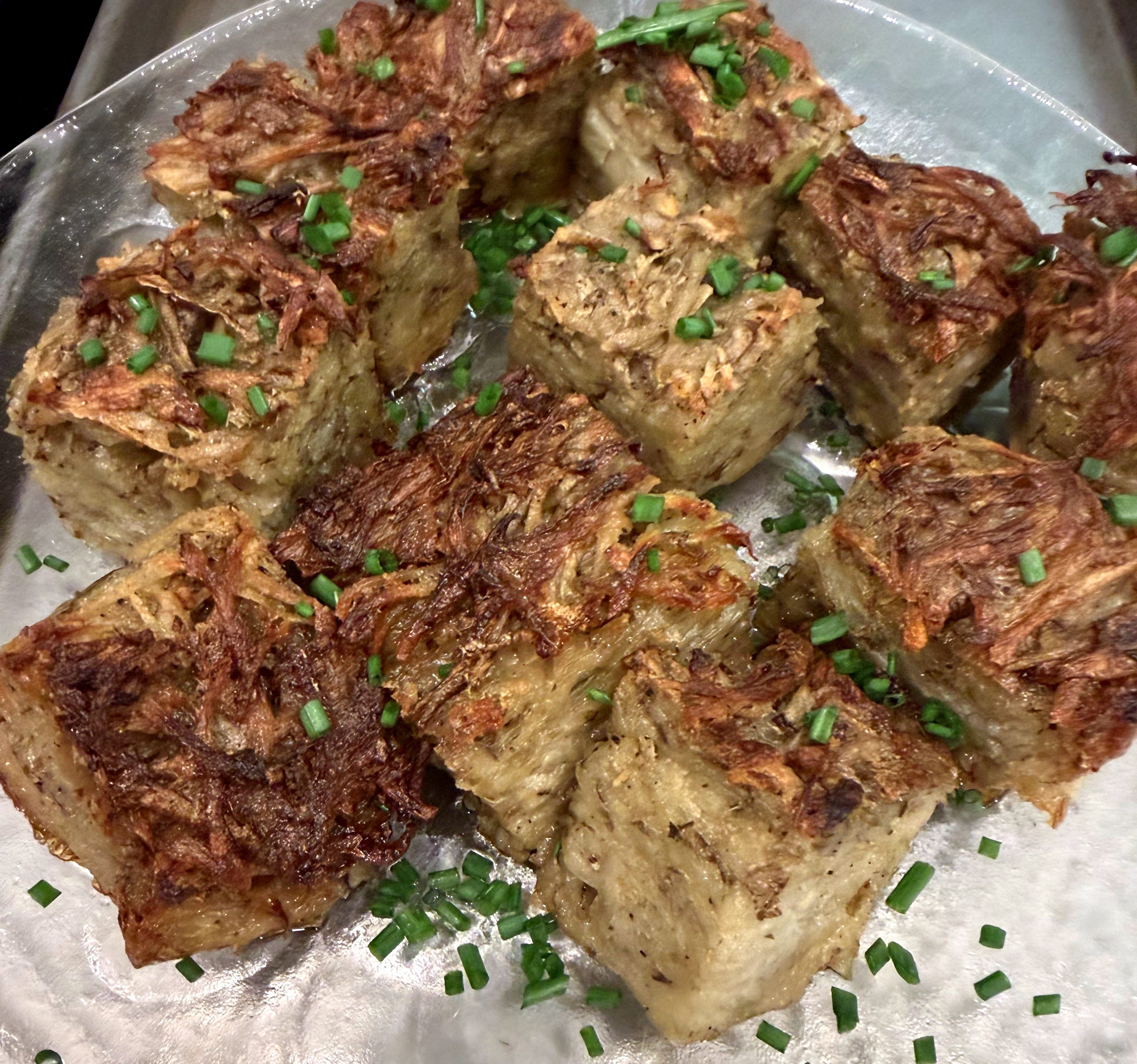
🪴I cooked Passover dinner recently and received what might be one of the finest compliments of my cooking life. Someone told me my kugel was more delicious than their grandmother’s. I can’t bottle that feeling. But I’m still trying.
If you’ve been reading along and haven’t yet subscribed, this is a good moment. There’s more coming — seasonal recipes, spice guides, and practical tools for making any kitchen feel a little more nourishing. All of it free, for now.
And if you’ve been here a while — thank you. I’d love to know what dish in your own kitchen you’d never have called Ayurvedic. Tell me in the comments.
Thanks for reading,

Comments
Nothing yet. Say the first thing.
Sign in to join the conversation.