
Ayurvedic food has a reputation problem. And I believe it deserves it.
Not because the principles are wrong. They’re not. The foundational ideas are some of the most intelligent, practical, and body-friendly guidance on food that exists anywhere.
The problem is how it gets presented.
Beige. Bland. Impossibly earnest. A bowl of kitchari next to a copper tongue scraper, photographed in soft morning light, captioned with something about dissolving ama. If you’re not already deep in the wellness world, or not willing to overhaul your entire kitchen and your entire life — it can feel like it was never meant for you.
I get it. I am Indian, I studied Ayurveda, I cook professionally — and even I have rolled my eyes.
Here’s what I want to say clearly, and I’ll come back to this again and again because it matters. Ayurvedic food is not a cuisine. It never was. It’s a lens. A way of asking different questions about what you eat, how you eat it, and what it does in your body. That lens works whether you’re eating dal or pasta, miso soup or roasted chicken. It doesn’t need to announce itself. It doesn’t need a label. It just needs to be underneath — in how the food is built, balanced, and prepared.
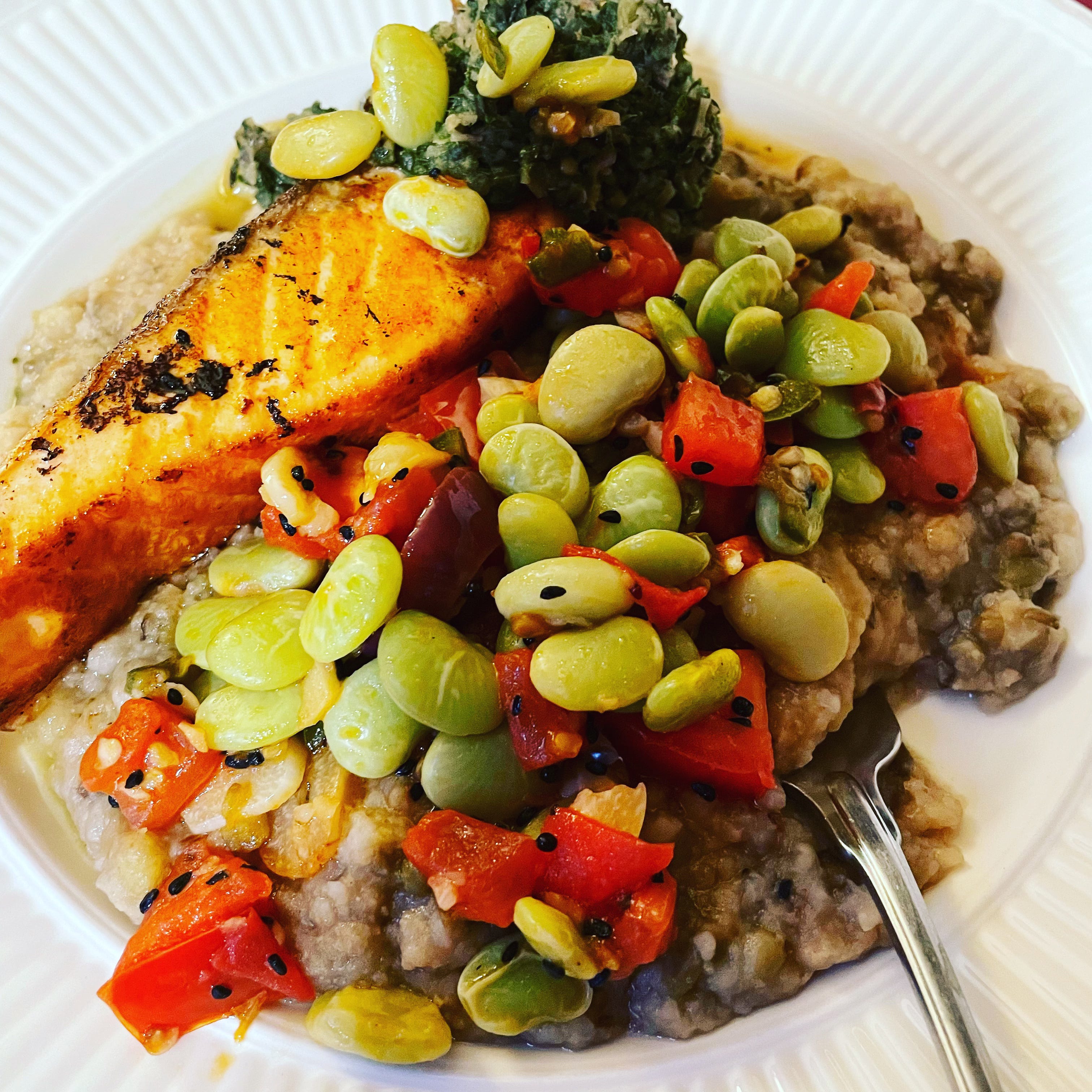
When Ayurvedic principles move freely across cuisines — when they show up in a Moroccan vegetable stew, a bright Mexican bowl with lime and roasted peppers, a simple Italian soup finished with good olive oil — the food doesn’t look beige. It looks like food that someone actually wanted to eat. Color, texture, contrast, aroma. The principles are invisible. The pleasure is very much visible.
Most Ayurvedic food writing — and the way Ayurveda has long been presented — gets this wrong. It leads with the system instead of leading with the food. It asks people to learn a language before they’ve tasted anything worth eating. It positions itself as a conversion rather than a conversation.
And then it wonders why people don’t stay.
I’ve spent decades cooking professionally across cuisines — Indian, French, Italian, Middle Eastern, Jewish holiday tables that weren’t mine but that I cooked for with everything I had. What I know from all of that time in kitchens is this. Good food has always operated on Ayurvedic principles, whether it knew so or not. The French cook with fat to make food digestible. The Mexican kitchen uses lime and chili to stimulate appetite and digestion. The Japanese concept of umami is really a conversation about satisfaction and the six tastes. Every great food culture has its own version of this intelligence.
Ayurveda simply gives it a framework.
It looks like asking two questions. Not rules. Questions.
What does my body need right now? Not what does my diet plan say, not what did I read on the internet this morning — but what does this particular body, on this particular day, in this particular season actually need? Ayurveda is deeply contextual. It understands that what nourished you in the depths of winter may feel like too much in March when the light is changing and the body wants to move differently. It understands that stress, sleep, and the quality of your week all change what food does inside you.
What will this food do once it’s inside the body? Not in terms of macros or calories. Ayurveda isn’t interested in those. It asks about qualities. Is this warming or cooling? Grounding or stimulating? Light or heavy? Drying or nourishing? These qualities interact with your own — and understanding that interaction is where the real intelligence lives. A cold salad full of nutrients can leave one person energized and another depleted. A simple bowl of warm soup with the right spices can do more for your digestion than a week of supplements. The food isn’t right or wrong. The question is always — right for whom, and when?
There is no denying that because Ayurveda originated in India — where spices grow abundantly and have been used medicinally for thousands of years — there is a strong emphasis on spices in Ayurvedic food. And yes, spices do real work. They support digestion, balance qualities in food, and bring a meal to life. But here’s where I want to give you some room. If a spice drawer full of cumin, coriander, turmeric, mustard seeds, and cardamom thrills you — use them. Explore freely. If salt, pepper, and perhaps a little oregano is where you live comfortably, that’s perfectly fine too. You can experiment slowly if curiosity pulls you in that direction, or you can simply know that the other principles — warmth, freshness, good fat, eating with presence — are doing meaningful work on their own.
Spices are a powerful tool. They are not a membership requirement.
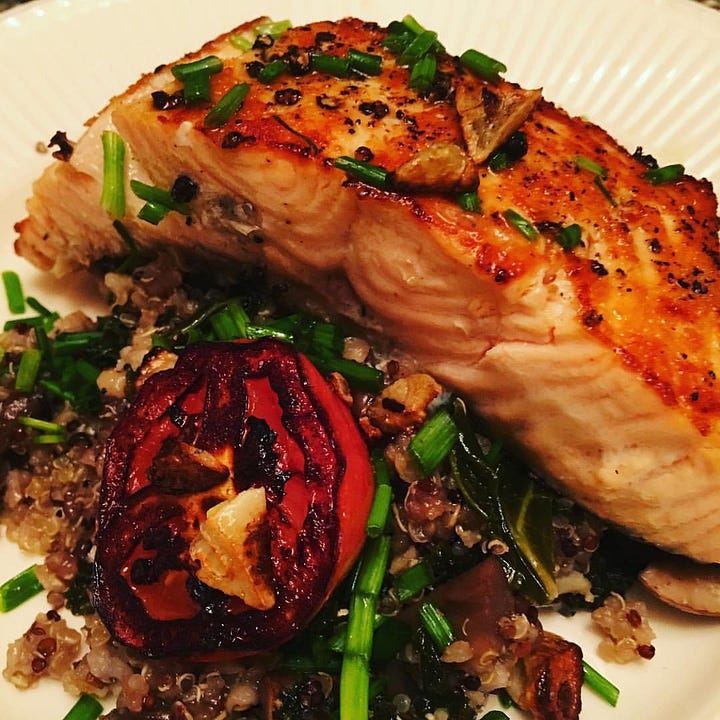
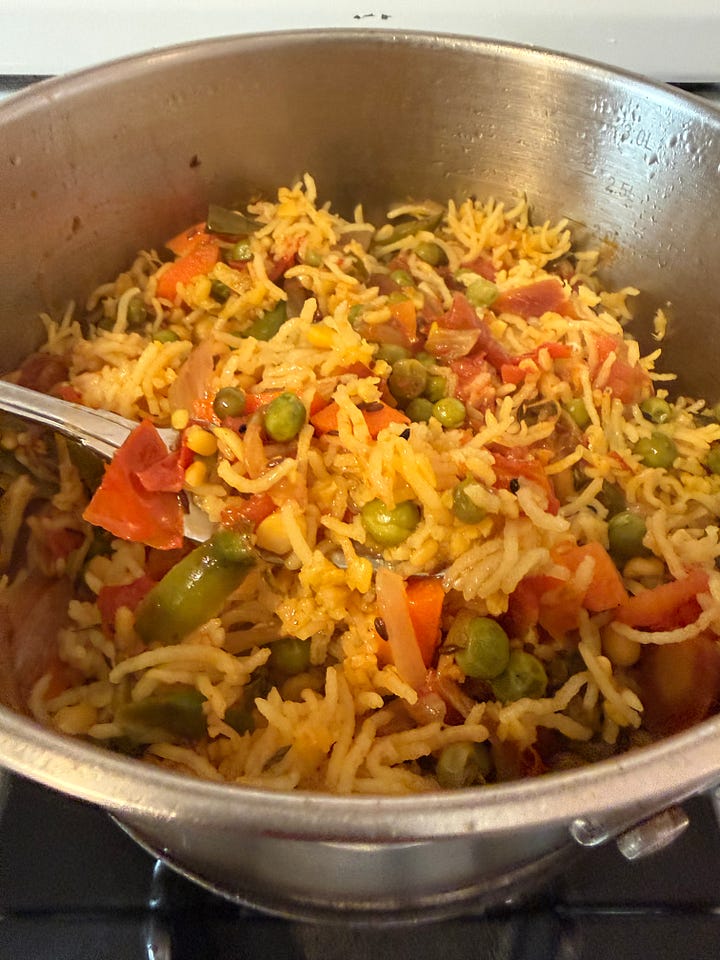
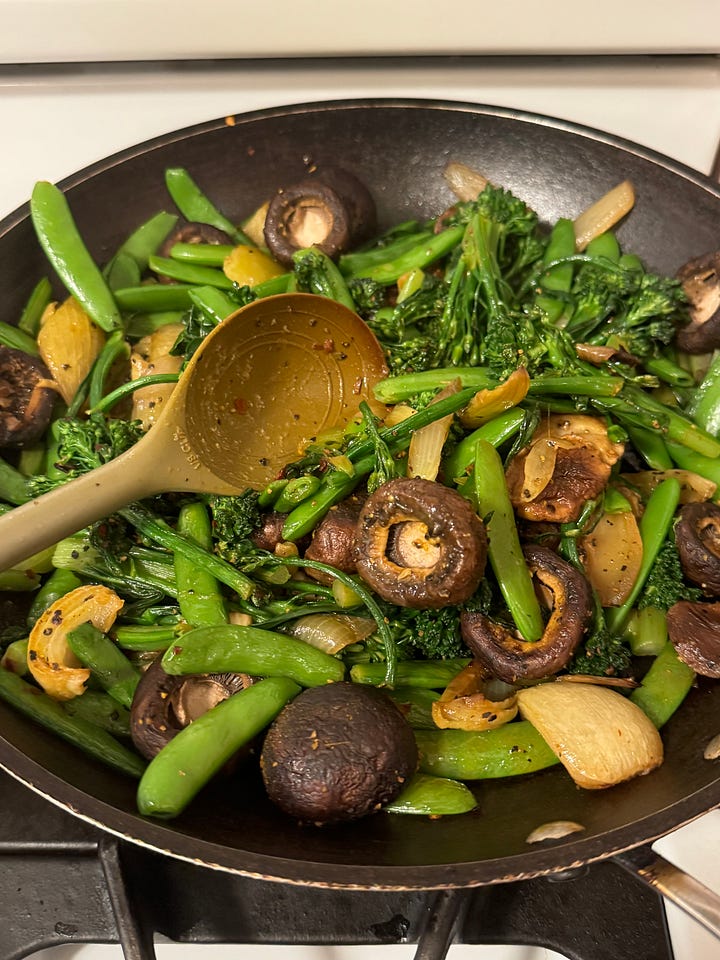
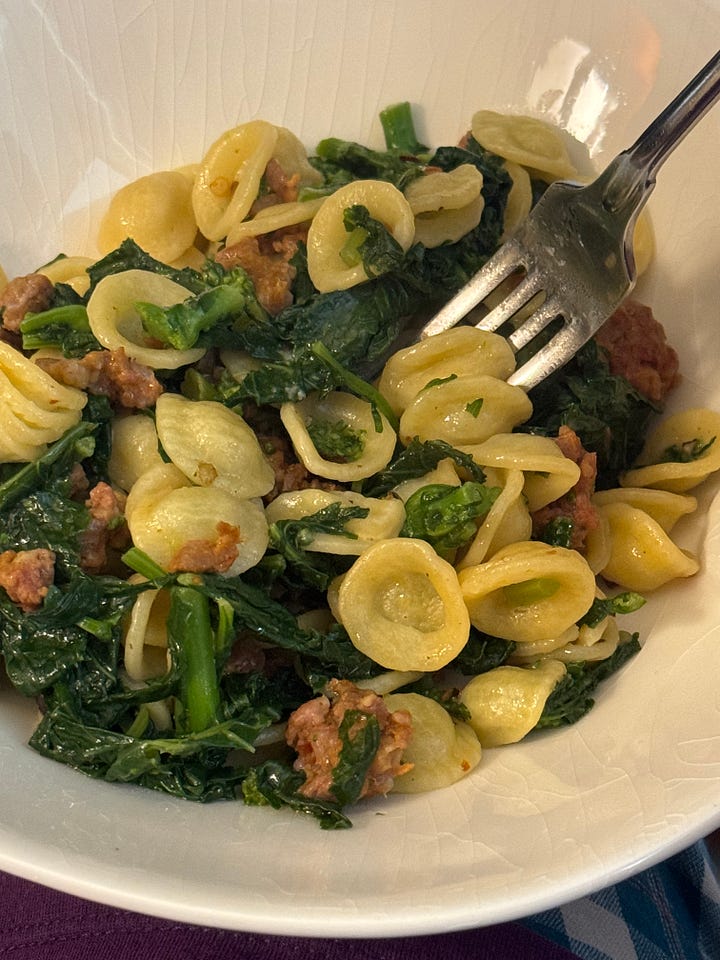
You don’t have to eat Indian food to eat Ayurvedically. You don’t have to give up the cuisines you love, the restaurants you enjoy, or the way your grandmother taught you to cook. You don’t have to understand Sanskrit or know your dosha before you’re allowed to begin.
You just have to start asking slightly different questions about what’s on your plate.
The architecture can be invisible. The food just has to be good.
I have a question for you.
I’m shaping what comes next in this newsletter and I want your input. This is genuinely useful to me and it takes less than a minute.
What would you most like to see more of here?
Ayurvedic food principles explained in plain language
Seasonal eating guidance — what to eat and why, as the seasons shift
Recipes that apply these principles without being complicated
The philosophy and thinking behind Ayurvedic food — posts like this one
Practical tools — meal frameworks, simple shifts, things to try this week
You can answer in the comments, or simply reply to this email. I read everything.
Thank you for being here. Please add a heart if you enjoyed this post - the algorithm lords seem to like that.
Namaste,

Comments
Nothing yet. Say the first thing.
Sign in to join the conversation.