
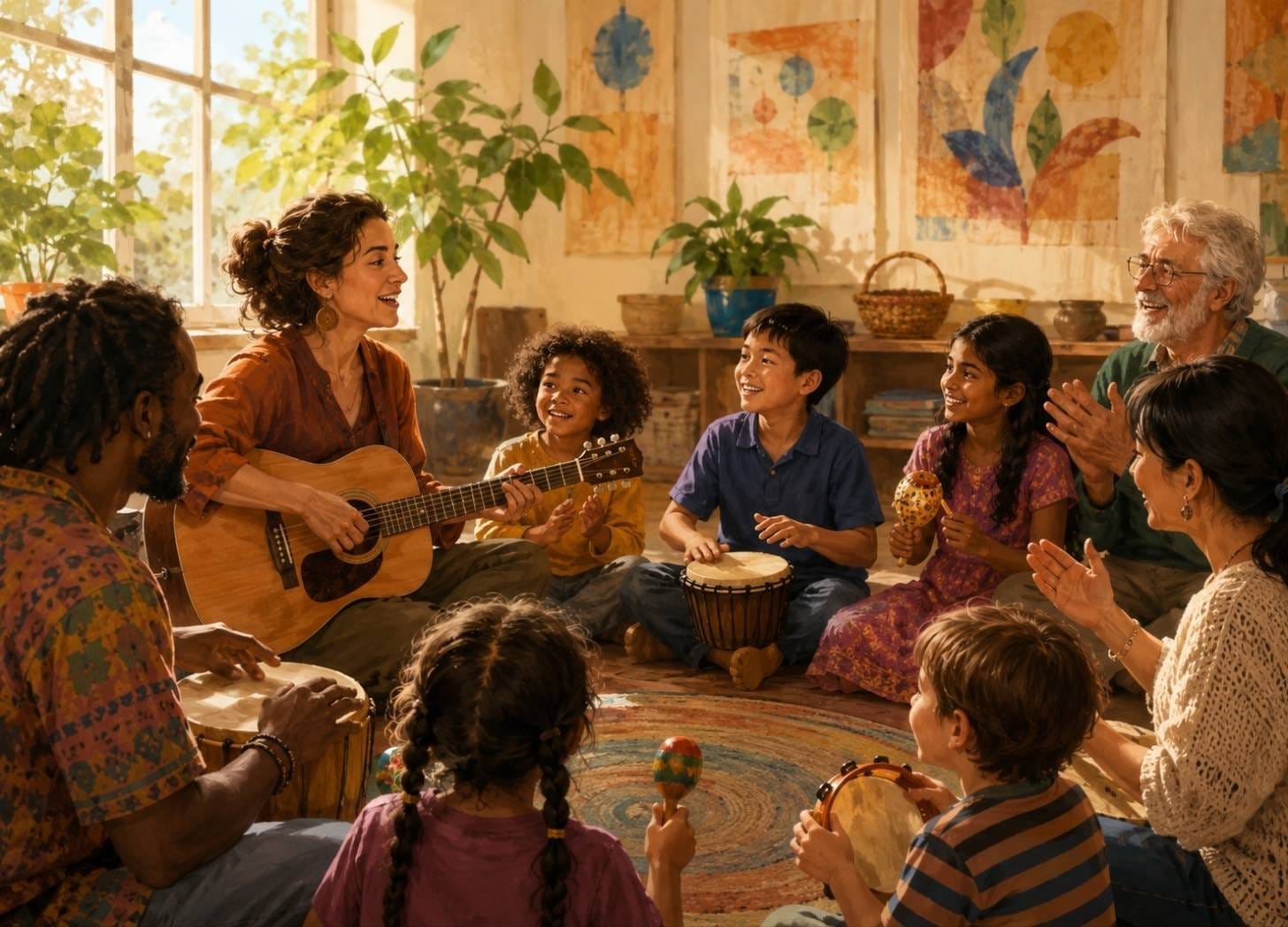
Many of my Substack articles are inspired by something that affects me emotionally.
It might be a news story, a photograph, a memory, a comment, or something I see online. Something grabs my attention, and I start wondering what psychology has to say about the topic.
This piece was no exception.
This time, it was a brilliant clip of Chilean music teacher José Miguel Bello Escobar and his class performing Depeche Mode’s Enjoy the Silence.
I love this on so many levels, not least sheer nostalgia.
The first concert I ever went to was Depeche Mode during their Black Celebration Tour in 1986, and I’ve loved them ever since.
Here’s the original version of Enjoy the Silence.
(They don’t make music videos like this anymore. Got to love the 80s 😂)
What interested me most about the classroom version wasn’t simply that the students were performing a song I love.
It was the kind of music-making on display. The clip shows music as something shared. The students are not just listening to a song or watching someone else perform it. They are part of it.
And that’s what this article is about. It looks at the psychology of participatory music making, and why making music together can feel so different from simply listening to it.
Participatory music making is music where the main point is taking part.
That might sound obvious, but it marks an important difference. Most of us are used to music as something we listen to, stream, watch, rate, or admire from a distance. Participatory music works differently. The people present are not only an audience. They have some role in making the music happen.
In Thomas Turino’s 2008 book Music as Social Life: The Politics of Participation, he describes participatory performance as music-making where there is no clear divide between artist and audience. There are participants, and there are potential participants. Some people may sing. Some may clap. Some may keep a rhythm. Some may lead. Some may only join in for a small part. The value of the activity is not measured only by how polished the final sound is. It’s also measured by the fact that people are involved.
A 2024 article in Encyclopedia explains the distinction in terms of purpose. Participatory music-making is something people engage in for the sake of the activity itself. Presentational music-making, by contrast, is organized around producing a performance or recording for an audience.
“Musical sounds are a powerful human resource, often at the heart of our most profound social occasions and experiences. People in societies around the world use music to create and express their emotional inner lives.”
Thomas Turino, Music as Social Life: The Politics of Participation
Listening to music can be emotionally powerful, but it isn’t the same thing as taking part. Nor should participatory music be confused with music therapy. The American Music Therapy Association defines music therapy as the clinical and evidence-based use of music interventions to meet individualized goals within a therapeutic relationship led by a credentialed professional. Participatory music making can have value, but it should not be confused with clinical music therapy.
Participatory music making can be informal, communal, educational, cultural, or social. It can happen in a classroom, a choir, a jam session, a place of worship, a protest, a family gathering, or a group of children turning a Depeche Mode song into something of their own.
In participatory music, people aren’t only receiving the music. They’re helping to make it.
A performance usually draws attention to how well the music is played or sung.
That can be part of the pleasure. We notice the voice, the timing, the arrangement, and the control. We may admire the people making the sound because they can do something difficult.
Participatory music puts less emphasis on being impressive. A person might join by singing one line, clapping a rhythm, copying a phrase, or adding a simple part. The aim is not to stand apart from the group. The aim is to become part of what the group is doing.
It also affects how people experience mistakes. In a performance, a mistake can feel obvious. In a group activity, a mistake may matter less because the sound does not depend on one person alone.
This is an important difference for anyone who has learned to think of music as something you only do when you’re good enough. Participatory music offers a gentler starting point. It gives people a way to join before they feel ready to perform.
Here, messy doesn’t mean careless.
Participatory music often has dense textures, repeated patterns, and a wider tolerance for timing and tuning than formal performance usually allows. Lots of people may be making a sound at once, and each separate part doesn’t need to be heard with perfect clarity.
This has a practical effect. An exposed musical line leaves little room to hide. If one person comes in slightly late, everyone may hear it. When the group sound is broader, small slips are less likely to dominate. The shared sound gives people cover while they find their way.
Repetition helps too. A repeated pattern gives people more than one chance to learn it. They can listen first, try a little, stop, and come back in. The music does not rush past them.
That is why participatory music can sound rougher than performance music and still work really well. The roughness isn’t a failure, it’s part of its charm and accessibility.
A strong participatory setting has space for different levels of ability at the same time. Someone with more experience can help hold the music together. Someone newer can stay with a simpler part. The point isn’t that everyone contributes in the same way. It’s that the activity can still include people who aren’t yet confident.
That’s a different way of thinking about musical ability. In a performance setting, skill can decide who gets heard. In a participatory setting, skill can support the room without becoming the condition for belonging.
This also explains why confidence matters so much. If people feel that every contribution is being judged, they are more likely to hold back. If the setting gives them a manageable role, they have a way to take part without pretending to be more skilled than they are.
People don’t always become confident first and then participate. Sometimes they become more confident because participation has been made possible. The clip that prompted this article demonstrates that beautifully.
When people keep time together, they have to pay attention to something beyond themselves. Each person is following a beat, adjusting to others, and staying close enough to the same pattern for the activity to hold together.
That kind of coordination is one reason participatory music can feel socially powerful. A 2014 review in Frontiers in Psychology describes musical interaction as one route to social bonding through synchrony. When people move, sing, or keep time together, they can begin to feel less separate from one another.
Voice adds another layer. Singing isn’t just sound produced by an instrument outside the body. It comes from the body itself. When voices are combined, people are doing something both personal and collective at the same time.
A 2015 paper in Royal Society Open Science followed newly formed adult education classes and found that singing appeared to bond strangers more quickly than creative writing or craft classes early in the course. The other groups also became closer over time, which is important. Singing wasn’t the only path to connection, but it seemed to accelerate the early stages.
A 2016 study in Evolution and Human Behavior also found that group singing was associated with increased feelings of inclusion and social connection, along with higher pain thresholds after singing. Pain threshold is often used in this kind of research as an indirect measure linked to endorphin activity, so it shouldn’t be read as proof that singing works through one simple biological pathway.
The careful conclusion is still a compelling one. Participatory music brings together attention, timing, movement, voice, and the awareness of other people doing the same. That combination can make belonging feel less like an abstract idea and more like something people are physically taking part in.
Participatory music can look very different depending on where it happens.
In some settings, it may be relaxed and informal. In others, it may be carefully planned by teachers, artists, or facilitators. A group of young children, a community arts project, a prison music program, and a specialist perinatal service are not doing exactly the same thing, even if all of them involve people making music together.
A 2020 article in the International Journal of Community Music makes this point clearly. Environment and intention both shape participatory music-making. In other words, where the music happens, who is present, and why people have gathered all affect the experience.
Participation in a school lesson doesn’t carry the same social meaning as participation in a voluntary community project. Music-making in a care setting doesn’t have the same emotional atmosphere as music-making among friends. A group where people choose to be there isn’t the same as a group where attendance is expected.
Digital settings add another layer. A 2024 article on COVID-19 and participatory music-making notes that some participatory musicians moved online during the pandemic. For some people, online formats increased access. For others, they couldn’t replace the physical presence, informal conversation, and shared atmosphere of being in the same room.
So the setting isn’t just background. It shapes what participation feels like. It can make music feel open, pressured, intimate, awkward, safe, exposed, meaningful, or forced.
Participatory music is never only about the notes. It’s also about the people, the purpose, and whether the situation allows people to take part in a way that feels possible.
Some people carry a long history of being told they can’t sing, can’t keep time, or simply aren’t musical.
I can still vividly remember a teacher telling me, in front of the whole class, that I was so out of tune I should mime the words when we performed our class song at school. To this day, singing in public fills me with dread, and being pressured into karaoke is my idea of a nightmare.
Other people worry about looking foolish, being too loud, being too quiet, or not knowing what everyone else seems to know already. The invitation to participate may be open, but the person still has to feel able to accept it.
Group dynamics matter too. A few confident people can dominate without meaning to. The material can be too hard, too unfamiliar, or too closely tied to a culture or tradition that hasn’t been properly explained. Even a well-intentioned group can make participation feel more like a test than a fun activity.
There can also be a quieter obstacle. Some people have learned to protect themselves by staying on the edge of group activities. That doesn’t mean they don’t want connection. It may mean they need more time, more choice, or a less exposed way in.
So participatory music isn’t automatically welcoming. It can create connection, but only when the setting pays attention to who might be holding back, who feels entitled to take up space, and who needs permission to enter at their own pace.
Welcoming groups usually don’t happen by accident.
They’re shaped by small decisions. How the activity begins. How quickly it moves. Whether people know what’s expected. Whether it’s acceptable to watch for a while before taking part. Whether the person leading the activity notices who’s comfortable and who’s disappearing into the background.
A good facilitator does more than keep the music going. They help set the emotional temperature of the room. They can make it clear that people don’t have to prove themselves before they’re allowed to contribute. They can offer a clear starting point, keep instructions simple, and give people enough time to settle.
Some people will want to take part straight away. Others may need to listen first, come in quietly, or stay close to someone more confident.
Welcoming groups also make room for different kinds of contribution. Not everyone needs the same role, the same level of attention, or the same amount of responsibility. The more flexible the activity is, the easier it becomes for people to find a way in.
Belonging doesn’t come only from putting people in the same room. It grows when the room is organized in a way that helps people feel noticed, respected, and able to take part without fear of being singled out.
Given the children’s reaction at the end of the opening clip, I strongly suspect José Miguel Bello Escobar teaches music this way all the time. He seems to have created a classroom where music feels shared, joyful, and possible.
There’s good reason to think participatory music can support connection, confidence, and belonging. The studies on singing, synchrony, and group music all point in that direction. They fit with what many people already recognize from experience. Making music with others can feel very different from sitting alone and listening.
But the research doesn’t prove that music alone is responsible for every benefit people report. In many group music settings, several things are happening at once. People are meeting regularly, listening to one another, moving together, and following a shared structure. They may also be receiving encouragement from someone leading the activity.
That makes the psychology interesting, but it also makes the evidence harder to interpret. If people feel better after taking part, the reason may be the music, the group, the routine, the movement, the attention, the chance to feel useful and included, or some combination of all of them.
There are other limits too. Many studies exploring participatory music are small. Some focus on particular groups, such as singers, students, clinical populations, or people already willing to join a music activity. Some measure short-term changes rather than long-term effects. That doesn’t make the research worthless. It just means any claims made need to stay proportionate.
The strongest conclusion is that participatory music can create conditions where connection becomes easier, confidence has somewhere to grow, and belonging becomes something people can actually do together.
Note to psychology students
Participatory music making would make a strong topic for a research project, final year dissertation, or thesis. It sits at the intersection of social psychology, developmental psychology, community psychology, music cognition, and well-being research. It also raises useful research questions about belonging, confidence, group identity, synchrony, access, and the difference between taking part and simply observing.
The charm of the opening clip isn’t just that the students perform the song well.
It’s the feeling that the music belongs to them while they’re making it. They’re attentive, absorbed, and clearly proud of what they’ve created. The song may have started as a famous recording by a famous band, but in that classroom it becomes something the students are doing for themselves.
That’s the heart of participatory music making. It reminds us that music doesn’t have to be treated only as a product to consume, a skill to display, or a performance to judge. It can also be a way of connecting with other people.
The opening clip is joyous because it shows all of this without needing to explain it. It shows a teacher, a class, and a song becoming theirs.
And perhaps that’s the real gift of participatory music. It gives people a way to experience music not only as something they hear, but as something they make with other people.
Have you ever had a memorable experience of making music with others, good, bad, joyful, or awkward? I’d love to hear about it in the comments.
The All About Psychology Substack is your go-to source for all things psychology. Subscribe today and instantly receive my bestselling Psychology Student Guide right in your inbox.
Upgrade to a paid subscription and as an extra thank you, you’ll also get the eBook version of my book Psychology Q & A: Great Answers to Fascinating Psychology Questions.
Why Upgrade to Paid?
Every penny of paid subscriber support goes directly towards hosting and running costs, helping keep All-About-Psychology.com free for everyone.
Your support ensures that:
Students and educators can continue to access the most important and influential journal articles in the history of psychology, completely free.
Readers everywhere can hear directly from world-renowned psychologists, authors and leading experts in the field.
High-quality free content for students, educators, and the general public continues to be created and shared on a regular basis.
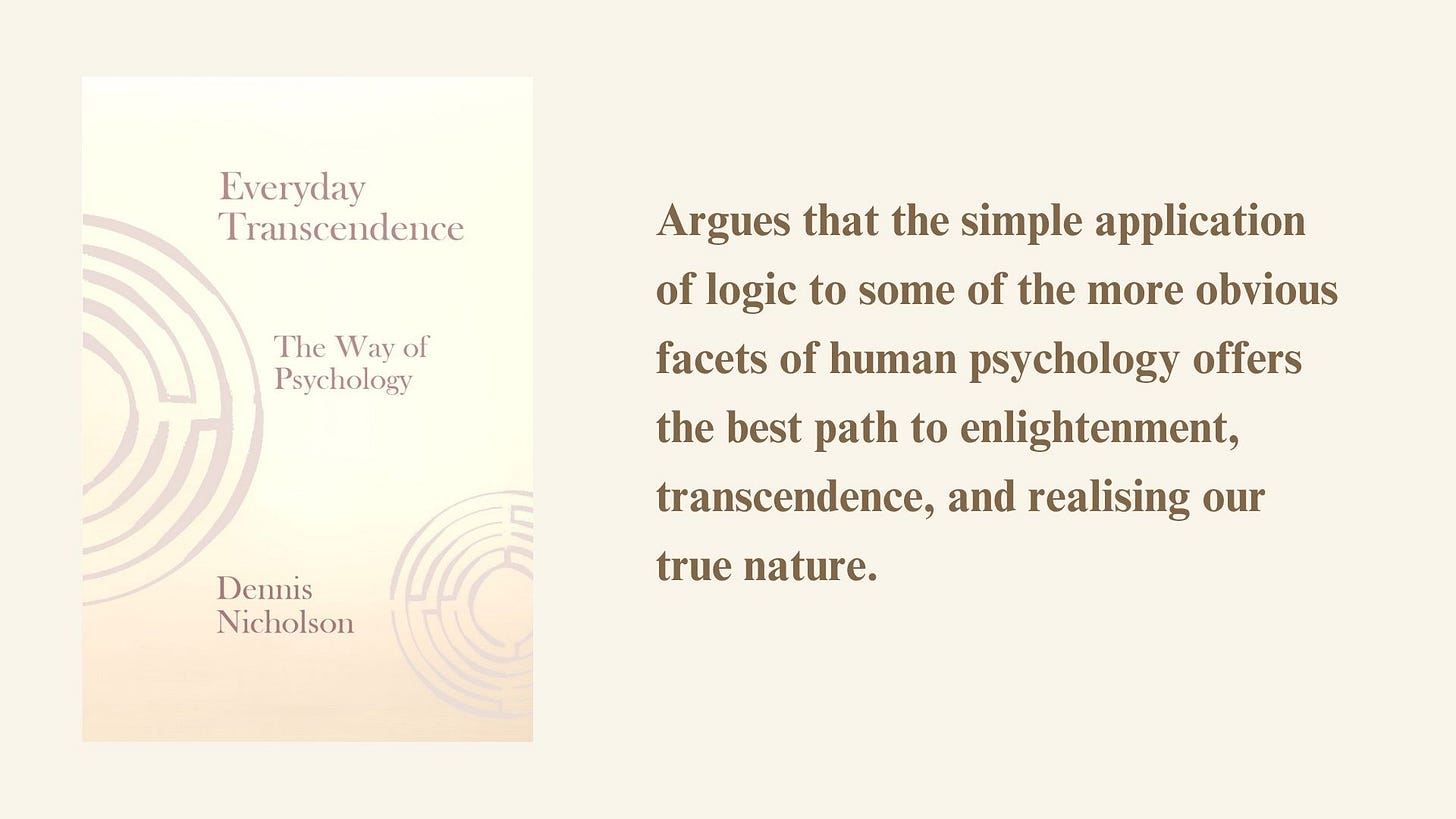
For readers interested in consciousness, personal development, and the psychology of self-understanding, the All About Psychology Book of the Week is Everyday Transcendence: The Way of Psychology by Dennis Nicholson.
A shorter and more accessible follow-up to Nicholson’s Self, Consciousness, and Being, the book explores how logic, psychology, and self-understanding can help us move beyond restrictive self-views and toward a more expansive understanding of who we are.
Learn more about the book here:
https://www.all-about-psychology.com/everyday-transcendence-the-way-of-psychology.html

I’m David Webb, a psychology educator and author who has spent over twenty-five years helping people make sense of why we think, feel, and behave the way we do.
I founded the All About Psychology website in 2008 and have been building it ever since as a place where students, educators, and curious minds can explore the many branches of psychology, learn about the field’s history and most influential pioneers, and access thousands of full-text journal articles and other quality psychology materials. Today the site is home to one of the largest and most engaged independent psychology communities online. This Substack is the latest addition to the All About Psychology platform.
My books, including Why We Are The Way We Are, are written for anyone interested in what makes us tick.
You can explore more of my work and books on my Amazon author page.
Comments
Nothing yet. Say the first thing.
Sign in to join the conversation.