

You are training a lot, you are training consistently. You are putting in the miles and you are showing up and you are doing the work. You can see that on your Strava.
But you are exhausted, and somehow you don’t feel you are getting any fitter. I was speaking with a man that was telling me that he feels fatigued most of the time and then he said something that made me feel sorry for him:
He told me it’s okay to constantly feel fatigued because it’s his age (he is 50) and that this is the price you have to pay if you want to run ultras. This is crazy, this is not true. It’s just a limiting belief.
I don’t agree that trail running and running ultras should be this thing where you finish destroyed, or you constantly feel tired. NO! I love trail running because it does the opposite, it gives you energy, it gives you the feeling of freedom and you get to live a more passionate life.

There is something magical when you run a 100km or 100 miler. it’s this number that makes you a better human being when you finish this races… but this doesn’t have to come with a cost of constantly being tired and fatigued.
I remember years ago I was training for my Ironman I felt a lot of times tired and fatigued. I followed my coaches training plan, I did the work but something was off. Back then I didn’t realise this but I was overtraining. I would do the workouts that my coach would assign but then I would do a bit more because I didn’t feel confident in the plan. But in reality I didn’t really enjoy swimming and cycling just took too much logistics. Fix the bike, do the bike, service the bike and so on.

I didn’t want to DNF or finish destroyed doing the race so I pushed harder to make sure I get ‘fitter’. In reality…. you don’t get fitter by pushing more like that.
The most frustrating places to people as an endurance runner is doing everything and not knowing if it’s working or not.
Here’s the truth nobody tells you.
Fatigue is not progress.
Most trail runners confuse being tired with doing enough. If you are not tired, you feel like you didn’t train hard enough so you add more, more miles, more sessions and more intensity. It’s like doing a Greek salad and constantly adding more feta just to make sure the salad is going to be tasty enough.
But tired and adapting are not the same thing. You can be completely destroyed and making zero fitness gains. In fact, that’s exactly what’s happening to most recreational trail runners right now.
The real problem is this: you are accumulating damage, not fitness.
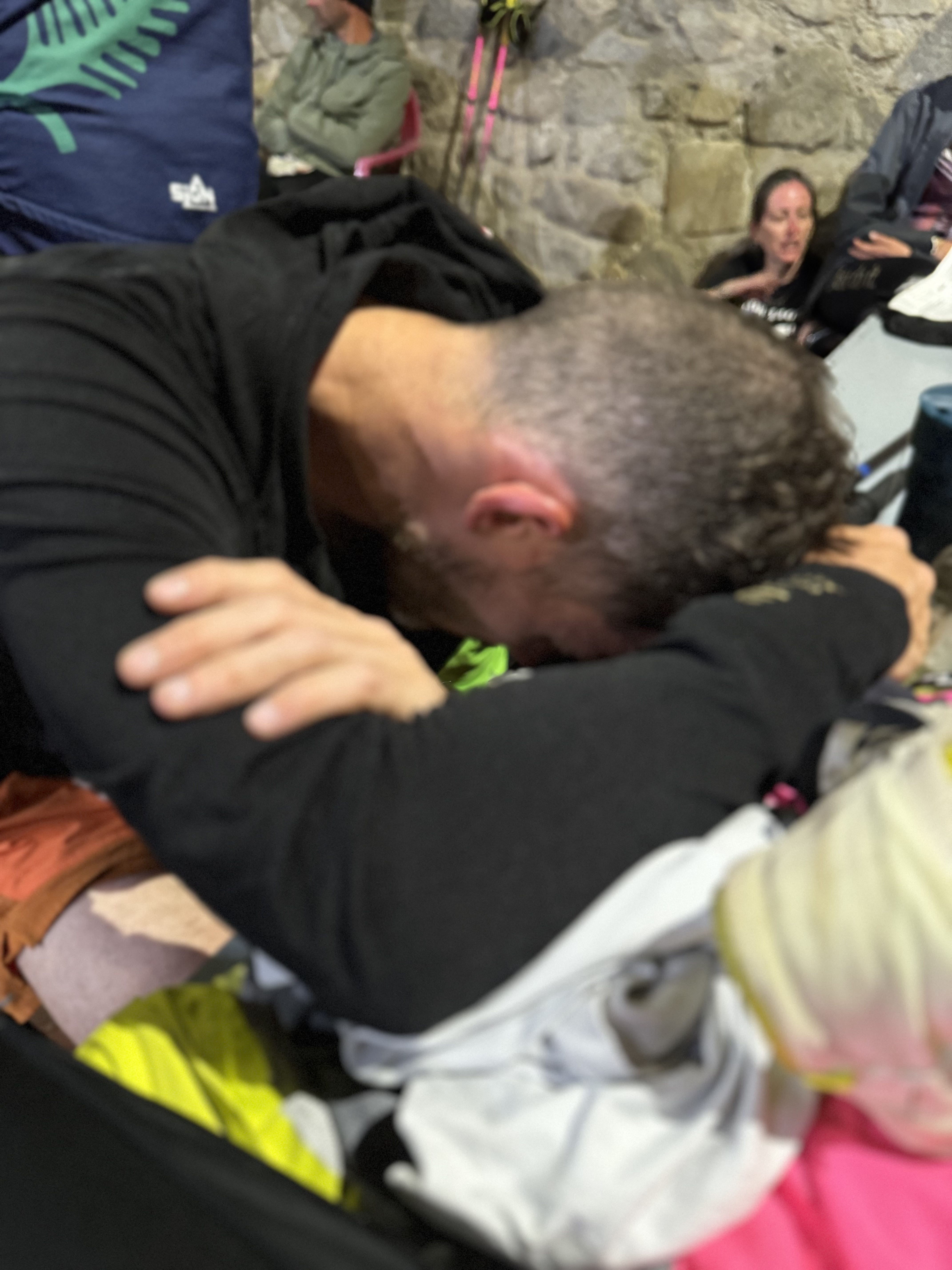
Your body adapts when it recovers, like really recovers. When you watch Netflix, read an article, read a book. It doesn’t recovers when you do “recovery” runs.
Training is just a stimulus, recovery is where the adaptation happens. When you keep adding load without structure, without planned recovery, without purpose behind each session, you are just adding stress to an already stressed system.
Your body can’t adapt, it’s too busy surviving. So then you wake up tired, you train tired, you go to bed tried and it’s the new normal and you say… it’s because of my age. Three months later you are standing at the start line of your race, hoping adrenaline carries you through.
Well it doesn’t. You start strong, fade hard and finish destroyed. This is not a fitness problem, it’s a structure problem.
Being fit vs being durable: know the difference.
Most runners train for fitness. There is this obsession with VO2 Max, Speed, threshold runs, interval sessions… These have their place, don’t get me wrong.
But fitness is not what gets you through a 100km or a 100 miler feeling strong.
Durability does.
Durability is your ability to keep performing when everything hurts. When you are 70km in, your legs are wrecked, your stomach is off ad you still have a mountain to climb. Fitness gets you to 50km but durability gets you to the finish line strong.
The runners who finish strong are not always the fittest runners. They are the most durable runners out there.
And durability is build differently. It’s not build by doing more. It’s build by training smart, recovering fully and building your body to hold the specific demands of your race.
You know when you finish a run outside your house at 9.88km and you go around the block to so Strava shows 10km?
Well that’s called junk miles. We’ve all done that. You know when you add an extra session just to feel like you did enough?
Junk miles.
When you run with purpose, without a target zone, without a reason for that specific session on that specific day, you are not building fitness and you are not building durability. You are just adding fatigue to a tired body.
And junk miles have a real cost: they eat into your recovery. The worst part is they increase injury risk. They make your quality sessions worse because you show up to them already depleted.
Every run should have a purpose. If you can’t answer why you are doing it, you shouldn’t be doing it.
Now, there is a line here. I love running and trail running because I enjoy the freedom, I just love being on trails. So you don’t have to so structured about all your runs and every run needs to GIVE you something. Sometimes you run just because you enjoy it and that’s okay. That’s why when I coach my athletes I make sure we ‘break the pattern’ and have runs that are called Gratitude Runs, Breathing Runs - to remind ourselves of daily basic things.
This is not about doing less, it’s about doing the right things. Focus on one element per training block: so it can be intensity or durability. Not both at the same time. When you train everything at once you develop nothing properly.
Replace one run per week with functional strength training. Most trail ultra runners skip strength work completely. Okay, some do it but it’s random and not targeting their strengths and weakness. But that’s a different story.
It’s a huge mistake to skip strength training because that’s what will keep your form together at kilometre 80…. It’s what protects your joints on descents. It’s what separates a strong finish from a death march which ultimately leads to ultimately a sour DNF or a finishing destroyed.

Add one full rest day, not a recovery run but a full rest day. Mental, emotional and physical. Your nervous system needs to recover as much as your legs do.
Build your weeks with intent. Every session connects to the next. Every block builds on the last. Nothing is random.
Last is shift your focus from fitness and durability. If you are not chasing a podium, if you want to finish strong not destroyed, 90% of your training should be building durability. That’s the biggest GAP.
QUESTION TO ASK YOURSELF
If you ran your last race and finished completely destroyed, ask yourself:
Was it a fitness problem or did you just run out of durability? Do you feel that you could have done more but your LEGS and your body just couldn’t handle the load?
Be honest with yourself. Because the answer tells you exactly what you need to work on.
Once you know that, training stops being complicated. You stop guessing and you stop adding random miles. You start being more intentional with your training.
“Waste no more time arguing what a good man should be. Be one.” — Marcus Aurelius
Stop arguing about the perfect training plan. Build one. Execute it.
If you want to go deeper on this, I am running a free live webinar next week.
I will break down exactly how to train for your big ultra like a full-time trail runner with part-time availability. How to structure your week. What to focus on and what to cut. How to build a body that finishes strong, not destroyed.
Tuesday 21st April at 19:00 GMT. Register for free here.
Train smart. Finish strong, not destroyed.
Comments
Nothing yet. Say the first thing.
Sign in to join the conversation.