
I was speaking to a trail runner this week and he told me he DNF’d a race. It was bad weather, heavy rain and mud. It sounds horrendous.
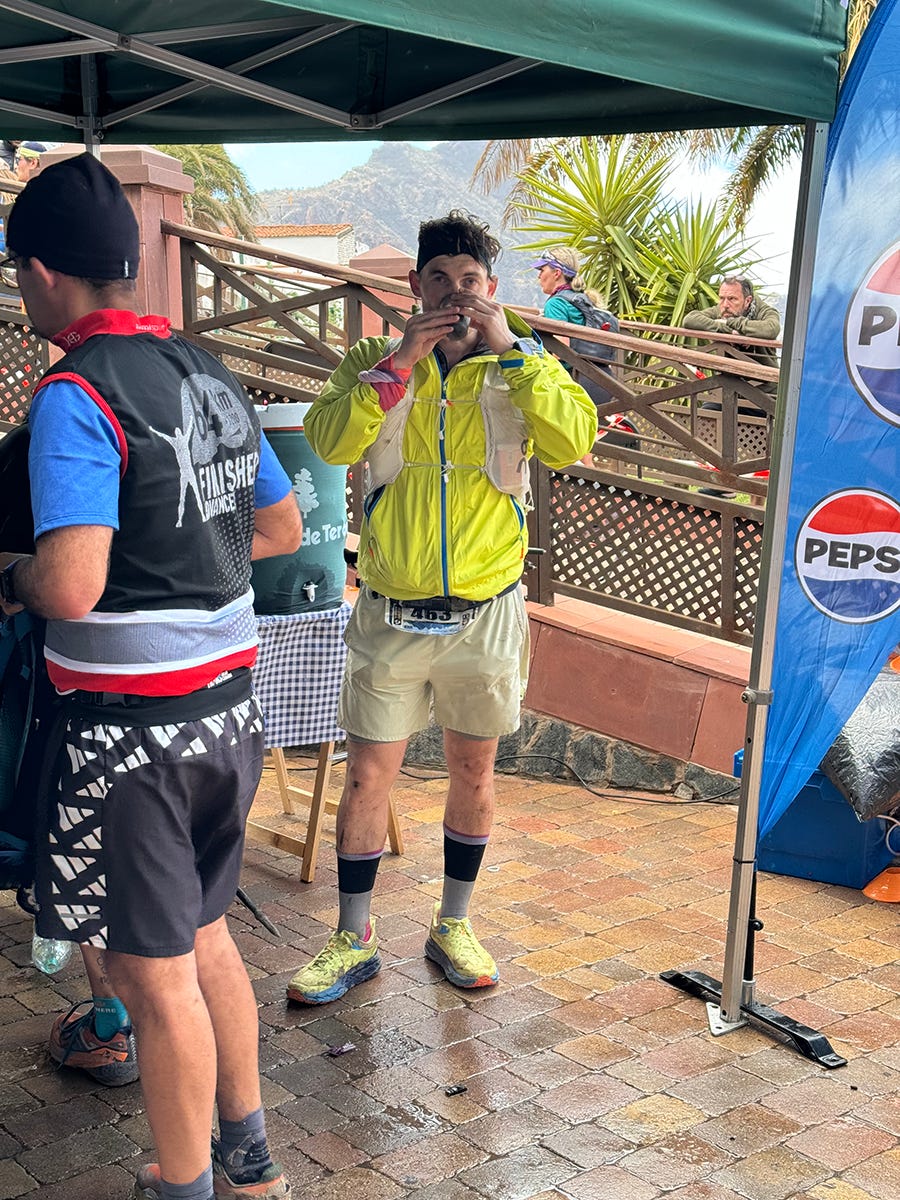
I remember running Transgrancanaria a few years ago. The conditions were brutal. At some point I had tears in my eyes climbing those hills.
I was on the verge of DNF.
And at the time, I blamed the weather.
But later I realised something uncomfortable: it wasn’t the weather.
It was my training, the weather just exposed the gaps.
Now the guy told me that he DNF’d again, same type of race, same conditions.
At that point you know it’s no longer bad luck. It’s just a pattern.
This is the biggest trap in trail running. We like to blame external factors. Weather, slippery terrain, nutrition, bad day at the office. And yes of course this things matter and it impacts the race.
But when the same outcomes keep happening… we have to look in the mirror and be honest.
Trail races don’t create problems, they expose them.

Mud has nothing to do with your race, it exposes weak footing and lack of strength. Rain doesn’t break you, it exposes poor fuelling, poor racing strategy and poor durability.
When you are fatigued at half way and chasing cut off times at 50km in…that didn’t start on race day. That started in your training.
Okay, this is the uncomfortable part. Blaming conditions and external circumstances protects the ego. But it also keeps you stuck.
Trail runners who improve are the ones who say:
“This is on me.” - That’s it. No excuses.
You see when I was on the verge of DNFing in Transgrancaria I was blaming the weather and the mud and then at the end there was a notoriously challenging, often described as a grueling "slog" through a dry, rocky riverbed (barranco) in the final 10km to 15km before reaching the finish line at Parque Sur in Maspalomas.
It was horrible, I hated every minute of it. I remember vividly saying I will never come back to TGC because of that section.
When you say this is on me, in a responsible way, the you take responsibility… only then you can actually fix it.
You start training for:
Fatigue resistance
Poor conditions
Terrain variability
Pacing under pressure
Mindset training.
The goal is not to survive good conditions, the goal is to be prepared for bad ones.
After that Transgrancanaria race, I stopped blaming the weather.
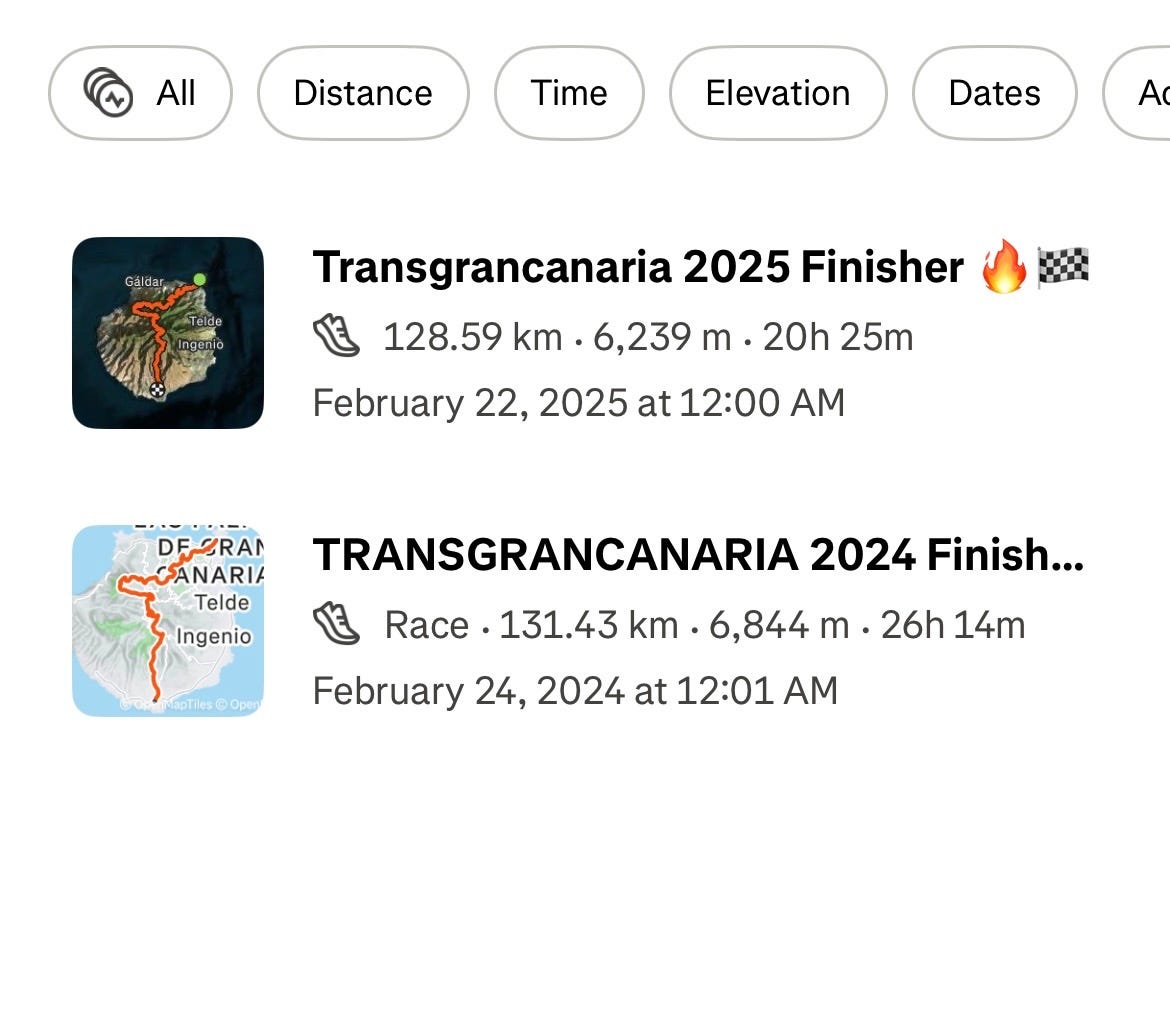
I realised I hadn’t trained properly, so I went back.
Trained for the worst conditions, built durability.
The next year I raced it, I took 6 hours off my time.
That’s the difference between: Blaming conditions…and fixing the problem.
If you’re a man over 35, this matters even more, you can’t just repeat last year’s training. You know that your body changes.
Your training needs to evolve.
If you want to finish your next race strong, not destroyed… look at your training honestly. That’s where the answer is.
If you want help with that, you can apply for coaching below. If I can help you, I will.
You can also download my free guide: How to Finish Strong, Not Destroyed
Wisdom worth sharing
“The impediment to action advances action. What stands in the way becomes the way.” — Marcus Aurelius
Comments
Nothing yet. Say the first thing.
Sign in to join the conversation.