
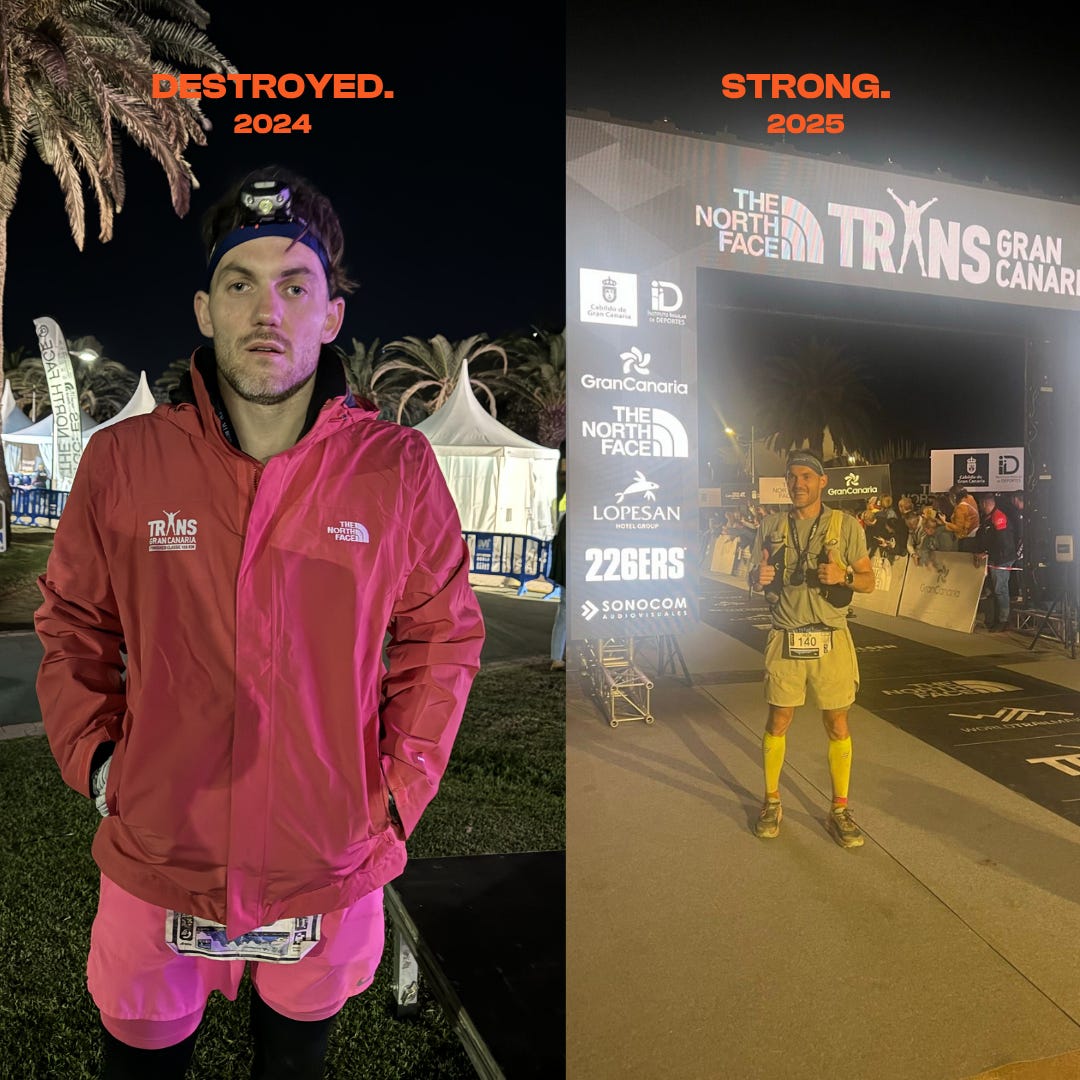
Imagine you show up at a race thinking you are ready. You see the start line, you see other runners among you and you are ready to go. You feel strong. Confident.
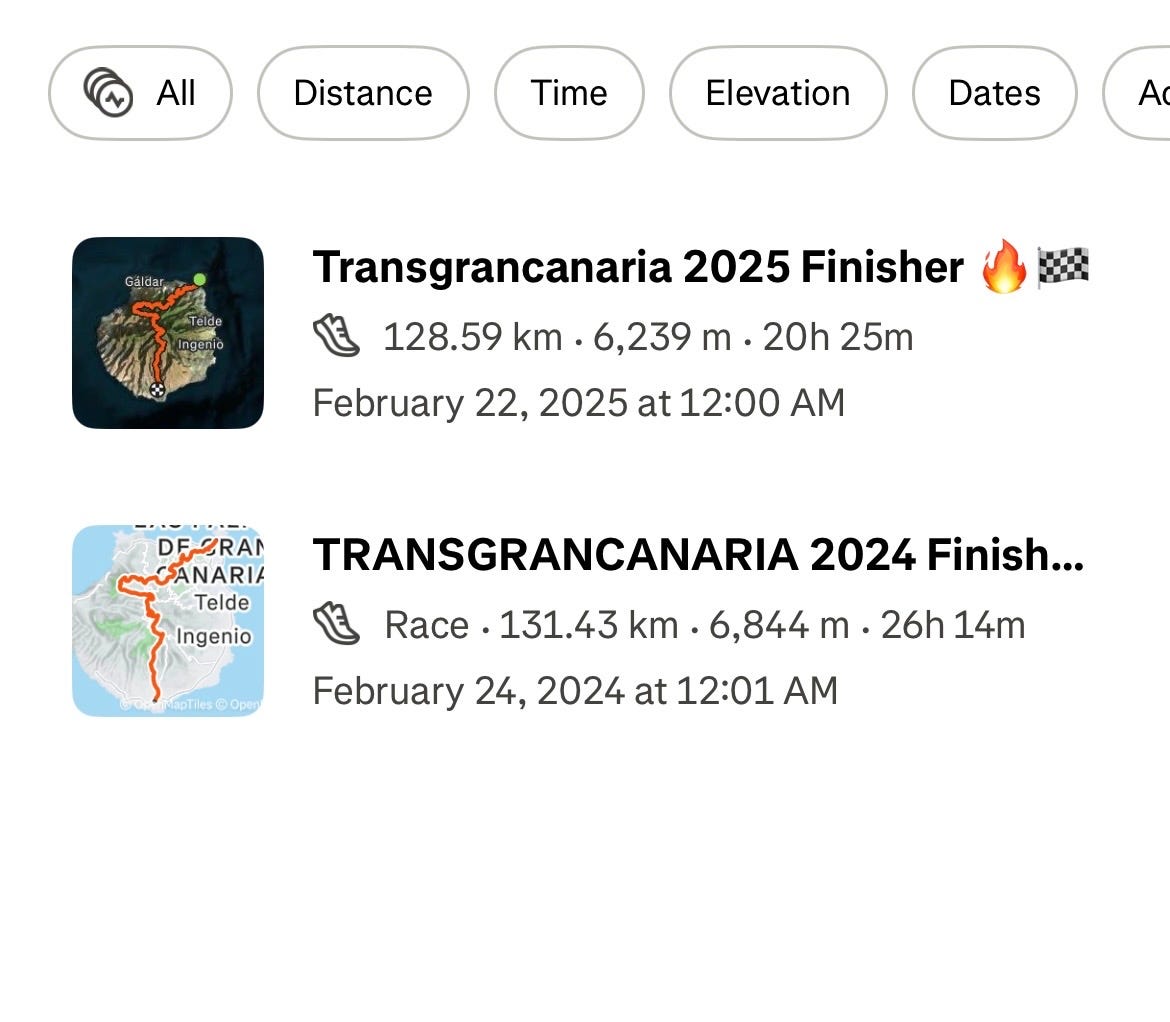
Somewhere along the line you realise this is going to be much harder than you expected. And you hope that feeling - that you might not make 131 km and 6,844m of vert —will somehow magically disappear.
Well this was me at Transgrancanaria 2024. I was on the verge of DNF, I couldn’t go through it, it was tough as I was underprepared.
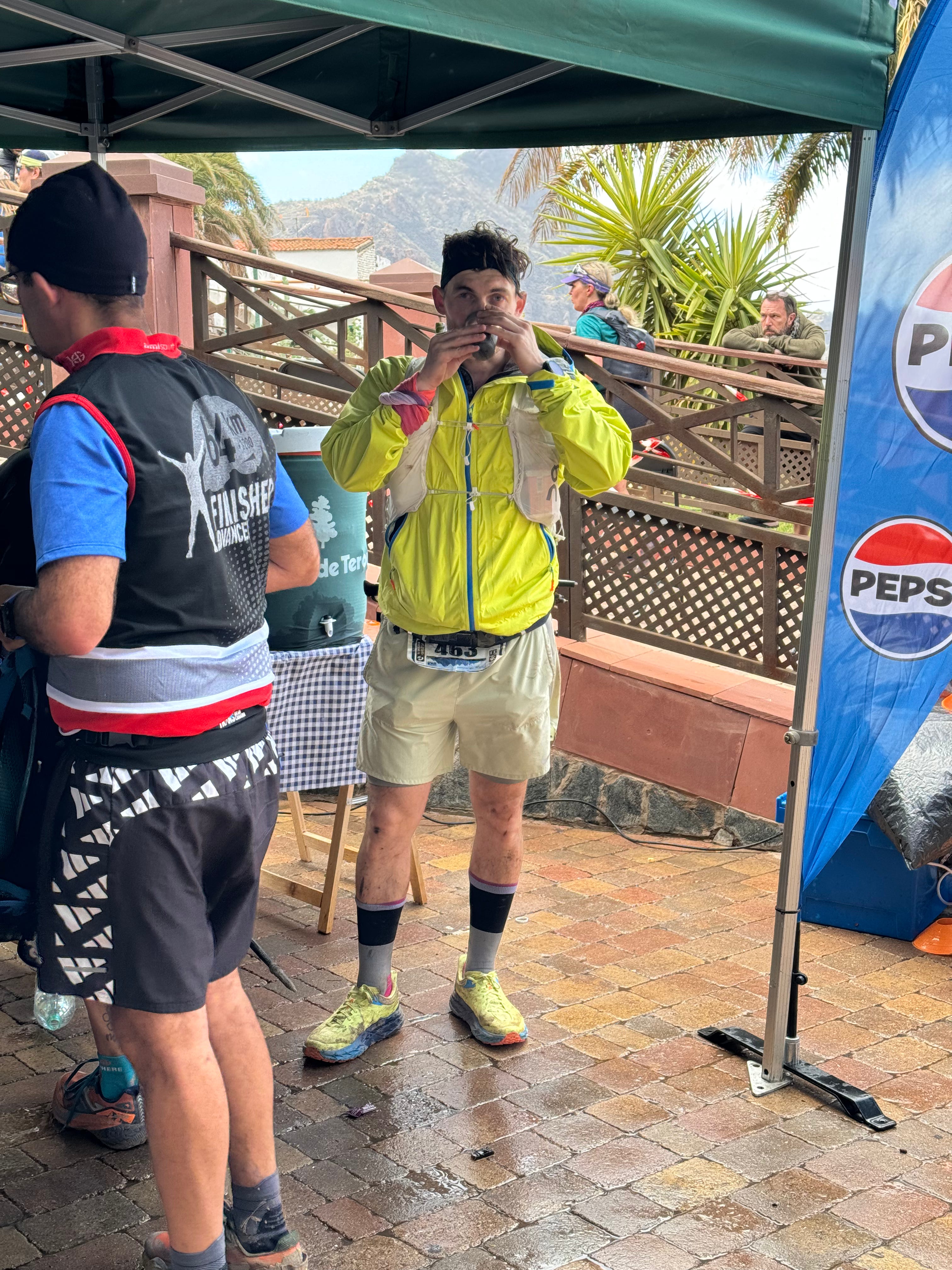
I finished the race completely destroyed and I hated every part of the race. At some points I had tears running down my face because the pain was huge.
I remember clearly that when I finished the race I said:
“I would never do this race ever again.” I blamed of the weather. I blamed the mud and I blamed (a lot) that final rocky riverbed section where every step felt miserable. I was fuming that they put the runners to go through that towards the end.
This wasn’t a fun experience, because trail running supposed to be fun, exciting and challenging.
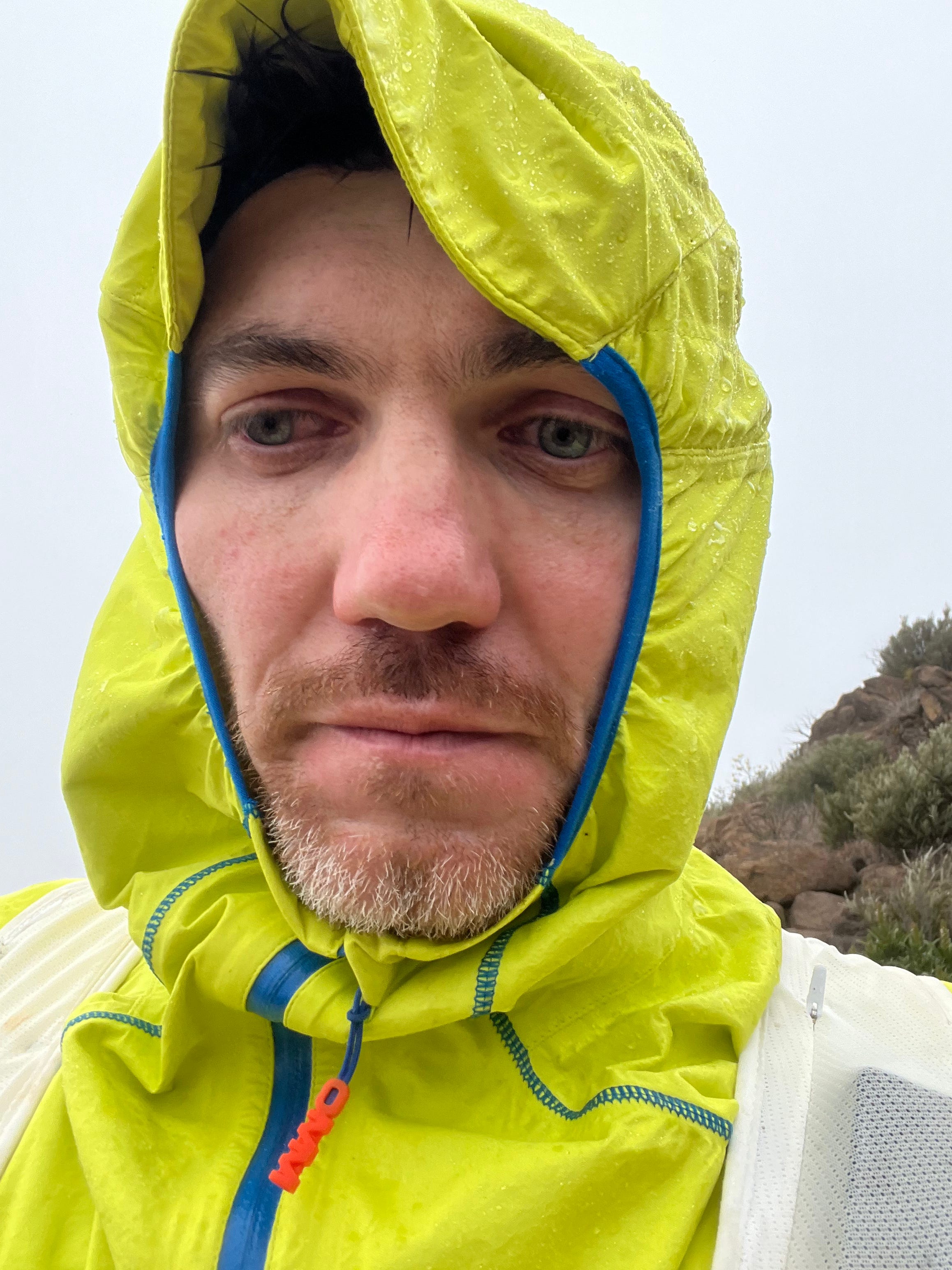
The next day I could barely walk. Yes I got the medal and a great finisher jacket but … the uncomfortable truth is that I wasn’t prepared for the race. The bad weather exposed my poor pacing and fuelling strategy, the mud exposed weak glutes, and weak coordination and balance.
After 2 months I somehow decided to register for the next year’s race, same distance, same vert, same location. I felt that I can do this properly, I can train and go back and give it my best.
WHAT CHANGED?
The first and most important thing is I stopped blaming everything. No more blaming the race, the weather, or the course.
This is what I did. I went back the following year and I run and finished strong. On Strava I can see I was 6 hours faster - but for me it’s not the time that matters is that I finished strong, not destroyed.
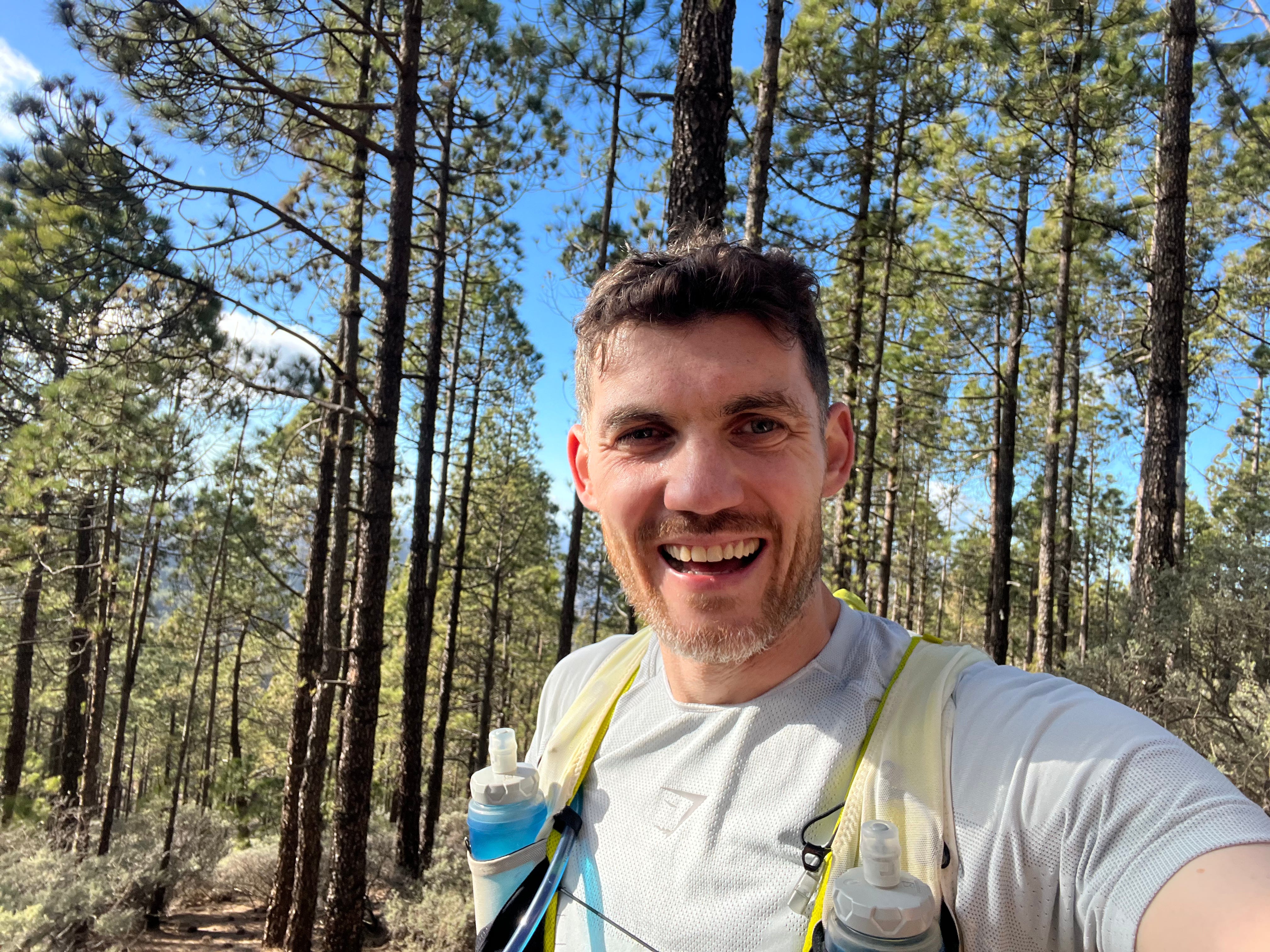
Here’s what I did to finish strong:
So I started working on my weakness:
durability
pacing strategy
fuelling
body composition
I decided to go to Gran Canaria to do a recce run. Funny enough I enjoyed the island more outside of race pressure.
I started a proper structured training that included:
balance and coordination
proprioception (the “sixth sense” that allows the brain to perceive body position, movement, and force without looking)
strength training
structured training blocks
Once I created with my coaches my training blocks each block was focused on one main element and one secondary element.
The second part was working on my running. I had to work on my durability, so I implemented:
long back to back runs
hill sessions
intentional rest and recovery.
Then came the big one: my body composition. In 2024 when I run the race I had excess body fat. Let’s be honest, I was fat. So every climb felt harder, every descent punished my knees, it was like I was carrying extra weight in a vest the entire race.
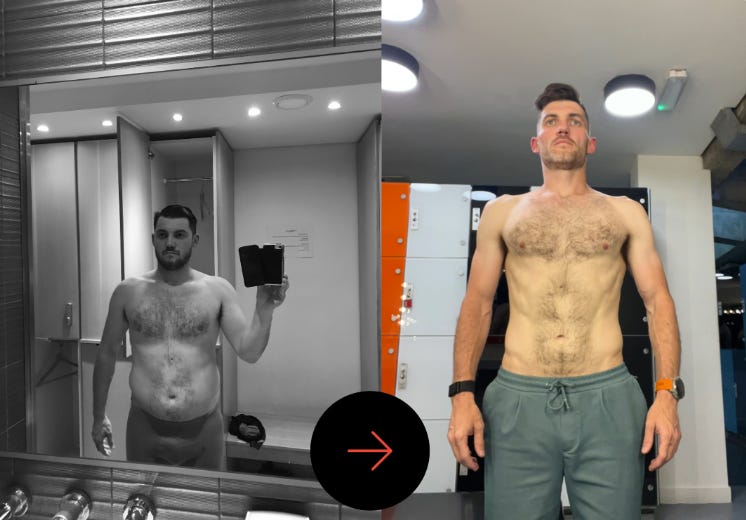
This was actually a huge element, so I started working on my day to day nutrition: I focused on high protein foods, going into calorie deficit and then on long runs balancing fuelling more.
I lost 10 kg of body fat, that alone changed everything. Just the feeling of not being fat and not seeing that belly gives you a different kind of confidence.
RACE DAY 2025
This time, I was actually ready. Better training, better pacing, better preparation. But a week before the race I had a niggle in my right leg… shin splints. I was frustrated. I put so much pressure on myself to perform because I had invested so much in terms of time, energy, resources, coaching from 2 coaches, so I was clearly putting so much pressure on myself because I though I need to perform this.
I did the opposite of what I did the year before: I started very conservative. Slow. Even slower. I expected bad weather but it turned out to be hot. Different problems, same principles: adapt. This is my biggest strength. I know how to adapt. I was born to adapt.
Then after half way I felt better, I started moving better and faster and more composed. This time I finished strong, not destroyed.
I was six hours faster, but that’s not the real win and it’s not a flex. The real win is finishing the race strong on my terms. The real win is enjoying the race. It’s being in control, I wasn’t chasing cut-offs. I wasn’t just surviving, I was running.
This was finishing strong actually means: not chasing a PB (we are not road runners), not proving something. But doing your best and actually enjoying the experience.
FINAL THOUGHT
You will suffer in trail races, but there’s a difference. Suffering because it’s hard and suffering because you weren’t prepared. I know which one I choose.
Strong, not destroyed.
I’m hosting a free small webinar next week called Strong, Not Destroyed. You can join free, we will have a Q&A session in the end as well.
If you enjoyed this article, why not share it with a trail buddy?
Comments
Nothing yet. Say the first thing.
Sign in to join the conversation.