
Ask five different sources what a healthy ferritin level looks like, and you may get five different answers. And, if you’re an endurance athlete, the answers may not be built with you in mind.
Iron sits underneath almost everything that makes endurance training work: oxygen transport, the electron transport chain, the enzymes that let your muscles actually use the oxygen you are hauling around.
A low ferritin doesn’t just leave you tired. You’re training with the engine detuned. So let’s get into what the research actually says about iron status and ferritin levels in endurance athletes.
Iron deficiency is common among endurance athletes, and it’s not a minor footnote.
Estimates range from about 15-60% in female athletes depending on the population and the cutoff used, with male athletes affected considerably less often, typically up to 30%.
Menstrual losses account for much of that gap. Women with normal, healthy menstrual cycles can lose around 10 mg of iron per cycle. This is why female athletes have a higher recommended dietary intake than males (18 mg per day versus 8 mg per day).
A 2024 systematic review from Pengelly and colleagues, pulling together 23 studies and nearly 700 female athletes, found that iron deficiency reduced endurance performance by 3-4% compared to iron-sufficient athletes, and that treating deficient athletes with supplemental iron improved endurance performance by 2-20% and maximal aerobic capacity by 6-15%. Those are not trivial numbers for athletes.
The mechanism is straightforward once you follow it through.
A ferritin test measures the amount of ferritin in your blood. Ferritin is a protein that stores iron inside your cells.
Low iron stores impair the oxidative enzymes and cytochromes in the electron transport chain, which limits how efficiently your muscles convert oxygen into ATP. That happens even before hemoglobin drops, which is exactly why ferritin (a marker of stored iron, not just circulating iron) has become the biomarker everyone leans on.
And exactly why the disagreement over what counts as an “optimal” ferritin level is such a practical problem.
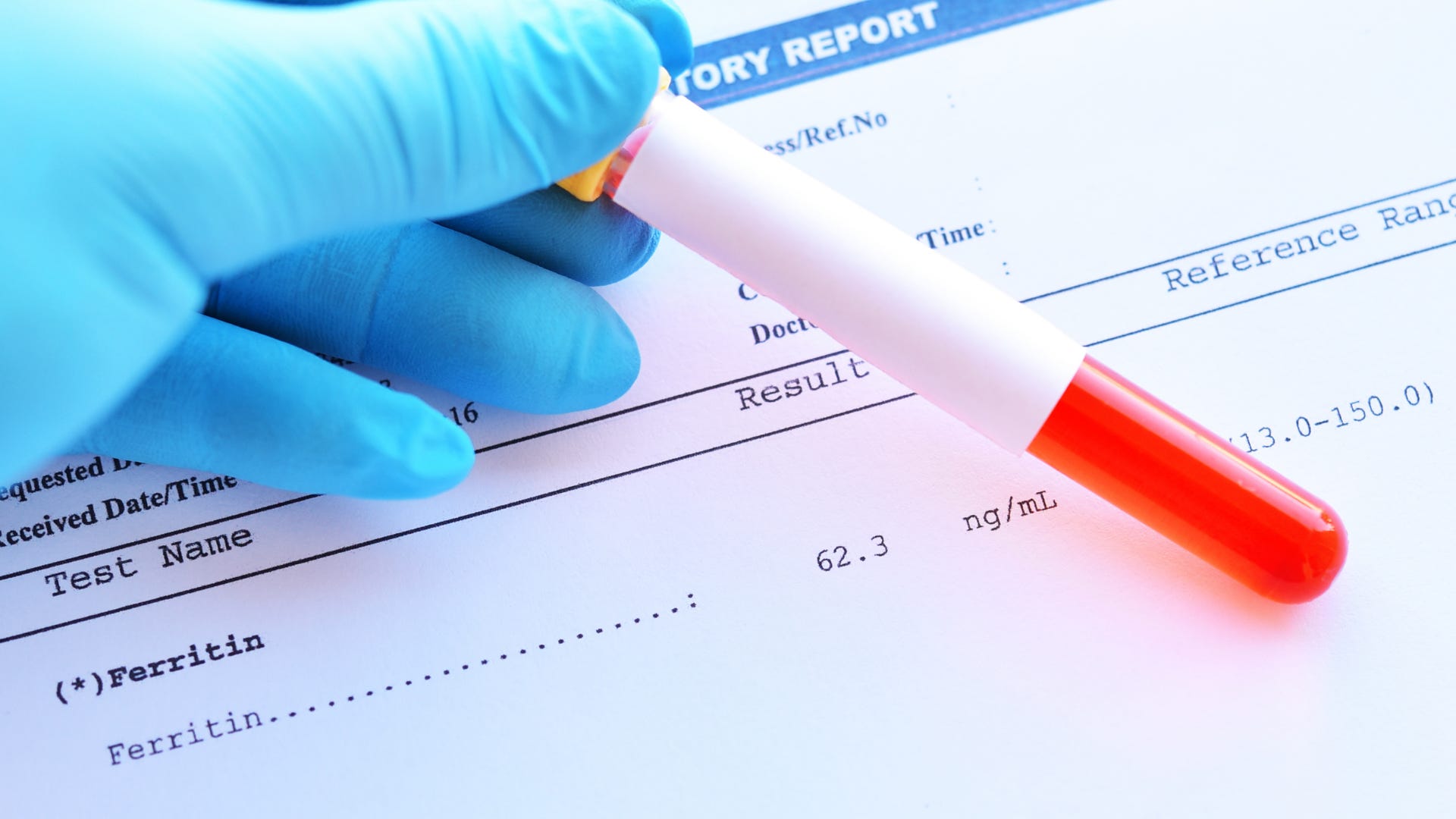
Here is the tour of disagreement.
The World Health Organization has historically used 15 ng/mL as the threshold to flag iron deficiency in the general population.
A 2022 study of blood donors of reproductive age argued that 25 ng/mL was a more physiologically accurate cutoff, based on the point at which iron absorption begins to ramp up.
In 2025, an expert consensus group published in Lancet Haematology recommended a considerably higher threshold of 50 ng/mL for clinical management of iron deficiency.
A newer study takes a different approach. Published in early 2026 by Kodger, El-Khoury, and Yurtsever in the Journal of Applied Laboratory Medicine, it skipped the debate over which cutoff is correct, and instead they measured ferritin in a group of women confirmed to be genuinely iron sufficient, ages 18 to 40, with normal blood counts and normal iron levels across the board. That group's ferritin had a median of 59.5 ng/mL, with a normal range spanning roughly 20 to 133 ng/mL.
The researchers also tracked the point where hemoglobin stopped climbing as ferritin rose. In other words, the point past which more stored iron stopped producing any additional benefit. That point landed around 25 ng/mL, and it’s the number they ultimately adopted as their own clinical cutoff.
So depending on which paper you grabbed off the shelf, “deficient” could mean anything from <15 to <50 ng/mL. And that is before you even get to sports science.
Researchers routinely debate that athletes need a higher bar because training can increase iron turnover and losses.
Several exercise-specific mechanisms drive iron depletion in athletes:
Iron is lost through sweat and, in some cases, exercise-induced hematuria (blood in urine).
Foot strike hemolysis - the repetitive, forceful impact of running can destroy the red blood cells inside the small blood vessels of the feet.
Gastrointestinal microbleeding - Exercise-related gut ischemia (reduced blood flow) can cause hidden GI blood loss.
Hepcidin-driven absorption blocks after hard sessions - Prolonged exercise can trigger the release of interleukin-6, a protein that upregulates hepcidin. Hepcidin is the master iron-regulatory hormone, leading to a 36% reduction in dietary iron absorption post-workout.
The sports nutrition literature generally treats anything below 30-35 ng/mL as a red flag in athletes.
However, researchers openly acknowledge there is “little consensus” on exactly where to draw that line for trained populations.
The dietitian team at Alex Larson Nutrition we see best results from our athletes with ferritin levels >50 ng/mL.
Checking ferritin annually is ideal. However, if ferritin levels are sub-optimal, re-checking in 3-6 months is recommended.
In the Pengelly et al. 2024 systematic review, they staged out the severity scale for iron deficiency:
Stage 1 (non-anemic deficiency): ferritin has dropped <30 ng/mL, but transferrin saturation is still normal. Transferrin saturation measures how much of the iron-carrying protein in your blood is actually loaded with iron.
So at this stage, your stored iron is starting to run low, but there's still enough iron circulating and being delivered around the body that nothing else is affected yet.
Stage 2: ferritin drops further, <20 ng/mL, and transferrin saturation drops, too. So it's not just storage that's low anymore. The iron actually being transported in the blood is restricted. Still no anemia at this point, but it’s a more advanced stage than stage 1.
Stage 3: hemoglobin itself finally drops <12 g/dL. This is anemia, the point at which the shortage is severe enough that the body can't make enough functional red blood cells.
None of this article is meant to be a knock on the research and the scientific community.
Ferritin is a genuinely hard biomarker to pin down, partly because it’s also an acute phase inflammatory protein, so a hard training block or recent illness can nudge it around independent of your actual iron stores.
But in practice, it means the number on your lab report needs context, not just a pass/fail stamp. If you are training seriously and sitting in the 20s or low 30s with symptoms (unexplained fatigue, flatlining paces, restless legs), it is worth addressing even if the lab flags it as “within range.”
Stay tuned for part 2 of this series as we dive more into lab values beyond ferritin.
“Normal” ferritin levels are not standardized. Published thresholds range from 15 to 50 ng/mL depending on the source. Sports science generally sets the bar even higher (around 30) than general medicine, because athletes lose and turn over iron faster. The ALN team sees best results from athletes with ferritin >50 ng/mL.
What resonated with you? What questions do you still have? Whether you're an athlete, a coach, or a fellow RD, I want to hear your perspective. Leave a comment below and let's keep the conversation going.
Pengelly M, Pumpa K, Pyne DB, Etxebarria N. Iron deficiency, supplementation, and sports performance in female athletes: A systematic review. Journal of Sport and Health Science. 2025;14:101009.
Addo OY, Mei Z, Hod EA, et al. Physiologically based serum ferritin thresholds for iron deficiency in women of reproductive age who are blood donors. Blood Advances. 2022;6:3661-3665.
Benson AE, Lo JO, Achebe MO, et al. Management of iron deficiency in children, adults, and pregnant individuals: evidence-based and expert consensus recommendations. Lancet Haematology. 2025;12:e376-e388.
Kodger J, El-Khoury J, Yurtsever N. Reevaluating Ferritin Reference Intervals: Defining Limits Based on Iron-Sufficient Population Studies, Clinical Relevance, and Healthcare Efficiency. Journal of Applied Laboratory Medicine. 2026;11:193-196.
Clenin G, Cordes M, Huber A, et al. Iron deficiency in sports, definition, influence on performance and therapy. Swiss Medical Weekly. 2015;145:w14196.
McKay AKA, Sim M, Moretti D, et al. Methodological considerations for investigating iron status and regulation in exercise and sport science studies. International Journal of Sport Nutrition and Exercise Metabolism. 2022;32:359-370.
No posts
Comments
Nothing yet. Say the first thing.
Sign in to join the conversation.