
Now that we’ve turned the page into 2026, it’s time for yet another best books list.
I might be a little bit late, but I don’t understand why everyone posts their best books lists in the Twixtmas period which if often the the best stretch of uninterrupted reading time you get all year.
I’ve been keeping a journal of what I read for the last five years or so, mainly to try and spot patterns or clusters in what I get through, and also to try and widen the variety of books that I engage with. Any year reading is a good one, but quite a few of these directly or indirectly moved me to pick up a pen and write something.
So without further ado…..
Contemporary Fiction
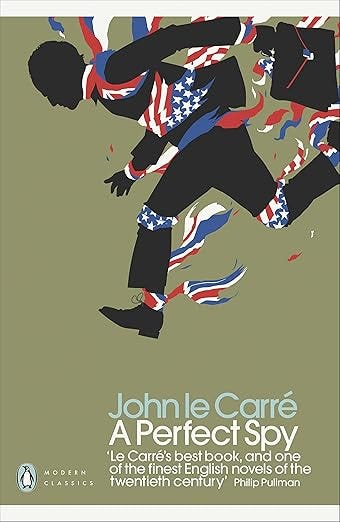
A Perfect Spy, John Le Carré. The more spy novels I read, the more I believe that they’re the best literary form for exploring the malleability of human identity and the fact that we never really know anyone - and this portrait of a diplomat’s life of lies coming unravelled is literature of the highest order. Apparently it draws quite heavily from Le Carré’s experiences with his conman father, which makes it all the more affecting.
Gilead, Marilynne Robinson. This novel made up of letters from a dying small-town preacher to his young son is unbearably touching and beautiful, even when re-reading it. Robinson’s control over his wavering voice and searching faith and the way the narrative unfolds are evidence of a master at work. Warning: if you have a child, it will make you start writing them letters.
The Art of Fielding, Chad Harbach. Perhaps not The Great American Novel, but certainly a brilliant one about baseball. This is a sports novel, a campus novel, and also something of a rare beast: a contemporary work of fiction that takes relationships between men - romantic, familial and otherwise - extremely seriously, and treats them with great humour and tenderness. File alongside John Irving and Michael Chabon.
Flesh, David Szalay. I read this tale of a Hungarian migrant’s rise through British society in a couple of sittings. Yes, the prose is pared back to the bone, but most interestingly it breaks a lot of the rules of what we expect from great fiction: the main character Istvan is remarkably low-agency, has no plot to conquer or win riches, and yet the end result is utterly compelling. Well deserving of its Booker win.
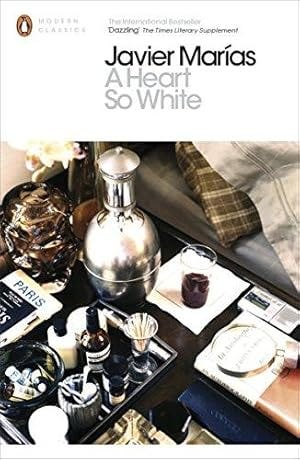
A Heart So White, Javier Marias - I only started reading Marias last year and so am on one of those wonderful streaks with a great writer where you devour their entire back catalogue one after the other. Marias is a master of the sentence that meanders from the narrative to the philosophical to the conversational with just a few commas for support. A great book about marriage, lies and the unbearable weight of certain kinds of knowledge.
Flights, Olga Tokarczuk. There’s no shortage of ways to try and analyse this book, but it defies easy categorisation: Tokarczuk experiments with travelogue, short story, meditation, place writing and many others around the theme of travel, migration and displacement. Almost every page is graced with an astonishingly high quota of counter-intuitive and perceptive insights. If you’re travelling anywhere this year, buy this book and only read it whilst you’re on the move.
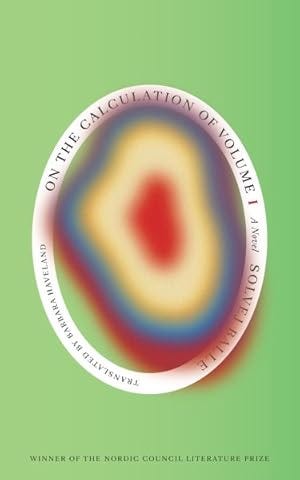
On The Calculation of Volume I, II, Solvej Balle - Groundhog Day, but make it European and literary - or, if you like, ‘In Search of Stopped Time’. Joan Didion once said ‘today is all there is,’ but rarely will you find something that explores that with more depth than this story of a woman trying to live whilst being perpetually trapped in the 18th of November.
There are currently three volumes of a proposed seven in this series available in English, which means that if you start now you can catch the wave as each new volume translation drops and its cult following grows. I will eat my hat if one of these doesn’t win The Booker.
There Is No Antimemetics Division, QNTM. This novel about a secret organisation investigating phenomena that are impossible to see or remember had an unusual and extremely modern genesis on messageboards, which is a great example of form following theme. This is science fiction doing what only it can do: pushing distressing and highly novel ideas to their absolute narrative elastic limit. I found this by way of one of my other non-fiction faves, which was…..
Non-Fiction
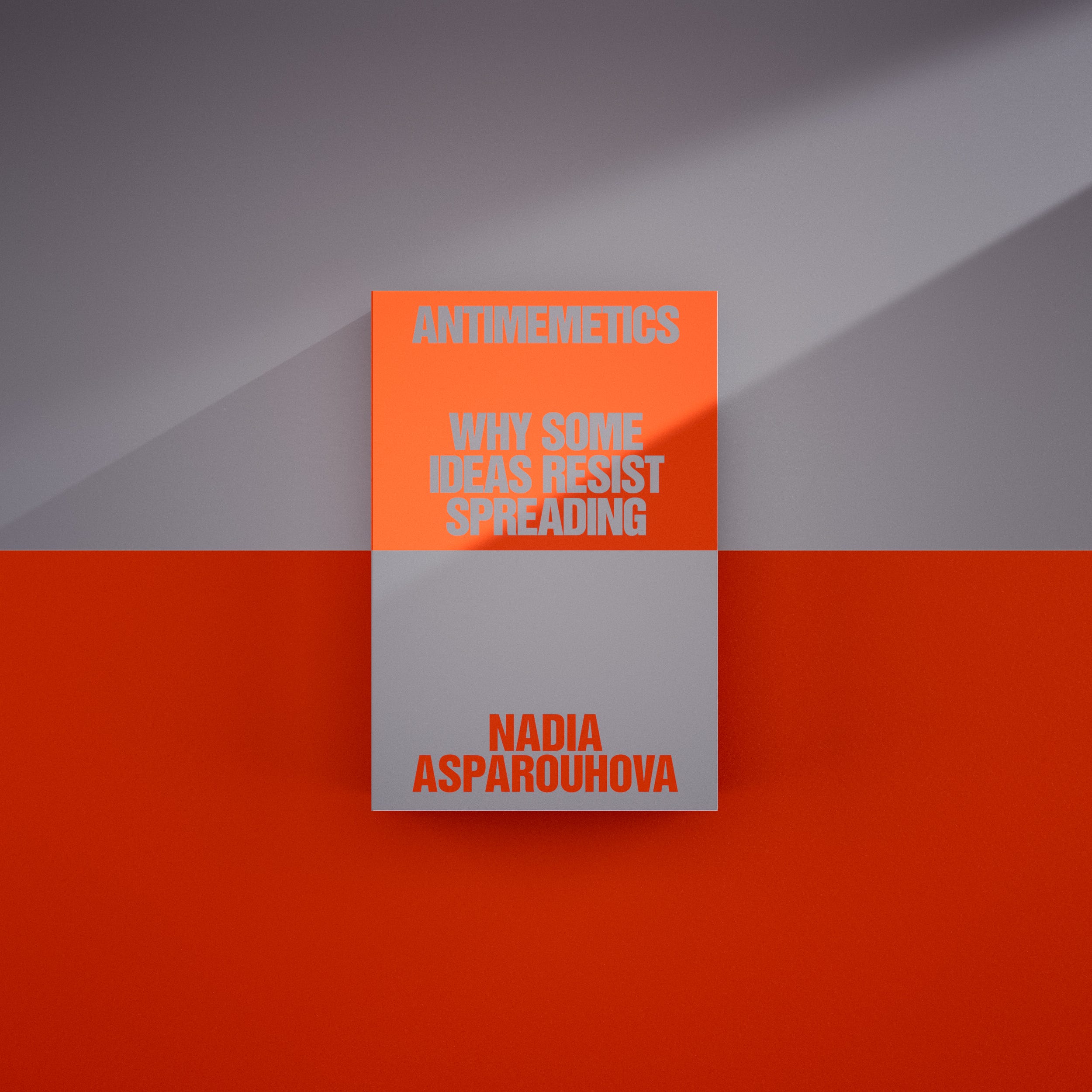
Antimemetics, Nadia Asparouhova. I wrote about this earlier this year, and for anyone who works in communication or is just interested in how the internet functions right now, this is an essential new manual for how to interrogate, articulate and spread new ideas.
The Right Stuff, Tom Wolfe. Whilst I’d watched the film I’d never got around to reading this masterpiece about the space race. This is a Mach 3 jet-engine of a book fuelled by a combustible mix of ego, engineering, courage, American jingoism, and male competitiveness, all set alight by Tom Wolfe at the peak of his New Journalism swagger. Read it and weep at the America that once was.
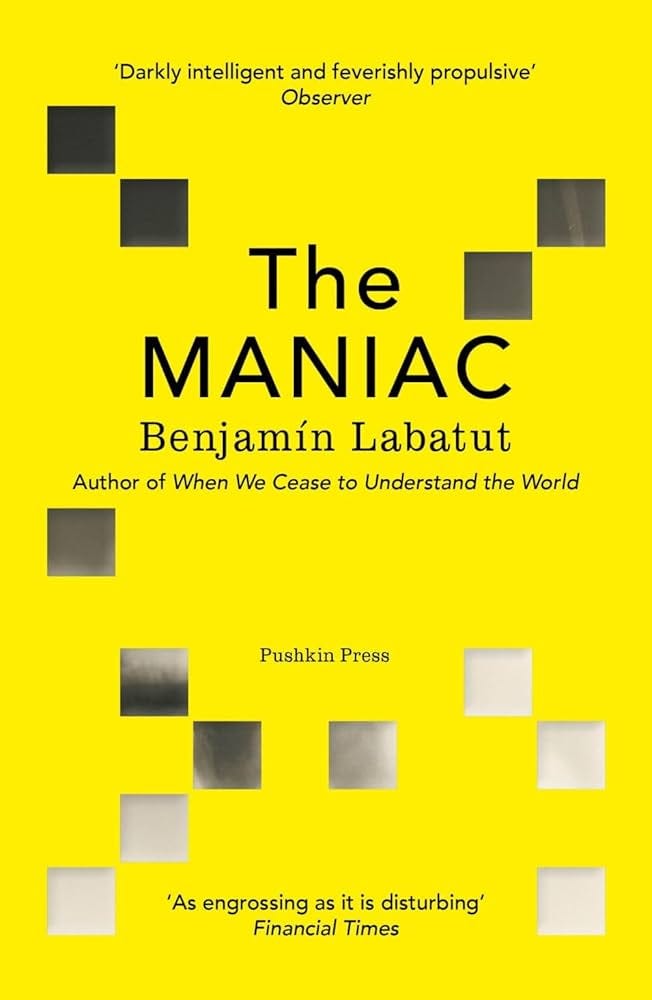
The Maniac, Benjamin Labutat. Having loved When We Cease To Understand The World, I had high expectations for this non-fiction novel about Hungarian genius John Von Neumann, and I wasn’t disappointed. A book about the horror of progress and the dark heart of computing, and vital reading for anyone trying to understand the AI era in its historical context.
The Scaling Era, Dwarkesh Patel. Another great release from a Stripe press on a hot streak, this oral history uses in-depth and highly technical interviews with some of the leading lights of the AI era to help explain what’s happening and what matters. One of the best companions for trying to grasp what the fuck is going on beyond the headlines of the AI boom.
In Praise of Shadows, Junichiro Tanizaki. A short, beautiful and meditative sliver of a book that does exactly what its title promises, and one that will likely make you view the prevalence of electric light in cities as a form of aesthetic loss from which humans have never recovered. Read it by candlelight.
The High Frontier, Gerard O’Neill - An astonishingly rigorous and imaginative book about how humans will live in space, written in the mid-1970s: it touches on everything from the best way to position floating solar mirrors to beam energy down to earth instead of burning fossil fuel, to speculations about the pleasures of zero-gravity sex, and is full of these sort of fun NASA technical drawings.

This book appears to have had a significant influence on Jeff Bezos’ Blue Origin (O’Neill was his professor at college). I wrote about it, and the new era of space travel, here.
Second Hand Time, Svetlana Alexievich. A masterful oral history about the collapse of the Soviet Union: this is a book concerned with the impact of extraordinary events on ordinary people, and is both horrifying and often unbearably moving. This is the first book that I have read that made me feel like what it might have been like to live through the collapse of the USSR, and also one that makes it distressingly clear how Vladimir Putin was able to gain and hold onto power. I wrote about it here.
Classic Fiction
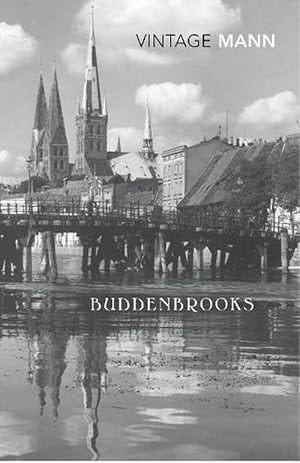
Buddenbrooks, Thomas Mann. As part of a cluster of reading (Death in Venice, Tonio Kroger, Dr Faustus), I finally got round to Mann’s first masterpiece, this saga about a family of German merchants. Everyone raves about Magic Mountain but I was far more moved by this. As a writer, it’s deeply depressing to think that anyone could have known so much or written so well at such a young age.
Pride & Prejudice, Jane Austen. As the saying goes, ‘to think I might have died without reading it’. There is very little new that anyone can say about this, but all I can bring is raw enthusiasm having read it for the first time. The title of this book was originally meant to be First Impressions, and if nothing else, reading it might make all of us slightly slower to make snap judgements about other people.
Cannery Row, John Steinbeck. An absolute riot of a novel that threatens to go off the rails in the best possible fashion at every possible moment. I loved this.
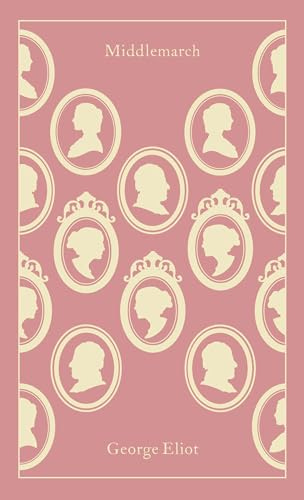
Middlemarch, George Eliot. With the greatest respect to Austen and Dickens, I re-read this and it remains my candidate for the Great English Novel. Please, if you’re going to read just one classic novel this year, make it this one.
Substacks
I’ve also read and deeply enjoyed a lot of writing here on Substack. Here’s a signal boost for a few that deserve your time over and above whatever dross the internet might offer:
The Metropolitan Review (in particular their pieces on Gay Talese and the philosophy of Tom Cruise) . They are now open to paid subscribers, and you should be one of them.
Souvenir Magazine, who have created a beautiful English-language literary magazine out of Paris. Phineas Rueckert’s piece on the Bataclan Attacks is rigorous and deeply affecting, I ordered the magazine immediately, and so should you.
Jasmine Sun - anthropological missives from the frontier of San Francisco. I particularly enjoyed this piece about vice signalling.
Joshua Citarella - one of the best guides to how the internet, politics and influence work, and the memetic battlefield we all live in now.
The Common Reader - Henry Oliver continues to bang the drum with feverish intensity and consistency for reading great books more deeply and appreciatively.
Lastly, I would like to try an experiment here for anyone who’s made it this far. Some of the reading choices above were driven by thoughtful friends and family recommending them, and so I’m going to ask for a favour, and also potentially offer one.
Firstly, please jump into the comments and let me know anything that moved, affected or touched you in the last year from a cultural, artistic, musical, cinematic, experiential or aesthetic level. Secondly, if you’re looking for new things to read, DM me the last few works you really enjoyed reading and your address, and I will send you a book. This human algorithm gets better the more specific you get, so please don’t be shy.
I wish all of you a book-ish and well-read turn around the sun: a year spent reading is never a year wasted.
No posts
Comments
Nothing yet. Say the first thing.
Sign in to join the conversation.