
Harbingers of doom are already proclaiming the end of reading and asking us to prepare for a world where books are consigned to the dustbin of history along with wax tablets and papyrus scrolls.
James Marriott’s piece on the post-literate society lays out the most doomer POV on it all1, and the British government cares enough that they’ve convened a Parliamentary panel to investigate2. These headlines are perhaps overblown, but they aren’t baseless: key indicators of the general health of reading and its popularity have been sliding downwards for some time, and will likely continue to do so. Consider the following:
In 2025, the percentage of children and young people in the UK who said that they enjoyed reading was its lowest in 20 years. Just 1 in 3 children and young people aged 8 to 18 reported enjoying reading “very much” or “quite a lot” in 20253.
Half of UK adults don’t regularly read and almost one in four (24%) young people aged 16 to 24 say they’ve never been readers according to research released by The Reading Agency4. Lest my international readers get smug, this isn’t just a very British problem.
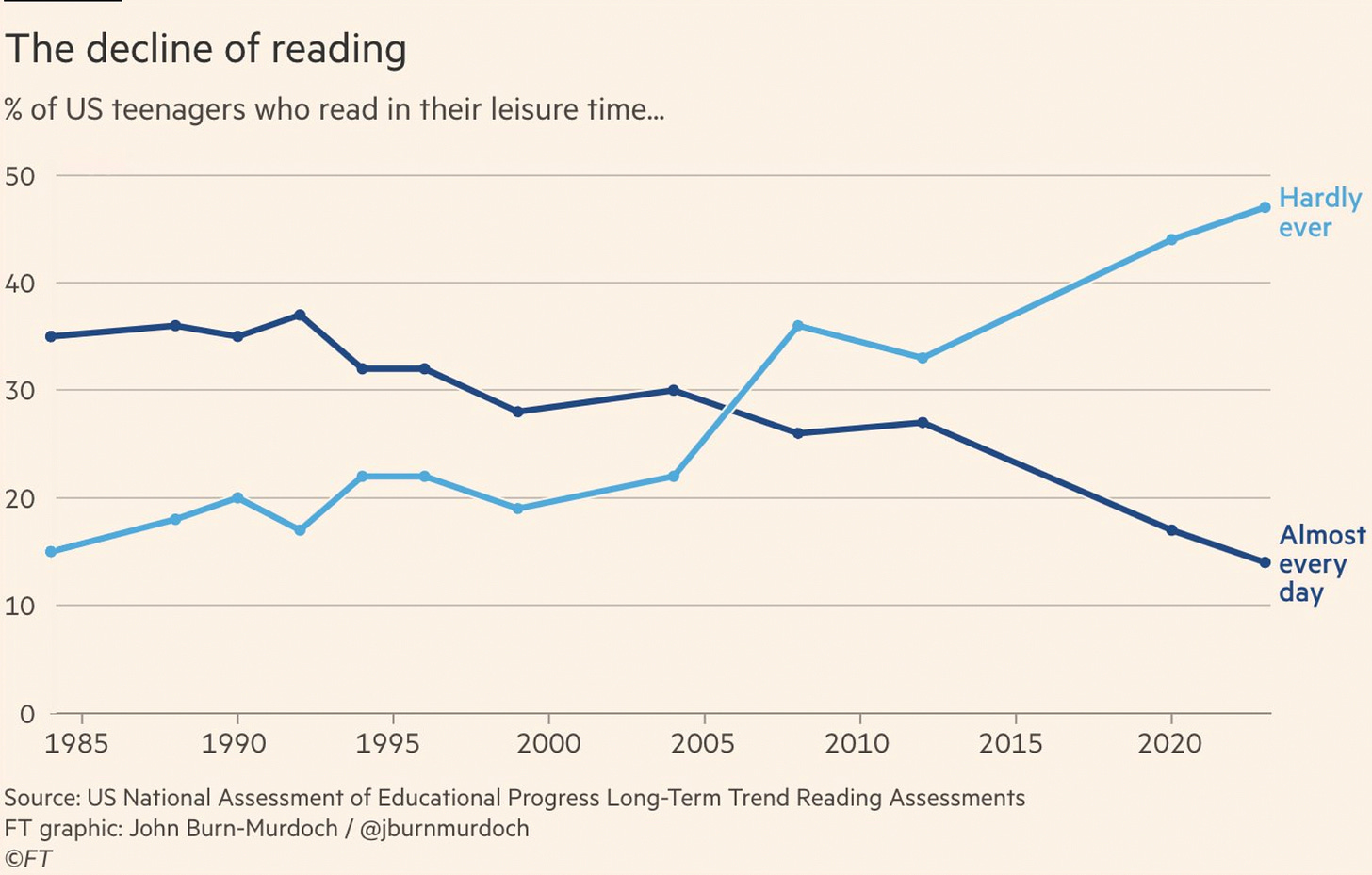
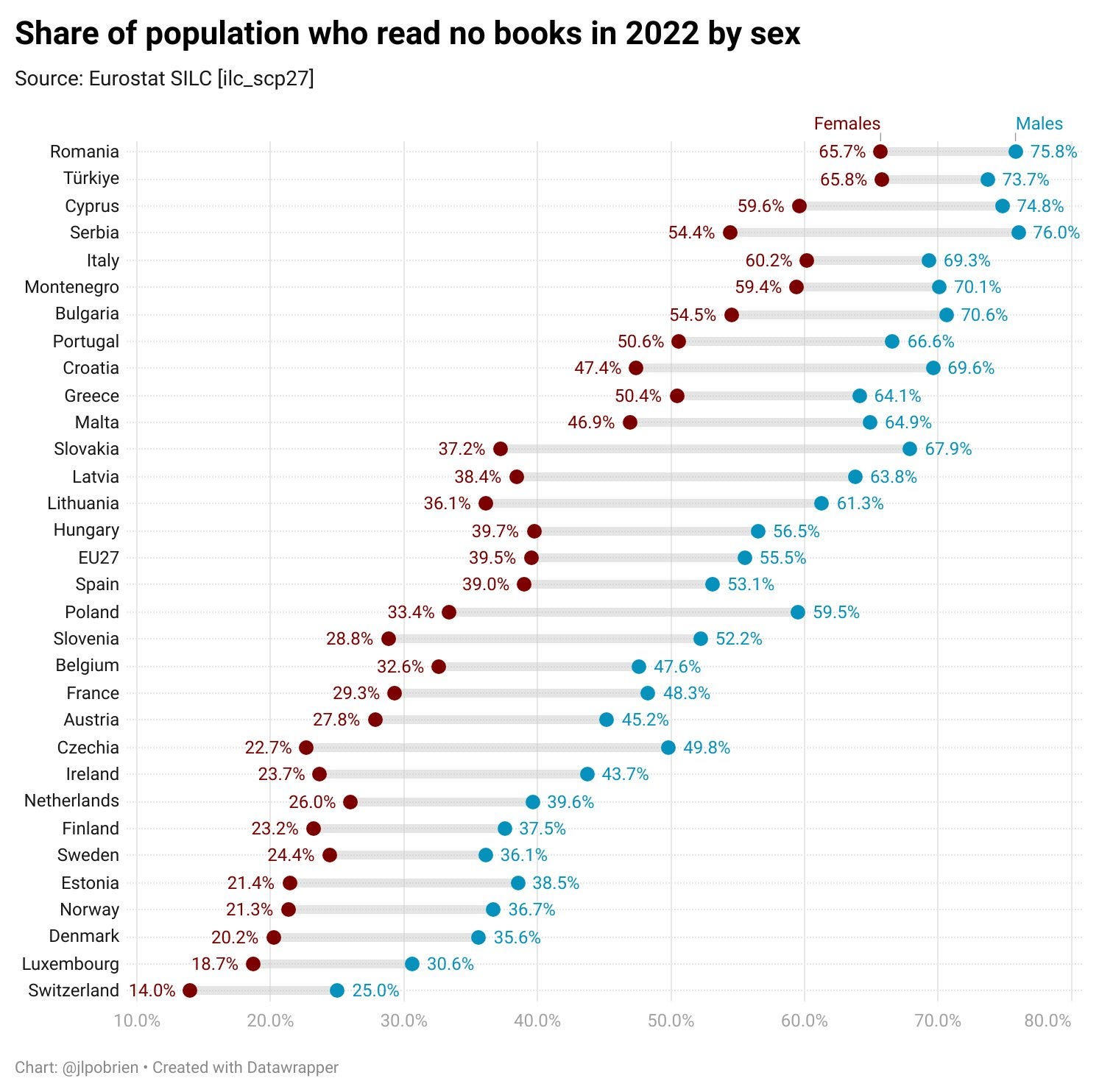
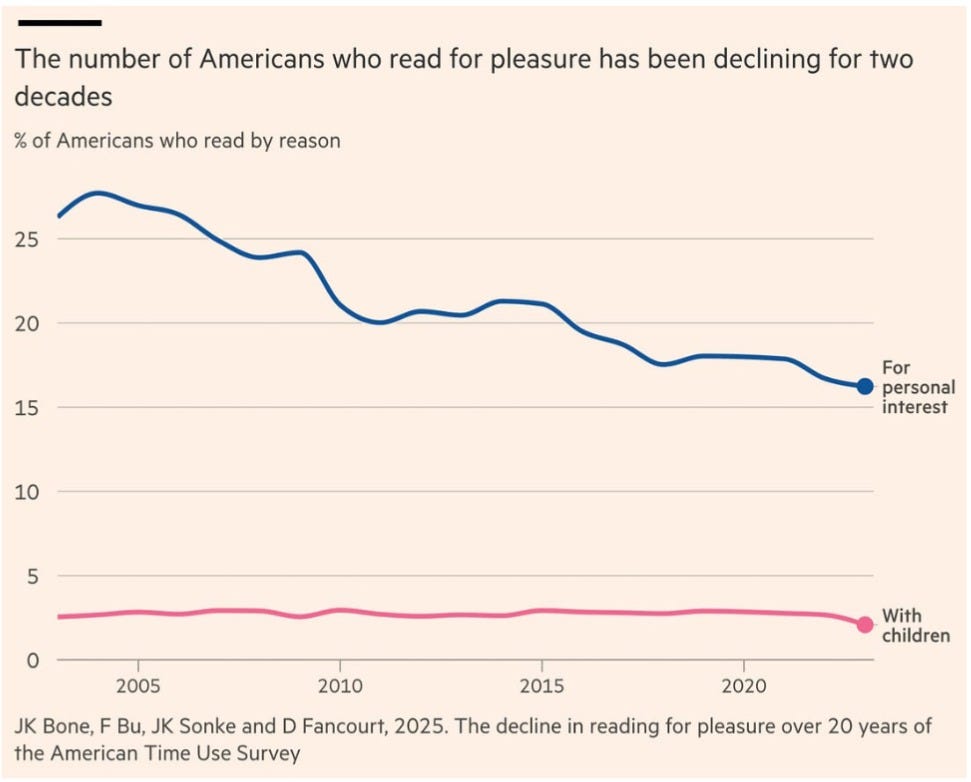
I don’t think this all means that we’re on an accelerating slippery slope to the hellscape of an illiterate future - Adam Mastroianni offers a useful and balanced counter-narrative on this5 - but I think it’s worth taking this problem seriously.
Put simply: it’s not as bad as it seems, it’s still worrying, and we could and should be doing more about it.
At a certain point, what the world needs isn’t yet another wailing lamentation on a future without reading or books, because all that does is just reinforce the problem, and narratives of inevitability that imply we have no say in whether we live in a post-reading world trigger my gag reflex. It appears that a critical mass of people agree that a world without reading would have extreme negative effects on cognition, art and aesthetics, childhood, education, mental health, politics, and human society - so perhaps let’s skip the continuous re-diagnosis and admiring of the problem, and propose some steps to address it, shall we?
What this situation demands is simple: more people engaging in and talking about their love of books, a vibrant culture of literary appreciation devoted to the unique art and pleasures of reading, and concrete proposals for how to get more people doing it. It’s encouraging to see some positive moves are already being made6, starting with the official designation of 2026 as The National Year of Reading in the UK.

But I’ve noticed a gap in the discussion about how we get there: inviting people to Go All In on reading is a start, but we could be much more clear, consistent and confident in communicating why reading matters and why people should do it more.
What follows is my attempt to apply some strategic and creative thinking to this problem, focus how people might talk about it, and some ways we might spread some positive social contagion around reading.
This will, eventually, form part of a longer series exploring the role and importance of reading, fiction and literature in a modern media landscape, but for today I’m going to mostly skip talking about why I believe reading matters, and get straight to an initial creative strategy to Make Britain Read Again.
Not for nothing is this Substack called Fiction and Persuasion. This problem brings together everything I’ve learned in my professional life (18 years writing brand and creative strategy for some of the world’s most interesting global companies across technology, news, entertainment, automotive, retail, and various other categories) in support of my passion - books. Stated in bald terms: this is an attempt to deploy the tools of persuasion in service of fiction.
My clients normally pay for this kind of thing, but I’m giving it away for free not as an act of charity, but as a gimlet-eyed attempt to grow the total addressable market for my own future work. I’ve just written a novel - more details on that to follow in an imminent post - and I would rather not see it published only to find myself the artisan of a dying craft with no audience to read it. I’m also the parent of an eight-year-old and so I have a great deal of skin in this game, as well as some hands-on experience.
A world where people don’t read isn’t one that I want to live in. I care about this problem a lot, and so should you. It might be big, but it isn’t insoluble: first, we just need to come to grips with it properly.
Before we begin, let’s do a quick two-way thought experiment. What’s our vision for victory here? If we want to build a mass popular culture of reading, how will we know when we’ve won?
Close your eyes for a few moments, and imagine a world where:
You get on public transport and everyone is reading books rather than looking at screens.
Book sales are soaring, and audiobook sales are booming7.
Reading nights are experiencing a resurgence
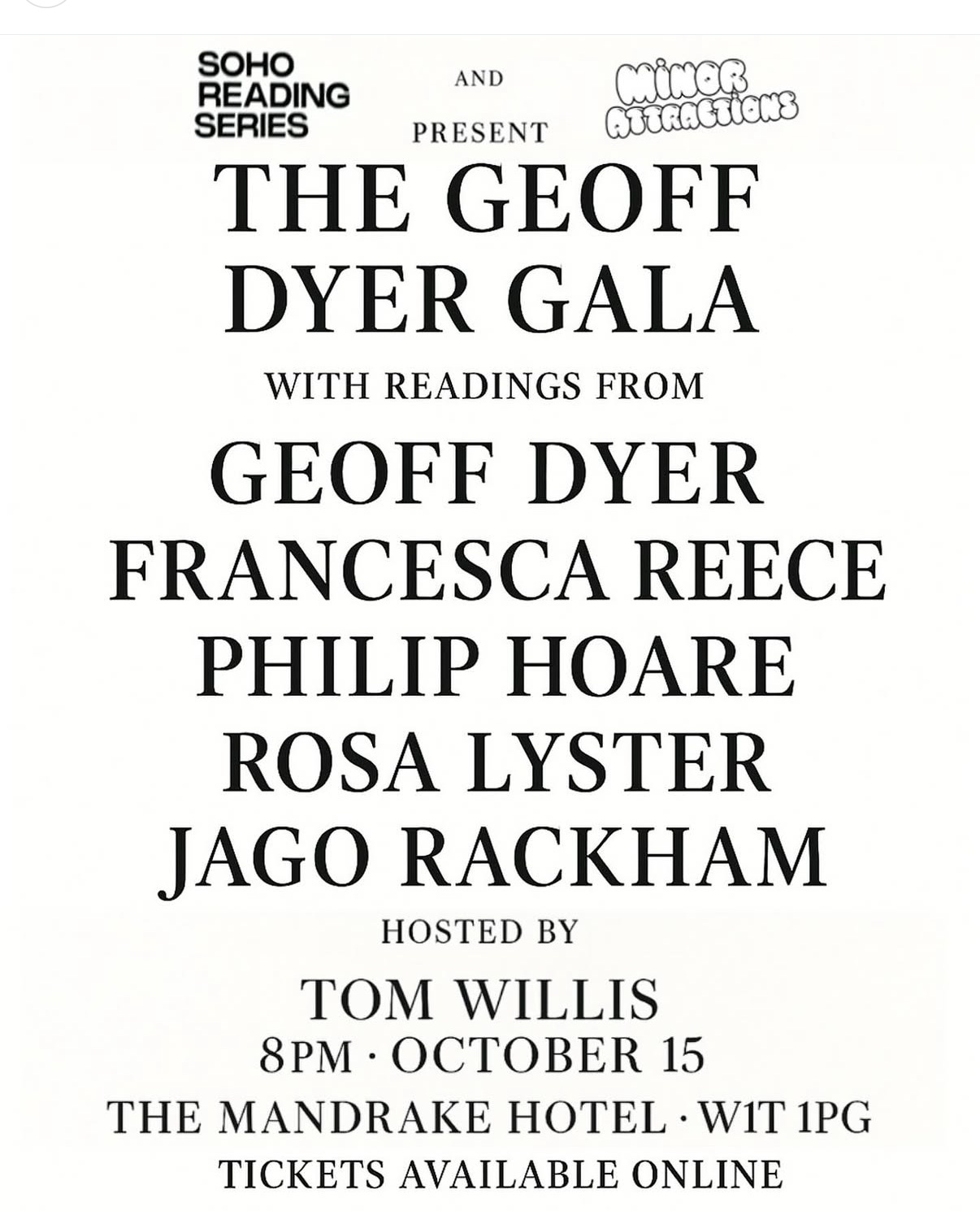
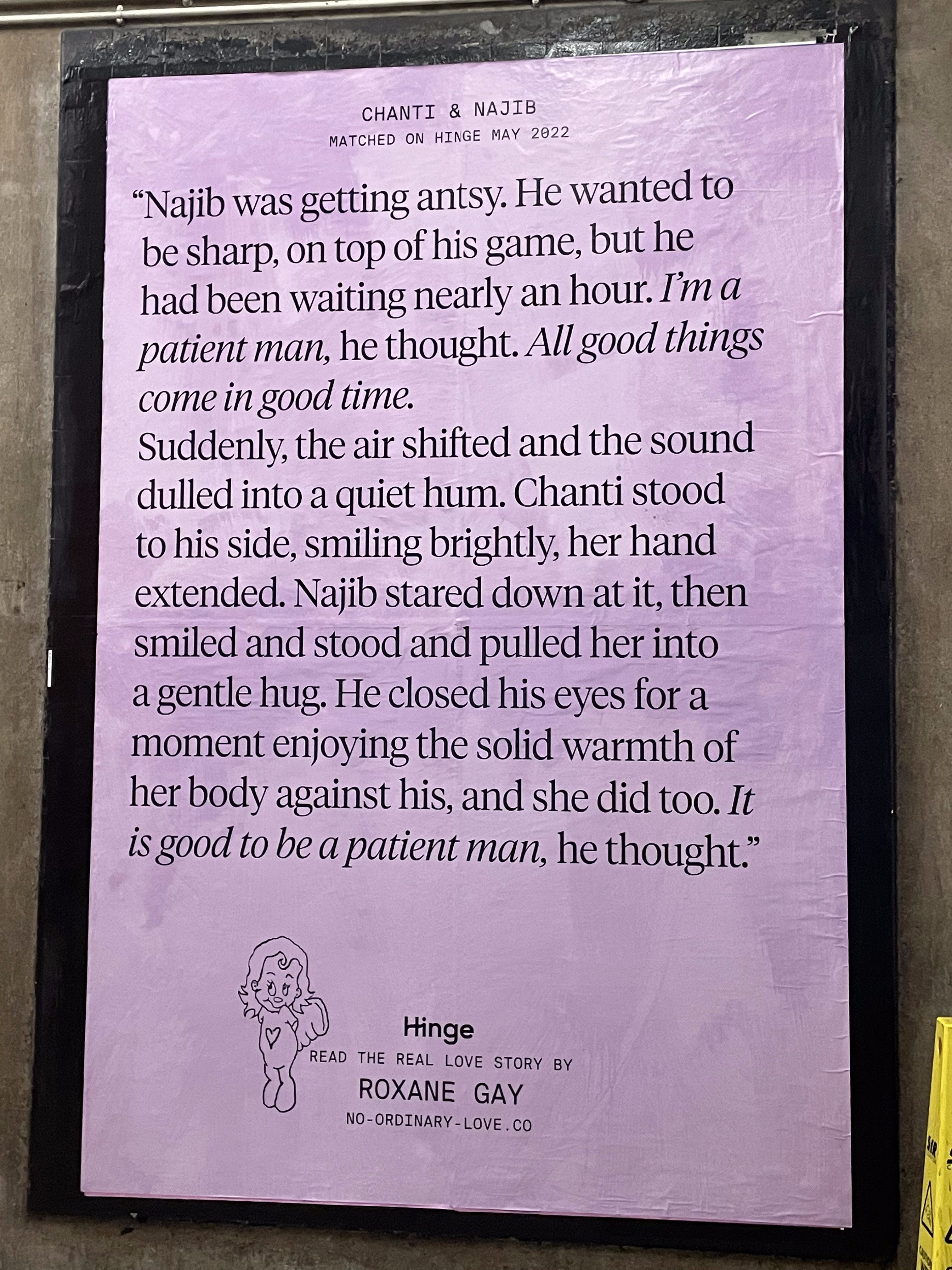
Literature is being used as a method of helping people find love, and get laid.
Printed publications and magazines are experiencing a minor resurgence8.
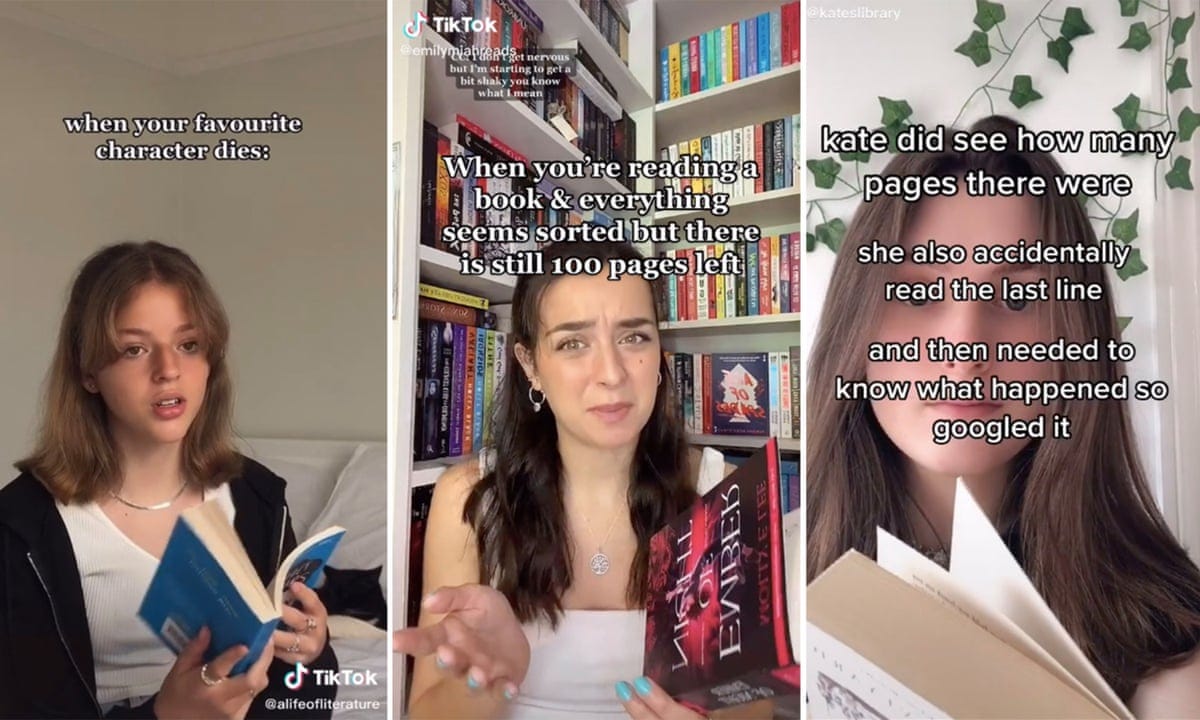
An entire corner of the world’s most popular social media is devoted to books.
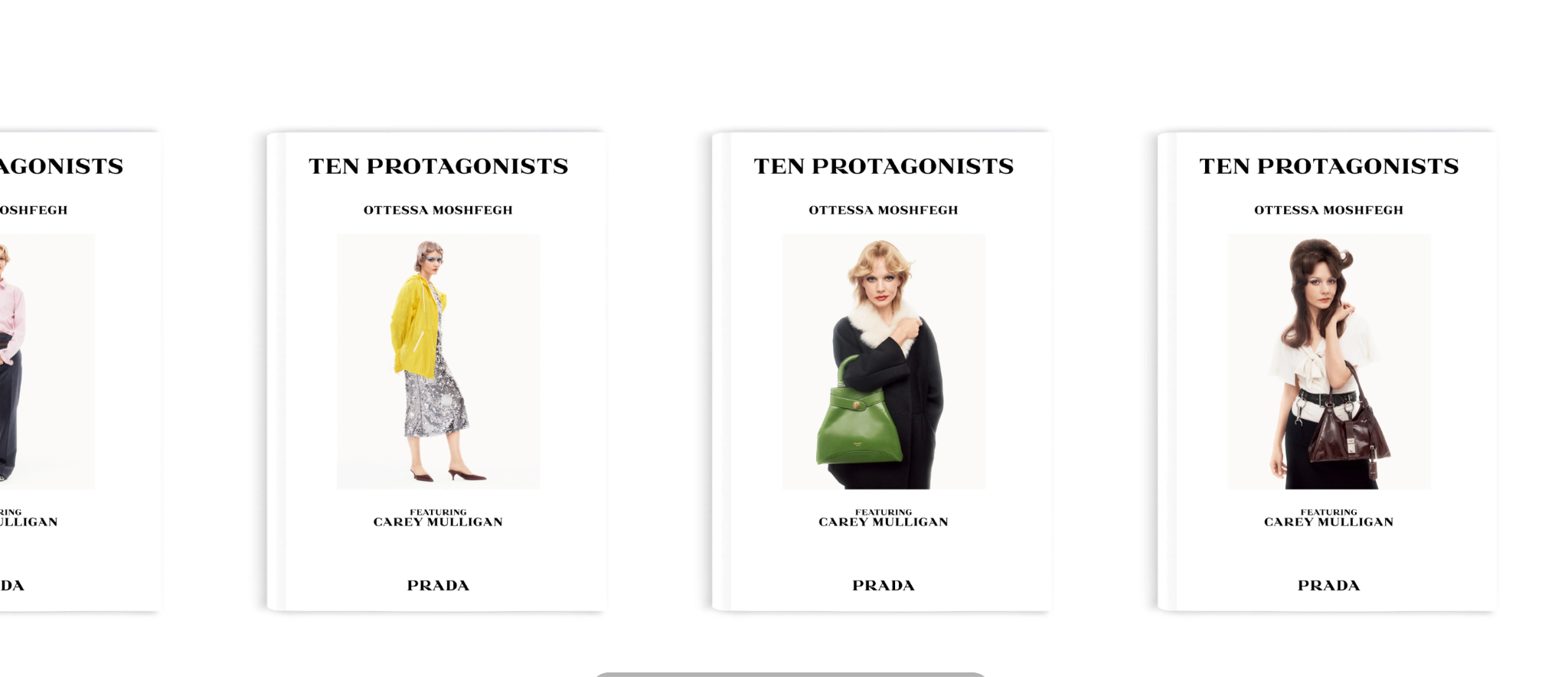
Luxury fashion labels are wrapping themselves in literature for cultural clout.

One of the world’s most famous pop stars is also one of its most prominent literary interviewers.

An entire social media platform exists for people who like reading, books and words, and has created a new wave of paying customers for high-quality writing9 (clue: you’re on it right now).
The good news is that, as William Gibson said, ‘the future is already here, it’s just not evenly distributed'. Literary culture is not going down without a fight. It may be that people feel the cultural and verbal poverty of much of modern life, and are attempting to grow their own flowers in the shit. But this qualitative resurgence of literary and reading culture is only happening in pockets, and at nowhere near a widespread enough level. People deciding that reading is glamorous and attractive and will get you laid is not enough to solve this issue.
The bad news is that quantitatively, even if you take into account the exponentially greater quantities of text that modern readers connected to the internet will consume in comparison to previous generations, the picture is much less positive.
So what’s getting in our way? Well, if you invert the problem and ask what sort of world we might create to stop people from reading, it might look and sound pretty similar to the one we live in today. As Ted Gioia has pointed out10, much of the direction, shape and speed of modern culture is antithetical to the kind of deep attention that reading both requires and fosters.
A great deal of the internet has shifted from text to imagery to video, and it’s unlikely that its next chapter fuelled by an AI which can also do your writing for you will naturally nurture the concentration necessary to encourage reading or deep attention.
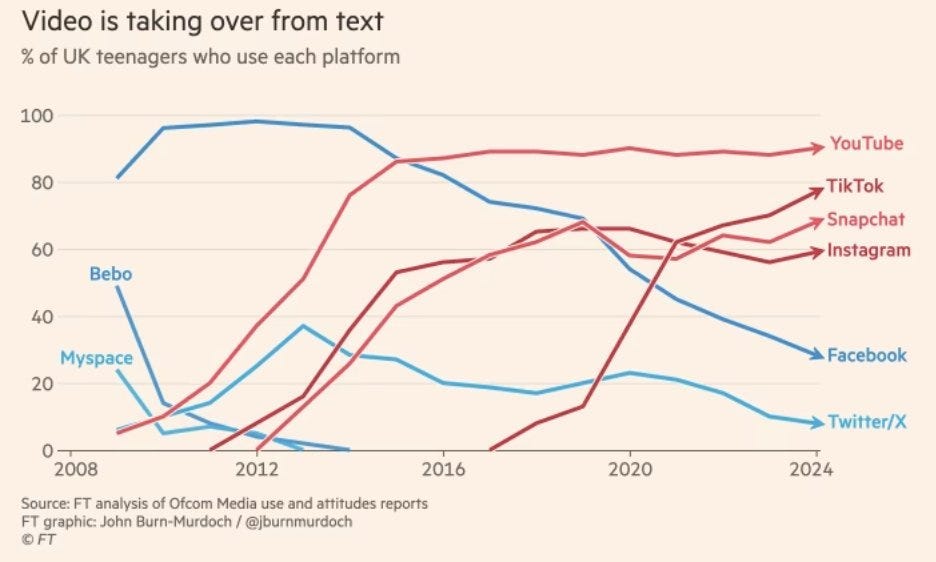
Much of this is downstream of attention, and whilst it’s not clear that smartphones are the lone offender, it stands to reason that a world flooded with easy-to-consume, undemanding and low-attention-processing media in short snippets can crowd out the time and space to engage with something that is, by its very form and content, designed to make you think.
Even if social media usage has peaked, a likely outcome if we continue on this path is a two-tier relationship with reading: one shrinking world of people who read deeply and buy a lot of books, and another larger body of people whose consumption of short-form media precludes the pleasures of reading. In this scenario, reading will become a cult, not a culture.
So before anything else, we need to think about where this war will really be won or lost. Apologies to embattled teens and twenty-somethings valiantly trying to reclaim their attention from a culture that’s shattered it into six-second pieces, but in the interests of focusing this strategic conversation, I’m going to leave you to fend for yourselves as a sacrifice on the field of battle .
It’s probably easier to raise a new generation of kids who like reading than weaning screen-addicted Millennials and Zoomers off habitual screen usage that has encroached into every corner of their lives, and the best time to stage such an intervention was about ten years ago.
All of this gets worse if we don’t win over the next generation of readers, and the front line of this battle is therefore the minds of children aged between 5 and 15
I think that the focus of the UK campaign around younger readers is absolutely the best place to begin. As the Jesuits liked to say: give me a child until the age of seven and I will give you the man. There will always be hope for reading in a world where children are doing it for pure enjoyment, and children that read for pleasure are more likely to grow into adults who do so too. And most importantly, childhood is not only the crucible of habitual reading for pleasure, but also the point in life where its joys and rewards are at their purest and most powerful.
Katherine Rundell, ‘Why Children’s Books?’, The London Review of Books11
I say this with some confidence because by the time I was ten I had read my way out of my local kid’s library and into the adult one, and the habit built in those many happy hours has survived all the distractions of adolescence and adulthood.
The call to arms here is pretty simple: don’t let today’s children be the last generation of readers.
However, rules about advertising to children mean that this is going to be a bit like marketing a toy: the children are the end beneficiary, but it’s the parents that we need to talk to about it, and if we can make the case for the parents we might get a few adults who’ve fallen out of the habit to fall back into it too.
So that’s the target audience. How do we do it?
I’m approaching this through a creative communications/behavioural change/advertising lens, and here in the UK there are certain interventions which might come out of the government review that will be policy-focused rather than communications-led; we appear to be moving towards smartphone bans in many schools, and blocking children from using social media before a certain age is being discussed too. But above all things, the most important communications task is this:
Parent and carers are the shock troops at the frontline of this new reading revolution. Readers are made in the laps of parents and close family, and I am quite happy to admit that the reason I read a lot is not because I possess some special übermensch willpower that permits me to abjure shameful internet slop in favour of higher literary pleasures, but simply because both my mother and father encouraged me to do so from a very early age, and that kind of habit is hard to break. This is why the clearest proxy metric for a child that will turn out to be a reader is still that they grew up in a house full of books.
But the main issue here is that parents aren’t reading to their kids, often because they find it laborious or don’t enjoy it.
If parents enjoy reading themselves, children are 25% more likely to be read to every day and 40% more likely to enjoy reading themselves. But a survey of parents and carers of children aged 0 to 7 found that more than 1 in 3 (35%) said they didn’t enjoy reading12.
Amongst parents of children aged 0 to 13, just 2 in 5 (40%) agreed that reading books to their child was fun13.
At the same time, National Literacy Trust surveys of parents of children aged 0 to 5 have found a steep decline in the number of parents who say they read daily with their child over the last five years, decreasing from 2 in 3 (66.1%) in 2019 to 1 in 2 (50.5%) in 202414.
This is no doubt more complex once you overlay things like household income, proximity to libraries, neuro-divergence or learning difficulties, availability of books that represent the reader, number of languages spoken in the household, parental occupation and family background, etc. Even so, whilst there might be some friction and cost in the process of buying books, but reading doesn’t have to be expensive. Being a reading household is something that, in the UK, is still within reach of a large swathe of the population.
So the first thing we have to ask of all parents is the simplest, but also the hardest: that they use screens as a crutch less.
When we default to constantly putting our kids in front of screens for entertainment , we are betraying criminally low expectations of them. We may tut disapprovingly at that old Victorian notion that ‘children should be seen and not heard’, but when all we can offer to kids for entertainment is little more than audio-visual sedation, are we doing any better? We’re effectively just telling them to sit still and shut up.
As a parent, I know that there are endless very good reasons to do this - you are tired, you’re working to a deadline, you’re cooking, you are tired, you are ill, you just want some peace and quiet, you are tired - but if you do it over and over again without encouraging them to read as a counterweight, you’re reducing their chances of ever picking up a book for entertainment.
The painful truth at the heart of this discussion is that parents without the capacity or willingness to tolerate boredom, or the imagination of how to entertain themselves in ways that don’t involve a screen, will likely raise children with the same issue.
Children, particularly once they get above a certain age, are keenly attuned to hypocrisy from their parents, and so there’s little point in parents espousing the joy of reading for ten minutes before bed if they’re on their phones constantly the rest of the time, and aren’t visibly reading for pleasure otherwise. That doesn’t, however, mean that other technologies are always the enemy.
Not all technologies are created equal, and not all other media are zero-sum distractions from reading. Comic books, kids’ magazines, audio players like Tonies and Yoto, picture books, e-readers, and any other media that accustom children to seeking entertainment from words are useful tools.
The National Literacy Trust laying out a definition of multi-modal reading15 is a useful first step in this discussion. We need to be less purist about reading-adjacent activities that might foster a love of both the spoken and written word.
This also reflects on the flipside, which is how what media they consume when they’re not reading affects their ability to read. It’s worth thinking about what a child watches, and where. Is this building their attention span and fostering interaction, or merely shutting them up for an hour? Is it likely to be something that makes their ability to maintain attention on a book more or less likely?
Not enough attention, in my mind, is paid to where and when people start reading. Writers like David Mitchell, Michael Chabon and J.G. Ballard have all stated that their love of reading started with genre fiction when they were very young, and that the love of words acquired there led them gradually upstream to some of the greats of world literature. As far as I’m aware, there’s still little hard data on what books/genres are the most effective on-ramps for children and young adults to graduate into becoming regular readers, and I suspect that the only organisation who can answer this accurately and backed by data is Amazon.
Either way, the right attitude here is simple: abandon purism and snobbery. Anything that fosters a love of reading in children or young adults is fair game, and those will include things that will not make it onto the curriculum in many schools.
Given that this country has one of the most expensive childcare costs in the world, local libraries are a cheap and easy way to entertain a child and therefore a big potential lever in getting families to do it more.
The UK has 3000 libraries, but in terms of the quantity, investment and access we’re lagging behind many European countries. France has about 24 libraries per 100,000 people, Finland 13, and the UK clocks in at 6. A recent estimate was that funding per person in the UK at £10-12 per person has fallen about 50% since 2010, and the cost of that decline is fewer libraries, open for shorter hours, stocking fewer books.
A recent commitment of £27.5 million for the Libraries Improvement Fund will help, but if we’re serious about getting people to read more this is a big pillar of any attempts.
So, these are some important bits of strategic bricklaying in how we might tackle this, but let’s get to the heart of the matter. The Mission Statement and Theory of Change of the National Year of Reading is that more people see reading as a personally meaningful, modern and social activity.
The question, then, is what exactly a campaign might say to make that perception shift. This is, fundamentally, about answering a simple but difficult question.
For those of you reading along who don’t work in advertising or communications, the best brands and campaigns for behavioural change are built on something big, simple, interesting and true.
Nike serve the athlete in everyone.
Apple speak to the creative person in all of us.
Lego are about imaginative play.
These ideas are not difficult to understand, have inspired decades of interesting integrated behaviour, and can be explained to an ordinary person in a pub without resorting to wanky language or bullshit.
Reading deserves something similar. What’s the central crux of the argument for what reading alone can do for people, and how do we make that interesting? We’re looking for something simple, big and true to communicate about reading that kids will love, and which parents can buy into.
This is the tricky part, because of the essentially circular nature of the question: the best argument for reading is reading itself, and any communications will always be a diluted alternative to the experience of doing so.
Even so, as part of this discussion a range of different arguments are being made, from the well-meaning but misguided (talking about its therapeutic benefits) to the ludicrous but interesting (position it as a vice so that kids will want to do it as an act of rebellion16). Even those which are true may not necessarily be effective levers of influence or behavioural change for parents or for kids. Here are a few that I’ve seen discussed:
Focus & Immersion - reading is a high-attention processing medium versus video-based low-attention processing media like television or social media, and so reading exercises your concentration and ability to focus.
Therapeutic & Emotional Benefits - reading is the equivalent of a warm bath or therapy, and will soothe your soul in the face of the volatility and unpredictability of the world. People who read are far less likely to be bored or lonely.
Learning About the World - Reading is a form of edutainment, and you will take in a great deal reading that might actually stick in comparison to learning via other media.
Reading makes you a better person - reading improves you on a moral and aesthetic and perhaps spiritual level.
Social Mobility - Reading is a simple habit with life-changing outcomes for social progress, educational attainment, and success in life.
Although I don’t believe that reading automatically makes you a better person and dislike it being positioned as a therapeutic practice, some of these things are both admirable and true - but that doesn’t necessarily mean that they should be what we talk to people about when it comes to selling reading.
I was interested to see Penguin Random House’s head of brand and communication raising the same question recently.
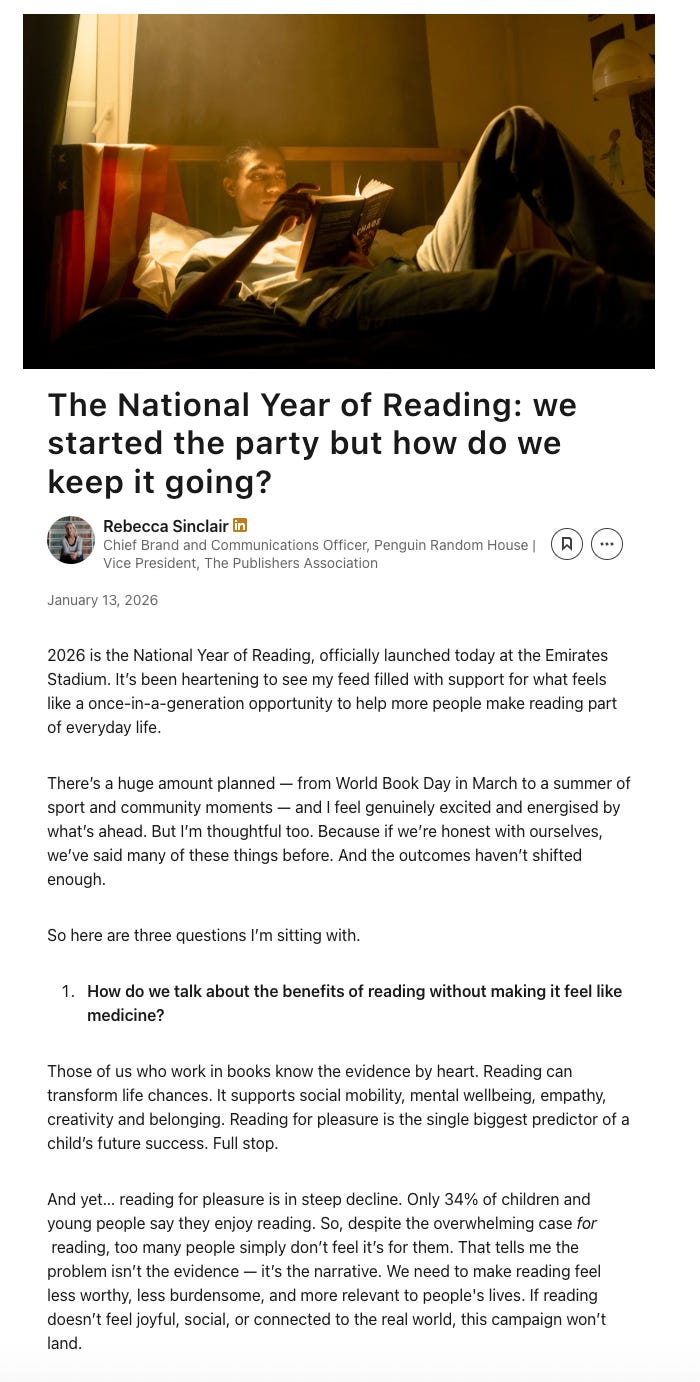
So whilst reading is all 3 of entertainment, education and imagination, the The fundamental question here is which to focus on. Let’s consider these 3 broad ‘creative strategies’ for how we might talk about reading, along with some inspiration and direction from ways that others have attacked this problem.
So, let us turn to the first of these potential creative strategies:
Reading for pleasure in the early years has four times more powerful impact on a child’s progress across the curriculum at age 16 than parental education or socioeconomic status17. There are plenty of people who view reading as purely informational, and want their children to read because they view doing so as the guaranteed edge in a world where they’ll have to start early to get ahead. Here’s an example of this strategy from a Kinokuniya, a bookstore in the UAE, that was apparently quite successful.

Here are some older examples from Waterstones, aimed at selling reading to adults.

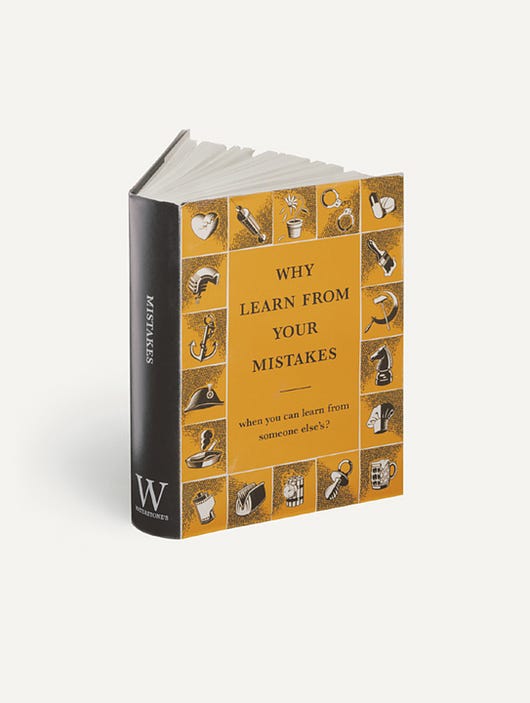
Whilst reading is a remarkably effective tool for social mobility, it deserves a different angle to this, especially when kids are concerned. The idea of parents forcing reading on their children solely as a source of competitive advantage is a bit saddening, and I’d rather not position it as a performance-enhancing drug for the long rat race of capitalism.
Its appeal should be much broader and simpler than that. Reading is one of the most basic and accessible artforms in the world. Life can’t be all bad when for the total of bus fare and a library card you can get access to some of the greatest stories that humans have ever told.
Secondly, the fact that it’s the most intellectually beneficial form of entertainment and contains wisdom and intellectual content shouldn’t obscure the fact that the minute that we start positioning it to children as the equivalent of eating their greens, we’re fucked.
We need children to read for pleasure, which brings us to the next potential territory.
Here’s a pretty good example of selling reading as a form of entertainment, not education, from Amazon and ad agency Droga5.

(Bear in mind that it’s easy to make and fund work like this when the sales of Kindle make you a de facto category leader and you have the marketing budgets of a tech company, not a publisher, governmental organisation or non-profit.)
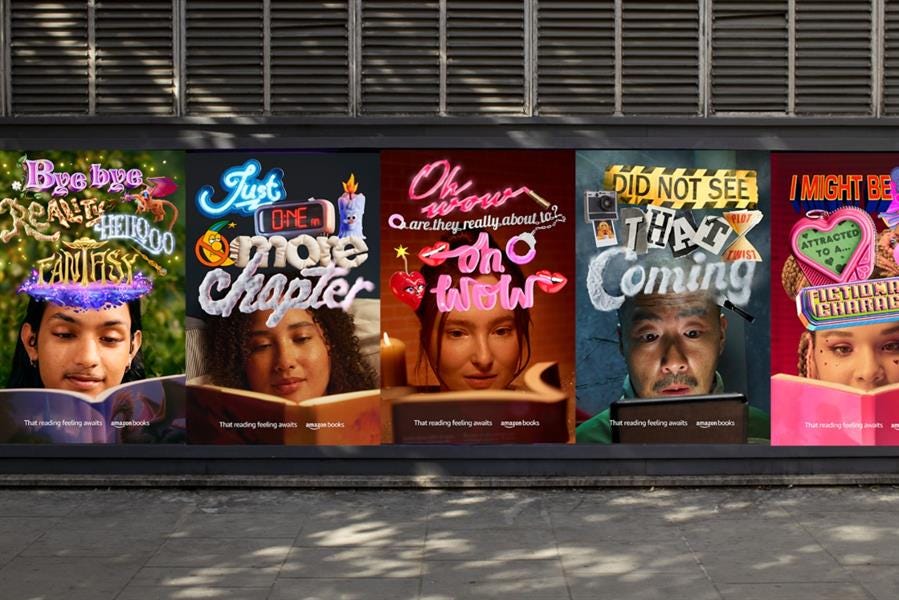
This, to me, is getting warmer. It’s treating reading as entertainment, and it’s focusing on the emotional (rather than educational) impact on the reader, and I think is aimed at younger (likely young adult) readers.
This campaign evolved into a second year, which suggests that it was in some way effective as an approach. However, I think it’s still under-selling books. I’d like to aim for something more active, more child-like, and less passive. To truly do reading justice, we need to isolate and amplify what Maryanne Wolf, in her excellent book Proust and The Squid, calls ‘the generative quality at the heart of reading.’
Books are high-attention processing media, and unlike almost every other form of entertainment available, most of which will feed you the complete story via short-form visuals, reading asks that the audience actively completes the story in their head. As Derek Thompson puts it, ‘a book is a co-production. A reader both performs the book and attends the performance. She is conductor, orchestra, and audience18.’
When a child reads a book, they aren’t just passively consuming information: they’re interacting and regenerating the entire story through a series of interlaced cognitive, perceptual and neurological processes. This is pretty close to magic.
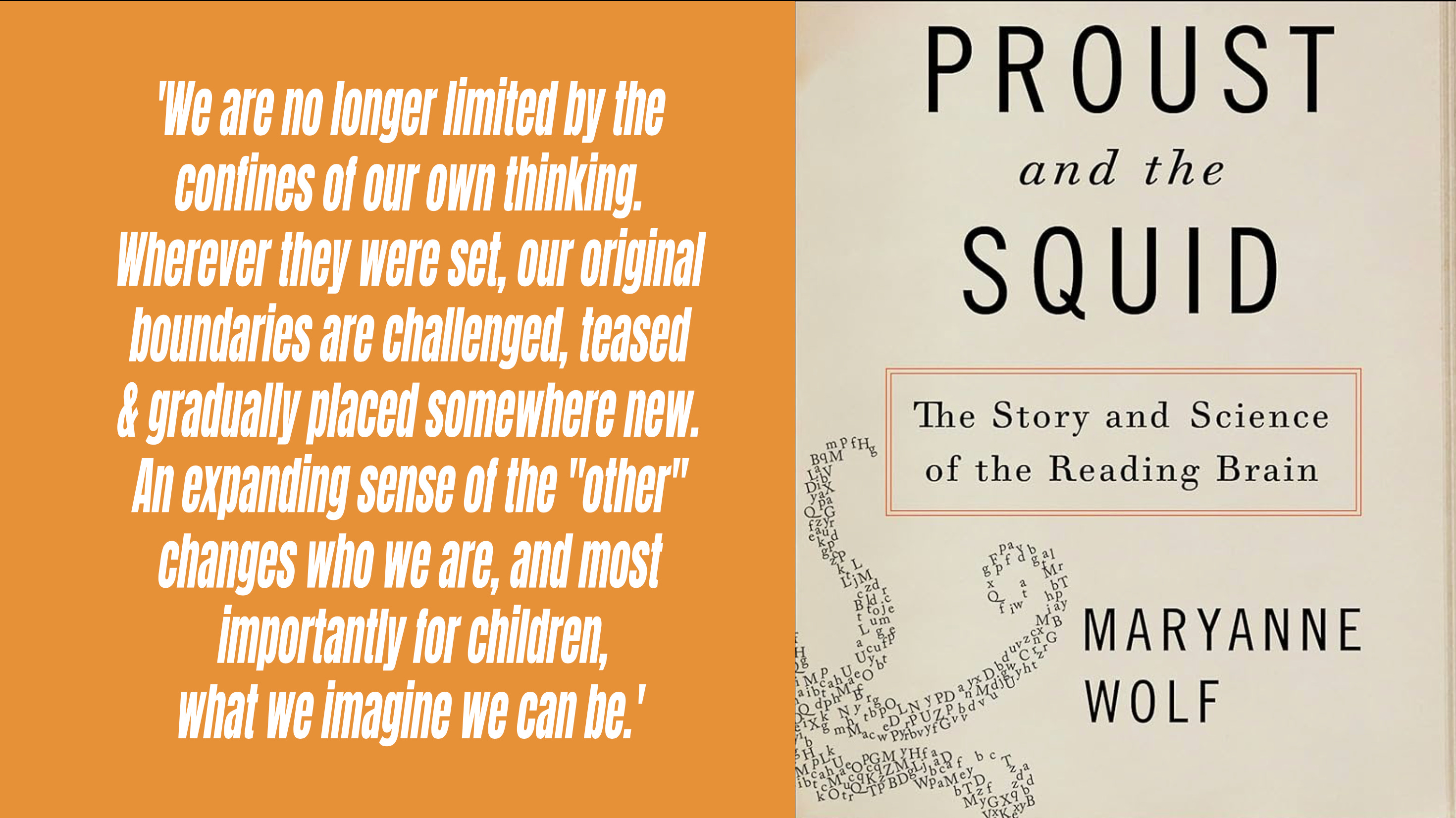
Ernst Gombrich called it The Beholder’s Share19. If you want another angle: this is what Joseph Conrad was writing about when he said that it was duty ‘to make you hear, to make you feel, above all to make you see.’
If Ernst Gombrich and Joseph Conrad aren’t persuasive enough for you: when I asked my daughter what she would say about reading to convince a friend her age to do it more, her response was that when you read ‘it makes you imagine things’. Every book a child read fuels their imagination, as captured by this cartoon below.
Audible recently ran a campaign under the idea ‘There’s more to imagine when you listen’ which gets pretty close to this in concept. I find it quite telling that an organisation like Amazon has effectively landed on a similar creative approach twice, once through Kindle and once through Audible.
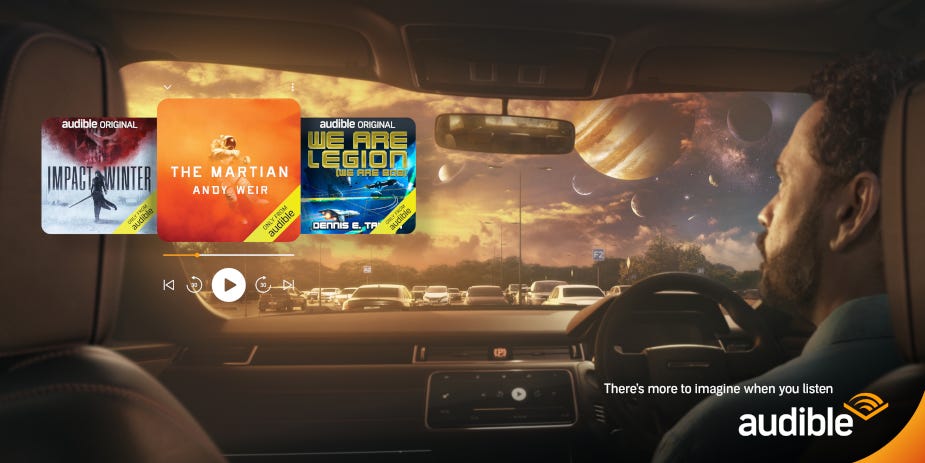
This approach positions reading as the mental equivalent of Lego, a toy that almost all parents feel very good about their children playing with, most children love, and which most crucially has built a long-lived and multi-billion-dollar business off a core positioning around imaginative play. Reading is the active mind at play, so the best and truest angle into why children should read is not in talking about education, social advancement, or pure entertainment, but through the lens of the active imagination.
Whenever a parent sits down to read with a child, they are engaging in a true act of shared imagination. They’re building their child’s mind, and also perhaps re-engaging with the child within that might have been beaten out of them by the demands and responsibilities of adult life.
Every time a child opens up a book, they’re opening up their imagination too.
If we want to lean into the shared aspect of this, we might try inviting parents to share in their child’s imagination and become a kid again. Or, if you want a more provocative angle into this, aimed squarely at parents and their guilt reflex: a child who doesn’t read is a child using only half their imagination.
Talking about reading through the lens of the active imagination also allows to create a messaging architecture that brings in other, secondary benefits that might be of importance to different audiences:
Social Mobility - Reading helps you imagine a better future for you and your family.
Fostering empathy and expanding life experience - Reading helps you imagine the lives of other people, walk in their shoes and understand them better.
Building creativity and lateral thinking - reading helps you imagine new ideas and see the world from a fresh perspective.
As important as what we communicate is the tone and manner in which we do it, and where this might show up.
Just because this is a worthy cause and we’re talking about something of societal value doesn’t mean that it has to be dull. I’m a bit bored of hearing well-meaning people position reading as a semi-sacred pursuit, and would much rather have this delivered in the irreverent, anarchic and slightly chaotic sort of humour that appeals to children. As a palette cleanser, read almost any Roald Dahl book or watch the musical adaptation of Matilda.
Secondly, let’s talk about how and where this campaign should show up. Co-ordinating with libraries and schools is vital, but these are already bookish spaces, and the problem is what’s happening outside of places where books are boss. Dependent on budget, there are plenty of potential behaviours that might naturally fall out of a platform like this which would take books and reading culture out of the library and classroom and into wider British culture.
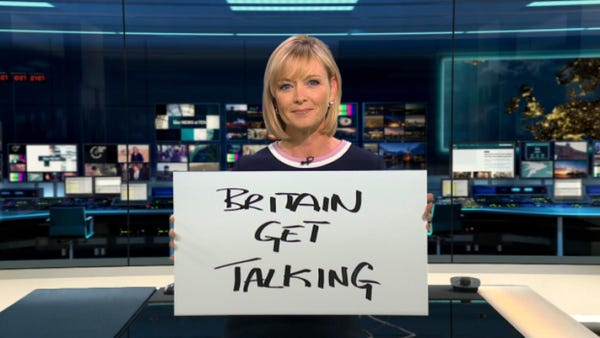
Harness the tools of distraction for the cause of imagination - if we’re talking to adults, it’s absolutely fair game to show up in their social media feeds and on television telling them to switch off and read with their kids. A few years ago, ITV interrupted Britain’s Got Talent for a minute of silence to prompt a national conversation about childrens’ mental health. What would happen if a major broadcaster roadblocked after-dinner programming to turn pre-bedtime back into family reading time?
Extends the world of toys, games and shows into books - tapping into fandom or love of different entertainment properties or passion points and making them a gateway into a deeper relationship with reading is a massive opportunity. 2 in 5 children and young people were motivated to read when material related to a favourite film or TV series (38.1%) or matched their interests or hobbies (37.1%)20. This might mean books that align with K-Pop Demon Hunters, the England football team, or Minecraft, but treating books as a deeper and richer form of engagement with their favourite fictional worlds is an ideal way to present them as a counterpoint to other forms of entertainment, and also to immerse them in all the deeper detail and context that get removed when material is translated from books into films and movies.
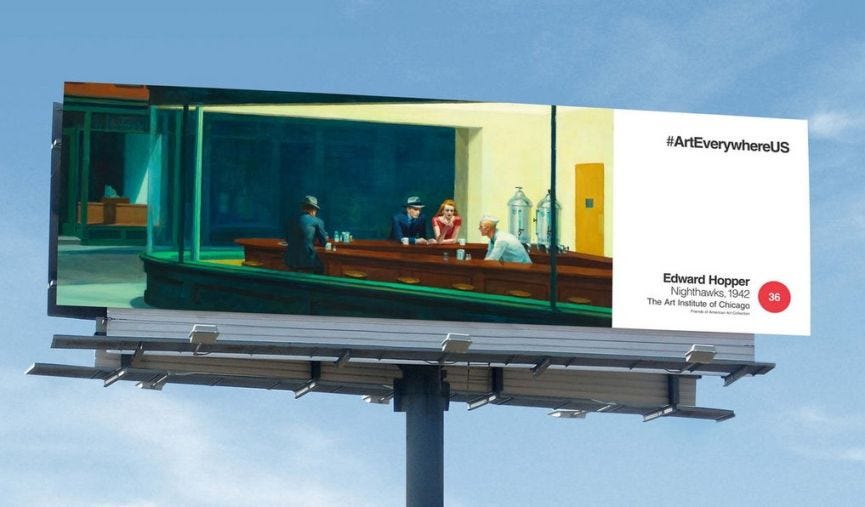
Hijack media to make books more visible - in 2013 the UK & US ran nationwide Art Everywhere initiatives in partnership with various out-of-home providers, purely to promote appreciation of art and beautify public spaces. For a while, advertising space became art space, and the UK was all the better for it. What if we did this with some of the best stories that a family could read together?
If you really want to be radical about this, here is my final and most ludicrous proposal: what if we asked companies who make money off our attention to pay a tax that might be reinvested in media and initiatives designed to help people read?
If you’ve made it this far, you’re likely someone who cares about this problem. It’s worth stating that all of the above is just the start of a conversation, was written using data & insight that’s already in the public domain, and it may well be wrong. You might disagree; you might be someone who knows far more about this than I do, has access to better information, or has domain-specific knowledge of how to solve a similar problem and can offer the benefit of experience. But if you’re reading this, and know anyone that is involved in this initiative who might be interested in chatting further, I’d love to help in any way I can. Please drop me a line.
Thank you for reading.
https://readingagency.org.uk/wp-content/uploads/2025/10/State-of-the-Nations-Adult-Reading-2025-Overview-Report_final.pdf
https://www.thebookseller.com/news/audiobook-sales-reach-record-268m-while-fiction-soared-in-2024-pa-report-reveals
https://nlt.hacdn.org/media/documents/The_future_of_literacy_Report_2025_Compressed.pdf
Derek Thompson, Hitmakers: How Things Become Popular
Ernst Gombrich, Art & Illusion
https://literacytrust.org.uk/research-services/research-reports/children-and-young-peoples-reading-in-2025/
No posts
Comments
Nothing yet. Say the first thing.
Sign in to join the conversation.