
Here’s what you’ll find in this issue:
How ChatGPT, Gemini, and Perplexity gate risky actions before the model “just does it”
4 AI UX patterns worth stealing
A 30-second tip: show the draft, not the decision
3 AI prompts to try
Fresh AI product teardowns and guides if you want to go deeper
The most interesting AI UX right now is not smarter models. It’s where products put the human back in the loop.
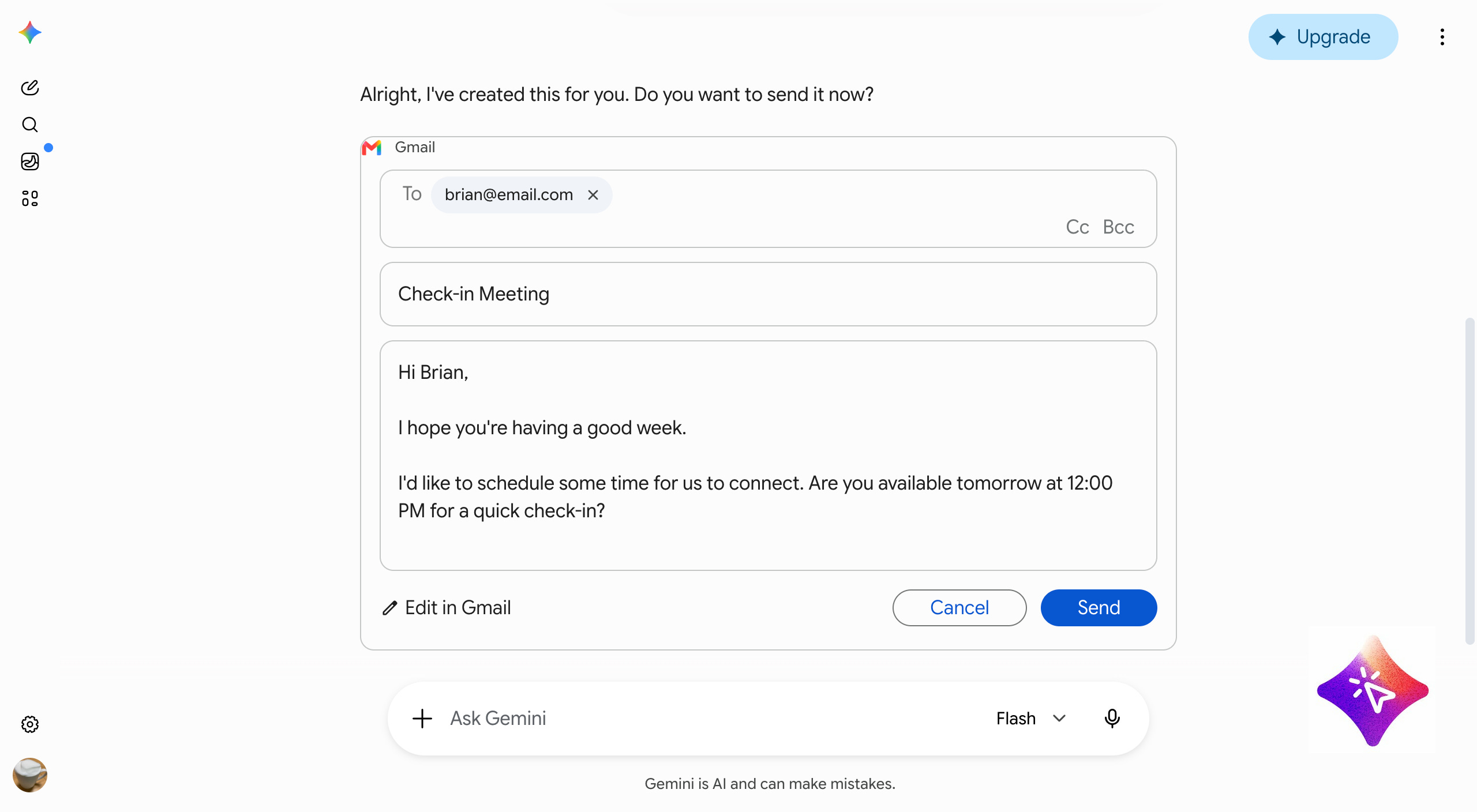
ChatGPT shows an editable email draft before Send. Gemini does the same in Gmail, with Cancel / Send made obvious. Perplexity goes further on tools: allow or disable capabilities one by one instead of one scary “yes to everything.”
That pattern is Human-in-the-Loop. The job is simple: let the model propose, let the user approve irreversible steps.
If you’re shipping agents, connectors, or anything that can send, buy, delete, or post, start here.
Read the HITL build playbook →
Compare how products handle it →
Human-in-the-loop — Approve before irreversible actions.
Citations & sources — Grounded answers need inspectable provenance, not a footnote dump.
Output artifacts — Keepable output beats a chat blob you can’t reuse.
Granular consent — Per-tool allow/disable beats all-or-nothing OAuth.
Browse the full pattern library →
If the AI is about to take an irreversible action, show the artifact first. Don’t ask “Send this email?” with no body. Show the draft. Let people edit. Then offer Send.
People trust what they can inspect. They reject what they can only approve blindly.

ChatGPT human-in-the-loop — Draft card + explicit Send
Gemini human-in-the-loop — Compact draft summary in Gmail
Perplexity permissions — Per-tool allow and disable
AI Feature Design Brief — Spec behavior, trust patterns, and user control before you ship an AI feature.
AI Error Handling UX — Map failure modes, recovery paths, and messages that keep trust when the model breaks.
Competitive UX Analysis — Tear down ChatGPT / Gemini / Perplexity-style flows and steal the approval gates that work.
This digest is an experiment. Reply with:
keep— more of this short weekly scanessay— go back to one long postboth— digest most weeks, essay when there’s something bigger
Thanks for reading,
AI UX Playground
No posts
Comments
Nothing yet. Say the first thing.
Sign in to join the conversation.