
Confession.
AI Search is changing at breakneck speed. I’ve been tracking it nonstop for 3 years and I have A TON to share.
Problem: after months juggling formats (bi-weekly, weekly, thematic), languages (French, English), and platforms (Substack, LinkedIn)... I was running everywhere. And you didn’t know where to find me anymore.
So, reset.
Starting today, The AI Content Strategist becomes THE newsletter on AI Search. It’ll be dense. I’m sharing my daily curation of everything I track across two continents from the best SEO, content, and marketing communities.
The essentials. Decoded. Actionable.
Dense, direct, useful (I hope!!).
Twice a month.
Why this change?
Because AI Search has eaten marketing. It’s no longer a tech, SEO, or editorial topic. It’s a C-suite issue. My conviction from 15 years of content marketing and 3 years of AI Search is becoming reality. Fast. Hard.
The content is getting denser. I’m getting denser too.
Here are your new sections:
🟣 Top AI Search News – The 4-5 major news items of the month
🟣 Top Research & Data – The studies/research that will help you
🟣 AI Search Tech Corner – Tech for non-techies
🟣 Search Everywhere Optimization – Beyond Google
🟣 GEO Strategies – GEO strategies for the C-suite
🟣 GEO Tactics – Field tactics from experts
🟣 Must-Read – THE essential content
🟣 SEO vs GEO – The naming war continues
🟣 AI Search Tools – Tools that matter (mostly free)
Welcome to The (new) AI Content Strategist.
Ready? 👇
👋 I’m Karine. I help you adapt your content strategy to AI Search and GEO through a masterclass and an AI Marketing community. You can sign up for both here
OpenAI officially announces advertising is coming to ChatGPT for free and “Go” tiers. Ads will appear in conversations as contextual sponsored suggestions. OpenAI promises ads will be “clearly marked” and “respectful of user experience.” Progressive rollout planned over the coming months.
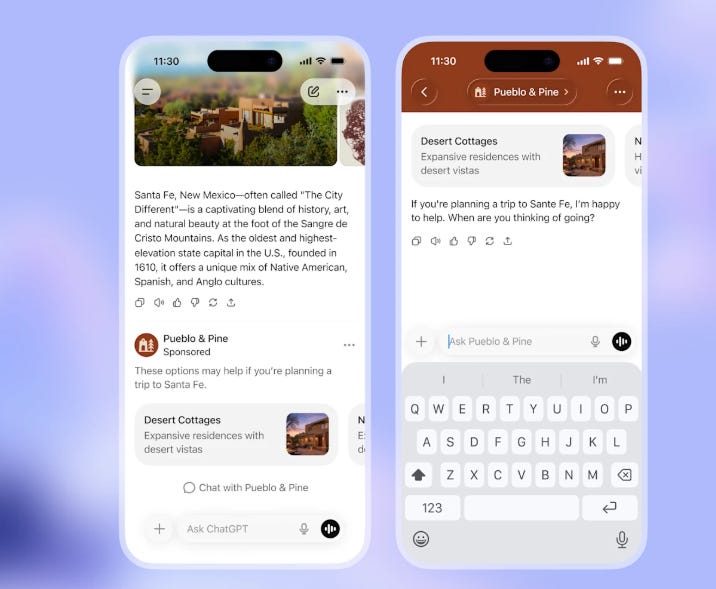
This is huge. It’s clunky. But not for the reasons you think. Until now, ChatGPT’s advantage over Google was... no advertising. We chatted with our favorite bot without interruption, confusion, or intrusion. Google walked on eggshells to avoid driving users toward a “clean” competitor. And we appreciated the freshness and real alternative.
Well, that’s over. OpenAI falls in line. And subtly just gave Google a pass that could really seal the match. ChatGPT no longer has this commercial neutrality advantage. And the race for Ads in AI search is officially on. Was free AI Search a healthy parenthesis before what’s coming? Should we prepare budgets to take positions now in the era of paid AI Visibility?
Quite possible.
But just as Google won the Search battle against Yahoo! by introducing “natural” results in its search engine back then (SEO was born like that), it’s very possible Google will win the new AI Search battle this time against ChatGPT thanks to... personal intelligence integrated into Search (we dive into that right here 👇).
Speaking of Yahoo! The brand we thought was finished officially enters the AI Search race with Scout, an answer engine combining web search and generative artificial intelligence. Scout promises conversational answers with source citations, positioning similar to Perplexity.
Barry highlights this is Yahoo’s return to web search after abandoning the field to Bing in 2009—an unexpected comeback made possible only by generative AI, which allows creating a competitive search engine without the titanic infrastructure traditional search required. Rand Fishkin tested it.
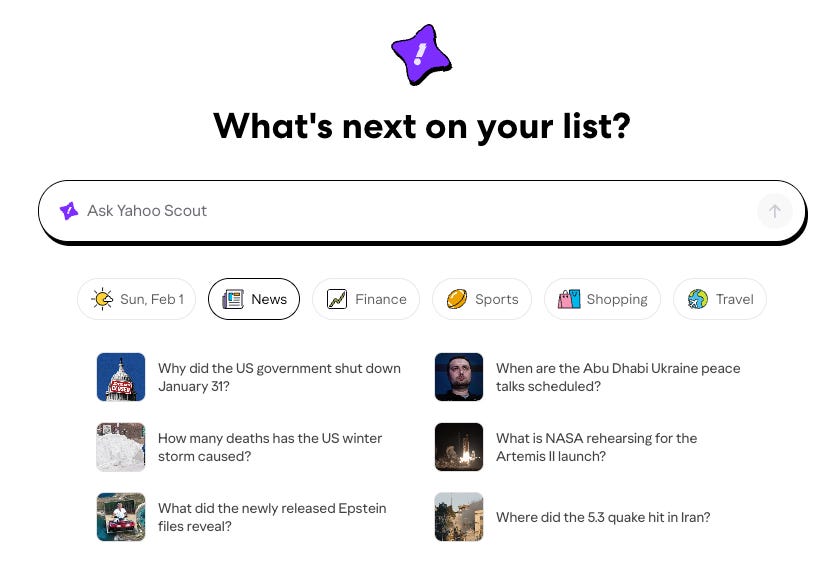
And yes... yet another AI engine to consider in your visibility strategy—but also, for those who weren’t convinced AI Search was THE big AI Marketing transformation, this confirms AI Search is becoming the industry standard, not just an experiment. All major players (Google, Bing, Perplexity, OpenAI, and now Yahoo) converge toward the same model: generative answers + source citations.
🔗 Introducing Yahoo Scout, a New AI Answer Engine and Barry Schwartz’s commentary on Search Engine Land.
Google introduces a new personal intelligence mode in Search designed to deliver more relevant and customized answers. The major insight is the shift from searching for general information to personalized assistance that relies on user context (our interests, obviously our browsing history, past interactions - I discuss this in more detail below) to refine results. This mode notably allows remembering specific preferences to avoid repeating them with each query, marking a key step toward a search engine acting as a proactive personal assistant.
This is also huge. And this time, we all understand the reasons. I have 4 major observations.
It’s officially the end of the “universal SERP” (what we called Google’s “black box”). Personal intelligence breaks the mirror: two users will never see the same page again. If Google pulls from your Gmail and photos to respond, tracking tools (Semrush, Ahrefs) become blind. It becomes impossible to do SEO in a probabilistic system using private data. There’s now no choice but to be present in training data. You can’t “rank” in someone’s private mailbox. As a result, traditional positioning SEO (1st, 2nd place) dies in favor of citation probability.
We’re truly moving from “navigation” to “delegation.” Behavior changes radically: the internet user no longer searches for a link to compare, they ask AI to decide for them. In fact, it’s the acceleration of Zero-Click. AI “assembles” the answer instead of “retrieving” sources. Conclusion: your content should no longer be destinations, but ingredients. If your brand isn’t exploitable data for AI, it doesn’t exist in the synthesized answer.
Entity and authority: the two pillars of your content strategy. Since keywords are losing their appeal versus user context, two pillars emerge: Your brand must be designed as an entity: If AI sees receipts or interactions with your brand in the user’s private data, it will systematically favor you. And optimization becomes pointless if your brand isn’t reliable and a real authority.
My take as a newsletter fan? Newsletters (and everything that’s first-party data) will become more than ever the star content because they’ll allow respecting the user’s “personal orbit.” But the ultimate irony will be that you’ll no longer need to be “read by humans,” but to be “ingested by the agent.” Ultimate paradox.
🔗 Personal Intelligence in AI Mode in Search: Help that’s uniquely yours
🔗 Glenn Gabe’s commentary on the subject
Anthropic officially deploys Cowork, allowing Claude to execute complex tasks directly in the browser. Unlike previous AI assistants limited to conversation, Cowork can navigate sites, interact with web tools, analyze data in real-time, and automate multi-step workflows. Lenny Rachitsky tested it and he’s blown away.
The game-changer: zero code, zero API keys, zero manual manipulation. You describe the task, Claude executes it end-to-end. AI automation for search optimization shifts from theoretical to operational. In the tools section I share a LinkedIn post detailing plenty of practical uses for your GEO.
THE research worthy of your attention this month is this study conducted by Conductor among more than 250 marketing leaders from American companies (500+ employees) mapping how organizations are investing in AEO/GEO in 2026: allocated budgets, adopted technologies, content strategies, challenges encountered, new success metrics, and skills necessary to remain visible and competitive in a search ecosystem now dominated by AI answer engines like ChatGPT, Gemini, and Perplexity.
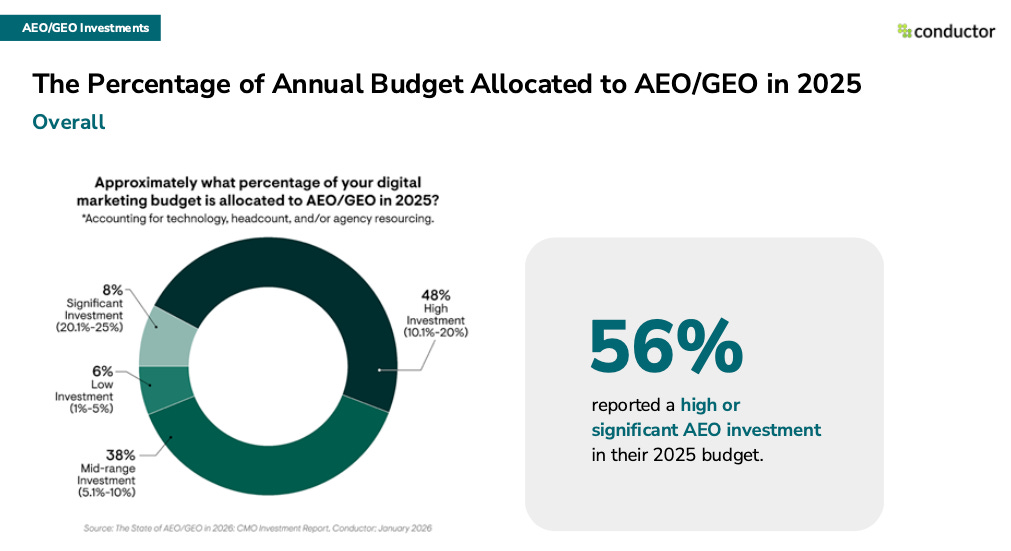
For once, it validates what I’ve been shouting for months: GEO isn’t a trend, it’s a structural transformation of digital marketing. Judge for yourselves:
12% of marketing budget in 2025 for a discipline nearly nonexistent 18 months ago
94% are increasing investments in 2026 (signal of acceleration, not slowdown)
97% positive impact on the marketing funnel
Major strategic insights:
SEO and GEO aren’t competing, they’re complementary. SEO remains #4 marketing priority for 2026, GEO becomes #1.
Massive internalization (93% build in-house capabilities). Clear proof companies consider AEO/GEO as a sustainable competitive advantage, not an outsourceable tactic.
The shift from volume metrics to quality metrics is THE most important mutation (and probably the best news from this study): conversions > traffic + brand mentions > rankings + sentiment > positions. The winning combo for 2026.
New professions emerge: AI Strategists, AI content strategists, GEO data analysts, Prompt engineers, Structured-data experts.
What’s still missing: Clear standards on ROI measurement and data quality. Pain point #1 (data quality) reveals the technology ecosystem is still immature.
🔗 The State of AEO / GEO in 2026: CMO Investment Report
🤫 Between you and me - Why this section? Because here we are. With AI Search and GEO, technical SEO is no longer “just” the devs’ business, it becomes a business decision. So you don’t need an MIT degree to identify the technical decisions to make on your site. However, you must understand the fundamental technical concepts that are GEO components. In my masterclass, one of my sections is dedicated to this topic.Raw technical definition - Schema Markup is a semantic metadata layer added to HTML code. It relies on the shared vocabulary of Schema.org. It’s what transforms raw text into a relational database.
In clearer terms... - It’s the standardized language (often using a format called JSON-LD) that translates a website’s visual content into organized data machines can understand.
The context where it’s used - Today, Google and answer engines like Perplexity or ChatGPT no longer just list links. They synthesize answers. To be cited as a source by an AI (GEO - Generative Engine Optimization), your content must be “liquid.” The risk? If AI doesn’t explicitly understand who you are and what you sell, it ignores you or, worse, “hallucinates” (invents) information about you.
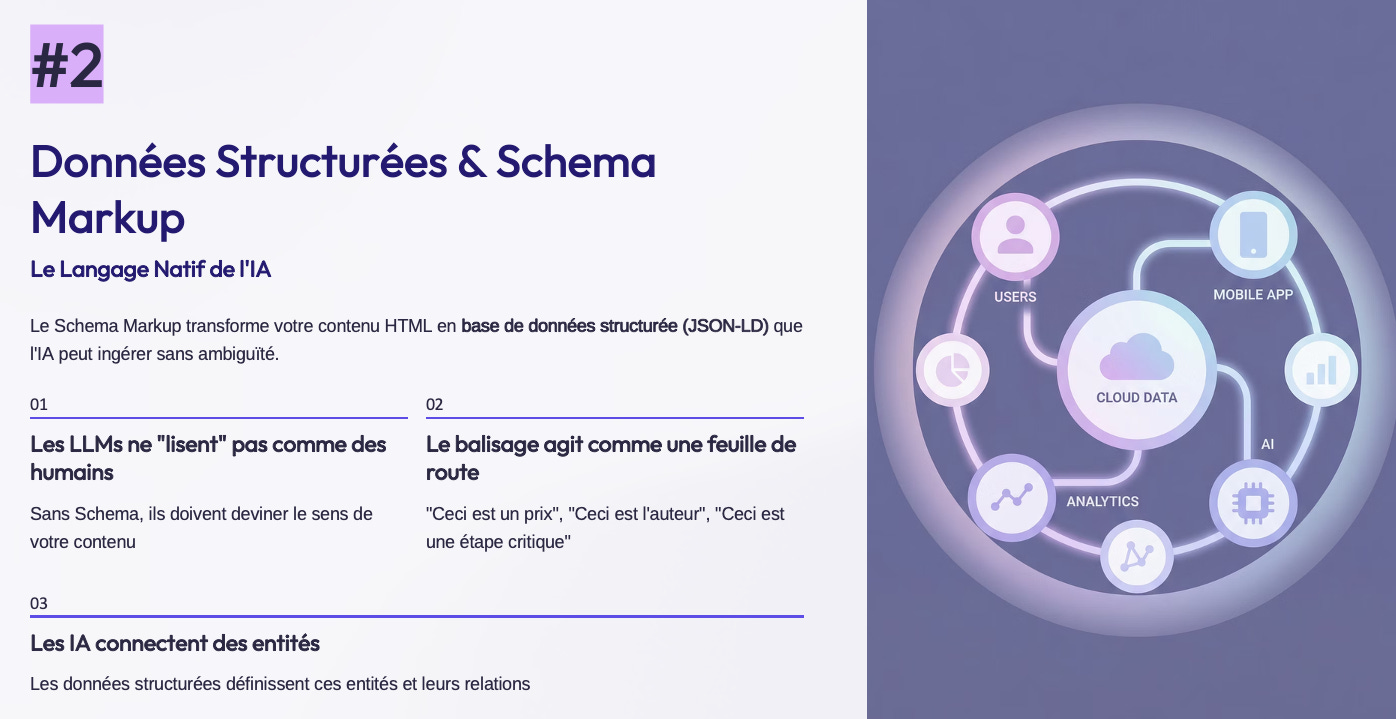
The analogy - Imagine your website is a book written in a complex language. Schema Markup is like slipping a universal ID card between each page that says: “This is the price”, “This is the warranty”, “This is a verified customer review”. It’s the official “handshake” between your company and artificial intelligence. You no longer let AI guess your business, you dictate the facts.
Example:
Without Schema: A page displays “4.5” and “120€”. AI hopes it’s a rating and a price.
With Schema: The code explicitly says: Rating: 4.5/5 and Price: 120€.
Result:
The company gets “Rich Snippets” (stars, prices, stock displayed directly in Google) and becomes a reliable source for voice assistants and chatbots seeking a precise answer to a purchase question.
Sure, you may not have to code, but you must validate three decision levels:
Budget Prioritization: No longer see technical SEO as maintenance, but as building the company’s Data Infrastructure.
Reliability Requirement: Require that each product or service launch be accompanied by its digital “twin” in structured data to guarantee brand accuracy on AI.
“Entity-First” Vision: Decide that the company must be recognized as an authoritative Entity in its field, not simply chase positions on volatile keywords.
In the AI world, ambiguity is profit’s enemy. Schema Markup is your best lawyer to remove any ambiguity about your offer’s value. It’s a €€ decision, not a developers’ decision. I address these topics from a business angle in my GEO masterclass. The next session in English in May. You can join the waitlist here 👇👇.
🟣 Social networks are dead... Sunny Lenarduzzi says it bluntly: social platforms systematically kill organic reach, and building your business on rented land is a losing bet. Between the algorithm suffocating your posts and total dependence on platforms’ changing rules, the model is broken. Her recommendation: pivot to what you truly control—your email audience, your proprietary community, your indexable content. Social networks become distribution channels, no longer your main asset. Time to take back control.
🟣 ...Or not. Google massively favors social networks. Chris Long observes exactly the opposite: social sites (LinkedIn, Twitter, Threads) are exploding with +100% SERP visibility. Twitter jumped from 26M to 33M organic sessions per month just in December. Meanwhile, traditional media got crushed in December’s core update (Barry Schwartz). Google now pushes social features way higher—”What people are saying” appears earlier and bigger, X threads pop up in Top Stories. Google’s endgame is clear: turn search results into a mashup of AI, user-generated content, and video. Traditional media? Getting squeezed out (Nectiv).
🟣 LinkedIn launches “vibe coding” certifications. LinkedIn will allow displaying your vibe coding expertise directly on your profile via dedicated certifications. Vibe coding—creating apps without coding via AI prompts—officially becomes a recognized professional skill. If your marketing team or execs haven’t explored this yet, this is the signal they should. The #1 professional platform validates this skill as a career differentiator.
🟣 LinkedIn hates links, but you can still drive traffic. Rand Fishkin confirms: LinkedIn’s algorithm despises links. Passionately. Even the old “link in comments” trick fails now—LinkedIn hides the comment too. But traffic, signups, and motivated visits are still possible with the right moves. His #5MinuteWhiteboard shows how to sidestep the blockade and keep winning despite the hostile algorithm.
🟣 Substack: the winning hybrid of blog, social network, and community. Social networks are algorithmic platforms that only boost you if you game them with platform-specific content. Communities are the new hype—they work because real people make real connections. Then there’s Substack, sitting right in the middle. One of a16z’s biggest wins, a hybrid oddball mixing the best of all three: better than a blog, better than a social network, better than a community. With Google already obsessed with Reddit and LinkedIn, the question becomes: what about Substack articles and notes? That’ll become AI training candy too. And now this gem of a guide drops to help you nail SEO and AI SEO on Substack.
🟣 Digital PR + Social Search: the 2026 power combo. Discoverability doesn’t run through Google alone anymore. People search on TikTok, Instagram, Reddit, and YouTube before they even think about a traditional search engine. Digital PR must now create content optimized for these social platforms—not just backlinks for old-school SEO. The winning move? Mix traditional media mentions with a strong social search presence. Your press releases, studies, and media placements need to live where your audience actually searches—reformatted for each platform’s quirks. Brands still treating PR and social search as separate? Losing 50% of their discoverability upside.
🟣 Perplexity explains how its AI Search really works. In this exclusive Search Engine Journal interview, Perplexity pulls back the curtain on its engine. Key points:
Perplexity combines real-time search and LLMs to generate answers, but unlike ChatGPT, they run a live web search for each query rather than relying solely on training data.
Their system evaluates source freshness and credibility in real-time.
For ranking, they favor sources with editorial authority, clean structured data, and recent content.
Major strategic insight: Perplexity always cites sources, which (according to them) drives referral traffic back to publishers—the opposite of Google AI Overviews, designed to trap users inside Google’s walls.
👀 My take: Two things matter here. First, Perplexity can become a real acquisition channel—if your content is structured, fresh, and authoritative. Second, and more important: AI visibility isn’t a single battlefield. Each engine has its own ranking logic. Your strategy can’t be 👉 “be visible in AIs” (that’ll mean nothing soon) but rather name and prioritize the platform where you want to be visible.
🟣 Google uses user data for ranking—and that changes everything. Marie dissected the latest Google trial revelations and found gold: Google massively integrates user behavioral data into its ranking systems. Clicks, time spent, bounce rate, navigation patterns—all of it directly influences rankings. This contradicts years of Google’s official line downplaying user signals. The evidence is piling up.
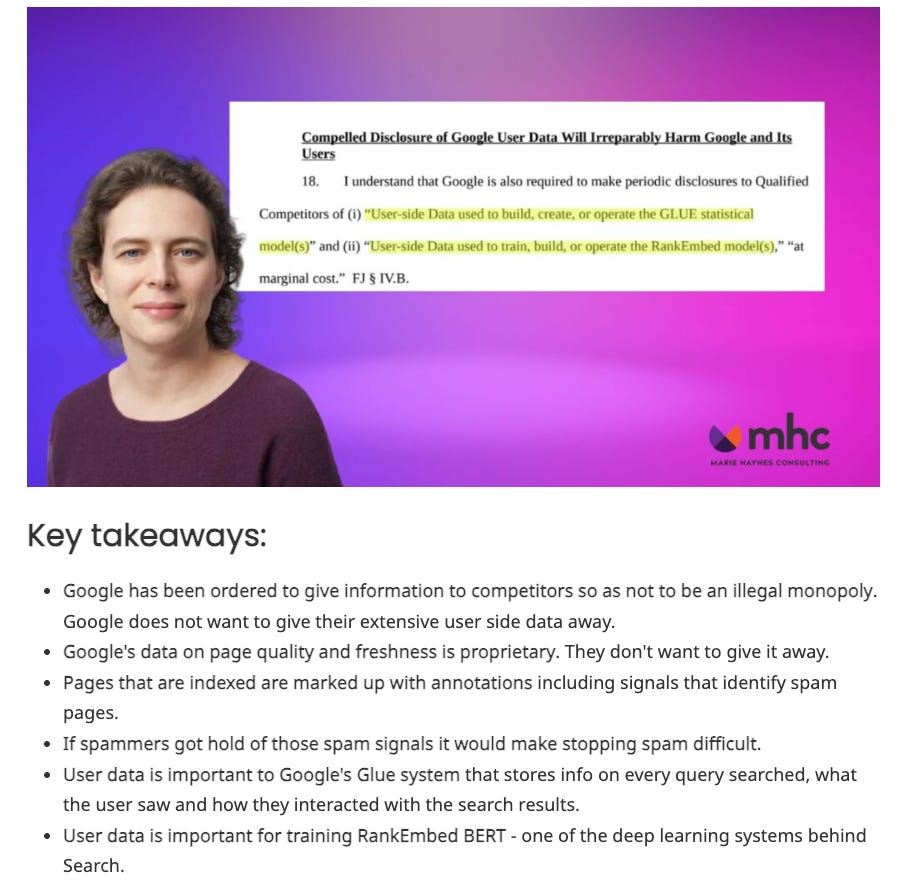
👀 My 2 Cents: Optimizing for crawlers is dead. Your content must engage humans—make them stay, click, explore. Pages that generate positive behaviors (long reads, low SERP returns, deeper site navigation) climb. Pages that disappoint (quick bounce, instant Google return) tank. For AI Search, this logic intensifies: LLMs learn from user interaction patterns to refine recommendations. Your content must answer real questions, not just check SEO boxes. Though yes, the technical foundation still matters.
🟣 Building your brand—Seth Godin reminds us what a brand really is. Cut through the noise and the #1 priority for AI visibility boils down to two words: be known. Marketing translation: build your brand.
Seth Godin nails it in this short: a brand isn’t a logo or a style guide—it’s the bundle of associations, emotions, and expectations people carry when they think about you. In a world where LLMs pull from the entire web to build recommendations, only brands with memorable, consistent, and differentiated presence break through. Technical optimization matters, sure. But without brand equity? You’re invisible. AIs recommend what humans already know, like, and talk about. Brand-building isn’t separate from visibility anymore—it’s the foundation of discoverability.
👀 My 2 Cents: For once, I don’t have one. I love everything.
🟣 The real competitor to e-commerce SEO isn’t AI—it’s ads. Aleyda Solis points to an underestimated trend: in e-commerce SERPs, the drop in zero-clicks comes from the explosion of ads, not AI Overviews. On the 5000 top “jeans” queries: multiplication of ads at the top, decrease in organic results. Result: “recovered” clicks go to ads, not organic. In product verticals, it’s ads “eating” clicks, not AI.
👀 My 2 Cents: Your paid media budget becomes even more critical than your SEO in certain product categories with strong commercial intent. If you target less competitive terms but within your semantic field, combining both will even be possible.
🟣 Optimize for the follow-up question, not the first one. Eli, author of Product-Led SEO whom I interviewed about his book, explains the strategic error in GEO/AEO is optimizing for the initial query when the real value is in the conversation that follows. In conversational interfaces, users ask a general first question, then refine with 3-5 increasingly specific and qualified follow-up questions.
Example: “best CRM” → “best CRM for teams under 10” → “does it integrate with Slack?” → “what’s the pricing?”.
It’s in these follow-ups that a prompt’s real commercial intent reveals itself and decisions are made.
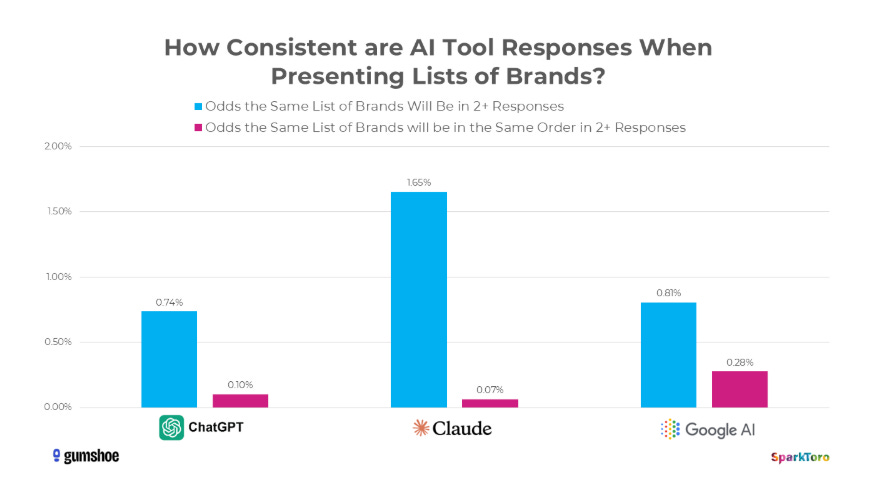
👀 My 2 Cents: Stop obsessing about ranking for high-volume generic terms. Focus on being the answer to level 2, 3, 4 questions of the conversation—those where the user is really evaluating and comparing. The generally very qualified part of the prompt (and need). Your content must as much as possible anticipate the complete conversational journey, not just capture initial attention. Brands winning in AI Search won’t be those appearing first (cf. Rand Fishkin’s study I cite 👆👆 saying exactly the same thing) — they’re those staying relevant throughout the conversation until the purchase decision.
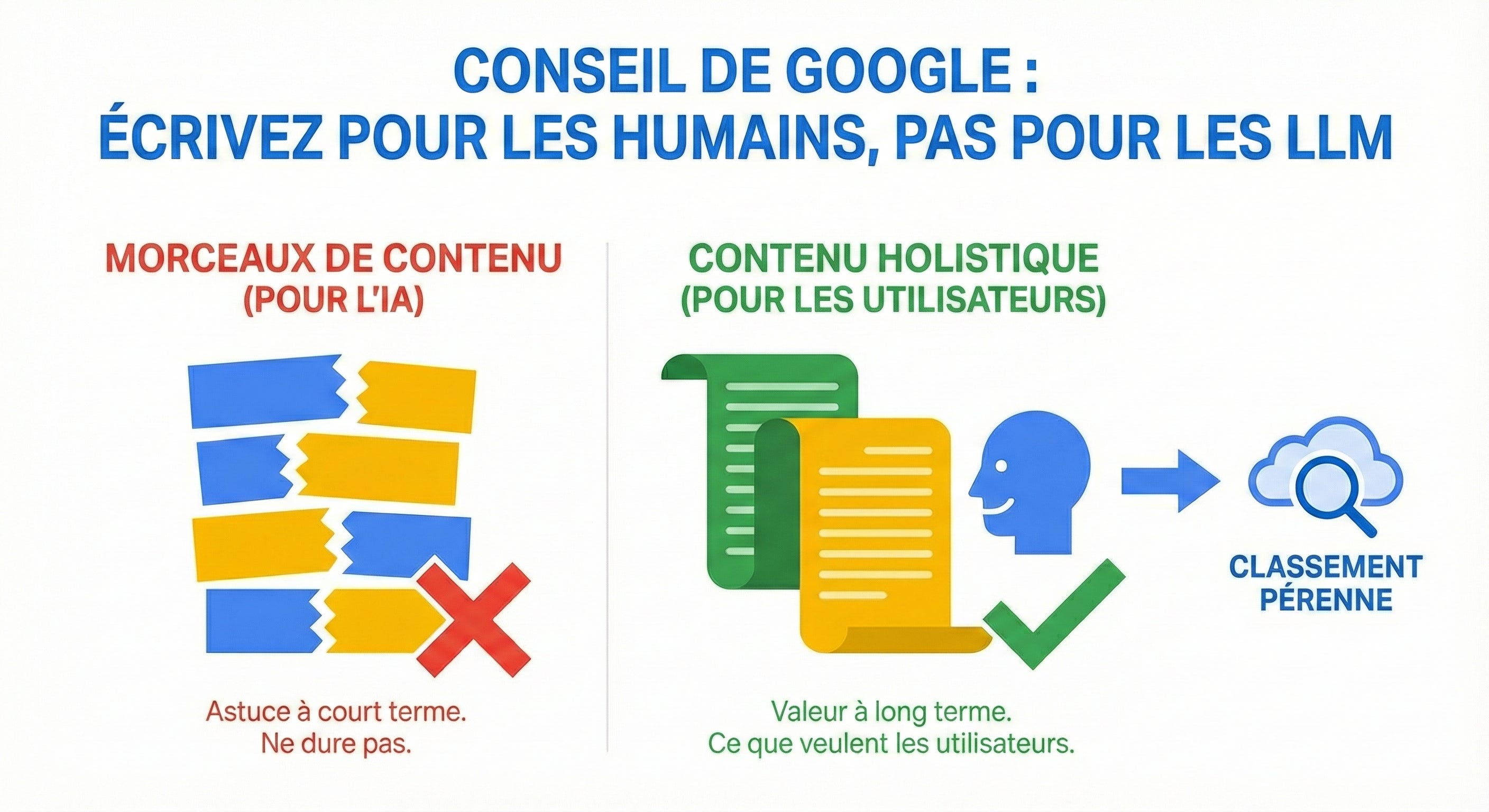
🟣 Chunking: Google says no, engineers (continue to) say yes. Google claims breaking your content into small pieces to please AIs (chunking) is useless. Nothing new under the sun, we understand Google doesn’t want Spam in its search results. Which, incidentally, doesn’t prevent results from still being stuffed with AI garbage content. So others continue thinking chunking is intelligent content engineering for modern retrieval systems, not an algorithm hack. Despite Google’s wishes, machines read in chunks.
🟣 SEO Poisoning arrives. Researchers identified “Haxor” campaigns diverting search results to distribute malware. If black-hats can manipulate Google, they’ll target LLMs next. Your reputation in AI answers becomes a security issue, not just marketing.
🟣 Is traffic still the right KPI? Ahrefs shows how to grow traffic from zero in 2025. But in a zero-click world where AI answers without sending anyone anywhere... is this really what we should measure? #AskingTheQuestion.
🟣 “Exact AI ranking” tools are scams. The GEO tech industry is already worth 2 billion dollars post-Semrush acquisition. Result: an avalanche of tools promising your exact position in ChatGPT. Rand Fishkin demonstrates it’s bullshit. AI rankings change with each prompt. The only reliable metric: your visibility percentage across hundreds of prompts, not a position #1 snapshot. You have the details here.
🟣 Black-Hat GEO already exists. Some brands boost their AI visibility metrics with mass-generated listicles. It works... for five minutes. Then their SEO traffic collapses because Google still controls the index (here’s a use case). Google has already won the AI Search race. Manipulating ChatGPT at Google’s expense is self-sabotage.
🟣 The only 3 types of content that work in AI Search. Ryan identifies three archetypes that systematically perform in answer engines. I validate this approach 10000% (the post). It’s the one I recommend in my masterclass.
Exploit data nobody else has access to (yours!)
Position yourself early on emerging topics
Don’t fear AI-assisted content
In my GEO masterclass, I help you redefine your content strategy to shift from volume production (to cover keywords) to a “source coverage” strategy and relevance engineering. The next session is in March, you can join the waitlist here 👇👇.
🟣 Stop ignoring zero-volume keywords. Steve demonstrates that ignoring “zero volume” terms misses entire intent clusters worth thousands of monthly searches. He built a custom bot to correct this gap. Volume tools lie. Semantic context matters more than volume data.
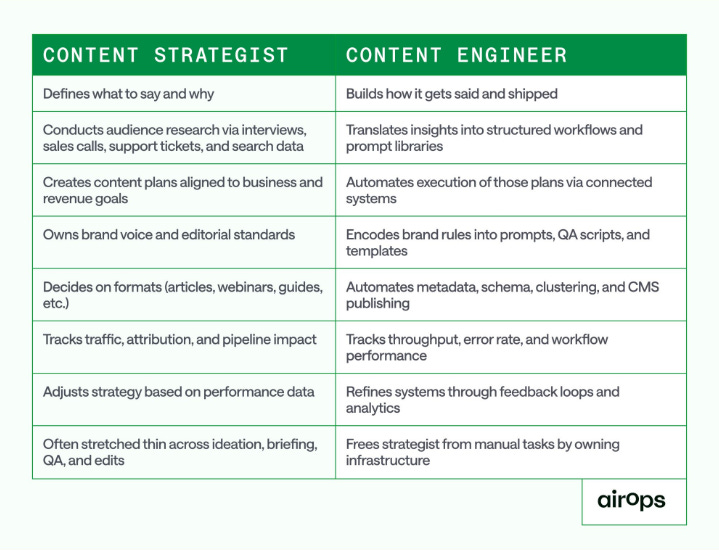
🟣 Content Strategist ≠ Content Engineer. Josh perfectly explains the difference. Strategists think about what to say. Engineers think about how machines will parse it. You need both. Choose only one and you lose.
🟣 Visual Fan-Out - to help you out. Google AI Mode now decomposes images into objects, attributes, styles, and intents, then launches parallel searches on all components (WordLift). You’re no longer optimizing pages for keywords. You’re optimizing objects for contexts. An image triggers multiple discovery journeys simultaneously. Welcome to spatial search optimization.
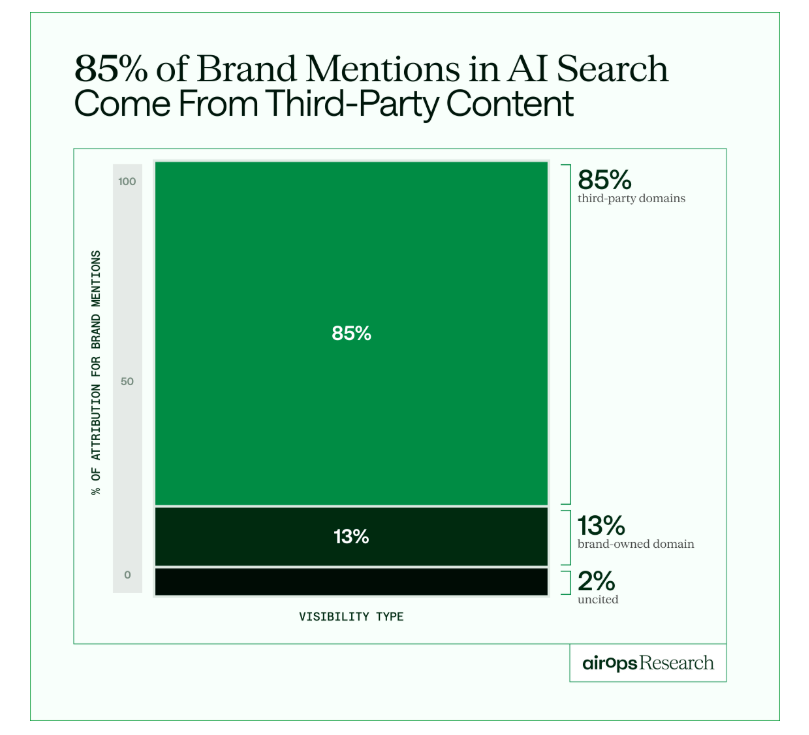
🟣 Your website represents only 15% of your AI visibility. AirOps analyzed thousands of AI Search results: 85% of brand mentions come from external sources—press articles, Reddit, third-party roundups, partner sites. The SEO playbook of the last 20 years is inverted.
→ Before: create content on your site → rank on Google → capture traffic.
→ Now: LLMs synthesize the entire web and form an opinion about your brand from everywhere except your .com.
If your brand only exists on your site, you’re invisible in 85% of conversations that matter.
How to take action?
Develop an “away game” content strategy (partnerships, earned media, external contributions), prioritize mentions in answer bodies rather than simple source citations, and create differentiated middle-funnel content rather than generic informational content already in training data.
🟣 A great way to find the questions people really ask LLMs. Lauren shares a brilliant Reddit technique to identify users’ real prompts: type any question about sentiment on a topic in Reddit’s search bar (ex: “what questions are doctors asking about AI scribes”), and Reddit automatically synthesizes answers from 10+ relevant subreddits, categorized by themes. You can even ask follow-up questions to refine. No more hours manually digging through subreddits. Bonus: it works for ultra-specific niches too (medical specialties, particular sentiments, etc.).
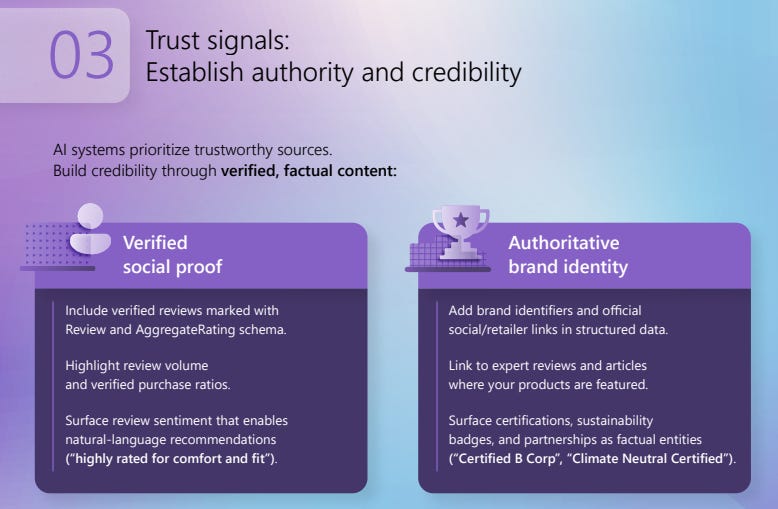
This “official AEO and GEO playbook” guide is the first actionable guide from a major AI platform. Microsoft Advertising just dropped “From Discovery to Influence”: 16 pages explaining how their system really works and what brands need to do to show up in Copilot and Bing AI.
Key takeaways from this guide. Microsoft:
Splits GEO from AEO. GEO = making content discoverable, reliable, and authoritative in AIs. AEO = making sure AI assistants find, understand, and present your answers effectively.
Explains how Copilot really works for shopping and reveals the “reasoning phase.” They detail the three data levels to master (crawled data, product feeds/APIs, and live website data). The conclusion is clear: AI agents navigate, click, fill forms, and complete purchases. Without a functional site, the sale dies—even with perfect feeds and crawled data.
Proposes three actionable strategies: mandatory structured data, intent-enriched content, and verifiable trust signals.
This is the most actionable guide any AI platform has published to date. Period. Microsoft isn’t theorizing. They’re documenting their actual system. Required reading.
🟣 No, SEO and GEO aren’t the same - Andrew sounds the alarm on a phenomenon he’s observed for a year: “SEO gurus” who spent months dismissing GEO now admit it’s a new system with new tools — while desperately trying to squeeze their SEO skills into this new framework. Once you realize AI is the biggest online influencer, you reallocate budgets quickly to try influencing it in your favor. This isn’t SEO evolution — it’s a fundamentally different system. We’re shifting toward “AI-first” interaction in search.
👀 My 2 Cents: The LinkedIn post that feels good (I admit).
🟣 “GEO = good SEO sold more expensive” - Piet drops a scathing critique: what’s sold today as “revolutionary GEO” is nothing but good SEO we should’ve been doing for 10 years. He dissects GEO guides and concludes: citing sources, adding statistics, structuring content... it’s exactly what Google recommends via E-E-A-T since 2014. His main argument? Agencies just rebranded the fundamentals with a new acronym to create urgency (and charge more). The real problem isn’t optimization — it’s the collapse of traffic and clicks. And GEO doesn’t change that.
👀 My 2 Cents: Piet is right... and wrong. Yes, fundamentals are the same. Yes, many agencies do opportunistic repackaging, they replace the “S” in SEO with “G” for GEO in their LinkedIn profile and call it done. But we already know to watch out for those. By focusing on these few scams, Piet still misses the essential: the context, objectives, internet structure, and its business model have radically changed.
Before, we optimized to be found by our final audience. Now, we optimize to be cited and recommended by an AI. It’s not the same battle. Classic SEO made you visible in a list of 10 blue links. GEO makes you the single recommendation in a ChatGPT conversation.
We’re shifting from positioning logic (ranking) to selection logic (being chosen).
All this isn’t (just) good old SEO rebranded — it’s a new playing field where off-site authority, brand equity, third-party mentions, and conversational quality matter more than ever. So yes, keep doing “good SEO” because it remains a solid foundation. But if you don’t understand that AI has fundamentally changed who decides your visibility (a conversational algorithm vs a ranking engine), you’ll miss the turn.
🟣 “Forget the acronyms. Become an AUTHORITY, period” - The final word probably goes to Mordy! He (rightly) denounces the obsession with fragmenting visibility (SEO, GEO, AEO, LLMO…) as if you needed different authority for each platform. In reality, the only sustainable strategy is building global brand authority. By optimizing channel by channel, teams lose sight of the essential: becoming a real reference in their field. If a brand is credible and unavoidable, all algorithms will eventually recognize it. The challenge isn’t optimizing for each system. It’s being an authority all systems can’t ignore.
👀 My 2 Cents: FINALLY someone saying things clearly. While we fight over the right acronym, we lose sight of the essential: authority isn’t divisible by channel. It’s transversal. Universal. Indivisible. Want to appear in ChatGPT? Become a reference cited everywhere. Want to rank on Google? Same battle. YouTube? Same. AI won’t search for “the best GEO-optimized content.” It’ll search for what everyone already considers THE reference. Calm down on tactical optimization for algorithms. Build real authority. The rest will follow.
🟣 The vibe coding guide for those who know nothing. Danny Sullivan (yes, THE Google Search Liaison) just discovered vibe coding. He shares his total beginner experience and created a detailed vibe coding guide with screenshots of the complete process to create a TV/movie watchlist app. So stop feeling guilty. If he can do it, we all can (his guide).
🟣 Visual Fan-Out Simulator: (literal French translation, so you don’t yell at me... Contextual Visual Deployment Simulator). Andrea Volpini (whom I already mentioned 👆) created this simulator = a tool that transforms an image into an explorable context graph. This simulator:
Analyzes an image → identifies objects, attributes, intentions
Automatically generates all potential follow-up questions
Deploys answers in parallel → like an organic mind map
Anchors each branch with verified sources (products, guides, references)
Maintains initial context across all depth levels
Why is it useful? This tool makes visible how AI anticipates user needs and structures information contextually. You “see” how Google’s AI Mode really works, not as a linear search engine.
🟣 Scrunch + Noble: automate AI citation placements at scale. The killer partner duo = Scrunch identifies citation sources LLMs pull for your key prompts (total citations, competitor mentions, influence scores by domain). Noble automates everything else—outreach, negotiation, content writing, payment, reporting. You approve content, they handle execution. Transform insight into large-scale placement without tedious manual prospecting work. Then watch your visibility climb in Scrunch.
🟣 Claude launches Cowork & Chrome Extension to automate SEO/GEO/AEO—for free. Anthropic deploys browser workflows allowing Claude to execute SEO and AEO tasks end-to-end without manual intervention. Demonstrated capabilities: audit 50+ URLs for broken schema in minutes, crawl competitor sites to identify internal linking gaps, connect directly to CMS to write meta-tag updates, monitor Core Web Vitals on staging site. In this post, you have other very concrete usage examples for your GEO. It can even manage your Google Ads campaign for you.
👋 That’s all for this month! I’ll see you in two weeks in this same format. If you’d like to give me your feedback on this new style, that would be awesome!
👀 Master the Economics of GEO in 90 Minutes. Don’t let AI Search redefine your visibility without you. Join me for a strategic masterclass: decode the shifts of 2026 and learn how to reallocate your Content and SEO budgets for maximum impact. Next Masterclass in May. Join the waitlist to stay tuned 👇👇.
No posts
Comments
Nothing yet. Say the first thing.
Sign in to join the conversation.