
Longevity is a big word these days: the term conjures up everything from the most ancient of human desires to the hottest trend on your wellness app. The definition of longevity has expanded so much over the last decade that it has become something of a cultural Rorschach test, the kind of word whose meaning depends almost entirely on the person speaking it. What people see in the idea of longevity may reveal their class, their politics, their relationship with mortality, and the particular bargain they have struck with their present or future decline.
For scientists, longevity invokes the study of how we age, its biological processes and whether they can be slowed or altered. Formerly considered an oddball corner of the research community, longevity science has raised billions of dollars of funding, attracted some of the brightest minds, and published more than 300,000 academic papers in the past decade. For Silicon Valley billionaires, longevity is a kind of quest to engineer their way out of mortality, spawning a host of new ventures with quasi-scientific promises of “precision wellness” and “personal optimization.”
For social media influencers, longevity is big business, driving sales of cold plunges, red light therapies and dietary supplement “stacks” to the wealthy and worried well. For primary care physicians, the topic of longevity has created new opportunities to talk to patients about good health habits and preventative care, but it hasn’t created the clinic time to have the conversation.
But while many will describe a path to “wellness for longevity” with considerable conviction, what the underlying science supports is considerably less clear. As Dana Smith, a reporter for the NY Times, aptly described it in a recent article: “Longevity medicine is a confusing brew of noble intentions, cutting-edge care and expensive snake oil.”
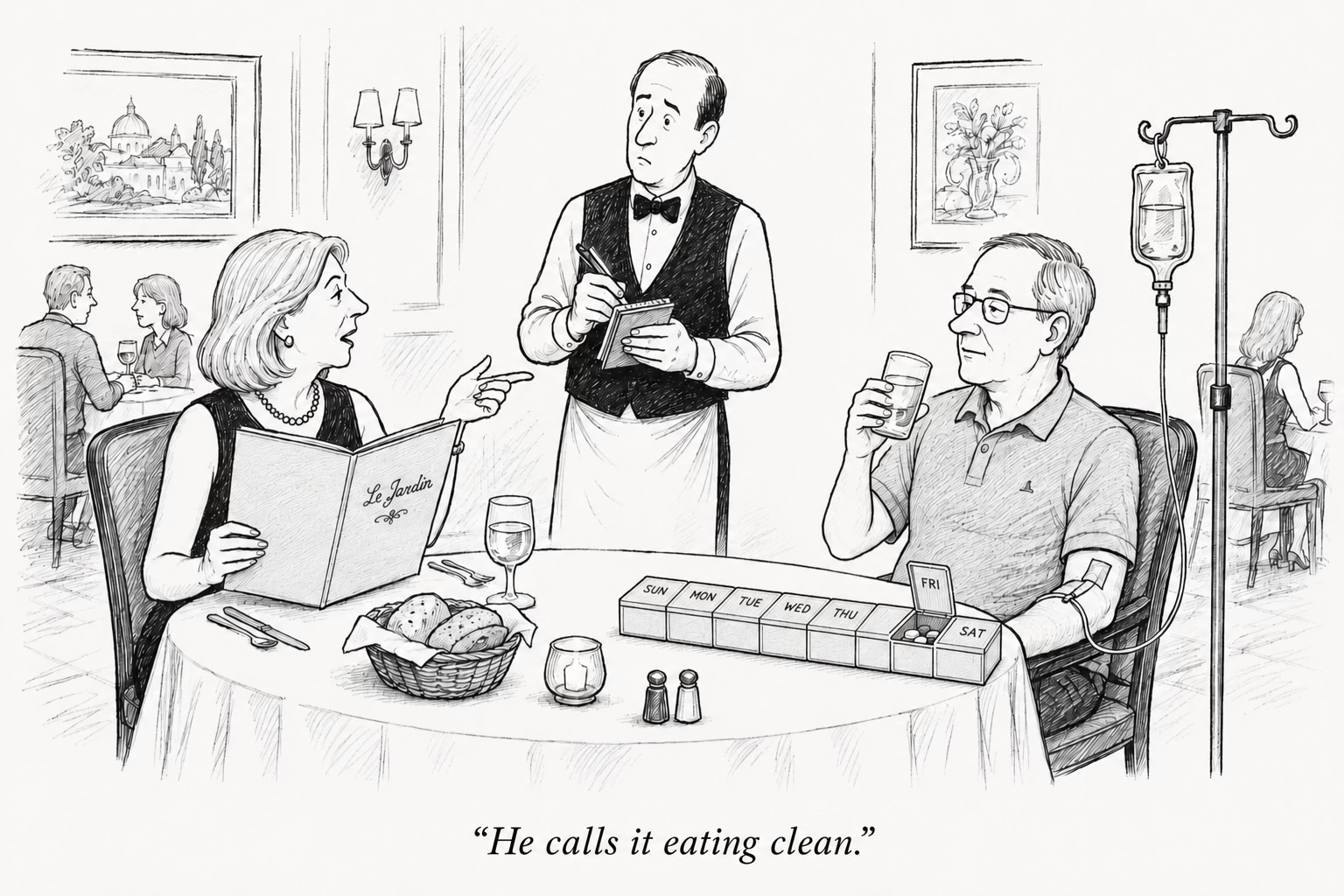
Modern medicine has already added decades to our average life expectancy. An American baby born in 1900 could expect to reach roughly 47 years of age; one born today can expect to live to 78. Most of the 20th century gains came from sanitation, vaccines, antibiotics and improved nutrition, which together collapsed the rates of infant and childhood mortality. The gains since 1950 have come from cholesterol-lowering drugs, blood-pressure control, and a generation of cancer therapies that have turned several of the most lethal diagnoses into manageable conditions. Today, an American turning 65 can expect to live another twenty years on average. (1)
The added years are not, however, guaranteed to be good ones. In the United States, the gap between lifespan and “health span” is about 12.4 years, meaning that the average person spends roughly 12 years living with disease or disability before death. The US lifespan-healthspan gap was the widest of all 183 World Health Organization member states in a 2024 study. (2) In short, medicine has been more successful at extending life than at preserving the quality of it, and the gap is wider here than anywhere else.
That reality has fueled the research agenda. Aging research today is preoccupied less with mortality than with morbidity: the work of extending the years of health and minimizing the years of dependence. The questions are not simply whether human beings can live longer, or by how much, though there is debate over whether a hard biological ceiling sits somewhere around 120 years. The questions now include why the added years are so often years of decline, which biological processes drive that decline, and whether any of those processes can be slowed, paused or reversed in human beings.
The fascination with longevity is not entirely new - academics have been documenting the unusually long-lived for more than a century. Alexander Graham Bell, in a 1918 monograph on the Hyde family genealogy, set out to demonstrate that longevity was heritable (3); Raymond Pearl, the Johns Hopkins biologist, spent the 1920s trying to derive a biological law of mortality from human population data. (4) Large observational studies of long-lived communities came later: the Adventist Health Studies in Loma Linda began in 1958, and the Okinawa Centenarian Study, started by the geriatrician Makoto Suzuki in 1975, remains the longest continuously running cohort study of centenarians in the world.
If certain populations achieved healthy old age at unusual rates, those outcomes were not purely the genetic lottery, and the conditions producing them were worth understanding.
In the early 2000s, the Belgian demographer Michel Poulain and his colleagues coined the term “blue zone” to describe an inland Sardinian region with unusual centenarian concentrations.(5) Popular interest in longevity took off soon after, fueled by journalist Dan Buettner’s synthesis of the Blue Zones work for a general readership. In a 2005 National Geographic cover story, later expanded into a blockbuster run of books and a 2023 Netflix documentary, Buettner identified five such regions (Okinawa, Sardinia, Ikaria, the Nicoya Peninsula and Loma Linda) where unusually large numbers of people reached extreme old age in good health. Working with Poulain, Suzuki and others, Buettner reframed the public conversation. If certain populations achieved healthy old age at unusual rates, those outcomes were not purely the genetic lottery, and the conditions producing them were worth understanding.
Aging is biologically plastic, meaning that its processes can be slowed, paused or altered. The laboratory evidence for that assertion stretches back nearly a century. In 1935, the Cornell nutritionist Clive McCay showed that rats on a calorie-restricted diet lived a third longer than freely fed rats, first introducing the idea that lifespan was not biologically fixed. (6) In 1961, Leonard Hayflick at the Wistar Institute showed that cultured human cells stop dividing after a finite number of generations, opening the field of cellular senescence. (7) In 1993, Cynthia Kenyon at UCSF showed that a single-gene mutation could more than double the lifespan of the laboratory worm C. elegans, establishing that the rate of aging itself was biologically modifiable. (8) And in 2013, Steve Horvath at UCLA published his first paper on epigenetic clocks, which estimate “biological age” from DNA methylation patterns and consistently find a measurable gap between chronological and biological years. (9)
The work expanded from individual labs to aging-focused institutions. The Buck Institute for Research on Aging, founded in Novato, California in 1999, was the first US research centre dedicated solely to the biology of aging. Private capital has followed, funding around 700 aging-related start-ups, including ventures such as Alphabet’s Calico (2013), Bezos- and Milner-backed Altos Labs (2022, $3 billion), Sam Altman’s Retro Biosciences ($180 million) and Unity Biotechnology.
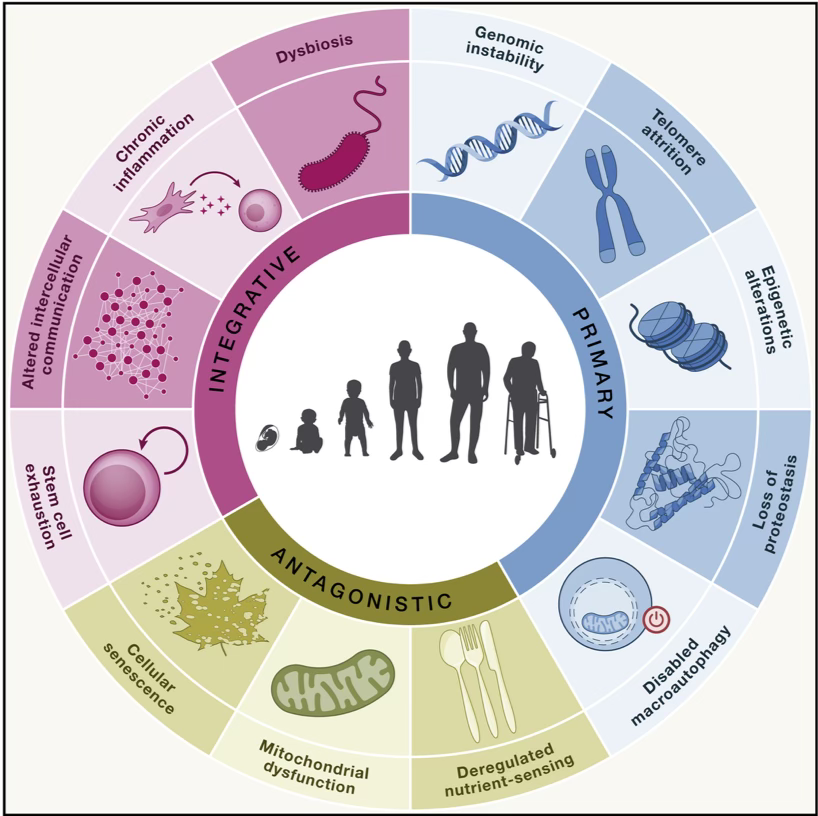
The current scientific consensus, set out in the so-called “Hallmarks of Aging” framework by Carlos López-Otín and colleagues, identifies twelve cellular mechanisms by which the body deteriorates over time, from telomere attrition and mitochondrial dysfunction to chronic inflammation and stem-cell exhaustion. (10) Certain interventions designed to alter or slow these mechanisms have produced interesting results in the laboratory, for example rapamycin, NAD precursors and senolytic compounds (for further detail on these interventions - see box).
Aging is a multi-faceted systemic process, so an intervention that affects a single biological marker of aging is not the same as finding a standalone “master switch” that will stop the biological clock.
No intervention has yet been proven at scale to extend human lifespan or delay the onset of disease, and animal models routinely disappoint in human studies. López-Otín and colleagues caution that aging is a multi-faceted systemic process, so an intervention that affects a single biological marker of aging is not the same as finding a standalone “master switch” that will stop the biological clock. (11) However, the detail matters less than the principle that follows from it: aging is increasingly understood as a set of processes that can, in theory, be modified. That principle is what is powering the wellness-for-longevity industry. If aging is modifiable, then almost anything that touches one of the twelve hallmarks, whether a supplement, a sleep protocol, a diet or a piece of wearable hardware, can be packaged as longevity science, even if the evidence base is still being developed.
Three Examples of Interventions in Biological Markers of Aging
Rapamycin, a drug typically used to prevent organ-transplant rejection, extends mouse lifespan by inhibiting a cellular pathway called mTOR — a kind of master switch that tells cells when to grow and when to repair themselves. Dialling mTOR down pushes cells into a maintenance mode that mimics the effects of fasting, and in mice has extended lifespan by roughly 9–14% even when the drug is started in middle age. (12) The signal cannot be switched off without cost, however: mTOR also governs cell growth and repair, and chronic suppression has side effects from immunosuppression to impaired glucose control and delayed wound healing. (13) The jury is still out on the trade offs associated with this drug.
NAD precursors are so-called supplement molecules that the body converts into NAD+, a coenzyme found in every cell and essential for energy metabolism and DNA repair. Levels of NAD+ fall steadily with age - although recent research has called that into question - and in laboratory studies, restoring NAD+ has slowed several markers of biological aging. In early control studies in humans, NAD precursors such as nicotinamide riboside, or NR, and nicotinamide mononucleotide, or NMN, have been shown to raise NAD+ levels in healthy adults, but few meaningful downstream effects on biological aging markers have been established. (14). There is no established evidence base that intravenous or subcutaneous NAD+ infusions and patches raise intracellular NAD. This remains an area of active research.
Senolytic compounds target so-called “zombie cells”. As cells age or sustain damage, a fraction of them stop dividing but refuse to die, lingering in tissue and secreting inflammatory signals that accelerate decline in their neighbours. Senolytics are drugs that selectively kill these “zombie cells,” and have shown early promise against the inflammatory and degenerative conditions linked to their accumulation. (15)
While science is slowly and deliberately developing its understanding of aging, the market for postponing death and decline is large, profitable and growing quickly. McKinsey puts the US wellness market at $480 billion in 2024, expanding 5 to 10 per cent a year. (16) Dietary supplement sales alone reached $69.3 billion, with “healthy aging” among the fastest-growing categories, according to the Nutrition Business Journal. (17) Narrower estimates of the US anti-aging segment specifically — skincare, injectables and clinic treatments — run to around $20 billion, though projections vary widely across consultancies. Where there is fear of death and disposable income, there is, sooner or later, an industry to serve it.
The foundation of the market is Americans taking dietary supplements. Three-quarters of US adults report taking at least one dietary supplement, according to the latest annual survey from the Council for Responsible Nutrition, and ninety-two per cent of those users describe the habit as essential to their health. The median monthly spend, across all users, is roughly $50. (18) Vitamin D has topped the popularity rankings for a decade; magnesium and fish oil round out the top three, with multivitamins, protein powder, creatine, greens, fibre, collagen, B12, vitamin C and probiotics filling the household medicine cabinet.
There is now also a longevity-specific tier of products, including resveratrol, spermidine, berberine, fisetin, the NAD precursors NR and NMN, and newer entrants such as Fatty15 and Mitopure. These products promise biological intervention rather than nutritional adequacy, and they are priced to match.
The celebrity stacker has become its own genre. Kourtney Kardashian, who launched her Lemme line of supplement gummies in 2023, documents her personal regimen on Instagram. Joe Rogan has spent years walking his podcast audience of tens of millions through the contents of his daily stack — Athletic Greens, vitamin D, fish oil, Alpha Brain from Onnit, the supplement company he co-founded and sold to Unilever in 2021. Rogan remains one of the country’s most influential lay endorsers of supplementation.
Perhaps the most extreme is Bryan Johnson, the technology founder whose Blueprint longevity protocol once involved more than a hundred pills a day, dosed against the minute. He has since consolidated some of the stack into proprietary multivitamins sold under his own brand, but the spectacle of his daily regimen, posted in granular detail on his social channels, has become a cultural reference point for what total commitment to supplementation looks like. His goal? Immortality by 2039, and a booming longevity business to boot.

Bryan Johnson@bryan_johnson
I’m going to try and achieve immortality by 2039. One year of time passes and I remain the same biological age. I invite you to join me. The search for the fountain of youth is the oldest story ever told. It’s been the dream of dreamers for millennia but always painfully out

10:55 PM · Dec 16, 2025 · 6.8M Views
3.87K Replies · 1.16K Reposts · 20.3K Likes
The clinical view does not align with the consumer enthusiasm for supplementation. The US Preventive Services Task Force concluded in 2022 that the evidence is insufficient to recommend vitamin or mineral supplements for the prevention of cardiovascular disease or cancer in healthy adults. An accompanying editorial by Northwestern physicians described routine multivitamin use as “a waste of money” for most Americans. (19) The mainstream medical position, expressed regularly by the American Medical Association, is that a generally healthy adult eating a varied diet meets nearly all nutritional needs from food, and that supplementation is appropriate primarily for documented deficiencies, pregnancy, or specific life-stage conditions.
Bioavailability is a further problem: resveratrol, berberine and several other heavily marketed compounds are broken down by the gut and liver before they reach the cells they are supposed to act on. Meanwhile, the popularity of stacking supplements may be at best a waste of time and money, but it could also be harmful in the wrong combinations, or when combined with prescription medications.
“You can supposedly lengthen your telomeres with products available on amazon.com, but the question of whether it’s a good idea to lengthen your telomeres is quite another matter.”
The meagre evidence for supplementation does little to slow the market, in part because under the 1994 Dietary Supplement Health and Education Act, supplements in the United States are regulated more like food than like medicine. “You can supposedly lengthen your telomeres with products available on amazon.com, but the question of whether it’s a good idea to lengthen your telomeres is quite another matter,” said Nobel prize-winning biologist Venki Ramakrishnan at a Columbia University lecture late last year. “The fact is, you can buy all kinds of supplements that claim they will do it and of course, no FDA approval or clinical trials are required because these are essentially considered food supplements.”
The FDA does not review dietary supplements for safety or efficacy before they reach the shelf, and intervenes only once harms have been reported in the consumers who have already bought them. Independent testing has repeatedly found that what is in the bottle bears limited resemblance to what is on the label, with contamination, under-dosing and the outright absence of the advertised ingredient all well documented.
Beyond the supplement aisle, the same logic of postponing decline plays out at considerably higher prices. Wellness centers sell NAD+ infusions, intramuscular shots of personalized “nutrients” and cryotherapy. Executive physicals, offered by the Mayo Clinic, the Cleveland Clinic and a growing set of concierge providers such as Fountain Life and Sollis Health, offer a day of bespoke consultations with a battery of diagnostic testing at $5,000 to $25,000 a visit.
Full-body MRI scans, sold direct-to-consumer by companies such as Prenuvo, Ezra and Neko Health, are pitched to healthy adults as a way to catch disease at its earliest, most treatable stage. A scan typically runs between $1,000 and $2,500, often promoted by celebrity endorsements and the implication that any sufficiently affluent person who skips one is taking an unnecessary risk. Below, Cindy Crawford and Rande Gerber post about their body scans with Prenuvo, in which they are both invested: “The couple that scans together, stays together.”
The medical critique, made repeatedly by professional bodies including the American College of Radiology, is that whole-body imaging in people without symptoms produces a high rate of incidental findings — abnormalities of unclear significance that trigger biopsies, follow-up scans and, sometimes, surgery, often for problems that would never have caused harm if left alone. (20)
The biohacking economy sells the same proposition in hardware. Continuous glucose monitors, now marketed to people without diabetes by companies like Levels, Nutrisense and Abbott’s Lingo, promise actionable data about the foods that “spike” individual blood sugar. Cold plunge tubs, red-light panels, and home hyperbaric oxygen chambers retail for thousands of dollars apiece on the strength of a small number of human studies and a much larger number of social media testimonials.
The longevity industrial complex sells hope, at a premium, to people who can pay. Sometimes the underlying science is real, but the proof of concept in humans is decades away.
The longevity industrial complex sells hope, at a premium, to people who can pay. Sometimes the underlying science is real, but the proof of concept in humans is years away - though the advent of AI may accelerate new discoveries. The most evidence-supported longevity interventions are not for sale on a subscription basis, which perhaps explains why they receive a fraction of the cultural attention given to those that are. Sleep, diet, exercise and preventive care form the unglamorous foundation, alongside social connection and finding purpose.
Rachele Pojednic, chief science officer at Restore Hyper Wellness - a provider of cryotherapy, red light therapy and shots of NAD precursors - put it bluntly at a recent conference on Healthy Aging in Stanford: “If you are not sleeping well, you’re not exercising, you’re not eating a healthy diet, it does not matter how many supplements you take, it cannot overcome those foundations.”
Last month, Bryan Johnson shared 42 lessons he has learned from spending millions on his quest for longevity. Remarkably, for a purveyor of longevity supplements, his list was entirely made up of common sense tips like, “go to the dentist” and “texting while driving is dangerous,” and best of all, “do less… most things don’t work.”
Chief Executive and President of the Buck Institute on Aging Eric Verdin, who has studied the science of aging for more than 30 years, delivered a riposte for the ages: “The greatest longevity hack of all turns out to be the one nobody can monetize: go to bed, eat a vegetable, call a friend, and stop buying things from people who tell you most things don’t work. Live better longer. It’s mostly free.”
In next week’s Aging Almanac, we’ll look more closely at the importance of sleep, exercise, diet and brain health for a long life well-lived.
Comments
Nothing yet. Say the first thing.
Sign in to join the conversation.