
Allison Applebaum, PhD. has spent her career trying to make the healthcare system see what it has long chosen to ignore: that the family members caring for the sick are quietly becoming the next wave of patients. A clinical psychologist, Applebaum knows the science of caregiver distress with the intimacy of someone who has also lived it: she spent almost a decade as her father’s primary caregiver, experiencing the physical and emotional exhaustion, the daily uncertainty of a parent with degenerative disease, and the small losses that accumulate long before the final one. That dual vantage point as researcher and family member, observer and participant, shapes everything she does.
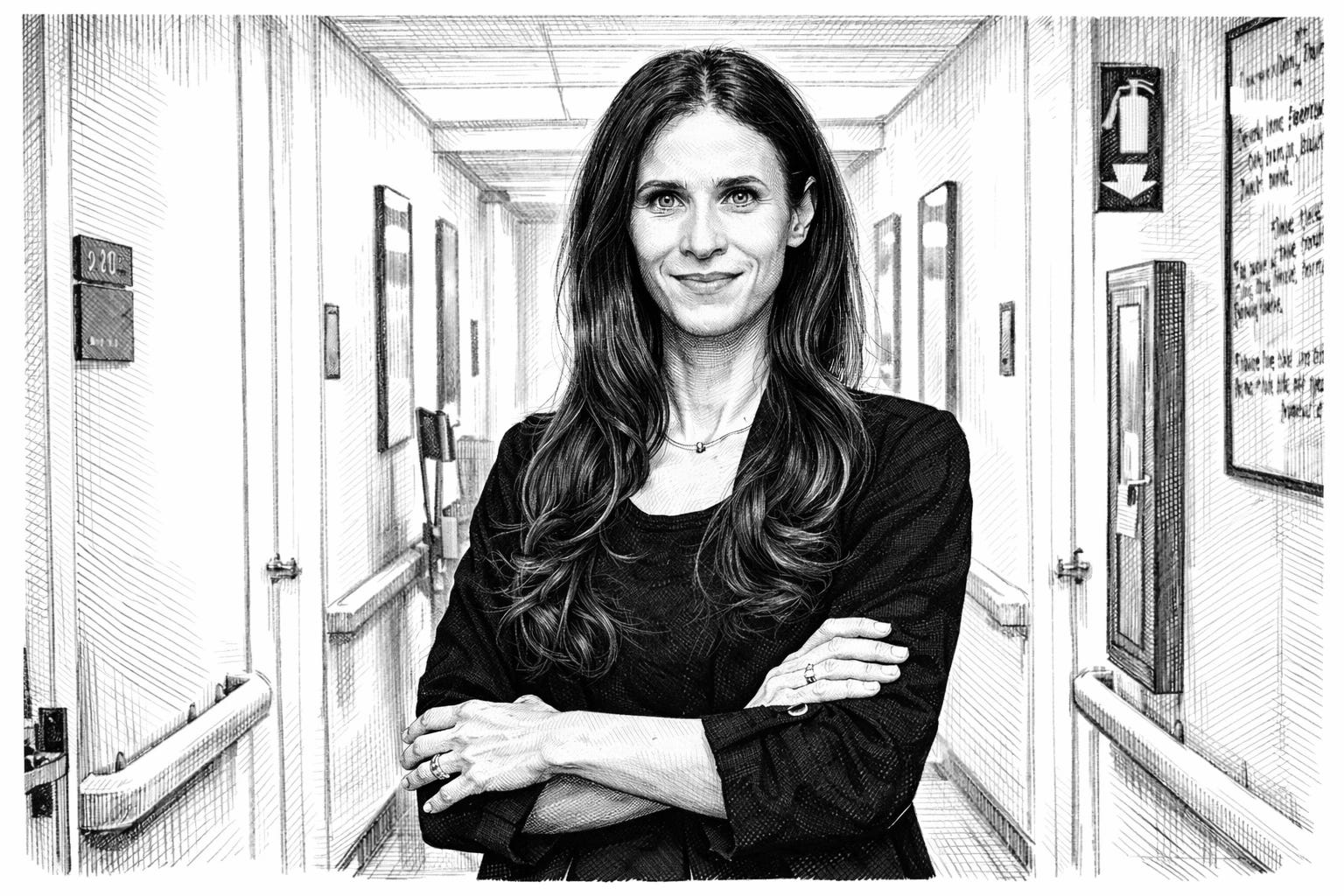
Applebaum is a Professor of Geriatrics and Palliative Medicine at the Icahn School of Medicine at Mount Sinai in New York, where she leads the newly established Steven S. Elbaum Family Center for Caregiving. The center has four areas of focus: a caregiver support clinic, research, training and education, and advocacy and dissemination of best practices. Before coming to Mount Sinai she spent fifteen years at Memorial Sloan Kettering, where she founded the Caregivers Clinic, the first program in the United States to offer comprehensive psychosocial care specifically for the family members of patients with cancer. She chronicled her professional and caregiving journey in her book “Stand By Me: A Guide to Navigating Modern, Meaningful Caregiving.”
Applebaum’s focus is the 63 million Americans who are family caregivers: a parent, partner, child, sibling, or friend caring for someone living with a chronic or life-limiting illness, disability, or mental health challenge, providing that care free of charge. Most don’t call themselves caregivers. Many don’t know how to find support. The healthcare system - organized almost entirely around the patient - has historically had little to offer them.
Caregivers are paying for that neglect with their health. Caregivers face higher rates of anxiety, depression, cardiovascular disease, and mortality than the general population. Left unsupported, Applebaum argues that caregivers become “the next generation of patients with chronic and life-limiting illnesses.” Her work is built around the proposition that this is preventable, and that the healthcare system has both the means and the obligation to act.
This is the fourth installment in The Aging Almanac’s caregiving series. The first three articles examined how America’s long-term care system is built on unpaid family labor, how that burden concentrates around a single person, and what effective medical advocacy looks like in practice for those caregivers. This week, Applebaum speaks directly to the emotional experience of caregiving — what the research shows, what her own caregiving taught her, and why she believes the healthcare system is, finally, ready to change.
AA: This comes up constantly. First, there’s a belief that everything a caregiver does is just part of the natural role of being a daughter, a wife, whatever the relationship might be. And second, I don’t think everyone initially understands what it means to be a caregiver — it isn’t a construct most have encountered, and they often assume a “caregiver” is a healthcare professional or a paid home health aide. What we find is that once we actually take the time to define what it means to be a caregiver, people say: “OK, that is actually who I am and what I’m doing.” Some feel very liberated by the language. It’s validating. And crucially, if you can identify as a caregiver, that opens doors to support. If you’re not identifying as a caregiver, you may not realize you’re eligible for services.
AA: Care partners - the patients - can see everything the caregiver is doing. They’re aware of how much of their care partner’s life is being put on hold, and in many cases, they feel deeply guilty about it. And the caregiver, of course, doesn’t want to add to that guilt, so they might brush off their concern and say everything’s fine. Everyone is trying not to be a burden to the other person, and collectively, it becomes a very painful dynamic.
It’s very, very rare that caregiving is the only stress someone is facing, which means the distress becomes compounded.
And then: caregiving never happens in a vacuum. For me personally, becoming my father’s caregiver happened when my mother had just died suddenly. It happened at a critical juncture in my career, when I was transitioning from postdoctoral fellow to faculty member. It happened in the context of my parents not having planned financially. I was thrown into the ringer very quickly. And I think that’s true for most caregivers. Caregiving is superimposed on top of many other responsibilities: childcare, other elder care, work, sometimes a divorce or another death in the family. It’s very, very rare that caregiving is the only stress someone is facing, which means the distress becomes compounded.
AA: Yes, this is a really important distinction. Anticipatory grief is what most people recognize: you are imagining the future, dreading the death that is coming. I would imagine my father’s funeral and become very tearful. That’s anticipatory grief: we are anticipating an eventual death. Pre-loss grief is different. It’s the grief we experience over losses that happen while our care partner is still alive. My father had a neurodegenerative disease and would hallucinate for hours at a time. I lost the capacity to know, when I came home from work, whether he was going to be oriented or disoriented, whether I was going to be able to meaningfully talk to him. On the days I came home and he wasn’t present, I experienced that as a mini death. I couldn’t connect with him in reality because he was somewhere else.
We experience pre-loss grief when we realize we can no longer travel with our care partner, or make plans, or do something as small as go to the grocery store together. It can be very big or very small, but these are losses, and they do lead to grief. Many caregivers don’t allow themselves to think about these losses in terms of grief, but naming it that way is itself a powerful intervention. To say: your mother is still here, but I know you can’t really talk to her. That loss of emotional intimacy, even though the person is still present, is deeply painful. Labeling it as grief is validating in a way that can be transformative.
AA: I love this metaphor because it captures what we know from the science but struggle to hold emotionally. We often talk about all the things that are difficult about caregiving: the burden, the stress, the anxiety, the depression, the trauma. All of which are real. That’s why I do what I do as a mental health professional. But we also know that caregiving provides an opportunity to connect to meaning and purpose, to grow, to learn new things about oneself, to develop new strengths.I want to be very clear: I’m not making light of caregiving. I’m not talking about turning lemons into lemonade. It’s not about being positive. It’s about saying: caregiving is an experience of great suffering. Caregivers experience profound losses — loss of the ability to plan for a future, loss of hope, loss of freedom. And yet, at the same time, despite all of that loss and suffering, caregivers can experience some of the good stuff too.
That’s the emotional experience of caregiving: at any one time, you can feel sadness, terror, anger, guilt, resentment — and love, hope, strength, connectedness. They all coexist.
When a crème brûlée is made properly, it’s crispy on the outside and creamy on the inside, cold on the inside and hot on the outside. That’s the emotional experience of caregiving: at any one time, you can feel sadness, terror, anger, guilt, resentment — and love, hope, strength, connectedness. They all coexist. And importantly, the experiences in life that are most meaningful to us are not necessarily the happy ones. I’ve lost count of the number of caregivers who have said to me, “I had no idea I was this strong,” or “I didn’t know I could do this.” Or caregivers who tell me: “I used to be shy, but because I’ve had to advocate with so many doctors, I found my voice.” I became a different version of myself because of caregiving. I would give it all away to have my father here, but I emerged a stronger version of myself because of it.
AA: Meaning-Centered Psychotherapy for Caregivers is one approach I’ve adapted to help caregivers remain connected to, or to reconnect with, meaning and purpose despite the suffering they’re experiencing. And a lot of what we do is help caregivers articulate very clearly what they’re feeling. There are deeply, intensely negative emotions that come up, and caregivers often feel a great deal of shame around them. Anger, for example. A lot of caregivers are very angry, and they have every right to be — angry that their lives have been put on hold, that their dreams have been deferred, that their care partner can’t do the things they once did, that the relationship has changed. Being able to express that anger with a mental health professional in a safe space, is very powerful. A lot of caregivers won’t feel safe to do that with judgmental friends or family, but in a therapeutic context, it’s the truth and it deserves space.
The ability to connect to meaning comes only after that ground has been cleared — and only, I want to be honest about this, when a caregiver’s basic needs are being met. Someone who is drowning in distress and can’t keep their head above water will likely find it too hard to access the good stuff. And for many caregivers, the sense of meaning is something that comes retrospectively, looking back, rather than in the middle of a crisis.
AA: Caregivers are at risk for their own major medical problems — cardiovascular disease, poor immune functioning, fatigue, sleep difficulties. Caregivers have higher rates of mortality than the general population. There are two things driving this. First, caregivers are simply not able to prioritize their own health. They’re not making time for their own appointments, their own screenings. Second, caregivers are under extraordinary amounts of stress for long periods of time. High levels of cortisol for years and years wreaks havoc on the body. That combination of very high chronic stress, lack of sleep, and not being able to keep up with one’s own medical care puts caregivers at very high risk. We have seen many caregivers who initially came to us as caregivers eventually become patients with a serious diagnosis. This is why I feel strongly that when we don’t support caregivers, we are producing the next generation of people with chronic and life-limiting illness.
AA: When I first proposed screening caregivers for distress at Memorial Sloan Kettering in 2010, the concern was that we would open a floodgate without having a way to address what came through. And I think there’s something in that. The healthcare system knows how to run a blood test, it knows what to do with a scan result. It doesn’t yet have a standardized procedure for a distressed caregiver, so there’s been resistance to even asking. The other factor is structural: the system is still focused on the patient. The caregiver is in most settings adjacent to that system, not inside it. But we know the power of simply asking someone how they’re doing. A social worker asking a caregiver how they’re doing helps that caregiver feel seen, valued, heard, part of the team. It is very, very simple. And we are still, fifteen years later, at the beginning of creating support systems for caregivers.
AA: My vision is that every caregiver in the United States has access to psychosocial support in the healthcare system where their care partner receives care. You go to the hospital with your loved one and in that hospital, there is support for you as a caregiver. What this means in practical terms is that when a patient is admitted to hospital, a caregiver is identified, that caregiver’s information is documented in the patient’s record, and the caregiver is also given their own medical record. The caregiver is screened for distress; they are asked how they’re doing. Based on the answer, they may be referred to a social worker, to a mental health professional, or to financial services. They’re followed over the course of their loved one’s illness so they’re not navigating it alone. In the next five years, our team is training up to 200 cancer centers to develop such caregiver support programs — we have National Institutes of Health funding for that work, which is itself a significant sign of the times.
The great thing about this approach - and I’ll be direct about the practical reality - is that it helps health systems build a sustainable business model for caregiver support services, because if caregivers are registered as patients, health systems can bill insurance for services. We also know that caregivers who are well supported have lower rates of depression and anxiety, and that translates into measurable health system outcomes, including lower rates of emergency room visits, shorter hospital stays, lower rates of discharge to rehabilitation facilities and nursing homes, and lower rates of mortality. A supported caregiver is better for the patient, and better for the system. That is the argument, and the data back it up.
I feel that what we’ve built is ready to grow — that there’s going to be a network and that the programs we’re seeding will find their own lives.
The NIH funding to train cancer centers gives me real hope. To me, that is an incredible sign that the field has changed. When I started this work in 2010, I was shouting from the rooftops and it felt like no one was really listening. Now, when I speak nationally about developing caregiver support programs, I see genuine enthusiasm and people understand why it matters. I feel that what we’ve built is ready to grow — that there’s going to be a network and that the programs we’re seeding will find their own lives.
AA: I would like them to know that everything they’re feeling is completely normal, healthy even. I would be more concerned if they didn’t feel that way, given all of the challenges and constraints and losses they’re carrying. That’s the first thing. The second is that it’s really important to start thinking about expanding and delegating support — and to get creative about it, even if you feel entirely alone in the role. Who else can help? For some caregivers that means home health aides and navigating Medicaid. For others it means asking friends and colleagues for specific things. I had a girlfriend who came over and spent one night a week with my father so I could get a night away. You’ll be surprised at who steps up and who doesn’t: people will disappoint you, but be open to the possibility that someone in your network might surprise you, even if you’re not very close.
It’s really important to start thinking about expanding and delegating support — and to get creative about it, even if you feel entirely alone in the role.
The other thing I want caregivers to think about is that energy as a finite resource. We are pulled in a million directions, and that means being very careful about who you spend your time with. For many caregivers, that means being willing to say no to people who drain their energy — people who don’t support them, who don’t buoy them up. Create boundaries. Self-care for caregivers is not what people imagine when they hear the phrase. It’s not a spa day. It’s setting limits. It’s choosing yourself, sometimes, over someone else. It’s figuring out how to conserve and rebuild your supply of energy, whatever that looks like for you.
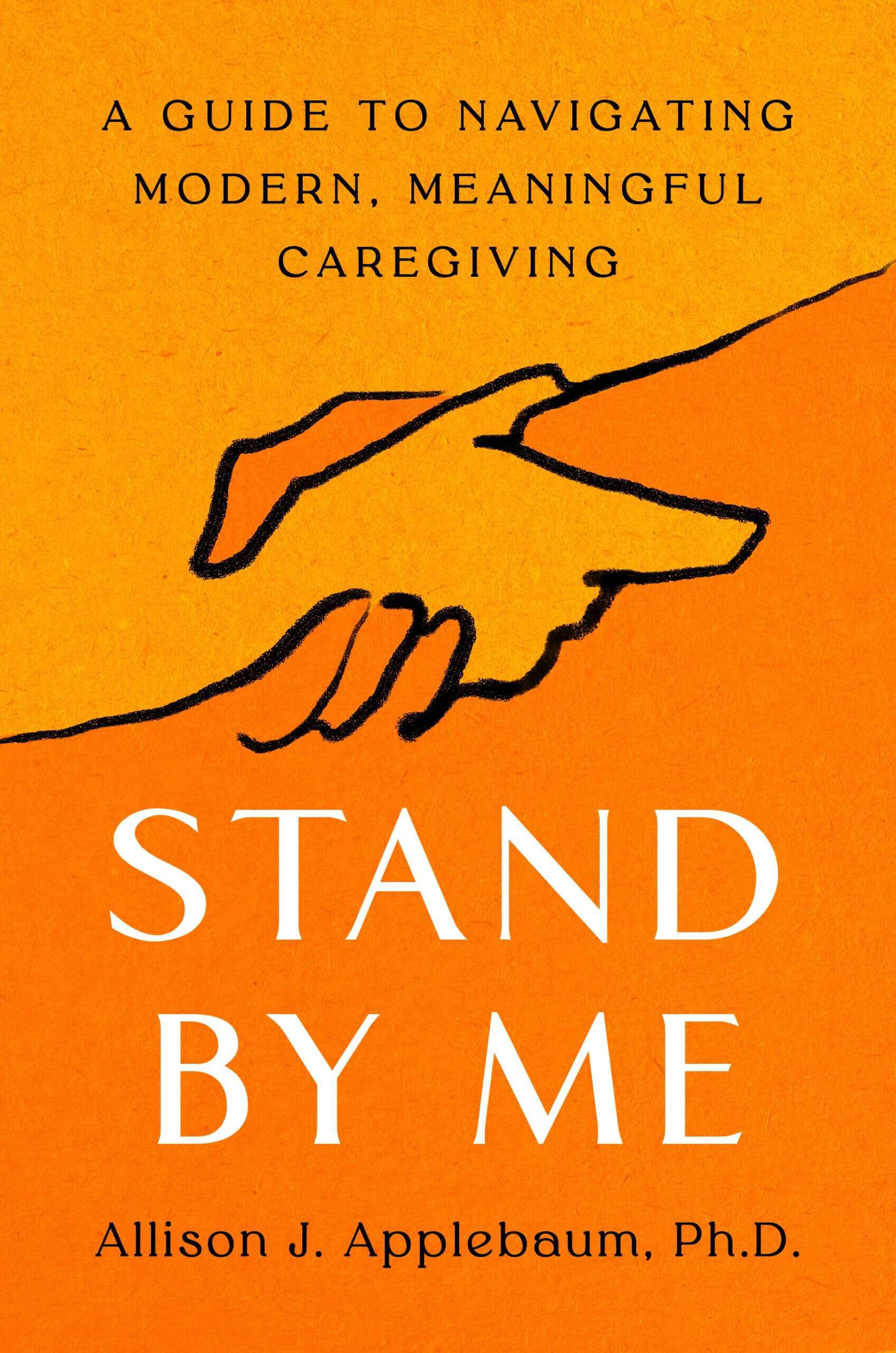
For readers interested in learning more from Allison Applebaum, her book, Stand By Me: A Guide to Navigating Modern, Meaningful Caregiving, is available wherever books are sold. Next week’s Aging Almanac will look at how and why families struggle to access needed services and supports for their loved ones, and how the Trump administration’s recent cuts to Medicaid funding are set to make things worse.
Comments
Nothing yet. Say the first thing.
Sign in to join the conversation.