
Hey Friend!
Leveraged ETF money doubled in two months. Stocks haven’t been this expensive versus bonds in 95% of the last 50 years. And market liquidity just went negative for the first time since 2021.
Three data points, one reading: late.
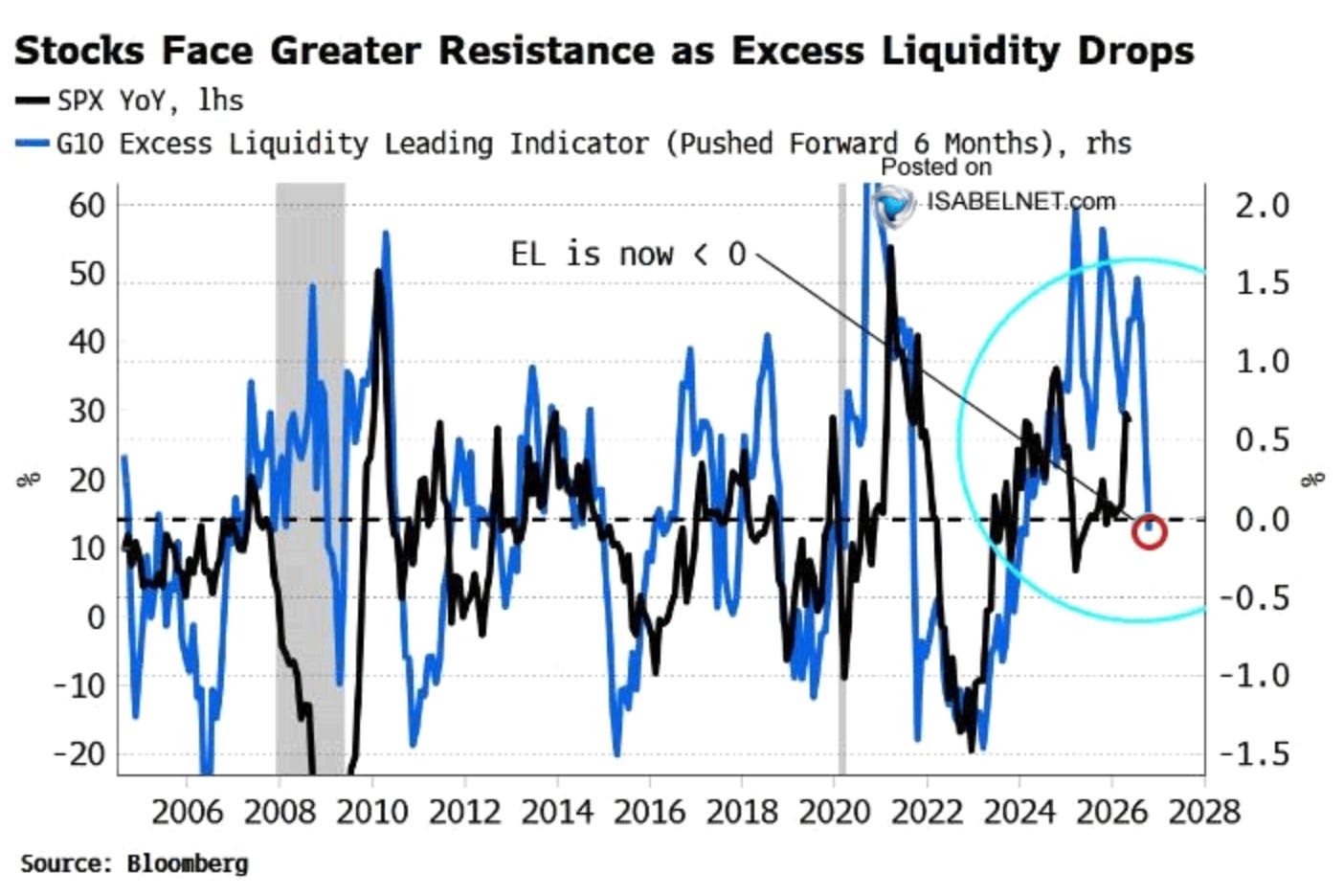
That third one is the one I watch closest. Excess liquidity. Take money-supply growth, strip out inflation and real economic growth, and whatever’s left is the surplus that has to go somewhere. For years it went into risk assets. That’s the tailwind that supported the stock rally for the last years.
It just turned negative. The leading version of it points down for the next three to six months, and it tracks the S&P 500 closely enough that I want to be positioned more risk off for now.
The rate machine is tightening without anyone touching a button. The new Fed chair came in more hawkish than expected: Nine of eighteen members now see a hike this year, and futures are pricing two for 2026.
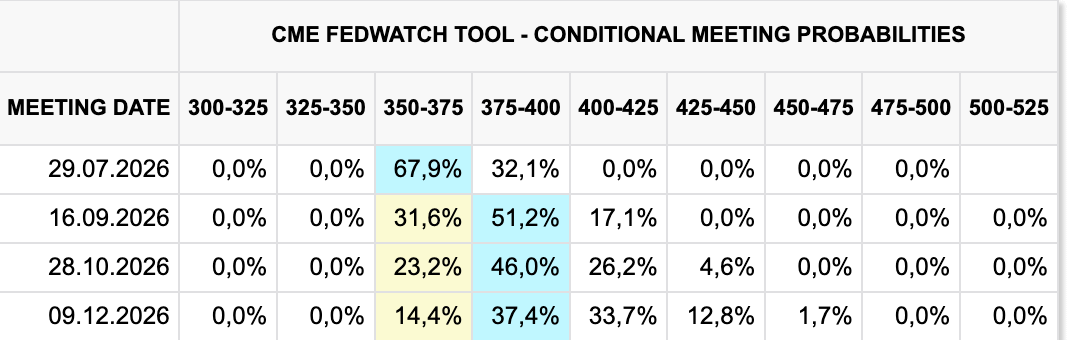
The hike isn’t even the point. The gap between the neutral rate and the terminal rate is closing, so policy gets more restrictive just because the market prices it in. No actual FED rate hike is required.
Two things are colliding right now.
First, stocks have rarely been this expensive relative to bonds. By one read of the last 50 years, the gap is more stretched than 95% of the time, with only 5% of history more extreme. Part of that is earned: corporate profits are strong, so equities keep grinding higher. The other half is bonds getting punished, because inflation is climbing again. U.S. CPI hit 4.2% in May, the fastest pace since 2021, and energy did most of the damage: over 60% of the monthly jump, with the Iran shock pushing gasoline up around 40%.
Second, the crowd is leaning into it with leverage. Assets in leveraged equity ETFs doubled in two months, from $39B to $84B, almost all of it chasing the AI trade. ETFs have pulled a record $837B in the first five months of the year alone.
You don’t need me to call the top. Look at where we are: Expensive, crowded, levered, and late. Decide for yourself which inning of the bubble that is, and how much longer it runs.
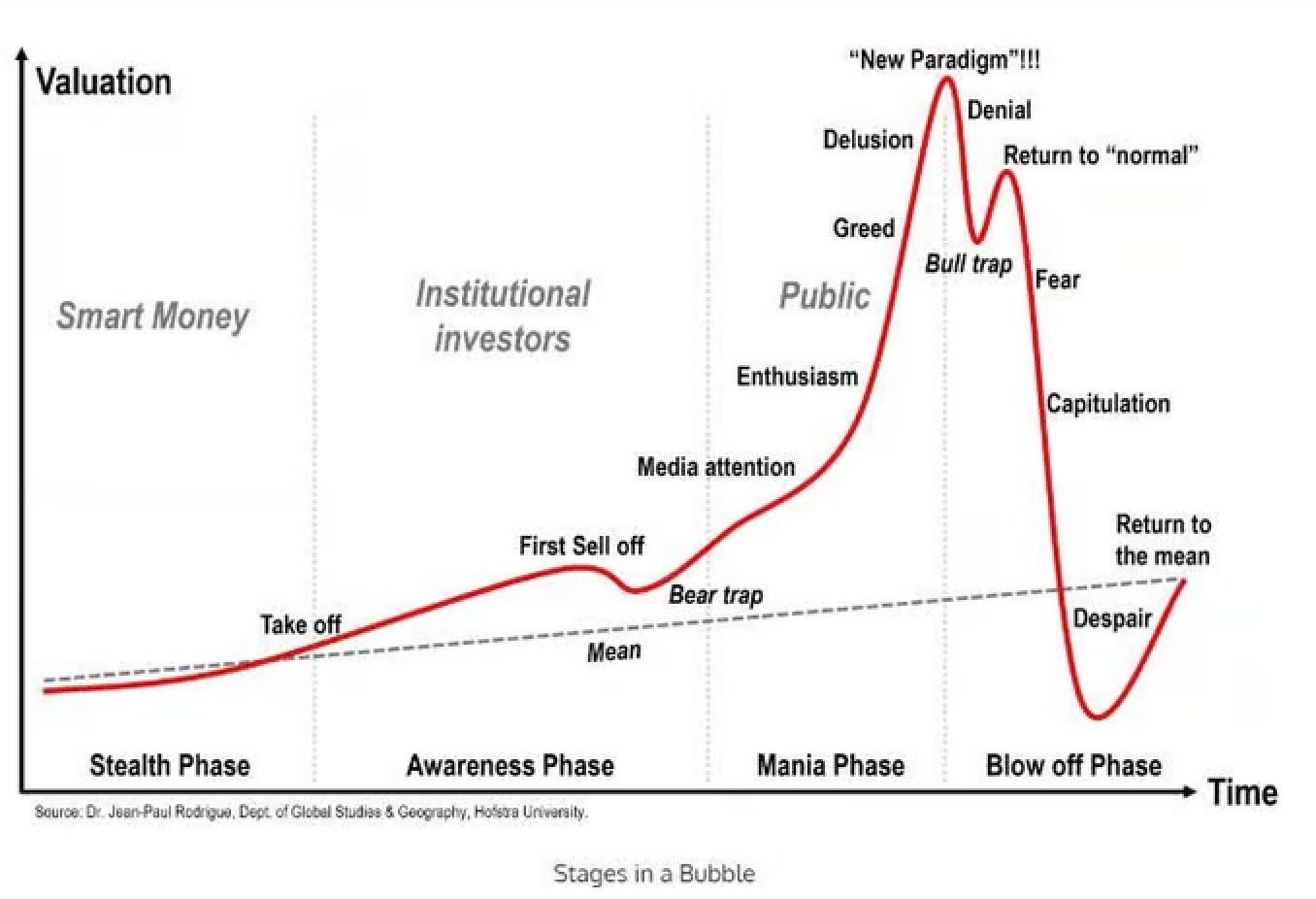
Now I don’t want to be a perma bear and this is not a crash signal. The link between liquidity and price is loose, not mechanical. First hikes came before perfectly good years for stocks in 1997, 1999, 2004 and 2015. Only 2022 burned everyone. So I’m not telling you to sell. I’m telling you the regime changed under the surface, and as long as the fuel is falling, every rally stands on thin ground.
Which is why I keep coming back to one company: Michael Saylor’s Strategy. With the ETFs it’s the main driver for this whole cycle.
The preferred share, STRC, is under real stress. It’s down near $90, about 10% below its $100 target, paying a yield close to 11.5%.
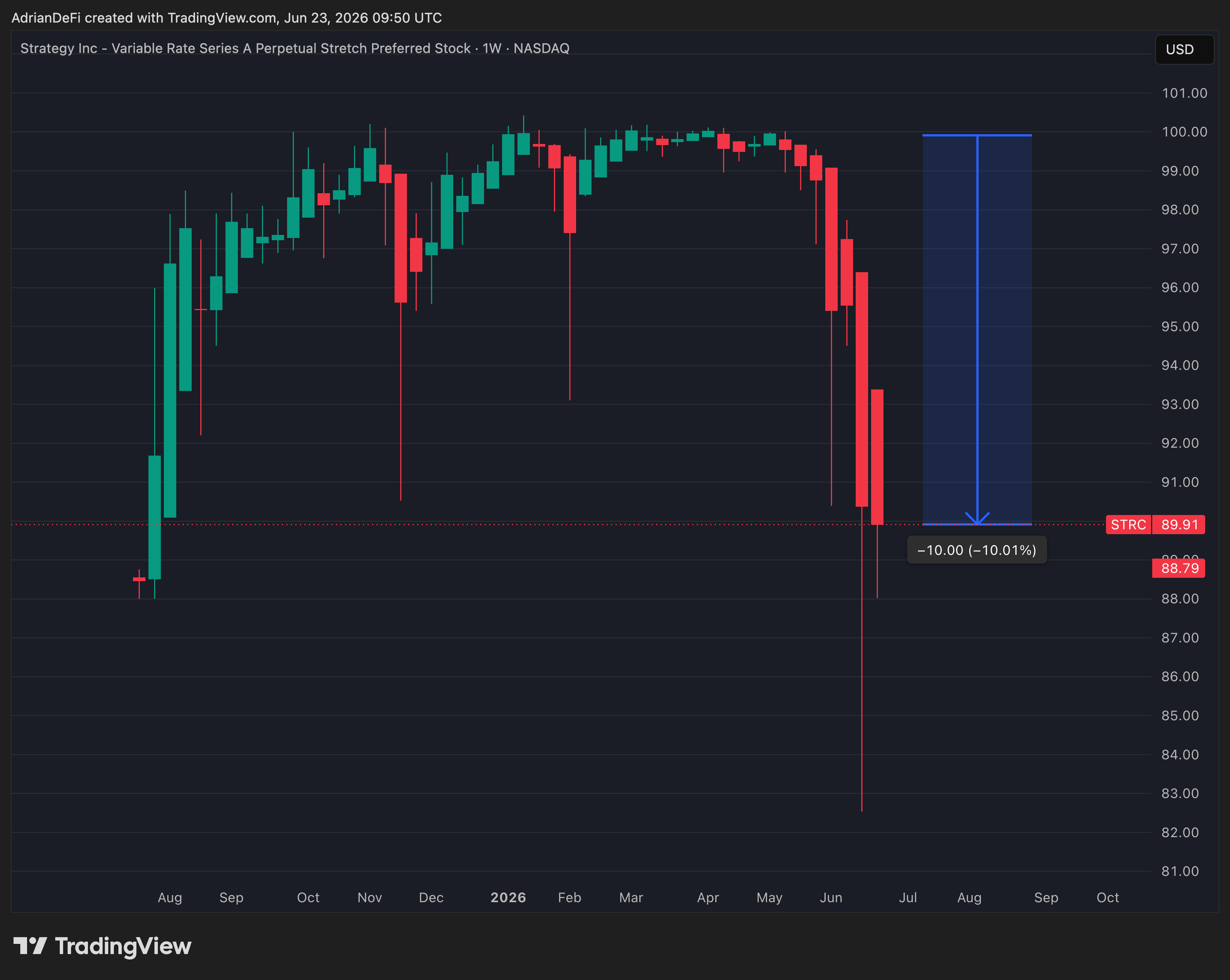
The trap is mechanical: to defend the price they have to keep raising the yield, which strains the structure further. The Bitcoin reserves can absorb that for a long time. But if this bear market runs longer than people assume, the question stops being theoretical. When does Saylor have to sell Bitcoin to fund the dividend?
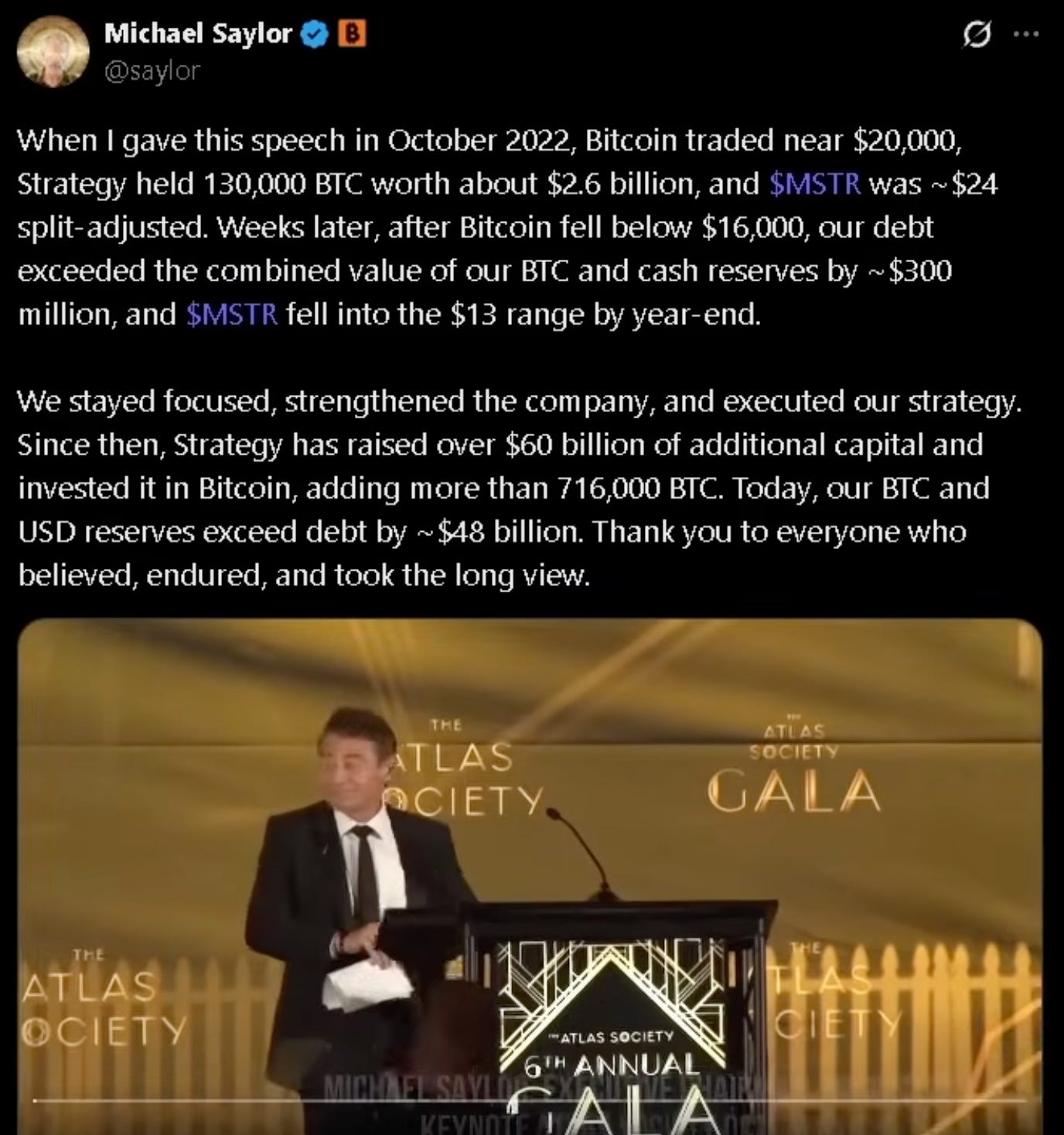
And yet the loudest take, that it’s a Ponzi and he’s fleecing shareholders by diluting, has it backwards. Dilution is the product. He issues shares into strength, buys more Bitcoin, and you get a leveraged-Bitcoin effect without the liquidation risk of real leverage. The balance sheet proves it. At the 2022 bottom the debt was $300M underwater and the stock traded near $13. Today the reserves clear the debt by roughly $48 billion. Same fear as the last bottom. The company is far stronger; the mood far worse. That’s the contradiction worth trading. I’m going to enter a trade for this massive contrarian bet in size and will let you know about it.
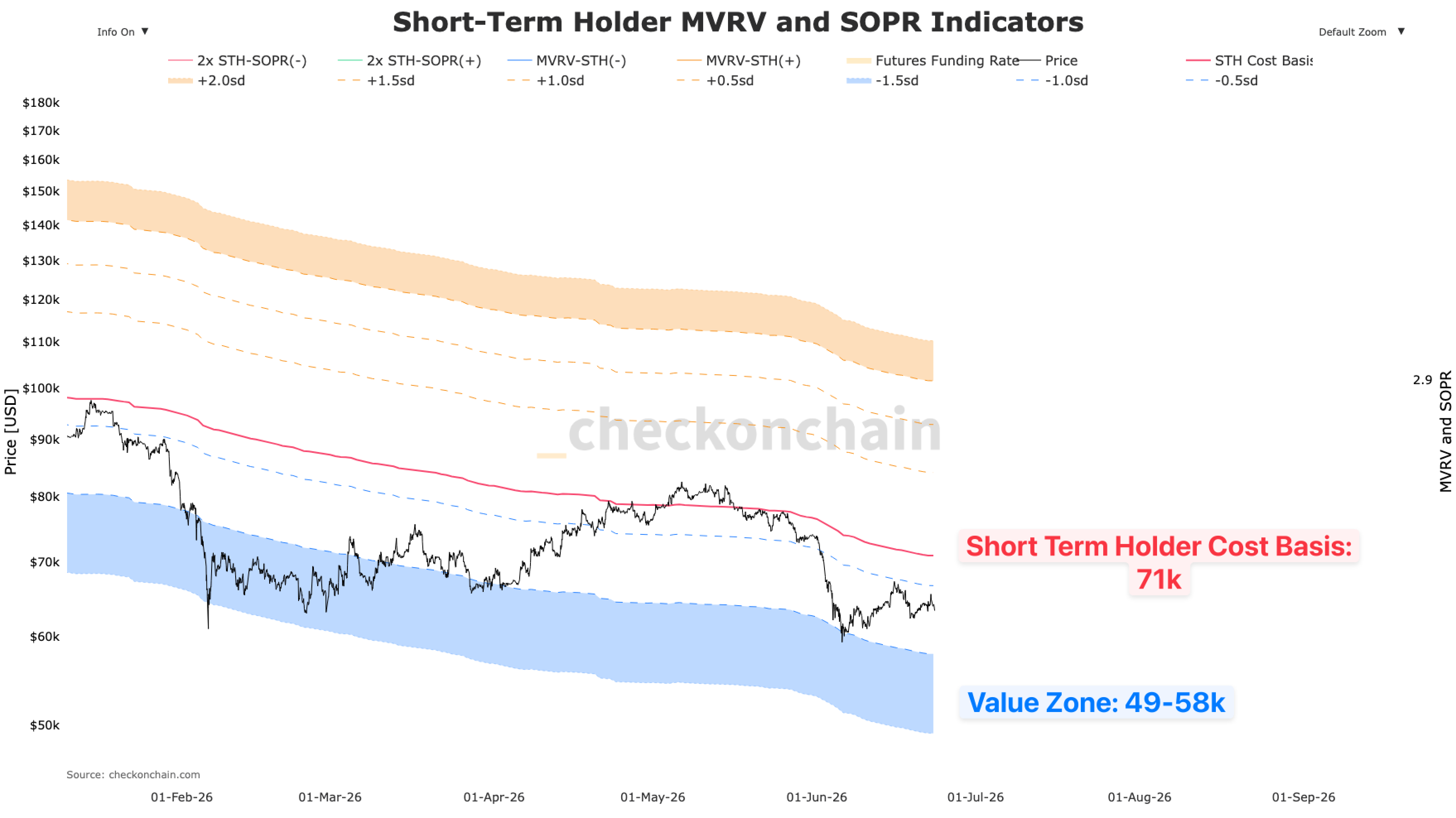
On Bitcoin itself, I’m not chasing. The bid right now comes from futures, not spot: leveraged bets, not organic demand. So this is the map I’m trading around, not a prediction.
~71,000: the short-term holder cost basis. Clear that and price actions get properly constructive.
58,000 down to 49,000: the on-chain value zone, where I’d actually add especially spot.
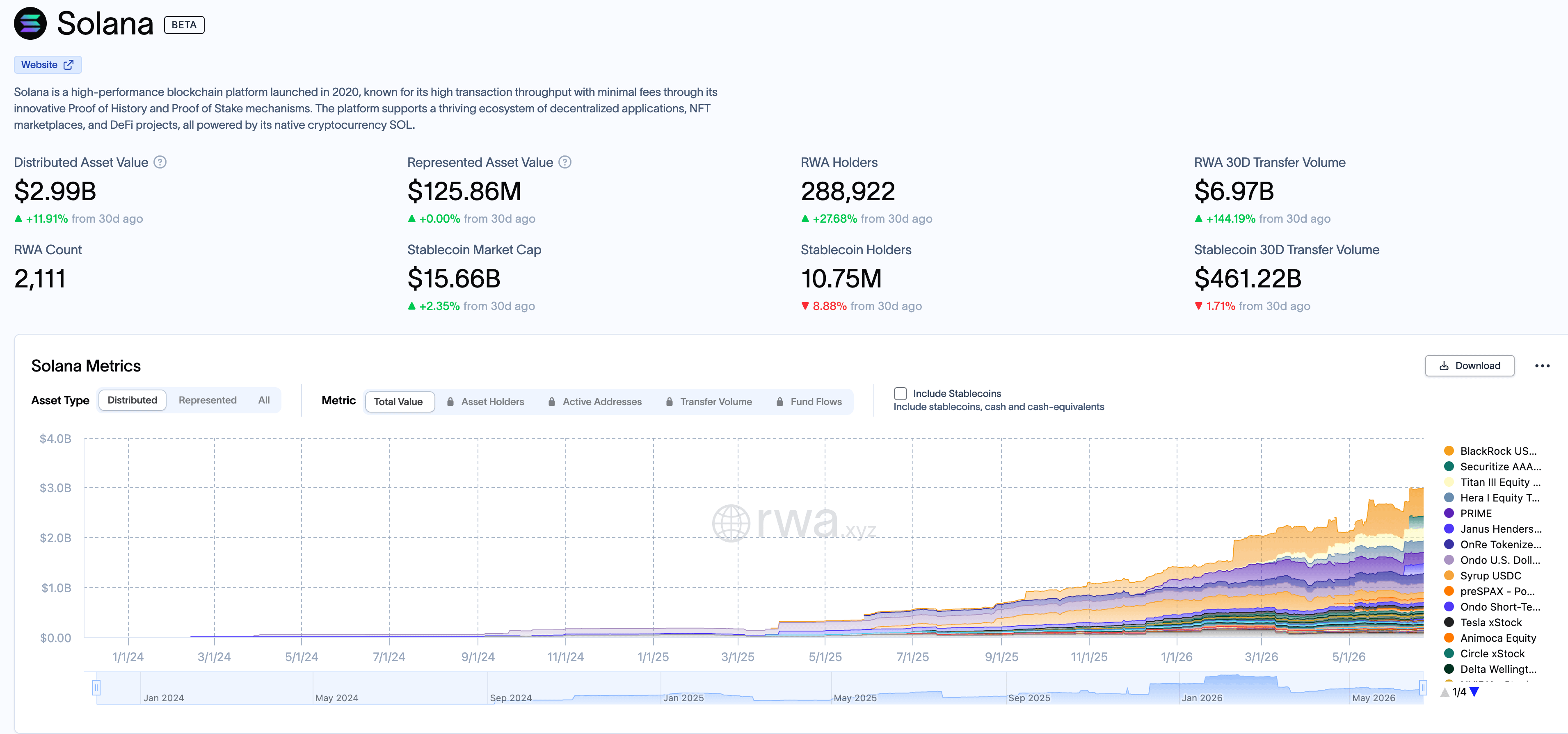
One last thing, because it’s the rare bright spot. Solana is the only major where the story is improving instead of breaking down. SOL is back above $67 after eight straight red monthly candles, and the sentiment is getting better for reasons that aren’t just noise.
Tokenomics could finally getting fixed: proposals to roughly double the disinflation rate and burn more fees, cutting about $1.5B of emissions over six years.
Tokenized stocks: on-chain equity volume roughly doubled this quarter, and the real-world-asset ecosystem just printed an all-time high near $2.99B.
A reported agreement between South Korea’s Toss Bank and the Solana Foundation around stablecoins and payments.
BUT: The tokenomics changes are not fixed. A near-identical tokenomics proposal already failed once because validators don’t want their income cut, and that fight isn’t settled. So I’m watching the rotation, not front-running the vote. Besides PUMP could still be the better bet on Solana if gambling and memes come back.
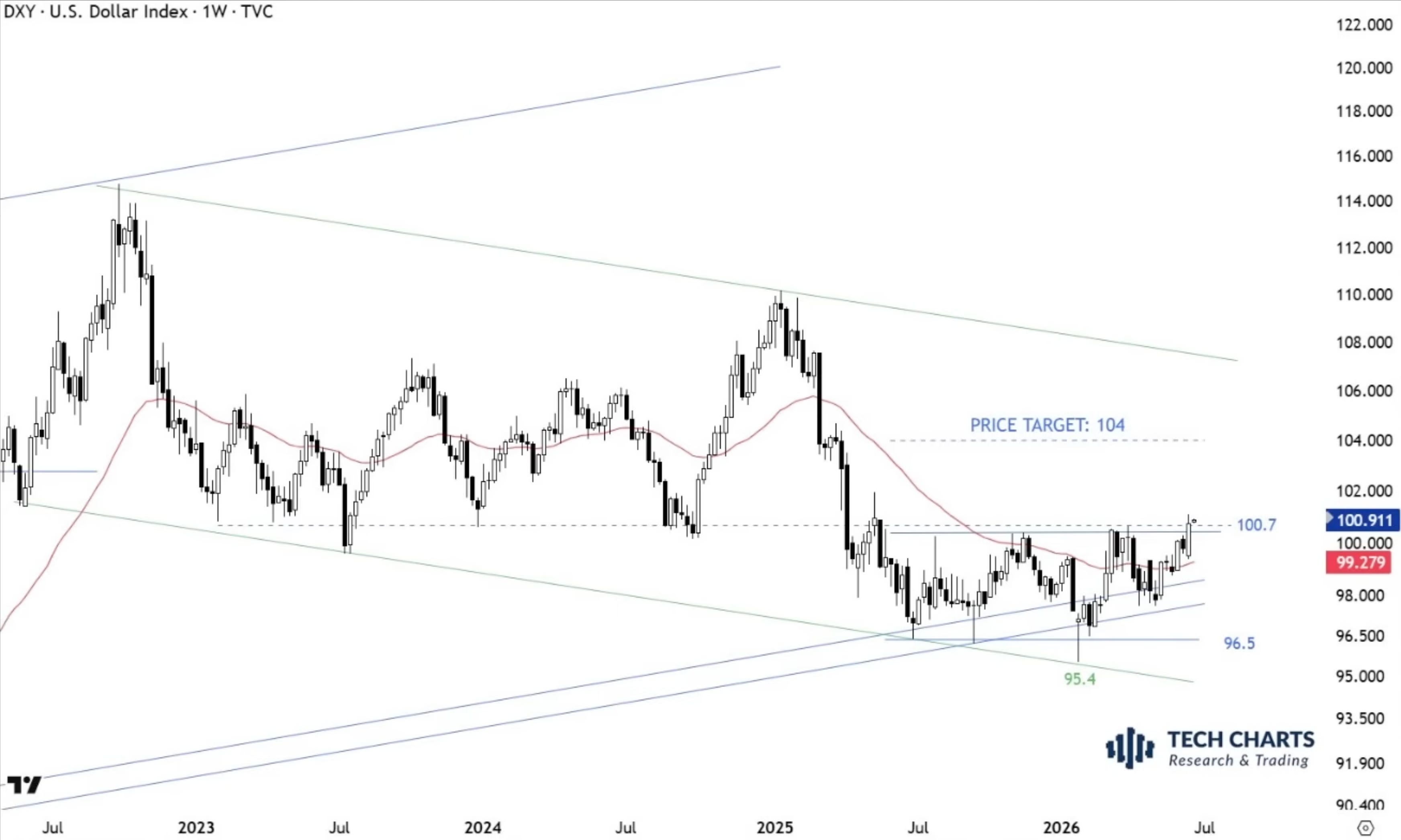
→ So what do we make of all this. The fuel is draining, the dollar’s firm and eventually about to break out above it’s range high of 100.
And obiously AI is everywhere. That’s not a reason to panic. It’s the stage where the positioning is figured out.
So do the unglamorous work. Mark your levels. Watch whether Strategy’s stress forces Saylor’s hand. Keep one eye on Solana. And decide, in advance, what you’d actually buy if 64k turns into 55k.
That’s it for today’s episode, thank you for being here! Till next time, stay safe!
P.S. If you’d rather not work out custody, position sizing and what’s actually signal on your own, that’s the work I do one-on-one. Reply to this and I’ll send you the details.
No posts
Comments
Nothing yet. Say the first thing.
Sign in to join the conversation.