

The best way to support me is to share this newsletter. Thank you!
Hey Friend!
DeFi looks cooked after the $300m KelpDAO hack, Trump is catching insider trading accusations, and markets are still pushing higher like they’ve finally made peace with the chaos.
The S&P just put in its biggest recovery since April, risk appetite is picking up again, and liquidity is improving. That matters. Because even with Hormuz still unresolved, oil still twitchy, and Trump back in full headline mode, the market keeps choosing to lean forward instead of shut down.
That doesn’t mean everything is suddenly clean and easy. It just means price is handling the mess better than just following headlines.
Bitcoin holding above 74k shows us the same thing. So does ETH starting to look better on the EMA cross
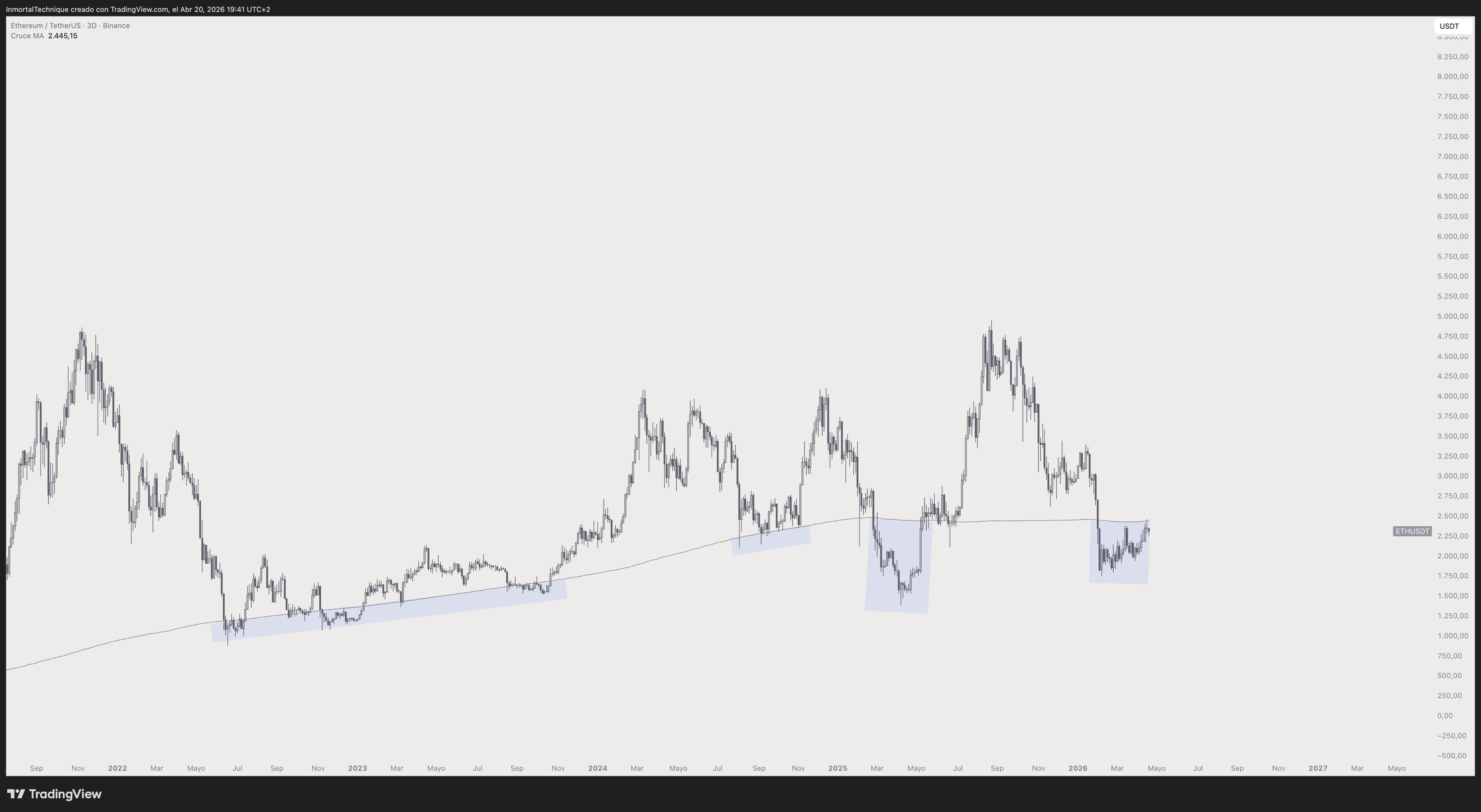
and so does the growing sense that altcoins may finally be getting ready to participate again. Even USDT dominance is starting to roll over.
Not a victory and fully risk on signal yet but definitely a better outlook for the coming weeks.
📈 Market Update – Bitcoin kept grinding higher through macro noise, holding key support while ETF inflows, corporate buying, and tighter supply kept the bid strong. The market is starting to care less about the chaos.
🐂 Alpha Insights – PUMP is starting to look like one of the more compelling high-beta bets in the Solana ecosystem: dominant market share, strong revenue, active buybacks, and a valuation that still looks cheap if memecoin activity returns with the next liquidity wave.

The current state of the market.
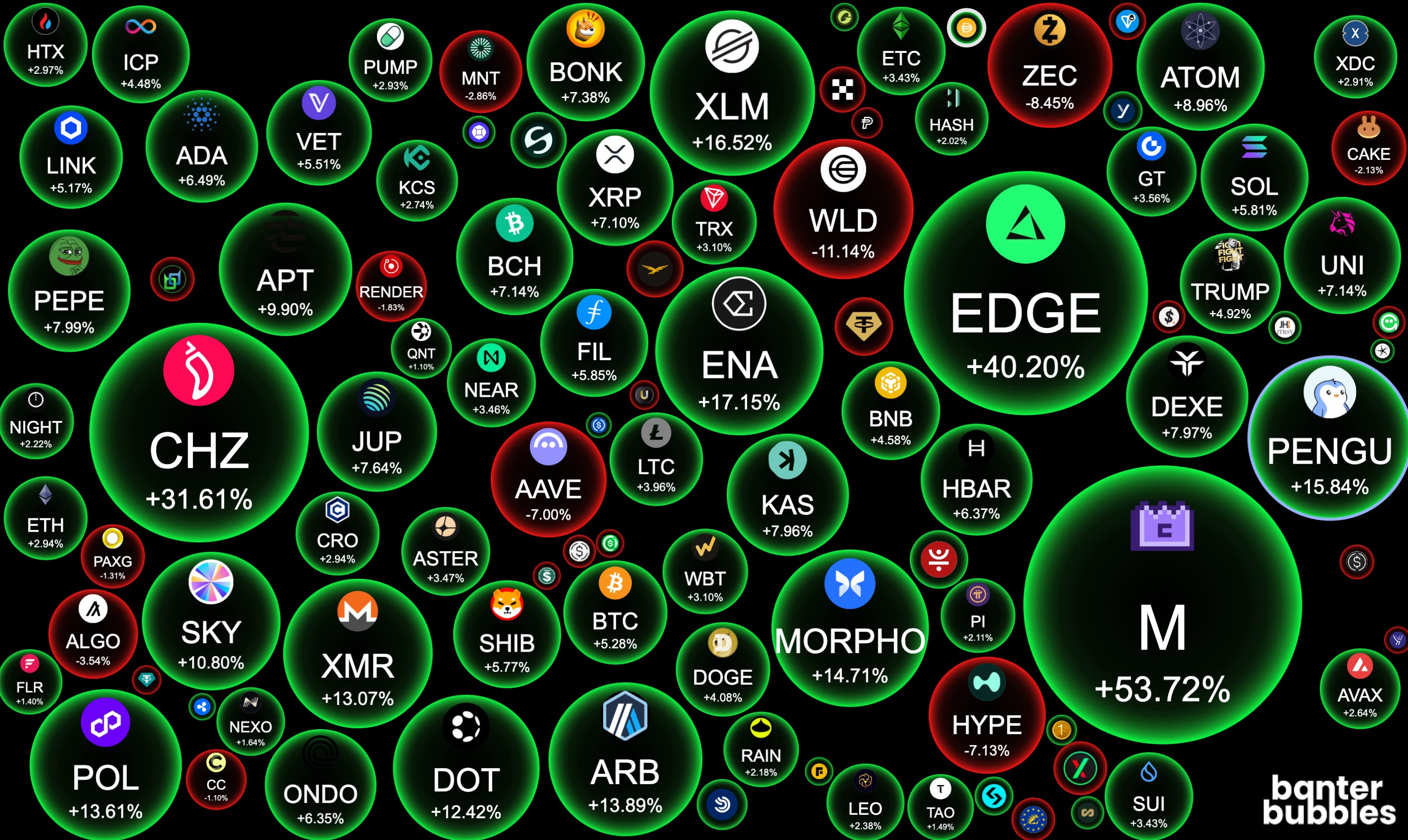
→ On the weekly we are seeing a broad rally across memecoins (PENGU, BONK), L1s (DOT, ATOM), L2s (POL, ARB) and some strength in DeFi (ENA, MORPHO) while AAVE remains the loser after the recent $300m KelpDAO hack.
Bitcoin spent the last 48 hours doing something new strong markets tend to do: Ignore the mess and grind higher anyway.
BTC moved from roughly 73.9k to above 77.5k, a clean 5% push while Iran headlines, oil volatility, and Fed uncertainty all stayed in the background. No big euphoric breakout yet but steady price acceptance higher.
Part of that comes from flows.
Spot BTC ETFs just printed their strongest weekly inflows since mid-January, with around $1B coming in and BlackRock’s IBIT leading with $612M. Add whale accumulation, ongoing corporate buying (Strategy bought 34k BTC for about $2.54B), and tighter available supply, and it becomes easier to understand why dips around 75k kept getting bought so quickly.
→ This is not just momentum. There is actual demand sitting under the market.
The chart reflects that too.
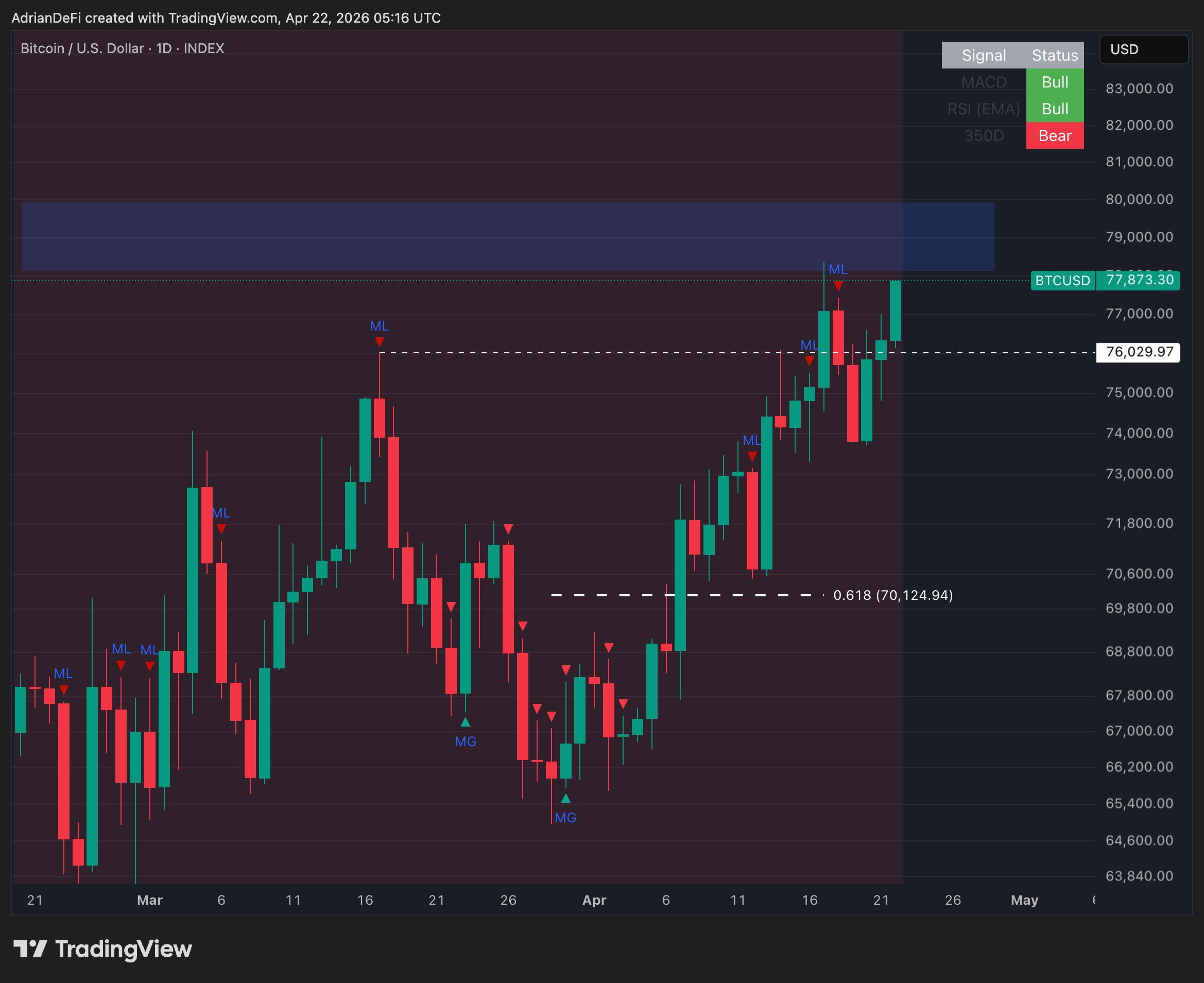
Bitcoin held the 75k area on the pullbacks, reclaimed 76k, and is now leaning into the next resistance zone around 78k to 80k. That is the next real test. If BTC clears it cleanly, the market likely starts treating this move as more than just another bounce.
For now, the map is pretty simple:
76k is first momentum support
75k is the key near-term defense
74k remains the stronger structural floor
78k to 80k is the next resistance cluster
That already looks constructive.
Then there’s USDT dominance, which makes the setup even more interesting.
USDT.D has now lost its higher-timeframe uptrend, and the 1W MACD has rolled over. In recent years, that combination has usually marked the point where capital starts leaving the sidelines and moving back into risk. First Bitcoin, then ETH, then the rest of the market starts to wake up.
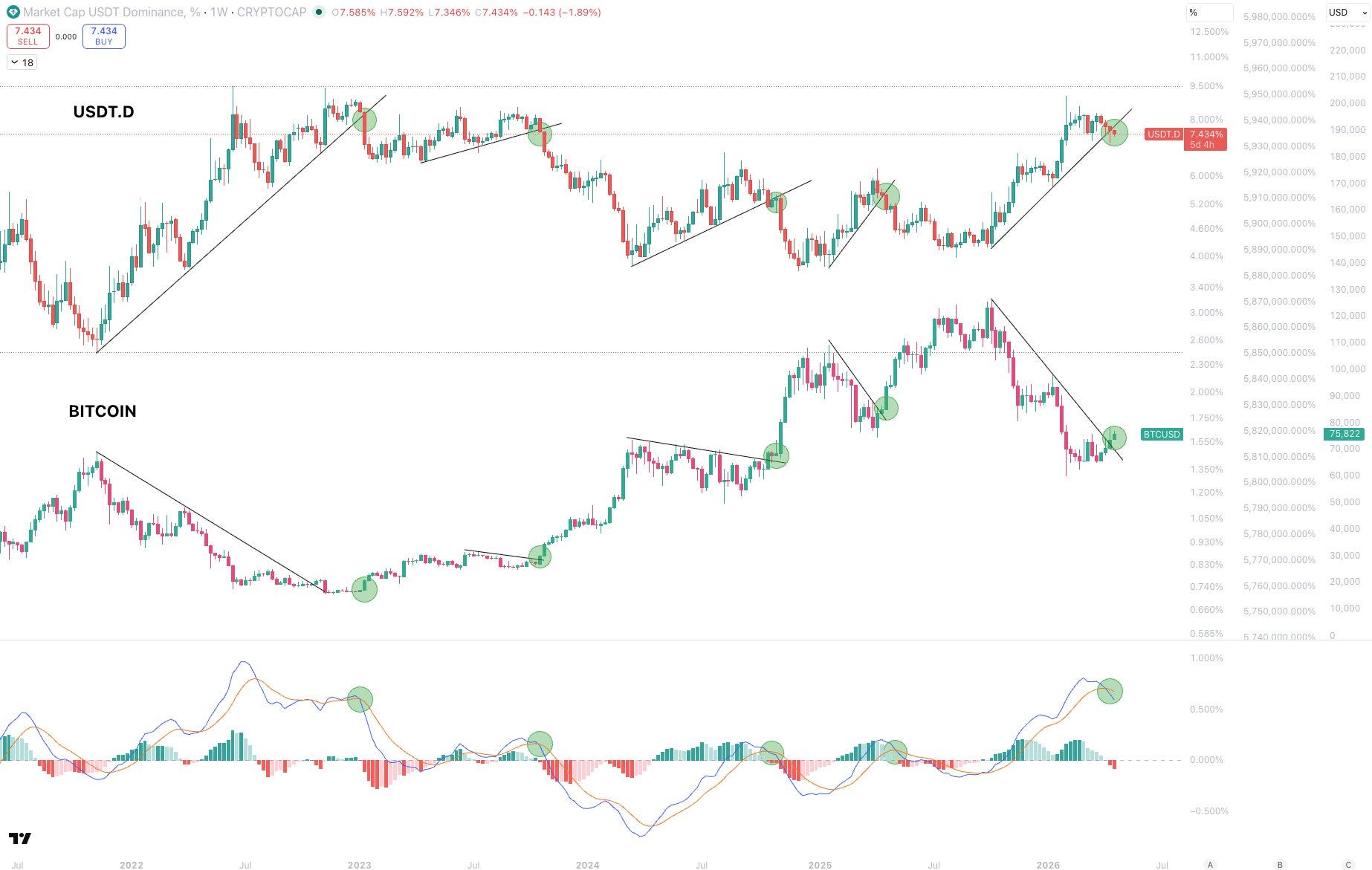
USDT.D is not just a stablecoin chart. It is a read on whether money wants to stay parked or get back to work. And right now, it’s starting to say risk-on.
→ A bearish USDT.D chart is usually a bullish crypto chart.
Put it together and the message is fairly clean: Bitcoin is holding higher, institutional demand is there, supply is tightening, and one of the better higher-timeframe risk gauges might now rolling over in favor of the bulls.
Macro is still messy. Oil can still cause problems. The Fed can still get in the way.
But the market is starting to care less.
That is usually how the tone changes, so maybe this run up has legs for a while. The market looks better in the short term than most expected.
BTC pushing through 77.9k with rising volume, institutional buying, and clean support around 76k suggests this move can still stretch higher from here.
But the bigger cycle picture still argues for caution.
If the 4-year-cycle pattern holds, the deeper low likely comes later in 2026, with 41k to 60k still on the table before the real long-term reset is done. That’s why this still looks more like a tradeable rally than the moment to go full risk-on.
The clean takeaway for me: near term, BTC can still push into 78k to 80k as long as 76k holds. Bigger picture, staying stable-heavy still makes the most sense until the cycle low is further along.
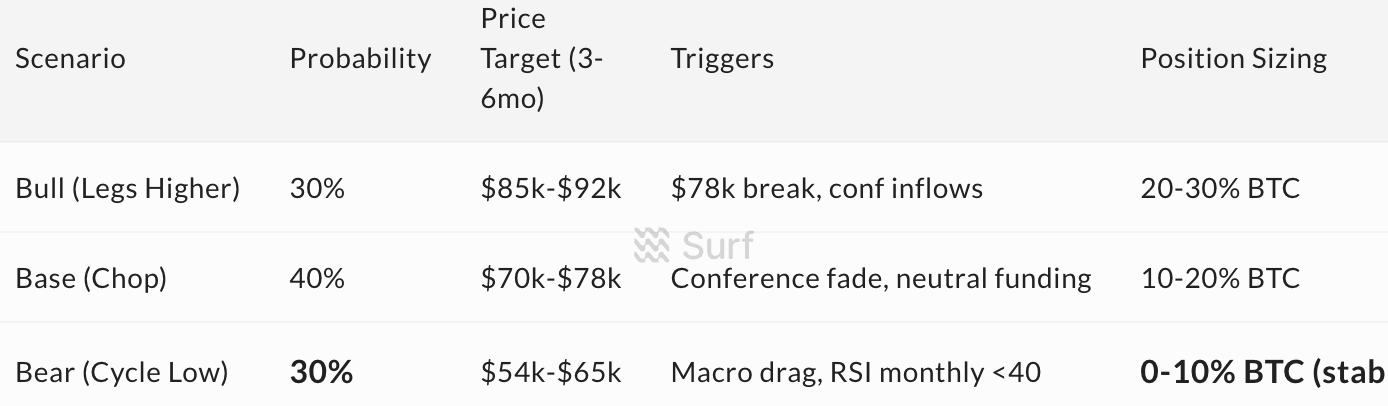
Bitcoin looks strong for now. Just not cheap enough yet to forget the larger setup and go fully risk-on.

Good opportunities I discovered.
This cycle, there’s a growing case that some altcoins may already be further along in the bottoming process that BTC.
That doesn’t mean BTC has definitely bottomed for the cycle but altcoins might have seen the bottom already.
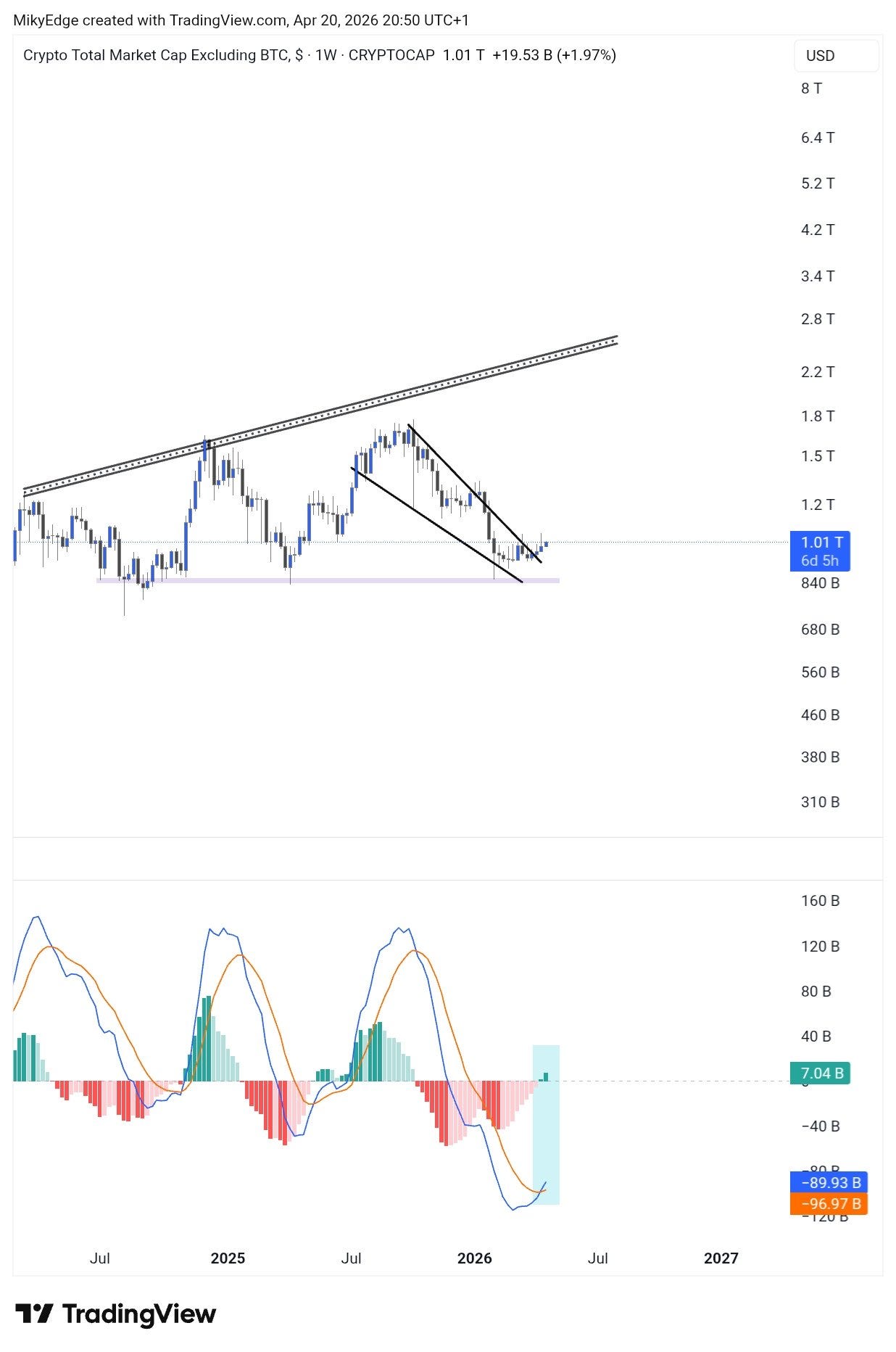
There are a few reasons for that…
First, the Solana ecosystem has effectively been in its own bear market for more than a year already. That matters because time is part of the cleansing process. Some of these assets have already seen a lot of pain.
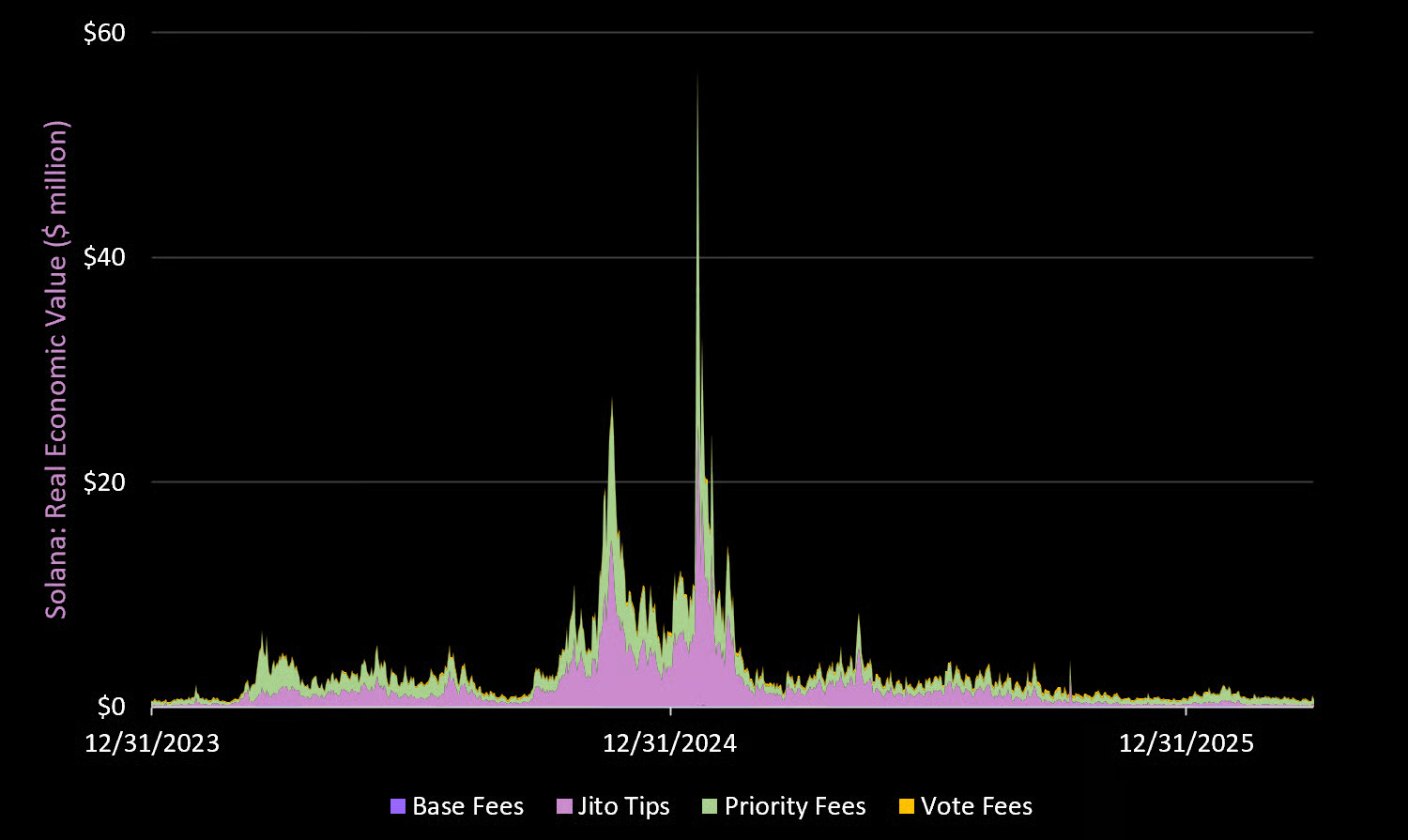
The Solana Network did $89.9m in total fees in Q1 — the lowest since Q3-23. This was down 1.4% from Q4 and 68% year over year.
Second, we’ve seen this before.
In the last crypto winter, several high-profile alts bottomed ahead of BTC. ETH did. DOGE did. The idea that Bitcoin always bottoms first sounds neat on paper, but the market has never been that obedient.
The thesis here is that the best-performing names are increasingly capable of trading on their own fundamentals, positioning, and narrative strength rather than waiting for BTC to bless the move. That’s a meaningful shift.
That brings us to PUMP.
PUMP is one of those ideas that still makes some people twitch because it sits at the center of the memecoin infrastructure, and that sector will outpergform again when risk is back.
And during Q1, PUMP generated more revenue than the Solana L1 itself while trading at just 1.2% of Solana’s market cap, or 3.4% on a fully diluted basis.
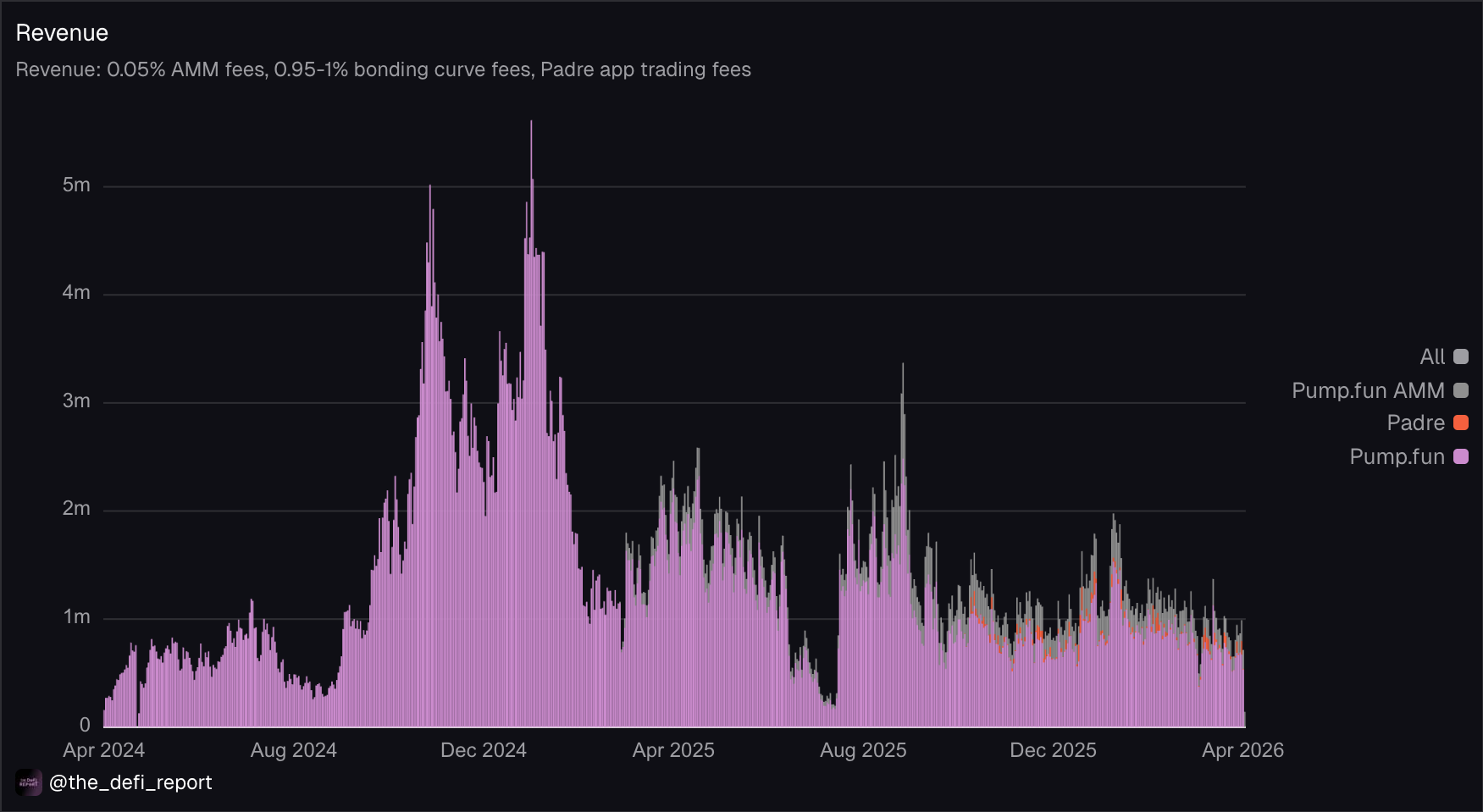
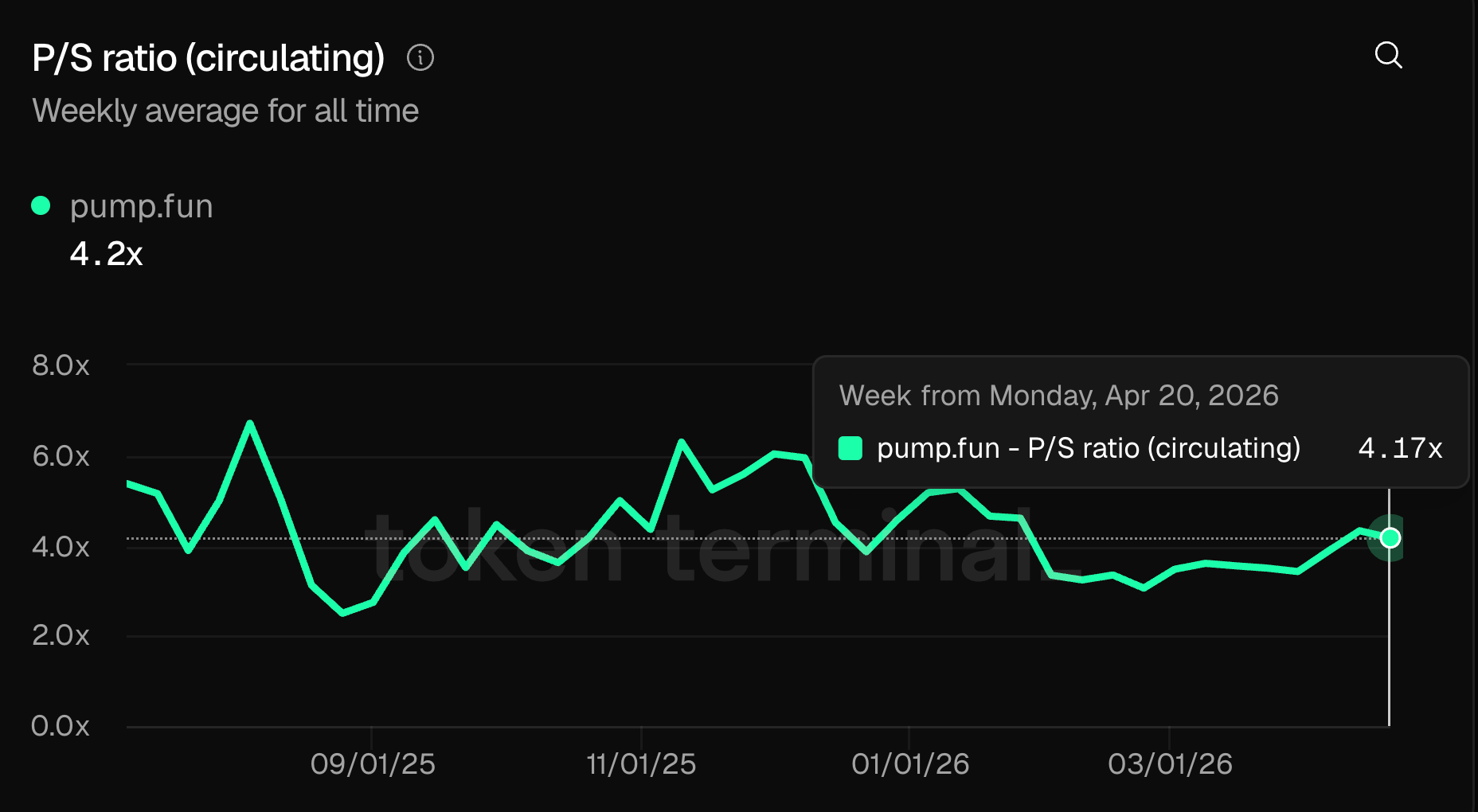
Based on Q1 revenues, the price-to-sales ratio sits around 4.2, which is extremely interesting.
Then you add the operating picture.
PUMP has shown strong user retention during the bear market. It still holds more than 90% market share on Solana in one of the hottest segments from the last cycle.
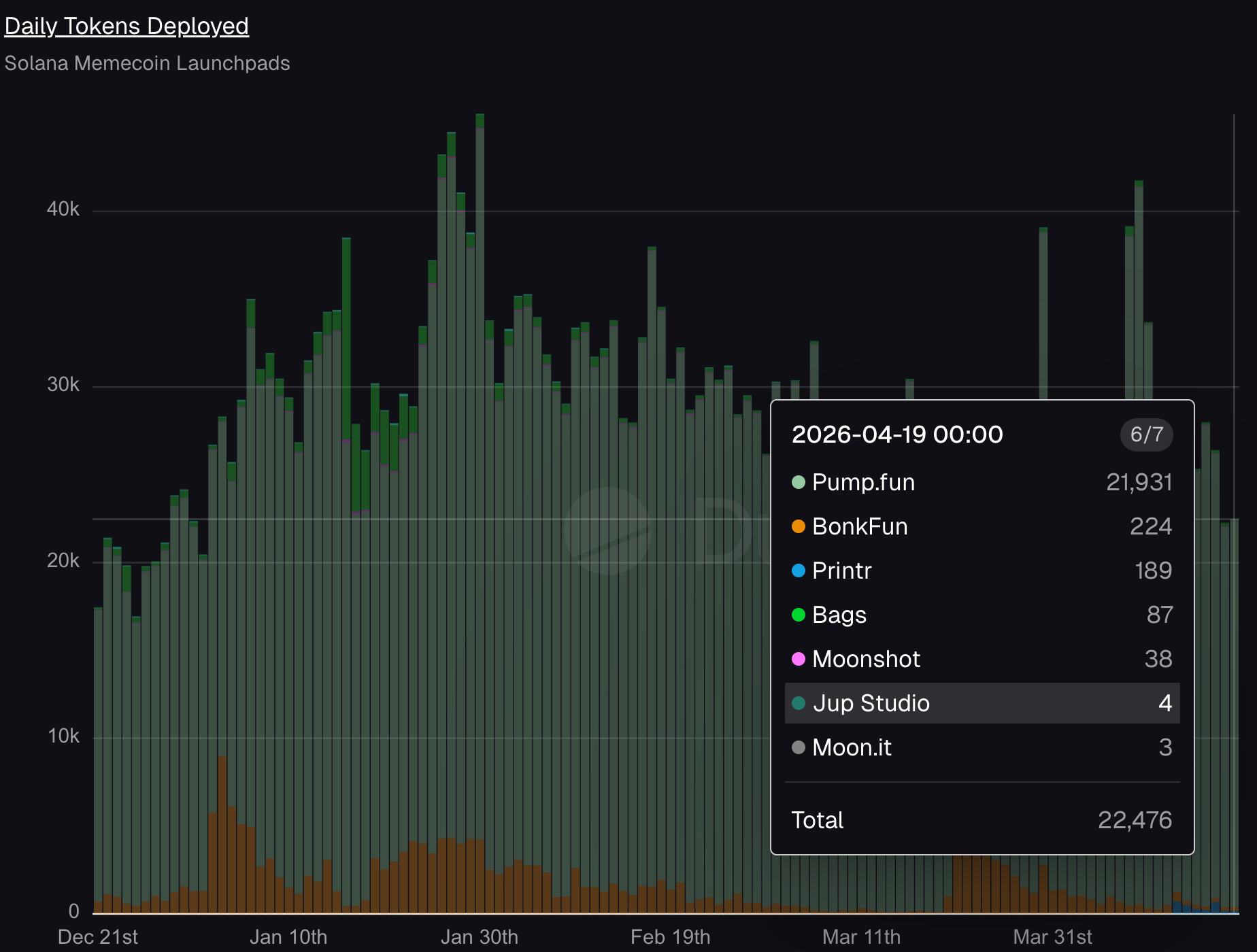
And it controls a wide chunk of the retail trading stack: launchpad, DEX, trading app, and social layer.
That kind of vertical ownership is worth a lot because crypto’s biggest winners rarely own just one feature. They own behavior.
→ PUMP is not just a token. It’s exposure to a category leader with users, distribution, and actual monetization.
The tokenomics help too.
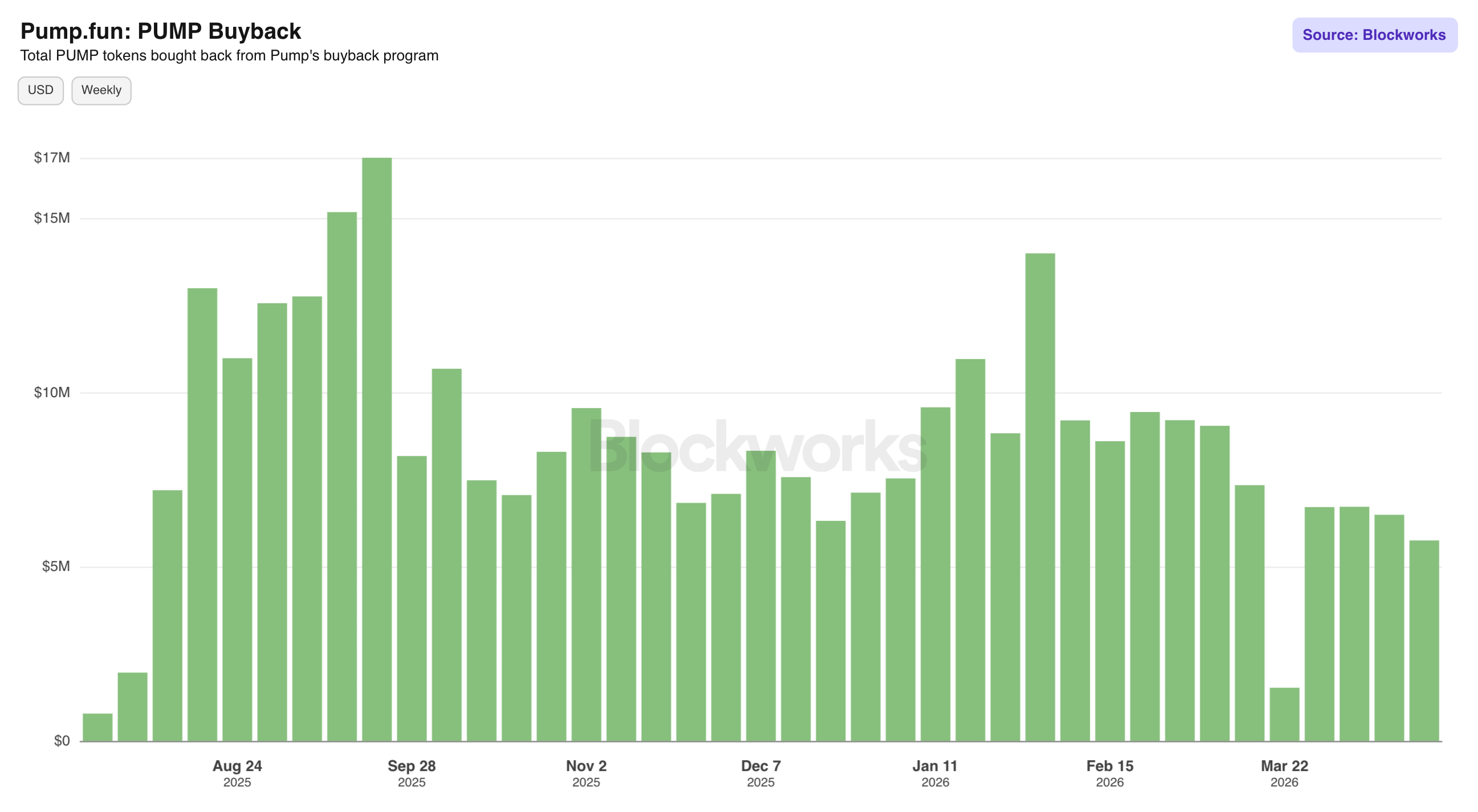
PUMP is currently buying back tokens with 100% of their revenue, which gives the setup more substance than the average “trust us bro” emissions schedule.
Last week this was $5.7m in PUMP tokens.
Price-wise, it’s down 79% from all-time highs and 55% from ICO, with a low hit on April 2 at $0.0158, down 82%.
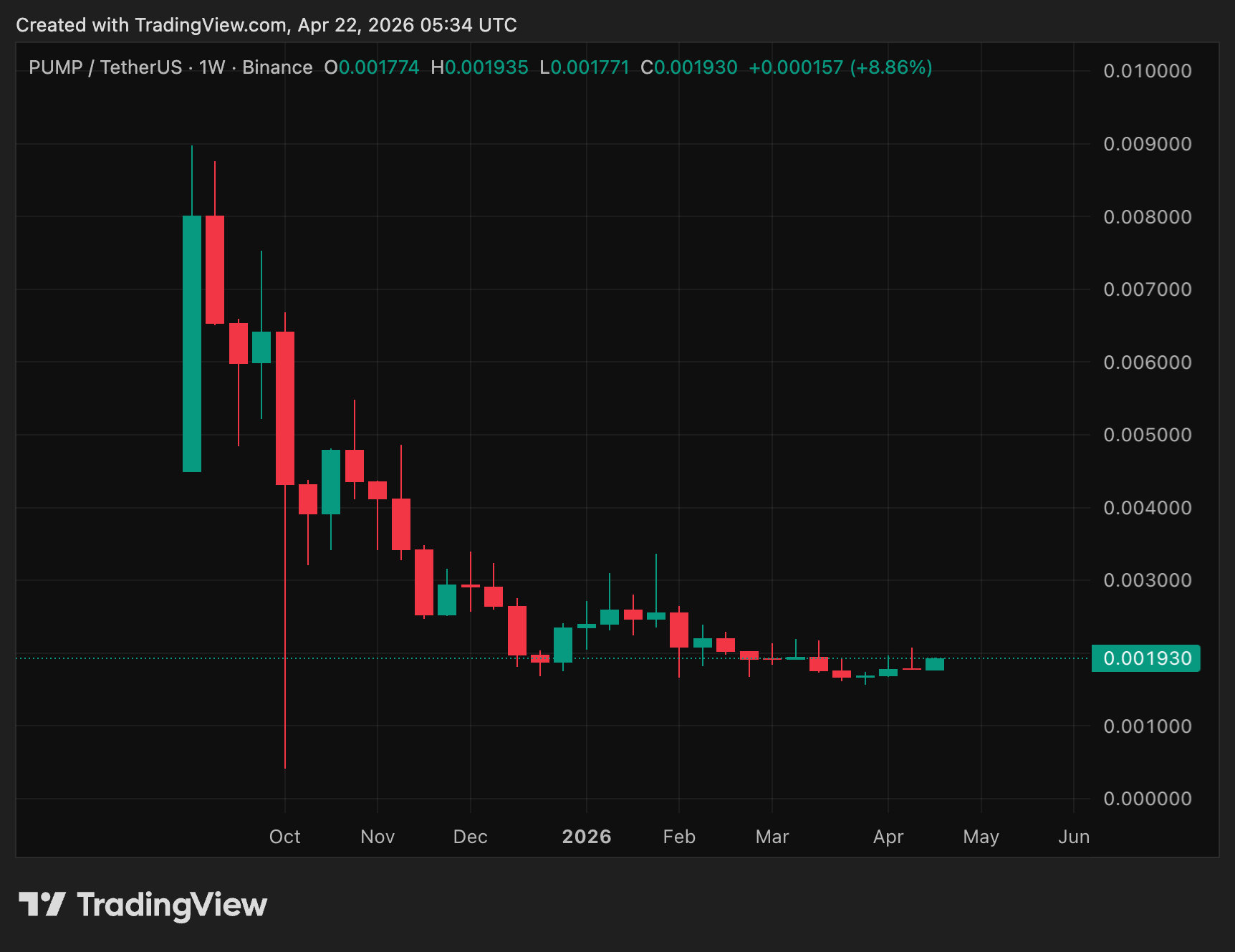
It seems now close enough that the risk/reward starts to look compelling if your horizon is measured in years instead of weeks.
And that’s the key framing here.
This is not about calling the exact low. It’s about allocating to potentially strong assets with functioning businesses.
With attention shifting toward the Hyperliquid ecosystem, there’s a decent chance investors have underpriced the fact that memecoins and the apps serving them had very real product-market fit in the last cycle. People may dislike that reality, but they used it anyway.
That leaves PUMP looking cheap if you believe that behavior returns with the next liquidity expansion.
Now, obviously, this is not some risk-free layup.
Security and smart contract risk remain a real problem, especially in an environment where DeFi hacks cost protocols and users hundreds of millions.
Competition is another factor.
PUMP briefly lost share to Let’s Bonk before reclaiming it, which is a good reminder that consumer crypto apps operate in brutal environments with very low switching costs. Users are loyal until they aren’t.
There’s also sector risk.
Memecoins had obvious product-market fit last cycle, but that doesn’t guarantee the next retail mania looks identical. Attention is the one asset in crypto with the worst unlock schedule of all time.
And then there’s the July unlock.
About 11% of supply unlocks in a cliff event, which is a known source of possible volatility. The buyback mechanism may help offset some of that pressure, similar to what traders have appreciated in HYPE, but it’s still a real event to respect.
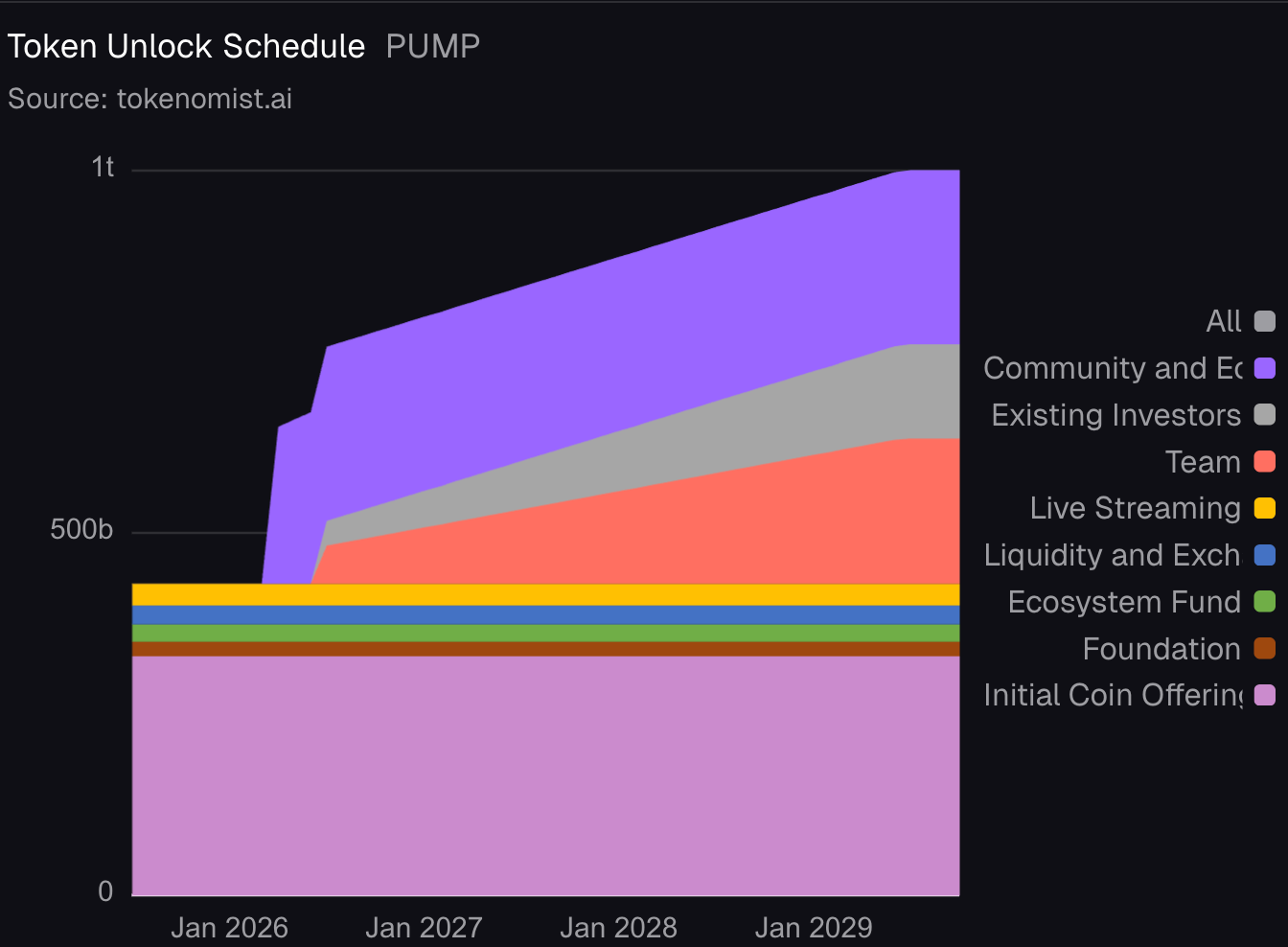
→ No risk, no reward still applies here. The point is not to ignore the risks. The point is that the upside may justify carrying them.
That’s why PUMP starts to make sense as a long term portfolio position.
Because the asset looks fundamentally stronger than its price implies, and because the best opportunities rarely arrive after the market has finished making everyone comfortable.
There’s one more useful angle here.
PUMP likely has high beta to SOL if and when liquidity returns to crypto. That changes portfolio construction a bit. If you believe PUMP offers stronger upside torque on a recovery, then holding spot SOL becomes slightly less compelling at the margin.
In plain English: if you want exposure to a Solana ecosystem rebound, PUMP may be a good expression of that bet.
If you want a straight to the point newsletter full of calls, new projects, airdrop farms, memecoin and DeFi moonshots, then Hix0n’s Confidential is the place for you. I can really recommend his take (if you’re comfortable with high risk).
That’s it for today’s episode, thank you for being here!
Till next time, stay safe!
No posts
Comments
Nothing yet. Say the first thing.
Sign in to join the conversation.