
Hey Friend!
We just watched a national stock index trade like a memecoin.
South Korea's KOSPI fell 44% in about 40 days, wiped out roughly $2 trillion, and then jumped 17% in a single session this Friday.
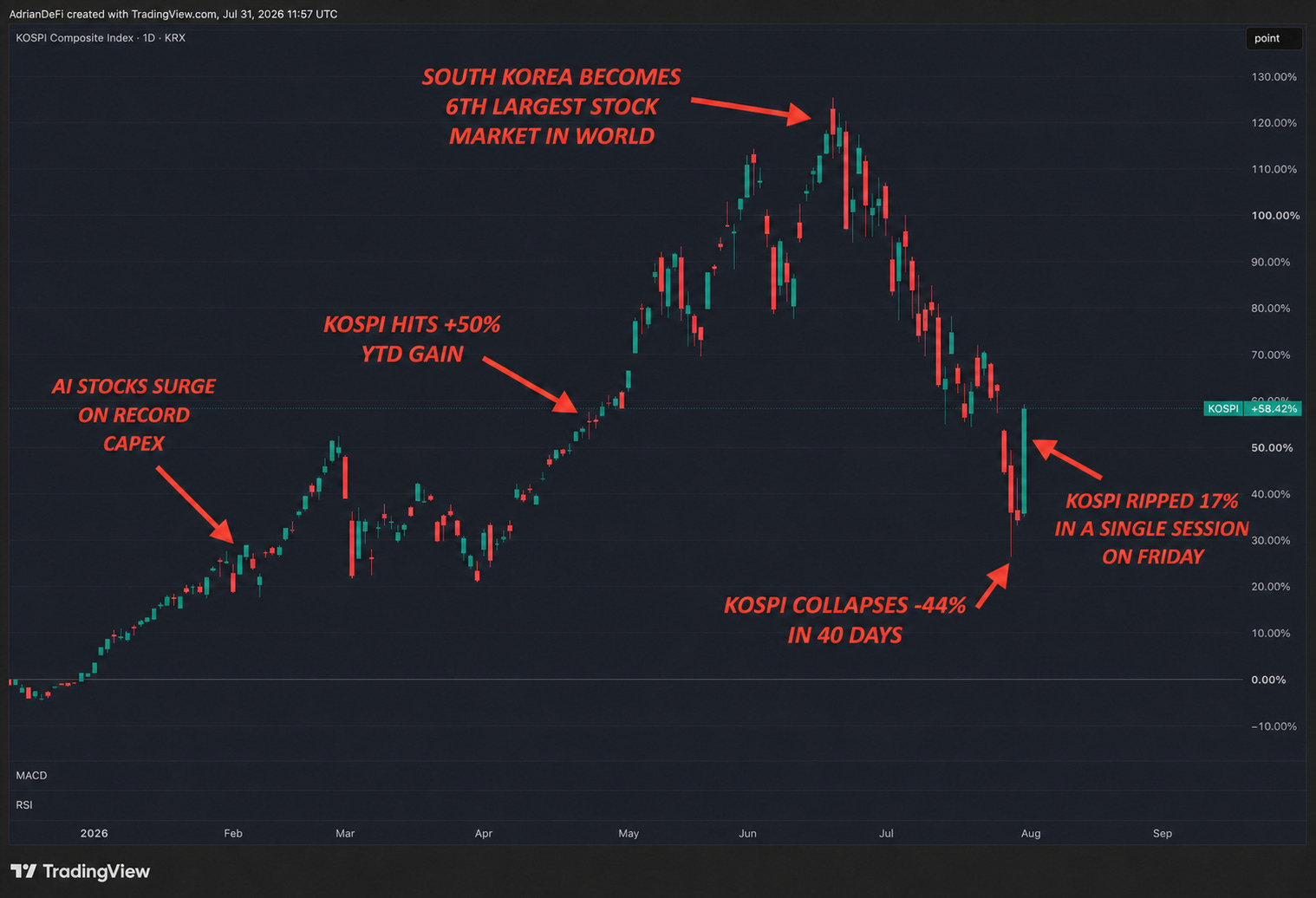
But volatility is not the same as a bottom. We are sitting on the highest long-term yields since 2007, an equity market unwinding leverage in both directions at once, and a Bitcoin bear market that is only 261 days old. The capitulation has not shown up. Neither has the recovery.
Let’s get into the broader picture and how to set up for the coming weeks:
️ ⚡ On today's Episode:
📈 Market Update – The Fed held at 3.50% to 3.75%, but the 30-year Treasury yield still climbed to 5.21%, its highest since 2007. Financial conditions are tightening while leverage and concentration drive extreme equity moves.
🔊 Project Updates – Hyperliquid generated $23 billion of its $45 billion weekly volume from HIP-3 real-world asset markets. Revenue is concentrating in fewer places as total DeFi app revenue heads toward its weakest month since October 2024.
🐂 Alpha Insights – Physical trading card protocols earned nearly $100 million in H1 2026. Collector Crypt trades at a $32.7 million market cap below 1x annualized net revenue, but token value capture and unlocks remain the core risks.

The current state of the market.
Market Overview
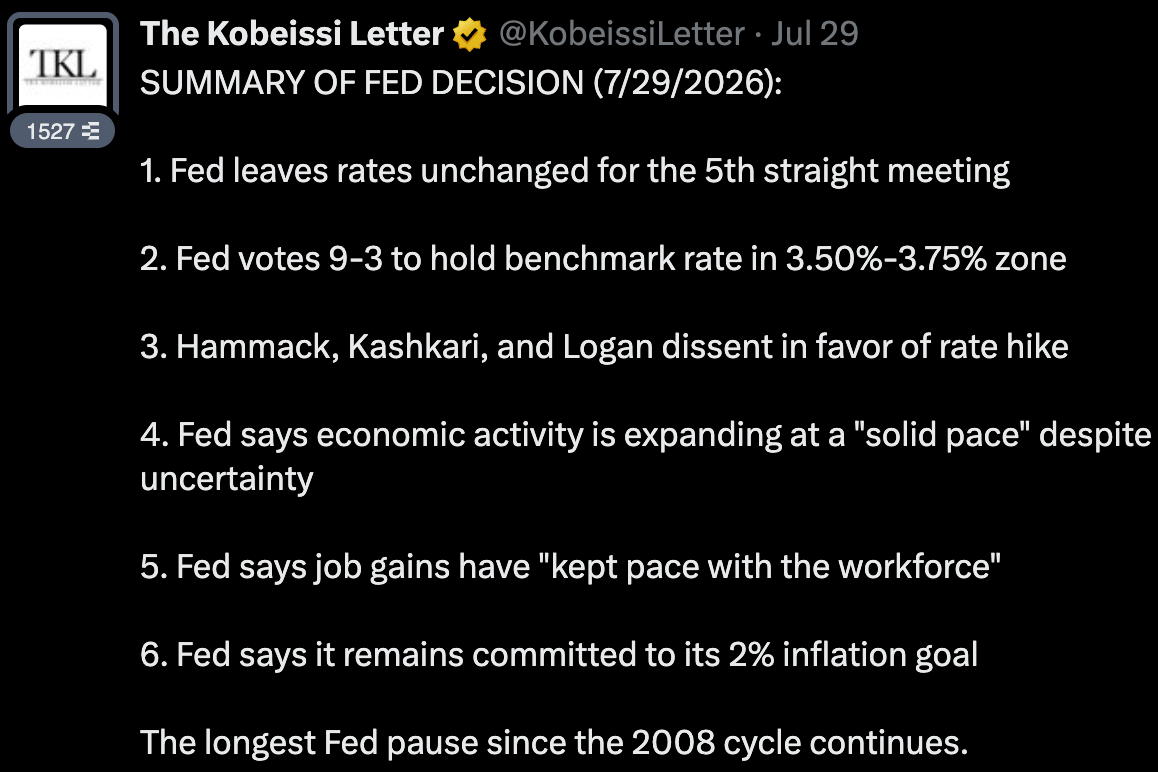
Start with rates, because everything else hangs off them. The Fed held at 3.50% to 3.75% in a 9 to 3 vote, and the three dissenters wanted a hike, not a cut. Middle East energy shocks are keeping inflation above target while the economy keeps expanding.
Here’s why that’s a problem: The Fed didn’t move, so the bond market did it instead. The 30 year Treasury yield jumped 12 basis points to 5.21%, the highest since 2007.
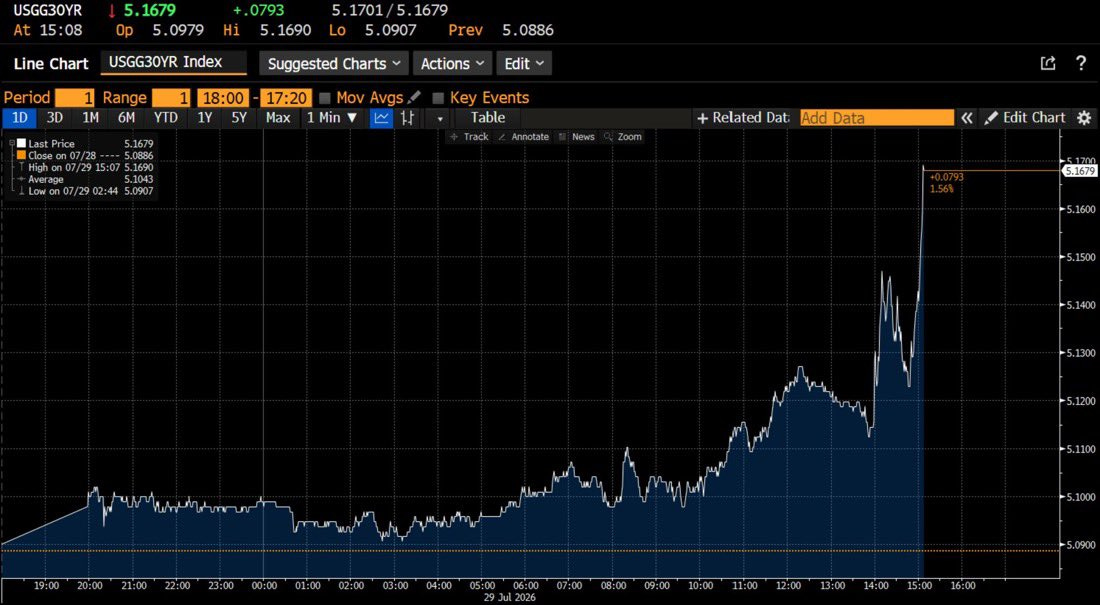
That keeps conditions tight without a single hike, and it keeps the pressure on expensive equities, housing, and anything credit sensitive. No cuts coming.
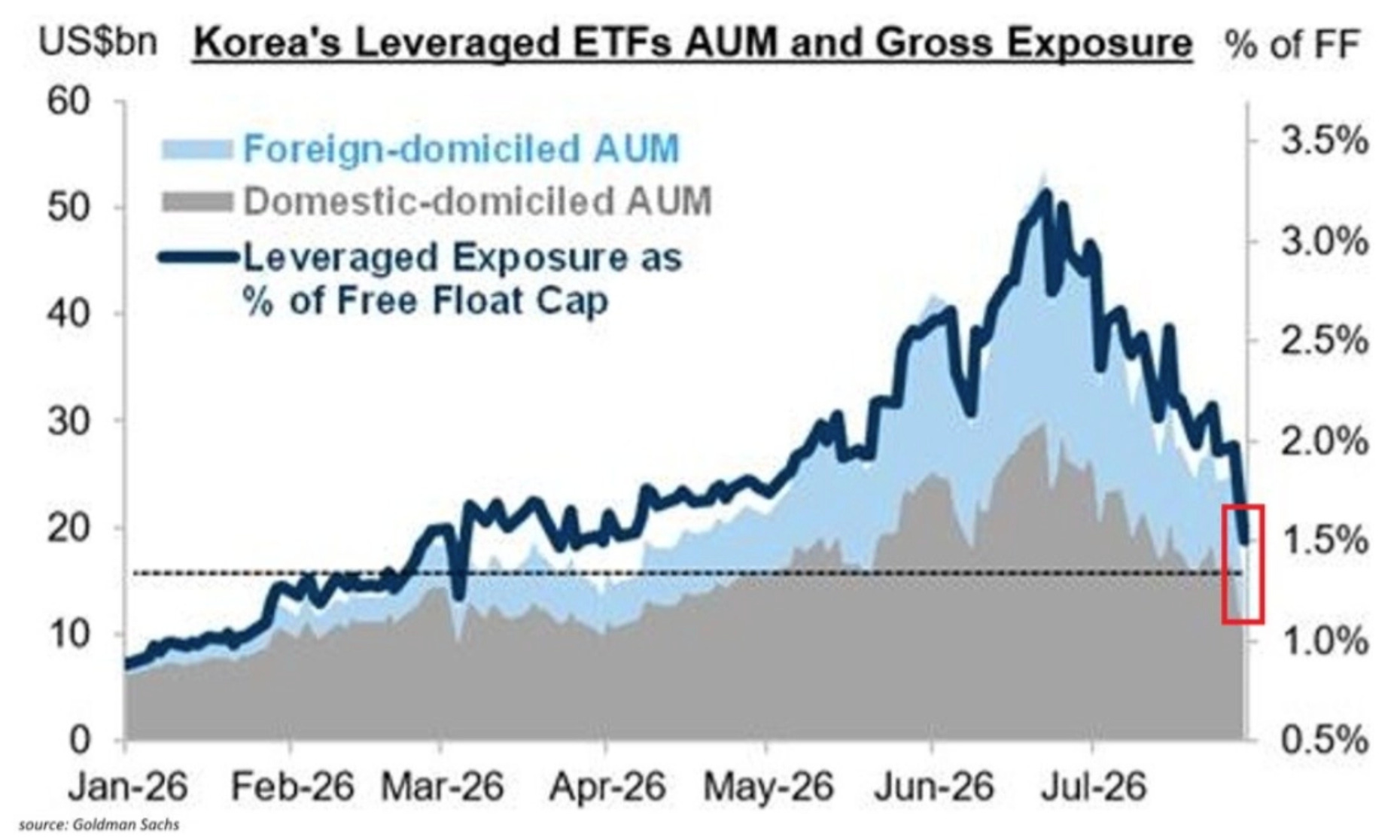
Now look at equities. Korea’s KOSPI had become the world’s sixth largest market on AI memory chip mania, held up by extreme concentration, record retail leverage, and a leveraged ETF complex that surged over 500% earlier this year.
Then it snapped. Roughly 44% gone in about 40 days. Leveraged ETF assets down around 70% to $16 billion. Over 1.2 million leveraged retail accounts hit with margin calls.
And the smart money was already stepping back. Hedge funds posted their heaviest three-day selling of global IT equities since the data started in 2016.
Then earnings landed and the whole market reversed. Microsoft closed up 15.5%, its best day since 2008, adding roughly $455 billion. Apple reported solid numbers, guided softly, and lost about $390 billion in sixty minutes. The KOSPI closed Friday at 6,595, up 17.91%, with Samsung up 28% and SK Hynix up 30%.
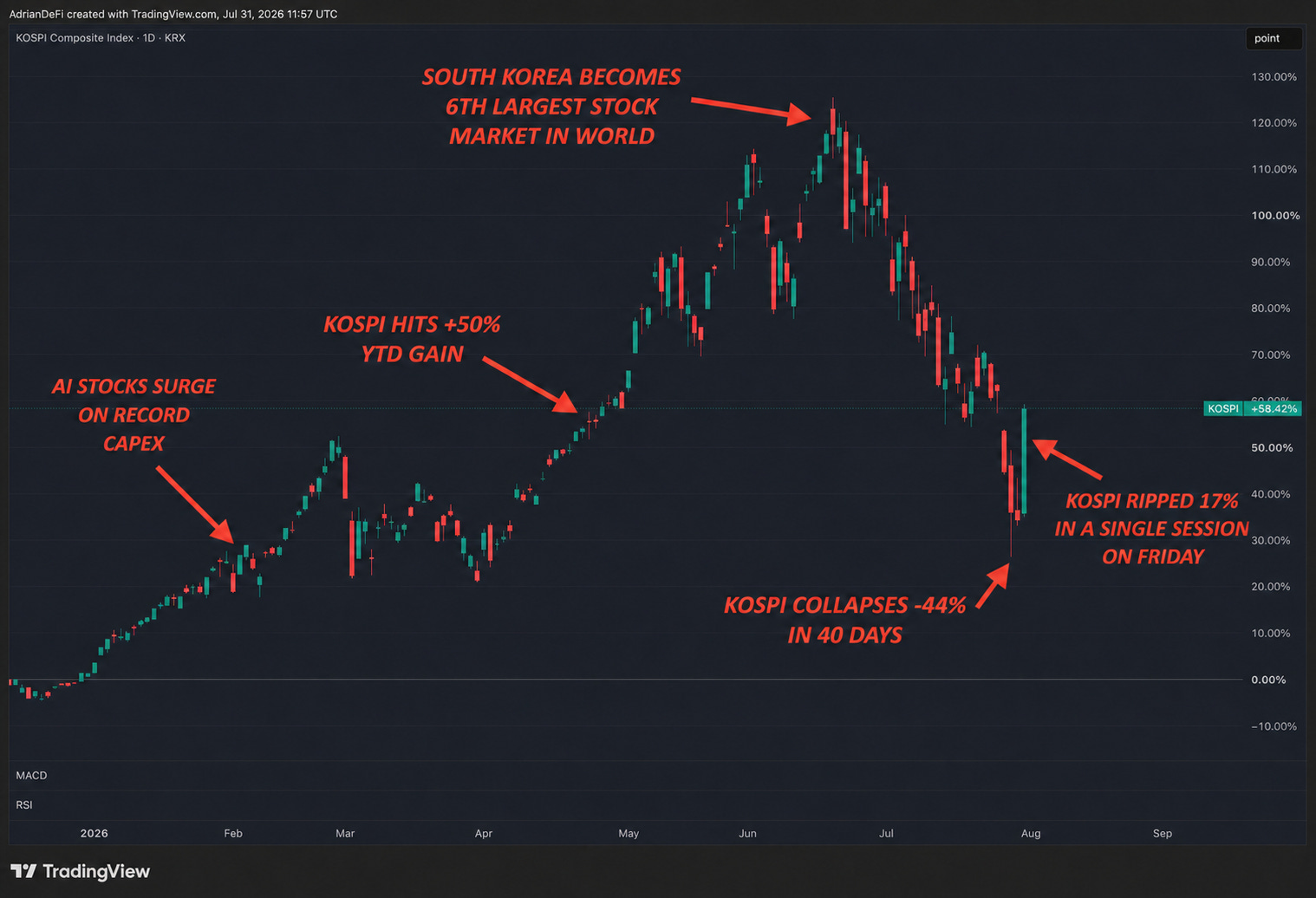
→ Earnings were mostly fine. That matters. When good results and soft guidance both move $400 billion in an afternoon, price is not reacting to fundamentals. Leverage plus concentration plus retail means the moves go both ways and neither direction tells you much about value.
Now the other side of the coin: Regulation. The Clarity Act moves, slowly.
Quick for your understanding: it’s the main US bill that would settle which agency regulates what in crypto. Nobody officially owns that job right now, which is a big part of why so much building happens offshore.
The Senate agreed on new wording for the ethics section this week, the part limiting how much crypto senior officials can hold while in office. The White House and the Democrats still have to sign off.
Two fights are open. How hard DeFi has to police money laundering, and whether stablecoins get to pay their holders interest. The banks want that second one dead, because a stablecoin paying yield competes with a savings account.
A vote is likely, but there isn’t much time before Congress leaves for August, which is what leadership said before it left for July. Guess regulation in the US moves to September.
Market Pulse
What’s important to track underneath the macro:
Bitcoin is holding around $64.8k with dominance at 59.1% and total crypto market cap at $2.30 trillion. BTC has held better up better than tech since the start of July and it is trading more on its own.
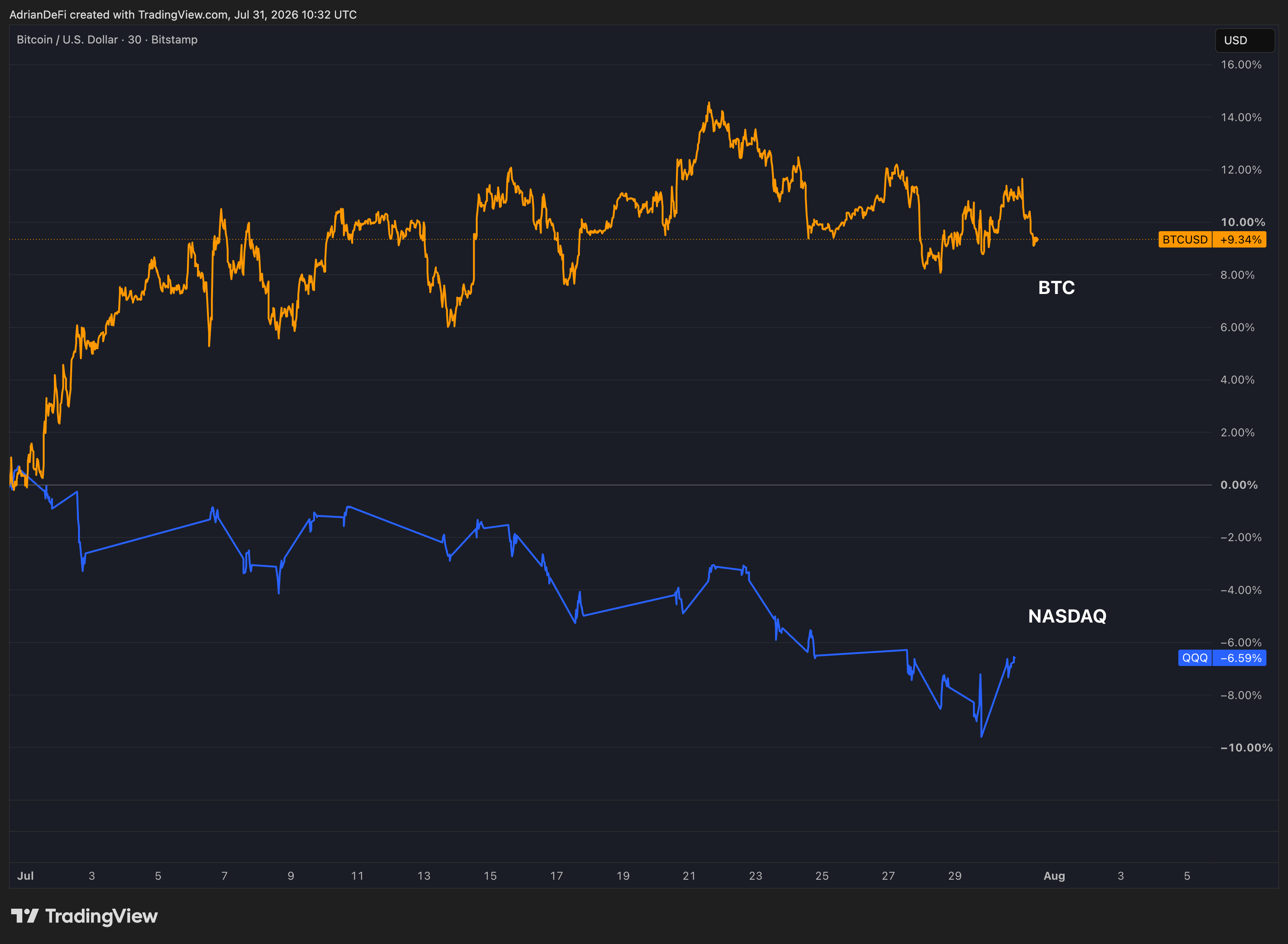
That looks like strength and is long term exactly what we want to see. A digital store of value which is uncorrelated to equities.
Though purely on time, this bear market has only run 261 days. The last two ran 376 and 364. On price, the drawdown has not reached the depth either of those two reached.
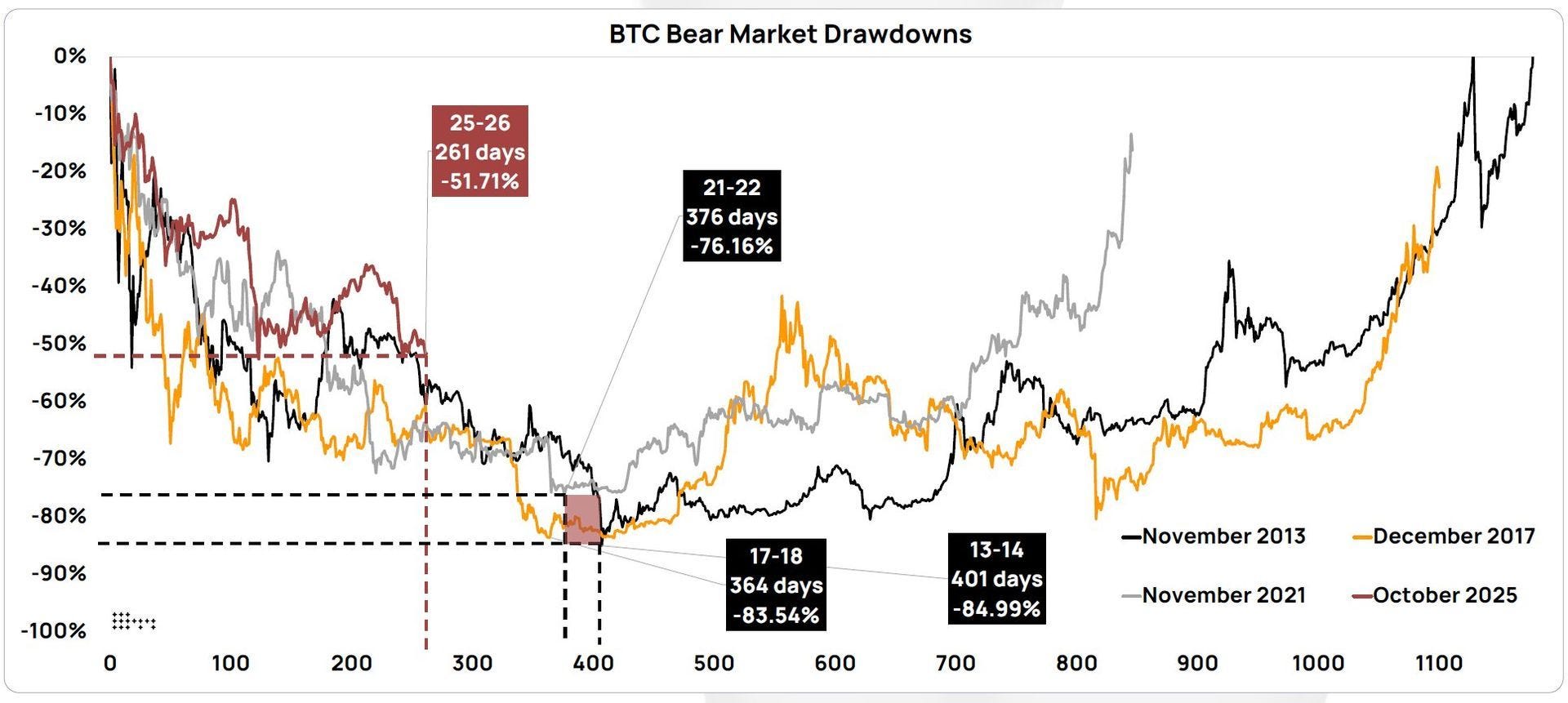
→ This bear market is clearly advanced. It is not clearly finished. On both clocks, time and price, the last two cycles leave room below where we are now. That is a pattern, not a promise, and it does not have to repeat. What it does tell us is that the burden of proof sits with the bulls right now, not the bears.
That leaves two scenarios, and nobody knows which one wins, so we keep both in mind.
Scenario one: The pattern completes. More time, one more leg down, and the bottom gets confirmed the way the last two were confirmed. Everything above is consistent with this.
Scenario two: The structure changed. Spot ETFs and treasury companies absorb enough supply that this bear ends shallower and shorter than the ones before it, and waiting for a 2022-style low means waiting for something that no longer happens.
The flows lean toward the first read. 2026 is on track to be the worst year for the US spot Bitcoin ETFs since they launched. The first half closed with $5.4 billion in net outflows, the first negative half-year on record, and June alone saw $4.5 billion leave, the biggest monthly outflow the category has ever had.
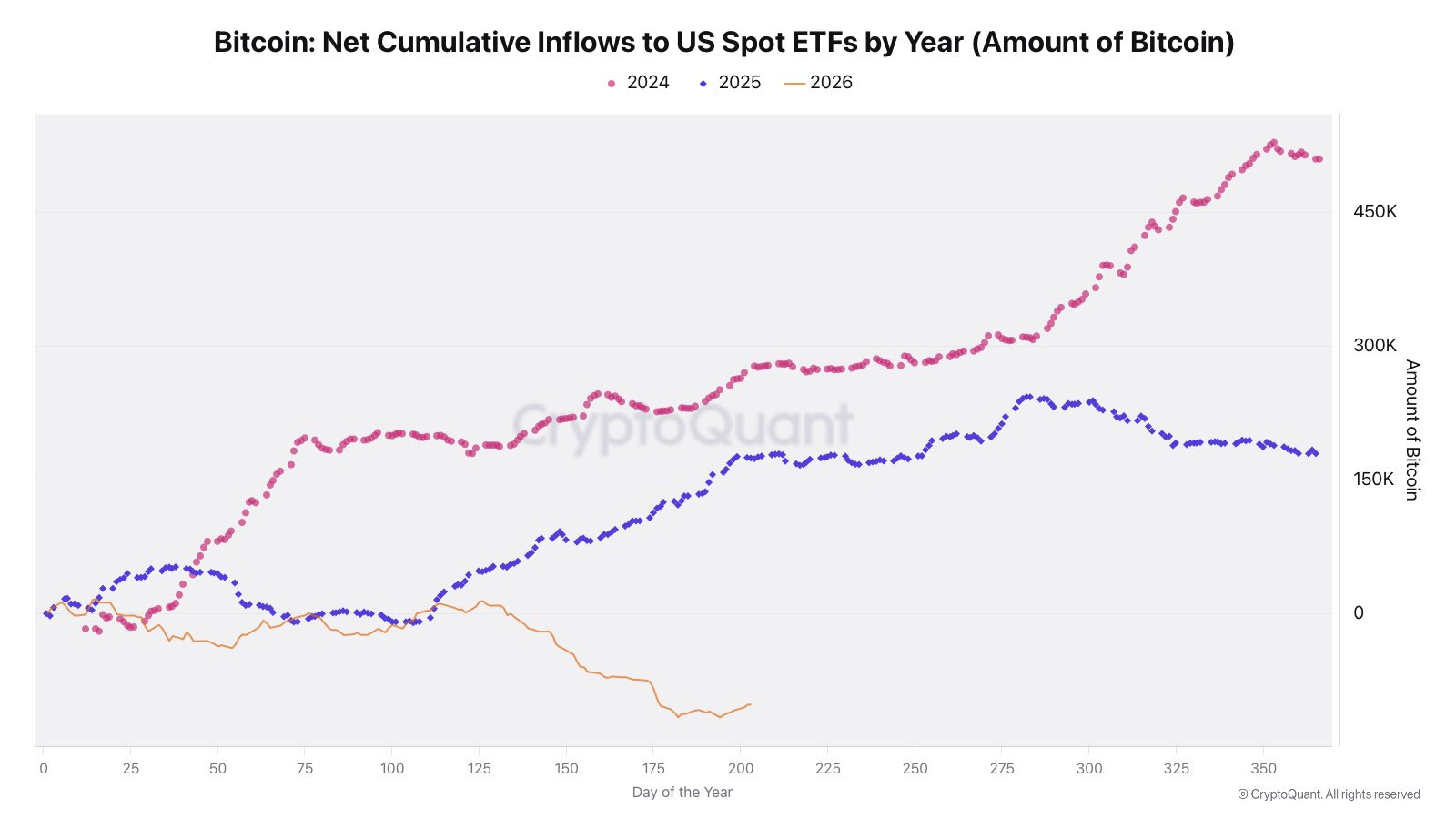
These products took in $56.6 billion over their first two years. The buyer that was supposed to be structural now stopped.
One thing did go the other way. Michael Saylor’s Strategy sold 5,429,160 MSTR shares between July 20 and July 26 for $544.5 million net, which took the cash pile up $525 million to $3.75 billion, and no Bitcoin left the balance sheet. About $25 million went into STRC preferred buybacks, and they say they’ll keep going while STRC trades under its $100 stated amount.
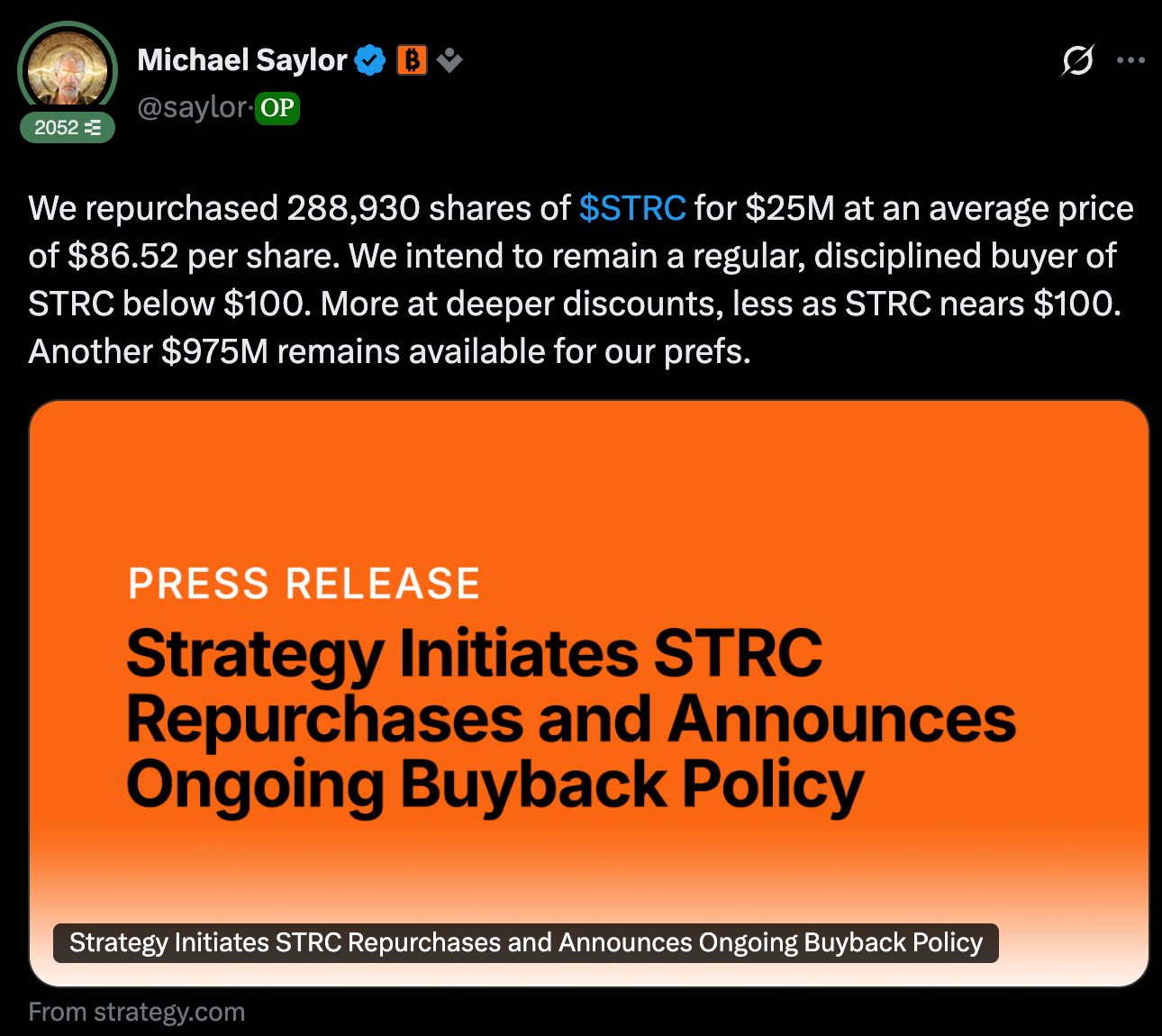
STRC is still under $90, which tells you how much confidence has drained away.
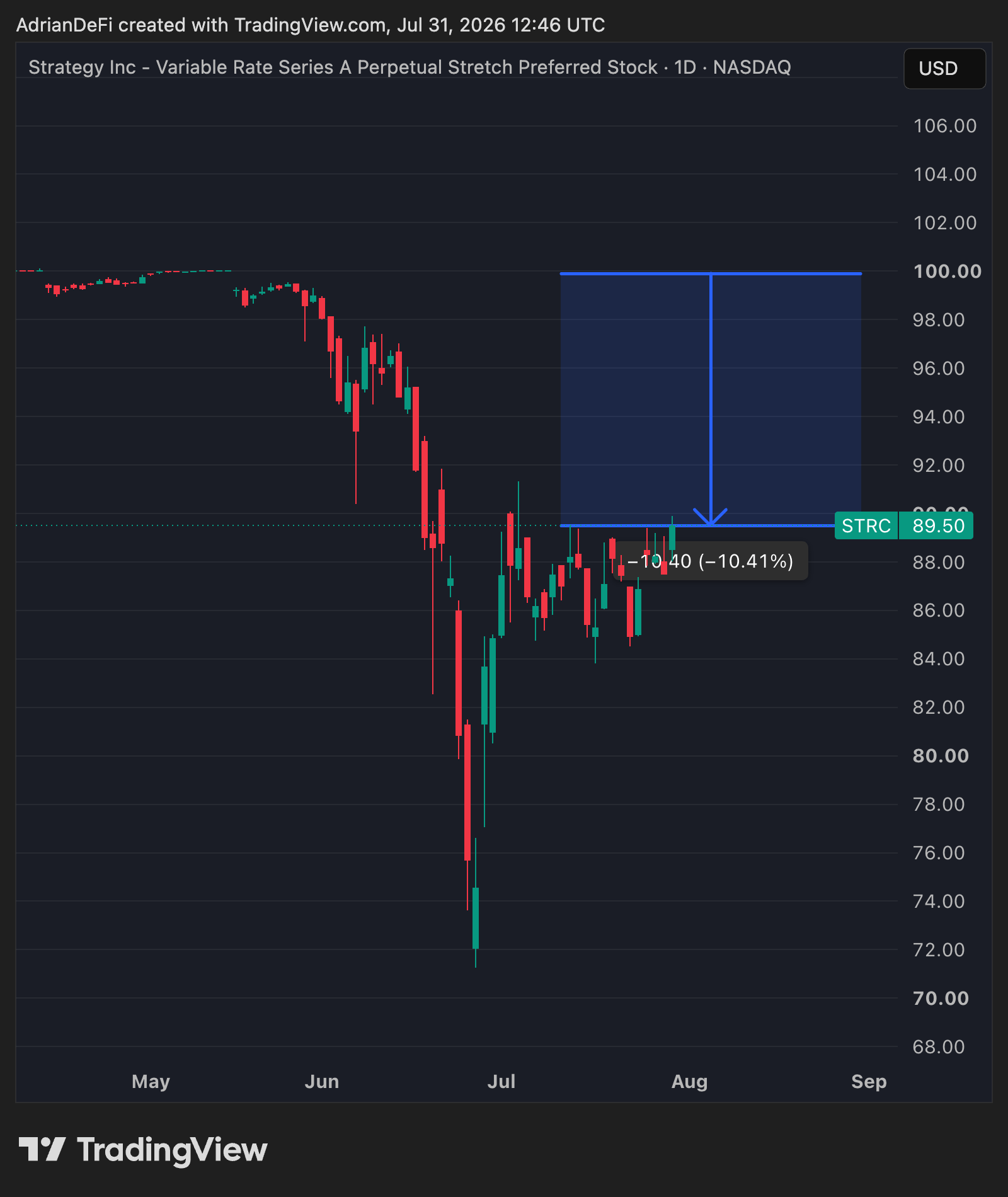
My read is three-sided. Bullish for STRC, because there is now a disciplined buyer sitting underneath it. Bearish for MSTR, because the cash came out of common holders. And mildly bullish for Bitcoin, because the odds of forced BTC selling just dropped.
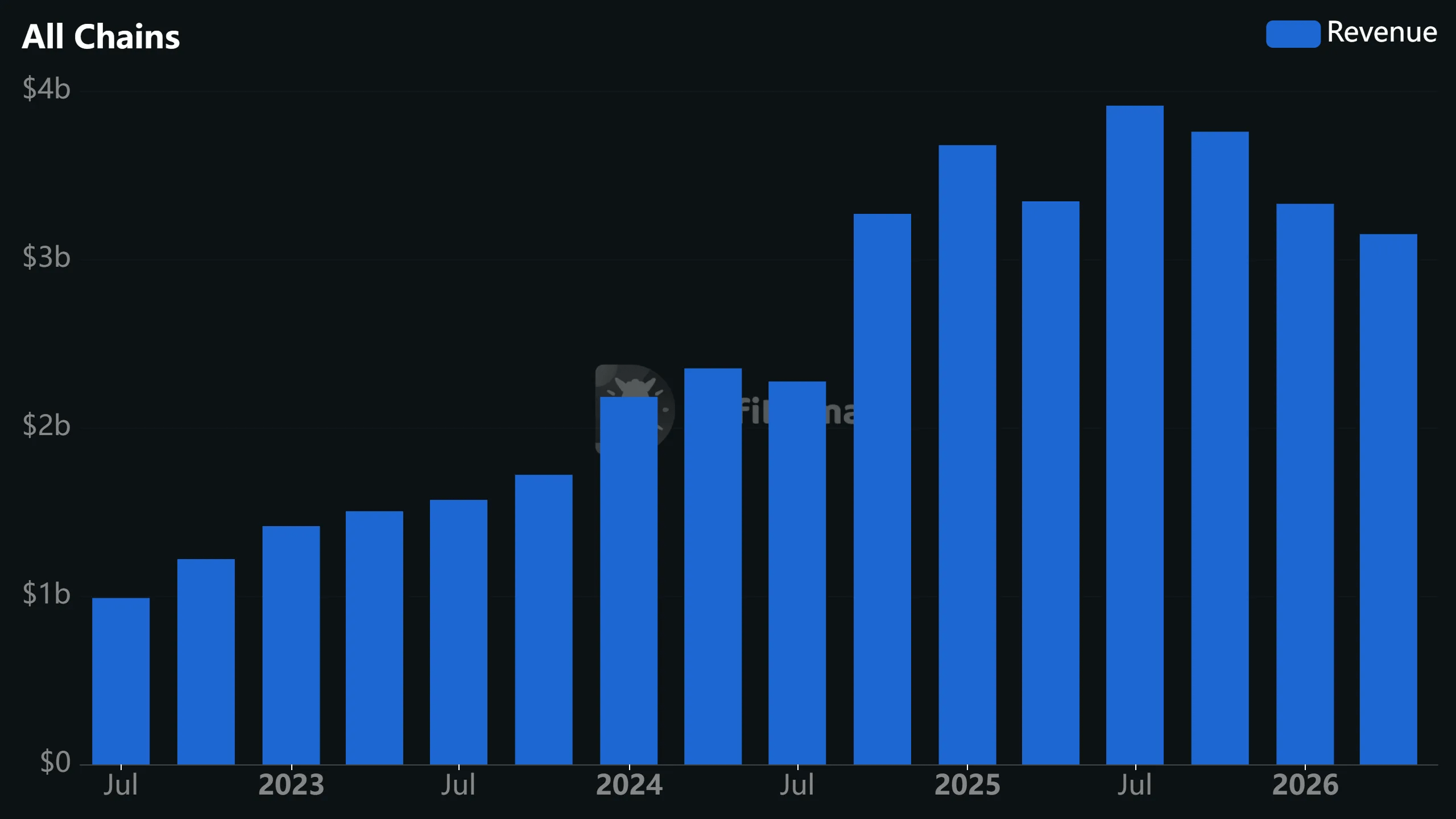
One more to keep on the radar: July is on pace to be the weakest month for total DeFi app revenue since October 2024, and last quarter was already the lowest since 2024. Something we expect in the bear market and monitor regularly because the fundamental thesis for good projects that accrue value to their token is still in play.
Thanks for reading Adrian DeFi! Subscribe for free to always receive the best DeFi insights and investment opportunities.

That covers the broader market. Now let’s move to the opportunities I discovered.
The two fee lines still growing onchain are a stock exchange and a shop that sells Pokémon cards. Two years ago we would have called neither of them DeFi. But revenue is revenue and we need to understand why the attention.
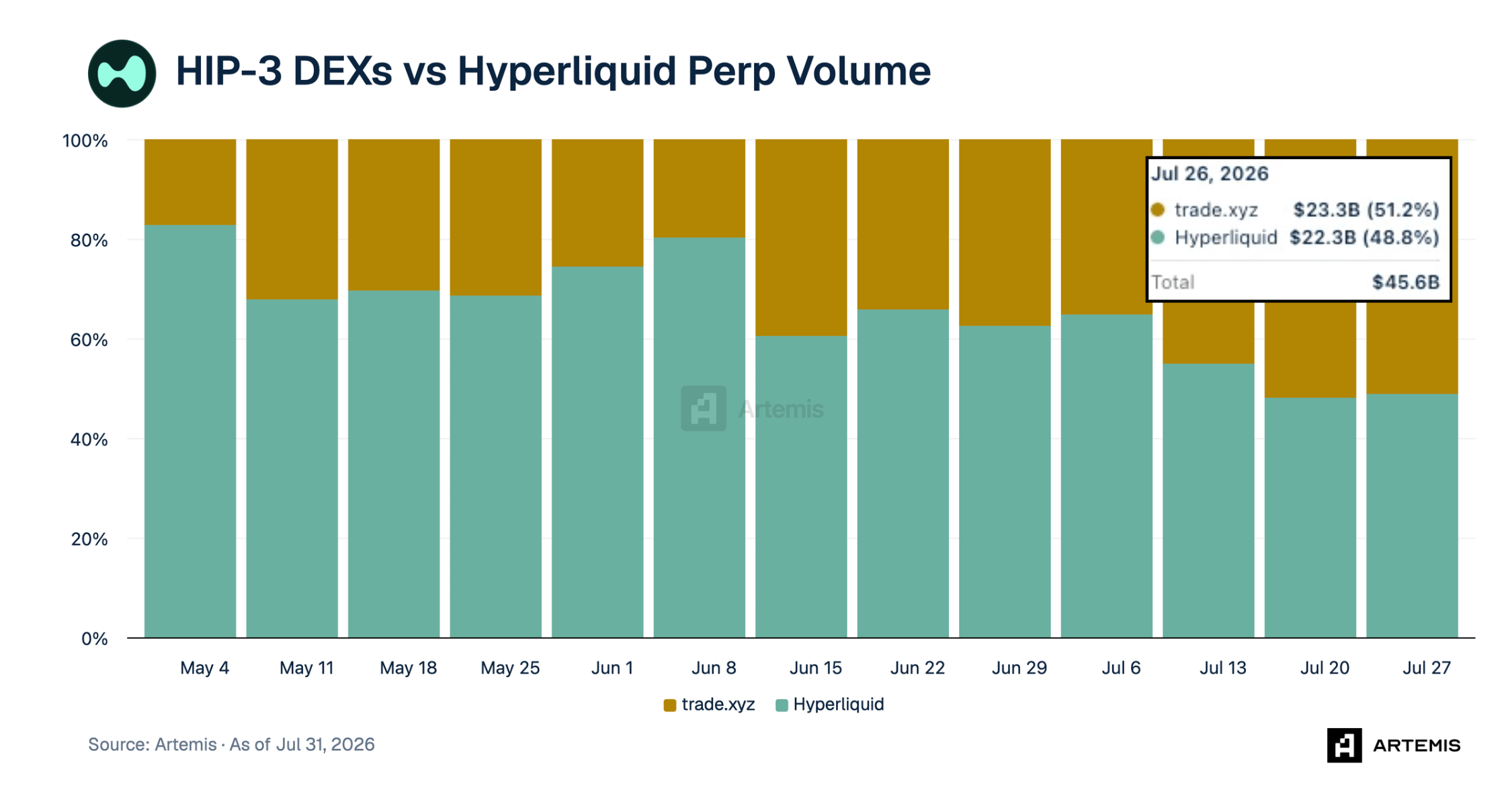
Start with the stock exchange on blockchain rails. For the second week running, Hyperliquid generated more volume from real world assets than from crypto. RWAs are now 51% of its total trading volume.
Quick for your understanding: HIP-3 is Hyperliquid’s permissionless market standard, which lets anyone list a perpetual futures market on things that aren’t crypto. Stocks, indices, commodities. Perpetuals are futures with no expiry date, so a leveraged position can be held open indefinitely.
Total DEX perpetual volume this week was $70 billion. Hyperliquid did $45 billion of that, and $23 billion came out of HIP-3 markets alone.
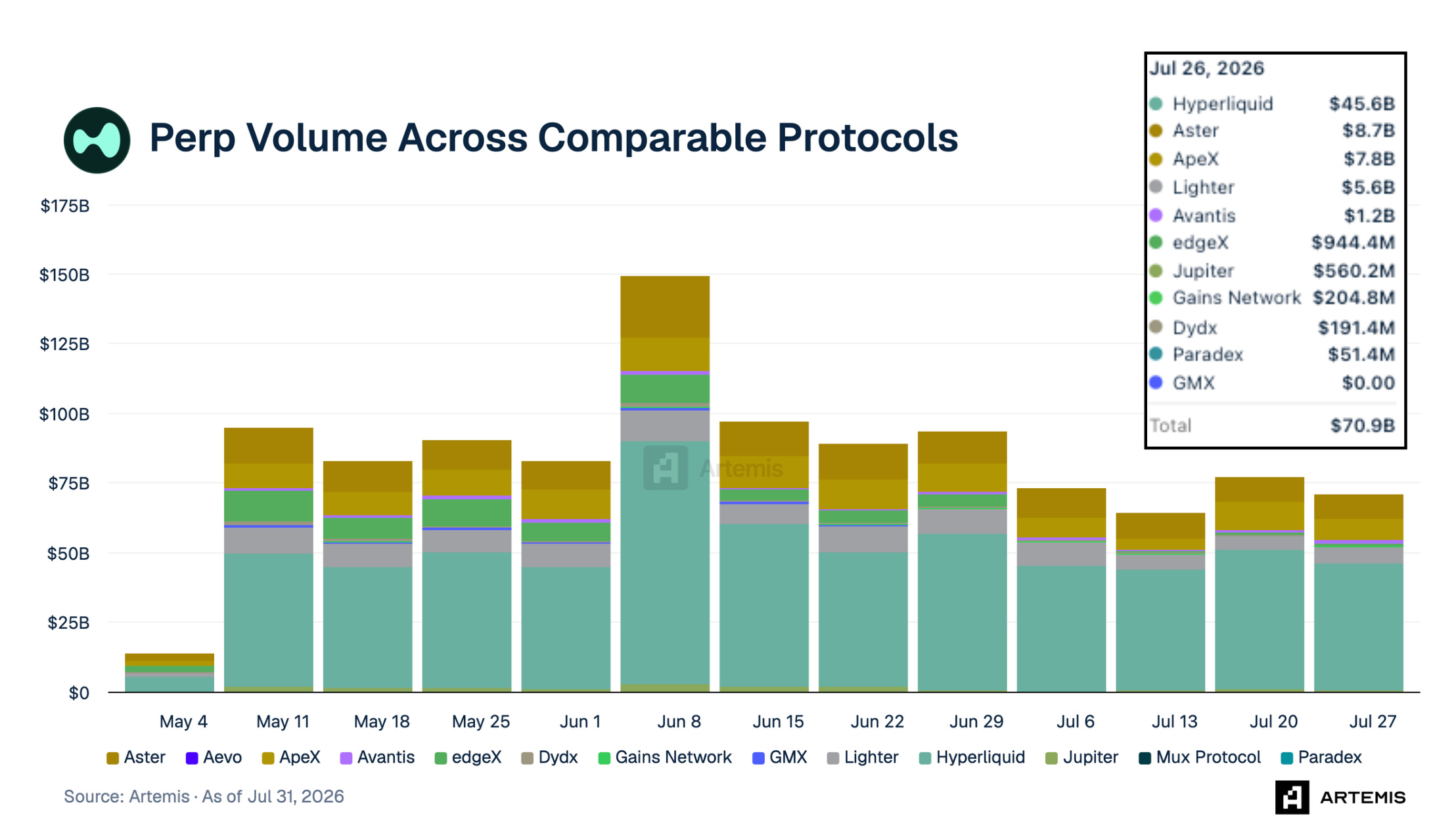
Its real world asset book is nearly the size of every other DEX’s crypto perpetual volume combined.
While the sector’s revenue contracts, Hyperliquid built a 24/7 permissionless stock exchange.
And then the card shop. Physical trading card protocols, which tokenize real graded cards so they trade onchain, earned close to $100 million in H1 2026 and $63 million in the last 90 days alone. Revenues are off last month’s peak, but the trend since January is hard to argue with.
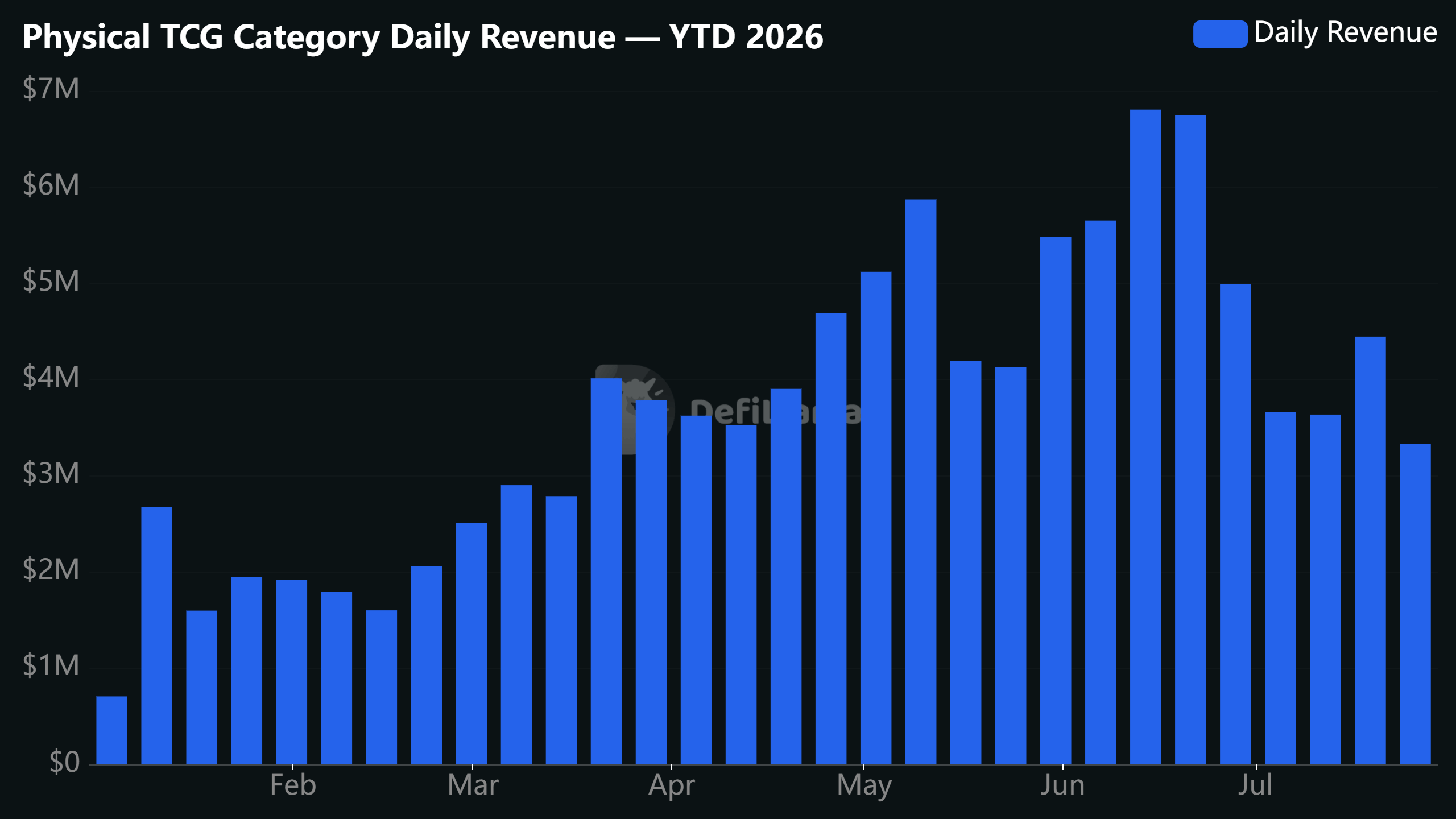
Collector Crypt is roughly 70% of that category, which brings me to this week’s idea.

Alpha:
Let’s talk about Collector Crypt. First we have to be honest: This is a small, illiquid token attached to a business whose economics may or may not reach it. Everything below sits on that.
The business is simple. They tokenize physical Pokémon and One Piece cards, so you buy a pack onchain, get the tokenized card, and can redeem the physical item whenever you want. The mechanic is gacha, a pack-opening format where you pay a fixed price for a randomized pull. It is as addictive as it sounds and it prints real, measurable revenue.
What changed this month is demand. New pack tiers around $2,500 caused a big spending spike, which I discount, because every new product does that. What matters is what happened after: Spending cooled and then settled back onto the old growth trend instead of falling apart.
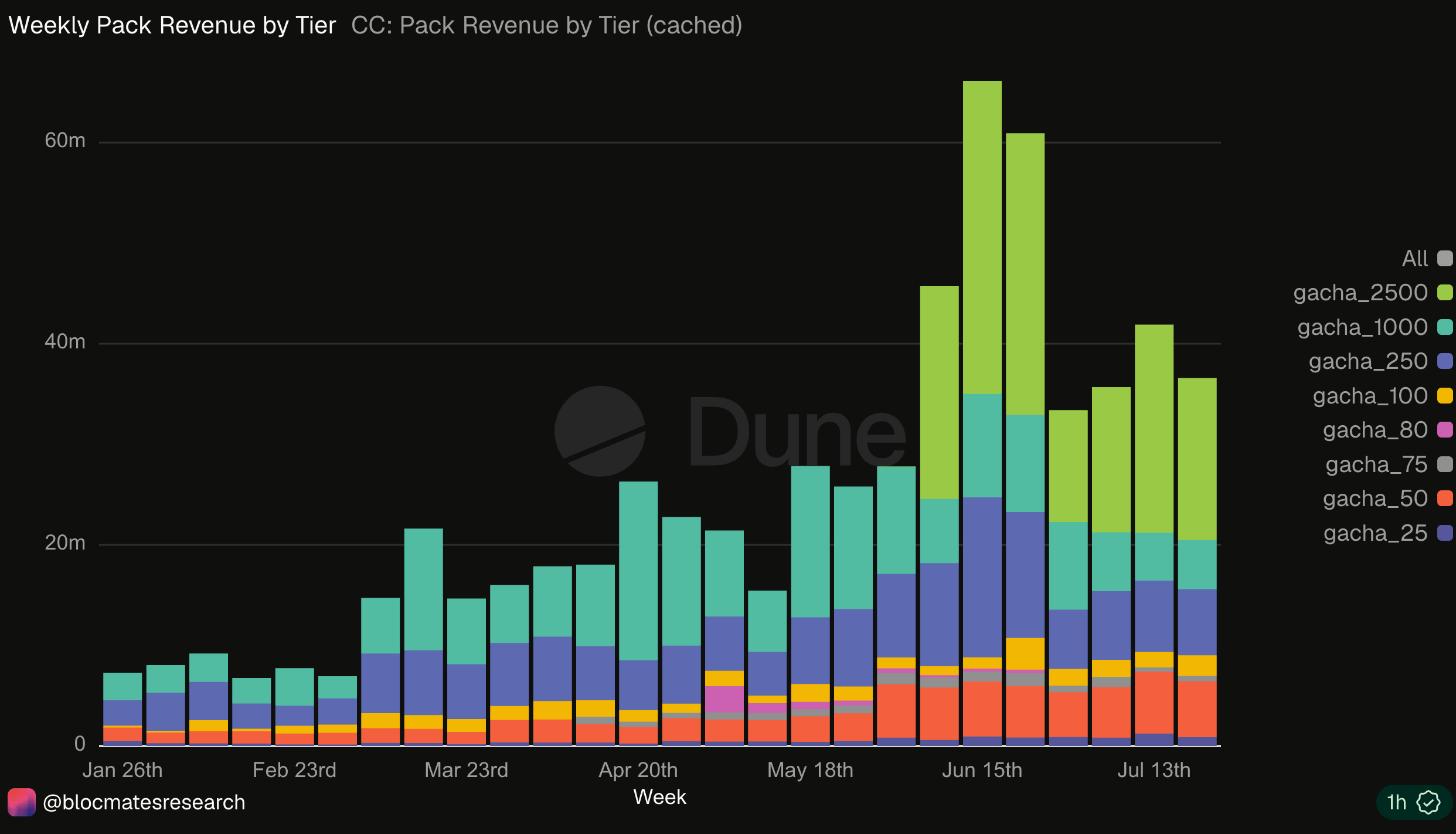
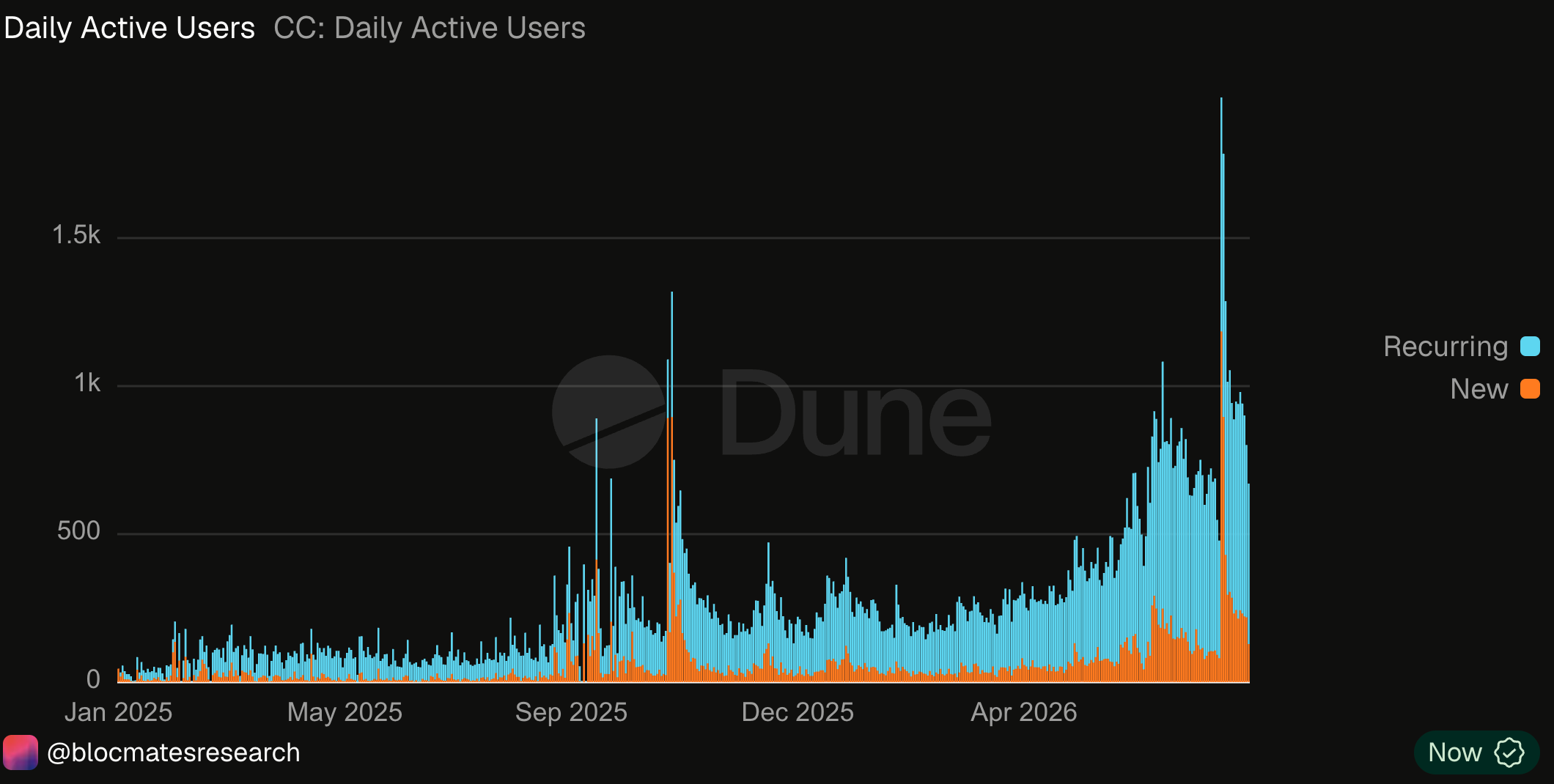
Then Jupiter built the gacha mechanic straight into its Solana interface on July 13. That window alone did $3.3 million in pack spending in 22 hours and over $363,000 in revenue for Collector Crypt New users (in orange) ran about 1,100 on day one and 900 on day two, the strongest new-user day in the platform’s history.
Fiat purchases are climbing too. Still a small share, but fiat buyers are a rough proxy for people who don’t already own a Solana wallet, and a business that only sells to crypto natives has a hard ceiling.
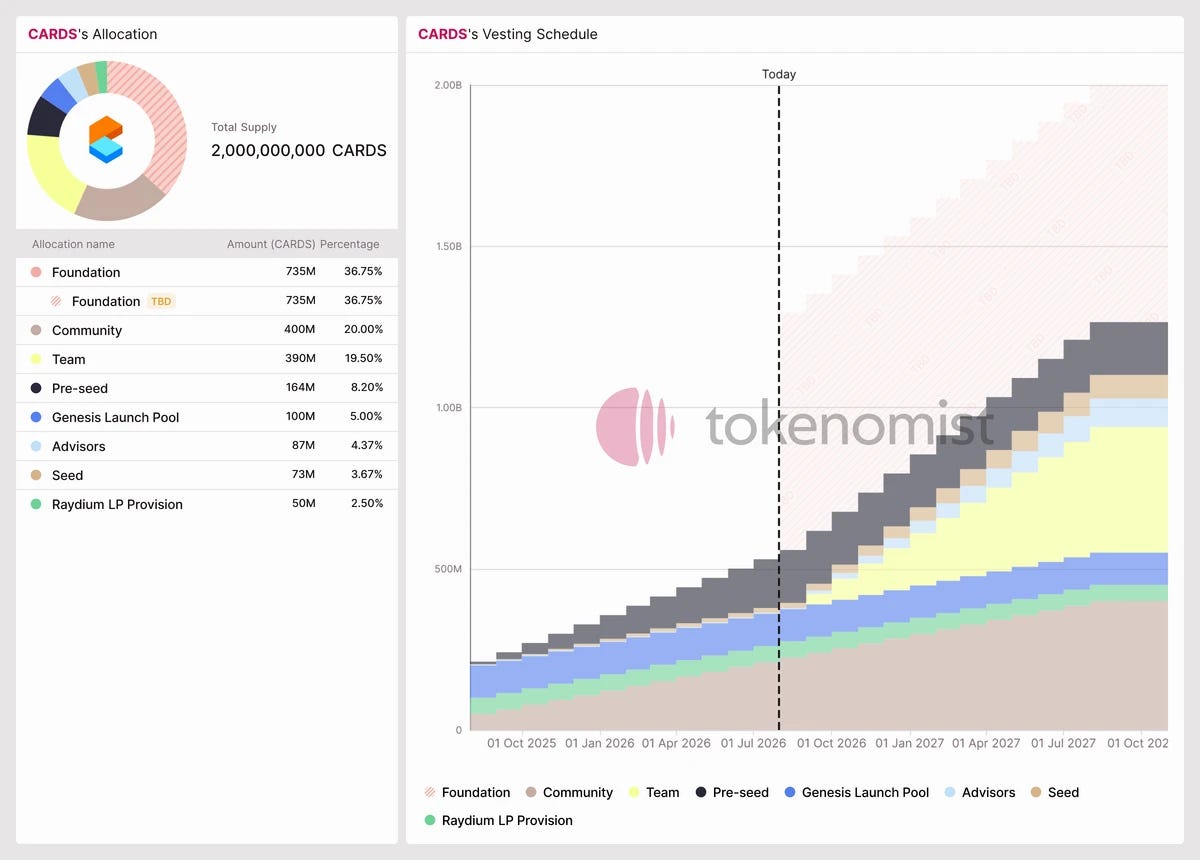
Thesis: The fundamentals are improving while the token stays compressed. CARDS trades at a $32.7 million market cap against a $253.7 million fully diluted valuation, with 260 million of 2 billion tokens circulating and a very tough unlock schedule with potentially a huge unlock of the founders allocation soon.
Measured against annualized net revenue, the circulating market cap sits below 1x. Revenue went up, the token didn’t rerate.
What I’m watching now:
~$0.15 (the support it lost this week, the first level it has to take back)
market cap to annualized net revenue below 1x (the whole reason I’m looking at this)
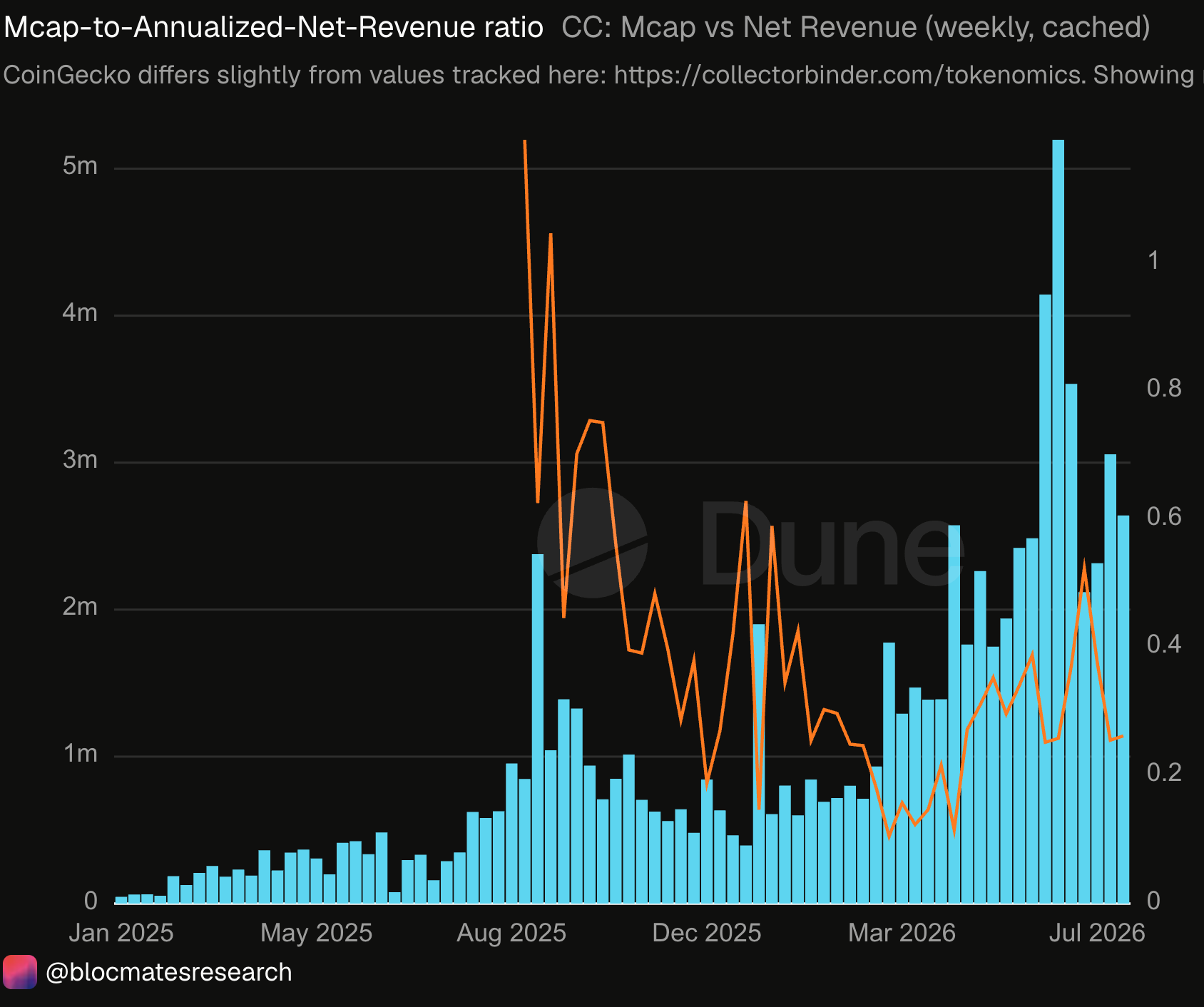
Why it matters: I’m treating this as a structure call, not a price target. If the revenue holds and the token keeps lagging it, the gap closes eventually. If the revenue was a pack-launch artifact, it doesn’t.
There are suspected buybacks too, just under $500,000 so far, running at roughly 1% of daily net revenue. The team has only soft-signalled them and there’s no contractual commitment, so I count that as a signal, not a mechanism. And I don’t want them buying back more. The company is still growing and needs that capital for product and distribution.
The risk: The link between company and token is not clean. Collector Crypt sold only a small slice of equity and funded itself mostly through the token, which I like, but it leaves the question of which asset actually captures the economics wide open. A market cap to revenue ratio only means something if the token has a real claim on that revenue. The high-priced packs may also lean on a handful of very large buyers.
This belongs in the speculative part of a portfolio, not the core.
I’ll keep you up to date on Telegram when I consider another entry.
For education and discussion only, not financial advice.
That’s it for today’s episode, thank you for being here!
Till next time, stay safe!
Comments
Nothing yet. Say the first thing.
Sign in to join the conversation.