
The last essay left you at a cleared doorway and admitted it could not walk you through. This one is about the step across, which is smaller and stranger than you are expecting.
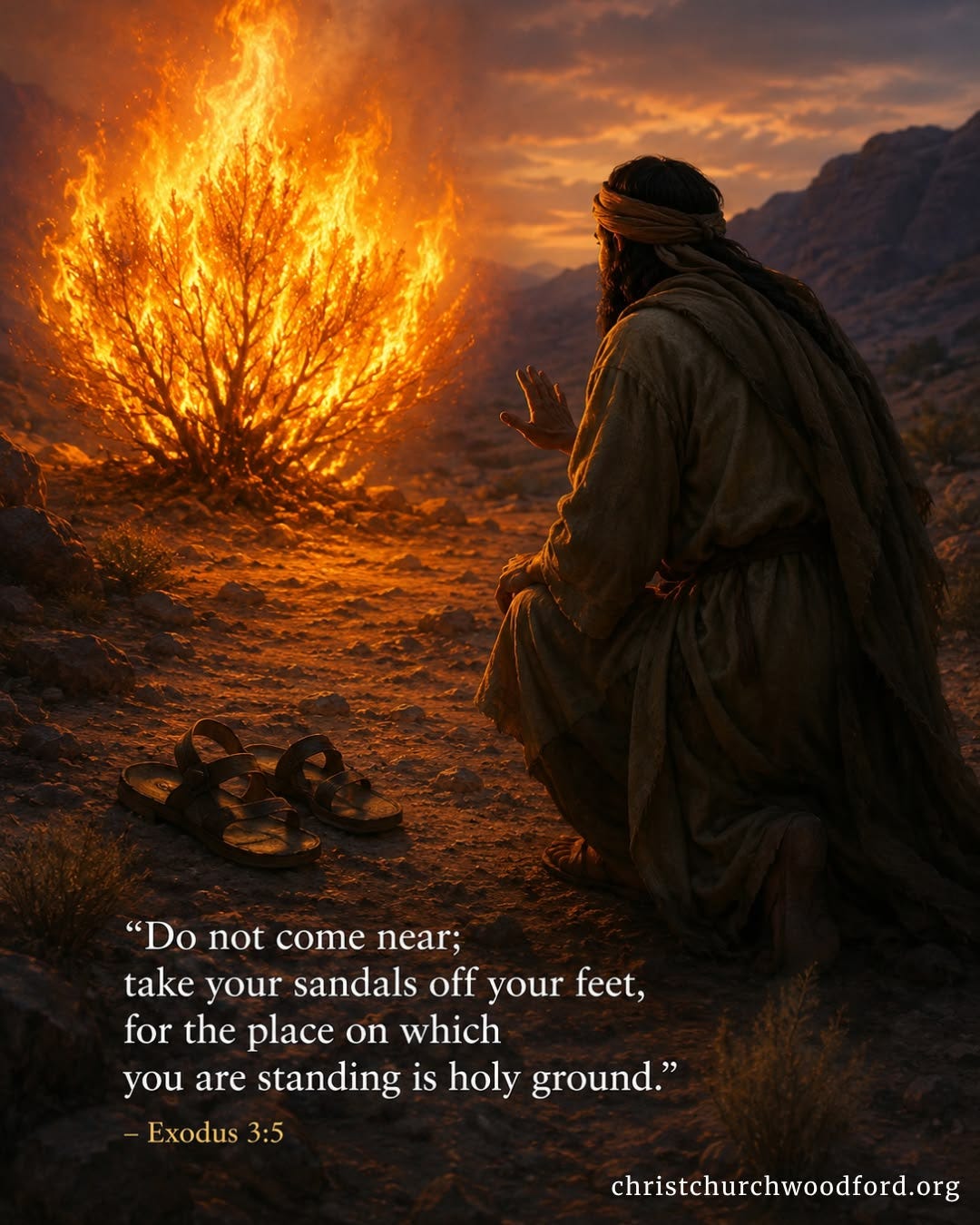
The last essay made a promise it could not keep, and I want to be honest about that before we go on. My essays cannot give you an encounter, they can point to the real thing to expose the imposters.
It said the whole series had been clearing a doorway. Taking down the false gods, the projections, the inherited caricatures, so that the real God could be met, rather than merely argued about. And then it stopped at the threshold and admitted the obvious: an essay cannot hand you an encounter. Words about a person are not the person. I can clear the doorway. I cannot make anyone walk through it, and I cannot manufacture the one who waits on the other side.
That is true, and it is also, I know, maddening. Because it sounds like being handed a door and then told the handle is not yours to turn. If the encounter is the point, and the encounter cannot be summoned by effort, then a reasonable person is entitled to ask: what, precisely, am I supposed to do? Sit and wait for lightning? Arrange my face into an attitude of receptivity and hope?
No. There is something to do, and it has a name, and the whole Bible is organized around it. But it is not what you think, and it is much smaller than you are bracing for.
The word is seeking. And almost everything you imagine when you hear it is wrong.
Here is what people think seeking God means. They think it means working themselves into a state. Generating enough sincerity, enough emotional intensity, enough belief-by-force to make something happen. They picture a kind of spiritual straining, eyes squeezed shut, willing the heavens to open, and when the heavens do not obligingly open on schedule they conclude they have failed the test, or that there was never anyone there to seek.
That is not seeking. That is the projection again, wearing new clothes. It is you, still trying to produce the encounter by your own effort, still the author of the whole transaction, still refining a picture rather than turning toward a person.
Real seeking is quieter and far less dramatic. It is the simple, sustained turning of your attention toward the possibility that he is there. Not the manufacture of certainty. The turning of attention. It is reading the words he is said to have spoken, honestly, with the picture held loosely enough that they could correct you. It is the half-formed sentence spoken into the dark that begins if you are there. It is noticing, over weeks and months, where your settled certainties about his absence are actually load-bearing and where they are just old habit. It is the willingness to keep the question open instead of slamming it shut, which is the one thing a wound always wants you to do, because an open question is a risk and the wound is trying to keep you safe.
The promise attached to this is one of the most specific in Scripture. You will seek me and find me, when you seek me with all your heart. Notice what it does not say. It does not say you will find me when you have assembled sufficient proof. It does not say you will find me when your theology is correct, or your feelings are strong enough, or your doubts have been fully resolved. It says you will find me when you seek me with all your heart. The condition is not intensity of certainty. It is honesty of direction. The whole heart turned, even slightly, even tremblingly, toward the possibility, rather than braced permanently against it.
And the reason that turning is enough, the reason it is not on you to close the distance, is that seeking God is the one search in the universe where the thing sought is also looking for you. You are not calling into an empty house. The parable Jesus told was not about a man searching for a lost coin. It was about a father already running down the road.
I want to give you someone who sought like this, because the abstraction needs a face, and this particular face makes an argument all by itself.
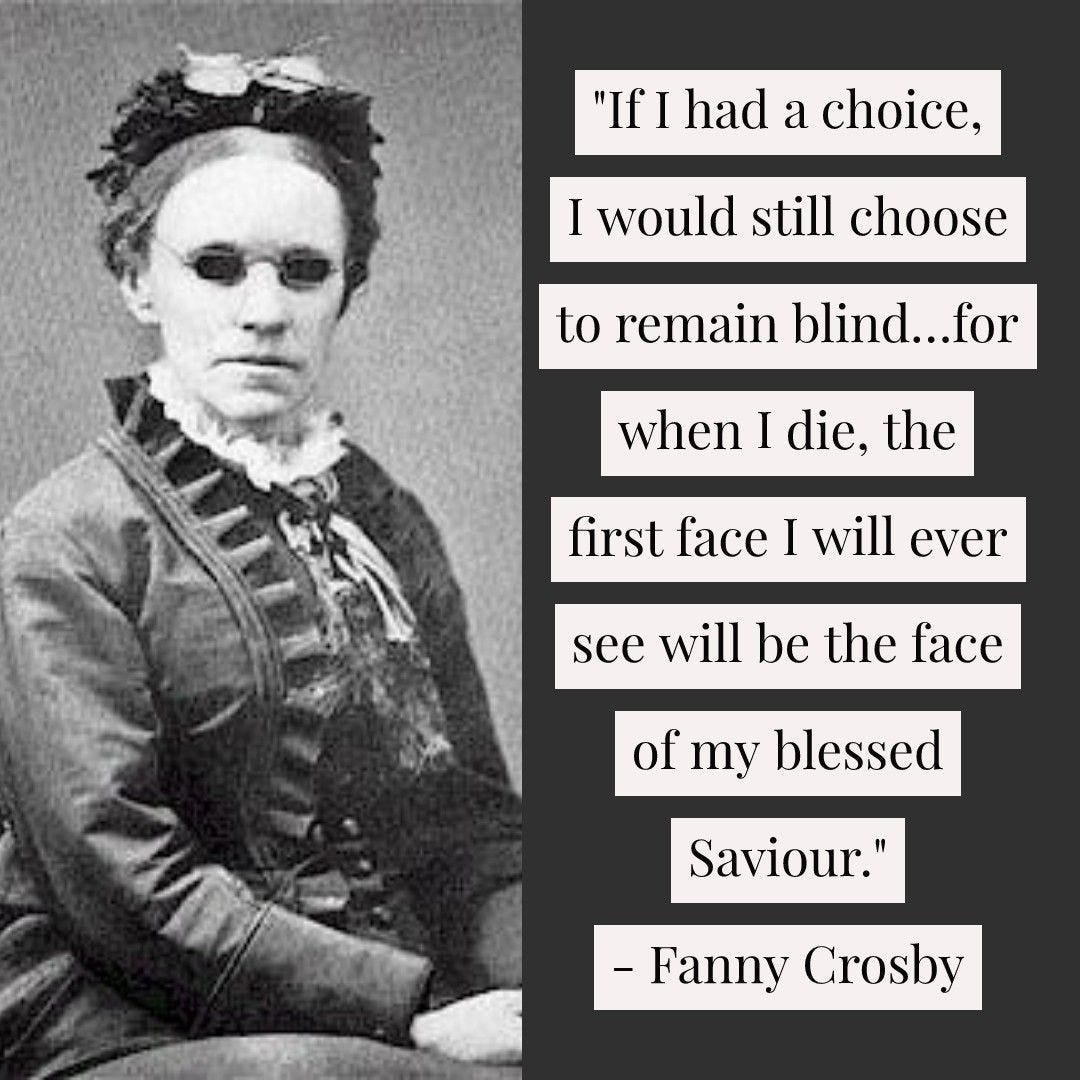
Fanny Crosby was blinded at six weeks old. A minor eye inflammation, a physician’s careless treatment, and a little girl was left without sight for the rest of what turned out to be ninety-four years. If anyone had grounds to seek God for a dramatic sensory sign, some flash of vision to compensate for the vision she was denied, it was her. She had every reason to demand that God prove himself in the one currency she had been robbed of.
She never did. What she did instead was seek him, quietly and relentlessly, across a lifetime, with an attention turned so fully toward him that she wrote nearly nine thousand hymns to a face she had never seen and would not see this side of death. And here is the line that ought to stop a skeptic cold. She said that if perfect eyesight were offered to her tomorrow, she would refuse it. Because, she explained, she might have been so distracted by the beautiful and interesting things around her that she would not have sought God as she did, and she would rather have him than the sight.
Sit with what that means for the objection we started with. The skeptic says, in effect, I would believe if I could see something. Fanny Crosby saw nothing, her entire life, and knew God more intimately than most people with two good eyes ever will. Which tells you that the encounter this series has been pointing toward was never a sensory event in the first place. It was never the thing the skeptic is demanding and not getting. A blind woman found it. She found it precisely through seeking, through the sustained turning of a whole heart toward a God she could not see, and she found so much of him that she pitied the sighted their distractions.
She wrote a hymn you have probably heard. Blessed assurance, Jesus is mine. O what a foretaste of glory divine. Read those words remembering who wrote them. Foretaste. Assurance. The vocabulary of intimate, settled encounter, from a woman in permanent darkness. That is not the language of someone refining a picture of God from a safe distance. That is the language of someone who sought, and was found, and knew it, and never needed her eyes to be sure.
Her favorite thought about heaven was that the first face she would ever see, in all her existence, would be the face of Christ. She had been seeking that face for ninety-four years without a single glimpse of it, and she was not anxious about whether it was there. She had already met the person. She was only waiting to see the face.
So let me tell you what walking through the doorway actually looks like, now that the drama has been drained out of it.
It does not look like a lightning bolt, though for a few people it is one. For most it looks like Fanny Crosby. It looks like turning your attention, a little at a time, toward a God you are not sure is there, and keeping it turned even when nothing dramatic happens, and reading his words as though they might be true, and speaking into the dark as though someone might be listening, and refusing to slam the question shut just because it stays open longer than you would like. It looks like seeking with the heart, honestly, in the direction of the cleared doorway, and trusting that the promise is real. That the ones who seek, find. That the house is not empty. That the father is already on the road.
You cannot manufacture the encounter. That was true and it is still true. But you were never asked to. You were asked to seek, which is a smaller and more human thing, the thing a blind woman did for ninety-four years and did not regret for a moment.
The doorway is clear. You do not have to force anything through it.
You only have to turn, and look toward it, and keep looking.
The One you are looking for has been looking for you the whole time. That is the part you could not have known from outside, and it is the part that changes everything. You are not the only one seeking in this story.
You never were.
If you value unflinching, historically grounded analysis that mainstream outlets soften or ignore, consider upgrading. Paid subscribers get:
Several new, full-length articles every week.
Carefully researched pieces you won’t find elsewhere.
Full access to the complete premium archive
Archive of in-depth writing, research, and commentary — all in one place.
Entry into the subscriber chat
A private space for serious readers and thoughtful discussion.
Thanks for reading. This post is public, so feel free to share it. A. C. Rosenthal writes on comparative religion, Islamic theology, and the relationship between Christianity and modern Western culture. This work is entirely reader-supported. By choosing a paid subscription, you allow me to continue this long-form research to bring these vital stories to light. Thank you for helping this Lion roar for truth. A.C. Rosenthal is the author of The Two Muhammads: What History and Manuscripts Reveal About the Islamic Dilemma, The God They Rejected Isn’t Real: Exposing the False Gods of Modern Doubt, and The Carpenter’s Son and the Imam’s Son. Further analysis at:
acrosenthal.com/
https://thetwomuhammadscurriculum.thinkific.com/
No posts
Comments
Nothing yet. Say the first thing.
Sign in to join the conversation.