
A singable, memorizable rendering in hymn-ballad meter (8-6-8-6), rhyming on the short lines. Paraphrased to preserve the sense and the promises. Sings to any Common Meter tune (for example “Amazing Grace,” “O God Our Help in Ages Past,” or “the theme from Gilligan’s Island,” which is also Common Meter).
But i’m a nobody, so who am i to paraphrase the Holy Scriptures? What i would like is for you to crack open you copy of James and see if you think this is a heretical poem, or a useful memorization tool?
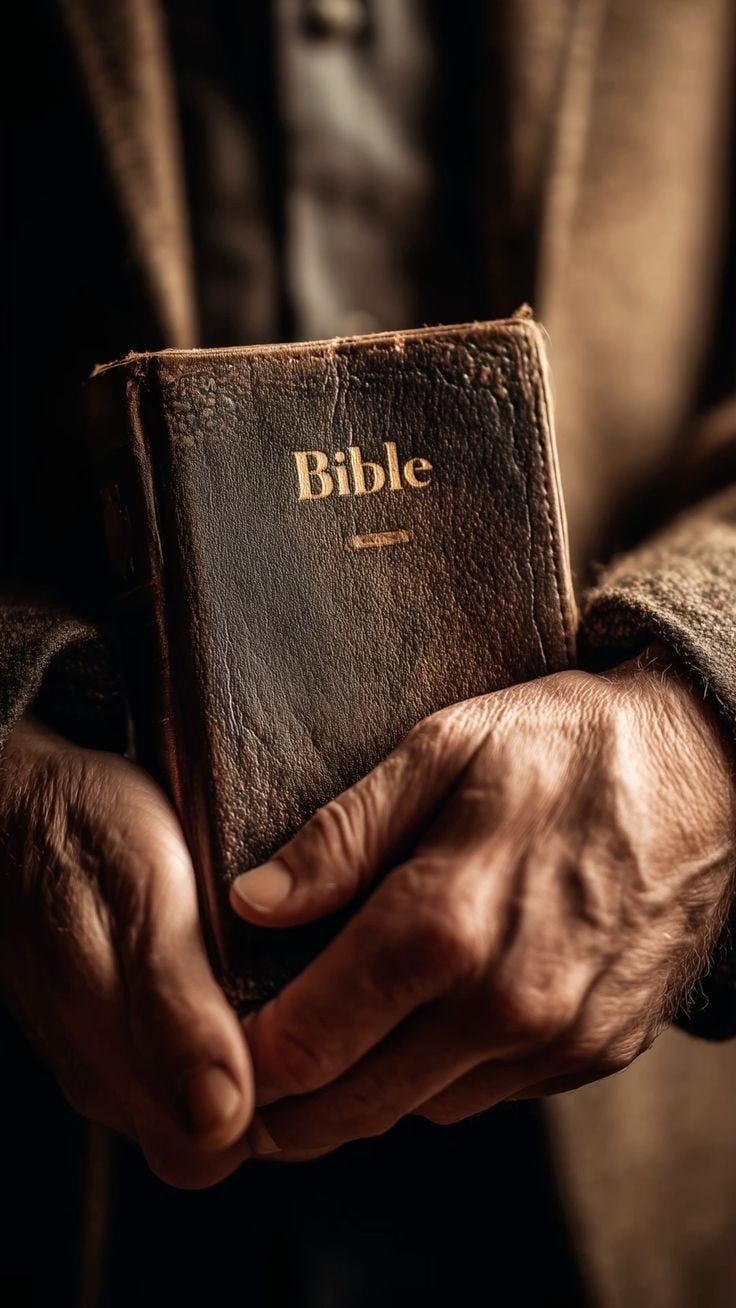
From James, a servant of the Lord, and of the Christ, his King, to scattered tribes in every land, a greeting now I bring.
Count it all joy, my brothers dear, when trials round you fall, for testing works a patience deep; let patience finish all.
Then you shall stand mature and whole, not lacking anything. And if you lack for wisdom’s light, then ask it of the King.
He gives to all men generously, He finds no fault, no blame. But ask in faith and do not doubt, or doubt will do you shame.
The doubter is a wind-tossed wave that heaves and cannot rest; that double-minded, restless man receives not one request.
The lowly brother, poor and meek, his high estate may boast; the rich man, in his passing low, shall fade and matter most-ly like a flower.
(This stanza limps. See note below.)
The rich man boasts in being brought low, for like the flower he goes: the sun climbs up with scorching heat, it withers grass and rose.
Its blossom falls, its beauty dies, the bloom is burned away; so shall the rich man fade from view amid his busy day.
O blessed is the one who stands and bears the trial’s test, for he shall gain the crown of life, by God’s own promise blessed;
the crown the Lord has pledged to give to all who love his name. So hold beneath the weight of trial, and He will crown the same.
When tempted, let no man declare, “It is from God I’m tried,” for God is tempted by no ill, and tempts no soul beside.
But each man’s dragged by his own lust, enticed and drawn to stray; lust, having conceived, brings forth its sin, and sin, full-grown, brings death that day.
Be not deceived, my brothers dear, weigh well the word I bring: each good and perfect gift descends from heaven’s Father-King,
the Father of the lights above, who shifts not like a shade. He birthed us by the word of truth, first fruits of all He made.
Take note of this, my brothers dear, and let it guide your ways: be quick to hear and slow to speak, and slow to anger’s blaze.
For human anger cannot work the righteousness of God. So strip away all filth and sin, and lay them ‘neath the sod.
In humbleness receive the word that’s planted deep within; that word has power to save your soul and cleanse you from your sin.
But be a doer of the word, not hearer only, blind, for hearers who will never act deceive their own dull mind.
The hearer-only’s like a man who in a mirror peers, then straightway walks away and clean forgets the face he wears.
But he who looks with steady gaze in freedom’s perfect law, and keeps it, not forgetting it, shall bless the deeds he saw.
The man who thinks himself devout yet cannot rein his tongue, deceives his heart; his empty faith is worthless, all unsung.
Religion pure before our God, unstained and undefiled: to tend the widow in her grief, to guard the orphaned child;
and keep oneself unspotted, clean, from all the world’s dark stain. This is the faith the Father loves, and this shall not be vain.
My brothers, holding to the faith of Christ, our glorious Lord, show no man favor by his wealth, no partial, biased word.
Suppose into your gathering comes a man with golden ring, in splendid clothes; and after him, a poor and ragged thing.
If you attend the well-dressed man, “Here, take the honored seat,” but tell the poor, “Go stand aside, or crouch beneath my feet,”
have you not judged with evil thought, divided rich from poor, and made yourselves as wicked judges sitting at the door?
Now listen, brothers whom I love: has God not made His choice of those the world counts poor and low to make their faith rejoice,
as heirs to rich, unfailing faith, and heirs of His domain, the kingdom pledged to all who love and hold His holy name?
Yet you have shamed and scorned the poor. Is it not rich men proud who drag you cruelly into court and grind you in the crowd?
Do they not blaspheme that fair name by which you all are known, the noble name of Christ the Lord who claims you for His own?
If you fulfill the royal law the Scripture handed down: “Love as yourself your neighbor near,” you wear a doer’s crown.
But if you favor by men’s wealth, you sin against the light, and stand convicted by the law as breakers of the right.
For he who keeps the whole of law yet stumbles at one word is guilty of them all alike before the holy Lord.
The One who said, “Do not commit adultery’s foul deed,” said also, “Do not murder, kill”; so heed the whole law’s creed.
So speak and act as men who face the law of liberty, for judgment falls without a shred of mercy’s clemency
on him who showed no mercy’s grace. But lift your head above: for mercy triumphs, mercy wins, and conquers judgment’s love.
What good is it, my brothers dear, if faith is all you claim, yet have no deeds to prove it true? Can empty faith reclaim?
Suppose a brother, sister, stands in cold without a coat, and lacks their daily bread to eat, a hunger in the throat,
and one of you should say, “Depart, go warm yourself, be fed,” yet gives them nothing for their need, no clothing and no bread.
What good is that? So faith alone, if deeds it cannot show, is dead within itself, and cold, as lifeless things below.
But someone says, “You have your faith, and I have deeds to see.” Show me your faith apart from deeds; my deeds shall show my plea.
You say you trust one God alone, and that is well and good; the very demons hold that creed, and shudder where they stood.
O foolish man, will you have proof that faith is bare and dead when severed from the deeds it bears? Then hear what Scripture said.
Was Abraham our father not made righteous by his deed, when Isaac on the altar lay, his own beloved seed?
You see his faith and works as one, they labored side by side, and by the deed his living faith was proven, verified.
And so the Scripture came to pass: “He trusted God’s own word, and it was counted righteousness”; God’s friend the man was called.
(Off-rhyme; see note.)
You see a man is justified by deeds, and not alone by faith that never moves a hand or makes its power known.
And Rahab too, the harlot once, was she not justified, who housed the spies and sent them forth by yet another side?
For as the body without breath is but a corpse, forlorn, so faith without its living deeds is dead as flesh outworn.
Let few of you be teachers, kin, for this you surely know: we teachers face a stricter fault and heavier judgment’s blow.
For all men stumble many ways. The man who never errs in what he speaks is perfect, whole, and every limb he steers.
We put the bit in horses’ mouths to make the beast obey, and by that small thing turn the whole and bend it every way.
Consider ships, so vast and strong, by driving tempests tossed, yet steered by one small rudder’s turn wherever the pilot crossed.
Just so the tongue, a little part, makes boasts both loud and grand. Behold how great a forest burns, set off by one small brand.
The tongue’s a fire, a world of wrong, it stains the flesh entire, and sets the wheel of life ablaze, itself lit by hell’s fire.
For every kind of beast and bird, of reptile, fish, and thing, is tamed and has been tamed by man, and bows beneath his ring.
But no man living tames the tongue, that restless, roving ill, a thing of deadly poison filled that wags and wounds at will.
With it we bless the Lord above, the Father, good and just, and with it curse our fellow men, God’s likeness, made from dust.
From that same mouth the blessing flows and cursing pours as well. My brothers, these things ought not be, this double note we spell.
Can any fountain from one spring send sweet and bitter through? Can fig trees bear the olive’s fruit, or vines the fig accrue?
No salt spring yields the water sweet. So let your speech be one, a single stream of blessing pure, till all your words are done.
Who is the wise and knowing man that walks among your throng? Let him show forth by his good life his deeds in meekness strong.
But if you nurse a bitter spite, and selfish, grasping pride, then do not boast, nor lie against the truth you cast aside.
Such wisdom comes not from above, but earthly, low it lies, unspiritual, of demons’ kind, a devilish disguise.
For where you harbor envy’s spite and selfish, warring greed, there disorder reigns, and every vile and evil deed.
But wisdom from the heaven’s height is pure before the rest, then peaceable, and gentle, kind, and yields to what is best;
full of compassion, mercy’s fruit, impartial, and sincere. And peace’s sowers reap in peace the righteous harvest here.
What breeds the fights and feuds in you, the quarrels and the strife? Is it not lusts that war within and battle for your life?
You crave and have not, so you kill; you covet, cannot gain, and so you brawl and wage your wars, yet all your asking’s vain,
for you have not because your lips have never asked of God; and when you ask, you ask amiss, to spend on lust’s applause.
Adulterous souls! Do you not know the world’s embrace and kiss is enmity against your God? Take heed, and mark you this:
whoever chooses friendship’s bond and to the world would cleave becomes an enemy of God, His fellowship to grieve.
Or think you Scripture speaks in vain? He yearns with jealous care for that same spirit He has caused to dwell and settle there.
But greater grace He gives us still. And so the Scripture saith: “The proud God stands against and breaks, the humble crowns with breath.”
(Second line paraphrases “shows favor to the humble.”)
So then submit yourselves to God, stand firm and hold your ground; resist the devil, and he’ll flee, no footing to be found.
Draw near to God, and He’ll draw near, close to your side He’ll stand. Wash clean your hands, you sinners all, and purify each hand;
make pure your hearts, you double souls, of every wavering part. Be grieved and mourn and weep your sin, lament with broken heart.
Let laughter turn to mourning’s sob, your joy to heavy gloom. Bow low before the Lord your God, and He will lift you from the tomb of despair.
(Last line overruns; see note.)
Speak not, my brothers, evil words against each other’s name; who slanders, judges brother-kin, does to the law the same:
he speaks against and judges it, and sets himself above, no doer of the law at all, but judge of law and love.
One Lawgiver and Judge there is, who saves and can destroy. But who are you to judge your kin, their neighbor to annoy?
Now listen, you who boldly say, “Today or next we go to such a city, stay a year, and trade, and profit grow,”
you do not know what dawn may bring, nor what your life shall be: a mist that lingers little while, then vanishes to sea.
Instead you ought to humbly say, “If God our Lord shall will, then we shall live, and do this thing, and that day’s work fulfill.”
But now you glory in your schemes, in arrogance you crow; and all such boasting is but evil, puffed-up, empty show.
So he who knows the good to do, yet does it not that day, to him it is accounted sin; he’s guilty in the weigh.
(”weigh” spelled to rhyme with “day”; you may prefer to fix. See note.)
Now weep and wail, you wealthy men, for miseries that near; your riches rot, your garments fine the moths devour and sear.
Your gold and silver, tarnished through, their rust shall stand and cry; it eats your flesh as fire consumes, your witness by and by.
You hoarded treasure to the end, in these last days of dread. Behold, the wages you withheld from reapers wanting bread
cry out; the harvest-workers’ cries have reached the Lord’s own ear, the Lord of Hosts, Almighty God, who bends His head to hear.
You lived in luxury on earth, in soft indulgence lay; you fattened up your greedy hearts against the slaughter’s day.
You have condemned and slain the just, the innocent, the good, who offered you no strife nor stood against you where he stood.
Be patient then, my brothers dear, until the Lord shall come. Behold the farmer waiting long to gather harvest home,
who bides for early and late rain, in patience, day by day. So you be patient, stand you firm; the Lord is near, I say.
Don’t grumble, brothers, one ‘gainst one, lest you be judged as well; behold, the Judge before the door now stands, the truth to tell.
Take, brothers, as your pattern true of patience under pain, the prophets who in God’s own name spoke forth and did not feign.
Behold, we bless the steadfast souls who bore and would not bend. You’ve heard of Job’s enduring faith, and seen the Lord’s own end:
how full of tender mercy’s grace, compassion deep, is He. So count as blessed the ones who stand through all adversity.
Above all else, my brothers dear, swear not by any oath, not heaven, earth, nor anything; let plainness bind you both.
Let “Yes” be “Yes,” and “No” be “No,” your simple word be true, lest you fall under judgment’s word and condemnation due.
Is any troubled? Let him pray, and lay his grief abroad. Is any glad? Then let him sing his songs of praise to God.
Is any sick among your band? The elders let him call to pray and anoint with oil, in the Lord’s name over all.
The prayer of faith shall heal the sick, the Lord shall raise him whole; and if he’s sinned, he’s pardoned clean, forgiven, heart and soul.
So then confess your sins, each one, and for each other pray, that you be healed; the righteous prayer is powerful in its way.
Elijah was a man like us, of like and mortal frame; he prayed the rain would cease to fall, and three years dry it came;
three years and six long months no rain upon the ground was shed. He prayed again; the heavens poured, and earth brought forth its bread.
My brothers, if among your band one wanders from the truth, and someone turns him back again to walk the way of ruth,
then know you this: who turns a soul from error’s deadly way shall save that soul from death itself, and hide his sins away.
A few honest flags, since this is for memorization and you’ll want to trust it:
Theological check worth your eye. In Chapter 2 I kept James’s actual claim that a man is “justified by works, and not by faith alone” (2:24), because softening it would be dishonest to the text, even though it’s the verse that gets fought over. I rendered it straight. If you’re using these devotionally you’ll want to be ready for that, but it’s what James says.
Where I paraphrased a quoted line. James quotes the Old Testament a few times (”Love your neighbor,” “God opposes the proud,” “Abraham believed God”). I put those into meter rather than quoting a translation verbatim, so the wording is mine, not any copyrighted version. The sense is preserved.
If you value unflinching, historically grounded analysis that mainstream outlets soften or ignore, consider upgrading. Paid subscribers get:
Several new, full-length articles every week.
Carefully researched pieces you won’t find elsewhere.
Full access to the complete premium archive
Archive of in-depth writing, research, and commentary — all in one place.
Entry into the subscriber chat
A private space for serious readers and thoughtful discussion.
Thanks for reading. This post is public, so feel free to share it. A. C. Rosenthal writes on comparative religion, Islamic theology, and the relationship between Christianity and modern Western culture. This work is entirely reader-supported. By choosing a paid subscription, you allow me to continue this long-form research to bring these vital stories to light. Thank you for helping this Lion roar for truth. A.C. Rosenthal is the author of The Two Muhammads: What History and Manuscripts Reveal About the Islamic Dilemma, The God They Rejected Isn’t Real: Exposing the False Gods of Modern Doubt, and The Carpenter’s Son and the Imam’s Son. Further analysis at:
acrosenthal.com/
https://thetwomuhammadscurriculum.thinkific.com/
No posts
Comments
Nothing yet. Say the first thing.
Sign in to join the conversation.