

For thirty-eight+ essays we have been examining the false gods other people handed you. This one turns the mirror around. The most important question left is not which god they gave you. It is which one you actually reach for in the dark.
There is the God you say you believe in. And there is the God you actually believe in. For a great many people, including a great many who have sat in church for decades, these are not quite the same, and the distance between them is the most important spiritual gap there is.
You can measure the gap easily, and you cannot fake the measurement, because it does not happen on your lips. It happens in your gut, in the half-second before you have time to give the correct answer. Something goes badly wrong in your life. A diagnosis. A betrayal. A door that slams that you were certain would open. And in that first unguarded instant, before your theology has time to arrive and tidy things up, some assumption fires automatically about what God is doing. That reflex, not the answer you would give in a Bible study, is your actual theology. That is the God you really believe in. The rest is commentary.
For most of us the reflex is not the God we profess. We profess a Father who is good and near. But the god who fires in the dark is often someone else entirely. A disappointed examiner who expected better. A distant manager who was always going to let this happen. A scorekeeper totaling the column that proves we had it coming. We would never say these things in daylight. We do not have to say them. They say themselves, in the reflex, every time the floor drops.
This series has spent thirty-eight essays taking apart the false gods that other people built and handed to you. It is time to admit that at least one of them is not out there at all. It is in the mirror. It is the god your own instincts reach for when you are too frightened to be theologically correct. And until you look at that one honestly, nothing else changes, because that is the god you are actually living with.
James describes the whole problem in a single image, and it is sharper than it first appears.
He says a person who hears the truth but does not act on it is like a man who looks at his face in a mirror, and then goes away, and immediately forgets what he looked like. Notice what James does not say. He does not say the mirror lied. The mirror was honest. The reflection was accurate. The man saw himself truly. His failure was not of perception. It was that he did not hold what he saw long enough to let it change anything. He glanced, registered the truth, and walked away, and by the time he reached the door it was gone.
We usually read this as being about behavior, about sin we notice and fail to correct. But read it about belief. What if the reflection we most need to stop walking away from is not our conduct but the image of the God we have actually been carrying? Not the God we profess, who is easy to look at, but the one who shows up in our reflexes and our fears and our most instinctive prayers, who is harder to look at and much easier to forget the moment we glance away?
Most people, given one honest look in that mirror, see the gap immediately. And most people do exactly what James describes. They walk away. Because the god in the reflection is uncomfortable to hold, and holding him would require doing something, and it is so much easier to return to the professed God on the lips and leave the practiced god running, unexamined, in the dark.
This essay is a request to keep looking. To not walk away from the mirror this time.
There is an ancient version of this, and it is not the story you would expect, because the people in it were not atheists.
When Moses disappeared up the mountain and stayed gone longer than anyone was comfortable with, the people at the bottom grew anxious. And they went to Aaron and said, make us a god who will go before us. So Aaron collected their gold and fashioned a calf, and they said, these are your gods, O Israel, who brought you up out of Egypt.
Stop and see what is actually happening, because it is not what we usually assume. They are not rejecting the God who delivered them. They are not denying he exists or that he brought them out of Egypt. They are replacing him with a version they can manage. A god they can see. A god who will stay put and not vanish into mystery and silence at the exact moment they most need reassurance. The problem with the real God, in that moment, was that he had gone quiet and gone up a mountain and could not be controlled. So they built one who could be. Smaller. Comprehensible. Manageable. Exactly as present as they needed and never unnervingly free.

If this series has been worth your time, consider subscribing. It is reader-supported, and that is what keeps it going.
Most of us have done this. Not with literal gold. With the gold of our experience. We take the raw material of our lives, the hurts, the disappointments, the specific times God did not show up the way we expected, and we melt it down and cast from it a god we can comprehend. A god who is exactly as present or as absent as our experience has taught us to expect. A god who behaves, reliably, like the people who hurt us, or like the silence that met us when we prayed, or like the framework too small to hold the suffering we went through.
And here is what makes the calf so convincing, so hard to see as a calf. It is built from real material. The gold was real gold. Your experiences were real experiences. The disappointments happened. The silences were genuinely silent. Nobody builds their private god out of nothing. That is precisely why it feels like sober realism instead of what it is, which is a manageable idol cast from the gold of a real and painful life.
Let me show you a man who spent years worshipping a caricature, and who happened to leave a detailed record of what it was like inside.
Before he was the most consequential churchman in a thousand years, Martin Luther was a monk being slowly destroyed by the god he actually believed in. On his lips, and in his training, was the God of the Church, gracious and merciful. But the god his gut reached for was a monster. An infinite, unappeasable judge whose righteousness meant only one thing: the perfect standard by which he was, at every moment, being measured and found wanting. Luther did everything the manageable god demanded. He fasted, he confessed for hours until his exhausted confessor told him to go away, he punished his body, he climbed stairs on his knees. And he could never get clean, because the god he was trying to satisfy was a scorekeeper who could not, in principle, ever be satisfied.
Listen to his own words, because they are not the words of an atheist. They are the words of a devout man describing the god of his own gut. “I hated the righteous God who punishes sinners,” he wrote. “Secretly, if not blasphemously, I was angry with God.” Here is a man who had given his entire life to God, raging in the dark at the god he had actually been worshipping, a god assembled from a theology of merit and dread that he had been handed and had never once looked at directly.
And his deliverance was not that he tried harder to believe correctly. It was that he finally looked in the mirror, at the phrase in Romans that had tormented him, the righteousness of God, and held the look long enough to see something he had missed his whole life. That the righteousness of God in that verse was not the avenging standard by which God condemns the sinner. It was the gift God gives to the sinner. Not a measurement he could never meet. A garment he was being handed for free. The god of the scorekeeping, the god he had hated and served in equal measure, simply was not the real one. He never had been.
Luther said it felt as though the gates of paradise had opened and he had walked straight through. And he wrote one more line I cannot get out of my head. He said he came to love that phrase, the righteousness of God, with a love as great as the hatred with which he had once hated it. Same words. Same God, named the same way. The entire difference was that the caricature had finally been set down and the real face seen. The Reformation, and much of the world that came after it, began the moment one terrified monk stopped walking away from the mirror.
So I am going to ask you to look, and I am going to ask it gently, because the entire point is that the God doing the searching is safe to be searched by.
When something goes wrong, what do you instantly assume he is doing? When you pray, do you expect to be heard, or are you performing a ritual toward an audience you suspect is not there? When something good happens and someone says you should thank God, does that feel natural, or does it feel like an absurd overstep, and what does that flinch tell you? And when you imagine him seeing all of it, everything you have done and thought and hidden, what is the very first thing you feel? Fear? Relief? The urge to run? Each of those first feelings, before the correct answer arrives, is a photograph of the god you have actually been living with.
Do not rush to fix the answers. Just hold them in the mirror long enough to see them, which is the one thing the god of your fear does not want you to do, because he can only survive unexamined.
And then set beside your reflex the prayer of a man whose professed God and practiced God had finally become the same. Search me, O God, and know my heart. Try me and know my thoughts. See if there is any grievous way in me, and lead me in the way everlasting. Notice that David is not braced for this. He is not performing courage. He actually invites the total search, welcomes being known that thoroughly, because the God doing the searching is a God he has come to trust with the whole contents of himself. That is what it looks like when the gap has closed. Being fully known stops being a threat and becomes the thing you ask for.
Here is where the looking leads, and it is the reason the mirror is worth not walking away from.
The god in most people’s reflection, the disappointed examiner, the distant manager, the scorekeeper, is a sketch. Drawn in the dark, with the few tools available, under enormous pressure, from real but partial material. It is not nothing. But it is not the portrait. And the renewal Paul talks about, being transformed by the renewing of your mind, is not mainly an intellectual upgrade. It is this exact work: the slow, honest replacement of the inherited sketch with the actual face that has been there the whole time, waiting to be seen clearly once the sketch is finally moved out of the way.
And the actual face has a name. If you have seen me, Jesus said, you have seen the Father. The clearest picture of God that has ever existed is the one who touched the untouchable, ate with the traitors, wept at the graves of people he was about to raise, and stretched his arms out wide on a cross and let them nail him there rather than come down and save himself. That is the portrait. Measure it against the scorekeeper in your reflex and see how badly they match. The scorekeeper was never him. The portrait was there all along. The sketch was only ever in the way.
The God who is actually there is not afraid of your honest inventory. He is not nervous about the comparison between the caricature and himself. He has been waiting, patiently, for the moment you are finally willing to hold the mirror still and look, because he knows something you are about to find out. The one looking back at you through it, once the sketch is set down, is better than anything the sketch prepared you for.
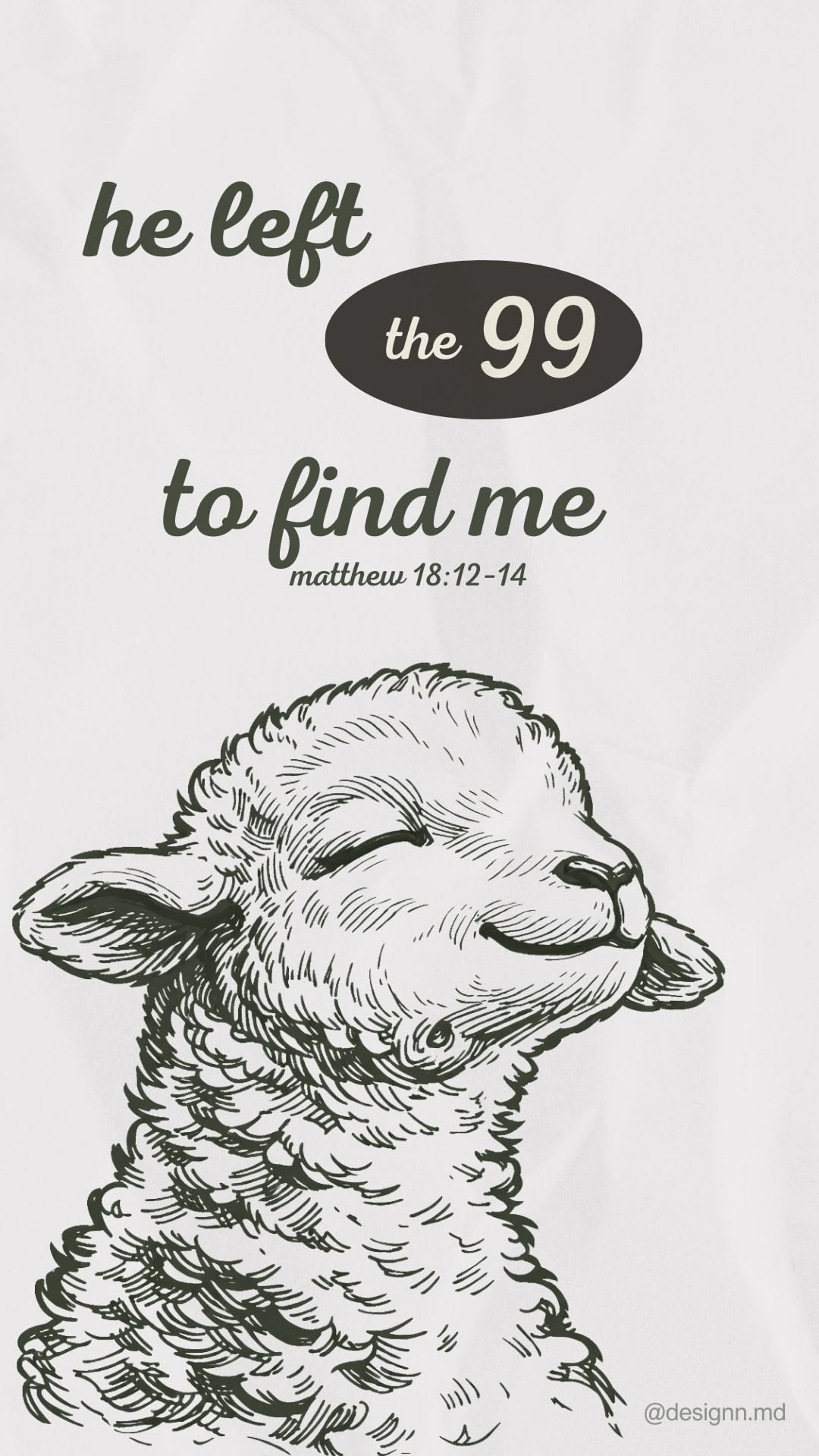
You do not have to fix what you see before you bring it to him. You only have to stop walking away from the mirror.
Say it, wherever you are, however unsure. God, I do not know if what I believe about you is accurate. Search me. Show me what I have missed. I am willing to look.
That prayer is the mirror held still at last. And the face that meets you in it was never the one you were afraid of.
If you value unflinching, historically grounded analysis that mainstream outlets soften or ignore, consider upgrading. Paid subscribers get:
Several new, full-length articles every week.
Carefully researched pieces you won’t find elsewhere.
Full access to the complete premium archive
Archive of in-depth writing, research, and commentary — all in one place.
Entry into the subscriber chat
A private space for serious readers and thoughtful discussion.
Thanks for reading. This post is public, so feel free to share it. A. C. Rosenthal writes on comparative religion, Islamic theology, and the relationship between Christianity and modern Western culture. This work is entirely reader-supported. By choosing a paid subscription, you allow me to continue this long-form research to bring these vital stories to light. Thank you for helping this Lion roar for truth. A.C. Rosenthal is the author of The Two Muhammads: What History and Manuscripts Reveal About the Islamic Dilemma, The God They Rejected Isn’t Real: Exposing the False Gods of Modern Doubt, and The Carpenter’s Son and the Imam’s Son. Further analysis at:
acrosenthal.com/
https://thetwomuhammadscurriculum.thinkific.com/
No posts
Comments
Nothing yet. Say the first thing.
Sign in to join the conversation.