
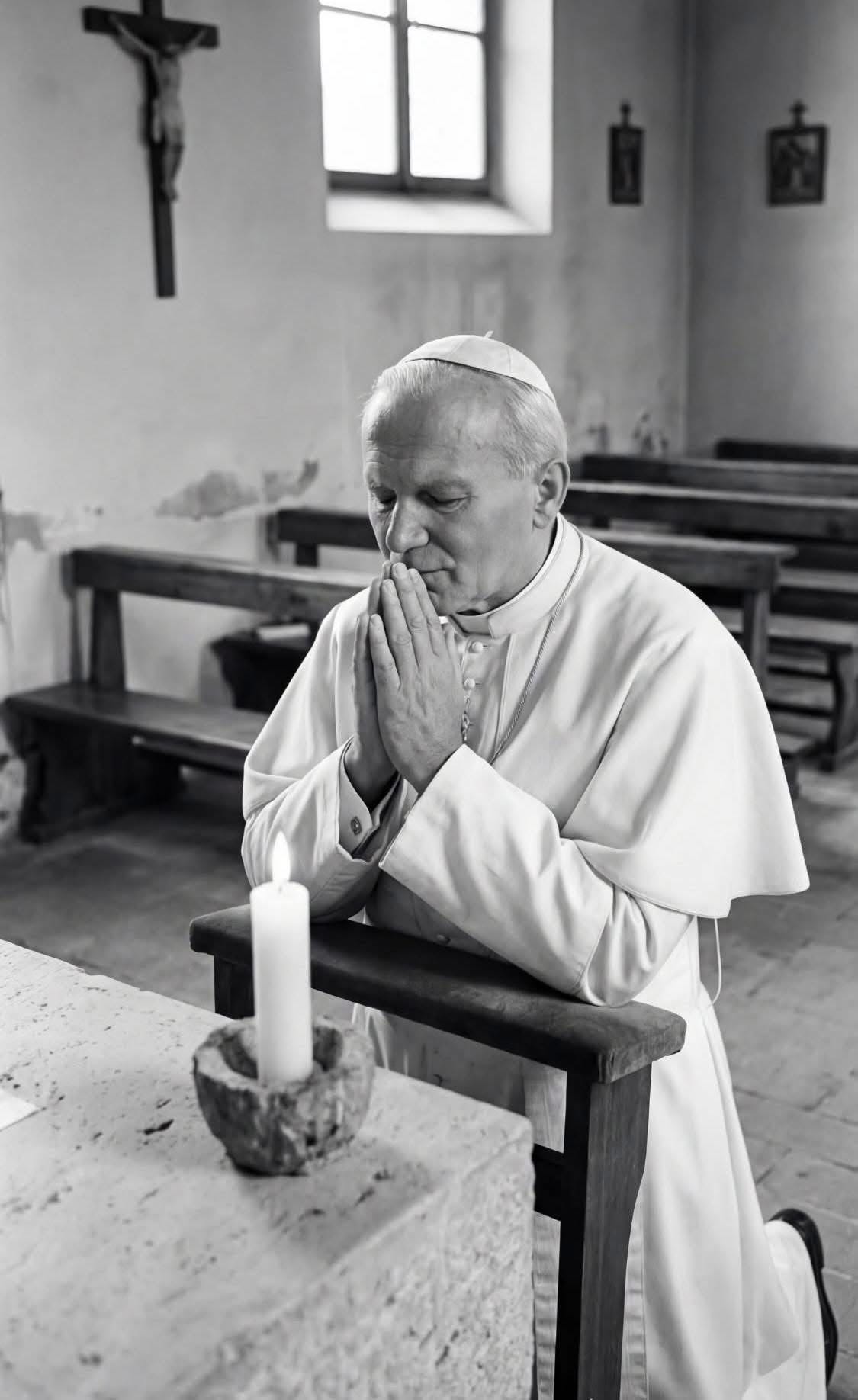
The cell door was left ajar. That detail matters, so hold onto it.
On the twenty-seventh of December, 1983, in Rebibbia Prison in Rome, an old man in white walked into the cell of the man who had tried to murder him and sat down close beside him in the corner. Two and a half years earlier, Mehmet Ali Agca had fired a pistol into John Paul II’s abdomen at point-blank range in St. Peter’s Square, and the pope had folded into his own blood and very nearly died. Now here they were, knee to knee. Agca was not handcuffed. The cell door was left open. The most protected religious figure on earth had asked to be shut in a room with the man who had shot him, unshackled, and he had asked that the door be left ajar, because he was not afraid, and he wanted the world to see that he was not afraid.
They spoke for twenty-one minutes, and the pope kept what was said between them for the rest of his life. When he rose to leave, he pressed a rosary of silver and mother-of-pearl into the hand of the man who had tried to kill him. From his hospital bed two years earlier he had already told the watching world what he intended: pray for my brother, he said, whom I have sincerely forgiven. And he did not stop at feeling it. He spent years lobbying the Italian president to pardon Agca, and in time the pardon came.
I want to use this scene to argue something that has almost nothing to do with whether you are Catholic, and everything to do with how honest people are supposed to weigh a thing. Because the way we currently judge religions, and the Catholic Church in particular, is not honest. It is one of the most lopsided pieces of accounting in modern public life, and once you see the trick, you cannot unsee it.
The rigged scale
Here is how the judging usually goes.
The Catholic Church is weighed by its Inquisitions, its Crusades, its corrupt Renaissance popes, its cover-ups and its scandals. The list is real and it is ugly and I am not going to pretend otherwise at any point in this essay. But then, on the other side of the ledger, the secular modern state is weighed by its hospitals, its universities, its charities, and its progress. The Church gets charged for its worst men. The competing institution gets credited for its best.
That is a rigged scale, and it would be rigged in either direction. If I judged the secular Enlightenment solely by the guillotine, the gulag, and the abortion clinic, and judged the Church solely by its cathedrals, its hospitals, and its saints, I would be doing the identical dishonest thing with the pans reversed. The first rule of fair measurement is simple and nobody follows it: you weigh every institution by both pans. Its goods and its evils. The hospitals it built and the heretics it burned. All of it, on one scale, for everyone.
And when you actually do that with the Catholic Church, the goods are not a footnote. This is the institution that effectively invented the hospital as a charitable institution open to all, and the university, Bologna and Paris and Oxford born from her schools. She preserved the literature of the ancient world in her monasteries through the centuries when it would otherwise have been lost, monks copying Cicero and Aristotle by hand in the cold. She is the largest charitable organization in the history of the human race, feeding and schooling and healing more of the poor across more of the globe than any government has ever managed. Gregor Mendel, a friar, founded genetics in a monastery garden. Georges Lemaitre, a priest, first proposed the Big Bang. The very calendar on your wall is named for a pope. Judge her by both pans and the scale does not tip the way the popular story insists.
But weighing both pans is only the first rule, and it is not even the important one. Because a critic can grant all of that and still say, fine, the evils remain, and they still count. And he is right that they count. The question is what they count as, and against whom. That is the second rule, and it is the one that changes everything.
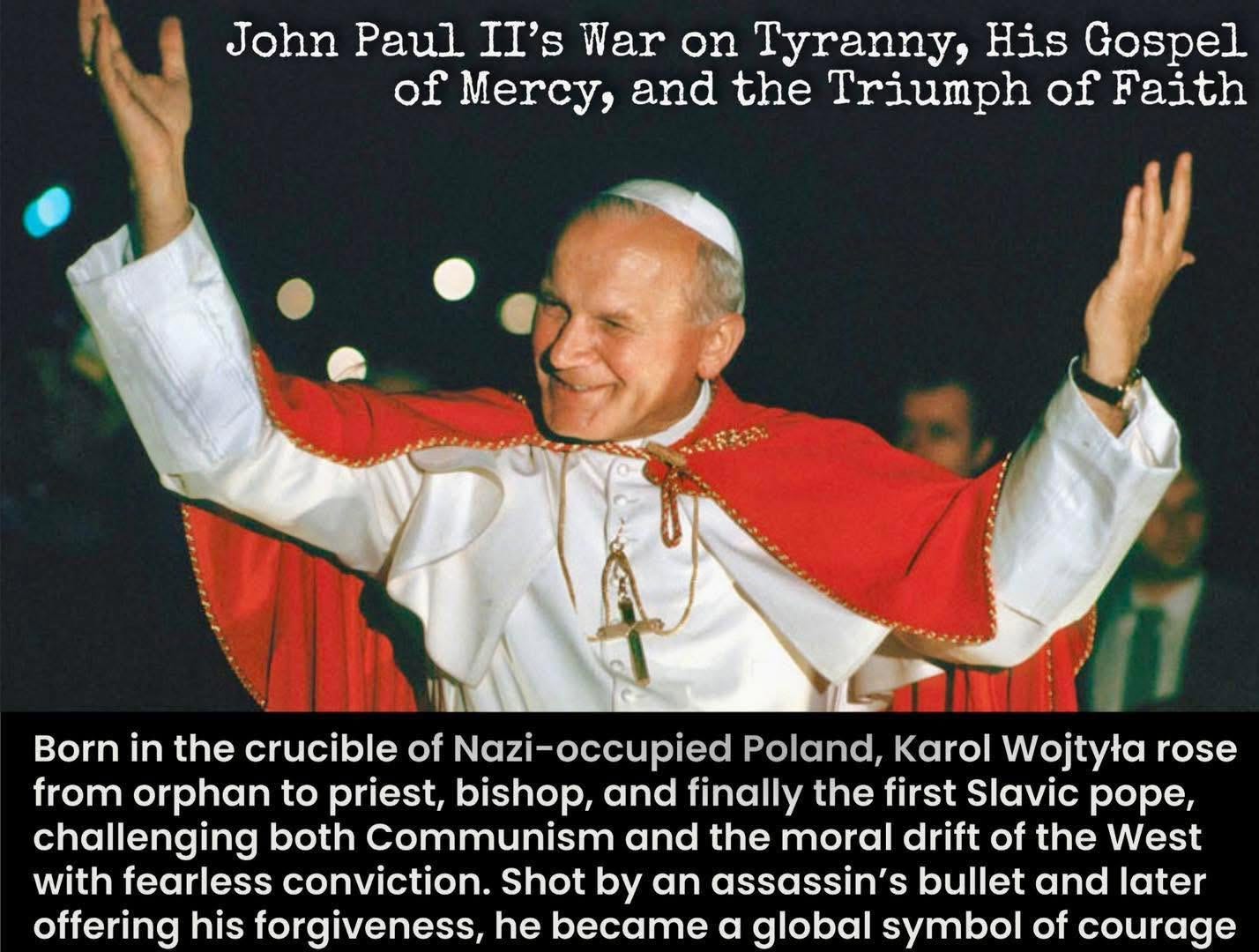
The second rule: vet the evil against the founder
When a member of a faith does something evil, there is a question you must ask before you can lay it at the feet of the faith itself. Was he obeying his founder, or betraying him?
This is not a dodge. It is the single most important distinction in the honest evaluation of any belief system, and it cuts in every direction, including against traditions I would defend. So let me state it as a clean test. Take the evil act. Hold it up against the explicit words and the personal example of the one who founded the religion. And ask which direction the act points. Does it fulfill the founder’s teaching, or does it violate it?
Comments
Nothing yet. Say the first thing.
Sign in to join the conversation.