
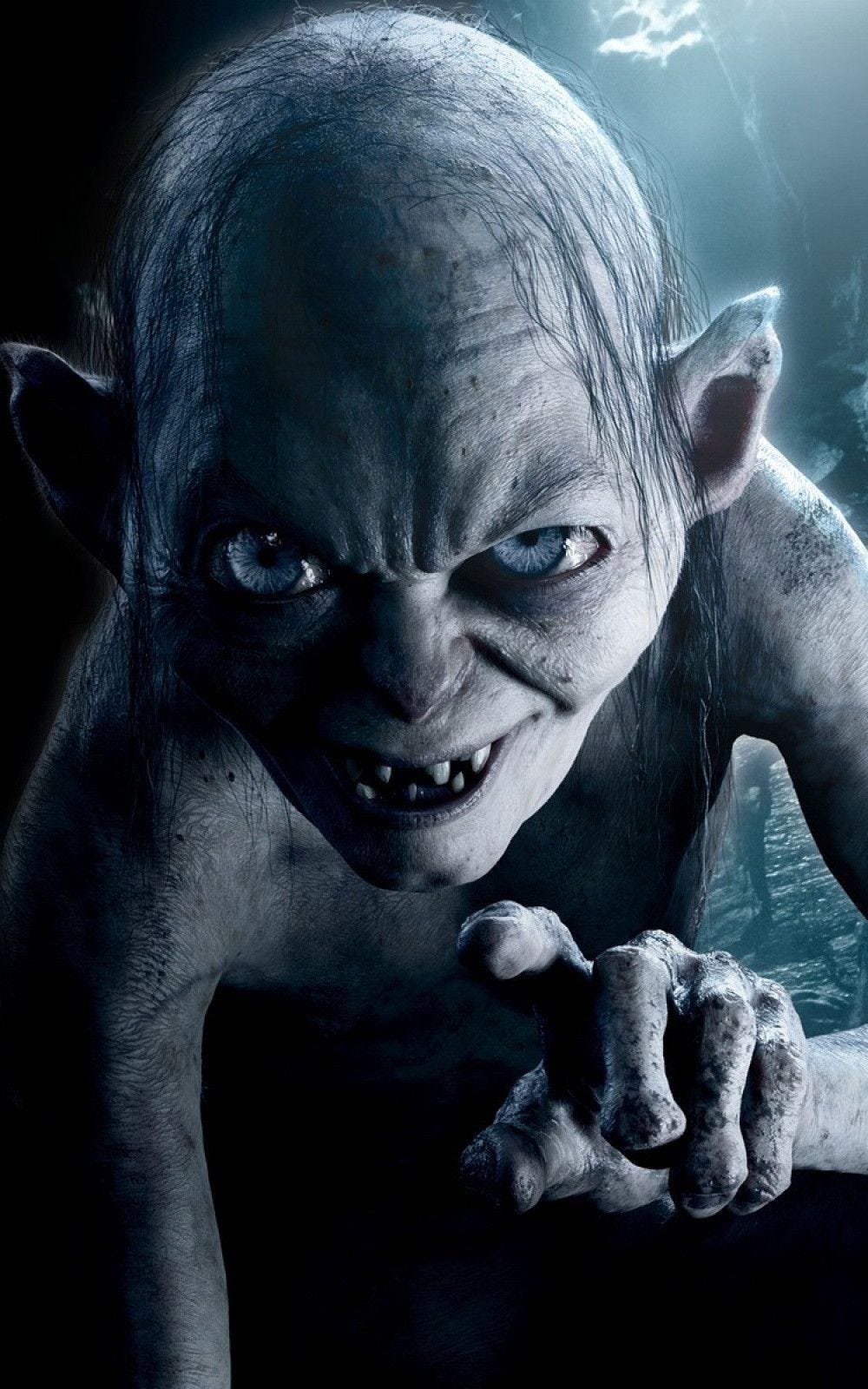
“Meat’s back on the menu, boys.”
That is an orc, in the dark under Fangorn, celebrating the prospect of eating a prisoner. And if you want to understand the whole moral universe of The Lord of the Rings, start there, in the pit, with the creatures who eat their own.
Because that is what the orcs do. They betray each other over a shirt of mithril. They knife one another in the towers of Cirith Ungol and leave the job half done. They cannot hold a fortress for a single night without the whole garrison turning on itself. Sauron can field them by the tens of thousands and still they cannot build anything, cannot make anything, cannot keep faith with one another long enough to finish a meal that isn’t one of their own. The orcs are what a world looks like when you subtract love from it entirely. It consumes itself. It is a race of appetite with nothing above the appetite, and Tolkien drew them that way on purpose, because they are the floor of his universe, the thing everything else is measured against.
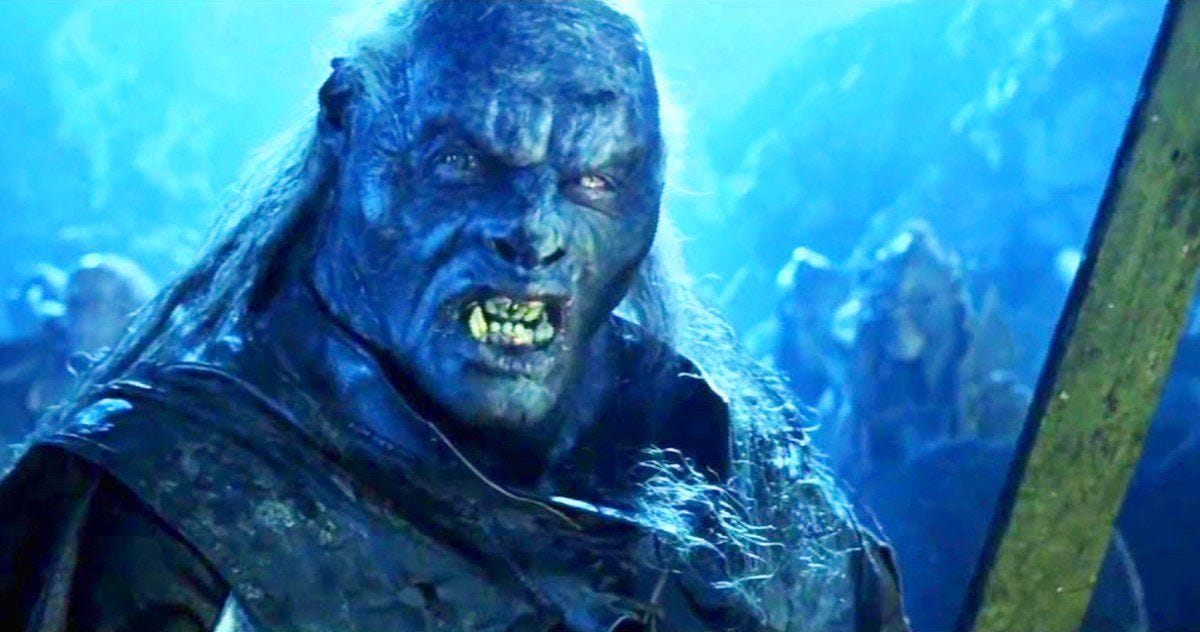
Hold that image. The self-eating pit. Because everything good in the entire tale is the answer to it, and the answer, every single time, is shaped like a cross whether Tolkien meant it to be or not.
Now, before the fans sharpen their knives, let me concede the whole board. Loudly. Because I am about to be told all the reasons I am wrong, and I already agree with most of them.
Everything the objectors get right
There is a certain kind of very well-read Tolkien fan who becomes physically uncomfortable when a Christian starts pointing at the Legendarium, and I want to say plainly: he is usually right, and he usually knows more than the person he is arguing with.
He will tell you that Tolkien despised allegory. True. Tolkien said so himself, in as many words, and said it more than once. He called his own preference a “cordial dislike” of allegory in all its forms. He would have loathed a sermon that reduced his life’s work to a decoder ring.
He will tell you there is no incarnation in Middle-earth. True. No God who becomes a man. He will tell you there is no Trinity, no Holy Spirit, no church, no sacraments in any developed sense, no evangelism, not one single scene of anyone being converted to anything. True, all of it. He will point out that Iluvatar, the one God, is remote almost to the point of absence, that he does not walk in any garden, that he intervenes perhaps three times in an age and each time it is world-breaking rather than tender. He will note, correctly, that the Valar are closer to the demiurges of Greek and Gnostic thought than to anything in the Nicene Creed, that they are called gods in the earliest drafts, that they manifest as weather and storm like something out of a pagan hymn. He will tell you there is no Virgin Mary, whose absence from a Catholic’s mythology is a thundering silence. He will tell you death itself works differently here, that it is called a gift rather than a punishment, which is nearly the reverse of the Christian story of the Fall.
And he will conclude, reasonably, that Tolkien was not smuggling Christianity into a costume. That he was building a mythology for England, drawing on Norse and Finnish and Anglo-Saxon sources at least as much as on his faith, and that anyone hunting for a one-to-one Christ figure has misunderstood the entire project.
I agree with every word of that. Every word. If your claim is that Tolkien wrote the Gospel in a wizard hat, you have lost the argument before you started, and you deserve to.
So I am not going to make that claim. I am going to make a stranger one, and a harder one to escape.
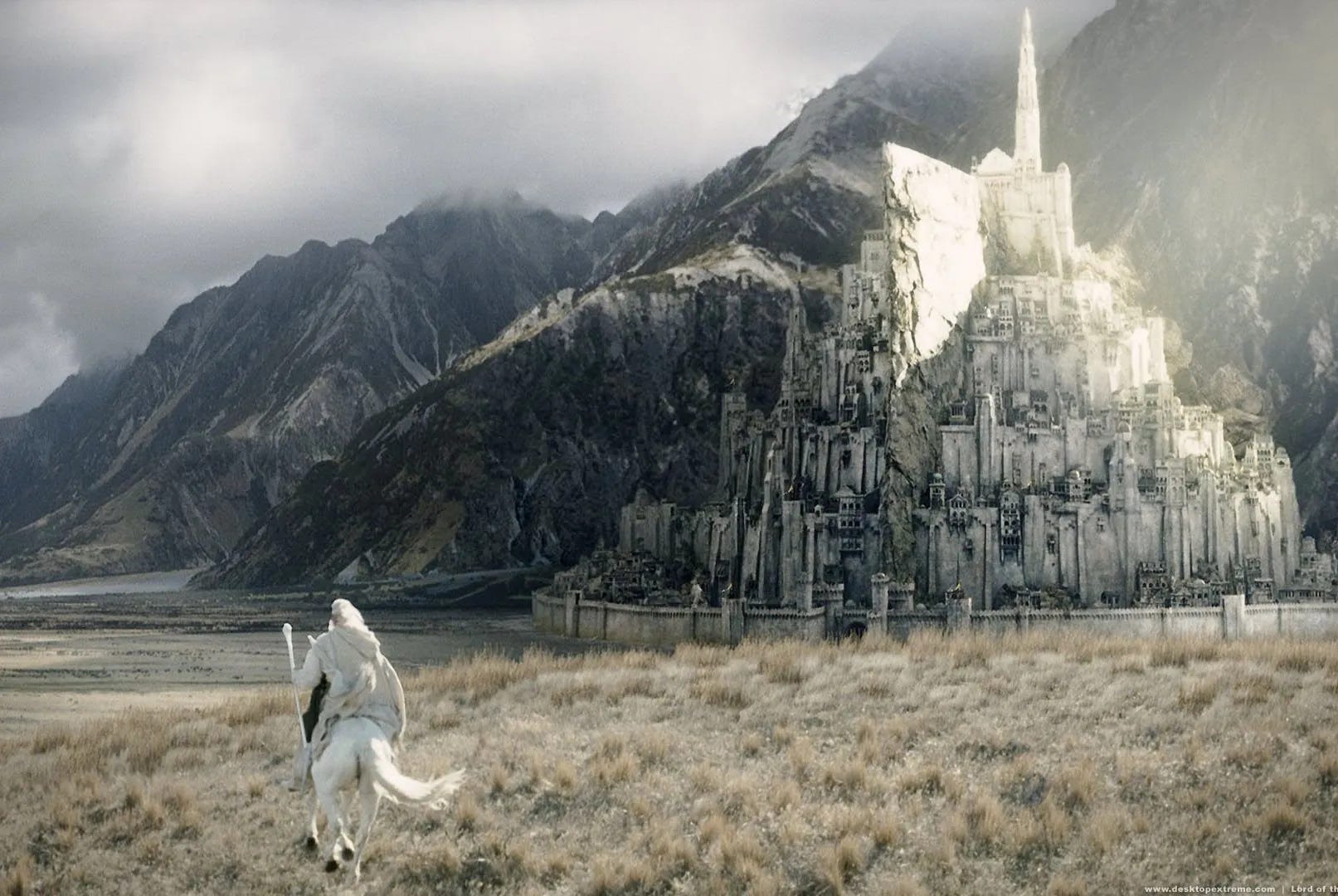
You can file off the nameplates. The cathedral still stands.
Here is the thing the objector proves, and the thing he does not.
He proves that the labels are missing. No incarnation nameplate, no Trinity nameplate, no Mary nameplate. He is right. The nameplates have all been filed off.
What he does not prove, because he never looks at it, is that the building underneath the nameplates is a cathedral. The architecture is Christian even though every sign in the lobby has been removed. And architecture is not decoration. You can strip the signage off a cathedral, knock down the cross on the spire, melt the plaques, and a structural engineer walking through will still tell you exactly what it was built to be, because the load is carried the way that kind of building carries load. The shape is in the stone, not the signs.
Tolkien did not decorate a Christian house. He built with Christian stone, because it was the only stone he trusted to bear weight. He was a man for whom the faith was not an opinion he held but the ground he stood on, and when a man like that builds an entire world from scratch, the moral physics of that world come out Christian-shaped no matter what he names the gods. Not because he is preaching. Because he cannot build a load-bearing wall out of anything he does not believe will hold.
And here is where the objector hands me the keys to his own house without noticing.
He says, as proof that Middle-earth is not Christian, that evil in it is parasitic. That Melkor and Sauron can only corrupt what already exists, never create anything of their own. That evil in Tolkien has no substance, no positive existence, that it is only good that has been marred, twisted, hollowed out. He offers this as a difference.
Comments
Nothing yet. Say the first thing.
Sign in to join the conversation.