
“Don’t go across the street when you’re at school… You don’t have anyone to go with you, and you can get hit by a car if you try it alone”, my mother Maryanne warned my sister Bebe and I one day in the late nineties.
“But my friends do it… Some of them are younger than I am,” I retorted indignantly.
“It doesn’t matter… They haven’t lived your life, and you haven’t lived theirs… You are not the same.”
Nigeria was a vastly different place when my family and I returned from Namibia in 1996. Only a year removed from truly becoming a pariah state due to the execution of Ken Saro-Wiwa and the Ogoni Nine, the country was being ruled by the military dictator Sani Abacha. In terms of brutality, there were few totalitarian regimes on the continent that could rival his own; the works of George Orwell might as well have been written about ‘90s Nigeria, in that people routinely vanished into thin air here, journalists and activists were assassinated with sickening rapidity, and huge sums of foreign currencies were embezzled by politically connected individuals while the vast majority of our citizenry writhed in pain and want.
Still, that having been acknowledged, my sister and I now talk about certain things from back in the late nineties and early noughties nostalgically, in a way that most gen Z Nigerians would write off as being too fanciful to be true. The availability of a food surplus in various parts of the country for example, with staple products being produced by our farmers for local consumption at affordable prices. Who would believe that a pot of quality stew could be made back then for 500 naira? Today, that amount would buy you a single pastry in Lagos.
I’m going to further look back on the Nigeria of my childhood and explore all the ways that it differed from that of today. I’ll also use the opportunity to speak briefly about the incredulity that the fact that we were ruled by a despot then, and now we are in a supposed democracy, inspires in the casual observer.
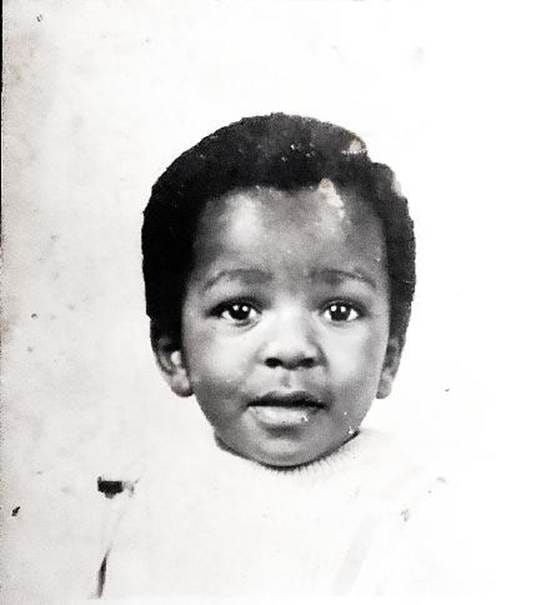
I was born in England, and I spent most of my first decade abroad. As a result, I was exposed to certain things upside down… I had Charlotte’s Web read to me in grade school in Namibia long before I came to realize who wrote it or where he was from… And the folk tales of Nigerian tradition that would later have such a profound effect on my own work as an adult wouldn’t be introduced to my life until I was around eleven or twelve, much later than is typical for my contemporaries.
As a result, coming back here the second time was something of a baptism of fire. My sister and I walked out of the plane upon its landing, retreated from the heat in horror thereafter - which is funny, considering the fact that Namibia is quite literally a desert - and begged our mother to look upon us with mercy and take us back where we came from. Spoiler alert: she didn’t do that.
In time, we were enrolled in school and began to get used to life here. The food was new; much of it, my mother made in Namibia, but quite a bit of it was entirely foreign to us. The prices of these things were, too. The Namibian dollar was pegged to the rand, so I knew what a few dollars could get you in Windhoek. In Lagos, you would have to deal in multiples by the dozen to get a relatively similar purchasing power. For a geeky adolescent boy with a minimum of a comic book-a week buying habit to service, this was something that inspired quite a bit of consternation at the time.
Both of my parents (but especially my mother) policed the activities of my sister and I like hawks. In order to get permission to go anywhere, we had to come up with ever more exotic reasons. “But it’s a birthday”, I would say, or “I was the only person in my class that was invited”, Bebe would. In retrospect, with the political situation in the country back then, I can sympathize somewhat with my mother’s fears… I had a big mouth at the time, my opinions were shared with everyone without a recognition of potential danger, and after labour that stretched for days and a recourse to an epidural when all else failed, she was not about to risk losing her only son and daughter because the former told the wrong person how he really felt.
Even with this though, we could still buy food at the tuck shop whenever we wanted at least… Because there was still food that could be bought. The idea that today, a lot of our crops have to be imported to Nigeria for reselling would have seemed unthinkable to me, my sister and our friends - if we were inclined to think of such things, that is. Heck, “Agricultural Science” was a subject in school because we all just assumed that food availability would always be a thing here. Now, with the world undergoing a cost-of-living crisis that has been exacerbated in Nigeria by the current administration’s decision to remove the fuel subsidy (and the financial cushion it provided to the regular Nigerian), we are faced with a situation where most of that is a thing of the past… If not in truth, then in spirit. I’ll look at this in more detail in the next section.
For a relatively small amount of money, you could get from the Lagos mainland to Victoria Island in a taxi cab in 1999. Granted, said cab would possibly be a moving wreck (my sister and I were scandalized when we first became aware of the ‘detachable’ window winders that many of them had), but still it was easy to get around this city. By contrast, my mother and I went from Ajah to Victoria Island two years ago in a meter taxi for the first time in years, and due to the financial instability that was plaguing the nation at the time, it cost us 30,000 naira to get there and back. Somewhere inside of me, my thirteen-year-old self was shrieking in disbelief at this figure.
Clothes were another major expense for us when I was a boy; every three weeks or so, my frame would become a few inches longer, and so my mother had to get creative to accommodate this physical variability. As a rule, she only bought clothes that were larger than my actual size - with the expectation that I would grow into them. I had a Karl Kani denim ensemble that looked like it had previously belonged to an older brother of mine that never existed as a result, and a couple of years later, these were joined by some Rocawear pieces that I would wear for the next decade due to how well made they were.
Whenever we went to Tejuosho modern market, my mother was quite adept at code switching in order to get the best prices from the traders. My grandmother had been an Ijaw, so she spoke Igbo as a second language and had bequeathed some of it to my mother. This was what she would use to essentially ingratiate herself with the Igbo traders there, because as a general rule Nigerians show preferential treatment to people who speak their native tongues. This was also true of the Yoruba traders, with her being fluent in that language due to my grandfather’s influence (He was a Yoruba who had trained as a linguist). Lastly, as for the Hausa traders, she picked up a few Hausa words along the way and used them with great skill as well.
I wasn’t socialized properly in terms of haggling, so to this day my first instinct when buying goods is still to pay whatever the merchant opens with as an asking price. As a result of this, I was always immensely popular at Tejuosho… Whenever we would go there, it would be like a carnival - traders would troop out of their stores by the truckload to try and talk this funny, round, not so little ‘foreigner’ into buying their clothes.
To give you a sense of how much things have changed, I went into a store in Lekki several months ago and was told without irony that a pair of Zara trousers there go for 50,000 naira and a jumpsuit by the same company goes for in excess of 100,000 naira. My life having flashed before my eyes in response to being told this, I turned around and hightailed it out of there faster than you could say ‘Heaven help me’!
The truly sad thing about this is that the people of today’s Lagos - those who have never known a time when some property in this city wasn’t priced in U.S. dollars - will look at what I am saying and wonder why I am reacting this way. As a response, all I can do is point out that the Nigeria I have described so far - with its affordable food, clothes and other items - wasn’t in the distant past. It was some twenty-six to twenty-eight years ago. What is more, it was far from a paradise… We were ruled by dictators and despots at the time, and our economy was in a shambles. This should serve as an indictment of the Nigeria of today, where some of the richest Blacks on Earth live side-by-side with people that struggle everyday to survive… All while on paper, our country has become one of the world’s wealthiest nations in the intervening decades.
What has caused us to come to this, you may ask? Deregulation, privatization, and the rise of free-range capitalism - and having experienced boom and bust periods myself in the past few years, I can confidently say that Lagos will eat you alive with very little in the way of remorse if you’re not careful. What has been the Nigerian government’s reaction to this troubling state of affairs? A clear and present disconnect between the experiences of the government and those of the governed. I’ll explore this further in the following section.
The federal government has been very good to some people. Vast amounts of money have been made through its policies, and as the gap between the haves and the have-nots has grown into an ever-widening chasm, the rest of Nigeria has struggled through Boko Haram terrorism, cattle herder violence, oil militancy, environmental degradation, political persecution, and inter-tribal prejudice.
In response to criticism of this state of affairs by everyone from Chief Funmilayo Ransome-Kuti in the Independence era to Seun Anikulapo-Kuti, her grandson, today, the Powers-That-Be have doubled down and embraced the free markets all the more. Who cares if a nameless child dies of malaria somewhere in Benue? In Abuja, where most of our ruling class lives, all they know is that they are safe from the random bite of the mosquito. Let everyone else deal with their own affairs.
To compare this to what was going on in 1999 and 2000, Nigeria was transitioning into a democracy after decades of military rule. Our people were full of hope for the future, because the gods themselves had taken our big bad bogey man Abacha away in the dead of a night back in ‘98. The future was ours, and Olusegun Obasanjo - the man who became our first democratically elected president of this current republic - hit the ground running based on this expectation. During his presidency, he championed debt relief on the world stage and got a large chunk of what we owed foreign institutional creditors written off. He also started the so-called ‘Excess Crude Account’, a cross between a sovereign wealth fund and a rainy-day savings account that was intended to store the billions of dollars that our nation was making due to surging oil prices.
In today’s Nigeria, meanwhile, Nigerian parliamentarians are slapping taxi drivers and getting expelled from the National Assembly for making allegations of sexual harassment against its principal officers. The stock market is in free fall, our purchasing power to the U.S. dollar has never been weaker, and natural disasters occur on an almost daily basis and are generally met by governmental apathy. Don’t get me wrong, Chief Obasanjo’s government was not filled with saints either in terms of this… The bungled response to the religious riots that followed the decision to host the Miss World beauty pageant occurred at this time, after all… As did the Odi massacre, in which a community in the Niger Delta was literally wiped off the face of the earth by agents of the state that the chief led.
Still, the people of Lawanson in Surulere - where my family lived for a few years - knew at the turn of the millennium that if the worst happened and the bottom fell out, they were at least guaranteed three square meals a day. That is something that everyone should be able to say but unfortunately, in today’s Nigeria, that is far from the case.
At the end of the day, Nigeria is no different from any other middle power in world affairs… Anyone with an intimate knowledge of India or South Africa, as I have, would know that what I am describing is not unique to it. Still, that is small consolation when people are expected to live in cities of millions whose rent is extortionate, food is expensive, healthcare is both erratic and ridiculously priced, and transportation is both violent and horribly exorbitant.
The truth is that this didn’t just happen. Our leaders have led us here, fiddling like Nero while the rest of us have watched helplessly. If anything is to be done to stem the tide in terms of it, and if today’s twelve-year-old Nigerians are ever to have the ability to look back on today with similar nostalgia, then the leadership is going to have to recognize that the status quo has left far too many of us behind for it to be maintained in good conscience. We need true change in this country, and we need it now. That is something that this former big-mouthed child feels a deep and persistent compulsion to state.
“It doesn’t matter… They haven’t lived your life, and you haven’t lived theirs… You are not the same.”
I didn’t get what she meant at the time; my classmates were Nigerians like me, were about my age, and many had been Third Culture Kids in other countries like I was prior to coming back here.
Today, though, I see that my mother was saying that a person’s experiences are unique to his or her life. You are never going to know where a person’s new shoes are pinching his feet if you are not wearing them yourself, as the saying goes.
After a moment of contemplation, she continued; “What do you and Bebe want to eat for lunch today?”
Comments
Nothing yet. Say the first thing.
Sign in to join the conversation.