
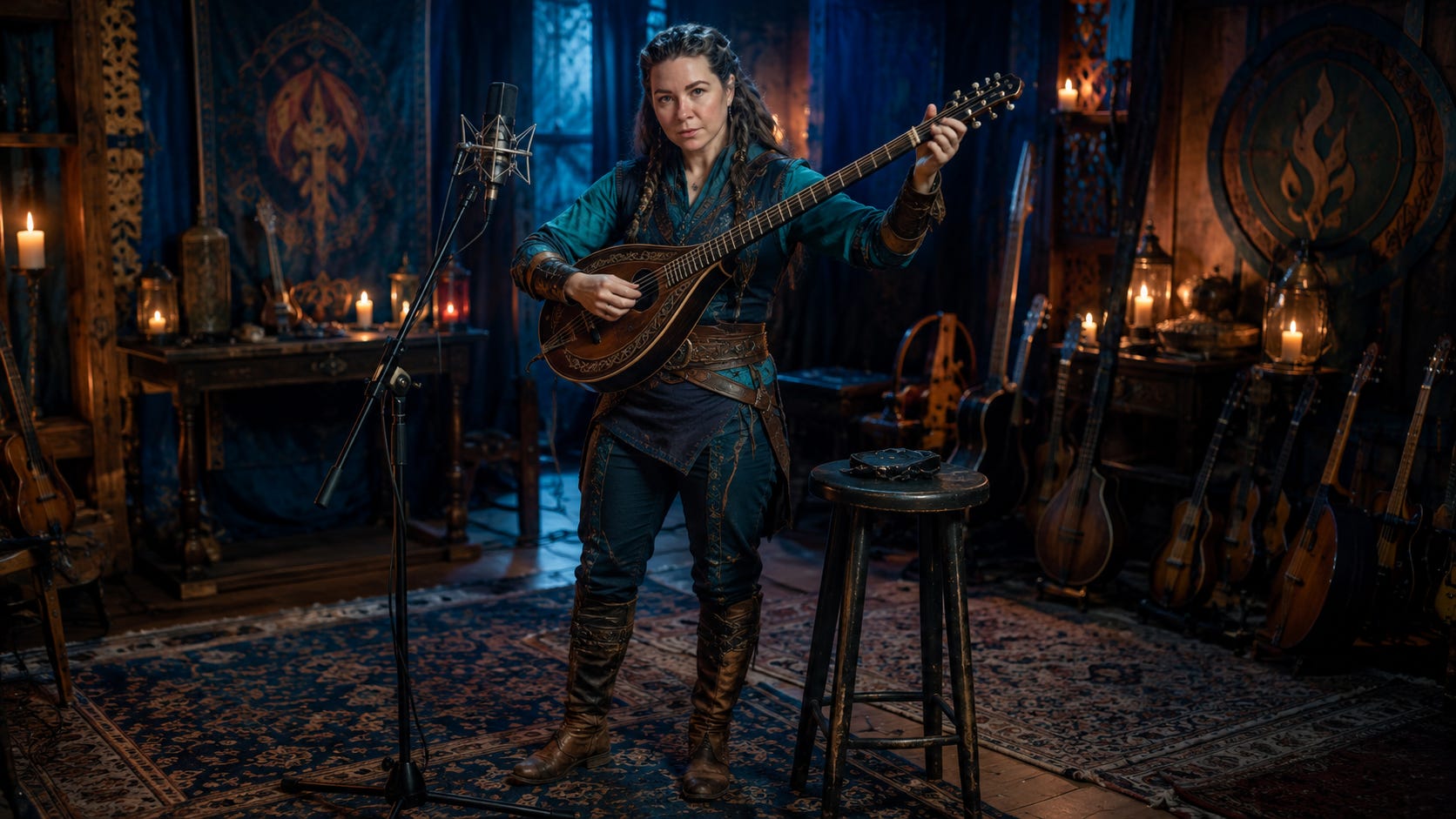
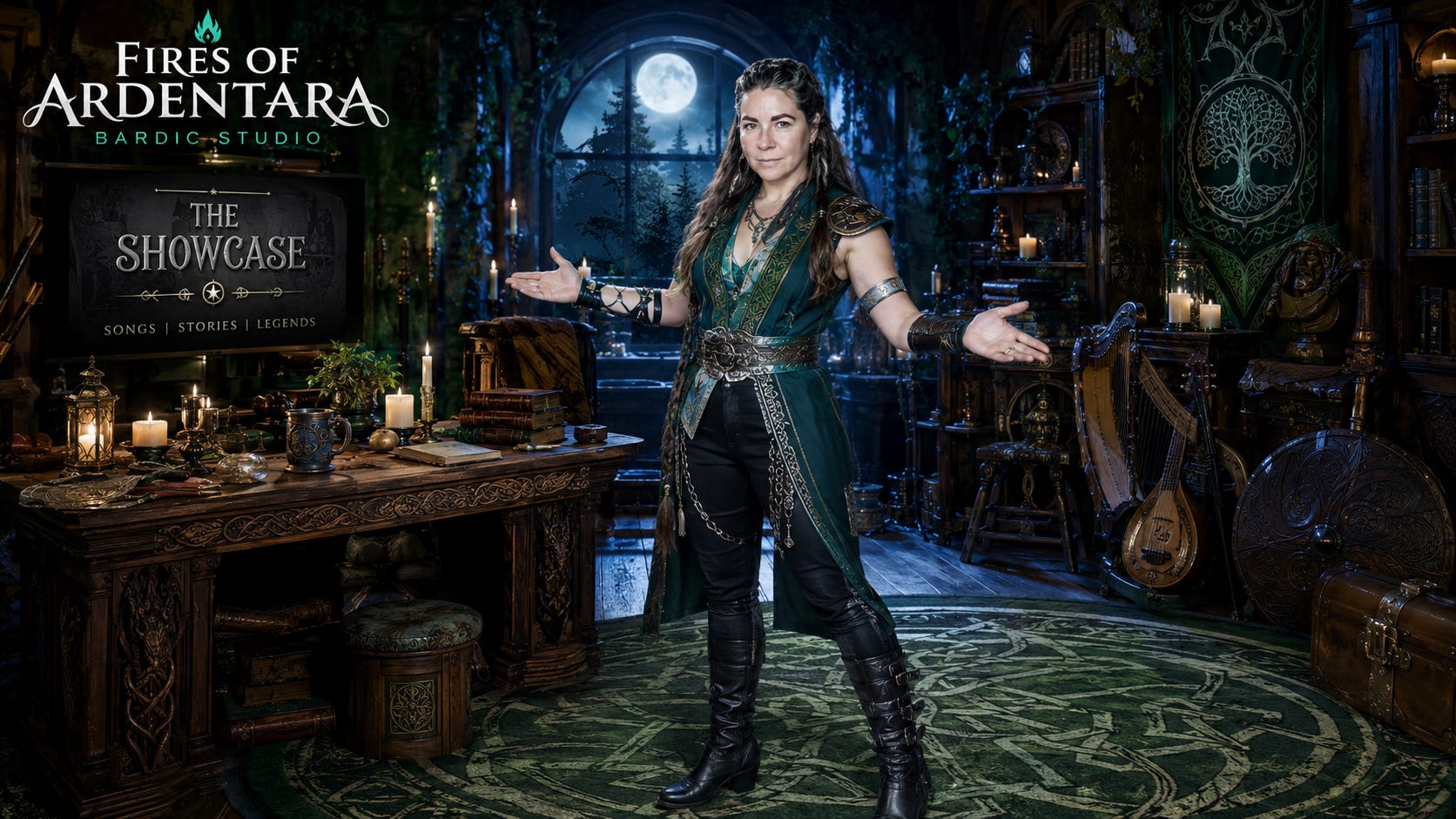
Every Monday night, a Wales-based dark folk artist opens her Twitch channel to music that rarely gets a dedicated stage in the AI music scene: folk, classical, jazz, blues, indie, world music, spoken word, opera and long-form works that run beyond most showcase limits.
The show is called Fires of Ardentara. The person running it is Bridget “Techcowgirl” Aboussafy.
Onstage and off, Aboussafy has spent the last several years confronting a problem much of the AI music conversation overlooks: why musicians using these tools — and musicians who refuse to touch them — still struggle to occupy the same room.
Moving between different parts of the music world, Aboussafy repeatedly encountered the separation — intentional or not — between different groups of artists.
In Wales, where she lives, Aboussafy has watched musicians settle into circles that rarely overlap: open-mic performers, folk-club regulars, electronic artists and members of the region’s many choirs.
“But they are all islands,” she says.
The metaphor is also how she describes the entire AI music landscape: a scene splintered not just by genre but by a harder, newer line between “organic,” AI-assisted and fully AI-native music, with real hostility running in both directions.
As Techcowgirl, Aboussafy makes historical dark folk that sometimes expands into rock, nu metal and what she calls threshold music. She is classically trained in voice and musical theatre, has spent decades making music and brings a professional technology background to her current work.
She also operates in the space most likely to catch fire from both sides: bringing her own vocals, instrumental snippets, melodies and chord progressions into Suno to develop songs around lyrics she wrote herself.
“As an organic musician, there’s a lot of creative benefit to be had using all the new AI tools at our disposal, in many places throughout our production processes,” she says. “My view is that if people will at least be curious and try it all out for themselves, they will find there was nothing to be afraid of, and they can now much easier get their musical ideas out of their heads and heard by others.”
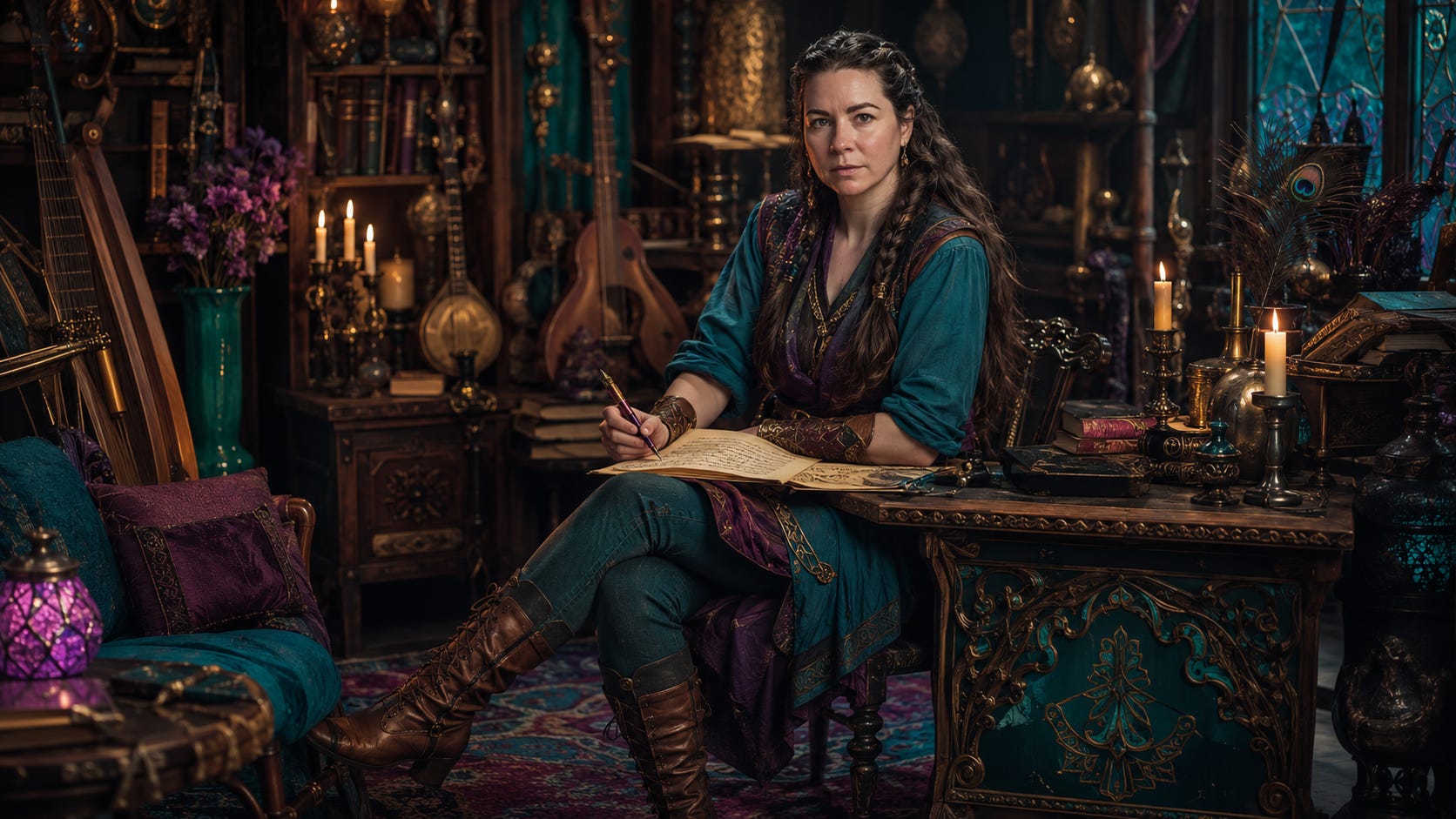
Aboussafy’s position is niche within niches. Being a hybrid musician, she says, is genuinely risky in the current climate — and being a historical folk musician on top of it makes it riskier still, since purism runs deep in that world.
She didn’t begin by asking people to enter her room. She spent a year entering theirs.
For roughly a year, Aboussafy made the rounds of mostly AI-focused Twitch and Discord showcases, appearing as a guest or submitting tracks to one host after another. She brought songs built from her own live vocals, instrumental passages, melodies and chord progressions, expanded through Suno and then separated into stems for additional work in her DAW.
At first, she says, people were simply surprised anyone was bridging the gap between pure AI generation and live performance. Then they started liking how it sounded. She kept going and kept bringing more songs until something shifted.
“People are now recognizing my songs by my voice alone,” she says.
At the same time, she brought the same approach into her live band, Celtic Spirit, while developing a new historical concert program. The band had sets of lyrics that needed music and wanted additional songs about regional history. With help from Suno, they worked the lyrics into full arrangements and performed them at the opening concert.
The band was skeptical at first. Watching how quickly they could test different arrangements in rehearsal changed that.
“The audiences who eventually heard the songs didn’t care how they were created,” she says, “only that the songs conveyed the story and emotions contained within them.”
That, more than any verbal argument, is the case she has been building in public for two years. Her work became a proof of concept for hybrid music — repeated until the hybrid part stopped being remarkable.
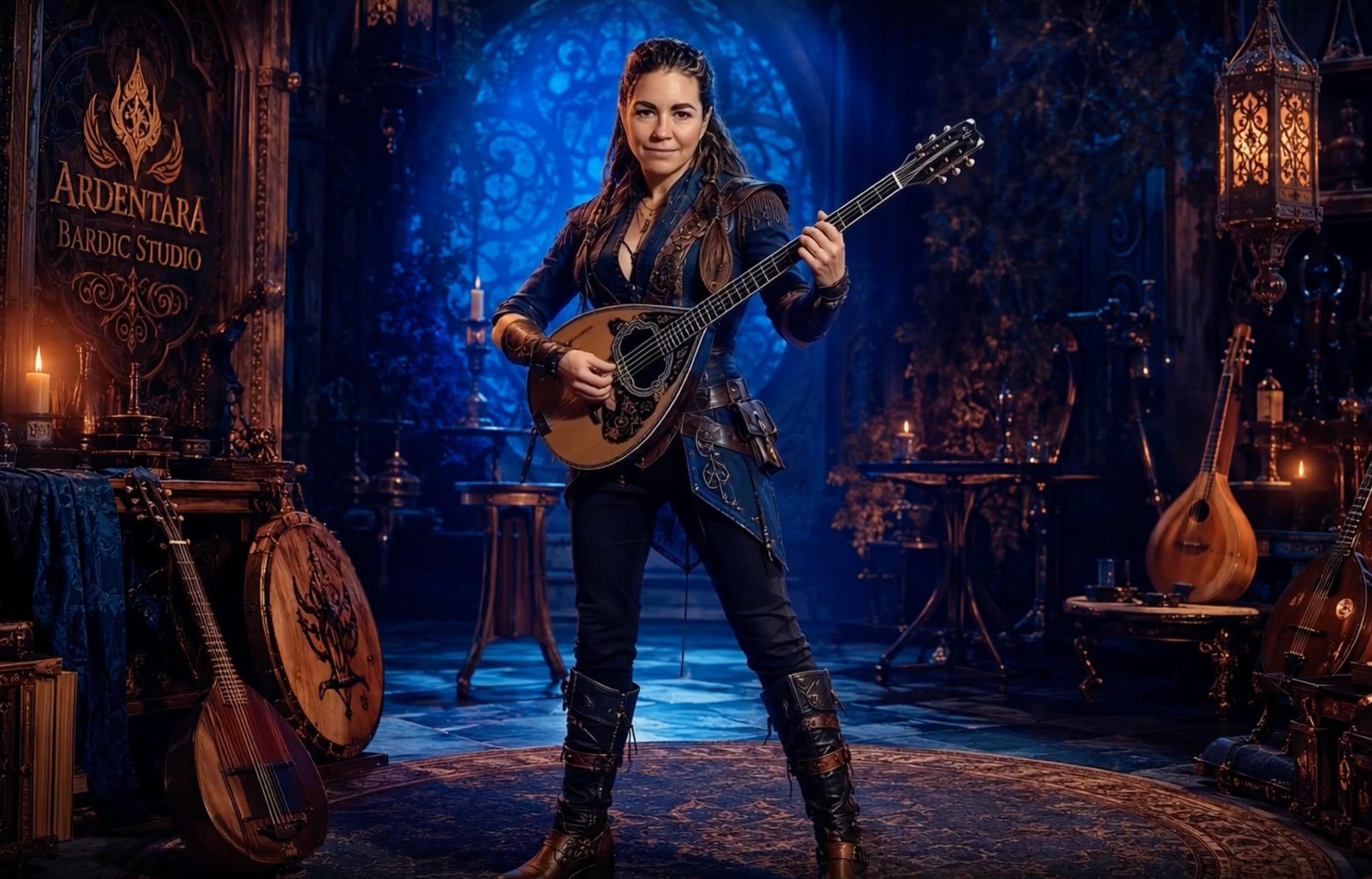
Fires of Ardentara grew from Aboussafy’s realization that hybrid music — and the genres overlooked by AI-focused rock, metal and hip-hop showcases — had no obvious home. The creators making that music were already there, but many were quiet about it.
Across more than a dozen episodes, the show has hosted a spoken-word poet and featured long-form audio stories, short films and test runs of historical documentaries.
Then, in late July, Aboussafy’s worlds collided.
The show recently aired Ardentara’s Acoustic Folk Circle #1, its clearest bridge yet between traditional performance and its wider hybrid community. The live broadcast ran for nearly four hours, creating a dedicated space for the acoustic folk music that had previously sat just outside the show’s established format.
Before the broadcast, the organic musicians Aboussafy invited were curious but cautious — watching to see whether she could make the idea work.
“They want to see if I can do it,” she said, “and if successful they will give it a go.”
The episode has now given them something concrete to assess.
Around the show, Aboussafy has built a wider ecosystem that includes Ardentara at Night and Ardentara Daybreak, ambient and work-focused streams that run for hours at a stretch.
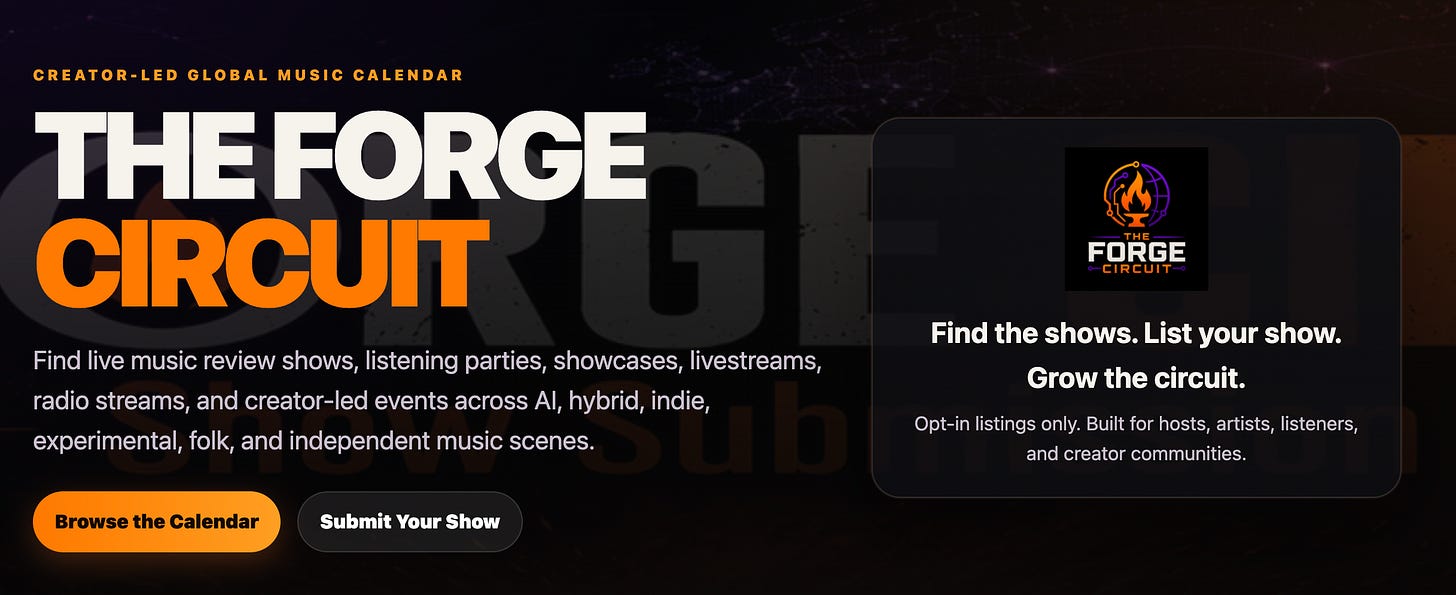
She has also created The Forge Circuit, an opt-in global calendar of creator-led showcases, review streams, listening parties and other music events, built without scraping or reposting anyone’s listings without permission.
Around the calendar, she is developing host and artist interviews, show guides and a standardized anonymous review system intended to help musicians determine whether a particular show is the right fit for their work.
“This way each review is objective, from blind or anonymous observation,” she says, “with the final result being a review that will allow artists to ascertain whether any particular given show is the right fit to confidently present their music at.”
What makes this more than one artist’s project is that other hosts have started participating, too.
The Forge Circuit now lists a growing roster of independent shows. Hosts have begun running one another’s show-card graphics on screen during their own broadcasts, promoting upcoming programs and attending each other’s shows whenever they can.
The artist-feature format is spreading the same way. Aboussafy and her husband appeared in an artist feature on Lord Starface’s Twitch show early this year, and she says other hosts have since adopted the format themselves.
It is a small step, but a meaningful one to go from getting played, to getting discussed, to eventually performing live.
Her experiment also reflects a broader movement visible at events such as AI.LOVE.JAZZ in Montreux, where a live house band performed AI-composed jazz, soul and funk finalists before an international jury and audience for the first time this July.
This is a different scale with the same fault line: an algorithm creates something fixed, and human performers have to bring it to life in the room.
The next planned expansion is audio-only. Aboussafy says she is developing a station through Live365 that would place AI and hybrid tracks on the radio alongside mainstream artists. She says a first cohort of five hosts and DJs is already on board, with a launch date still being finalized. She expects the first version of that interconnected system to be operating by the end of August 2026.
Ask Aboussafy what any of this is building toward, long-term, and the answer is not a business plan.
“To bring closer the communities of AI musicians, hybrid musicians, and organic musicians and their audiences,” she says. “The flack I take about even touching AI tools from the old-school organic crowds is intense. This is not how the music communities should be going into the future — the lines need to blur so people can be free to move between and experiment, experience new things. So I figured I’d do my damndest to make that happen.”
The islands are not going anywhere on their own. But in late July, the bridge Aboussafy had spent months describing was finally tested — live, on air, for nearly four hours.
Now the musicians watching from the other side have to decide whether they will cross it.
Techcowgirl hosts Fires of Ardentara Monday nights on Twitch. Find her music on YouTube and Bandcamp, and visit The Forge Circuit at theforgecircuit.com.
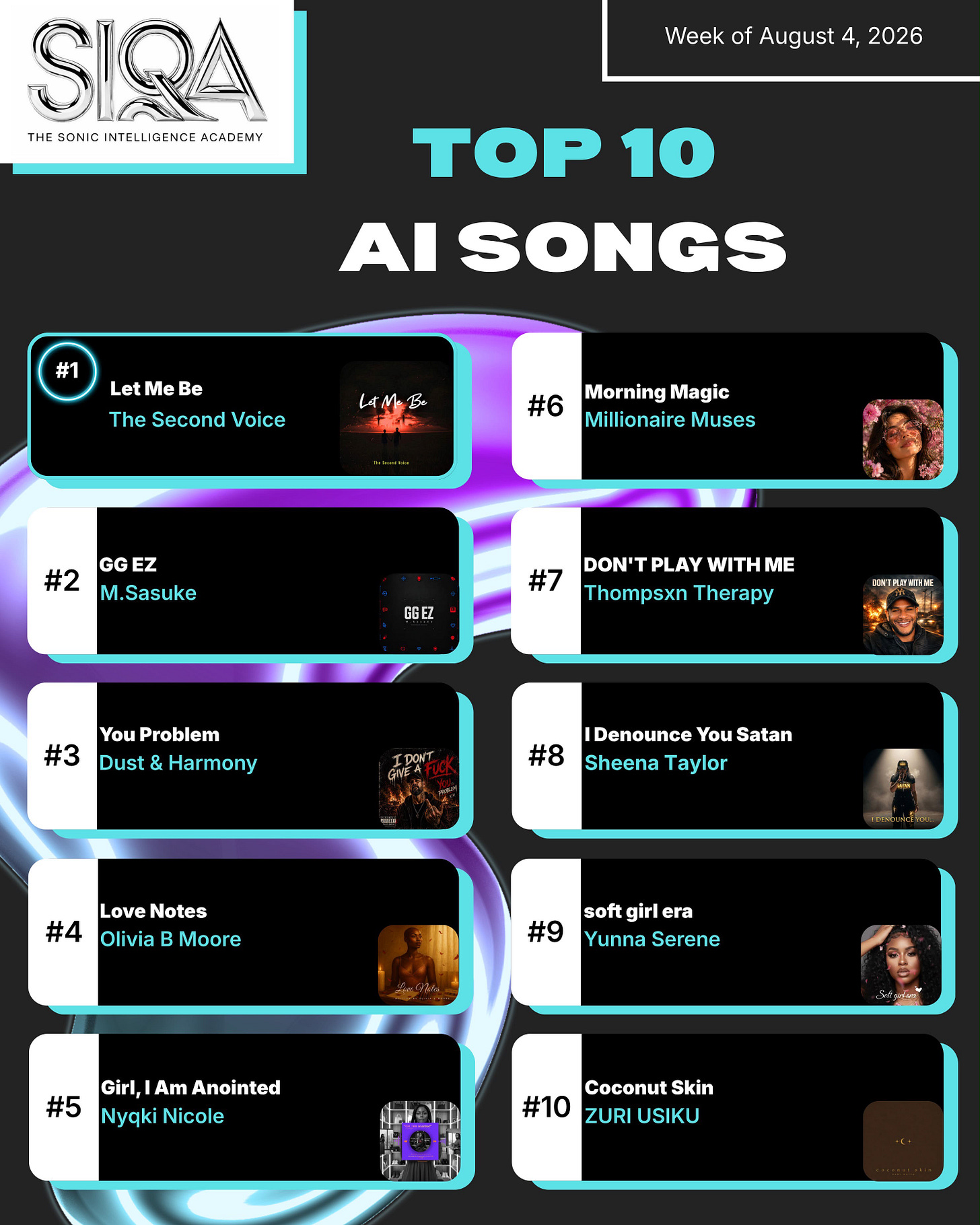
The August 4, 2026 SIQA chart saw its top five tracks remain the same as July 28, while the lower half experienced minor position swaps and welcomed back Yunna Serene's "soft girl era" to the Top 10, coming in at number nine.
Get a sense of the blurred genres and epic scale of Bridget Aboussafy’s Celtic hybrid music. Driven by dark folk atmosphere, ritual vocals and hypnotic EDM energy, “The Tide Owns Us All” is an elemental anthem about mortality, fate and the one force that makes no distinction between the powerful and the forgotten.
“The next generation of AI platforms isn’t just competing for users. They’re competing for creators.”
— Tallium CCO & AI Creator Christian Schaffner, via LinkedIn

MORE ZINSTREL:
Zinstrel.com | @zinstrel_ai on IG | AI Underground on Discord
Written by Marcus Lawrence, courtesy of composition platform Versey.ai.
I use em dashes proudly.
Special thanks to our paid subscribers: C.Y. Lee, Daryl Dekking, Lynn Clapp, Steve Clapp, Mete Dibi, Daniel Lares, Dexter Garcia, Matthew Marturano, Sammy Stoltz, Tim Burley, Drew Thurlow, Sheila Spence, Lenny Skolnik, Màuhan Zonoozy, Matti Kuha, and Jacci Cenci-McGrody.
No posts
Comments
Nothing yet. Say the first thing.
Sign in to join the conversation.