
NVIDIA launches Halos for Robotics, industry’s first unified safety system
→ Full-stack architecture extending 18,600 engineering years of AV safety to physical AI
→ What NVIDIA IGX Thor + Holoscan Sensor Bridge + Halos OS reveal: safety built into every layer from compute to certification
Genesis AI unveils Eno, debut multi-purpose robot
→ Non-humanoid form factor with human-like hands, folding mechanism for “calm intelligence” and minimal footprint
→ Why full-stack in-house AI + optional transparency screen signal trust-first design for human-robot collaboration
Hyundai acquires SoftBank’s remaining 9.65% Boston Dynamics stake for $325M
→ Consolidates 100% ownership under Hyundai Motor Group, deepening robotics commitment
→ What put option exercise signals: transition from SoftBank’s diversified portfolio to automaker’s core automation strategy
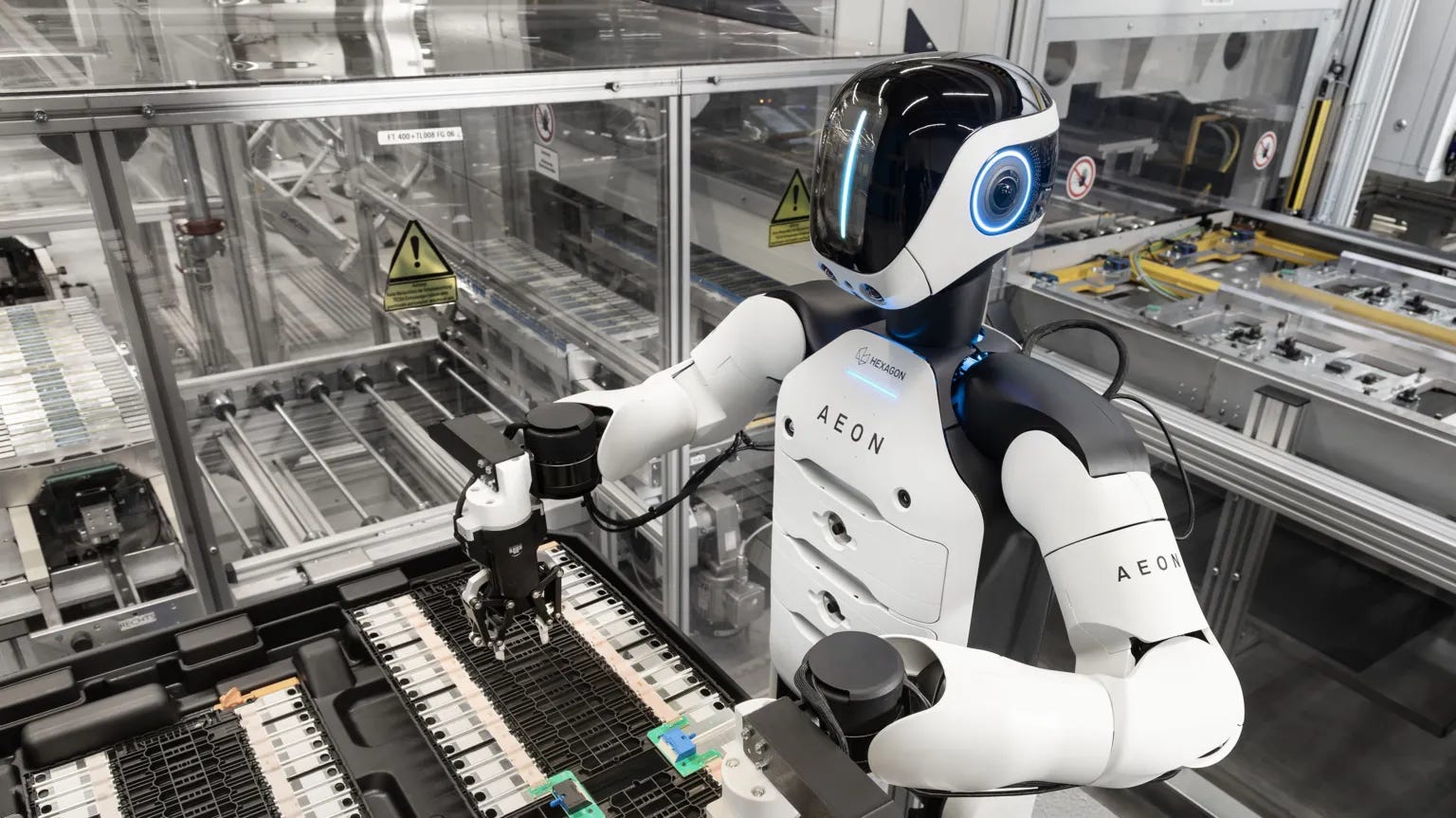
AEON begins production tasks at BMW Leipzig plant
→ Humanoid now performing actual manufacturing work while training on future applications
→ Why shift from “can these operate in manufacturing” to “how quickly productive and scalable” marks new phase
NVIDIA has announced NVIDIA Halos for Robotics, the industry’s first full-stack, comprehensive safety system for robotics and physical AI that unifies AI compute and safety. The system extends NVIDIA Halos’ proven autonomous vehicle safety to robotics, giving machines that sense, decide, and act in the real world a single common safety architecture. Agility, a leading humanoid robotics company, is the first to use Halos for Robotics to build safety into its humanoids working for customers including Amazon, GXO, Schaeffler, and Toyota Motor Manufacturing Canada.
Drawing on more than 18,600 engineering years of autonomous vehicle safety development, Halos for Robotics provides developers with a common safety architecture for building, validating, and deploying physical AI systems. Safety is built into every layer: NVIDIA IGX Thor and Holoscan Sensor Bridge provide industrial-grade AI compute and sensor connectivity, the Halos OS software stack handles safety functions and applications, and the NVIDIA Halos AI Systems Inspection Lab, the world’s first ANAB-accredited program for functional and AI safety for physical AI, helps partners prepare for third-party certification.
Agility is extending its leadership in humanoid safety by integrating NVIDIA IGX Thor and Halos Core into its proprietary safe human detection system for its humanoid robot Digit. The company will also participate in the Inspection Lab to ensure Digit’s safety-related software, AI components, and cybersecurity protections meet rigorous standards such as IEC 61508, ISO 13849, and ISO/IEC TR 5469 before final third-party certification. “For humanoids to deliver value at scale, safety has to be built into the robot and validated across the entire system,” said Peggy Johnson, CEO of Agility. “This collaboration unlocks true human-robot teamwork.”
The Halos for Robotics ecosystem brings together more than 40 companies across software, embedded systems, sensors and silicon, industrial applications, and certification bodies—including Acontis, QNX, Advantech, Infineon, NXP, STMicroelectronics, Texas Instruments, FORT Robotics, and KION Group. Certification bodies including TÜV Rheinland, TÜV SÜD, UL Solutions, exida, SGS, and CertX all recognize the Inspection Lab as part of their certification process. NVIDIA Halos Core is available in early access for registered developers, and the open source Halos Outside-In Safety Blueprint is now available in early access on GitHub.
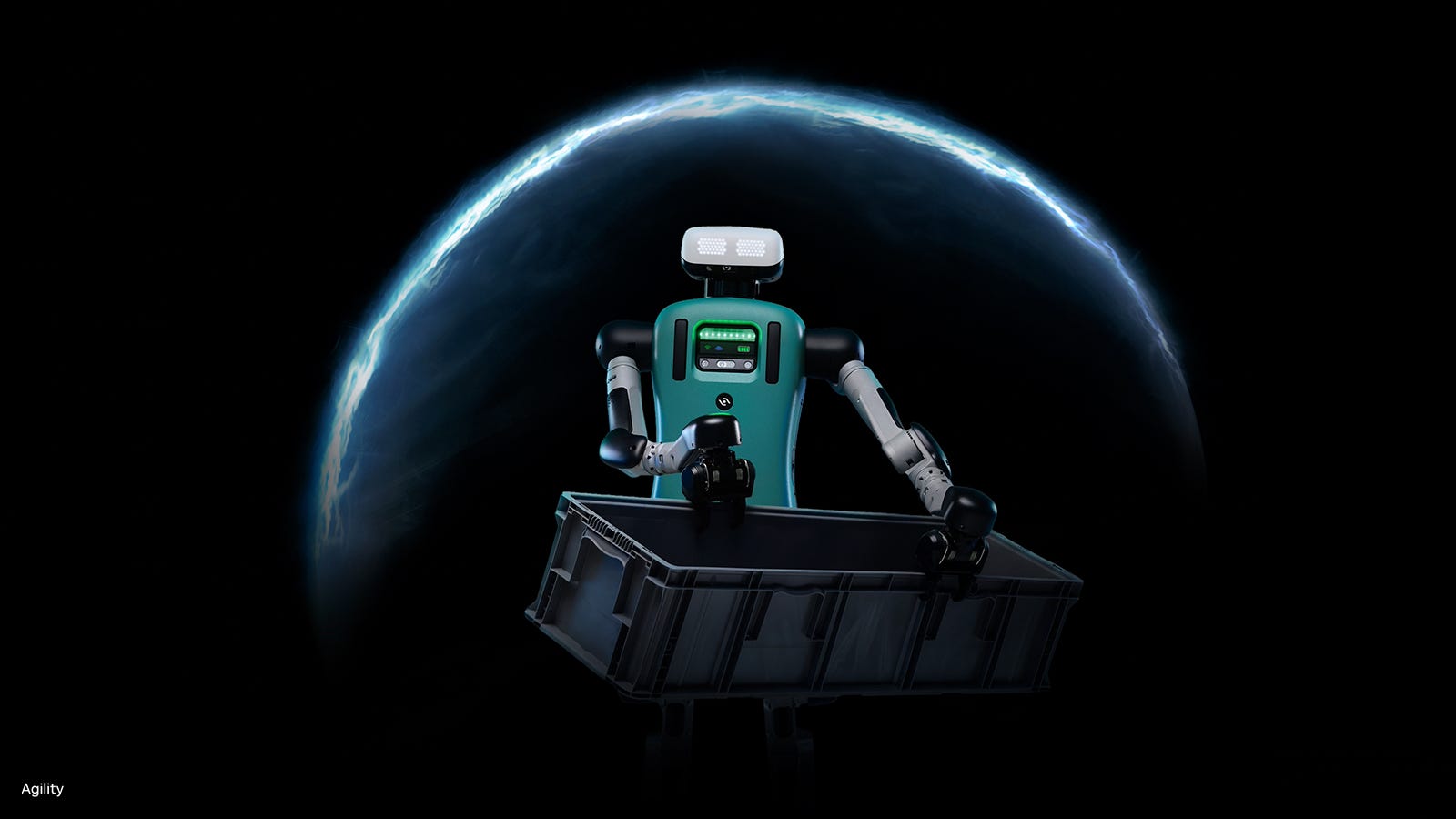
Genesis AI has unveiled Eno, its debut robot. Based between Paris and San Carlos and founded by robotics engineer Zhou Xian, the company has secured investment from former Google CEO Eric Schmidt, among others. While decidedly non-human in form, Eno has been explicitly designed to fulfill almost all of the mobility and agility requirements of a typical adult, eschewing the head-torso-legs form factor in favor of a blend of agility and mobility.
Eno’s most obviously analogous appendages are its arms, with disarmingly human-like gloved hands. Everything else has the soft, clinical sheen of a robotic arm or welding machine. Describing it as “radically minimalist,” the Genesis AI team started with a premise of “calm intelligence,” positing that future robots, whether at home or elsewhere, need the ability to slip silently from view when not in use. The robot has a folding mechanism with articulated panels that fold up and down to extend its height while minimizing size when not in use. The hands were developed in house and closely mimic the abilities of a human hand.
Described as a “general-purpose robot,” Eno’s full-stack AI was developed in house by Genesis AI and is said to be sophisticated enough to make it a true physical agent—one that can decipher, decode, and learn tasks just like agentic AI on a high-end smartphone. To build trust right out of the box, one option is an optional screen that shows a representation of Eno’s processes in real-time. The company stresses the importance of Eno being able to work alongside humans, rather than as a remote machine in a dark warehouse.
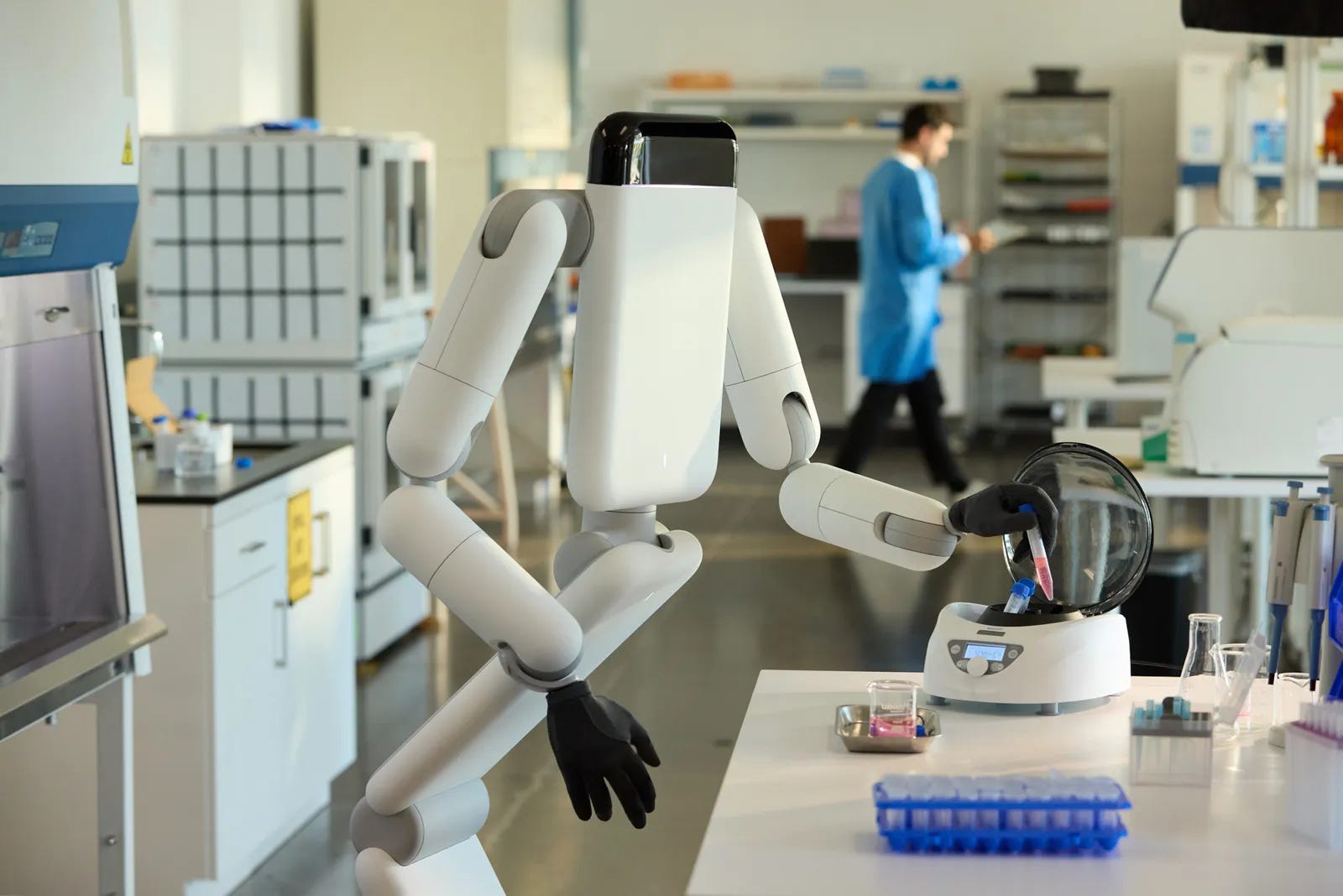
Hyundai Motor Group plans to buy SoftBank Group’s remaining 9.65% stake in Boston Dynamics for $325 million to make the U.S. robotics firm a wholly owned subsidiary, according to a report by South Korea’s Maeil Business Newspaper.
The report said SoftBank had told Hyundai it would like to exercise its rights to sell its remaining stake in Boston Dynamics under a put option agreed when it sold Boston Dynamics to Hyundai. Hyundai Motor Group, including Group Executive Chair Euisun Chung and affiliates Hyundai Motor, Kia, Hyundai Mobis, and Hyundai Glovis, already owns just over 90% of the robot maker.
The move would consolidate full ownership of Boston Dynamics under Hyundai, deepening the automaker’s commitment to robotics as it continues to position the company at the center of its long-term automation and physical AI strategy.
Learn how to use MATLAB and Simulink with platforms like VEX Robotics, LEGO and other educational robotics kits.
MathWorks experts share knowledge on elementary concepts in robotics for beginners.
BMW Group and Hexagon Robotics have reached a new milestone in their collaboration as AEON, Hexagon Robotics’ humanoid robot, begins performing production tasks within BMW Group Plant Leipzig, while simultaneously being trained on future manufacturing applications. “Humanoid robotics is entering a new phase,” said Arnaud Robert, President of Hexagon Robotics. “The question is no longer whether these systems can operate in manufacturing environments, but how quickly they can become productive, versatile, and scalable.”
The next phase of the collaboration will focus on increasing autonomy, robustness, and operational performance. Battery assembly activities are also expected to move from the Innovation Garage into the factory environment as part of future pilot activities. Robert added that the partnership with BMW and the progressive rollout at the Leipzig plant is enabling Hexagon to demonstrate the value of humanoids in the real world.
The collaboration reflects a broader trend toward the adoption of humanoid robotics in industrial environments. According to Hexagon’s global Robot Generation study, people overwhelmingly favor the use of robots in factories, warehouses, and hazardous environments, while preferring human involvement in caregiving and education. The findings suggest strong public support for robots performing physically demanding industrial tasks when deployed with appropriate governance and safety measures.
Looking ahead, BMW Group and Hexagon Robotics are continuing to build the path from pilot systems to production-ready humanoid workforce solutions. AEON will be deployed in production by the end of 2026, marking an important step toward the next generation of manufacturing automation.

Comments
Nothing yet. Say the first thing.
Sign in to join the conversation.