
Weave Robotics launches Isaac 1 mobile home robot
→ Why hybrid autonomy (autonomous + remote ops for edge cases) matters more than full autonomy claims
→ $7,999 or $449/month, California deliveries fall 2026, expanding nationwide 2027
Agility Robotics goes public via SPAC at $2.5B valuation
→ Digit deployed across 9 customer sites (Schaeffler, GXO, Toyota, Mercado Libre) with $300M+ in multi-year orders
→ Why $620M raised for production scaling + 30-customer pipeline signals transition from pilots to commercial deployment
Apptronik launches Apollo 2 in bipedal and wheeled configs
→ Expanded 90K sq-ft Robot Park in Austin generates high-quality training data for Google DeepMind’s Gemini Robotics foundation models
→ What modular configurations reveal: bipedal for adaptability, wheeled for safety compliance in existing operations
Flexion’s Reflect v1.0 achieves 90% success on complex missions
→ Custom VLM mission controller continuously monitors, reasons, and replans across multi-step tasks vs 38% without RL
→ Why natural-language instructions enabling real-time prompt changes matter more than task-specific programming
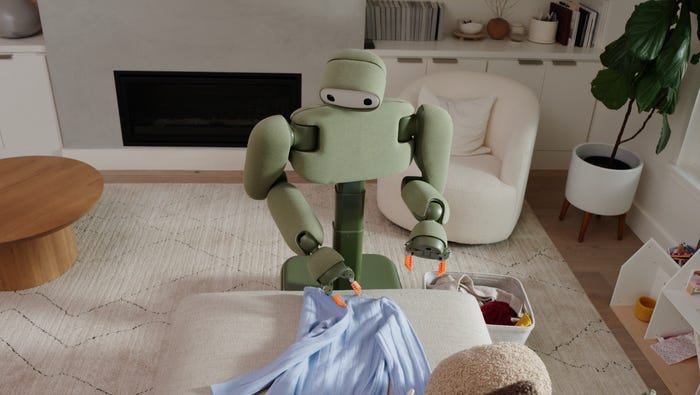
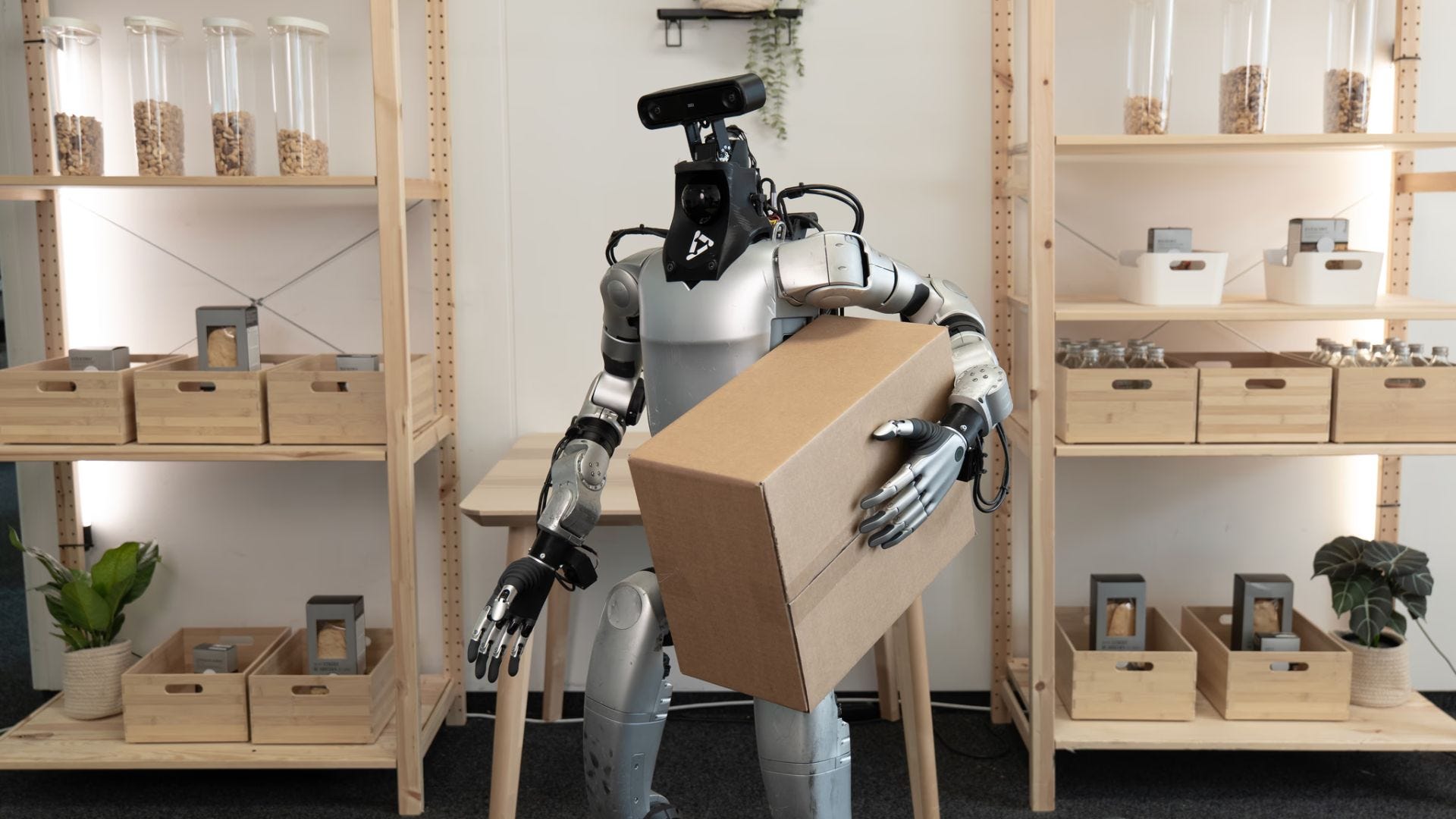
US-based Weave Robotics has released Isaac 1, a wheeled mobile home robot designed to automate everyday household chores such as tidying rooms and doing laundry. The robot can make beds, sort clutter, fold clothes, and put items away while operating autonomously in most situations. When it encounters tasks it cannot complete independently, remote human assistance steps in to ensure the job is finished. Isaac 1 succeeds the company’s earlier Isaac 0, a stationary autonomous robot launched in February 2026 that folds laundry in 30-90 minutes.
Unlike its predecessor, which remained stationary at a table, Isaac 1 features a motorized wheeled base that allows it to move throughout a home. The robot is equipped with a telescopic body that adjusts its height from about 3 feet (0.9 m) to 5 feet 9 inches (1.75 m), enabling it to reach furniture, beds, shelves, and laundry baskets while maintaining a compact profile when idle. Its upper body houses two robotic arms designed for household manipulation tasks, using multiple onboard cameras and AI-powered perception to identify objects, understand room layouts, and determine where misplaced items belong.
The robot operates autonomously by default but can transition to remote human teleoperation whenever it encounters situations beyond its current capabilities. Through this hybrid autonomy model, a remote operator can temporarily guide the robot using its onboard camera feeds to complete difficult tasks before returning control to the autonomous system. To address privacy concerns, the company says Isaac 1 includes hardware controls that physically disable its cameras when they are not required for operation.
Weave Robotics plans to continue expanding Isaac 1’s capabilities through over-the-air firmware updates, allowing the robot to perform additional household tasks as its AI models improve. The company is offering the robot for $7,999 or through a $449-per-month subscription. Customers can reserve a unit with a $250 deposit, with deliveries scheduled to begin in California in fall 2026 before expanding across the United States during 2027.
Agility Robotics, the humanoid robotics startup that spun out of Oregon State University in 2015, plans to go public through a merger with special purpose acquisition company Churchill Capital Corp XI in a deal that values the company at roughly $2.5 billion. The transaction is expected to generate more than $620 million in proceeds, including about $200 million from a group of new and existing institutional investors.
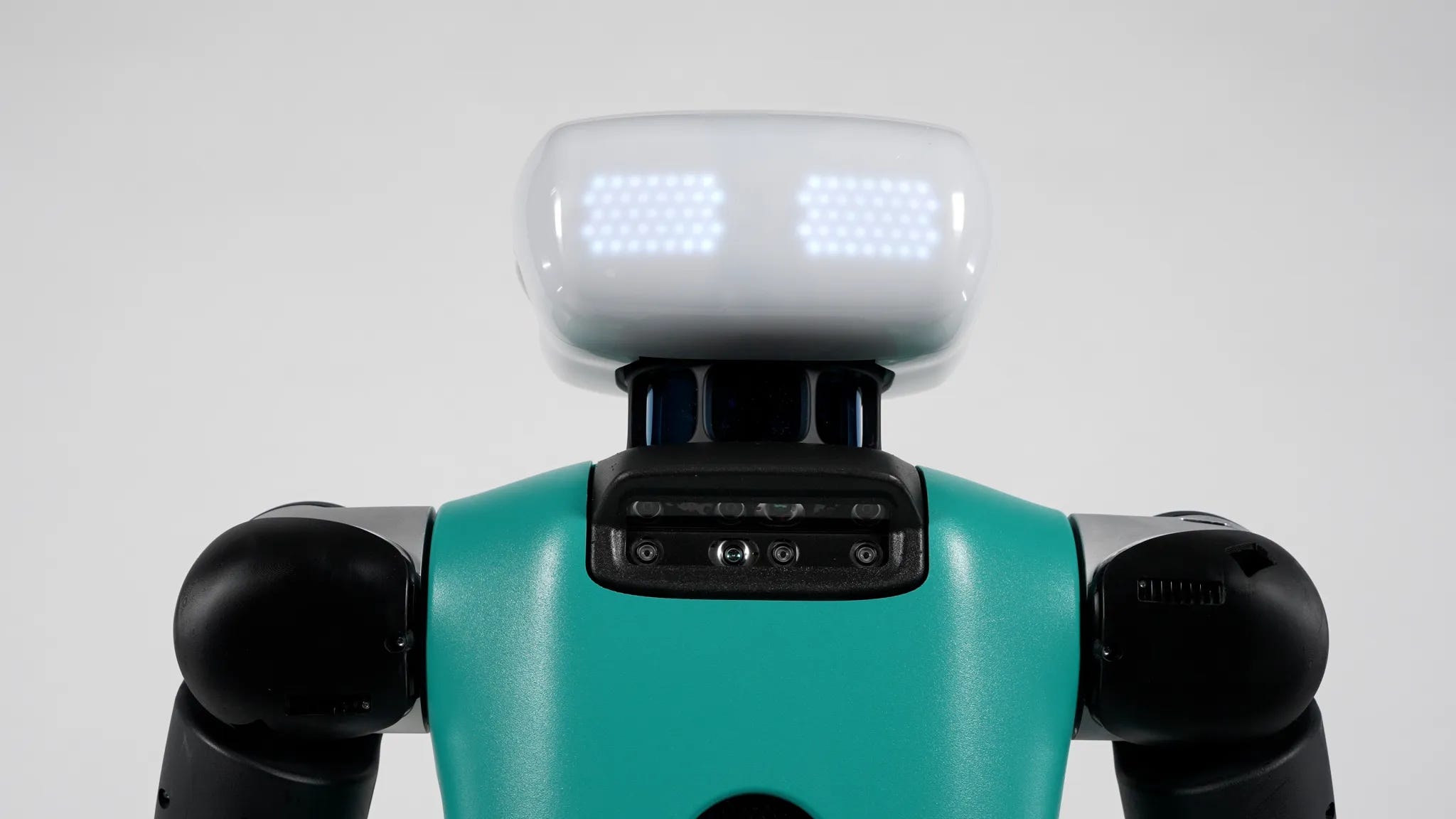
Agility is best known for Digit, a bipedal robot that is being used across nine customer sites, including with Schaeffler, GXO, Toyota Motor Manufacturing Canada, and Mercado Libre. The company has enjoyed backing from high-profile tech companies and funds like Amazon, Nvidia, SoftBank Vision Fund 2, and DCVC. Now it plans to use the capital raised in the SPAC merger to increase production capacity of its next-generation Digit v5, fulfill existing orders, and expand to new and existing customers.
The company said it has secured more than $300 million in multi-year orders for the new model and a pipeline of more than 30 potential customers evaluating large-scale deployments. “Humanoid robots are poised to become a critical driver of productivity, supply chain resilience, and American technology leadership,” Agility CEO Peggy Johnson said. “With commercially deployed humanoids already operating in customer environments today, Agility is helping enterprises address labor shortages, improve efficiency, and safely integrate AI-powered automation into their operations.”
The combined company is expected to trade under the ticker symbol AGLT on a North American stock exchange that has not yet been announced. The move makes Agility one of the first pure-play humanoid robotics companies to pursue a public listing, marking a significant milestone as the industry shifts from pilot deployments toward commercial scale.
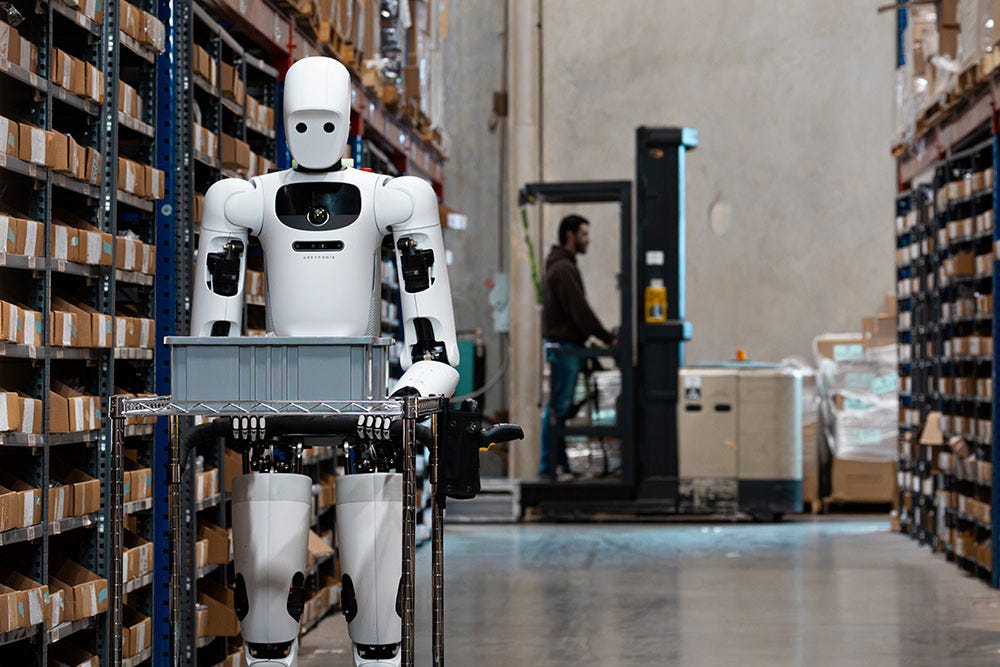
Apptronik has made two major announcements. First, the company launched Apollo 2, its updated humanoid robot. Second, it opened its newly expanded Robot Park, its flagship data collection and training facility for humanoid robots in Austin, Texas. Apollo 2 comes in both bipedal and wheeled-base configurations, designed to learn real-world work through large-scale data collection across a wide range of tasks and environments. As part of Apptronik’s research partnership with Google DeepMind, the data Apollo 2 collects helps advance Gemini Robotics, Google DeepMind’s foundation models for robotics.
Their Robot Park enables the data collection that is fuel for that, and Apollo 2 is the machine that makes it possible.” Apollo is based on nearly a decade of development on 15 previous robots, including NASA’s Valkyrie. Apptronik started out of the Human Centered Robotics Lab at the University of Texas at Austin, has nearly 300 employees, and earlier this year raised $520 million, bringing total capital raised to nearly $1 billion.
By offering Apollo in modular configurations, Apptronik said it can optimize data collection across a variety of operational environments. The wheeled-base is designed to conform with existing safety standards for industrial mobile robots, allowing it to fit easily into existing customer operations, while the bipedal configuration provides maximum adaptability for complex environments. Everything the company is proving through the Apollo 2 platform is directly powering the development of its commercial product, Apollo 3.
Inside the newly expanded nearly 90,000-sq.-ft. facility in Austin, both bipedal and wheeled Apollo 2 systems learn across an array of customer use cases in logistics, manufacturing, retail, and other activities. Through a combination of teleoperation and autonomous execution, Apollo 2 continuously generates significant quantities of high-quality training data used to train and refine the Gemini Robotics AI models.
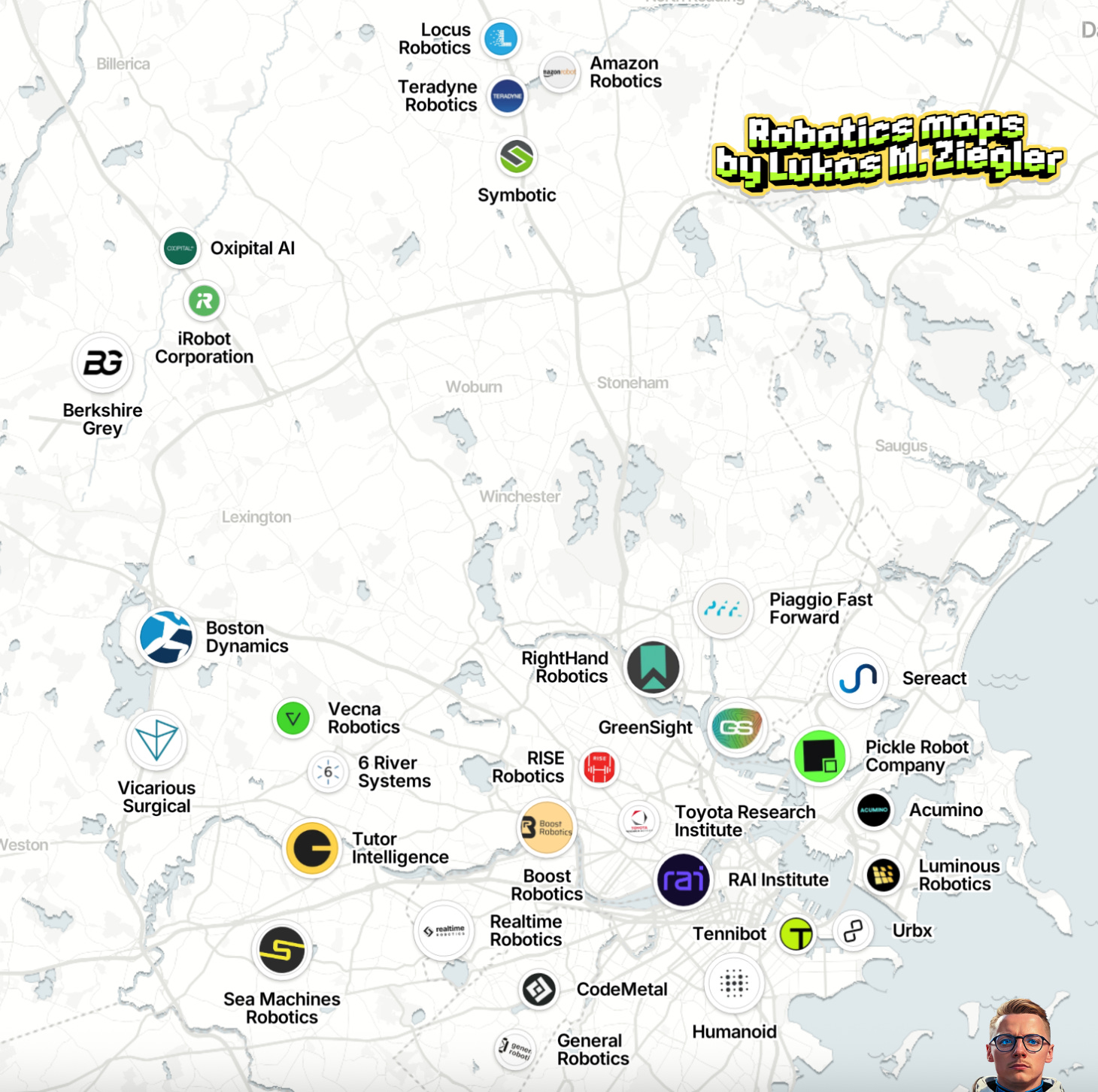
The Massachusetts ecosystem is one of the world's leading hubs for robotics, combining top research, companies, and deep-tech investment.
At its core are Massachusetts Institute of Technology (MIT) and Harvard University, which produce world-class researchers, engineers, and robotics startups. Many of today's leading robotics companies trace their roots back to these universities. The region is also home to companies like Boston Dynamics, whose work has inspired advances in humanoid and mobile robots.
Flexion Robotics has introduced Reflect v1.0, a robotics intelligence platform that enables humanoid robots to complete complex, multi-step tasks autonomously, without human intervention during execution. The company showcased the system through a workplace delivery demonstration in which a humanoid robot retrieved a snack parcel, navigated stairs and an elevator, unpacked the box, and stored the items in a drawer, all from a single natural-language instruction. Reflect v1.0 unifies reasoning, perception, motion, control, and runtime into one robotics platform.
Long-horizon autonomy remains one of the biggest challenges in robotics because even highly reliable navigation, manipulation, and perception systems can collectively fail when errors accumulate across many sequential tasks. Reflect v1.0 addresses this by integrating a custom vision-language model (VLM) that acts as a mission controller, continuously monitoring progress, reasoning about the environment, and replanning whenever necessary. The platform combines this mission controller with a motion layer that uses vision-language-action models trained on real-world data alongside reinforcement learning-based skills, while a real-time whole-body controller maintains balance, stability, and precise movements throughout the mission.
A key feature of Reflect v1.0 is its use of natural-language instructions rather than task-specific programming. Users can modify missions simply by changing the prompt, allowing robots to perform different tasks or even receive updated instructions while a mission is already underway. Reinforcement learning has significantly improved the platform’s reliability: in an internal evaluation involving a 16-step mission, a supervised fine-tuned model achieved only a 38 percent end-to-end completion rate, but after reinforcement learning was applied across multiple layers of the system, completion rates increased to 90 percent.

Comments
Nothing yet. Say the first thing.
Sign in to join the conversation.