
Neura Robotics raises up to $1.4B Series C at $7B valuation
→ Tether, Qualcomm, Amazon, NVIDIA, Bosch, Schaeffler, EIB participate with conditional milestones
→ Why European robotics reaching mega-round scale signals competitive credibility alongside US/China leaders
Theker raises €80M, Europe’s largest robotics Series A
→ Barcelona-based startup builds reconfigurable robots: swappable hands, arms, form factors vs fixed humanoid design
→ Raising 2x target, growing from dozens to 120 employees, expanding showrooms across Europe, US, Asia
Robotiq ships TSF-85 tactile sensor digital twin on NVIDIA Isaac Sim
→ 97% SSIM accuracy on hyperelastic model, 90% on elastic, trained on 53,400 real-world maps
→ What 2.3M cycle durability with zero signal drift reveals: models maintain consistency through demanding factory use
Standard Bots raises $200M Series C at $1B valuation
→ AI-native robots taught by demonstration, targeting 10% US industrial deployments by next year, 100% US manufacturing by 2027
→ Why 150% job posting increase + 15% employment growth in robot-adopting plants challenges “job loss” narrative
German company Neura Robotics has raised a Series C round worth up to $1.4 billion to develop its humanoid robotics technology, with U.S. tech giants Tether, Qualcomm, Amazon, and Nvidia all participating. The round also featured European industrial companies Bosch and Schaeffler, alongside the European Investment Bank. The company hit a valuation of around $7 billion, according to a source familiar with the matter.
“The future of AI will not only live on screens,” said David Reger, founder and CEO of Neura Robotics. “It will move, interact, learn and work beside us in the real world.” The full funding is contingent on Neura hitting certain milestones based on company performance, the source added.
Investors have piled into robotics startups in recent times as attention turns to deploying AI in physical systems that can interact in real-world environments. Robotics companies have raised $55.8 billion so far in 2026, according to Dealroom, a record figure nearly double the previous record raised last year. The majority has been raised by companies in the U.S. and China, but new European robotics companies are emerging too, including SoftBank-backed Agile Robots and U.K.-based Humanoid.
“Many believed globally relevant AI infrastructure companies could only emerge from Silicon Valley,” Reger said. “We believe the next generation of AI leaders can emerge anywhere in the world where there is enough vision, engineering talent and execution speed. With this financing, Neura is firmly among the global leaders in the robotics race, alongside the best in the US and China.”
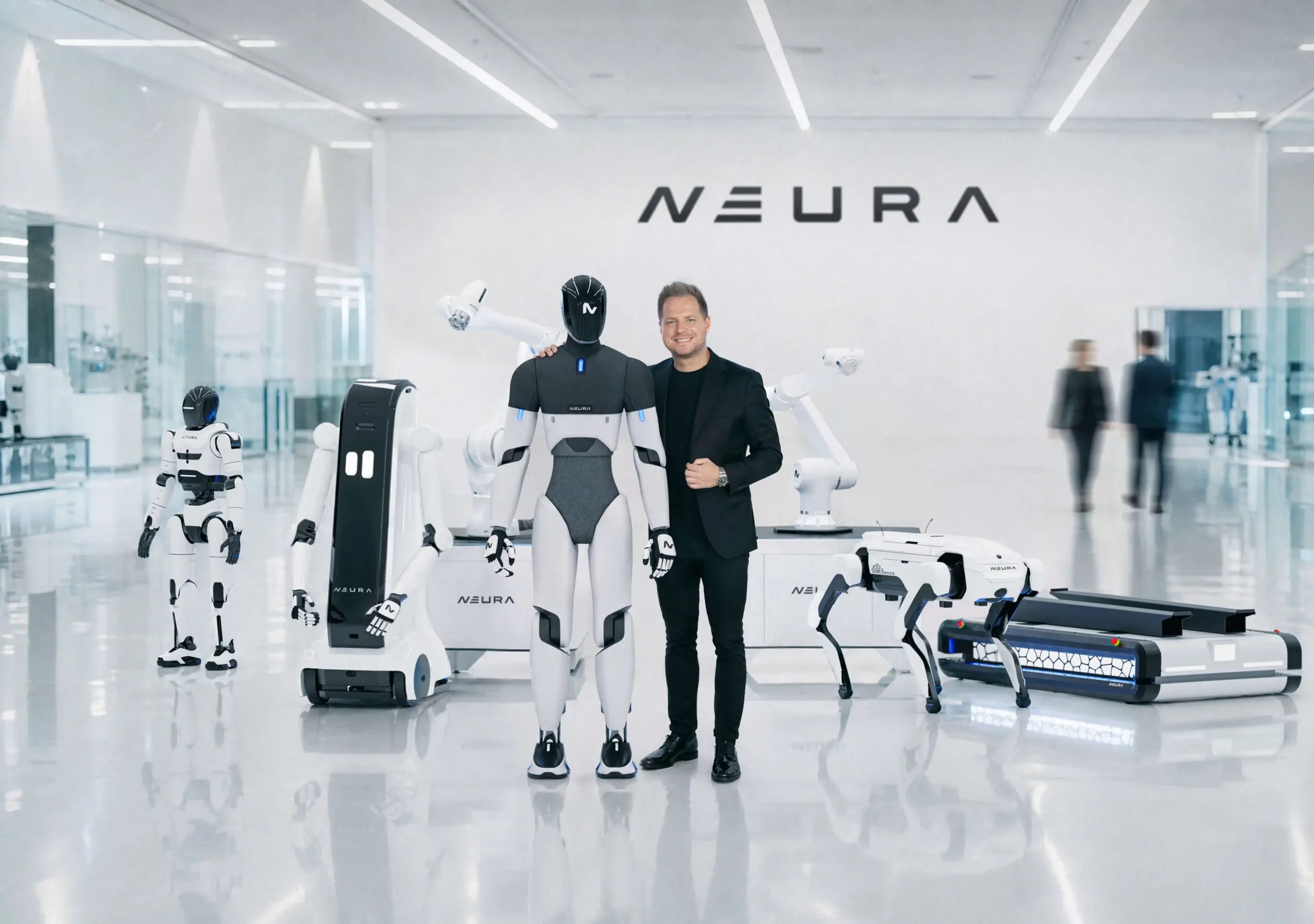
Theker, a Barcelona-based AI robotics startup, has raised $85 million in what it’s calling “Europe’s largest ever robotics Series A.” The company aims to go beyond robots trained for a single task. “If you always have to put the same cookie in the same box, that works perfectly, but most processes aren’t like that,” co-founder Carla Gómez Cano told TechCrunch. Theker is designed for that messier reality.
Unlike humanoid robots designed around a fixed form, think Boston Dynamics, Theker’s machines are built to be reconfigured. Their hands, arms, and overall form can be swapped out or resized depending on the task, whether that’s sorting packages, packing clothing, or handling bottles and cans in a warehouse. Inditex, Zara’s parent company, signed on as an early backer, signaling where Theker’s ambitions start—the broader goal is to move beyond retail into heavier industrial settings like manufacturing, where the complexity and scale of manual tasks is even greater.
The Series A came less than a year after a record seed round, led by American VC firm CRV and backed by a mix of traditional and strategic investors, including Samsung and Aglaé Ventures, the investment vehicle tied to LVMH chairman and CEO Bernard Arnault. Gómez Cano said Samsung is not a client yet but the two are in advanced discussions—a potential trifecta of customer, supplier, and investor that would give the startup both revenue and credibility in manufacturing at scale.
To demonstrate it can deliver, Theker has a showroom in central Barcelona and plans to open others as it expands across Europe, the U.S., and Asia. The company has already received 15,000 job applications and could grow from dozens to up to 120 people by the end of the year. Raising twice its target has reinforced the startup’s conviction in keeping its HQ in Barcelona, a growing robotics hub, and in Europe’s tech ecosystem more broadly.
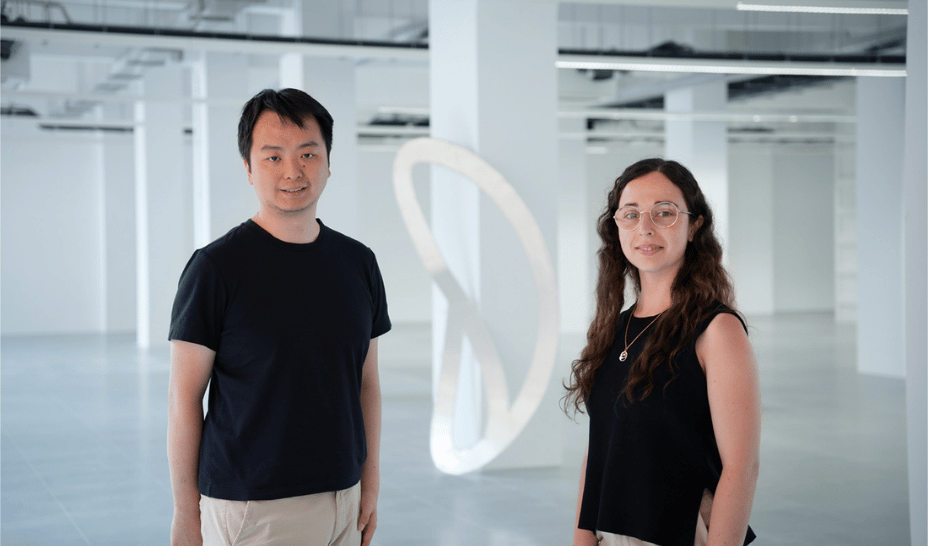
Robotiq has released the digital twin of its TSF-85 tactile sensor in NVIDIA Isaac Sim, the first industrial-grade tactile sensor digital twin shipping on a commercial collaborative gripper. Tactile sensing promises to accelerate robotics, but its adoption has been limited by the lack of data from industry-ready hardware and accurate simulations. Model builders can now train contact-rich manipulation policies in simulation, then run them on the same physical sensor designed to operate reliably on the factory floor.
Most tactile sensors rely on a deformable contact interface, the very property that gives them sensitivity is also what makes them difficult to simulate. The TSF-85 digital twin is built around that constraint. It generates synthetic tactile maps through a custom Isaac Sim UI panel, visualizes them in real time, runs data generation at the simulation refresh rate, and exports to HDF5 for downstream training pipelines.
The simulation method is documented in two peer-reviewed publications. The first, published in Frontiers in Robotics and AI (2025), draws on a dataset of 53,400 real-world tactile maps to train, validate, and test each simulation pipeline, achieving up to 97% Structural Similarity Index Measure (SSIM) for the hyperelastic model and 90% SSIM for the elastic model on 12 unseen objects. A companion paper at ICCRT 2025 releases an open dataset of 46,200 real and synthetic tactile samples.
Simulation accuracy matters, but it only helps if the real sensor remains stable over time. The TSF-85 has been tested through 2.3 million cycles at maximum gripper force, with no significant variation in tactile signal output. This means models trained on its data can continue to rely on consistent signals for edges, shapes, textures, and geometry even after demanding real-world use.
Robotiq has been the go-to components provider for both academic research labs and industrial production for more than a decade, exactly the bridge Physical AI requires. The digital twin supports NVIDIA Isaac Sim 5.1 and is available now on GitHub.

This course gives a solid intro to modern robot learning, mixing classical methods with recent large-scale models.
Students begin with imitation learning, reinforcement learning, and policy optimization, then move on to topics like Vision-Language-Action (VLA) models and foundation models for robotics.
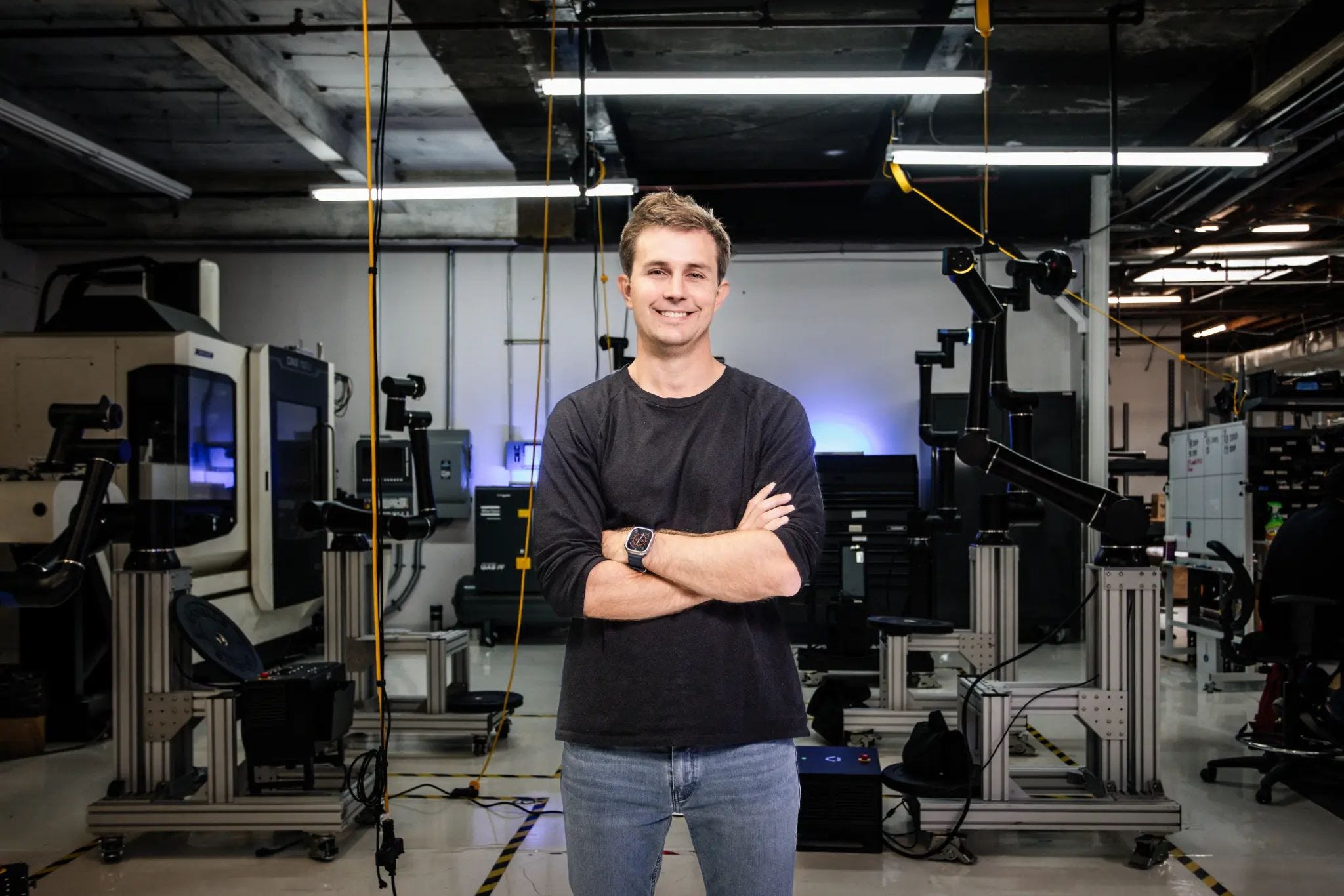
Standard Bots has announced a $200 million Series C at a $1 billion valuation, with the company claiming to be the largest manufacturer of AI-native industrial robots in the United States. The pitch is counterintuitive: robots will make American manufacturers more competitive, and that will unlock more jobs. “We’ve gone from 20 million manufacturing workers in 1979 to only 13 million today,” their CEO said.
Standard Bots makes AI-native robot arms and industrial humanoid robots that can be taught by demonstrations rather than code—you show the robot the job, it watches, learns, and starts doing the job itself. The pitch is that this collapses the cost and complexity that have kept advanced automation out of reach for most American manufacturers, especially small and mid-sized shops. Customers range from Sunoco, Lockheed Martin, Amazon, NASA, and the U.S. Army to hundreds of smaller manufacturers. “AI-native robots are the essential power tool of the 21st century,” said CEO Evan Beard. “The quickest way to get to full autonomy is through deployments, collecting real-world data, and iterating as fast as possible.”
The company argues investment in robotics is key to closing the gap with China. According to the International Federation of Robotics, China installed 295,000 industrial robots in 2024, 54% of the global total, more than the rest of the world combined, and its operational robot stock now exceeds 2 million units, roughly 4.5 times that of second-place Japan. The Americas accounted for just 9% of new deployments. Standard Bots says it will deliver 10% of new U.S. industrial robot deployments by next year, designs almost all its own parts including its own actuators, and by 2027 plans to manufacture everything—from metal in to robots out—right here in America.
The $200 million Series C was led by robotics fund RoboStrategy alongside existing backer General Catalyst, a steep markup from the company’s previous $63 million raise in 2024. “Standard Bots stands out because they’ve solved one of the hardest problems in industrial automation: making robots that are not only powerful, but actually usable on the factory floor without specialized programming,” said Andrew Kang, CEO of RoboStrategy. The big question is whether adding more robots really does mean adding more jobs, Standard Bots cites a 2025 University of Minnesota study finding roughly 150% increase in job postings and 15% increase in employment in plants that adopt robots compared to non-adopters. Whether that brings the jobs back, or just the work, is the question the next few years will answer.

Comments
Nothing yet. Say the first thing.
Sign in to join the conversation.