
OpenAI revives robotics division after 5-year pause
→ Hiring full-stack engineers targeting infrastructure robots for data centers, power grids, factories
→ Why near-term focus signals clarity: not consumer/warehouse, but skilled worker support building AI boom’s physical infrastructure
Genesis AI releases Genesis World 1.0 simulation framework
→ 89% hardware correlation, 45% smaller reality gap, 200+ hour real-world task runs in <30 minutes simulation
→ What separation of training (real) from evaluation (simulated) reveals: avoids simulator overfitting, enables systematic variable sweeps
Robotiq launches IQ for automatic robot integration
→ 5-minute Fit Check replaces weeks of manual quotes and site visits for palletizing decisions
→ Why deployment-ready workcells with validated designs in actual factory environments change SMB economics
Helsing launches Area 9, unveils RX-1 robotics platform
→ European defense tech incubator building full robotic stack in-house: hardware + software layer for autonomous research
→ What partnerships with ETH Zurich and INRIA Paris signal: developing unpredictable terrain navigation for debris-laden environments
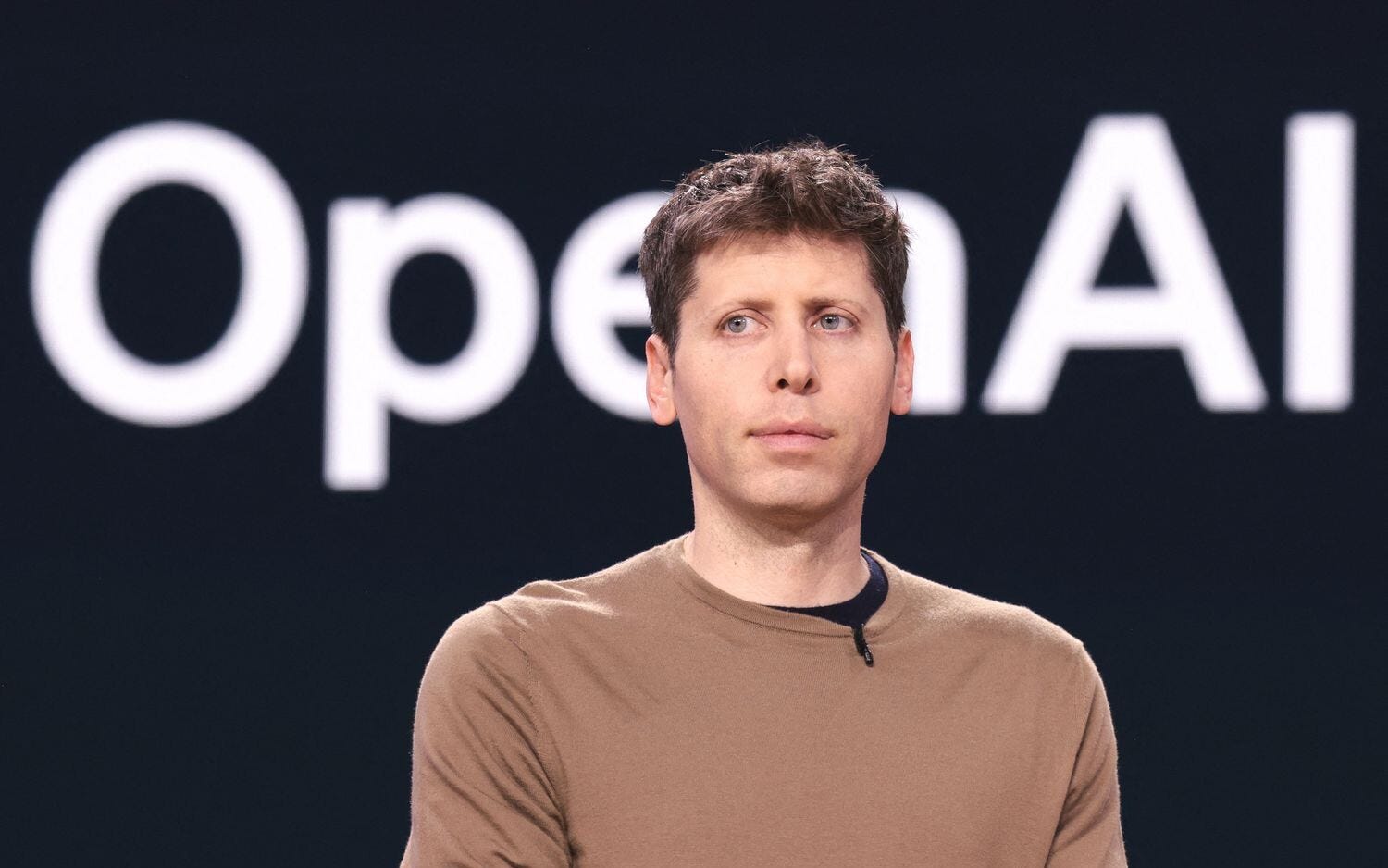
OpenAI is actively hiring robotics engineers as it revives its robotics ambitions, with an initial focus on robots that can help build data centers, power grids, and other critical infrastructure. On May 31, Sam Altman posted on X that OpenAI Robotics is hiring, seeking “exceptional full-stack hardware, ops, systems, and ML engineers to help us program and manufacture robots that are useful for society.” Greg Brockman, OpenAI’s co-founder and president, followed up to confirm the division is “making rapid progress towards building AI that can help people in the physical world.”
The move marks OpenAI’s strongest robotics push since shutting down its robotics team in 2021. The near-term focus is specific: robots to support skilled workers building infrastructure, not household helpers or warehouse sorters, but the workforce that will need to wire, pour, and assemble the data centers, power grids, and factories that the AI boom demands.
This is not OpenAI’s first attempt at robotics. The company ran a robotic hand project called Dactyl from 2017, most notably solving a Rubik’s Cube one-handed in 2019, before disbanding the entire robotics team in 2021. Since then, it has maintained a foothold through minority investments, the OpenAI Startup Fund led a $23.5 million round for 1X Technologies in 2023 and joined the $675 million round for Figure AI alongside Microsoft, NVIDIA, and Jeff Bezos. However, Figure subsequently ended its collaboration with OpenAI in February 2025 to build its AI models entirely in-house.
OpenAI’s robotics hardware lead Caitlin Kalinowski, who joined from Meta in November 2024, resigned on March 7, 2026, citing concerns about the company’s Pentagon deal and the lack of guardrails around domestic surveillance and lethal autonomy.
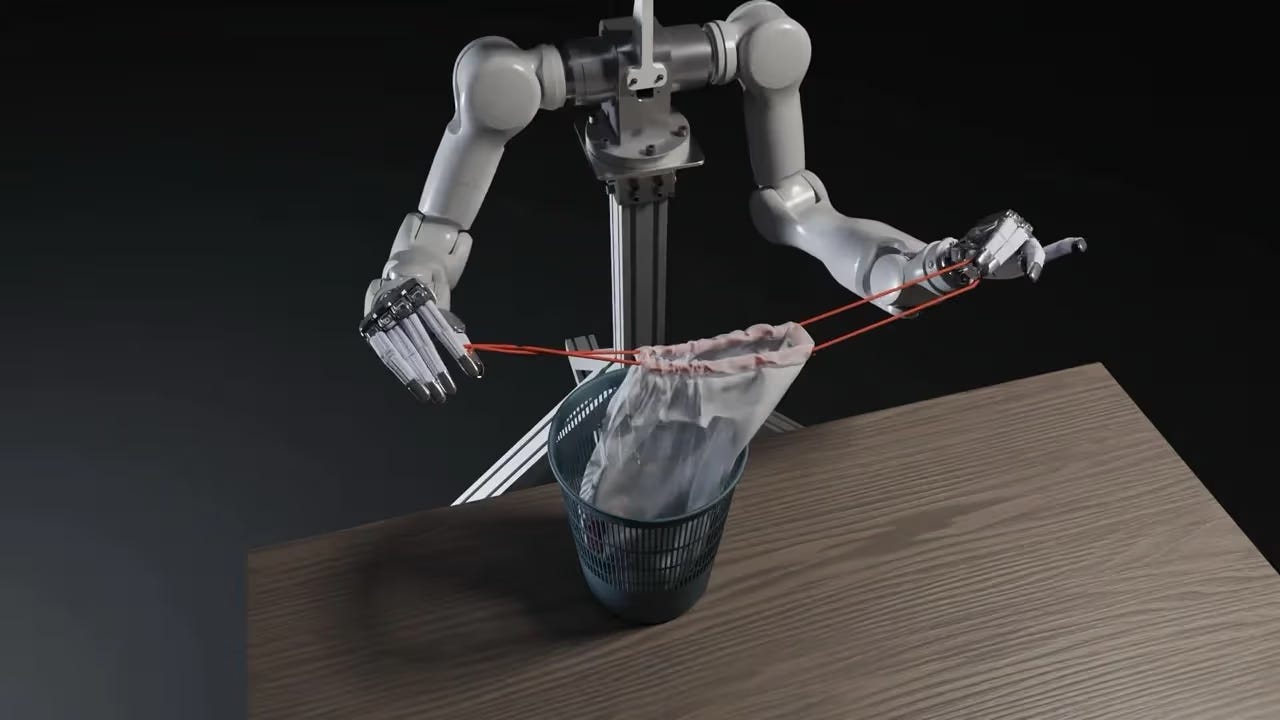
Genesis AI has released Genesis World 1.0, a comprehensive simulation framework that treats simulation not just as a data generator, but as the fundamental infrastructure layer for robotics development. The platform includes Nyx (a photorealistic rendering engine built for robotics), Genesis World (a unified physics simulator supporting rigid and deformable bodies), and Quadrants (a GPU-accelerated compiler). The key insight: simulation should accelerate the robot development cycle itself, turning model evaluation from a real-world bottleneck into a compute problem.
Genesis’s approach prioritizes evaluation first. Rather than training on simulated data, they train on real-world data but evaluate in simulation—keeping training and evaluation workflows separate. This avoids overfitting to simulator artifacts. Their simulation correlates at 89% with on-hardware rollouts, and their reality gap is 45% smaller than competing simulators. In tests, a single evaluation that would take 200+ hours of continuous robot operation in the real world runs in under 30 minutes in simulation.
The platform enables systematic evaluation across hundreds of tasks with hundreds of episodes each, revealing exactly where policies fail. They can sweep variables—object shapes, lighting angles, camera trajectories—across multiple axes simultaneously, something nearly impossible on physical hardware. This lets researchers validate design choices before committing to large-scale pretraining, saving significant compute.
Going forward, Genesis is focused on three directions: scaling post-training through millions of simulated training iterations, building hybrid simulators that merge classical physics with learned models, and enabling self-evolving physical AI where agents improve end-to-end across both simulated and real-world loops. The north star: keeping robotics development from being bottlenecked by real-world wall-clock time, moving progress at the speed of compute instead.
Robotiq has launched IQ, an AI platform that automates the entire robot integration process, attacking one of industrial robotics’ most stubborn problems. Integration has always been manual, unpredictable, and expensive. Site visits, weeks waiting for quotes, custom engineering every single time. IQ aims to change that entirely.
The platform starts with a 5-minute Fit Check, a structured assessment that tells you whether palletizing is a fit for your floor, what deployment looks like, and whether the financial return makes sense, including in 1-shift operations. No site visit required. No engineering hours upfront. No waiting weeks for a quote that may not go anywhere. Just an honest read on your opportunity before you commit to anything.
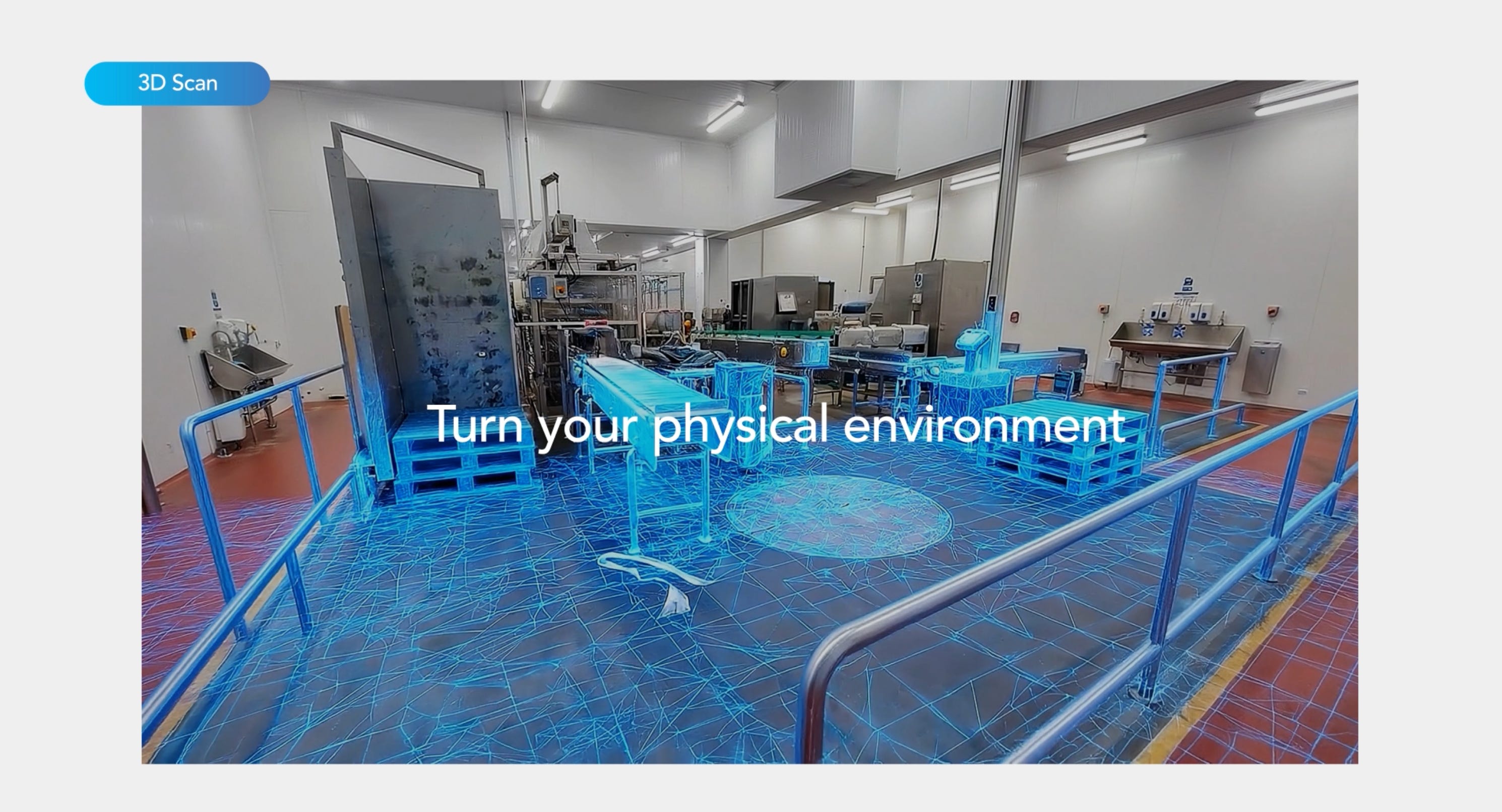
Once fit is confirmed, IQ guides the entire project, built on lessons from over 1,000 Robotiq deployments. It captures the reality of your operation, connects your team with the right people at the right step, and generates a validated workcell design simulated in your actual factory environment. Cycle time, reach, payload, all confirmed before you commit. The result: a deployment-ready palletizing workcell with predictable performance from day one.
Robotiq calls this “Automatic Integration”, the idea that deploying a robot workcell should be as predictable and repeatable as ordering one. For the thousands of small and mid-sized manufacturers who have been priced out of robotics by integration complexity and unpredictability, this changes the equation entirely. IQ was unveiled at RUC 2026 to selected partners and opens to everyone June 4th.
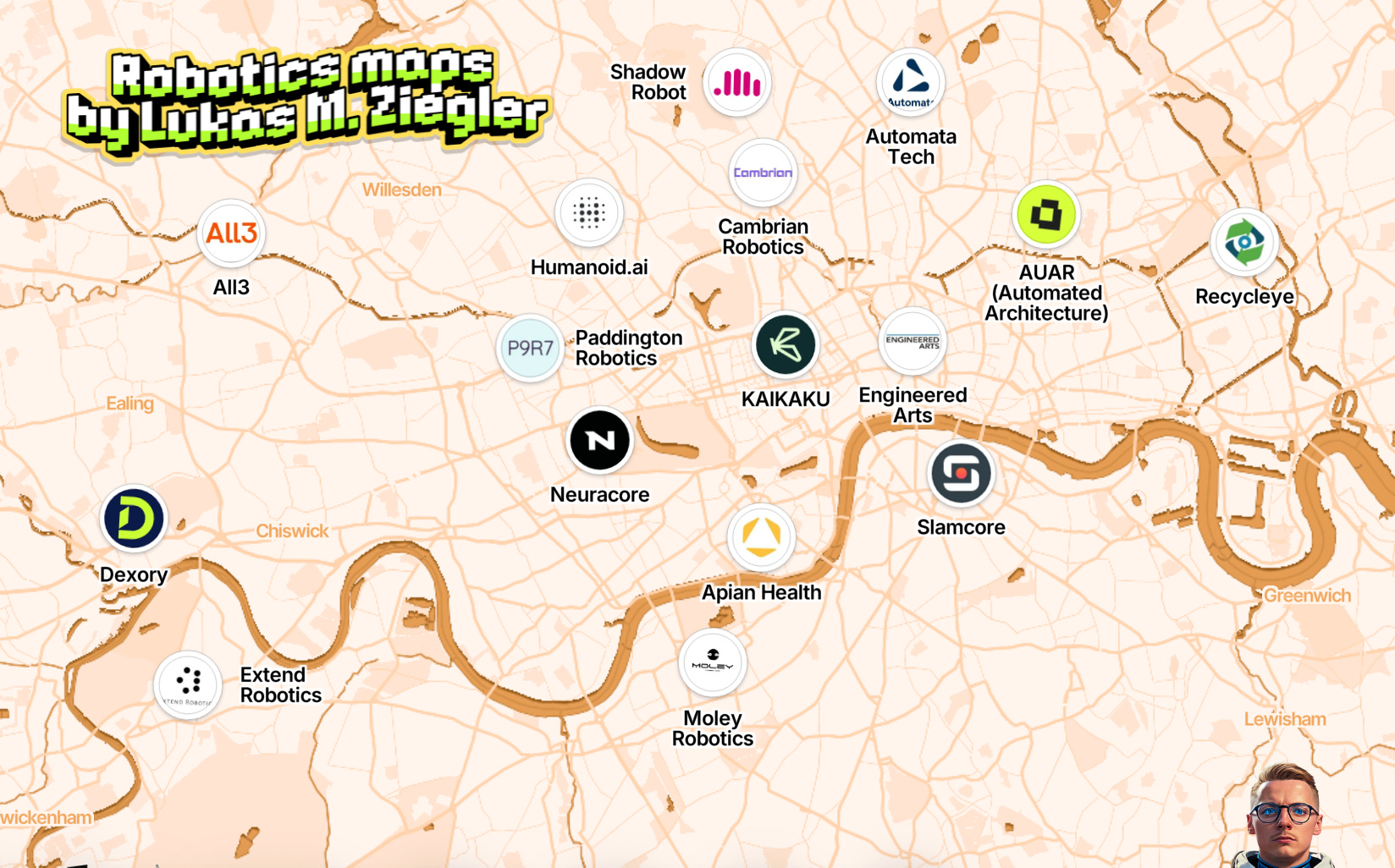
The robotics startups ecosystem is growing rapidly in London. Here’s a curated map of most of London-based companies working in the physical AI space. If I missed a company you know of, let me know! :)
German defense tech giant Helsing has officially unveiled Area 9, a new research division designed as a pie-in-the-sky incubator for European defense tech, think Moonshot Factory or Skunk Works, but for Europe. As part of the launch, the company also announced RX-1, a robotics research platform developed by Area 9. “Until now, robotics research in Europe meant depending on platforms built elsewhere,” said Helsing’s Chief Scientist Antoine Bordes, who is leading the project. “We built RX-1 so that doesn’t have to be true anymore. Designed here, owned here, iterated here.”
Area 9 was first announced last year, with the innovation team initially working on AI agents for the battlefield, including Centaur AI. The Centaur agent was publicly unveiled in June 2025 when Helsing and Saab announced it had flown the latter’s JAS 39 Gripen E fighter. Centaur will also serve as the AI brain for the company’s CCA analog, the CA-1 Europa, unveiled last fall. Now the company is moving into the physical realm with robotics.
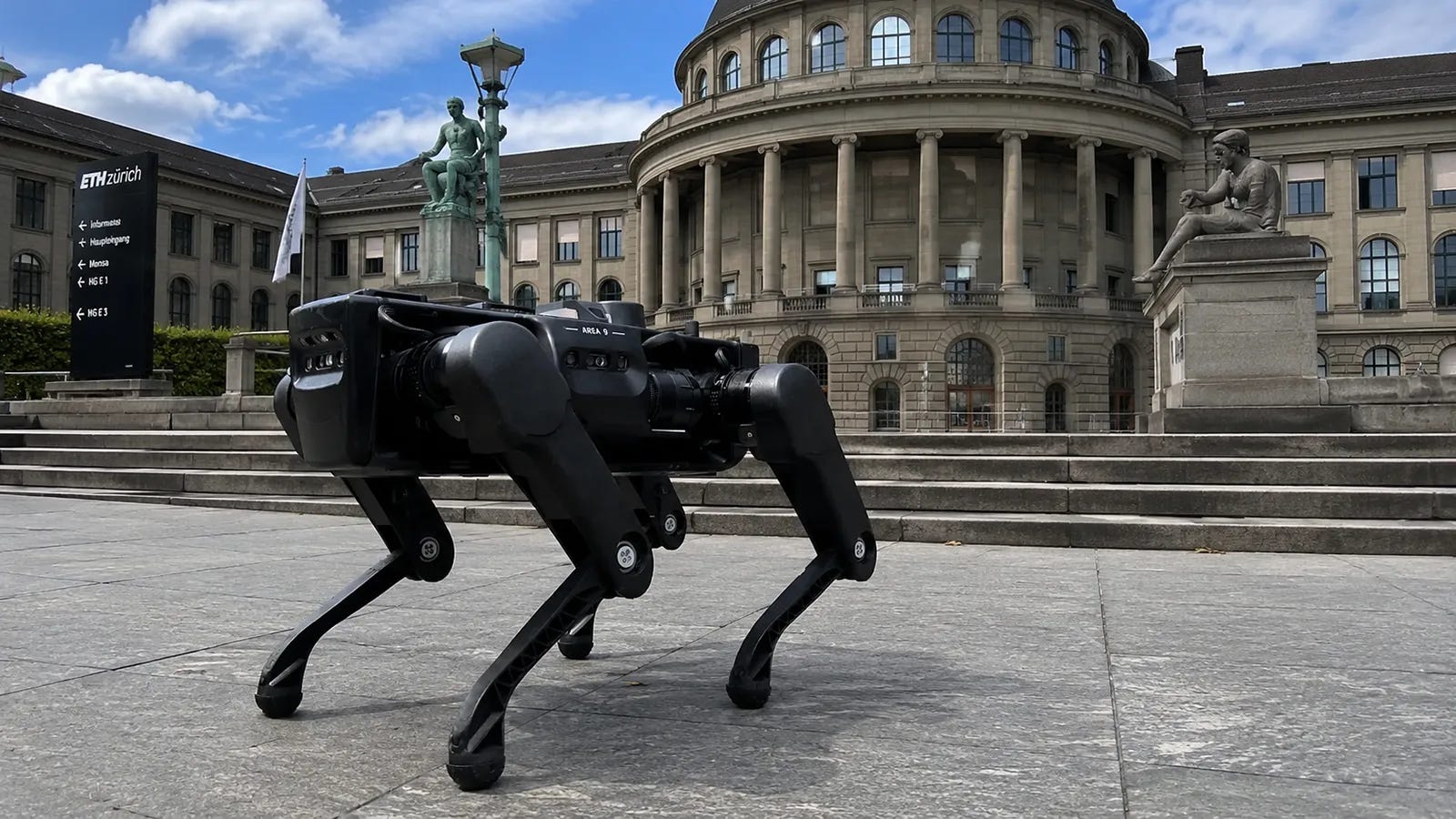
RX-1, in its current form factor, looks like a robot dog. Helsing plans to build all parts of the robotic stack—the robot itself plus the software layer that researchers can develop and test different autonomy capabilities on. The platform is more research-intensive and less currently-fieldable, but Helsing says it will make RX-1 available to research institutions and robotics laboratories across Europe. The company has already teamed up with the robotics group led by Marco Hutter at ETH Zurich and INRIA Paris to further develop RX-1.
The company’s goal is to develop an autonomous robotic platform that can navigate real-world, unpredictable terrain—like debris-laden environments—built entirely in Europe. “Area 9 exists to find the problems that look impossible and break them open,” Bordes said. “That’s why we made RX-1.”

Comments
Nothing yet. Say the first thing.
Sign in to join the conversation.