
Humanoid’s 1,000+ robot deal with Schaeffler signals 100K total shipments
→ Seven-digit actuator purchase (1M+) at 50% coverage implies 100K robots across all clients over 5 years
→ Why dual role matters: Schaeffler as both aggressive adopter (thousands of units) and preferred supplier
Boston Dynamics reveals Atlas fridge-lifting via reinforcement learning
→ Atlas trained millions of simulation hours with varied weight, friction, grip, positioning conditions
→ What proprioception demonstrates beyond cameras: sensing weight, balance, resistance for real-time unstable load adaptation
Locus Robotics acquires Nexera for AI-driven grasping
→ NeuraGrasp’s patented soft membrane + AI + vision adapts dynamically to shape, texture, material, porosity, weight variations
→ Why mobile manipulation at enterprise scale is the frontier: efficiently grasping millions of SKU types with speed/precision
Rivian spinoff Mind Robotics raises $400M, total hits $1B
→ $900M raised in 2 months at $3B+ valuation as Scaringe targets factory automation with “robotics with human-like skills”
→ Why “Project Synapse” launched: existing startups not fully equipped for industrial work
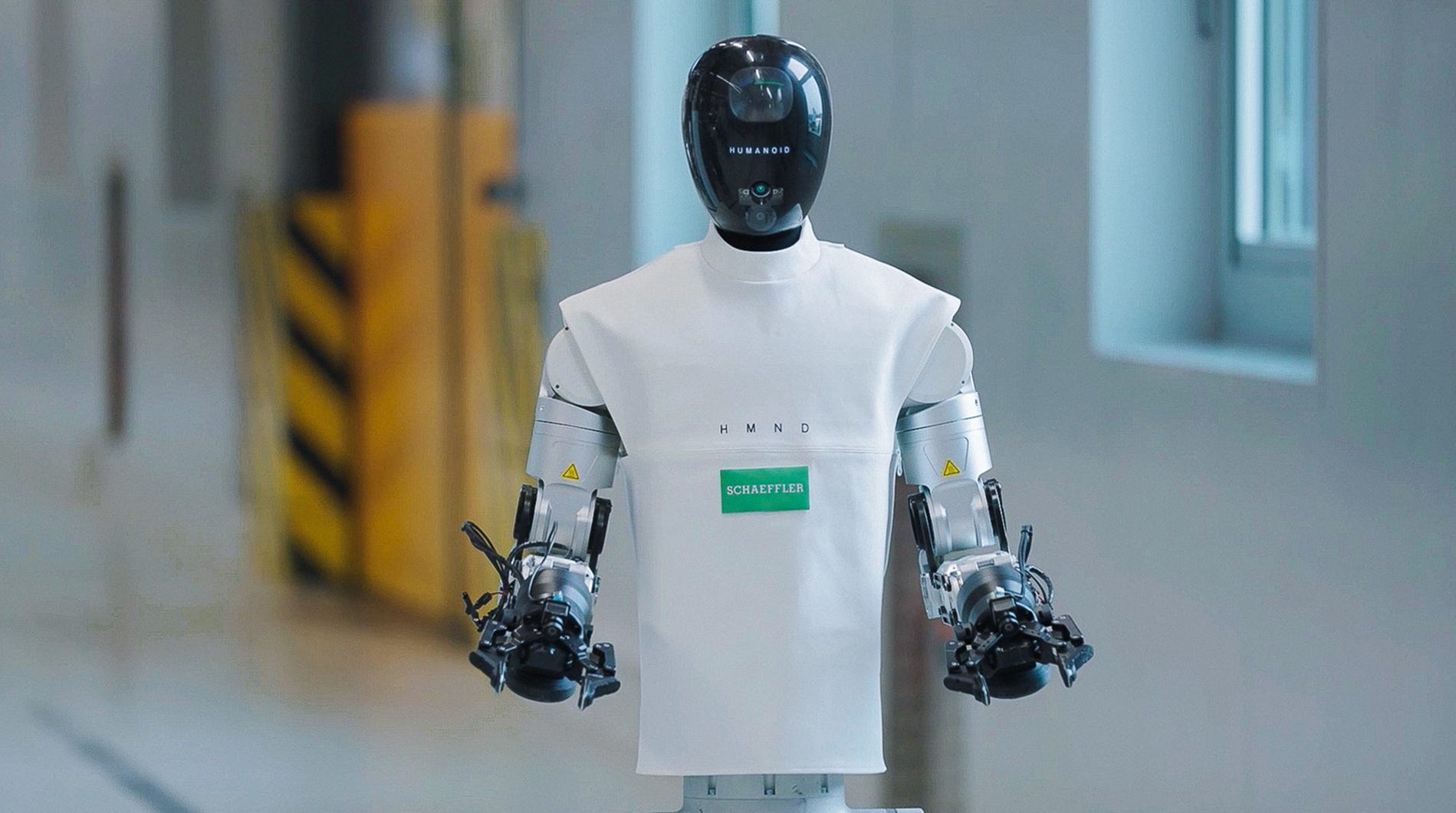
Two-year-old British startup Humanoid has signed a deal to integrate “a four-digit number of humanoid robots into live manufacturing operations” at German industrial giant Schaeffler’s factories starting later this year. The bigger news, however, might be that Humanoid has committed to buying a “seven-digit number of actuators” from Schaeffler over the term of the agreement, suggesting Humanoid intends to ship a staggering 100,000 humanoid robots across all of its clients over the next five years.
Four months ago, Schaeffler and Humanoid announced they’d put “several hundred” humanoid robots into factories over the next five to six years. On Wednesday, the companies upgraded the number significantly, signing an agreement to integrate at least 1,000 – and potentially many more, humanoid robots into Schaeffler’s manufacturing operations by 2032. This makes it one of the largest disclosed humanoid robot rollouts to date and arguably the most aggressive escalation between a humanoid OEM and an industrial customer.
The supply agreement indicates Schaeffler will become Humanoid’s preferred supplier, covering more than 50% of the company’s demand for joint actuators for its wheeled-based platforms through 2031. This partnership is expected to translate into the supply of a “seven-digit number of actuators” – at least one million. The wheeled HMND 01 Alpha offers close to 30 active degrees of freedom, and the “Schaeffler-relevant” actuator count per robot is probably roughly 18-22 joint actuators. At 50% coverage, one million actuators means 100,000 robots over the next five years.
Schaeffler is simultaneously one of the most aggressive industrial adopters of humanoids and a preferred component supplier for the platforms it’s buying. The company is committed to buying thousands of humanoid robots from Humanoid, at least 1,000 from Switzerland’s Hexagon Robotics, plus a bigger partnership with Germany’s Neura Robotics for 4,000-6,000 units. Schaeffler CEO Klaus Rosenfeld said the company is now engaged with roughly 45 humanoid robotics players worldwide and expects its humanoid robotics division to secure an order book in the hundreds of millions of euros by 2030.
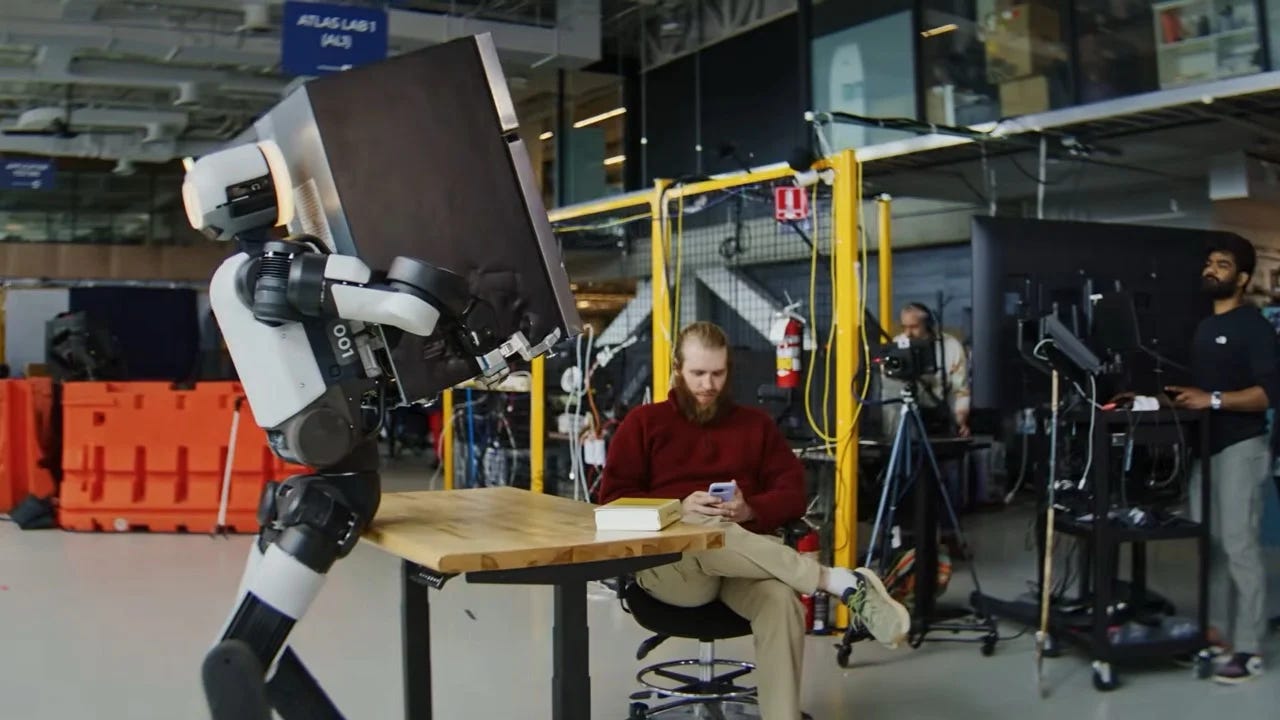
Boston Dynamics has revealed how its Atlas humanoid robot learned to lift and carry heavy industrial objects using reinforcement learning and large-scale simulation training. In a newly released technical blog, the company showed Atlas rotating its torso 180 degrees, squatting to pick up a mini-fridge, and carrying it across a lab floor while adjusting to shifting weight inside the object. The behavior was developed within weeks of Atlas’ public debut earlier this year.
The latest demo marks a shift from choreographed robot movements toward adaptable industrial behaviors designed for factories, warehouses, and construction sites. Boston Dynamics said Atlas is being developed as a “general purpose tool for physical work.” Rather than relying mainly on cameras, the robot uses proprioception, internal body awareness, to sense weight, balance, grip, and resistance while moving objects, allowing Atlas to adapt in real time to unstable loads and changing conditions.
Boston Dynamics trained Atlas through reinforcement learning, where the robot repeatedly practiced the same lifting task in simulation under different conditions. The company varied factors such as object weight, floor friction, grip strength, and fridge positioning to force the robot to adapt. “Atlas practiced the moves for millions of hours in simulations in parallel on GPUs,” the company said. The process starts with a reference trajectory, then Atlas is rewarded for completing tasks correctly while external disturbances are introduced.
One major advantage of the new Atlas platform is its reduced “sim-to-real gap”—a longstanding robotics challenge where behaviors trained in simulation fail in the physical world. Boston Dynamics said Atlas’ simplified hardware architecture makes accurate simulation easier, using only two actuator types across its body with symmetrical arms and legs.
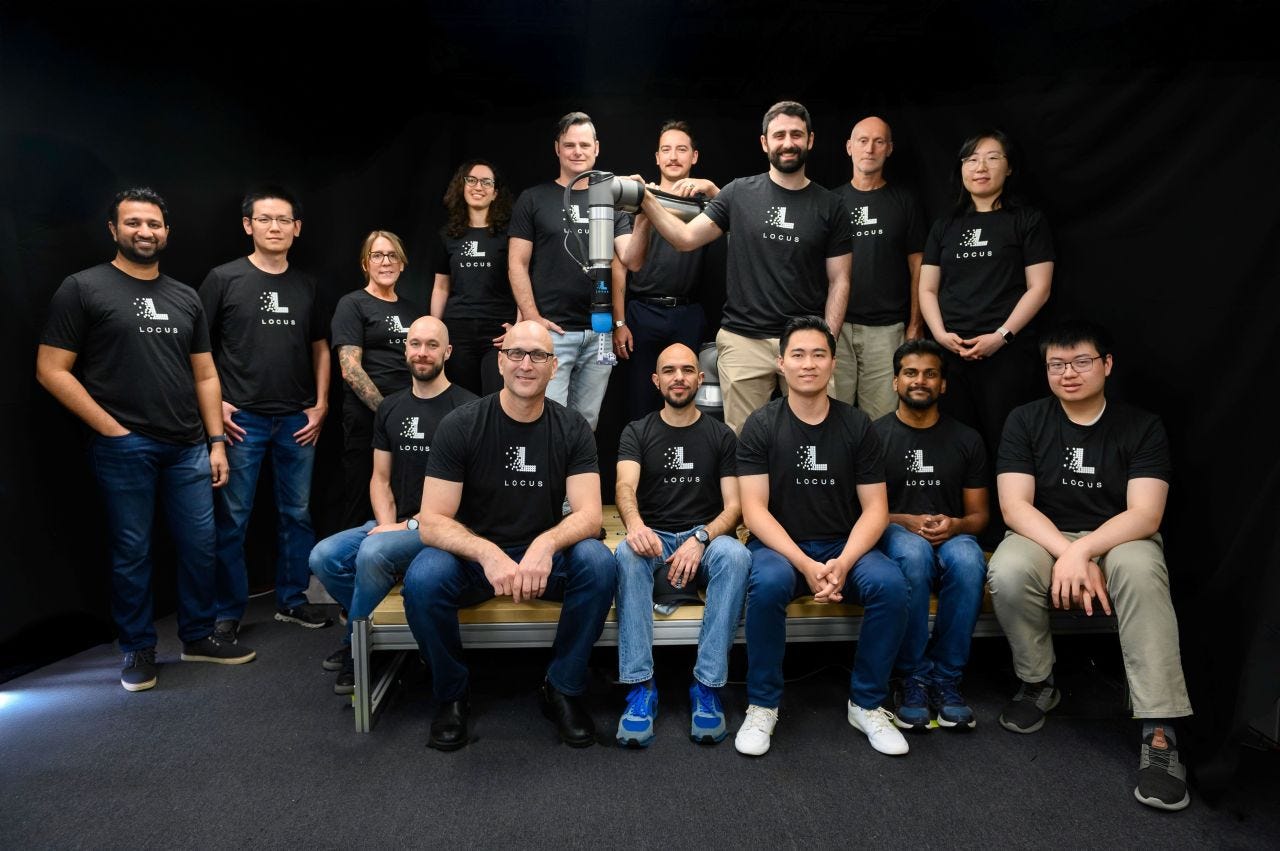
Locus Robotics, the leader in Flexibility-First Warehouse Automation, has announced the acquisition of Nexera Robotics, a Vancouver-based robotics company specializing in advanced robotic grasping. The integration of Nexera’s proprietary NeuraGrasp end-effector technology into the Locus Robotics physical AI platform significantly expands the company’s autonomous mobile manipulation capabilities and broadens what Locus Array can handle across end-to-end fulfillment workflows.
NeuraGrasp combines AI-driven grasping intelligence, onboard sensory inputs, computer vision, and a patented soft membrane structure to adapt dynamically to the physical characteristics of each item. This enables a single gripper to conform to variations in shape, surface texture, material, porosity, and weight, creating reliable grasps across high-variability inventory found in real warehouse operations.
Locus Robotics CEO Rick Faulk stated that the frontier of warehouse robotics today is AI-driven mobile manipulation at enterprise scale, and being able to efficiently grasp millions of SKU types with both speed and precision is where the next decade of value gets created. Nexera CEO Roy Belak said they built NeuraGrasp to solve the manipulation challenges that have held robotic picking back for years, and joining Locus gives them the platform, scale, and customer base to bring this breakthrough technology into high-velocity fulfillment environments.
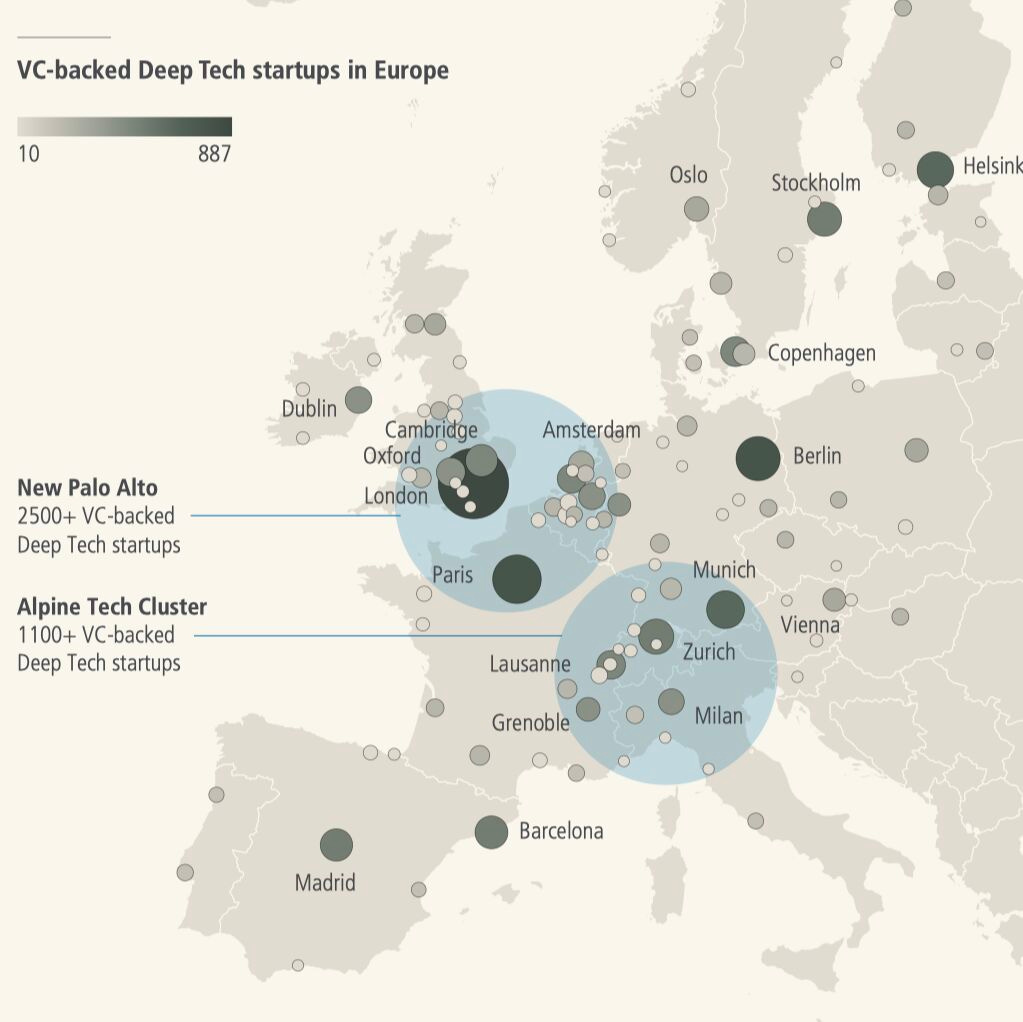
Alpine Tech Corridor is the undisputed deeptech capital of continental Europe. The data from the European Deeptech Report 2026:
Rivian’s spinoff company Mind Robotics has raised another $400 million, just two months after raising $500 million, as it works to develop industrial robotics that can further automate factory operations. The funding round, first reported by the Wall Street Journal, was led by Kleiner Perkins, with participation from the venture arms of Volkswagen (partnered with Rivian on a software joint venture) and Salesforce. The new funding brings total raised to more than $1 billion and values Mind Robotics at more than $3 billion.
Rivian CEO RJ Scaringe, who is chairman of Mind Robotics, told TechCrunch in March that he created the company because he felt other startups were not fully equipped to automate industrial work. He started the project—initially known as “Project Synapse”—as an effort to build “robotics with human-like skills.” Mind Robotics had previously raised $115 million from Eclipse after it was created in 2025.
Scaringe also helped create and spin out a micromobility company called Also, which has raised more than $300 million to date. The rapid fundraising pace, $900 million in just over two months, demonstrates strong investor confidence in Mind Robotics’ vision to bring advanced industrial robotics to factory operations and manufacturing environments.


Comments
Nothing yet. Say the first thing.
Sign in to join the conversation.