

IV. RUSSIAN CENTERS OF GRAVITY
a. Russian Manpower Shortage
At this stage of the Russo-Ukrainian War, the direct participants are trying to collapse each other’s will to fight by subjecting their respective armies to attrition. Therefore, both adversaries are focused on destroying each other’s manpower and equipment. On paper, Russia enjoys a significant advantage, since its population is eight times larger than Ukraine’s. Nonetheless, despite a monthly recruitment rate of new volunteers that averages 25,000-30,000, Russia loses more men than it replaces through its wasteful frontal assaults at the front. The Russians believe that they have no choice but to engage in such simplistic tactics because the new Russian replacements must be rushed to the front before they can receive adequate training. Moreover, the frightening losses of junior officers that the Russian army suffered during the first months of the war have not been replaced by commanders of like quality. Thus, when on the offense, the Russian army can operate its infantry at only a very basic tactical level, reliant on air bombardment and the fast tempo of repeated but costly small unit attacks to pave the way for its advance.
Russian recruitment is dependent on the high pay and bonuses it offers to the new volunteers, thereby fueling inflationary pressures in the economy. However, to sustain its monthly rate of recruitment, the Russian defense ministry has to offer greater and greater financial inducements, as less and less new volunteers are willing to sign up. Reportedly, the monthly rate of Russian military recruiting has dipped to 25,000, despite the promise of ever-increasing bonuses and pay, averaging as much as the equivalent of $22,000.00 US Dollars in the expensive Moscow and St. Petersburg recruiting districts. [1] Moreover, the high Russian losses in armor and artillery leave less equipment available for the armament and outfitting of new regiments and brigades, irrespective of the influx of new volunteers. [2]
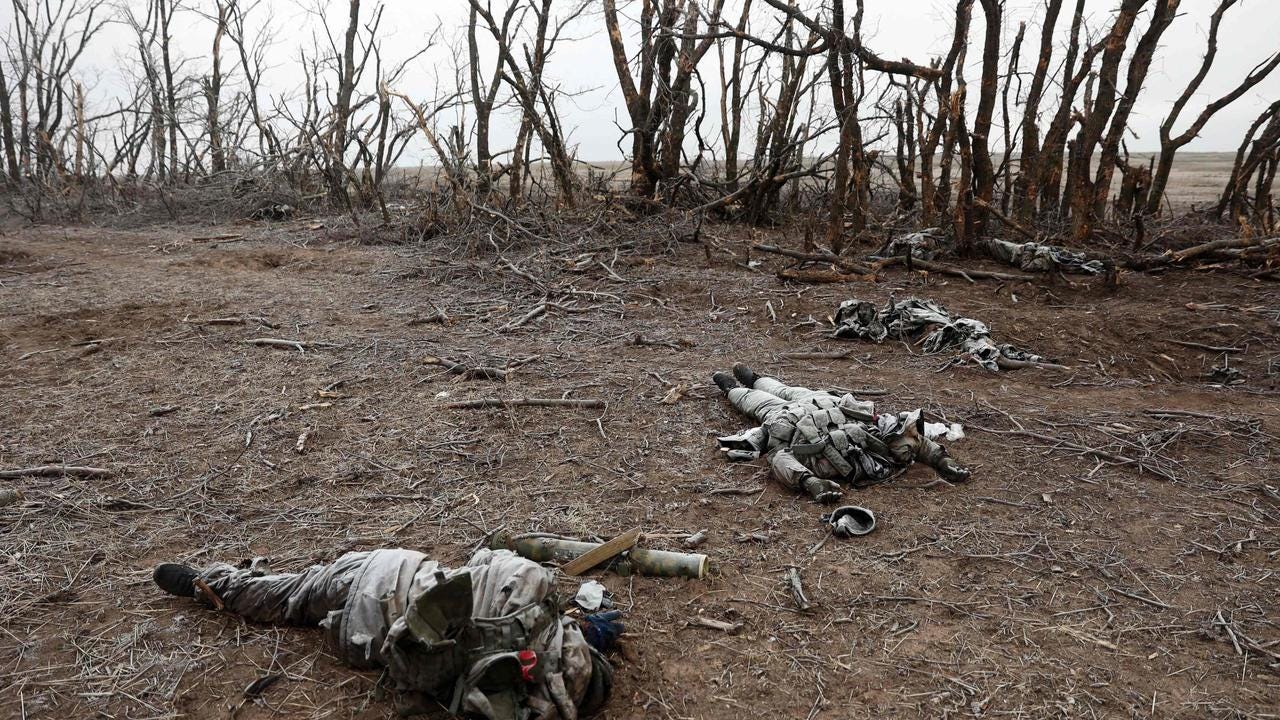
Russian dead
In any case, Putin’s strategy of attrition is pursued at an inordinately high cost in men and material. Russian manpower losses in killed, wounded, prisoners and missing for July reportedly reached 35,680, following a June loss of 35,030. The record monthly loss, however, occurred in May 2024, when the Russian army lost 38,940 soldiers. [3][4][5] In fact, to achieve its strategy of attrition Russia is sacrificing four times more manpower in losses than it is inflicting on the Ukrainians. Although Putin believes he has the manpower reserves to pursue such an expensive strategy, he cannot sacrifice such resources indefinitely unless he orders a general mobilization. This he would prefer not to do because of potential domestic social unrest, not to mention the reduction of the available labor pool for the wartime economy. His alternative to a new mobilization decree is the deployment of the annual 150,000 cohort of 19-year-old one-year conscripts to the front, something he has promised not to do. [6] So far, these serve out their one-year enlistment inside of the Russian Federation and away from the fighting in Ukraine, where they are not expected to see combat. That premise was recently put to the test in Kursk oblast when thousands of these conscripts were caught up in Ukraine’s invasion of Kursk oblast. Hundreds surrendered during the first week of the Ukrainian incursion after going up against veteran Ukrainian soldiers and no doubt, scores died in combat. More importantly, further Russian losses in armored vehicles and artillery will make it impossible to outfit new Russian regiments and brigades, even if Russia sustains its intake of 30,000 new volunteers a month. Estimates place Putin’s grace period for such a strategy of attrition at 12-18 months. [7] Of course, Putin may just decide to order the available pool of one-year conscripts to fill out the front lines in Kursk while veteran forces continue to press their assault on Pokrovsk and Chasiv Yar in the Donbas. But such a strategy comes at great risk to his regime when the mothers of these conscripts begin to protest in the streets after casualties amongst this politically sensitive cohort increase.
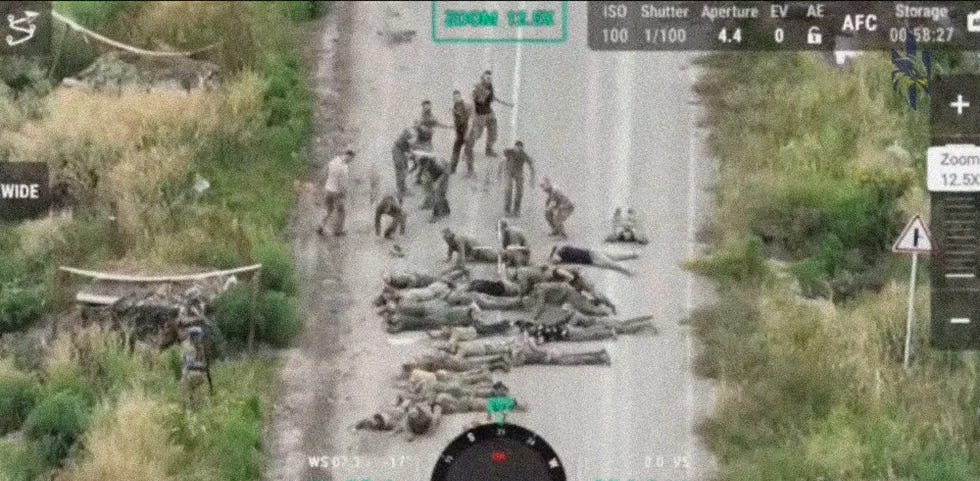
Russians surrendering near Sudza
Ukraine’s strategy of destroying Russian manpower and equipment has the obvious operational benefit of reducing the number of hostile forces that can attack along the extended front lines of this war. That way, the Russians are unable to outnumber and outflank the hard-pressed Ukrainians in an unprotected area of the front, like near Chernihiv in the north or Sumy in the northeast. Reportedly, the actual contested battle frontage stretches along only 800 kilometers of the 1,900-kilometer border between Ukraine and Russia. Had the Russians accumulated sufficient reserves to attack in an unprotected sector of the border, a breakthrough of forward lines would have enabled them to roll up Ukrainian defenses at the flanks of the breach. However, because of the heavy attrition of Russian manpower, the Ukrainians were able to keep their lines from collapsing. It is true that the Russian Kharkiv offensive in May 2024 forced the Ukrainians to strip their reserves from other sectors to contain it. This forced the Ukrainians to thin out their lines, especially near Pokrovsk and Chasiv Yar, enabling the Russians to accelerate their advance near these strategic communications hubs. Throughout the Spring and Summer of 2024, the Ukrainian army has steadily given ground to keep its troops from being destroyed by firepower or surrounded by maneuver. They hope to slow the Russians once these hit the urban conglomeration of the city of Pokrovsk and the neighboring town of Myrnohrad. Since the fall of Avdiyivka in February 2024, the Russians have had the advantage of advancing over rural terrain. Now they will be forced to attack in urban terrain that will be easier to defend. [8]
The fear was that Russia’s recruitment campaign of 30,000 volunteers every month, would result in a buildup of enough surplus of trained manpower to be decisive. Fortunately for the Ukrainians, they kept killing or wounding enough Russians to keep up with Russian recruitment. At most, Russia was able to enjoy a 60,000-man advantage. [9] But instead of using such a reserve decisively, all at once, the Russians kept rushing these forces piecemeal to the front lines without adequate training. Ironically, it was the undermanned Ukrainian army that secretly carved out sufficient reserves of 10,000 to launch its Kursk offensive on August 6 in what had been a quiet sector of the border near the city of Sumy.
During the first two-and-one-half years of the war, any hope that Ukrainian attrition of Russian manpower would cause a political backlash by the families of the dead failed to materialize. Most of the killed and missing-in-action were volunteers who funneled their pay and signing bonuses to their families, who welcomed the sudden infusion of expendable cash into what were mostly impoverished households. Moreover, the 25,000 dead that the Wagner group suffered during 2023 were convicts from Russia’s penal system, for whom few people shed a tear. However, the young conscripts who are suddenly dying in the fighting for Kursk have parents clamoring for their withdrawal from combat. Putin promised previously that these children would be spared from the fighting. By invading Russian soil, the Ukrainians may have stumbled upon a psychological pressure point that triggers a political response against the war from the sizeable cohort of Russian mothers of conscripts and conscripts-to-be. [10]
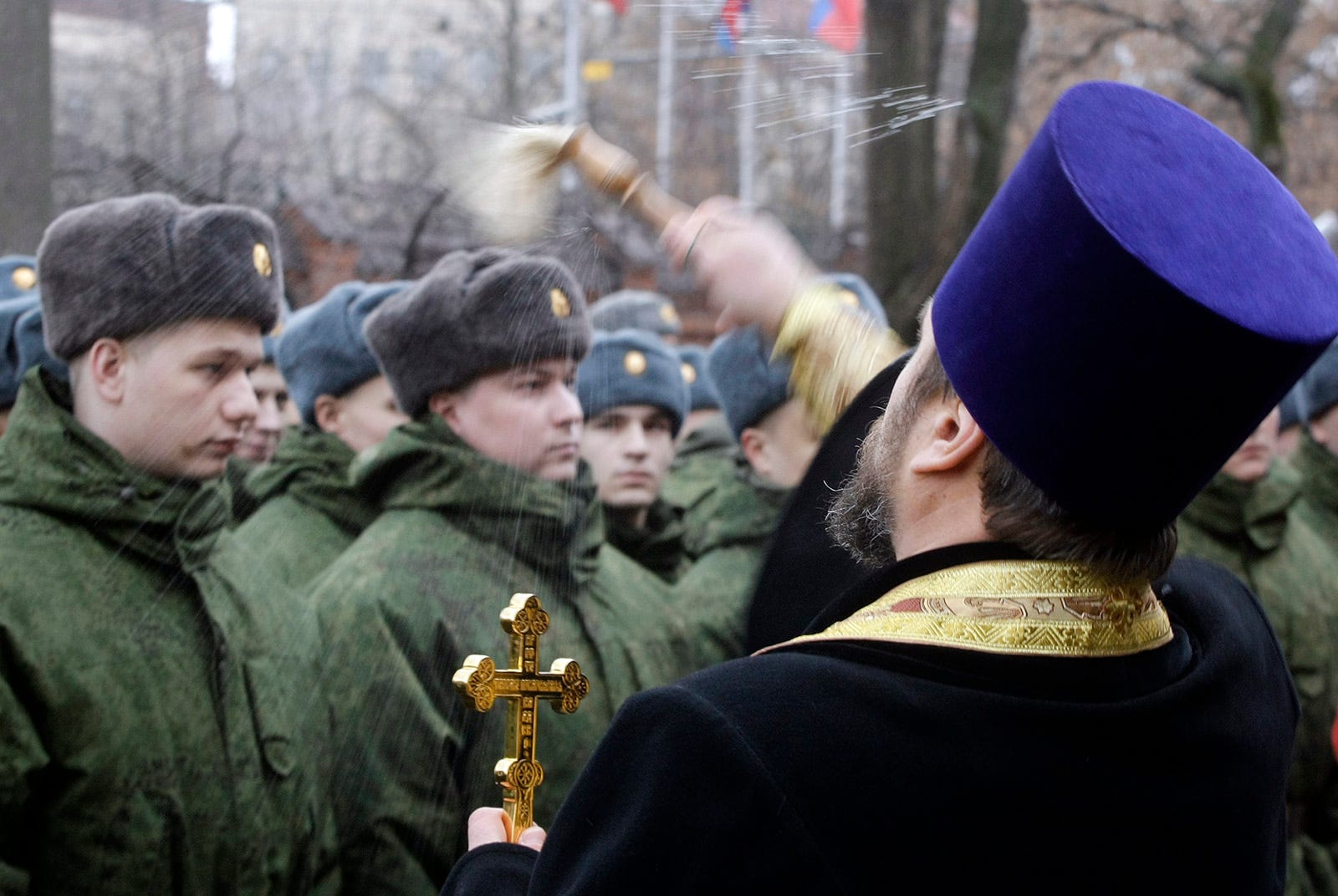
Orthodox priest blessing Russian conscripts with holy water before departure
b. Loss of Trust in the Russian State to Provide Security
What the recent Ukrainian invasion of Kursk oblast has revealed is that the Russian people are vulnerable to a psychological shock to their sense of personal safety and well-being. The evacuation of 180,000 Russian citizens from the border of Kursk and Belgorod oblasts in response to an almost unimpeded advance into Russia by supposedly heretofore defeated Ukrainian forces did not go unnoticed by millions of ordinary Russians, notwithstanding the best efforts of Russian propaganda to limit its resonance within Russia. Reportedly, Putin ordered the YouTube, WhatsApp, and Signal social media platforms to be silenced after the Ukrainian invasion on August 6, which angered younger Russians who rely on them for music and entertainment. Moreover, influential right-wing Russian online military bloggers that have hundreds of thousands of followers did not spare their criticism of the Russian military and the local Kursk administration for being caught unawares by the Ukrainian incursion into Russian territory. When combined with Ukraine’s strategic bombing campaign of Moscow and oil and gas infrastructure, the Ukrainians have found a way to bring the war home to the Russian people. That does not mean that the recent incursion into Kursk oblast will collapse the Russian will to fight anytime soon. However, in the long run, dissatisfaction with the war will grow, especially after the overstimulated Russian economy results in higher prices and shortages in consumer goods, which will begin to be felt by 2025. No doubt, the Ukrainians hope to dent the trust of ordinary Russians in Putin’s ability to manage the invasion of Ukraine and by extension, his confrontation with the West. Of course, such a strategy can backfire if the inflicted damage and humiliation causes the Russians to blame the Ukrainians rather than Putin.
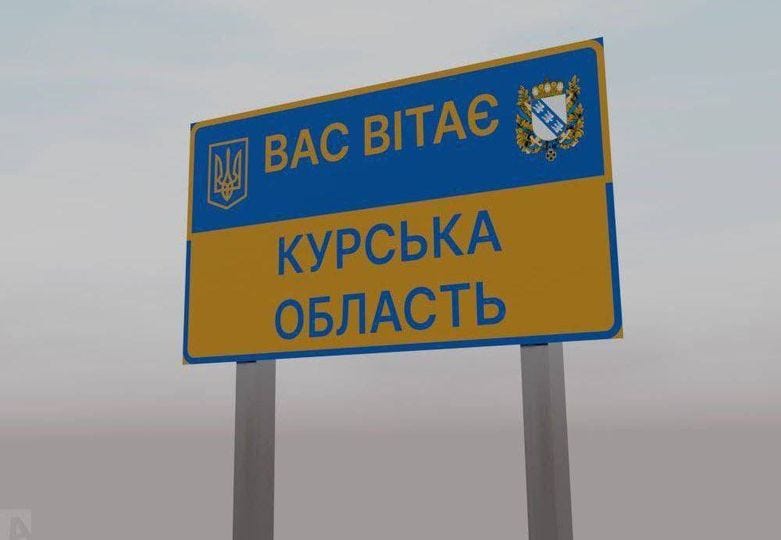
Sign in Ukrainian greeting motorists with the words “Kursk oblast welcomes you”
At the same time, the Kursk invasion is a personal affront to Putin, who has ordered his military to eject Ukrainian forces by October 1. It is evident that he is aware of Ukraine’s strategic objective to stoke domestic dissatisfaction within Russia. Addressing the situation in Kursk oblast at a meeting with top officials on Monday, August 12, 2024, Putin said Ukraine’s aim was to “destabilize Russian society and strengthen its position in any future negotiations.” [11 ] Ultimately, the success of the Ukrainian Kursk incursion will depend on the ability of the Ukrainians to goad Putin into an imprudent or even rash response. Ideally, this would take the form of diverting Russian reserves from the Pokrovsk and Chasiv Yar sectors to Kursk. An even riskier decision for Putin would be to order a general mobilization in order to escalate the war. This would be very unpopular plus a severe strain on Russia’s shrinking labor pool. Nevertheless, to get Putin to take such a dangerous step, the Ukrainian battle group in Kursk oblast will have to do more than simply hold onto what Ukraine has captured so far. The Ukrainians will need to venture beyond the town of Sudza and advance further north towards Rylsk or northeast to the railroad hub at L’gov, to embarrass Putin sufficiently to divert major forces from Pokrovsk and Chasiv Yar in Ukraine to the Kursk region in Russia. (See Map 1)
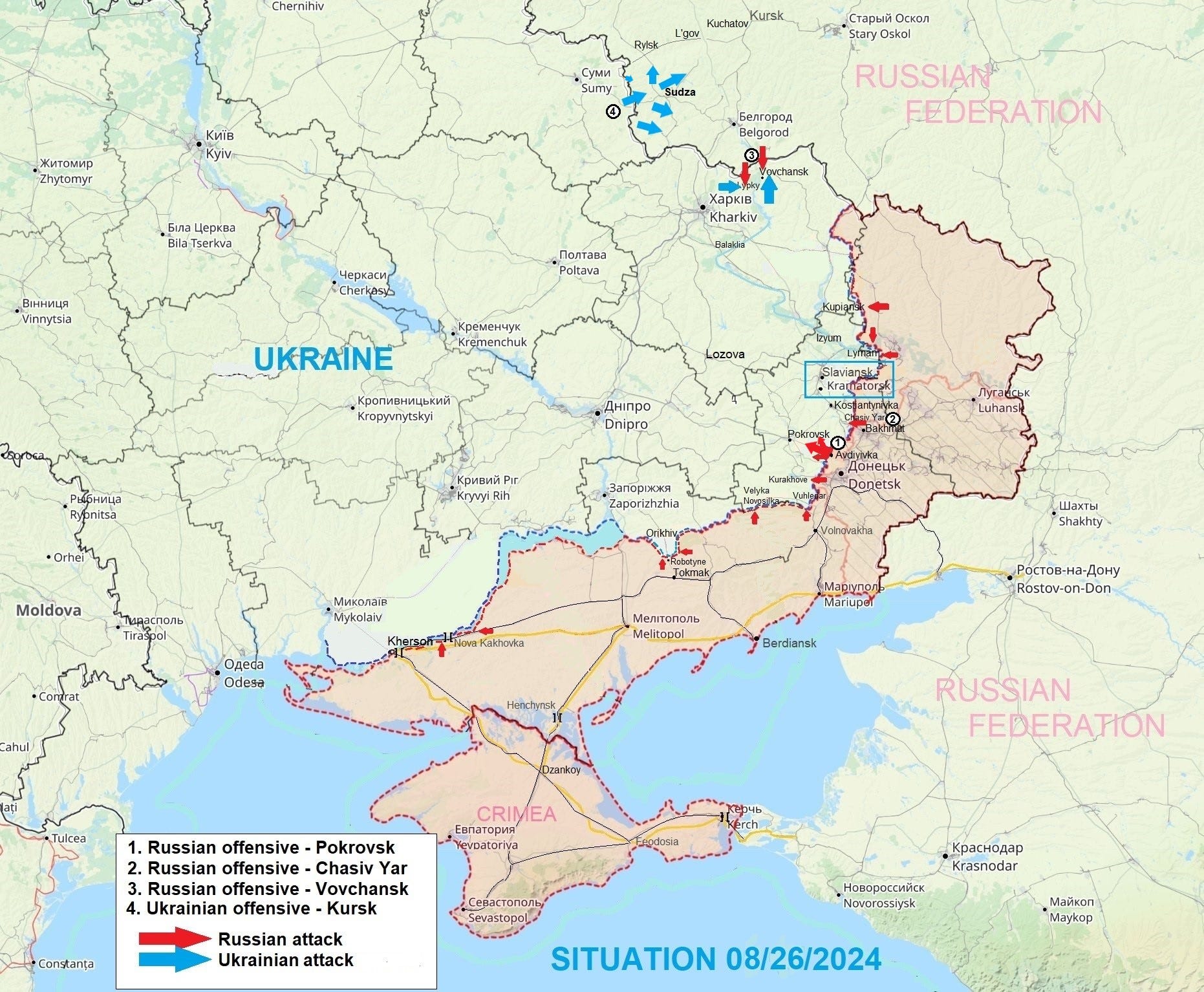
Map 1
Regardless of the outcome of the ongoing Ukrainian Kursk offensive, ordinary Russians have been surprised and disturbed by the ability of the supposedly defeated Ukrainian army to attack deep inside Russian territory. This has upped the ante for Putin and his regime.
c. Dashed Economic Expectations - Inflation, Devaluation, and Shortages of Consumer Goods.
Russia’s failure to score a quick victory in 2022 forced Putin to mobilize Russia’s economy for war, with vast outlays of public spending to fund the effort. These were made in the face of severe sanctions by the West, including the exclusion of many Russian banks from the SWIFT system for the clearance of international financial transactions. This made the conversion of repatriated overseas gas and oil profits into rubles cumbersome. When the majority of the European governments came together to wean themselves off of Russian oil and gas in 2022 and turned to other suppliers instead, the Russians had to turn to the Chinese and Indian markets, which extracted cheaper prices from the cash-hungry Russians. Consequently, oil and gas revenues came down and the exchange rate for the ruble began to drop. Remarkably, Russian oil and gas revenues went up 50% in 2024, as the reset to Chinese and Indian markets consolidated. However, the value of the ruble dropped to 103 rubles to the U.S. Dollar in June, continuing to create inflationary pressures in the economy. Although, Russia’s competent central bankers, like the highly regarded Elvira Nabiullina, continue to raise interest rates to tamp down on inflation, fiscal spending on recruitment and the military-industrial complex continues to increase inflationary pressures. [12][13][14]
Meanwhile, when the Russian army invaded Ukraine in February 2022, it attacked with an invasion force of only 125,000 troops, whereas the Ukrainians mobilized 400,000 volunteers to augment its standing army of 150,000. Thus, Ukraine enjoyed a manpower advantage through September 2022, when Putin relented and signed a partial mobilization order of 300,000 men. This proved very unpopular. Nonetheless, the mobilization was not large enough for the Russians to seize the initiative, since heavy losses at the front quickly reduced the pool of available recruits. Thus, the Russian defense ministry began paying volunteers huge signing bonuses to replace the exorbitant losses that the Russians were suffering in Ukraine. Local Russian authorities also contributed to the financial inducements to enlist. These enabled Russia to sustain a monthly recruitment rate of 30,000 new soldiers throughout 2023. The pay, bonuses, and in many cases, death benefits were passed on to soldiers’ families, which substantially infused the local Russian economy with cash. Russian consumer confidence surged and spending on consumer goods increased. However, rising prices began to rise.
Irrespective of Russia’s ability to entice 30,000 volunteers every month in 2023, Russian losses at the front were also averaging 30,000 a month. Eventually, the pool of those desperate enough to accept the offer of enlistment began to dry out. Therefore, in 2024 the pay and bonuses had to be increased, since fewer people were volunteering. The average annual pay for new enlistment contracts has now reached 400,000 rubles ($4,400.00 USD); reportedly in expensive recruiting districts like Moscow and St. Petersburg it approaches two million rubles annually ($22,000.00 USD). [15] Simultaneously, the monthly recruitment rate has plunged below 25,000 volunteers. [16] Meanwhile, casualties have skyrocketed, as the Russians lost over 100,000 soldiers in combined killed, wounded, prisoners, and missing in May, June, and July 2024 alone. Therefore, the Russians are experiencing a net loss in monthly manpower levels.
Russian oil and gas revenues alone proved insufficient to fund the new war economy, so Russia has had to run budget deficits in 2023 and 2024 to make up the shortfall. [17] This fiscal spending by the central government will likely lead to economic pressures, particularly simultaneous inflation and rising interest rates, called stagflation, which have the potential to disturb the delicate social contract between the Russian people and the state. Meanwhile, the Russian government repatriates hard foreign currency from the sale of its oil and gas and converts it to rubles, to stretch the devalued ruble to meet its obligations to fund pensions and social benefits, further fueling inflation. Finally, the displacement of the labor force from the peacetime economy into both the army and the military-industrial complex affects productivity, particularly in the manufacture of high-tech products as well as consumer products, that will be expensive to replace with imports, due to sanctions. The higher wages necessary to account for a dwindling labor force also push inflation up. Thus, if Putin is forced to order another mobilization, like the one he decreed in September 2022, the Russian system may be confronted with a political shock on top of a worsening economy that it may not be able to absorb for long. The Russian people, who have enjoyed the infusion of cash into their pockets through signing bonuses and increased pay, as well as higher wages due to a shrinking labor pool, are vulnerable to the curse of dashed expectations as they realize that the purchasing power of their increased earnings and savings dwindles by the day.
d. Centrality of Crimea in Putin’s Propaganda Narrative of the War.
The recent Ukrainian missile and drone bombing campaign of Crimea has substantially reduced Russian air defenses on the peninsula and limited Russian capability to resupply it over the tenuous Kerch bridge or by naval barges. Actual resupply to Crimea comes mostly from the east via the system of roads leading from the city of Rostov-on-Don near the Russian border. The Russians are trying to supplement this logistics artery by building a new railroad line towards Mariupil, as the existing railroad from Rostov-on-Don travels too far north and therefore within Ukrainian missile and artillery range at the segment of the line between Donetsk and Volnovakha. In the meantime, the effectiveness of the Ukrainian missile and drone bombing campaign in Crimea remains a lever in future ceasefire talks between the two adversaries. It is unlikely that Ukrainian political leadership views the recapture of Crimea as a realistic strategic objective in the near term, although it continues to declare its recapture a stated war aim, for domestic political consumption. After all, Ukraine does not have the capability to launch a major amphibious crossing of the Dnieper River or to approach Crimea by way of a ground offensive through Melitopil. Nevertheless, by isolating yet not occupying Crimea, Ukraine reminds the Kremlin of its capability to limit Russian control over the peninsula. An impending loss of Crimea would be such a potential propaganda fiasco for Russia, that a nuclear warning shot at a symbolic target in Ukraine would be likely. Thus, the Kremlin has no choice but to factor Ukrainian capabilities to isolate Crimea logistically into its calculus of the end game to this war.
e. Putin’s Fixation on the Capture of Sloviansk and Kramatorsk
On August 27, 2024, President Zelensky expressly stated that keeping Russia from recapturing the entirety of the Donbas has been a Ukrainian strategic objective from the very beginning, precisely because Putin has been proclaiming it as the principal war aim from even before the invasion on February 2022. [18] As explained in my previous Substack article on June 17, 2024, the main operational question in the Russo-Ukrainian War for the remainder of 2024 is whether Ukraine has enough combat power to keep the Russian army from capturing Sloviansk and Kramatorsk. (See blue outlined box on Map 1) If Sloviansk and Kramatorsk fall, Putin attains a psychological reprieve in the minds of the Russian public regarding the trajectory of the war that will buy time to pursue his propaganda offensive against the Western democracies to dissuade voters from voting for politicians who support Ukraine. Although the election of Donald Trump does not guarantee outright American support for Putin’s Russia, further US aid to Ukraine in 2025 would be unlikely. But if the Ukrainians maintain their grip on Sloviansk and Kramatorsk without having their logistics severed to these twin cities from the west, the pressure inside the boiling tea kettle that is Putin’s hold on power will increase, especially when combined with the disappointment over the Ukrainian invasion of Kursk oblast and the worsening economy. Even if Pokrovsk and Kostiantynivka fall into Russian hands later this year, the Ukrainians can still supply Sloviansk and Kramatorsk through the city of Lozova in Kharkiv oblast. (See Map 1)
Therefore, the economic imbalances of an overheated war economy, caused by Russian pay bonuses and government spending on war-related manufacturing are fueling an approaching political reaction. One does not know whether this will come from members of Putin’s inner circle, the Russian oligarchs, the Russian general population in general, or all of the above. After all, the common people will be the first to pay the price for fiscal mismanagement through rampant inflation. Although, Russian domestic propaganda trumpets the capture of Bakhmut and Avdiyivka as equivalents of legendary Soviet victories of World War II, most of the Russian people can read a map. There have been only incremental changes in the front lines since February 2022 and no loss of a major Ukrainian city since the capture of the port of Mariupil on May 20, 2022. Furthermore, the Ukrainians recaptured much of Kharkiv oblast and the west bank of the Dnieper River together with the city of Kherson in the Fall of 2022. Continuing monthly losses of 38,000, such as were suffered during May 2024, without something major to show for it, endanger Putin’s regime, especially if he must order another mobilization.
V. UKRAINIAN CENTERS OF GRAVITY
Meanwhile, Russian strategy focuses on exploiting the following Ukrainian centers of gravity:
a. Ukrainian Manpower Shortage
A lack of infantry was not a Ukrainian center of gravity during the first year of the war when Ukraine had a manpower advantage over Russia. Initially, fickle Western support for the Ukrainian war effort was the primary Ukrainian vulnerability. However, Western support shifted to secondary importance when Ukraine’s manpower shortage became apparent following the fall of Avdiyivka in February 2024. Two years of high-intensity warfare reduced the Ukrainian army through death, wounds, and PTSD. Concurrently, the Ukrainian government could not fully make up the shortfall through a full mobilization because it was politically unpopular. Meanwhile, Russia’s ability to enlist 30,000 new volunteers monthly with lucrative pay and bonuses enabled the Russian army to eventually surpass the Ukrainians numerically. This caused the Ukrainians to thin out their defenses along the entirety of the active front, enabling the Russians to sustain a slow but steady rate of advance in the Donbas.
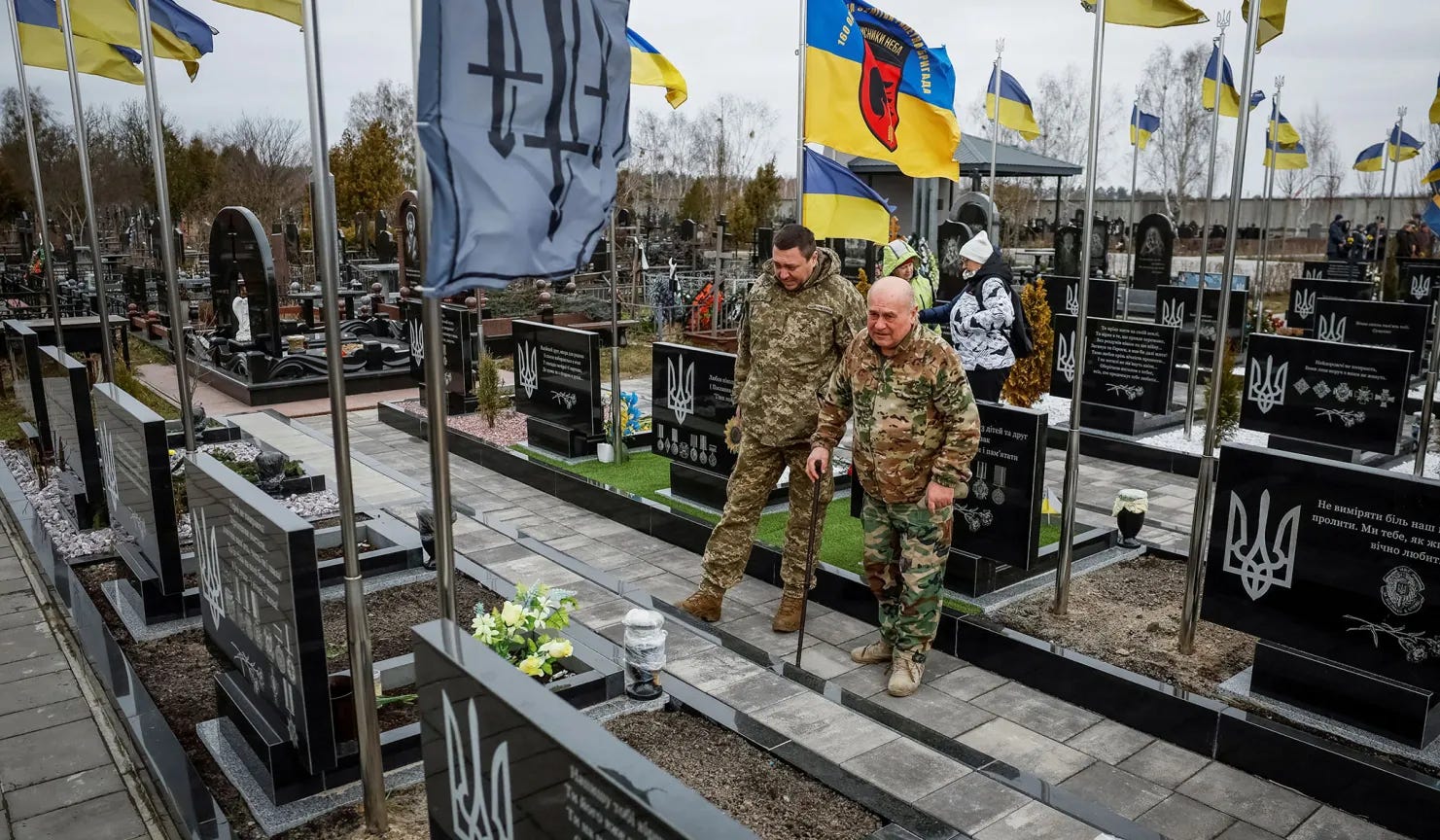
Ukrainian war cemetery
The Russians believe that if they can force the smaller Ukrainian army to fight on multiple fronts simultaneously, they can spread it out and degrade it sufficiently to achieve a major breakthrough. Particular attention is placed on grinding down the better Ukrainian mechanized and elite airborne/air-assault brigades, which act as operational reserves. Since the Ukrainians are having difficulty replacing their losses through effective mobilization, the Russian general staff feels that it needs to push its advantage in numbers now, regardless of the cost in human lives and equipment, before Western ammunition reaches the front and Ukrainian mobilization efforts redress manpower shortages. Throughout May-August the Russian main effort has been focused on the Pokrovsk vector of advance, after Ukrainian reserves were enticed away from the area to repel the new Russian offensive towards Kharkiv. The Ukrainians had little choice since the loss of the country’s second-largest city would have been a significant political blow to domestic morale. Pursuant to this reasoning, a major Russian success would cause Ukraine to sue for peace on unfavorable terms, or even better, dissolve into civil war.
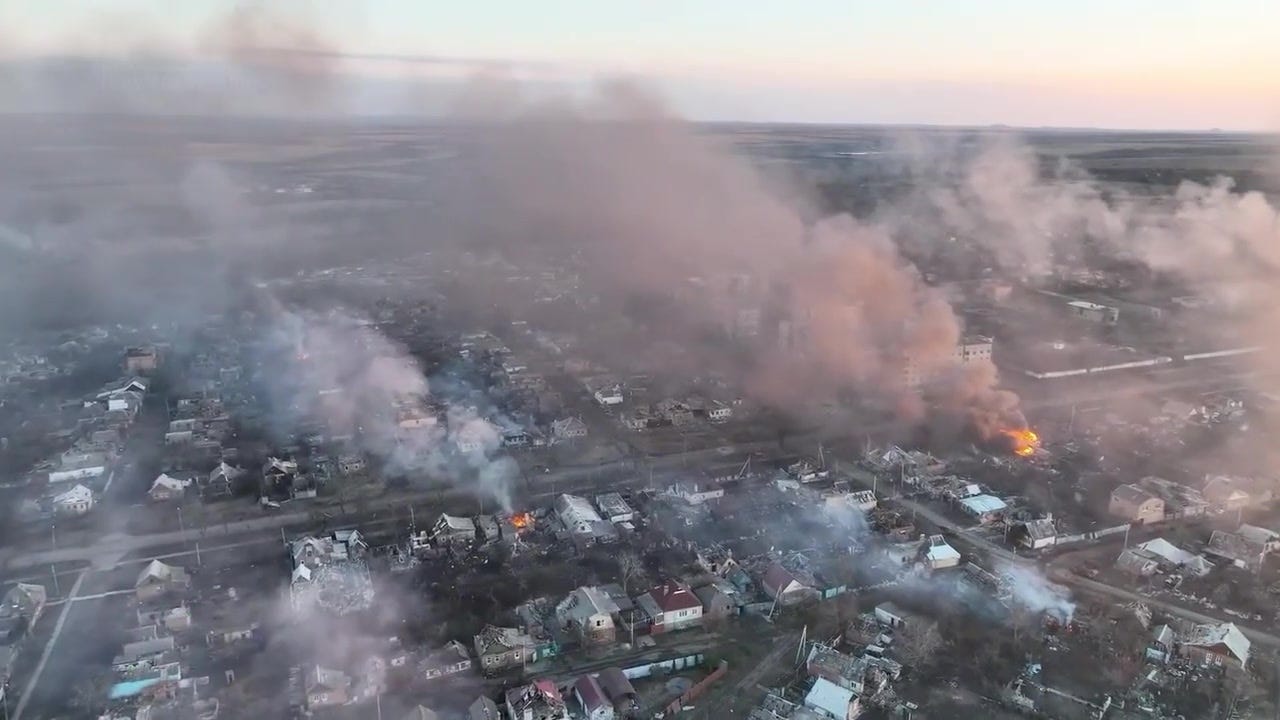
Bakhmut under Russian bombardment
Meanwhile, the steady attrition of the 550,000 Ukrainian regular soldiers and volunteers who rushed to the colors during the first days of the war left the Ukrainians undermanned. Current estimates have the Russian army in Ukraine at 580,000 soldiers [19], while the Ukrainian forces are defending the forward edge of the battle zone with about 450,000. The intensity and destructiveness of the war have scared away new volunteers and Ukraine’s previous attempts at mobilization failed to redress the shortage. Through 2023, Ukraine’s demographic crisis limited the mobilization pool to men above 27 years of age. The verdict is still out on the new mobilization law that was passed on April 10, 2024, which lowered the mobilization age to 25. [20][21] Rumors of new Ukrainian brigades that were organized after passage of the new mobilization law have yet to be confirmed. So far, none of these have made an appearance at the front. It is an open question whether the Ukrainian army will be able to give the new recruits sufficient advance training, instead of shipping them off immediately to replace losses at the front and hoping that they learn on the job. Even if the newly mobilized conscripts receive adequate training, it is an open question whether Ukraine will receive the new Western armor and artillery necessary to outfit the new brigades that this new manpower is supposed to fill. The re-emergence of European military-industrial capacity has decreased Ukrainian dependence on American arms transfers. Nonetheless, the volume of European arms and ammunition flowing to Ukraine has yet to fully replace American supply chains. [22] Currently, the Ukrainians are absorbing the recent American allocation of arms, but it is unlikely that this will continue, especially if Donald Trump wins the American presidency in November.
b. Centrality of Western Support
Therefore, Putin is also focusing on that older Ukrainian center of gravity – Western support. He hopes to quicken the process of Ukrainian exhaustion by exploiting Russian prowess in propaganda and political subversion, to cut off military and financial support for Ukraine in the West. Putin ordered a concerted effort to manipulate the election process in Western democracies by funding opposition parties and hijacking social media to convince voters to vote for candidates who oppose further aid to Ukraine. Obviously, a return of Donald Trump to the White House is expected to severely limit American support. Whether the Europeans pick up the slack in supplying the Ukrainians with the necessary munitions and armored vehicles to sustain its war effort, remains a key question. But the end of American aid will not be determinative. The fact is that Europe collectively has spent more on the Ukrainian war effort than the United States. [23] It is just that the Europeans have not brought their military-industrial output up to mass production levels, whereas the Americans had huge, mothballed stocks of obsolescent or recently decommissioned weaponry ready for transfer to Ukraine (i. e. Bradley M2 IFVs; M113 APCs, and M777 artillery pieces). Therefore, the American weapons transfers received most of the media attention. In which case, Putin must be disappointed with the results of recent French parliamentary elections, where the Russian-supported French right-wing party failed to achieve a majority. It appears that France will be able to continue its support of Ukraine. Undoubtedly, the lack of US funding and weapons will create serious but not insurmountable obstacles to continued Ukrainian resistance. If the European NATO members begin to supply weapons and ammunition in 2025, Ukraine has a chance to remain in the fight for the long haul, but only if Ukrainian psychological stamina continues to hold.
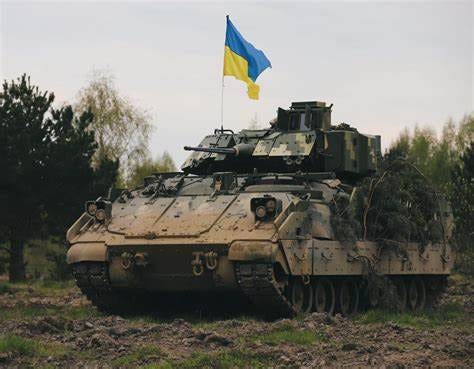
American Bradley IFV in Ukrainian service
c. Russia’s Strategic Bombing Campaign of Ukrainian Urban Centers
Therefore, the Russian air and space forces, known as the vozdushno kosmichni syly (VKS), continue their strategic missile and drone bombing campaign of Ukraine’s power grid system, with the intention of (1) depleting Ukraine’s supply of anti-air missiles and (2) making the country’s eastern urban centers uninhabitable. The bombing campaign forces Ukrainian S-300 and Patriot anti-air missile batteries to defend its urban centers instead of protecting front-line troops from air attack by Russian FAB glide bombs. Operationally, this helps Russian ground operations. Moreover, the Russian missile and drone bombing campaign is designed to make the eastern Ukrainian metropolitan centers uninhabitable in winter. The Russians expect that the suffering in the East and South of Ukraine will result in demands on Zelensky to end the war, irrespective of peace terms. That remains to be seen, as Russian cruelty likely steels Ukrainian resolve more than weakens it. Finally, the bombing campaign hopes to reopen regional rivalries in Ukraine, as the Ukrainian-speaking population of Western Ukraine must accommodate even more displaced Russian speakers from the East, while the Eastern Ukrainians suffer the disproportionate burden of destruction and suffering. The Ukrainian regional differences are yet another vulnerability that is discussed in the next section.
d. Internal Cohesion
Ukrainian regional differences have been at the center of political fault lines in the post-Soviet Ukrainian state since it declared independence in 1991. Putin relied on these differences when invading in February 2022, believing the Russian-speaking East to be genuinely pro-Russian. It turned out that a substantial majority of the Russian-speaking people in East Ukraine were just as loyal to the idea of Ukrainian statehood as the Ukrainian-speaking West. This miscalculation is one of the primary reasons for the failure of Putin’s initial invasion plan. Nevertheless, after two years of war, fissures have appeared that Russian propaganda is trying to exploit. For example, following legislation passed in the Ukrainian Rada (Parliament) on February 24, 2024, to declare martial law and to postpone presidential elections indefinitely, pro-Russian politicians and journalists attacked the legislation as anti-democratic, calling into question the legality of the future of the Zelensky administration. [24]
Eastern and Southern Ukraine have borne the brunt of Russian aggression and physical destruction, while Western Ukraine has suffered relatively less. Internal displacement of refugees from the East has led many to the Western oblasts (regions) of Ukraine, particularly to the Western regional capital of Lviv. Anecdotal evidence suggests that many Western Ukrainians consider the Russian speakers from the East as malevolent interlopers who are trying to usurp living quarters, jobs, and public resources at their expense. The displaced neighbors from the East are convenient scapegoats for the Ukrainian speakers in the West for the disruption of their stable pre-war peacetime existence. Furthermore, some in the Western regions feel as if their soldiers are doing all the fighting, while the Russian-speakers are not contributing their fair share. This is simply not true. Although, the frontline brigades from the Western areas, like the 80th Air Assault, 24th Mechanized and 10th and 128th Mountain Brigades, have fought well and made great sacrifices, brigades from East Ukraine have been just as effective. For example, the Kharkiv-based 92nd Mechanized and 103d Territorial Defense Brigades were stellar in defeating not only the first Russian attack on Kharkiv in 2022 but also the recent Russian offensive on the city in May 2024. These regional differences are potential flash points that Russian propaganda is ready to exploit if the situation at the front deteriorates.
Furthermore, populism has historically been a powerful force in Ukrainian political life. The mobilization of ordinary people to oppose the wealthy oligarchs and the authority of the central government has a long and cherished tradition. [25] However, this conflict was set aside by the Russian invasion, when the majority of Ukrainians rallied behind the Zelensky administration during the early months of the war. Nevertheless, dissatisfaction with Zelensky and the senior military leadership following reverses during the Summer counteroffensive of 2023 has brought this tradition back into the open. Public outrage after the fall of Avdiyivka in February 2024 and the initial Russian successes along the Kharkiv front in May 2024 was particularly fierce. The most glaring criticisms appeared on social media by volunteer officers of the former politically right-wing 3d Assault Brigade (originally the Azov Regiment), who criticized Major-General Yurii Sodol, former commander of the Ukrainian Marine Corps, after he was appointed commander of the joint forces command and the strategic operational group Khortytsia. Sodol was accused of being a butcher of the troops under his command earlier in the war. To stay ahead of these headwinds, Zelensky used fellow party members and media spokespersons to pin responsibility for the defeats on the General Staff and replaced Major-General Sodol with a junior brigadier-general. [26] When one adds the constant accusations of corruption on the part of Zelensky’s allies in his Servant of the People Party, the potential for political turmoil, even civil war, is there under the surface, waiting to be stirred up by Russian propaganda and subversive units of the GRU (Russian military intelligence).
VI. CONCLUSION
Both sides in the Russo-Ukrainian War believe that at this stage of the conflict they have no choice but to exhaust the other through a war of attrition. However, the Russians are willing to lose more men than their Ukrainian adversary, so long as the less numerous Ukrainians suffer the loss of a greater percentage of their fighting force. Thus, Putin hopes for a major victory sooner than later, regardless of the cost in human lives, to ease the pressure on his overheated wartime economy. The capture of Sloviansk and Kramatorsk would be an optimum development, as it would enable Putin to claim that he delivered on the pre-war promise of clawing back the Russian-speaking Donbas from the Ukrainian “Nazis.” It is for that reason that the Russian army attacked relentlessly in May, June, and July, suffering close to 100,000 casualties in the process, in the hope that it can wear down Ukraine’s army by the November elections in the United States, at the latest. Then, an expected victory by Donald Trump will be used as leverage to drive the Ukrainians to the negotiating table on Russia’s terms, with the existing front lines delineating national boundaries. In response, the Zelensky administration decided on the risky strategy of invading Russian territory to push back on the Russian propaganda offensive in the West and to create its own leverage for any future peace negotiations.
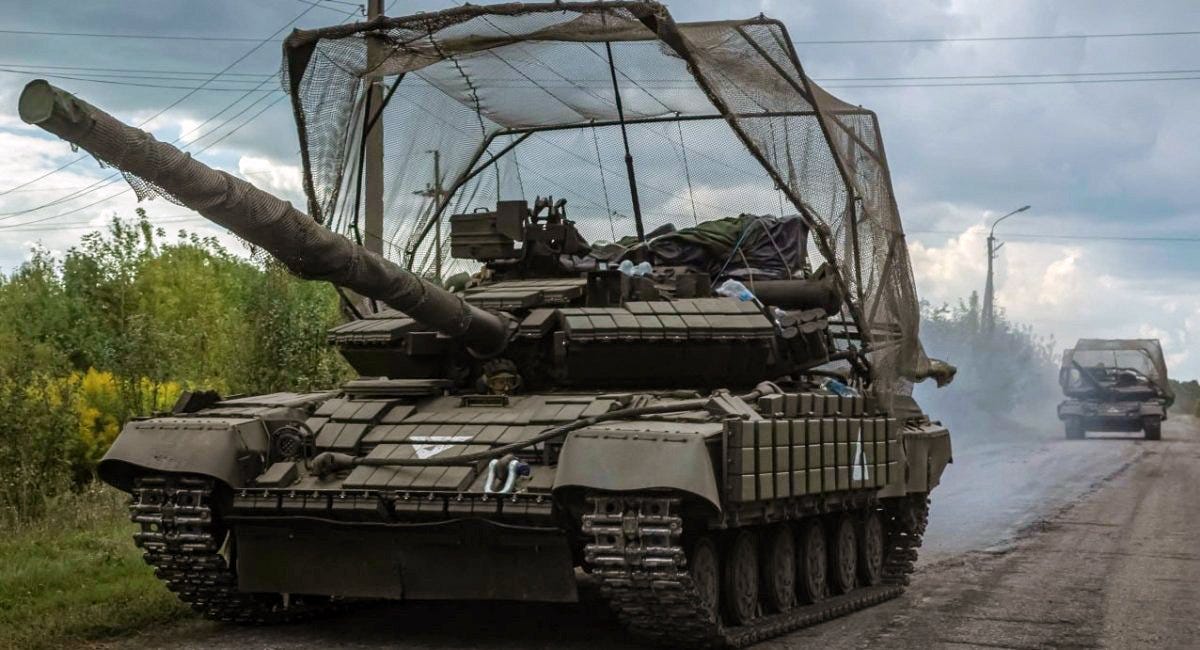
Ukrainian T-64BV tanks in Kursk oblast. (Notice anti-FPV drone nets)
One of the objectives of the recent Ukrainian invasion of Russia has been to present the West with a counternarrative to the Russian propaganda message that Russian victory is inevitable. As long as Putin is unable to expel Ukrainian forces from Russian soil, the counternarrative that Ukraine can still fight will continue to squelch Russian claims of victory. Meanwhile, the Ukrainians intend to soak up Russian pressure while trading space for time to train new brigades for gradual rotation into the line, giving the exhausted older brigades an opportunity to rest, regroup, and rearm. By denying Putin major prestige objectives, like Sloviansk and Kramatorsk, to trumpet as propaganda victories in Russian media, the Ukrainians hope to gradually increase the frustration of the Russian population with the war, while waiting for inflationary pressures to make their mark. The recent Ukrainian incursion onto Russian soil into Kursk oblast emphatically hammers home to the Russian populace that the war is not going as well as Putin’s propaganda portrays. How Putin uses the 150,000 available teenage conscripts in responding to the Kursk incursion will determine the extent of the Russian population’s anger with the Putin regime for the failure to repel Ukraine’s aggression. Regardless of whether Putin sends the fresh-faced recruits to fight or orders a new mobilization of the older workforce, the trust of Russians in the Putin regime’s ability to provide that most essential of governmental protections, security from outside invasion, likely has been damaged by Ukraine’s invasion.
Moreover, as the Russian wartime economy absorbs more and more government spending while experiencing decreased productivity due to a shrinking labor force that is gradually mobilized into the army, inflationary pressures continue to build. Although, the devaluation of the ruble brought on by diminishing oil revenues and sanctions helps the Kremlin to meet its budgetary requirements, the value of the earnings and savings of ordinary Russians grows less and less. The universal curse of dashed expectations threatens to confront the Russian people after the sugar high of the current fiscal spending wears off and turns into hyperinflation that cuts into their purchasing power, pensions, and social services. It is apparent that Putin is sensitive to the risks of hyperinflation because he raised income taxes on the rich on June 12, 2024 - an unpopular move with the heretofore docile upper classes. [27]
Thus, Putin is taking the short-term view that events will justify his strategy soon, before the Russian economy spirals out of control, while the Zelensky administration is playing the longer game, hoping that the Ukrainian army holds the line while frustration within Putin grows over a lack of progress in the war and the painful consequences of the wartime economy, allowing Ukraine to recapture the initiative. Just in case, the Ukrainian army seized a sizeable chunk of Russian territory to parlay as leverage in any cease-fire negotiations that are pushed upon it after the American election in November. Of course, Ukrainian calculations are largely dependent on the ability of the European military-industrial complex to supply the Ukrainian army with arms and ammunition.
The current trajectory of the Russo-Ukraine War places an inordinate responsibility on the shoulders of Ukrainian President Volodymyr Zelensky. He must juggle competing interests in an ethnically diverse and cantankerous democracy that pits Ukrainian speakers against Russian speakers, populists against oligarchs, and Nationalist volunteers against the professional officer corps. It is no secret that Zelensky is not as popular as he was during the first months of the war, let alone when he was elected by 75% of voters in 2019. Yet most Ukrainians realize that he is Ukraine’s best hope for coming out of this ordeal on the positive side of the ledger. Recent events in Kursk and Belgorod oblasts suggest he is a consummate grand strategist. Concurrently, he must sustain the diplomatic charm offensive to supply Ukraine with Western arms and funding. Throughout, assassination is an ever-present professional hazard. One marvels at his reserves of physical and psychological stamina.
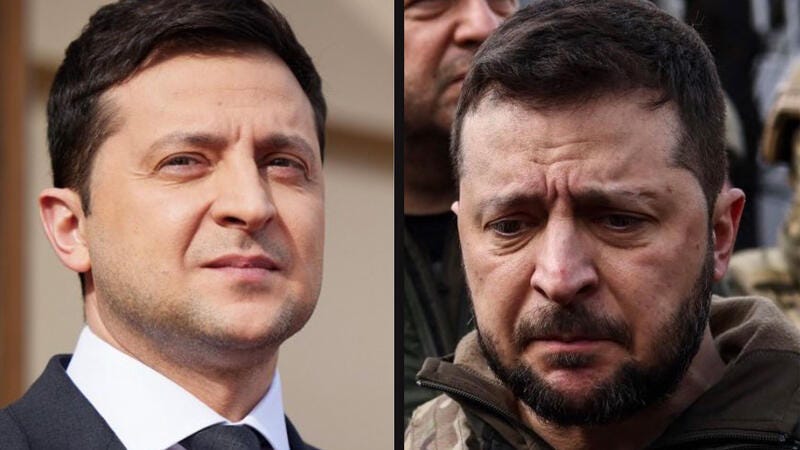
President Zelensky before and during the war
______________________________________________________________________
[1] Tatarigami_UA. X (formerly Twitter), August 12, 2024.
[2] Michael Koffman, Ryan Evans. Is Russia’s Window of Gains this Summer Narrowing? Russian Contingency. June 14, 2024. http://warontherocks.com
[3] Russia loses 1,270 more soldiers, 60 artillery systems and 26 tanks over past 24 hours. Ukrayinska Pravda, June 9, 2024.
[4] Stavros Atlamazogolou. Russia Lost 40,000 Soldiers in Ukraine War Last Month. National Interest, June 8, 2024.
[5] Oleksander Kovalenko. Vtraty rosiyskykh okupantiv v Ukraiini za lypen 2024 roku. Tverezyi Pohliad, August 1, 2024.
[6] Anders Puck Nielsen. Ukraine Can Face a Bigger Russian Army. YouTube.com, August 19, 2024.
[7] Jack Watling. Russia’s War Machine is Peaking. Next Year, It Runs Out of Steam. Ep. 26. Patreon, June 28, 2024.
[8] Kostantyn Mashovets. Visti z frontu. Tverezyi Pohliad, August 24, 2024.
[9] Kostantyn Mashovets. Chyselnist reservu okupantiv ne perevyshchuye 50-60,000 osib. Tverezyi Pohliad, June 8, 2024.
[10] Anders Puck Nielsen, supra. [11] Putin says Ukraine wants to destabilize Russia with Kursk offensive. Reuters, August 12, 2024.
[12] Putin spends big - and sends Russian economy soaring. How long can the party last. The Economist, August 11, 2024.
[13] Szu Ping Chan. Why Putin’s inflation battle is weakening Russia from within. The Telegraph. August 12, 2024.
[14] Andrei Kolesnikov. Putin’s New War Economy. Why Soviet-Style Military Spending – and State Intervention – Won’t Save Russia. Foreign Affairs, July 10, 2024.
[15] Tatarigami_UA. X (formerly Twitter), August 12, 2024.
[16] Putin: No need for mobilization as more than 460,000 volunteers have signed up. NHK News, June 8, 2024.
[17] Jeffrey Sonnenfeld, Michal Wyrebkowski, Anders Aslund, and Tymofiy Mylovanov. An economic catastrophe is lurking beneath Russia’s GDP growth as Putin ‘throws everything into the fireplace’. Fortune, August 25, 2024.
[18] Holovne zavdannia - ne daty RF povnistiu’ okupuvaty Donbas – Zelensky. Cenzor.net, August 27, 2024.
[19] Michael Koffman, Ryan Evans. Is Russia’s Window of Gains this Summer Narrowing? Russian Contingency. June 14, 2024. http://warontherocks.com
[20] Andrew E. Kramer, Josh Holder, Lauren Leatherby. Can Ukraine Find New Soldiers Without Decimating a Whole Generation? NYT, April 11, 2024.
[21] Elena Davlikanova, Kateryna Odarchenko. Ukraine’s new mobilization law leaves demobilization issue unresolved. Atlantic Council, May 2, 2024.
[22] Vladyslava Kovalenko. First batches of shells arrive in Ukraine under Czech initiative. RBC, June 16, 2024.
[23] Sinead Baker. Europe Leading, Being Bolder and Less Timid Than US in Helping Ukraine. Business Insider, July 19, 2024.
[24] James Waterhouse. War and popularity keep Zelensky in power despite term expiring. BBC, May 24, 2024.
[25] YurkoMax. Native Ukrainian Characteristics in War. 4. Populism and Volunteerism in the Russo-Ukrainian War. http://yurkomax.substack.com, March 24, 2023.
[26] Ukraine’s Zelensky replaces commander of joint forces. Reuters, June 24, 2024.
[27] Russian lawmakers approve an increase in income taxes on the rich. AP World News, July 10, 2024.
No posts
Comments
Nothing yet. Say the first thing.
Sign in to join the conversation.