
There are times when I’m reading a book and I wonder, “Where in the world is this going?” Now, sometimes plots can get lost, and this weakens the overall effect of a story, but sometimes we get pulled so deeply into a story, and the author is so good at setting just enough space for us to stand on, that we as readers feel drawn along without knowing what direction we’re going. We feel a sense of gravity without knowing where “down” will actually lead us.
I remember feeling this way when watching the movie Contact in the theaters. Towards the end of the film, the main character, Ellie Arroway, is boarding a space ship, and I had absolutely no idea what would happen. Would she make contact with the aliens? Would it all be a hoax? Would the movie just stop then and there? The filmmakers had set the story so well that I was at the edge of my seat. I had the feeling that I was on the verge of something desperately important but I couldn’t see past that moment. It’s one of the reasons that I still love Contact so much (though, of course, the book by the awesome Carl Sagan is a lot better!).
This can happen in Japanese literature, film, manga and anime, and video games. Like any other culture, Japanese art can hack a little close to the genre bone or it can surprise us. In a way, Japanese art is more traditional than Western art, partially because it didn’t go through a period of art criticism called early-20th century modernism. Here, we find artists like Ezra Pound saying things like, “Make it new.” If art doesn’t do something new and surprising, then it isn’t interesting in the West. Think about Star Wars Episode VII; there are a lot of problems with the movie, but one frequent complaint is that it recycles too much from Episode IV, A New Hope. Star Wars follows mythic structures, and recycling older material is what myths and legends do. Complaining that Star Wars has old mentor figures, plucky heroes who don’t know their lineage, and mystical encounters with strange, small, wrinkled creatures is like complaining that there are too many spaceships and lightsabers in a space opera like Star Wars. But this is exactly what Star Wars fans complained Episode VII did, because we in the West want things to be new.
Again, Japan didn’t go through this “make it new” period. Japanese culture struggles with with the dual influences of the past and the present, or traditional Japanese versus Western influences, but these influences are in tension with one another instead of one (the modern, in the West) winning out against the other (the past). Japanese media can be a lot like classical music and opera in the West, where musicians try to perform set pieces with their trained skill. It doesn’t matter that many people have sung Don Giovanni before; it’s the performance of the music, hitting all the notes, and giving it life again that’s important. Japanese media works the same way, so that where we in the West see a series of stereotypical tropes that seem like repeats of what has come before, many Japanese will see artists trying to achieve virtuoso performances of traditional material. In other words, “new” isn’t the only way to judge the success of something in Japanese culture.
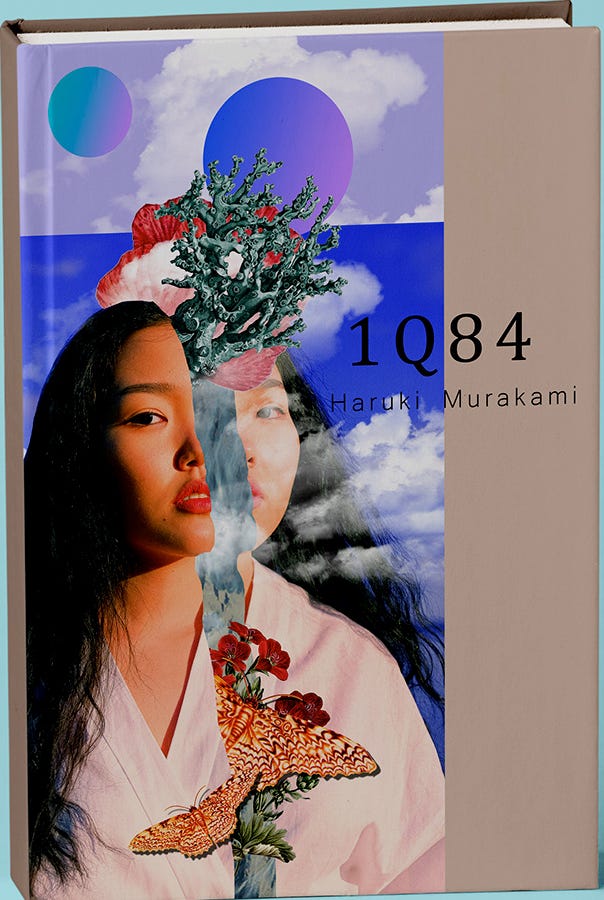
All this said, the Japanese aren’t all trying to repeat their traditions ad nauseam. Like Contact, Japanese literature and art can surprise us and lead us into an artistic, pathless wilderness where we only have the artist as our guide. I get this sense of being lost with only the artist as my guide especially when reading Murakami Haruki. His plots are wild, sometimes even too wild, but there’s always a sense that there is some meaning, somewhere, perhaps just out of reach, perhaps forever outside of our reach. One of the reasons Murakami is so fun to read is that you rarely know where you’re going or even where you are. You can meet anyone, you might meet no one, the path you’re on may peter out and turn into a figurative thicket of thorns, or the whole thing might come together and make sense in the world of the story (if not in our world outside the story). In his children’s stories (yes, Murakami wrote children’s stories) about Watanabe Noboru, the reader is thrown into the a confusing setting where a man, who seems to have no reason to be in the narrator’s house, is asking an old pencil sharpener or a kotatsu that is actually (or maybe not?) a time machine. We never learn whether Watanabe Noboru is the only person who collects old pencil sharpeners or if the kotatsu is actually a time machine, but the joy in the stories isn’t figuring them out but in following the narrator as he plays along and sees where this strange story goes. The narrator’s humility before the strange and mysterious allows us to be humble as readers as we walk into the unknown, giving us a place to stand as we are surrounded by the surreal and, in this case, the hilarious.
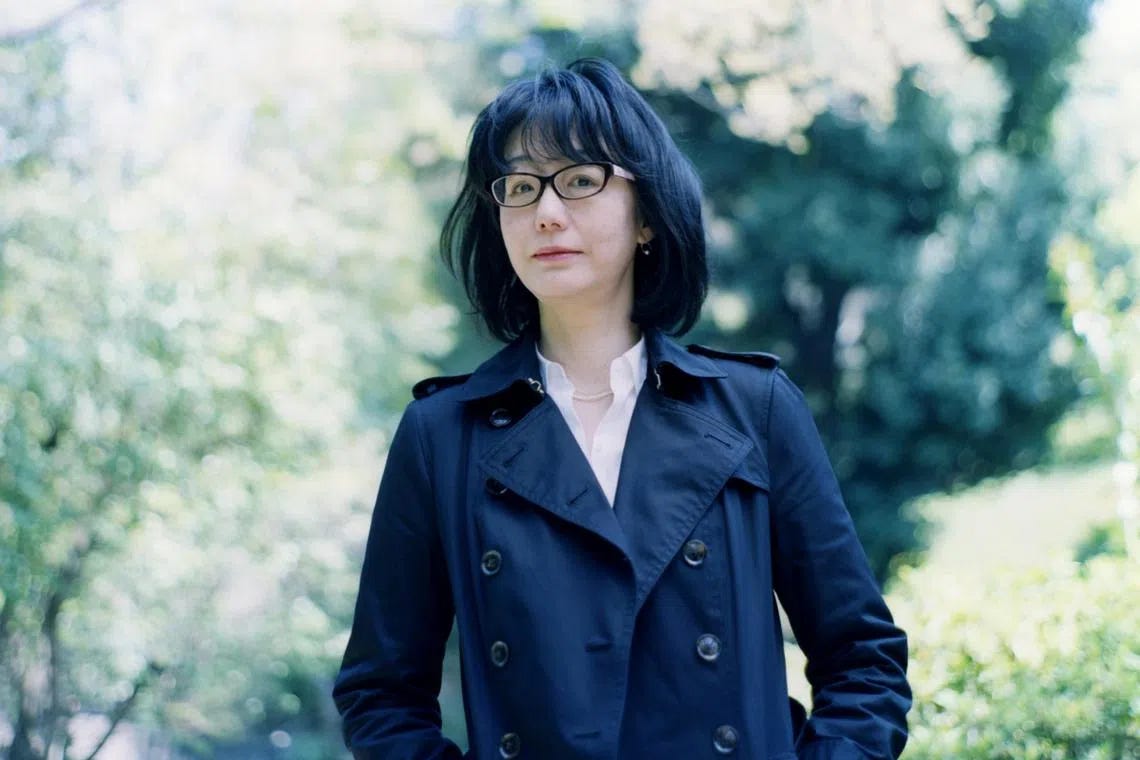
Other Japanese authors do this. Kawakami Hiromi’s worlds are a bit closer to reality than Murakami’s, though one needs to follow her into some very strange, and often very dangerous places, without a map or knowledge of where you’re going (or if you’ll ever get back). Her novel Manazuru is a fantastic (in both senses) journey into a woman’s inner world of grief and longing, and that grief and that longing become real in a way that threatens not only her relationship with her daughter but, it seems, her “self.” I put self in quotes here, because it’s not fully clear what is really at stake. Is it her sense of who she is? Is it her sanity? Could she be lost in the worlds she wanders in, never to return to the “real” world? Or is the world where she journeys somehow more “real” than the one in which we all inhabit? One of the fun things about reading Kawakami is being okay with going where she leads, even if it’s uncomfortable or eerie. Again, having humility is the important part of reading Kawakami.
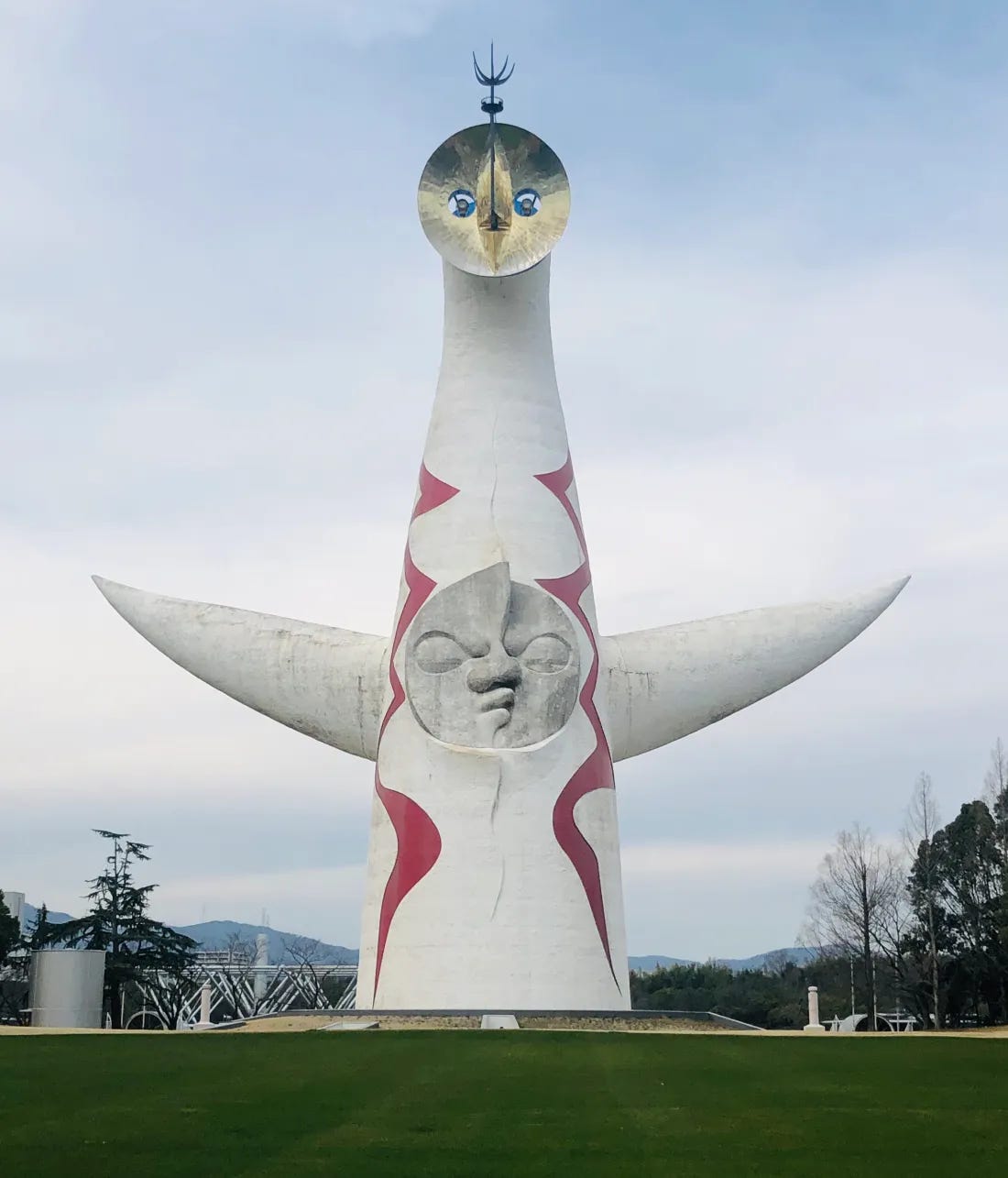
Morimi Tomihiko is also good at this, and although his stories end up being very similar to one another, they’re also pretty funny, and that humor goes a long way. When I was reading Tower of the Sun, I didn’t know that the tower was actually a real thing in Osaka, and so the descriptions of this wild monstrosity seemed to fit in with all the other weird things going on in the story. When I learned that the tower actually exists, I literally laughed out loud. It seemed to fit the world of the story, which is wacky and strange, more than it fit in our world.
Fantasy literature has an interesting tension. On the one hand, fantasy aims to describe worlds beyond our own. We go to fantasy to leave our waking world in the hopes of taking a break from that world, to exercise our own imaginations, or to look more deeply into reality than an otherwise realistic story can bring us. This is the difference between “truth” and “reality”; no, unicorns don’t exist, nor do Tolkienian elves, and I don’t personally believe in little grey aliens that crashed in Roswell, New Mexico, but reading about these creatures, even though they are not “real” helps me understand some things that are important and essential to our world. Whether unicorns are magical creatures that shoot rainbows or docile creatures that can only be lured in by maidens in mystical forests or they’re monstrous creatures that attack knights in heavy armor, we learn about the human penchant for violence, our desire for purity of spirit, and what it means to be human when we read about them. Tolkienian elves, similarly, are more natural than humans. They are are tied deeply to the fate of the world, and so their grief and longing for safety and power are somewhat “thicker” than ours, who (in Tolkien’s world) are destined for something beyond the confines of the world. In fantasy, we learn about ourselves, who we are, what we are, how we work, and the “truth” of what it means to be human.
On the other hand, fantasy is a genre with reader expectations. Murakami is hard to categorize because he doesn’t write stories about alternate intelligent species like elves and dwarves, his writing style is more conversational than the high, Tolkienian style that mimics myths, legends, and Biblical literature, and the lore in his stories is much more hidden than in other fantasy, where the discovery of lore is part of the joy of reading. Writing to reader expectations is one of the ways to make a book popular, and one of the reasons that Murakami isn’t more popular in the West is that he doesn’t care about reader expectations. He does his own thing. So do Kawakami and Morimi. Again, that’s part of what makes them fun, but they’re outliers because of it.

What, however, is Japanese in all this? How are Murakami, Kawakami, and Morimi Japanese in a way that a Westerner writing against the expectations of the reader aren’t? I think it’s a question of wisdom. Western authors need to make things new and thrive on confusion, where Japanese fantasy authors may be confusing and unsettling to read, but there is a sense of wisdom and truth to their stories that we discern vaguely and need to think about, deeply, in order to achieve. What wisdom is there in Murakami? For me, it’s awe and humility before the unknown. Also, I’m a Christian, so the spiritual world is “safe” because it’s ultimately controlled by a loving deity. Murakami and Kawakami’s worlds aren’t safe in the same way. People can get lost in them. And being lost doesn’t “destroy” or “damn” the soul as it might for a Christian or Western author; the space beyond reality is one in which someone can wander for a long time, perhaps even for eternity, and the grief in thinking about that teaches me something about the preciousness of life, society, and community. There is something to learn, however, in skating so close to these worlds of endless wandering, and that wisdom is something that can only be gained when threatened with the possibility of being forever lost. Again, for a Christian, this would be like there being a place not just between Heaven and Hell but beyond that dichotomy (this is one of the reasons why reading medieval literature is so fun; that dichotomy doesn’t always exist).
What is this wisdom? It’s hard to discern, and one of the reasons I started this substack is to think about and wonder about what that wisdom is. All I can say is that, again, it makes me a more humble person to consider worlds beyond ours and eternity that is not necessarily all good or all bad. Breaking dichotomies is one of the gifts of Japanese literature and culture as a whole, and it’s certainly one of the joys of reading Japanese fantasy.
No posts
Comments
Nothing yet. Say the first thing.
Sign in to join the conversation.