
(…continued from Part 4…)
Diplomacy
One of the best things Ukraine can do right now is to escalate their mid- and long-range attacks. In order to do that, they need more drones. In April, Ukraine and Norway agreed to jointly produce several thousand middle-strike drones and Ukraine should be receiving them by now. A month before he was fired, Fedorov said Ukraine and the Netherlands agreed to a joint production of mid- and long-range drones that will be manufactured in the Netherlands and transferred to Ukraine. €250 million will be allocated to that effort. Another €250 will be used to buy PAC-3 missiles through the PURL program, which allows NATO partners to buy US products since Trump opposes aid without compensation. The timeline for delivery of the missiles was not reported.
Mongolia imports all of their fuel, 95% from Russia at a discount and 5% from China. One-third of their imports is fuel. After assessing the situation in February, they stockpiled as much fuel as their storage would allow and started to buy from other sources, which is how they’ve survived so far. Current imports are not sufficient but they haven’t stopped. They started construction on their own refinery in 2018, and when it is completed in 2028, domestic oil production will surpass imports. Mongolia has 1.4 million cars but less than 2,000 are electric despite neighboring China.
The US used to head the Security Assistance Group that assessed Ukraine’s military equipment and training needs and found solutions, if any were available. They are now pulling back from that effort and it will be led by another NATO nation.
Turkey, Saudi Arabia and Pakistan signed a mutual defense pact that was not aimed at any specific country. Pakistan has provided training and technical assistance to Saudi forces for decades, while Turkey and Pakistan have exchanged warships and training aircraft. Saudi Arabia is a major purchaser of drones from Turkey. Pakistan has deployed about 8,000 troops, fighter jets, drones and an air-defence system to the kingdom and opened negotiations with Kuwait to provide security in exchange for energy cooperation and investment. Israel, India and Iran did not comment.
Ukraine plans to buy from Turkey 70 ATACMS ballistic missiles and 12 M270 MLRS, which is the tracked version of HIMARS that has twice the launch capacity. They would also get 2,524 rockets for the MLRS/HIMARS that have DPICM cluster munitions. The amount of the sale is unknown but the original price was $284 million. Turkey will use the money to buy more modern systems. The US said they would approve the transfer. From Bulgaria, Ukraine would receive 47,000 203 mm artillery shells with cluster munitions for the 2S7 self-propelled artillery.
A Turkish analyst said that if Turkey is providing Ukraine with offensive weapons then a lot has changed. Turkey’s deputy foreign minister said, “This time, we truly feel closer to the goal. For the first time in 10-15 years, we have a U.S. administration we trust.”
When Zelensky was in Washington, Ukrainian front-line drone commanders gave a 30 presentation to Republican senators. One described how his brigade of 2,000 personnel destroyed $15 billion worth of Russian equipment. Another said his unit accounted for a small portion of the defense budget but was responsible for 30% of Russian losses through autonomous systems, highly trained operators and relentless adaptation. Ukraine’s greatest comparative advantage was not manufacturing but human capital. Western militaries remain focused on buying new equipment when they should be focusing on redesigning how they fight. Technology can change quickly and even the drone will be countered at some point.

The US thinks Russia will conduct a limited incursion into NATO within weeks in the form of hybrid operations, cyberattacks and other deniable measures short of a conventional military campaign. The intent is to fracture the NATO alliance.
A Russian drone exploded in a Bulgarian sunflower field near their border with Romania and a strategic gas pipeline.
A drone with PETN and Semtex explosives was found on a runway in Germany’s Leipzig/Halle airport, not far from four Ukrainian cargo planes. It was defused without injury or damage. A DHL cargo plane aborted its landing when the runway was closed and collided with a second drone, which caused minor damage. The airport has a fairly small passenger terminal but is a major logistics hub that also supplies Ukraine. In 2024, a package with an incendiary device detonated just before it was loaded onto a DHL plane at that airport.
The Trump administration has limited capabilities to plan and analyze events. Realizing their limitations, the US Central Command is asking military analysts if they have any “new creative and unconventional ways to pressure and punish Iran.” The request for ideas also went out to military officers and enlisted men. A CENTCOM spokesman said, “US Central Command has a long history of thinking and working in innovative ways. Admiral Cooper, in particular, reaches out to members of our great team, regardless of rank, to achieve the highest levels of operational performance possible.”
Crowdsourcing requests for input on policy decisions were notably absent prior to the attack on Iran.
Chairman of the Joint Chiefs of Staff Caine acknowledged that bombing alone is unlikely to accomplish all Trump’s previously stated objectives for the war. “Air power has its limits,” Caine told lawmakers last month.
Trump lowered his expectations and is now hoping to end the war with a symbolic win and possibly using strikes as a “fireworks” display, hitting the same or similar sites that he attacked a year ago that will give him an excuse to declare a symbolic victory. A source said, “At the end of the day, POTUS will want a deal, so he’ll continually look for ways to get tough and get out of this. You need creative minds at times -- especially if you’re running out of conventional options.”
Equipment
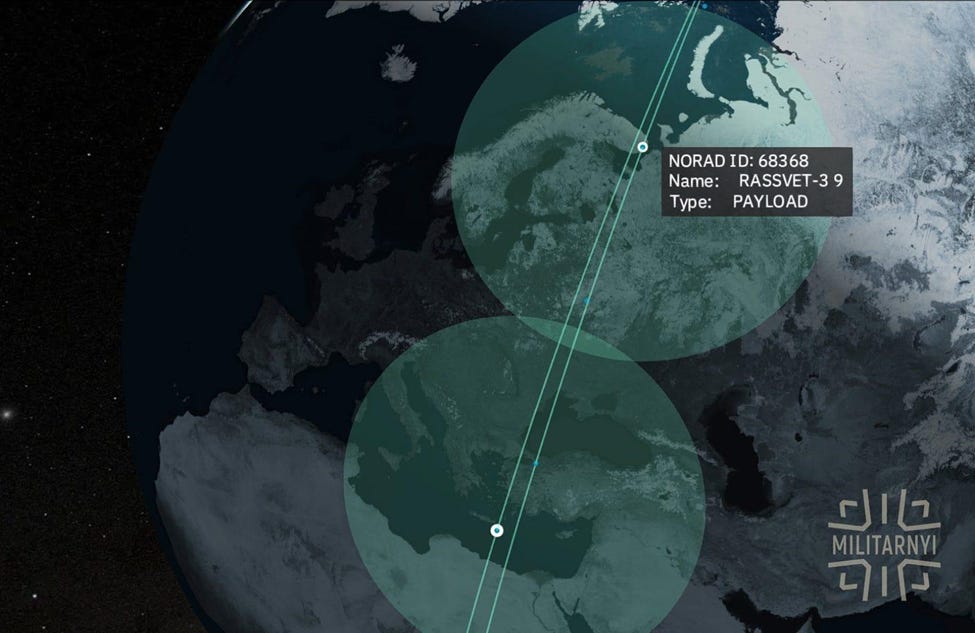
After Russia lost access to Starlink with devastating consequences, they rushed to establish their own Rassvet satellite communications network. 16 satellites were launched in a rocket from Plesetsk site 200 km south of Arkhangelsk. 12 are at the right altitude to function, three are climbing and one malfunctioned. This small constellation already provides communication over Ukraine twice a day for 60-90 minutes, which means reconnaissance and strike drones can potentially be remotely piloted through this system at those times. With enough satellites, the Belarusian relay stations would no longer be needed.
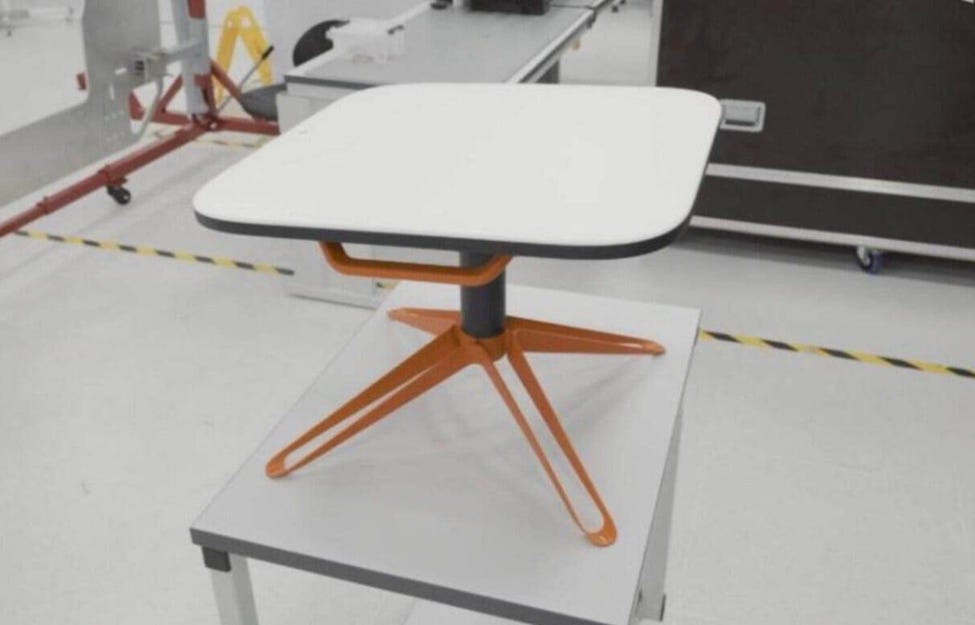
A second rocket with 16 satellites was launched from the same location on 19 July. For nine days prior to that, Russia issued a series of aviation and maritime notices about launches and expected areas where the rocket stages would land in the sea to obscure the launch date and trajectory of the rocket. Ukrainian drones attacks on Plesetsk began in December 2025 after the launch of a radar image satellite. Ukraine attempted an attack in March. Russia had plans to put 250 satellites in orbit at a cost of $1.3 billion by 2027, 730 in orbit by 2030, and 900 in orbit by 2035, but to do so they would need to launch a rocket every month and they have been launching one rocket every four months. Even so, they will have full round-the-clock coverage of Ukraine by mid-summer 2027 at that rate and Ukraine would have to counter them with jamming or other measures.
Triada Robotics was co-founded in 2024 by a Ukrainian veteran who worked in investment banking, project management and IT before 2022. Their business model was inspired by the US company Andruil. The company of 20 people develop their own long-range drones and sell them to manufacturers to build. They are currently developing two drones, the Bravo and Kilo. The intention is to make them inexpensive to build but the estimated cost was not reported. The Kilo would have a 500 km range, a combustion engine and would operate without navigation satellites and have autonomous target acquisition.
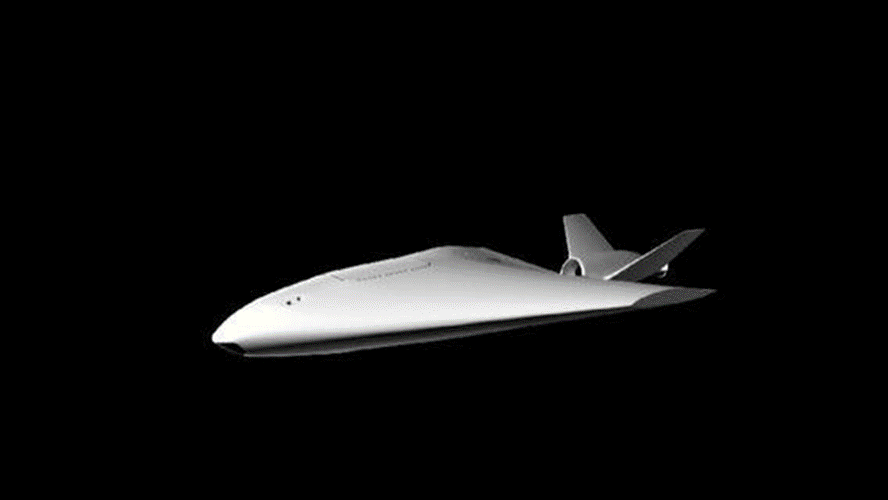
The Bravo drone has a self-learning model that plans routes based on the experiences of the previous drones. The drone has been built and was being prepared for testing at the end of June. The company will build 100 drones prior to serial production.
As part of the Bravo development, a hardware-software complex called Topaz was created to provide real-time drone tracking and monitoring, intelligent route planning and management, multi-channel communication, and target acquisition and tracking, which suggests moving targets can be hit.
The company also developed the Argon mission control center. The software manages drone swarms, receives real-time onboard analytics and supports target selection. The three software modes are manual with AI recommendations, automatic with minimal human intervention, and swarm mode.
They also developed the Onyx sensor that can be used on any drone to measure pressure, temperature, acceleration, and fuel consumption, and collects navigation and camera data.
The company wants to proceed in a measured way by developing their products, demonstrate their effectiveness through combat missions and then agree to joint production. The company is seeing interest in joint ventures with other manufacturers and is interested in working with the top 20 global partners, such as Lockheed Martin or Northrop Grumman. The first need to determine if their technology falls within export conditions.
The Ukrainian company December1 produces the Damba jamming system that disrupts the electronic frequencies used by radio-controlled drones. It has a 50 km range and is paired with third party sensors and needs an internet connection for 360 degree coverage. 6,000 Damba units have been sent to the front since August 2024 at a discounted price of $10,000. The software is free. They made 400 systems a month in July 2025, and now make 1,000 a month and they could rise to 2,000 a month.
Fiber optic drones are immune to jamming but using jammers forces Russia to use the more expensive fiber optic drones. Russia launches a mid-strike Molniya drone every minute, plus there are reconnaissance drones and long range strike drones. Military units, the Ukrainian government and private businesses are buying the jammer.
Ukraine has a new jammer that can jam FPV drones in two frequency bands, 300-2,500 megahertz and 2,000-6,000 megahertz, with a combined output of 200 watts.
Russian Gerber drones were seen towing an FPV behind it. 4-5 Russian drones do it every day and a reason hasn’t been stated.
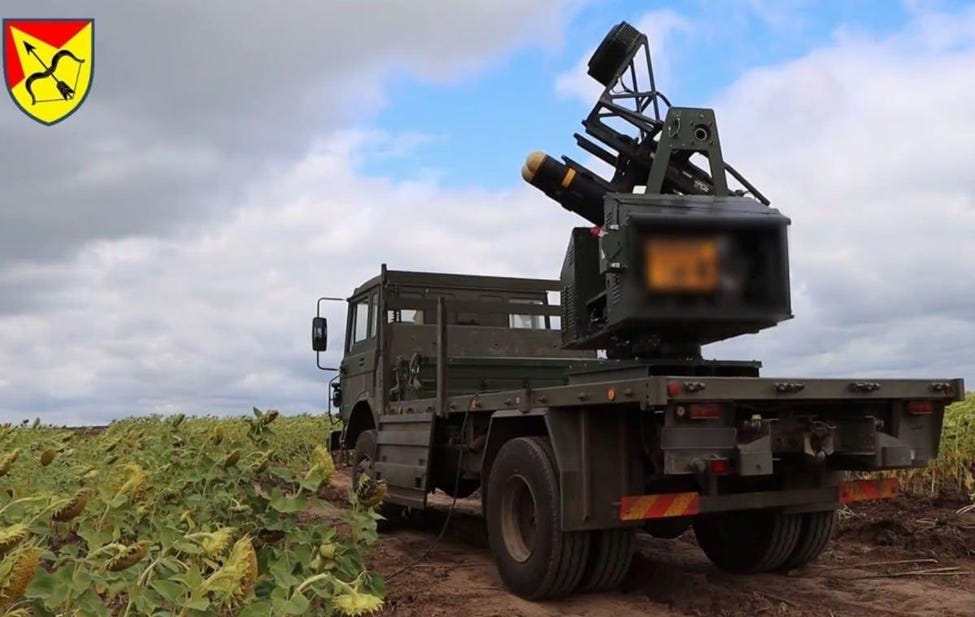
The US and Ukraine are modernizing old S-300 missiles and plan to create new ones with improved capabilities by the end of 2026. 1-200 of these missiles can be created each year. It was not reported if the new capabilities included the ability to engage ballistic missiles.
Flamingos were originally built with old engines that had little operating life left. The limited supplies would eventually run out and it seems as if a British engine is now being installed on the missiles.
No posts
Comments
Nothing yet. Say the first thing.
Sign in to join the conversation.