
By April 1944, the British Isles became a high-security prison.
The operation was codenamed Hornpipe. It sounds horny. It was. To protect the operational secrets of Overlord, the British government slammed down a ten-mile-deep coastal ban zone from the Wash to Land’s End, trapping over one million civilians behind internal borders. Obviously, some desperate men slipped past checkpoints to see their girlfriends, but overall, the lockdown held.
The state apparatus went into overdrive. All foreign diplomatic travel? Suspended. Official mail from foreign embassies? Ruthlessly intercepted and censored. Under the iron fist of the Allied Expeditionary Force, over three million military personnel funnelled into heavily armed marshalling camps across southern England.
Barbed wire wrapped the perimeters. Armed sentries walked the lines. The second a soldier received his final tactical briefing, he was dead to the world—physically barred from leaving. Inside these Camps, 54,000,000 field rations were issued every seven days. WTF.
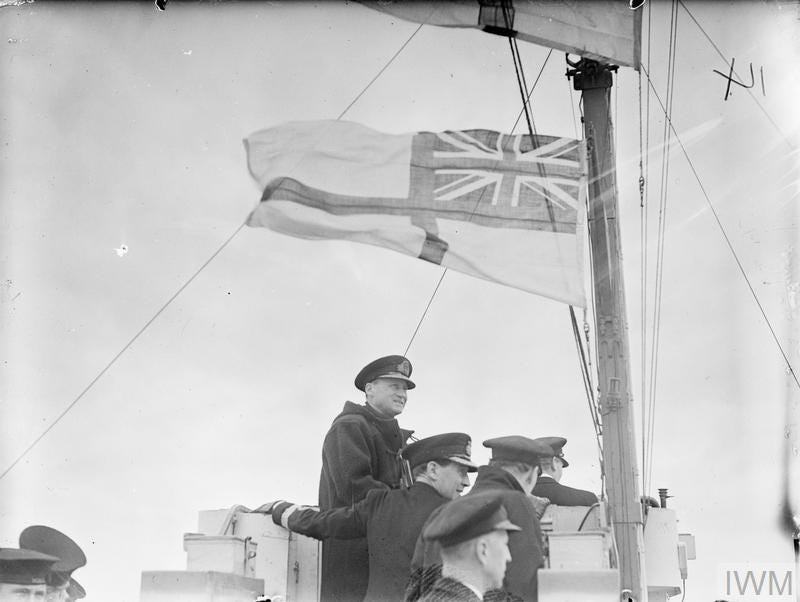
Operation Neptune—the naval component of Overlord—was designed to orchestrate the movement of the largest amphibious fleet in human history across the English Channel. The naval commanders were in charge of their considerable subjects; it was they who held the fate of the world on their callused fingers.
Their objective: transport the initial assault waves through heavily mined waters without catastrophic collisions or German Naval attacks.
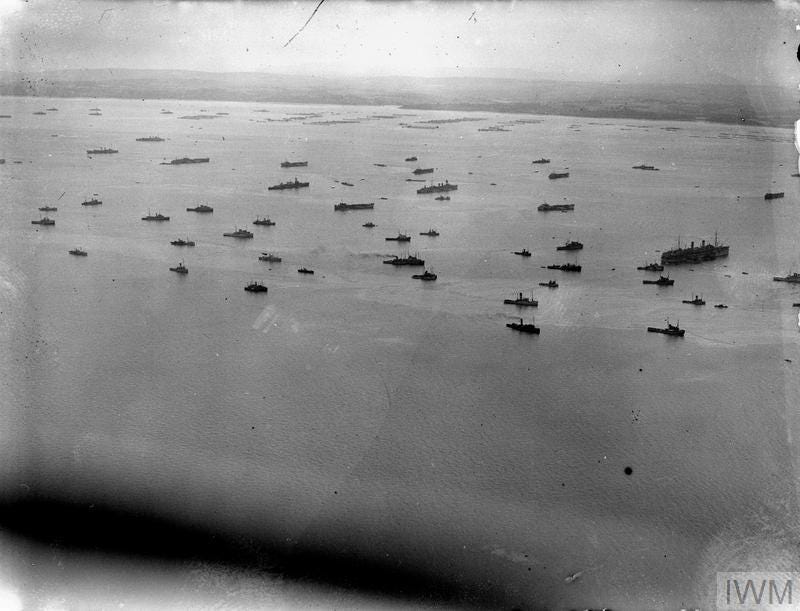
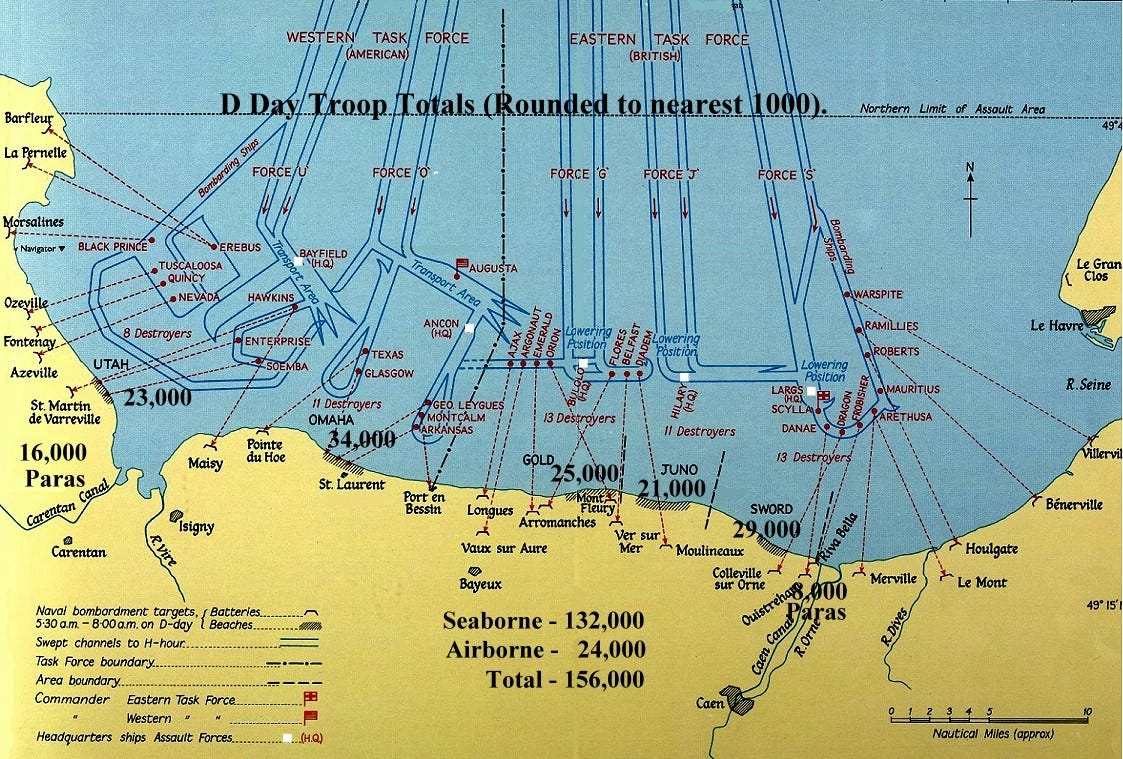
The movement was organised into a precise geographical bottleneck:
The Ports: Thousands of vessels departed from ports scattered across the UK, from Belfast and the River Clyde down to Plymouth and Newhaven.
The Assembly Area: All ships converged on a circular staging area 13 miles southeast of the Isle of Wight. Codenamed Area Z, planners universally called it “Piccadilly Circus.”
The Swept Channels: From Piccadilly Circus, a fleet of 287 minesweepers cleared ten distinct underwater channels—two for each landing sector. Lighted buoys marked the lanes, guiding the invasion fleet south through the German barrier minefield toward the French coast.
Clear the lanes too early, and the Germans spot the gaps and know you’re coming. Clear them too late, and the entire landing schedule falls apart. It was a staggering operational tightrope. One that was walked successfully.
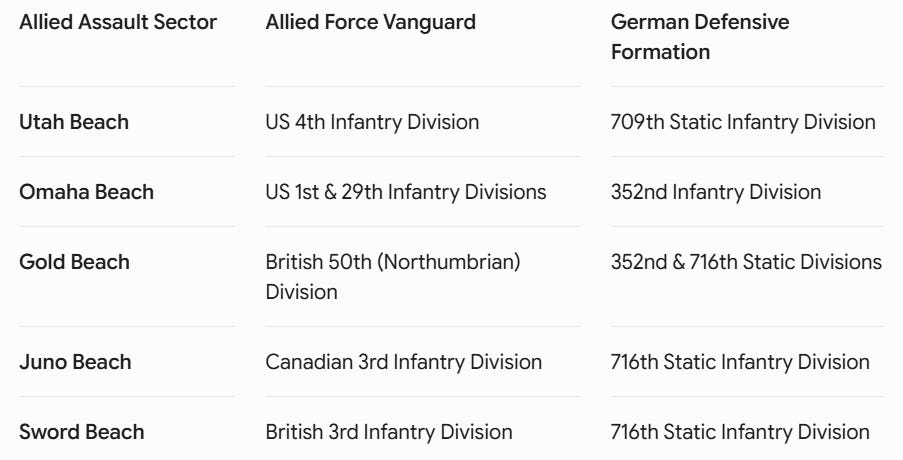
The tactical plan divided the 65-mile Normandy beachfront into five assault sectors. The Allied assault formations pitted themselves directly against the defensive units of General Erich Marcks’s German LXXXIV Corps, part of General Friedrich Dollmann’s German 7th Army under Rommel.
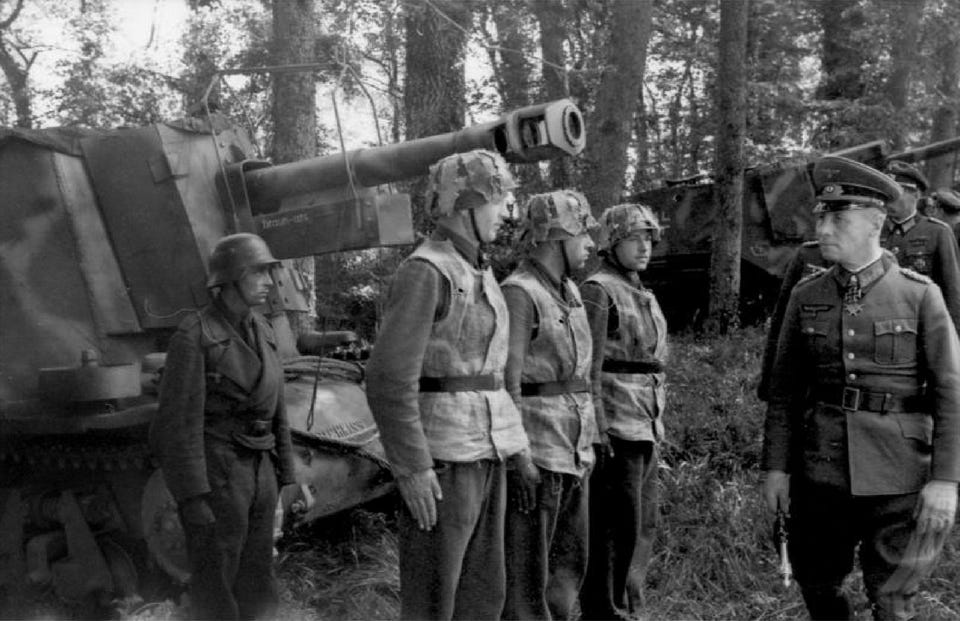
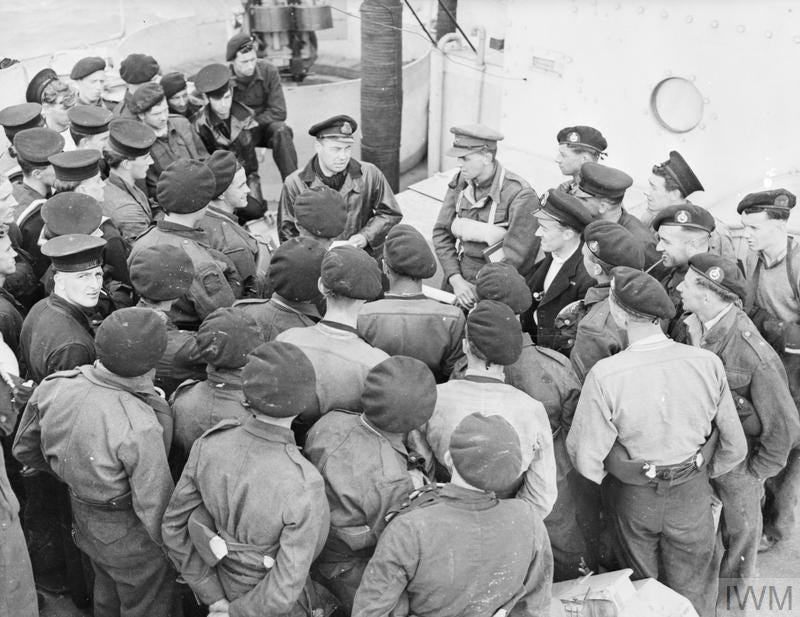
To truly understand how these macro matchups looked when steel hit bone, look at a single, legendary unit: The Nottinghamshire Sherwood Rangers Yeomanry (SRY). They would end the war with more battle honours than any other single British unit. On the eve of D-Day, they were a beautifully chaotic jumble of British life—butchers, bakers, bankers, gamekeepers, and country folk. Ordinary men with no desire to be professional soldiers. But they stepped up.
This was a reserve unit activated for the duration. Most members were drafted from the same localities—weekend soldiers who first deployed in 1940 as a horse-mounted cavalry unit in Palestine, drawing sabres against Arab insurrectionists in one of the last true cavalry actions in British history. Then came a humiliating horse stampede. The top brass stripped them of their steeds—horses had no place in modern war. To their deep humiliation, they were retrained as artillery gunners. The regiment split; some dug trenches in Tobruk, while the rest got battered in Crete.
By late 1941, the regiment reunited in North Africa. The tanks finally arrived. Wahheyy!
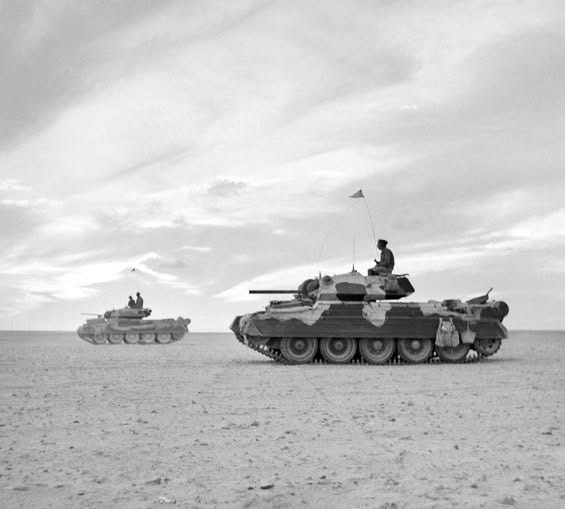
The SRY mechanised on the fly. Equipped with M4 Shermans and British Crusader tanks, they learned the brutal realities of armoured warfare the hard way. At Alam Halfa in 1942, B Squadron was slaughtered in a hopelessly romantic, Balaclava-style cavalry charge—losing 11 out of 16 tanks in a single afternoon—poor show.
But they learned. Unlike many regular British regiments, they had no long, rigid history to conform to, or no out-of-date pre-war ideas to clog their thinking. They adapted. In war, to adapt is to survive.
By the time they shipped back to England to spearhead D-Day as part of the 8th Armoured Brigade supporting the 50th (Northumbrian) Infantry Division, they had transformed into lethal, hyper-adaptive masters of all-arms coordination. They knew the ultimate truth: be professional or die.
Before June 1944, they were packed into B9 Camp near Fawley, wrapped in a barbed-wire blanket, sweating out the clock. Let’s meet the chaps:
Major Stanley Christopherson: Commander of A Squadron. He kept a single nine of hearts playing card in his wallet for good luck. As he watched the invasion fleet silently glide down Southampton Water, he wrote in his journal, wondering if the medieval invaders of bygone days felt the same “rats in the stomach” he got before going out to bat in cricket or riding in a steeplechase.
Lieutenant Eric “Bill” Walton: A 31-year-old printer’s son who was commissioned in the field due to his natural soldiering ability. A gentle, empathetic soul. In five years of marriage to his wife, Marian, they had spent only four months together. Stuck behind the wire, remembering better times and watching the leaves sway in the rain, he lovingly wrote to her: “I have a sudden pang of longing to be walking there with you.”
Lieutenant John Semkin: A 23-year-old troop commander, but a veteran who had already seen the darkest side of the war. At Alamein, his best mate and tent-partner of seven months, Ronnie Hill, briefly left his tank to climb onto Semkin’s deck for a quick chat. A split second later, a German shell screamed in. Ronnie was obliterated right before Semkin’s eyes. Semkin didn’t break; he wiped himself off and kept fighting.
The Schoolboy Soulmates: Lieutenants Stuart Hills and Dennis Elmore. Best chums from public school who opened the batting together at Lord’s Cricket Ground in the summer of 1942. Now they were together again. Hills’ parents were currently interned in a brutal Japanese prison camp in Hong Kong; he could only assume the worst. As a colonial boarding school boy, he rarely saw his parents, spending holidays with Dennis’s family instead.
Trooper Arthur Reddish: A 22-year-old kid from Lancashire, already badly burned in a previous tank battle that killed two of his crewmates. Before reversing his Sherman tank onto the steel deck of his Landing Craft Tank (LCT), he bent down, picked up a single pebble from the British beach, and stuffed it into his pocket—carrying a small piece of England into the fire.
Reminder, these are people like you and me.
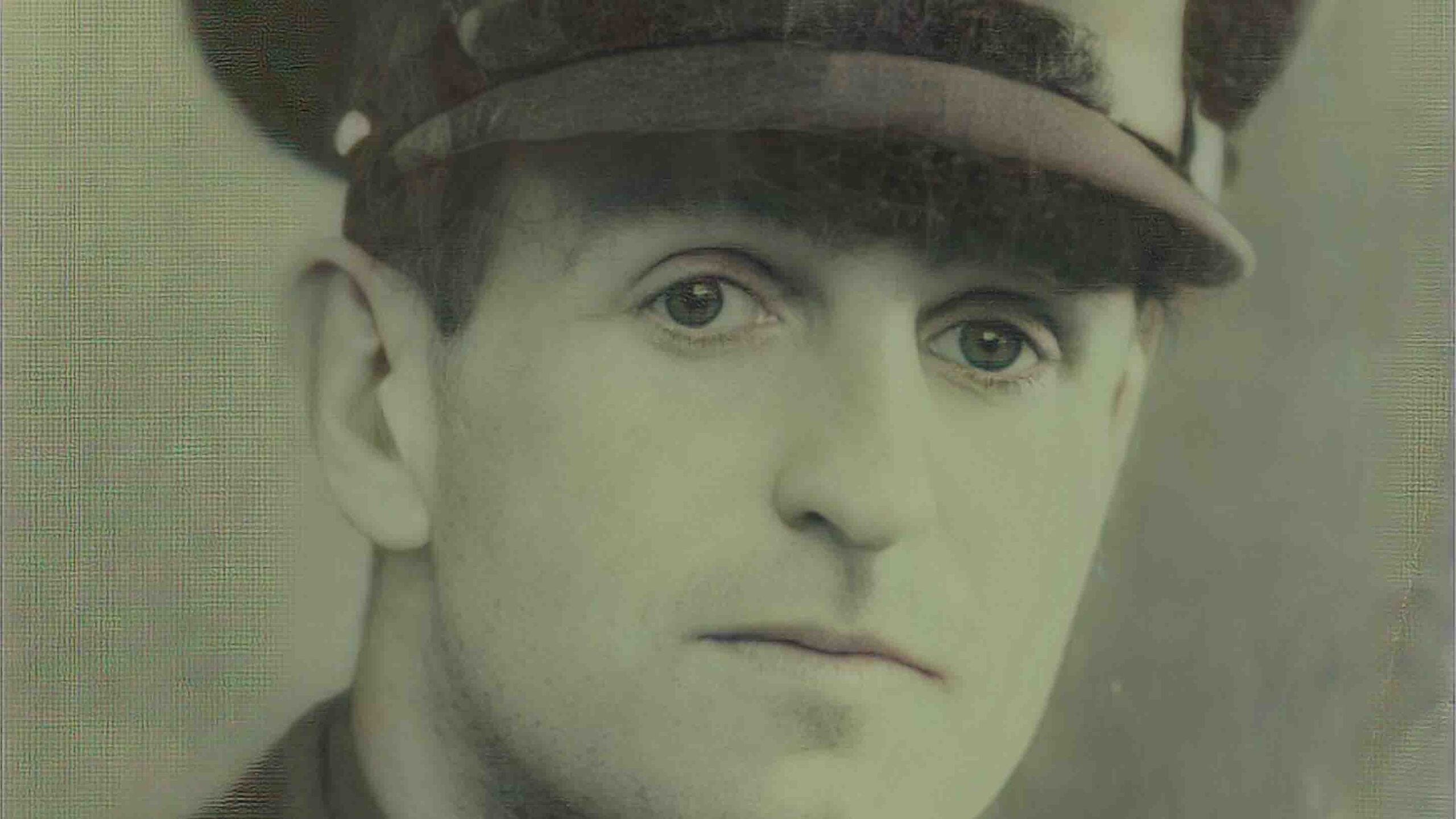
The fire was exactly where they were heading. B and C Squadrons of the SRY were assigned to the first wave in DD (Duplex Drive) Tanks. This was one of the war’s craziest, best innovations derived from a stark problem: how do you provide direct fire support the second you land?
The answer: wrap a 30-ton Sherman tank in a waterproof canvas skirt that extends upward to displace water, propelled through the open ocean by two small screws. Theoretically sound. But try telling that to the crews, who faced the terrifying reality of being swamped by waves and dragged down to a watery grave.
A Squadron, under Christopherson, was held in reserve—set to land an hour later directly on the beach. We will follow these exact men as they hit Gold Beach. But first, the entire operation slammed into a wall of weather.
By June 3, 1944, a severe low-pressure system over the Atlantic brought the worst summer weather seen in the English Channel in twenty years. Group Captain James Stagg, Chief Meteorological Officer for SHAEF, reported that wind speeds up to 30 knots and low cloud cover would render both naval gunfire support and airborne drops impossible.
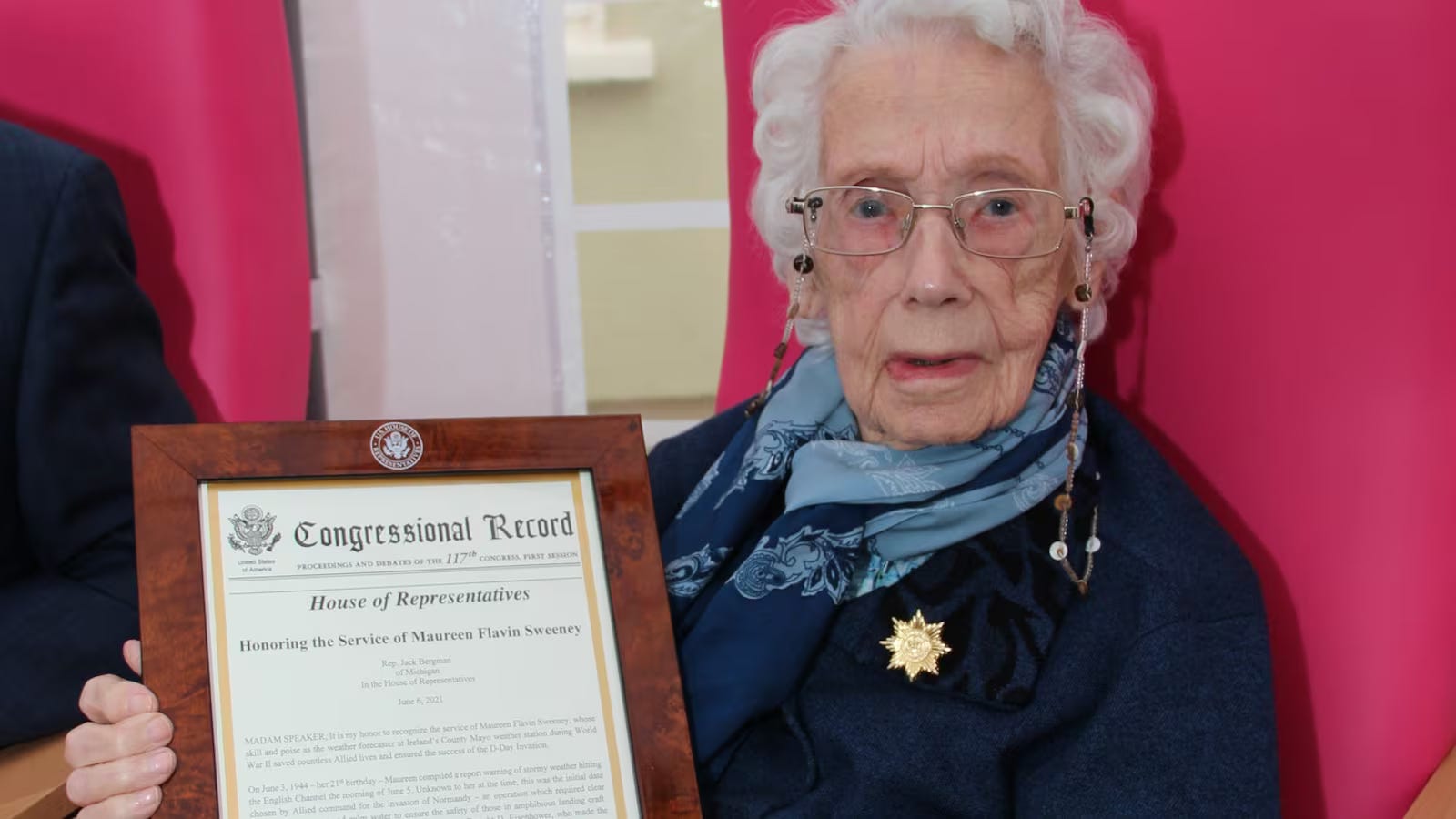
The fate of the invasion hung on an early warning from a young Irish girl named Maureen Flavin at the remote Blacksod weather station in western Ireland. Her barometric readings provided the first definitive proof of the incoming storm. Because weather data was critical intelligence,
the Allies kept an iron grip on Atlantic weather patterns. The Jerries had no such luxury; they relied on U-boats, disguised trawlers, and weather planes—all increasingly lethal to deploy as Allied hunters swept the ocean clean.
The German chief meteorologist in Paris, Major Walter Stöbe, worked with a fraction of the data Stagg possessed at SHAEF. On June 4, German meteorologists correctly saw the massive Atlantic storm slamming into France. But with no weather ships left in the deep ocean behind the storm, they missed the tiny ridge of high pressure rushing in right behind it. Stöbe looked at his blind maps, saw only relentless rain, and concluded the storm would last for days. He told Rommel and the high command that an Allied landing was impossible until mid-June.
Across the Channel, Stagg plugged in his data from the western Atlantic—anchored by those crucial readings from Blacksod—and spotted a 36-hour miracle window. The Allies saw the gap in the clouds; the Germans only saw the rain.
At 04:15 on June 4, sheltering from the downpour in the library of Southwick House near Portsmouth, Supreme Allied Commander General Dwight D. Eisenhower—pacing and chain-smoking—ordered a 24-hour postponement. This created an immediate logistical crisis, forcing dozens of naval convoys already at sea to reverse course in pitching waters. How this about-face was accomplished in a pre-Internet era without a major incident beggars belief; only a navy as experienced as the Royal Navy could have pulled it off.
At 21:30 on the night of June 4, Stagg identified the brief meteorological window: a temporary barometric rise caused by a ridge of high pressure. He predicted a 36-hour break in the storm starting late on June 5, with winds dropping to 15 knots and cloud ceilings lifting enough for aviation. Following a brief consultation where Montgomery stated he was ready to proceed, Eisenhower made the final executive decision at 04:15 on June 5, uttering the fateful execution order: “OK, let’s go.”
Across the Channel at the headquarters of Army Group B in La Roche-Guyon, German meteorologists came to the exact opposite conclusion, assuring command that the storm ruled out any immediate threat. Believing they were safe, Field Marshal Erwin Rommel departed France at 06:00 on June 5 for Herrlingen, Germany, to celebrate his wife’s 50th birthday and meet Adolf Hitler. High-ranking German officers across Normandy relaxed their alert status; many left their posts to attend a simulated war-game exercise in Rennes scheduled for the morning of June 6.
The supreme irony: German officers practised for an invasion in a classroom while the actual invasion hit their beaches. Divisional commanders like Generalleutnant Wilhelm Falley of the 91st Air Landing Division were away from their posts, travelling to the games, leaving their units leaderless at the critical moment when the first parachutes opened.
This hit on a peculiar, recurring feature of the German war machine: their high command was always missing when the hammer dropped. Rommel was away in North Africa during El Alamein, away in Italy during a major crisis, and now away on D-Day. While the Allies synchronised like a corporate board, the German high command was fighting on a map while their front line was blown to bits.
The invasion began in the air. At midnight on the night of June 5/6, a massive aerial fleet consisting of 1,200 transport aircraft (mostly C-47 Skytrains, known fondly as Dakotas) and over 100 troop-carrying gliders departed airfields across southern England, carrying more than 18,000 paratroopers directly into occupied France.
At least, that was the plan.
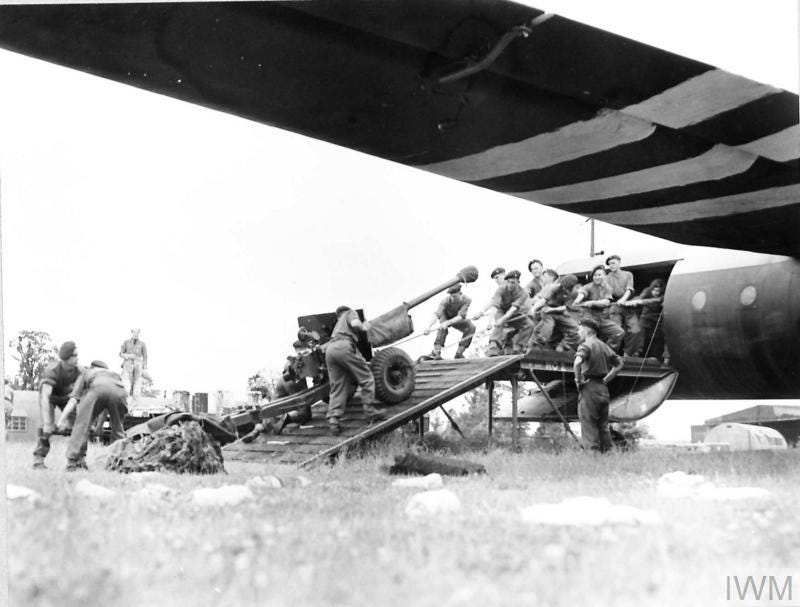
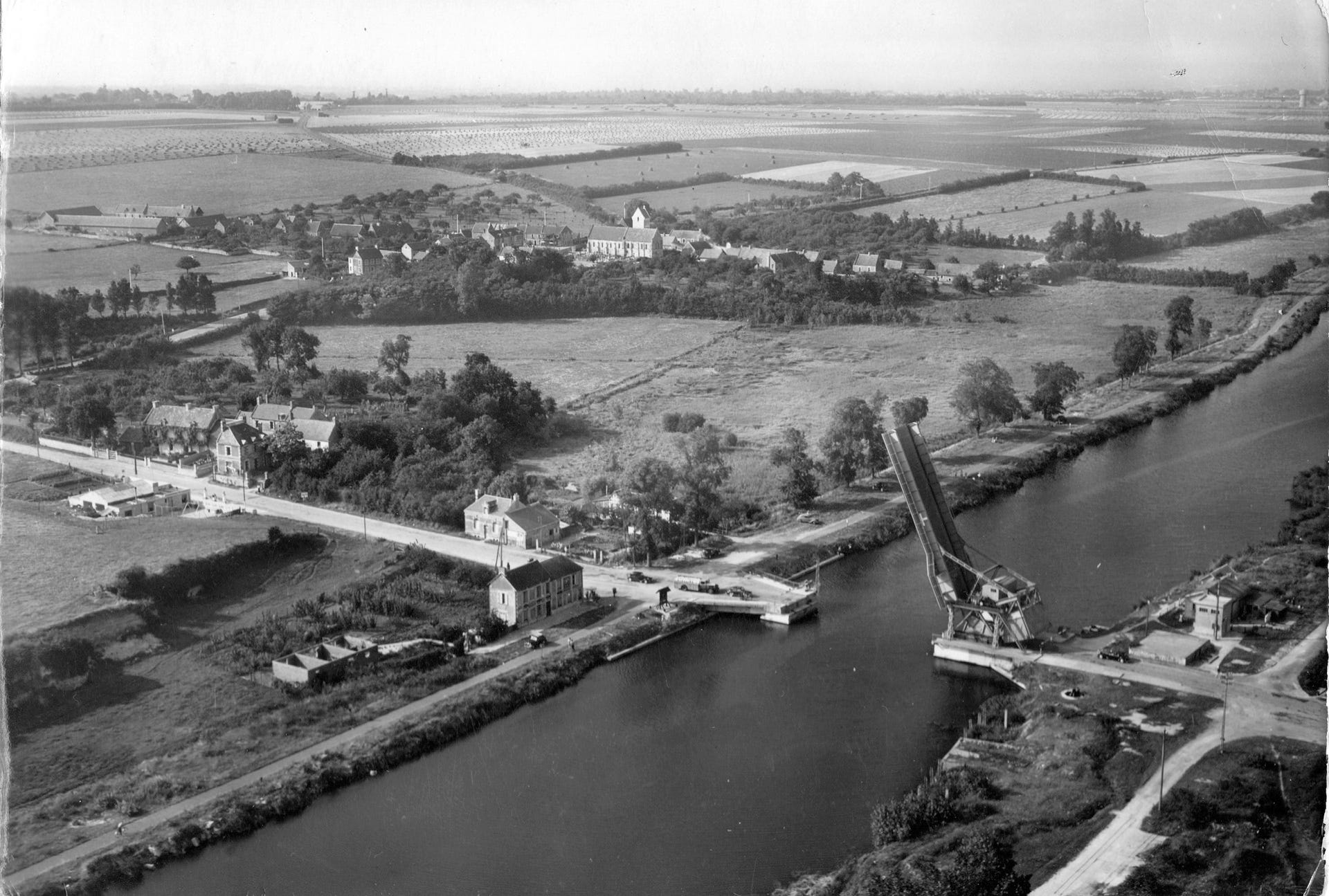
Minutes after midnight, Major John Howard’s coup-de-main force from the 2nd Battalion, Oxfordshire and Buckinghamshire Light Infantry (part of the British 6th Airborne Division) executed a picture-perfect glider landing. Within ten minutes, they captured the vital bridges over the Caen Canal and the Orne River.
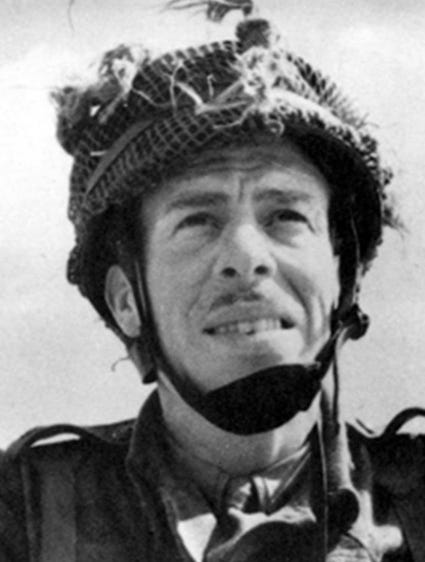
The first Allied casualty from enemy fire fell here: Lieutenant Herbert Denham “Den” Brotheridge. At exactly 00:16, Brotheridge’s Horsa glider—the very first to land—crashed down hard, just 50 feet from the Caen Canal bridge (now famously known as Pegasus Bridge).
Stunned but moving on, raw instinct instilled by deep training, Brotheridge rallied his men with a quiet, “Come on, lads.” They charged across the bridge in the pitch black. Brotheridge silenced a German machine-gun post on the western bank, but as his platoon pushed across the span, the Germans opened up with heavy machine-gun fire from a cafe on the opposite side. A burst caught Brotheridge in the neck and back. He fell on the bridge and died of his wounds shortly after.
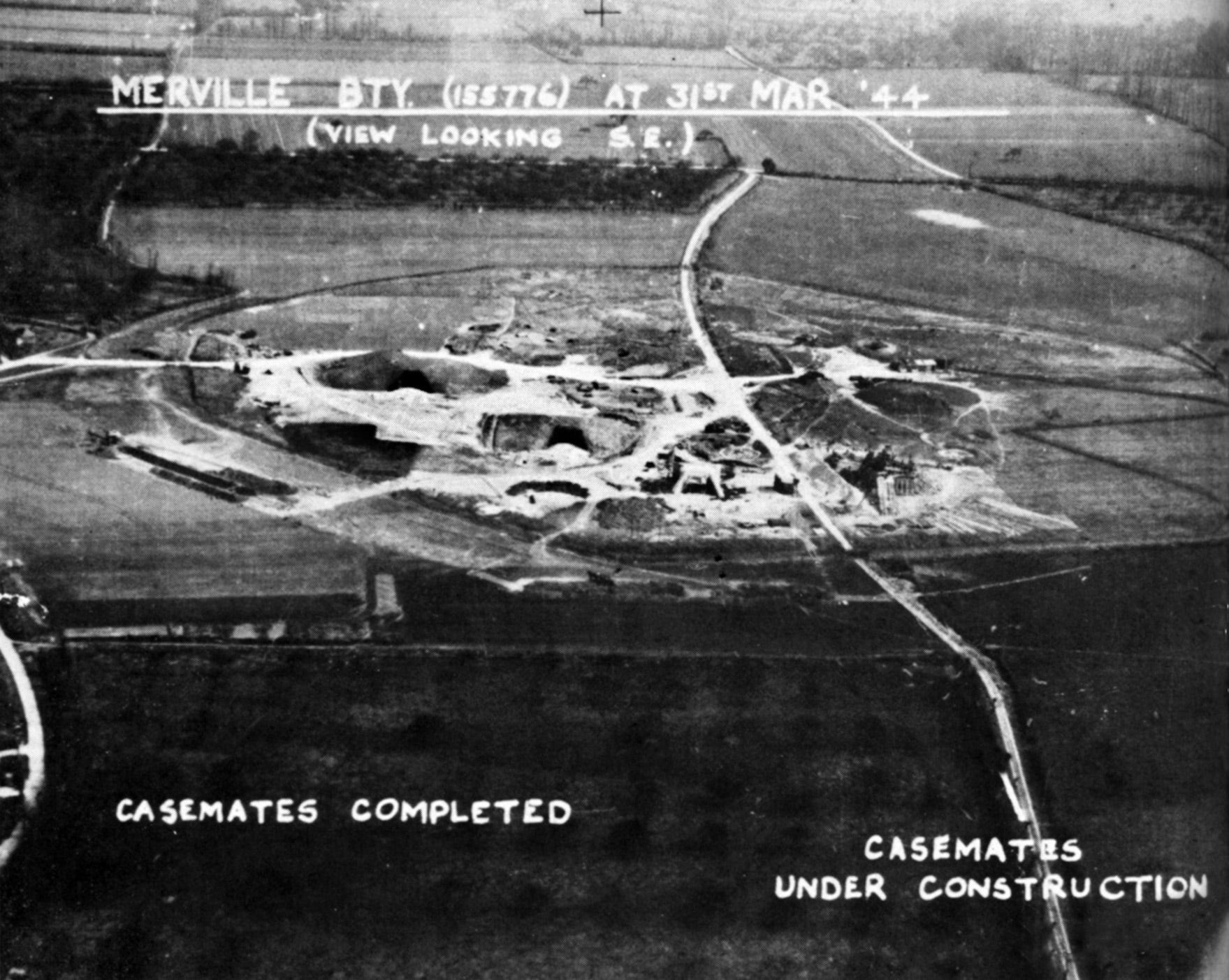
Concurrently, and with considerably less success, the 9th Parachute Battalion dropped in to assault and neutralise the heavy coastal artillery pieces at the Merville Gun Battery. Allied intelligence feared the fortress housed massive 150mm guns that could obliterate the landings at Sword Beach. Otway’s orders were absolute: drop and neutralise the battery before the fleet arrived.
The midnight drop was a disaster. Blown off course, Otway’s 750-man battalion scattered across the marshes. By 02:50, Otway stood at the rendezvous point with just 150 men. They had no heavy machine guns, no mortars, no mine detectors, and no specialised explosives. Knowing the landing craft were already approaching the coast, Otway famously declared, “We’re going to do it anyway.”
At 04:30, the 150 paratroopers charged the fortress. They cut through six-foot-high barbed wire, prodded their way through minefields, and engaged in savage, hand-to-hand trench fighting. Within 20 minutes, the garrison surrendered.
When the survivors breached the concrete casemates to spike the guns, they got a massive shock: instead of modern, long-range 150mm artillery, the bunkers housed vintage, captured 100mm Czech howitzers. They were too old and short-ranged to threaten the main fleet out at sea, though they could have still chewed up the infantry on the immediate shoreline.
With half his assault force dead or bleeding out, and missing his demolition gear, Otway’s men jammed German stick grenades down the barrels to crack the steel mechanisms, successfully breaking the battery’s teeth before broadcasting the success signal “HAMMER” to call off a scheduled British naval bombardment with minutes to spare. This brutal action secured the crucial left flank of the landing zone, in the nick of time.
On the opposite end of the Normandy front, the US 82nd Airborne Division (Major General Matthew Ridgway) and the 101st Airborne Division (Major General Maxwell Taylor) dropped into the Cotentin Peninsula. Thick cloud banks and heavy German anti-aircraft fire fractured the flight formations:
Misdrops: Over 60 per cent of the American paratroopers were misdropped, scattering across a 350-square-mile zone.
The Swamps: Hundreds of men drowned in low-lying fields and marshes along the Merderet and Douve rivers, deliberately flooded by German river locks.
The Tactical Fluke: Despite severe dispersal, the chaotic scattering of thousands of armed paratroopers completely disrupted German communications and deployments. It prevented LXXXIV Corps from identifying the main Allied axis of advance, paralysing their tactical response during the critical early morning hours.
To make matters worse for the defenders, the German forces sent off their only mobile tactical reserve—the bicycle-mounted Kampfgruppe Meyer (352nd Infantry Division)—on a total wild goose chase across the peninsula. Tricked by Operation Titanic, they spent the critical opening hours of the invasion hunting down “Ruperts” (dummy paradummies that dropped with firecrackers) and small SAS diversion teams. By the time the German counter-attackers realised they were chasing smoke and mirrors and turned their bikes around, the Allies had already established their foothold on the beaches.
By 02:00, elements of the 82nd Airborne successfully captured Sainte-Mère-Église, securing the first major crossroads town in liberated Europe and locking down the exit causeways leading off Utah Beach. The vanguard was firmly on the ground; the naval armada was dropping anchor off the coast.
This opening phase deserves a lot more focus, like many of the legendary actions I will cover, but we need to move on for now.
The seaborne invasion awaits!
Thanks for reading
As always, your feedback and support are greatly appreciated.
See you for Part 3 soon!
No posts
Comments
Nothing yet. Say the first thing.
Sign in to join the conversation.