
The weather always gets a vote in war. In early June 1944, God did everything he could to stop the invasion. It was too big even for him to abort.
By the early hours of June 6, a Force 5 gale tore across the grey water, whipping up a brutal six-to-eight-foot swell. Flat-bottomed landing craft—LCAs, LSTs, LCTs—and Higgins boats were pushed around like pinballs. Their high sides and shallow drafts compounded the misery. Inside, men packed shoulder-to-shoulder. Soaking wet, freezing, exhausted. The biggest day of their lives was upon them. If they were lucky, they managed to eat something; most were vomiting violently. Fear is a powerful emotion. Salt water, fuel, and bile pooled at their boots, sloshing angrily. Soon, it would be blood.
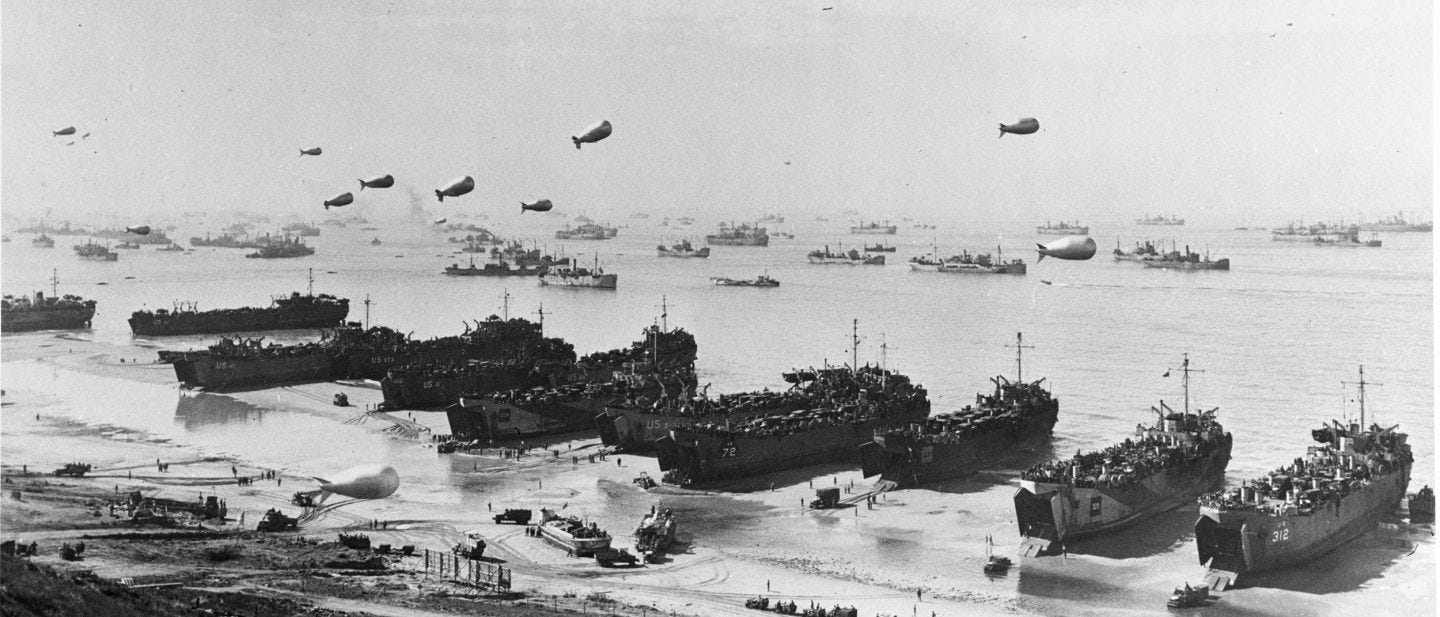
Despite the foul weather, the Allied high command could not halt. The complications of turning back were insurmountable. Surprise would be lost, the enemy would gain time to fortify, and morale would tank. The men were ready. You do not cancel an armada of 7,000 vessels. You do not halt an industrial avalanche. The Allies had committed to total, unrelenting mass—automated artificial harbours, undersea fuel grids, and millions of tons of steel.
The crust of Hitler’s Fortress Europe was about to meet the hammer.
The airborne night bled into the raw light of dawn, leaving a shattered, disconnected German defence behind.
Along a dark, canopy-covered dirt track near Picauville, the silence snapped. Major General Wilhelm Falley, commander of the 91st Luftlande-Division, was racing back to his headquarters. His staff car’s headlights cut through the gloom like a commando knife. Suddenly, a volley of fire erupted from the tree line. A lost, aggressive element of the American 82nd Airborne Division had set an ambush. Bullets riddled the chassis. Falley was gunned down in the mud alongside his driver. The paratroopers didn’t know who they had killed, but it hardly mattered—the only good German was a dead one.
Before the sun cleared the horizon, a critical German counterattack division was leaderless. Miles away, amid the fragmented drops, a desperate meat-grinder developed at a tiny stone crossing: the La Fière bridge over the Merderet River.
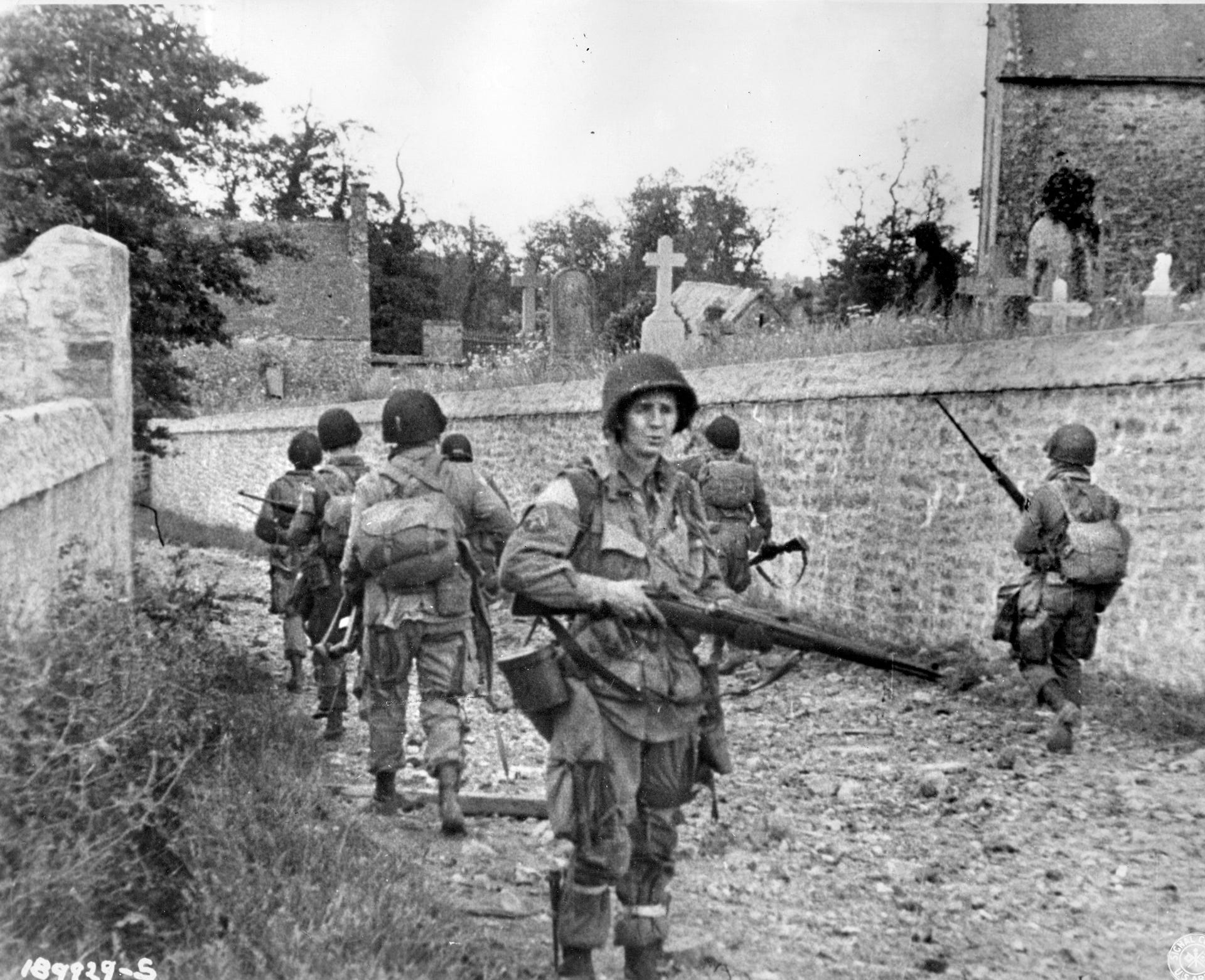
At 04:00, the 505th PIR reached the bridge. By dawn, foxholes were dug across the position. For the next 72 hours, the paratroopers would endure a grinding armour defence to keep the crossing secure.
This narrow strip of stone was one of the keys to the kingdom. If the Germans held it, they could trap the U.S. 4th Infantry Division on the Utah beachhead; if the Americans took it, the road to Cherbourg opened. Men from the 82nd Airborne—primarily B Company, 505th Parachute Infantry Regiment (PIR)—dug their fingernails into hasty foxholes on the eastern bank—no heavy artillery. No reinforcements. As the morning light grew, they braced for the first wave of German tanks and grenadiers. The battle for the chokepoints had begun.
The popular memory of June 6 is dominated by Omaha Beach—a five-mile crescent of slaughter where the American army was sent to its death to save the world from Axis tyranny. But while the men were exceptionally brave and the occupiers were dickheads, the reality is far more nuanced than universal slaughter. Geography and chance decided this fight.
Omaha is a natural defensive trap: a concave bowl overlooked by 150-foot solid bluffs. The German sector officer, Lieutenant Colonel Ernst Goth, fortified the four natural “draws”—the breaks in the bluffs that allowed vehicles to move inland—creating interlocking kill zones.
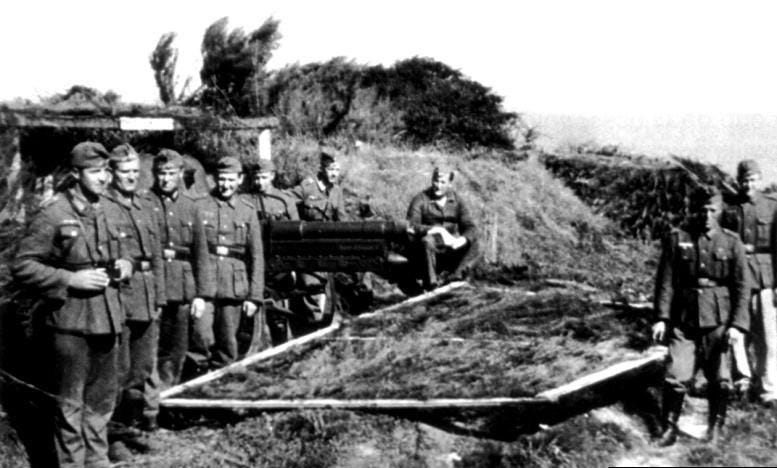
Post-war myths paint the German defenders here as elite, highly trained soldiers. They weren’t. They were standard, static German troops—not bad, but definitely not first-rate. They didn’t need to be. Geography did the heavy lifting. Their job was to ensure the MGs and mortars had enough ammo and kept firing. It wasn’t an enviable job, looking out to sea at the largest armada ever assembled and thinking, Which shell has my name on it? It raises an interesting question: would you rather be a German defending Omaha, or an American attacking it?
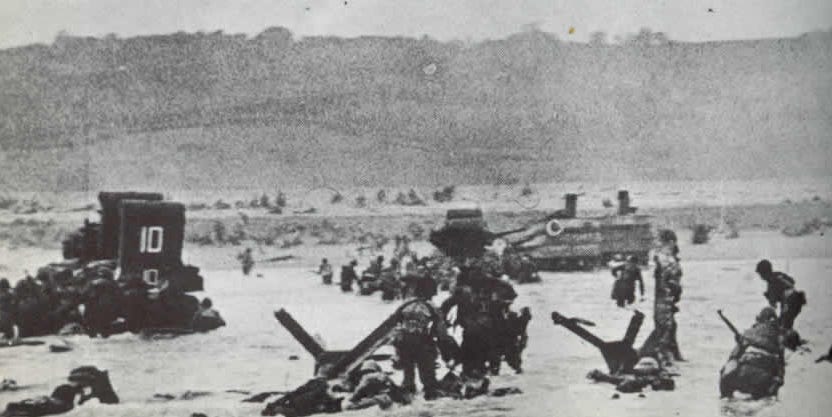
The plan split Omaha between two master formations: the veteran 1st Infantry Division ("The Big Red One") on the eastern sectors, and the green, untested 29th Infantry Division ("The Blue and Gray") on the west. National Guardsmen from Virginia, Maryland, and DC. Boys who had never seen a shot fired in anger. They were paired with elements of the 2nd and 5th Ranger Battalions—elite shock troops forged in the live-fire hell of the British Commando training centre at Achnacarry, Scotland. Together, they were slated to spearhead the initial assault waves. Before they were to land, the heavy bombers were meant to do the hard work. The infantry was supposed to inherit a cratered wasteland, pulverised by the air forces. Instead, they stepped into a pristine shooting gallery.
At dawn, 329 B-24 Liberators roared over Omaha through thick, blinding cloud cover. Terrified of dropping ordnance onto the approaching waves of American landing craft, the pilots delayed their bomb releases by a mere 5 to 30 seconds.
It was a catastrophic operational error. Most of the 13,000 heavy bombs overshot the Atlantic Wall entirely. They detonated harmlessly miles inland, digging massive craters in fields and killing French livestock. The German fortifications remained 100% intact. When the ramp gates dropped on the LCAs, the American infantry stepped out into an unblemished, fully operational web of automatic fire.
The slaughter was real, but intensely localised. That is the brutal, uncaring lottery of war: one company ceases to exist while another walks through untouched, based entirely on where their landing craft hits the shale.
At the eastern end of the beach, the defences of Widerstandsnest 62 (WN62) retained clear German optics. This was the largest and deadliest of the fifteen resistance nests locking down the coast from WN60 to WN74. Bounded by WN61, its primary tactical job was to seal the E-3 Colleville draw—a vital natural gap off the sand. It was here that Heinrich Severloh—the infamous “Beast of Omaha”—manned a forward foxhole, looking directly down the throat of the Easy Red and Fox Green sectors.
In his memoir, Severloh claimed to have fired over 13,500 MG42 rounds and 400 rifle rounds into the incoming waves before the position collapsed and he was captured on June 7. While historians rightly dispute his exact casualty count, the geometry of the bluffs doesn’t lie. From his elevated position, he held complete visual command over the tidal flats. He and his comrades’ fire undoubtedly tore the heart out of the American infantry landing below.
Further west, at the Vierville draw, Company A of the 116th Infantry landed precisely in the teeth of WN72. Within minutes, 163 men were killed or wounded. The sea turned red; the unit was destroyed. When you think of Omaha, you think of Company A—God rest their souls.
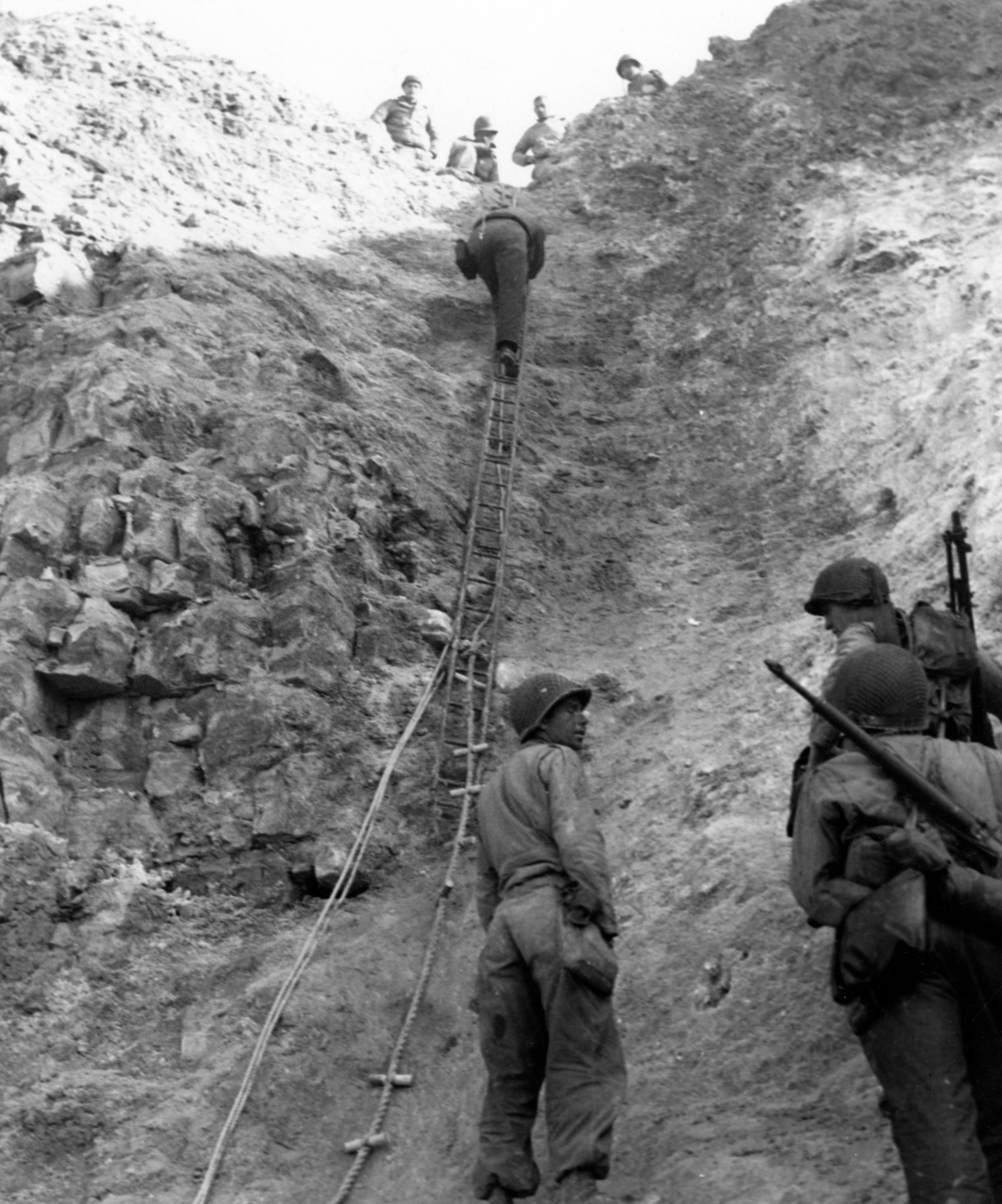
Three miles west of the bloody sand, a distinct drama unfolded. The 2nd Ranger Battalion, commanded by Lieutenant Colonel James Earl Rudder, was ordered to assault Pointe du Hoc—a sheer, 100-foot cliff topped by a heavily fortified battery of six 155mm guns that could rain down fire on both Omaha and Utah beaches.
Landing late due to the fierce current, Rudder’s force of 225 Rangers hit a narrow strip of rock under a hail of German grenades and machine-gun fire from the 352nd Infantry Division. They used rocket-fired grappling hooks, ropes, and extension ladders borrowed from the London Fire Brigade to scale the wet, crumbling limestone.
They fought their way to the summit in a frenzied, vertical infantry assault, only to discover the casemates were empty—the Germans had moved the guns inland to escape the naval bombardment. Undeterred but disappointed, the Rangers hunted them down, locating the hidden artillery pieces in a nearby orchard and destroying them with thermite grenades. For two days, isolated and cut off, Rudder’s men endured fierce German counterattacks. By the time they were relieved, only 90 men remained standing. Absolute steel.
Even further down the coast, at Dog White, Company C of the 116th had a completely different war. They touched down to find a massive grass fire raging on the bluffs, ignited by early naval shells. The thick, rolling smoke completely blinded the German gunners in that sector. Company C moved across the wide sand and reached the base of the cliffs without a single casualty. No logic. No justice. Just the blind luck of wind and smoke. Because the bluffs were concave, large stretches of “dead ground” existed between the bunkers. Small, leaderless groups of infantry began scaling the sheer rock faces, bypassing the German kill zones entirely.
That same wild disparity in fortunes played out with the armour. The plan called for amphibious Duplex Drive (DD) tanks to swim ashore and provide immediate heavy fire support.
For the 741st Tank Battalion on Omaha East, it was a massacre. The battalion commanders launched their tanks a suicidal 6,000 yards out into a roaring Force 5 swell. The canvas flotation skirts were never built to handle six-foot waves, and the ocean ripped the seams wide open. Twenty-seven out of thirty-two DD tanks flooded and sank instantly, dragging their crews to the bottom of the Channel.
On Omaha West, the commanders of the 743rd Tank Battalion took one look at the churning sea and said, “Fuck that.”
They refused to drop their tanks into the open ocean. Instead, they forced their Landing Craft Tank (LCT) skippers to run their vessels all the way in through the German artillery fire, slamming the ramp gates directly onto the shale. They did exactly what the British did on their flanks: they delivered their armour straight to the dry sand, alive and punching. Those tanks provided the direct-fire high explosives the infantry needed to start blasting back.
By 09:00, the U.S. Navy decisively intervened. Destroyers like the USS McCook and USS Emmons scraped their keels on the sandbars, running into dangerous, shallow water to get within rock-throwing distance of the cliffs. Firing over open sights, their 5-inch guns pounded the concrete slits of the German bunkers at point-blank range, collapsing the casemates on top of the gunners.
By mid-morning, men were making their way up the draws, and the crust at Omaha was finally breaking.
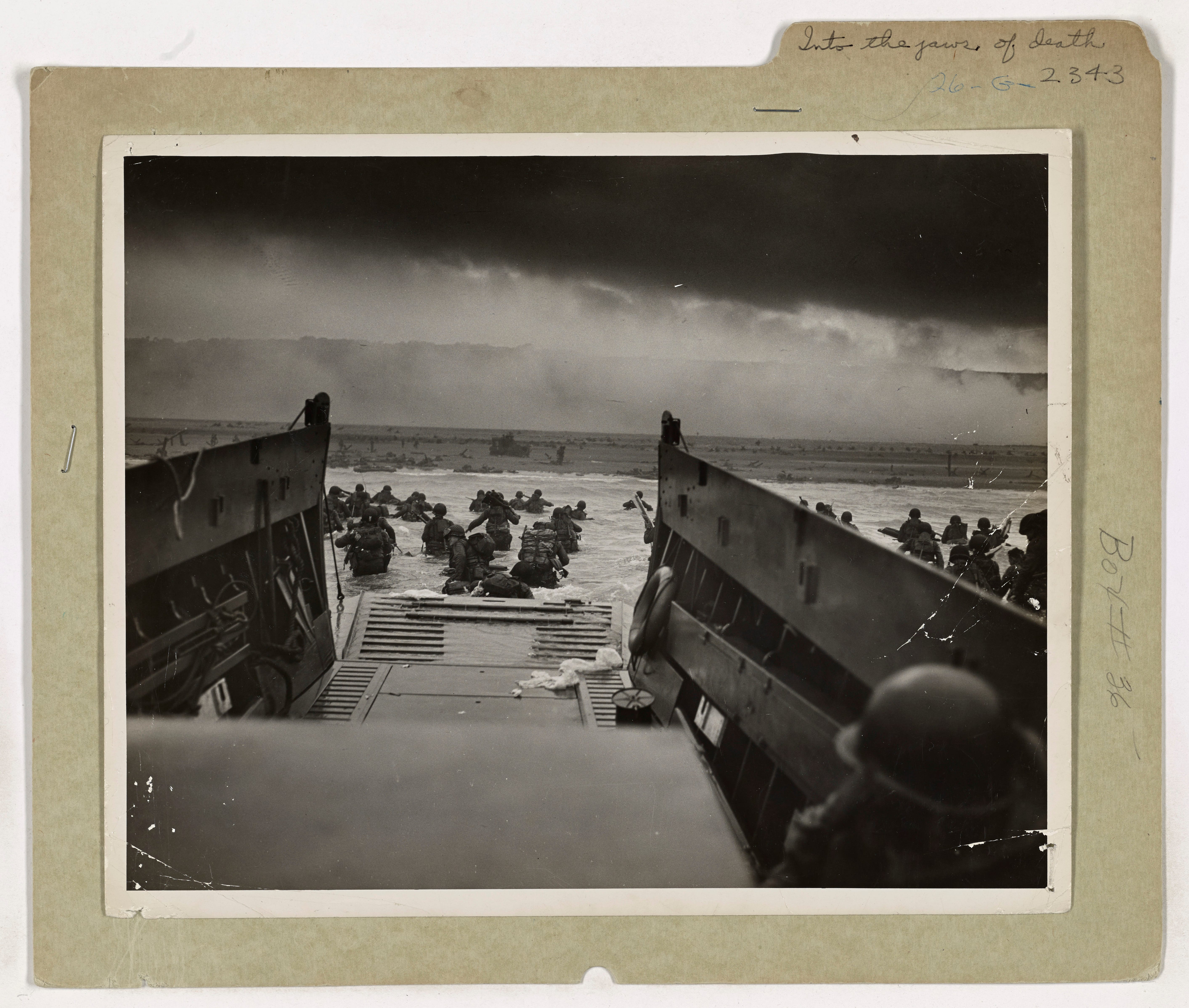
While Omaha bled into a near-disaster, the landings at Utah Beach proved that flexibility under fire is a supreme tactical virtue. Utah was the westernmost flank of the invasion, tacked onto the plan late by General Montgomery to seize the critical port of Cherbourg. If Omaha was a tragedy of errors, Utah was a comedy of errors that went entirely the Allies’ way.
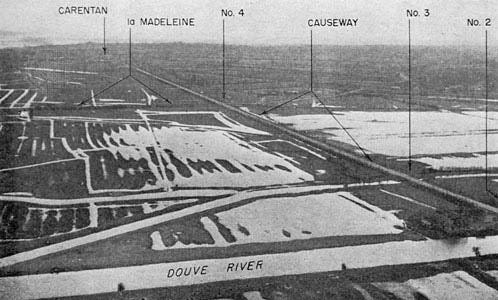
The geography here was a nightmare of a different sort. Behind a narrow strip of dunes lay miles of deliberate, engineered flooding—the Germans had opened the sluice gates, turning the Norman lowlands into an impassable marshland. The infantry could only move inland along four narrow, elevated dirt causeways. If the enemy held the exits of those causeways, the 4th Infantry Division would be bottled up on the sand and slaughtered like fish in a barrel.
The plan went out the window immediately. The coastal current at Utah, shielded by the windbreak of the Cotentin Peninsula, was deceptively swift. Thick smoke from the naval bombardment blinded the landing craft skippers. Hit by the current and lost in the haze, the primary assault wave of the U.S. 4th Infantry Division drifted 2,000 yards south of their intended sector.
They stepped out of their Higgins boats directly in front of Widerstandsnest 5 (WN5).
It was the best mistake of the day. The original landing zone was heavily fortified, but WN5 was a hollow shell. Unlike the battle-hardened troops at Omaha, this sector was manned by unmotivated Ost-battalion conscripts—mostly Soviet prisoners of war who had volunteered for garrison duty to escape starving to death in German camps. They had absolutely no desire to die for the Führer.
Worse for the defenders, the naval gunners at Utah actually hit their targets. While the heavy bombers missed at Omaha, the battleship USS Nevada—a survivor of the Pearl Harbour attack—lay off the coast of Utah and conducted a wellness clinic in precision naval gunfire. Her massive 14-inch shells had already pulverised WN5’s heavy weaponry, leaving the surviving defenders shell-shocked and bleeding in collapsed trenches.
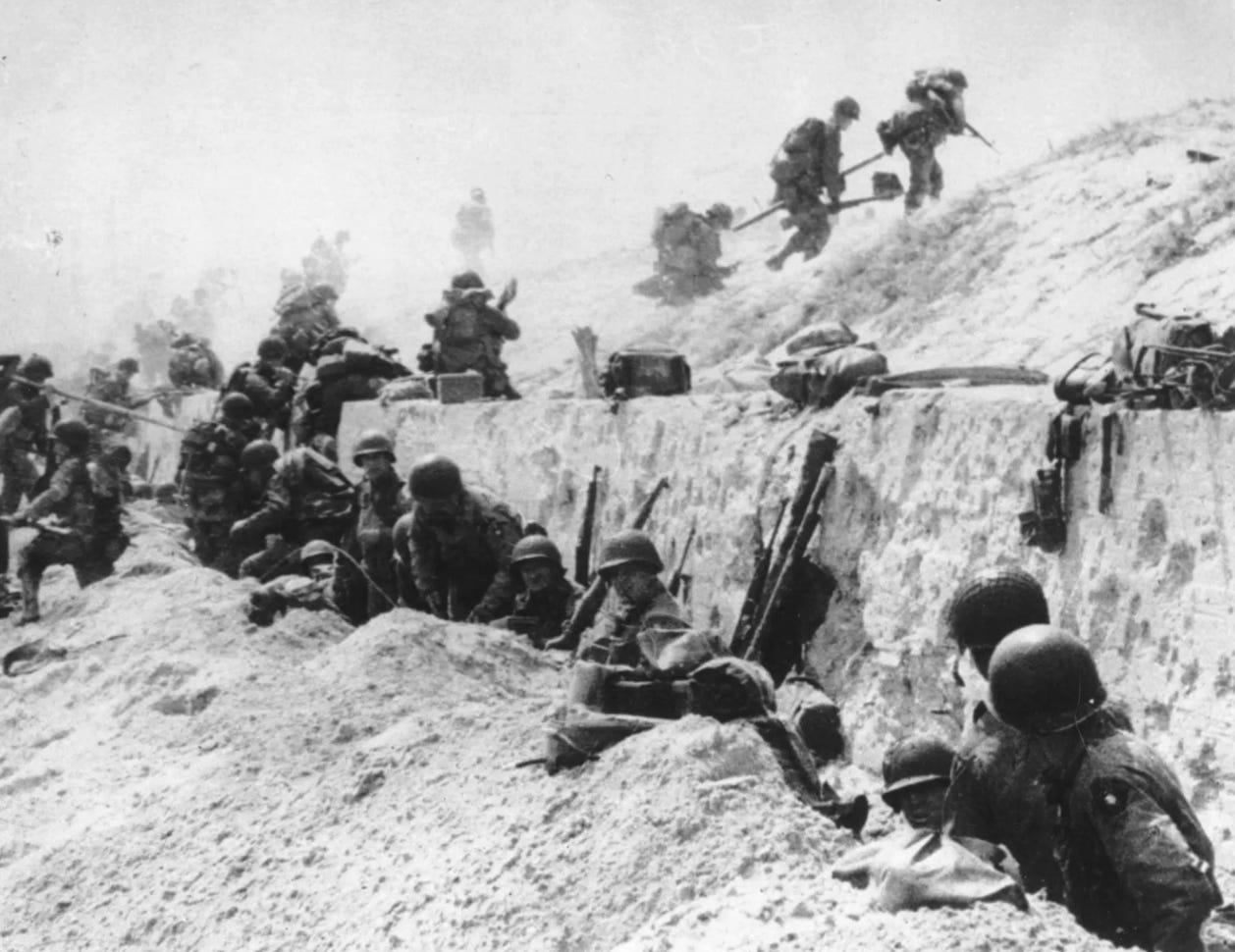
Brigadier General Theodore Roosevelt Jr.—the 53-year-old son of the former president, fighting with a severe heart condition and walking with a cane—surveyed the displaced, smoke-choked dunes. He was the only general to land in the first wave on D-Day. Realising they were in the wrong place, he didn’t panic. He knew that trying to reroute the following waves back north into the teeth of the original target would cause a catastrophic traffic jam in the surf.
He made a command decision on the spot:
“We’re going to start the war from right here!”
With those words, the momentum shifted. Armoured dozer Shermans aggressively punched holes through the 15-foot sand walls. Unlike the disaster at Omaha, the amphibious DD tanks here were launched sensibly at a safe 1,500 yards out; twenty-eight out of thirty-two made it to the dry sand, immediately providing the direct-fire high explosives needed to clear the remaining resistance.
But opening the beach was only half the battle. The infantry still had to cross those flooded marshes via the narrow causeways.
That they did so without a massacre is entirely due to the chaotic, blood-drenched sacrifice of the 82nd and 101st Airborne Divisions. Dropped inland hours before dawn, the paratroopers were scattered across the peninsula in total confusion. But instead of retreating, small, leaderless groups of Screaming Eagles and All-Americans attacked every German position they could find.
By 08:00, while the regular infantry was clearing the beach, these scattered paratroopers had successfully seized the inland exits of the causeways from behind. When the 4th Infantry Division marched off the sand, they found the high ground already secured by ragged, exhausted airborne troopers.
By nightfall, over 23,000 men and 1,700 vehicles had poured across Utah Beach at the cost of fewer than 200 casualties. It was a stunning operational success—not because the plan worked, but because the men on the ground had the clarity of mind to exploit a lucky mistake.
By the time the sun began to dip over the Cotentin Peninsula, the western flank of Operation Overlord had defied the odds. The price had been high, but within the cold calculations of supreme command, it was entirely manageable.
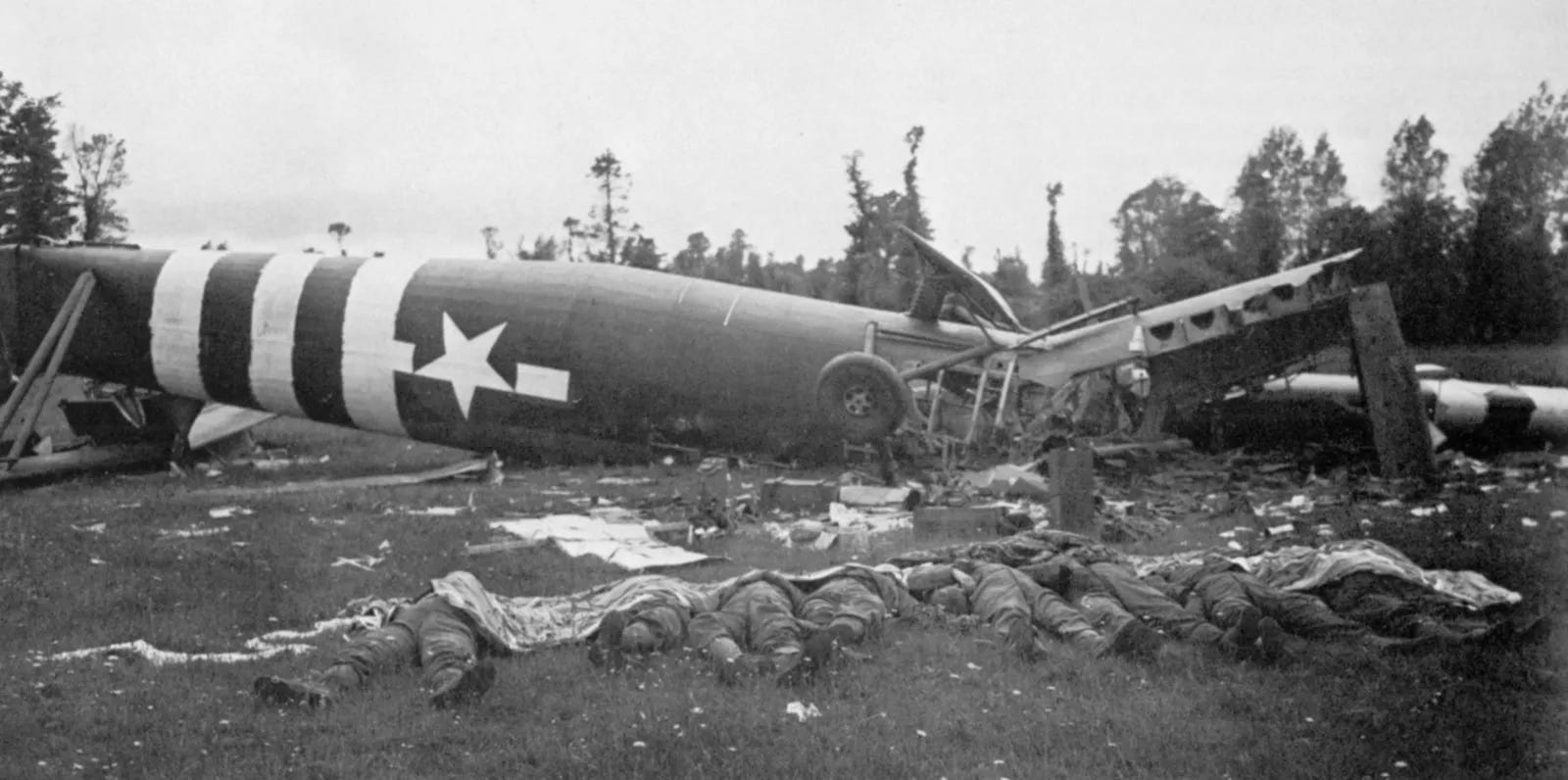
Omaha had bled—nearly 4,000 Americans lay dead, wounded, or missing on the shale, and the flooded fields of the interior were littered with the crumpled skeletons of gliders. But the slaughter was localised. The plan had cracked, but it had not shattered.
The line held. Two distinct American beachheads were locked down, the Atlantic Wall was ruptured, and the German defenders were left leaderless, blind, and reeling under the relentless weight of Allied naval steel. General Omar Bradley’s nightmare of evacuating the beaches evaporated with the tide.
The Western anvil was set. But as dusk approached, the fate of the entire campaign turned to the east. There, the British and Canadian forces were slamming into their own sectors of the crust—meeting an entirely different, more mechanised breed of German resistance.

Join me again soon when we look at the invasion through the eyes of the British and Canadians. (This was originally 1 part, but I had to split it!)
I hope you enjoyed reading.
Until next time.
Ru
No posts
Comments
Nothing yet. Say the first thing.
Sign in to join the conversation.