
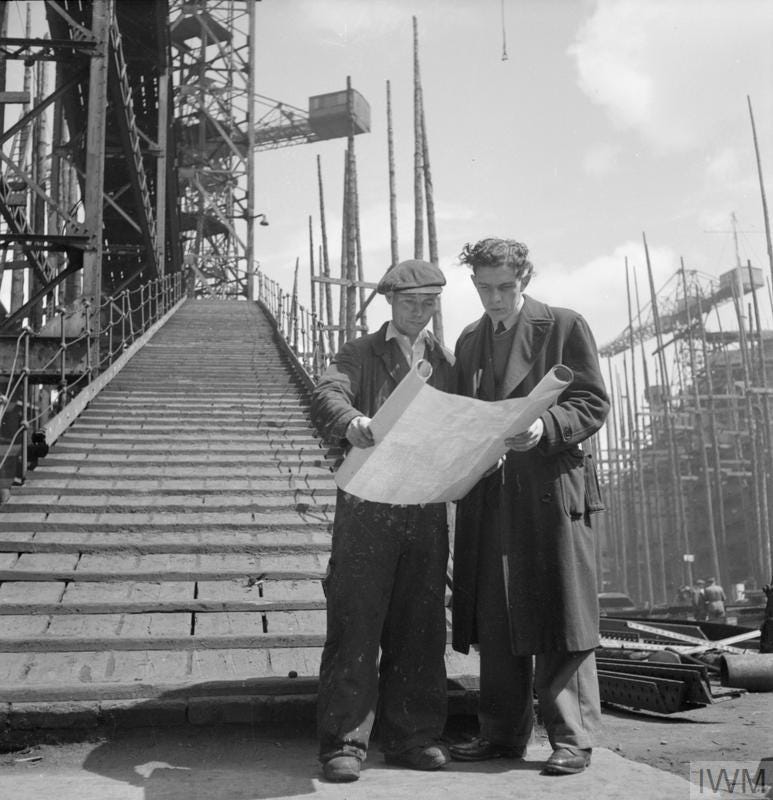
It’s 1944. The United Kingdom and its expansive empire have been at war for five long, arduous years. In that time, the country had experienced disastrous defeats but managed to steady the ship and was now hitting victory after victory. The island had also changed from a world-leading trading and financial centre into one massive supply depot.
It’s going to be needed.
Nothing in the history of mankind has ever been attempted on this scale. Sure, there have been a few warm-ups—North Africa, Sicily, Anzio—but this is the Champions League Final. The Super Bowl of the world war. This is D-Day.
Think of the planning and preparation phase as a business merger between two titanic companies. The US is bringing the investment and manpower, while the UK is providing the facilities and the know-how.
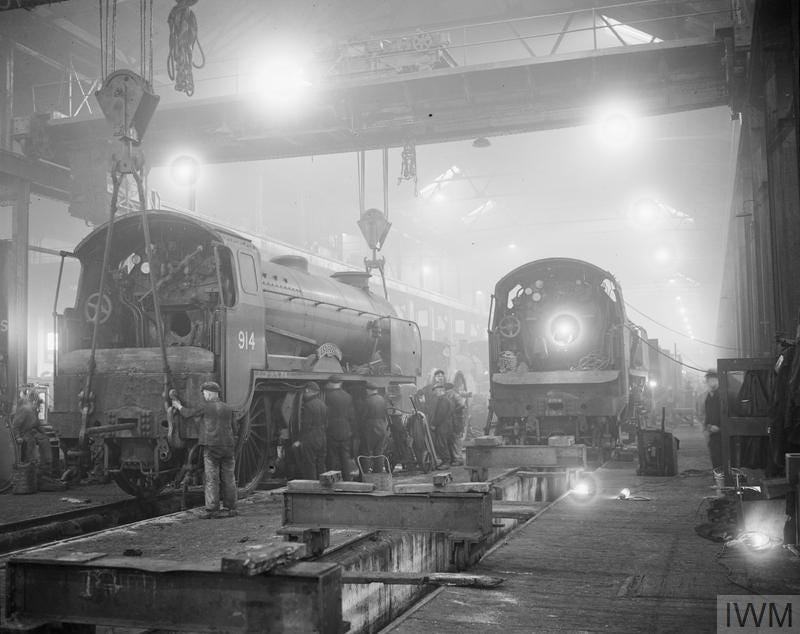
While the US is sending men over by the million, the UK construction firms are having a field day. They literally cannot build enough. They need new concrete airstrips, barracks, storehouses, improved port and train facilities, and anything else you can think of—they are building it.
The Airfields: The Allies constructed over 100 new airfields across southern England.
The Lines: They laid down thousands of miles of additional railway siding solely to handle the massive influx of rolling stock.
The Tonnage: Logistics pipelines are moving 2 million tons of supply cargo from British ports to active marshalling areas every single month, leading up to June.
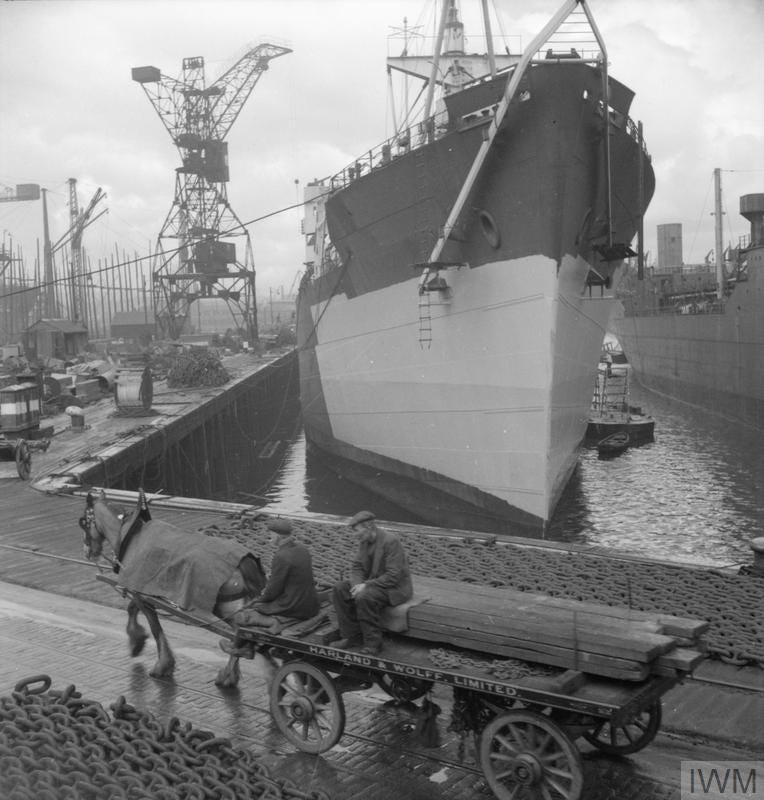
A horse-drawn cart of Harland and Wolff travels past a large cargo ship under construction in my Birthtown of Glasgow. The hull is being painted, and a large crane can be seen in the background. To the left of the photograph. Timber scaffolding is hiding another ship under construction.
The American GIs were famously “overpaid, oversexed, and over here.” This was certainly a cause for concern for the native British men, who could only look on as their potential girlfriends and partners were swept up by a comparatively rich, well-dressed Yank with good teeth. I can’t imagine the girls were complaining too much, though.
However, please just imagine you’re in a sleepy village in Sussex in the southeast of England. Nothing much has changed in the last 100 years. Sure, we now have a few gas lights and running water, but life and traditions continue as they always have. Men go off to work in the fields, or in the bakery, butchers, or commute into the local hotspot for work. The women generally are at home, taking care of the bairns, and providing a hot meal for papa.
Lovely.
Yes, I’m sure it was, but it is no longer 1936. It’s 1944. There is a massive airfield where Old Tom’s field used to be. Thousands of young men are strutting around with brass bollocks, there is constant noise from the aeroplanes, and the main gate is right next to Aunt Bess! Bless her, at least the guards give her some of that fancy new chewing gum now and then!
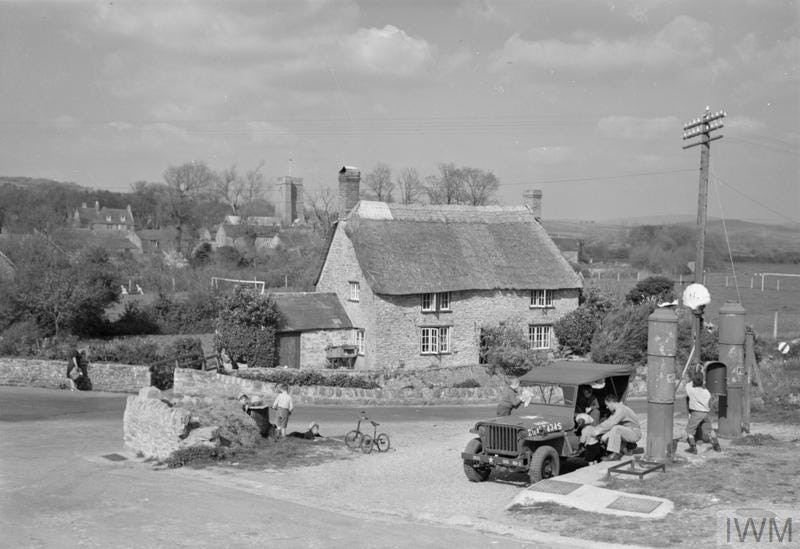
This dramatic logistical buildup, primarily in the south of England, had transformed the place. Its presence was intrusive and constant, no matter how polite the guests were. But alas, it was for a good cause. For there could be no cause better than liberating that old enemy, France, from the vile Nazi villains.
By May 1944, 1,533,000 US troops were stationed in the UK, alongside approximately 1,75 million British and Commonwealth troops.
Enter General Bernard Law Montgomery. January 1944.
His CV? Absolutely outstanding. A highly decorated World War I officer, he was shot through the right lung by a sniper at the First Battle of Ypres in 1914, was practically left for dead, and came back to be noted for his meticulous staff work. Between the wars, he rose to the rank of Major-General, carving out a reputation as a brutal, uncompromising trainer of men. He literally rewrote the infantry training manuals and taught the next generation of commanders at the Staff College, Camberley.
When World War II kicked off, Monty skillfully led the 3rd Infantry Division. He did so with precision amid the chaos of the 1940 retreat to Dunkirk, masterfully managing his forces on the fly to plug holes in the face of aggressive German attacks.
By August 1942, Winston Churchill rolled the dice and sent him to North Africa to take over the defeated, demoralised British 8th Army. Monty steps into the desert, immediately sorts out the absolute mess, and ends the rot in morale.
How?
Simple, effective communication.
He leads the Allies to a shattering victory over Rommel at El Alamein, followed by a relentless pursuit across Libya and Tunisia. He never allows himself to be outfought because he is ruthlessly safe.
He then leads the 8th Army onto the beaches of Sicily in July 1943, completing his strategic objectives with minimal casualties (with help from others, of course). By September, he lands in mainland Italy, driving the Germans back and fighting a grinding war up the right-hand leg of the Italian boot, successfully creating the vital operational space for the Foggia airfields to grow and prosper.
He’s then sent back to England to complete the planning and preparation for Operation Overlord—the invasion of Nazi-occupied France.
This was the new boss. He was to be in charge of all Allied ground forces for the initial invasion.
I bet he was as happy as a Pig in Shit.
But beneath that clear elation was a growing, heavy sense of responsibility. Never one to admit personal weakness, Monty knew from the second he read the blueprints that the current plan needed a serious, fundamental rethink.
This guy wasn’t your cinematic, Hollywood general. He was a small, skinny, middle-class vicar’s son wearing a black tank corps beret—proudly sporting two cap badges, the general’s officer badge alongside the Royal Tank Regiment emblem(what a weirdo). He didn’t have the effortless, diplomatic charm of Eisenhower or Alexander. But what he did have was an absolute, blinding arrogance and a total obsession with what he called “clarity.”
See, Monty knew a harsh truth: the British Army by 1944 wasn’t the elite, professional, regular force it had been in 1939. That army was dead, buried in the sands of the desert or left behind on the beaches of France years ago. This was a citizen army. It was made up of conscripts—boys from the green fields of Sussex, the local bakeries, and the leftovers from the Royal Navy and the RAF to fill the infantry gaps.
If you wanted them to fight and fight well, you had to kill the “fog of war” before they even stepped onto a landing craft. To Monty, confusion was a psychological disease, and his cure was unadulterated structural clarity.
So, what does he do? He goes on a massive whistle-stop tour across the length and breadth of the United Kingdom. He addresses over 1 million men in person. No megaphones, no fancy stage setups. Just Monty, standing on the bonnet of a Jeep in a rain-slicked field so the boys in the back row can see his face.
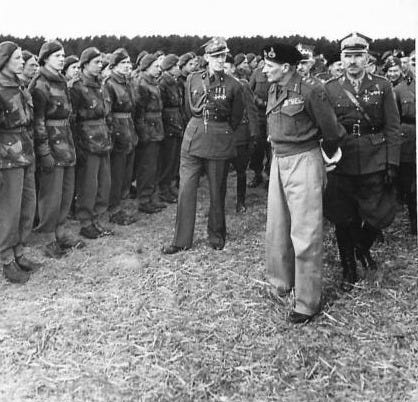
Imagine a day at work as a battalion cook in the Argyll and Sutherland Highlanders when you get the shout: “Oi, the boss is here!” “Who, the Sergeant Major?” “No, you bleeding fool, it’s Monty for fuck’s sake!”
He would stand on that hood, gather the men close, and deliver his trademark briefing. It sounded like this:
“We have got to visualise what is before us. We are going to France to fight the Germans. We are going to defeat them, and we are going to knock them clean out of the war. Every single man must know what he is doing, why he is doing it, and how his part fits into the whole master plan. I want you to have total confidence. Together, you and I, we will see this thing through to the absolute end.”
This personal touch had a massive, psychological impact on his men. No matter how blunt what he actually said was, here he was—the big boss, the legendary victor of Alamein—taking the time to talk directly to me. It fostered a strong sense of team spirit and collective effort, which is crucial before an undertaking as hard as this.
But don’t get it twisted—he was ruthlessly pragmatic, and he didn’t do romanticism.
Take the conversation he had around this time with Captain Carol Mather—a 25-year-old SAS veteran who had just pulled off a legendary escape, trekking 600 miles down the spine of Italy through enemy lines. This wasn’t just random small talk over soup; Captain Mather had been hand-picked by Monty to join his inner circle as one of his ADCs (Aide-de-Camp) and personal liaison officers. You might think Monty would give his new staff officer a pat on the back and a cinematic speech about British grit. Instead, Monty looks him dead in the eye, grins, and drops the ultimate cold-blooded corporate truth:
“It’s going to be quite a party... your chances of survival are not very good.”
That was the management style. No illusions, no false promises. And the men absolutely loved it. They would rather be told the brutal, unvarnished truth. They already knew it was going to be a hell of a hard fight, and hearing their top boss tell them so straight to their faces—while fundamentally assuring them that they would win regardless—was a massive psychological boost.
This CEO was organising a hostile takeover, and he needed every single man to know their exact place on his teamsheet before the boots hit the beaches. Every man had a crucial role to play.
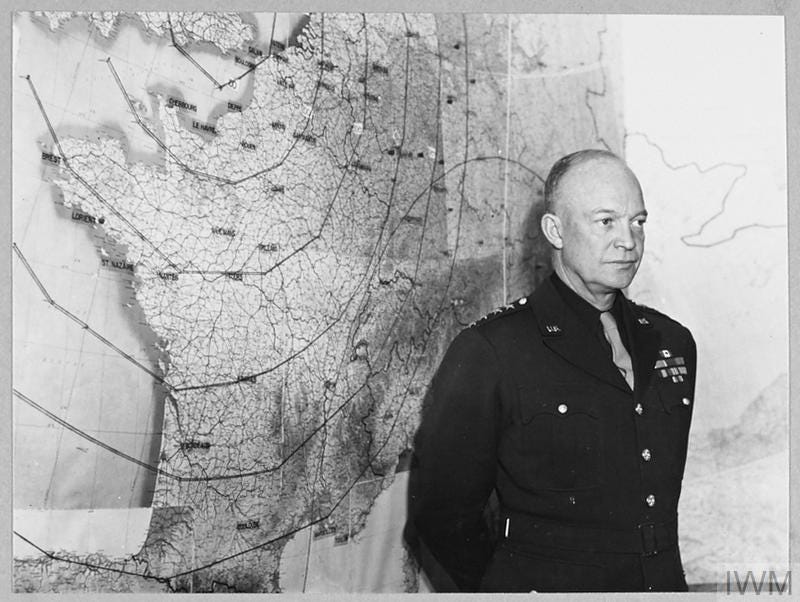
If Monty was the CEO on the ground, General Dwight D. Eisenhower was the Chairman of the Board. Sitting down in January 1944, they took one look at the paperwork left by previous management and threw the script into the shredder.
Not good enough.
For a year, Lieutenant General Frederick Morgan’s under-resourced COSSAC team had done an admirable job building the initial blueprint. But they were fighting a losing battle against resource shortages. Their original plan was tight, cramped, and dangerous: just three infantry divisions hitting a 25-mile strip of coast (Gold, Juno, Sword). The flanks were exposed. If the Germans bottlenecked them on the sand, it would be a total meat grinder.
Monty wrinkled his nose and barked: “This is too small. We must expand, or we will fail.”
Ike agreed. You don’t launch a hostile takeover with a skeleton crew. You blow the front doors off.
Operations moved to St. Paul’s School, Hammersmith(Monty's old school), where classrooms became a clacking bureaucratic engine. To execute this expansion, Ike and Monty brought in their corporate hatchet man: Major General Walter Bedell “Beadle” Smith, Ike’s chief of staff. Brilliant, fiercely loyal, and packing a legendary temper fueled by a raging gastric ulcer, Beadle ran the smoke-filled rooms—downing milk to soothe his tummy while ruthlessly coordinating hundreds of logistical sub-committees. Tough job.
Under Beadle’s iron fist, the scale exploded:
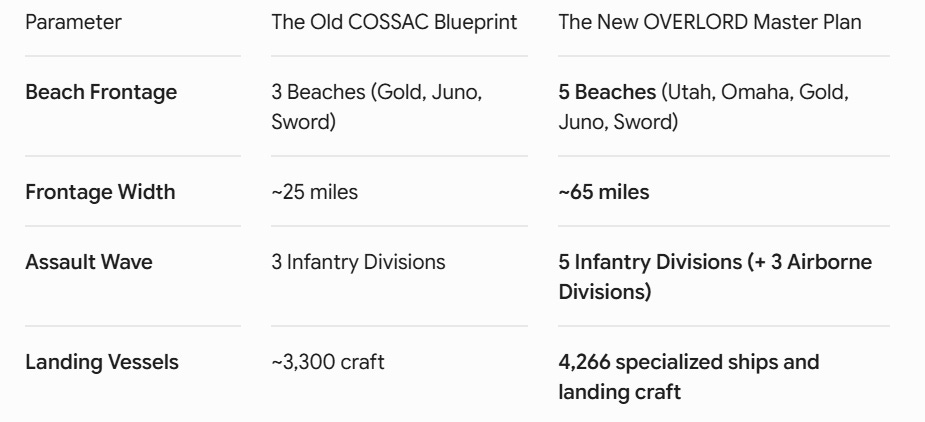
To map this 65-mile front, the Ordnance Survey team printed an astronomical 16 million highly classified maps to be handed out(poor trees).
But adding two beaches created a colossal logistical nightmare: a brutal global shortage of LSTs (Landing Ship, Tank) and LCAs (Landing Craft, Assault), which were being hoarded by the US Navy in the Pacific.
Ike and Beadle launched a cutthroat bureaucratic war against Washington for every piece of floating steel. The crisis got so acute that to secure the extra landing craft for Monty’s teamsheet, they made a massive corporate gamble: they pushed D-Day back from May to June 1944.
A one-month operational delay. It cost millions a day and kept three million men sweating in their camps. But under this management, there were no half-measures. They weren’t playing chess; they were building a weapon big enough to smash the hall where the tournament was being played.
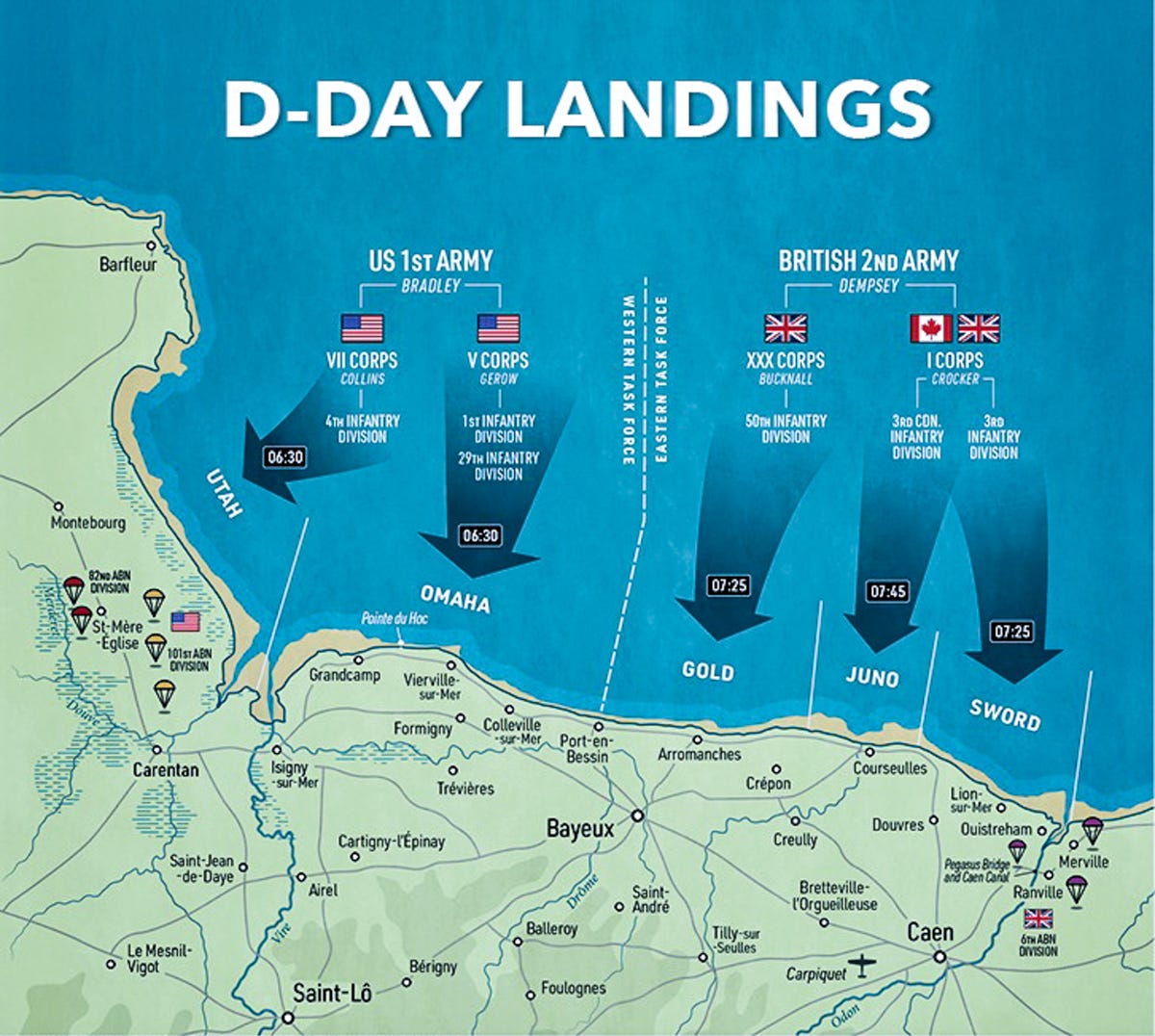
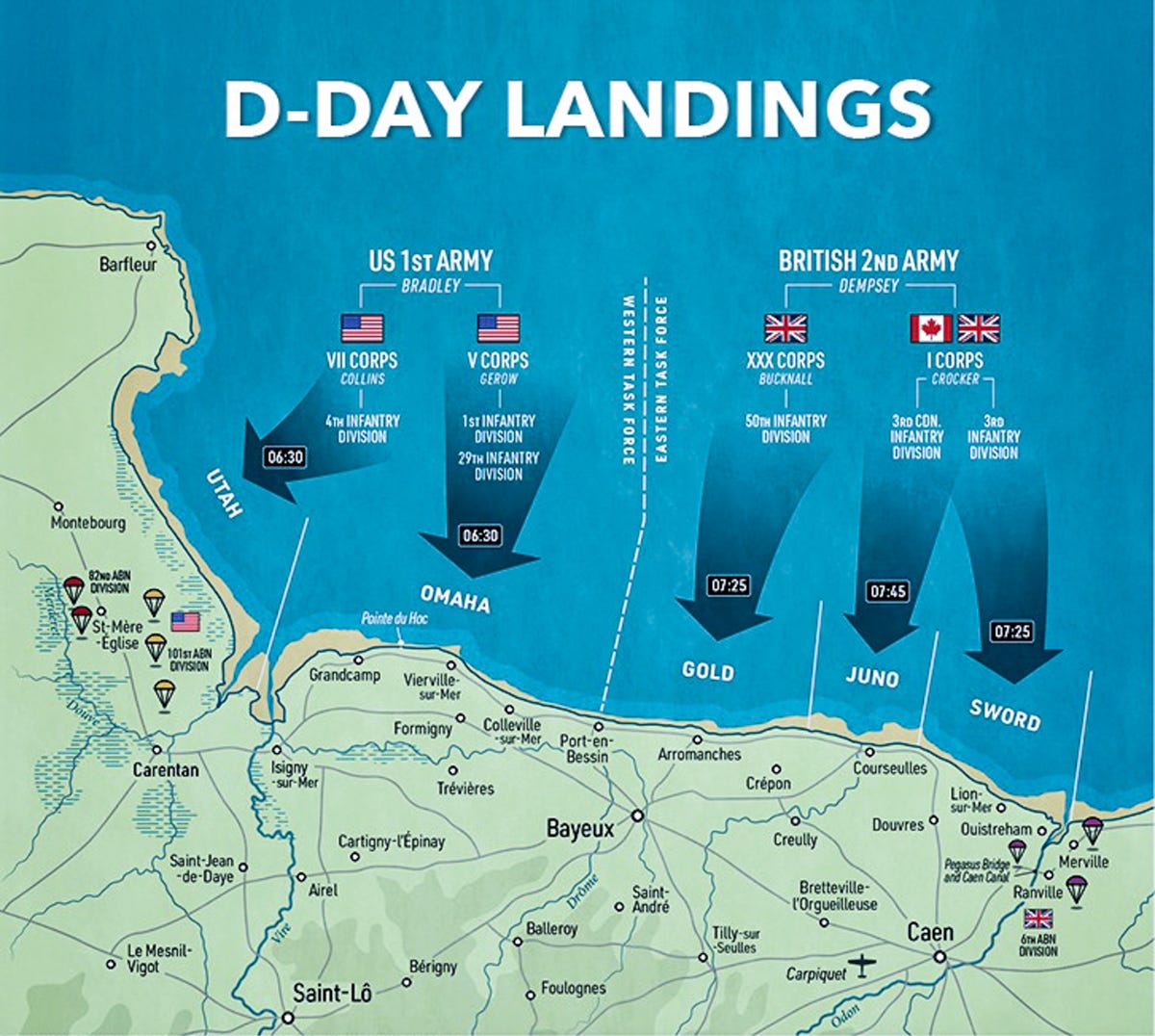
With the five-beach blueprint locked in, Allied planners needed a simple way to conceptualise the entire 65-mile front. They decided on a human left hand lying flat, palm down, against the English Channel.
It was a brilliant metaphor that gave every commander instant clarity:
The Little Finger: The Cotentin Peninsula, jutting north into the Channel. At the very tip sat Cherbourg—the deep-water port the Allies desperately wanted to pump supplies directly into France.
The Knuckles: The 65-mile stretch of infantry landing beaches. From west to east: Utah and Omaha for the Americans; Gold, Juno, and Sword for the British and Canadians.
The Thumb & Index Gap: The eastern bottleneck is anchored around the city of Caen, the Caen Canal, and the Orne River.
But visualising the hand was the easy part. Fixing the fatal operational flaws within it fell to the problem-solvers. Enter Colonel Charles H. “Tick” Bonesteel III.
Bonesteel was a brilliant, archetypal Allied staff officer—a West Point graduate and Rhodes Scholar who had already proven his logistical genius during the Sicily campaign. Analysing the terrain at the base of the little finger, Bonesteel spotted a glaring, catastrophic hazard.
The area behind the westernmost beach was a nightmare of low-lying marshland and fields, flooded deliberately by the Germans via river locks, creating a massive soggy zone. When the Americans landed on the sand, they would be forced to advance up on the narrow causeways, being exposed to fire with no ability to manoeuvre or take cover.
Bonesteel’s analysis forced a last-minute change to the plan. To secure Utah Beach, they couldn’t just rely on a frontal sea assault. They had to drop the US 82nd and 101st Airborne Divisions—13,000 paratroopers—directly into the pitch-black swamps on the night of June 5/6. Their objective: seize the inland causeways, disrupt German reinforcements, and secure the vital crossroads town of Sainte-Mère-Église.
The same logic applies to the other side of the hand. To protect the eastern flank (the thumb) from a rapid German armoured counter-attack, the British 6th Airborne Division had to drop in at midnight to seize the Orne river bridges and neutralise the heavy Merville gun battery.
Every finger, every knuckle, and every gap on that hand had a specific, operational assignment. If even one piece failed to lock into place, the entire plan could shatter.
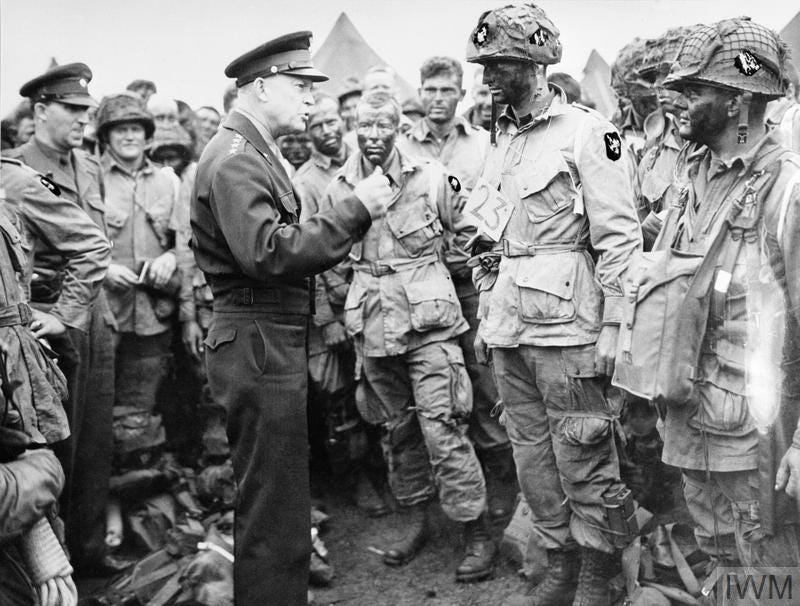
Building the powerful corporate machine was only half the battle. To guarantee the takeover succeeded, the Allies had to completely blind, confuse, and manipulate the competition. They did it through carefully weaponised paranoia.
Enter Operation Fortitude, run by the London Double-Cross Committee. They achieved a total sweep, completely subverting the German intelligence network (Abwehr). Remarkably, every single German spy in the UK was caught, turned, or executed.
I repeat, the Germans had no spies in the UK.
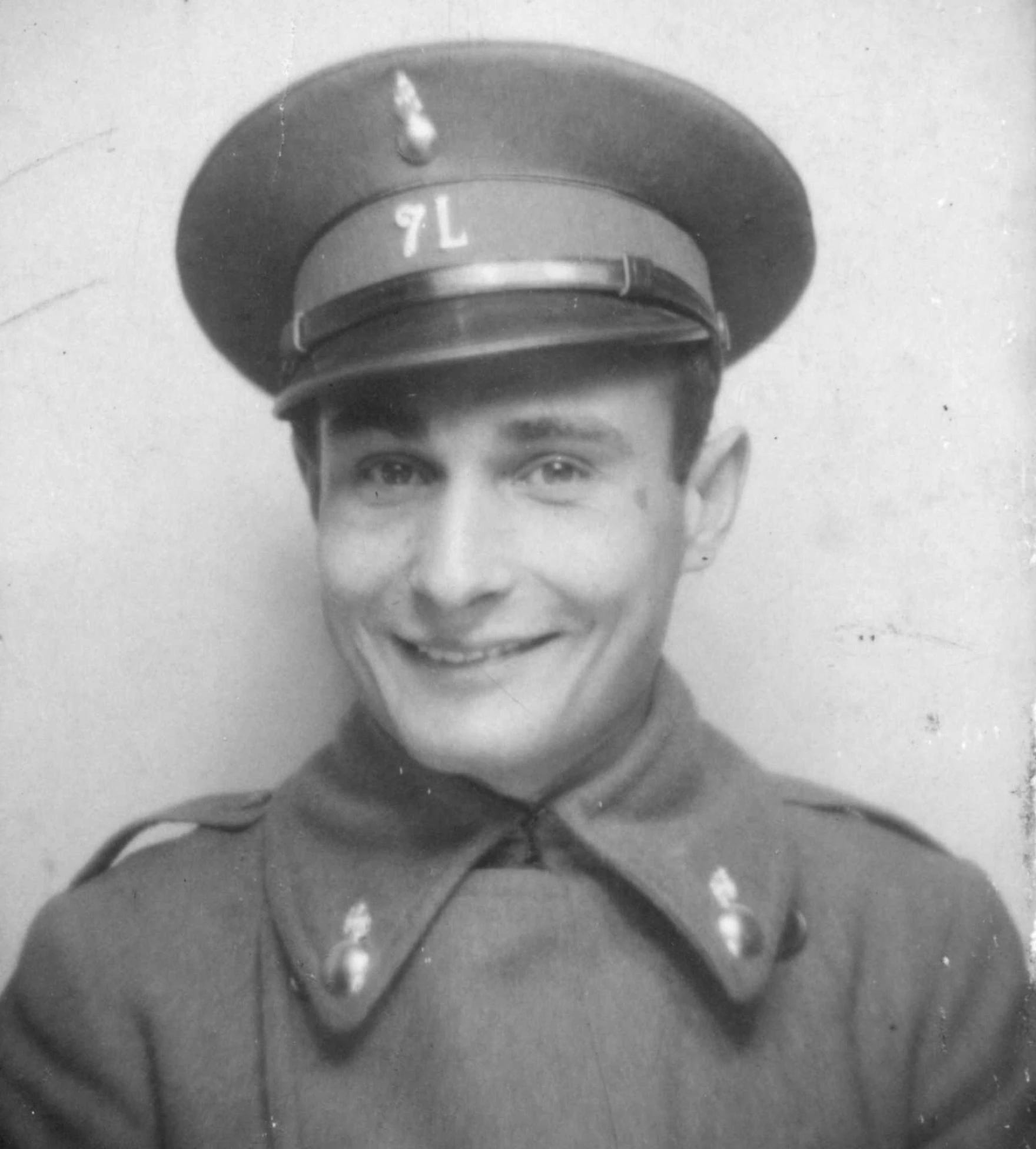
Their star asset was a rare, non-sleepy Spaniard named Juan Pujol García, codenamed Agent Garbo. Working hand-in-hand with his MI5 case officer, Tomás Harris, under the strict direction of Tar Robertson’s Twenty Committee, Garbo became the lead actor in a massive strategic deception. Managing a fictional network of 27 fake sub-agents, Garbo and Harris bombarded Madrid with an astronomical number of encrypted messages that went straight to Berlin.
Together with the Allied planners, they sold the Germans a fictitious phantom army: the First US Army Group (FUSAG), allegedly stationed in Kent under the command of General George S. Patton. This was greatly aided by the widespread belief that Patton was the best general in the US Army and the man most likely to spearhead an assault into Europe.
When Patton found out about his fake role, he was not amused:
“I am a sort of mystery man... The Germans are certain I am going to lead the big attack, and they are watching for me. It is quite a compliment, but a very empty one when one wants to be in the middle of a fight.” — Patton’s Diary, March 16, 1944
The best lie is always based on truth. There were indeed many US soldiers in the Kent area, and it was a useful place to store supplies destined for Normandy. The deception was so perfectly executed that it successfully locked down the German 15th Army—150,000 decent troops—in the Pas-de-Calais, holding them in place for weeks after June 6 because they were waiting for a second invasion that didn’t exist.
If that wasn’t enough, the Allies weren’t just feeding the Germans lies; they were actively reading Adolf Hitler’s mail.
At Bletchley Park, codebreakers weren’t just cracking tactical Enigma traffic. Using Colossus, the world’s first digital computer, they were intercepting “Fish”—the ultra-elite Lorenz teleprinter line used exclusively by the German Army High Command. This wasn’t local naval gossip; it was a direct tap into the executive suite. It gave Allied planners verbatim transcripts of messages sent straight from Hitler’s desk to his field marshals. By May 1944, Ike and Monty had absolute, ironclad confirmation that Hitler had swallowed the Pas-de-Calais feint hook, line, and sinker.
With the enemy blindsided, the Allies activated their final trick: the French Resistance, coordinated by General Pierre Koenig’s EMFFI.
On the nights of June 1–5, the BBC broadcast hundreds of coded personal messages into occupied France, including lines from Verlaine’s poem Chanson d’automne. The minute those lines hit the airwaves, they triggered over 1,000 coordinated acts of sabotage. Under Plan Vert (railways) and Plan Violet (telecommunications), the underground severely damaged German lateral communication and supply lines, paralysing their ability to react before a single landing craft even left port.
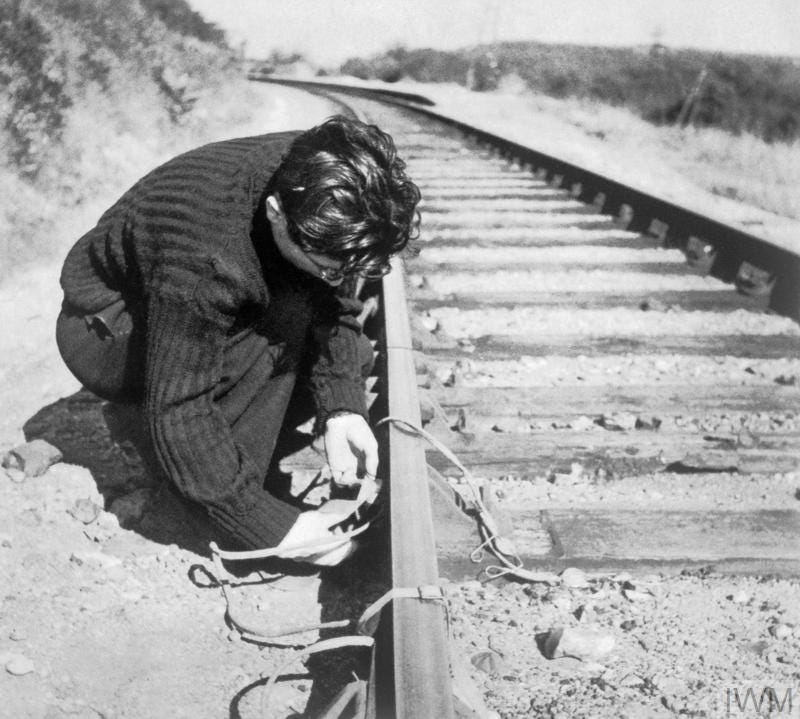
On the eve of battle, two great war machines presented a staggering, fatal contrast.
The Allied system under SHAEF was built on rigidity and clear delegation. It was a singular, unified command structure running on a clean line:
Eisenhower - Montgomery - Army Commanders (Bradley and Dempsey).
If a crisis hit, everyone knew exactly who to call. It was built for sound judgment, efficiency, and total synchronisation.
The Third Reich, by contrast, was a fractured, chaotic feudal court built on petty rivalries and overlapping commands:
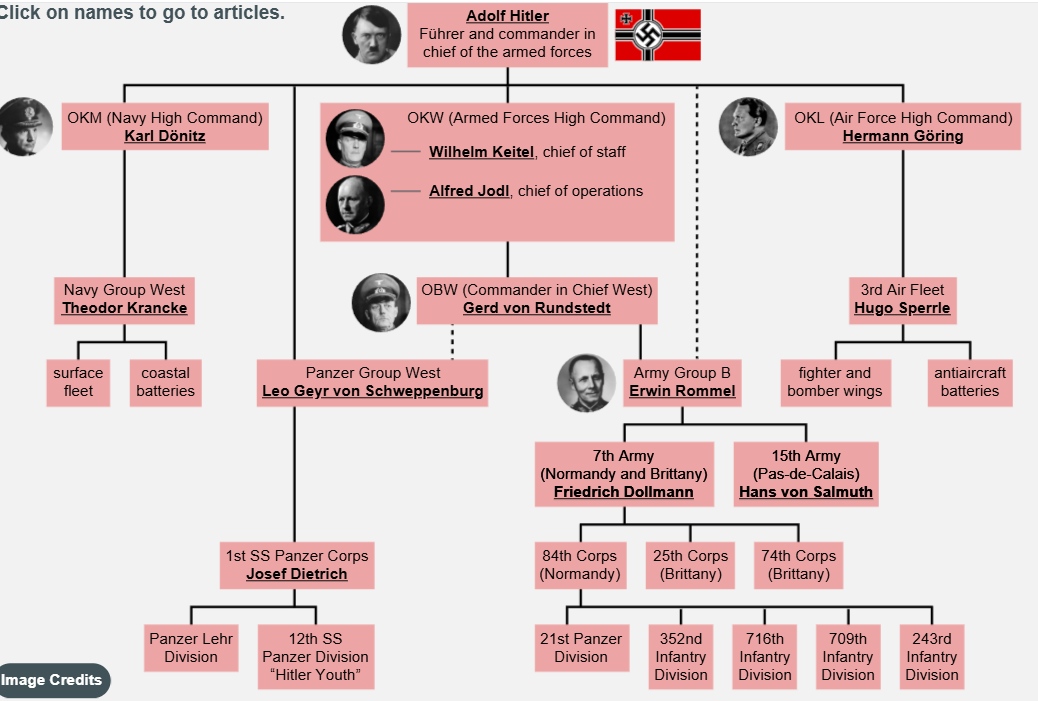
OB West (Field Marshal Gerd von Rundstedt): The old-school aristocrat. He believed Normandy was a distraction and wanted to hold his elite armoured reserves (Panzer Group West under Geyr von Schweppenburg) deep inland. His strategy: let the Allies land, and then launch a massive, concentrated counter-offensive to drive them into the sea.
Army Group B (Field Marshal Erwin Rommel): Rommel knew Allied air supremacy would completely paralyse all daytime movement inland. His strategy: dig the Panzers in right on the coast and stop the Allies at the water’s edge on day one. “The first twenty-four hours,” he warned, “will be the longest day.”
To settle this corporate deadlock, Hitler made the worst decision possible. In attempting to please both, he pleased no one. He created the OKW Reserve.
The premier heavy tank formations—the 1st SS Panzer, 12th SS Panzer Hitlerjugend, and Panzer Lehr—were placed in a paralysed state away from the front. They could not be moved, fueled, or deployed without a direct release order from Adolf Hitler himself.
The Germans were fighting like rats in a sack, and the sack was held by Hitler himself—the self-proclaimed military genius with a fondness for injections. The happy tragedy of the German High Command was that both men were ultimately fighting over personal control, not over a winning strategy. In reality, there was no good solution for the Germans. Place the armour far away, and Allied air supremacy ensured they wouldn’t make it to the front in time. Place them right on the beachheads, and they would be completely smashed under the horrific weight of offshore Allied naval bombardment.
The Allies, meanwhile, were calmly sitting around a large mahogany table, amicably discussing the best way to do business, with time set aside for lunch and numerous tea breaks, of course.
End of Part 1.
I truly hope you enjoyed
As always, thanks for reading.
Please leave a comment and let me know what you think.
Until next time
Ru
No posts
Comments
Nothing yet. Say the first thing.
Sign in to join the conversation.