
By Ru Johnson
By May 1944, the Italian Campaign had become a certain bet. The Allies were no longer fighting for individual hills; they were leveraging the full weight of an industrial war to shatter the German 10th and 14th Armies. While the world looked wistfully towards the English Channel, the most brutal, technical, and high-stakes battle of the year was reaching its crescendo in the shadows of the Apennine Mountains.
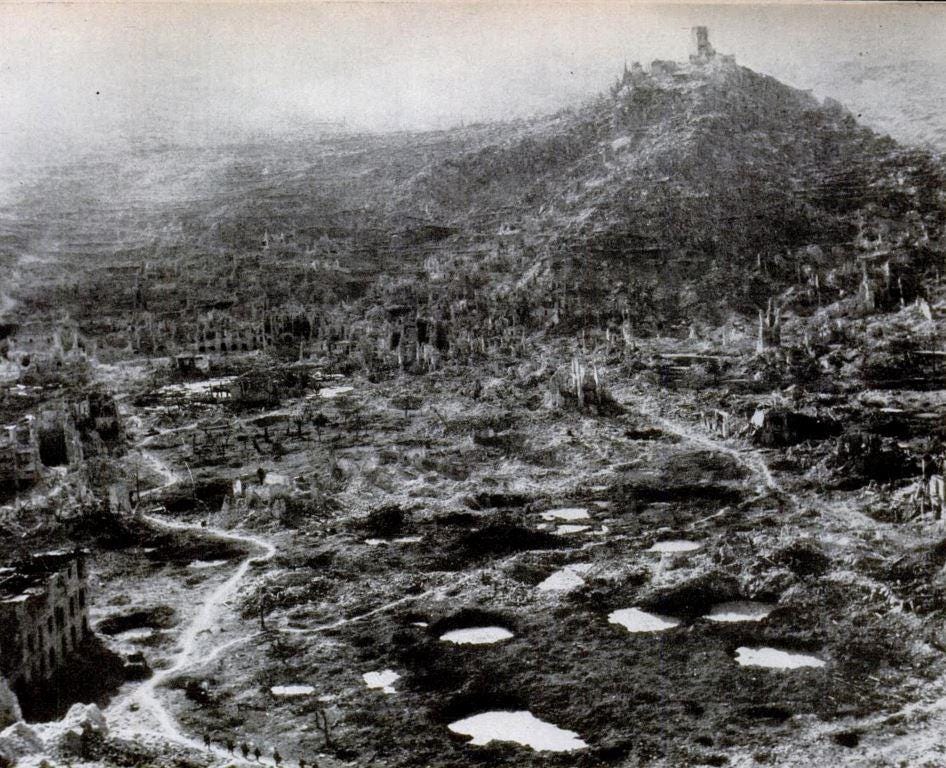
The German defence, anchored by the formidable General von Vietinghoff, rested on a single geographical certainty: the Aurunci Mountains were impassable. The Germans sensibly believed the jagged limestone peaks and vertical scrubland south of the Liri Valley were a natural wall that required only a very thin crust of the hammered 71st Infantry Division to guard.
The German defence, anchored by General von Vietinghoff, rested on a single geographical certainty: the Aurunci Mountains were impassable. The Germans believed the jagged limestone peaks and vertical scrubland south of the Liri Valley were a natural wall requiring only a thin crust of the hammered 71st Infantry Division to guard.
Unfortunately for the Jerries, they hadn’t met General Alphonse Juin and the French Expeditionary Corps (CEF). Juin knew that where a goat could go, a man could follow—if that man was a Moroccan Goumier. These tribal warriors, carrying their signature koummiya daggers and wearing striped djellabas, specialised in the mountain warfare that terrified standard soldiers. They were the legendary troops of Moulay Driss Zerhoune, from Taza and the rugged Atlas Mountains. Martin Rose recalled: “My father, who saw his twenty-first birthday in a dug-out opposite the monastery at Cassino in March 1944, used to say of them, echoing the Duke of Wellington: 'I don’t know what effect they had on the enemy, but by God they scared the living daylights out of me.'”
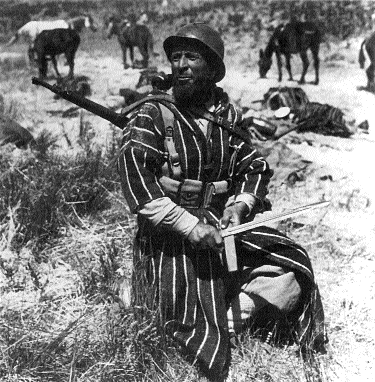
Now, history has a glimpse of what they did to the enemy. Tasked with climbing steep slopes covered in mud and snow that the Germans judged unscalable, they secured the peaks under a torrent of artillery fire. By scaling the Spino-Saturnia Ridge on May 13 and 14—while the British 8th Army was still fidgeting like an autistic child with river crossings in the valley—the French force did the impossible: unzipping the Gustav Line. They outflanked Cassino entirely, conquering the neighbouring summits of Monte Majo, Monte Aurunci, and Belvedere, before spilling into the Orcenti Valley by May 15.
The tactical impact was immediate. By seizing the heights, the French physically split the German 71st and 94th Divisions, shoving the 94th toward the Tyrrhenian coast and pushing the 71st deep into the interior. The hinge of the Gustav Line snapped. Field Marshal Albert Kesselring himself later admitted the shock, writing: “The French, and above all the Moroccans, fought furiously and exploited every success by concentrating their forces on each point that showed signs of weakening.” The Germans expected a battle of Grit and Metal in the valley; they didn’t expect an army to drop from the clouds onto their heads and open the route to Rome. Of the French force that bled for this breakthrough, 72,000 men—sixty per cent—were Moroccans.
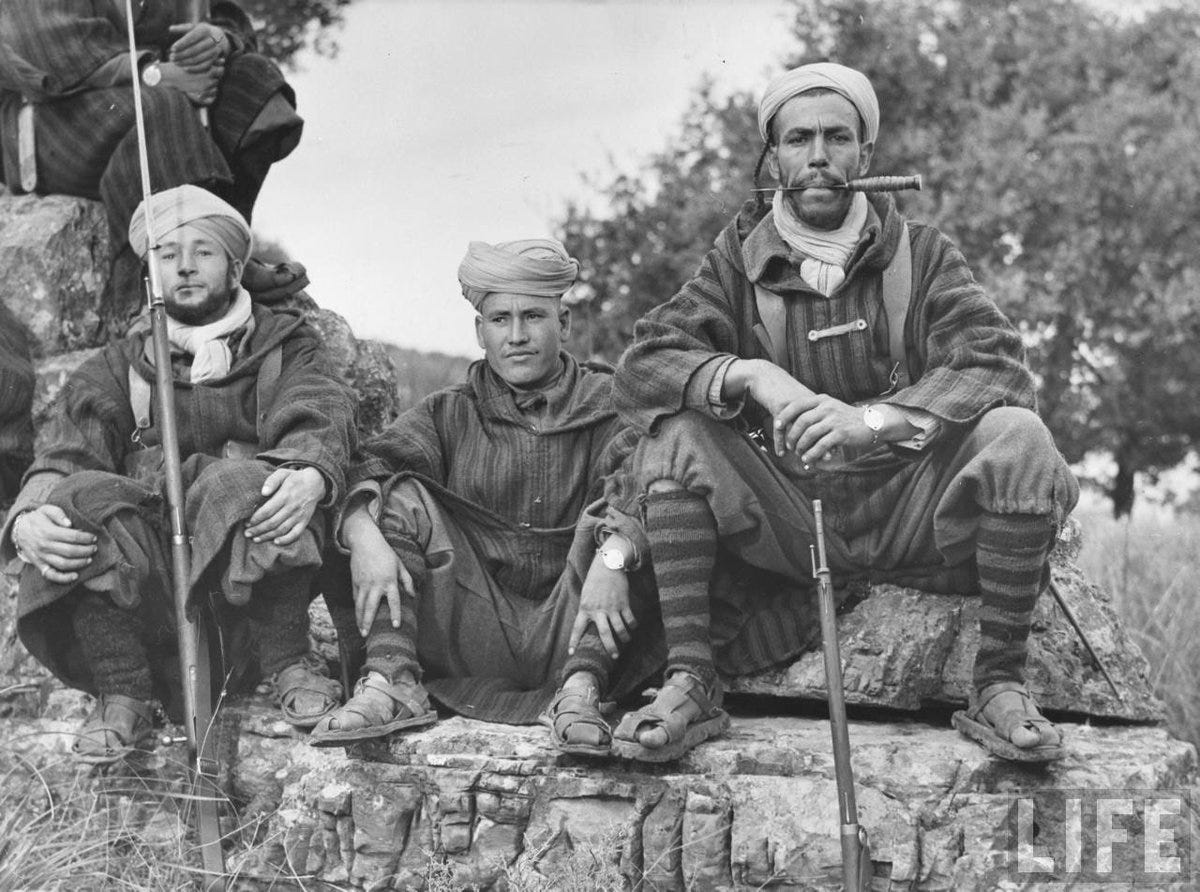
But history cannot sanitise the blade. These Goumiers were brutal men; they cared not for Geneva Conventions or moral standards. While their fighting ability was undeniable, their behaviour in the wake of triumph was abhorrent; raping and pillaging helpless Italian civilians in the surrounding hills was normal and even sanctioned. Even in a war as brutal as this, there were standards other forces did not stoop to. The blood they poured out to conquer the unscalable peaks opened the road to Rome, but the horror they left in the valleys below remains a permanent, tragic tarnish on their reputation—one that must never be overlooked.
The fall of the Aurunci Mountains had turned the Abbey of Monte Cassino from a fortress into a strategic liability. The 1st Parachute Division—the “Green Devils”—realised that if they stayed, they wouldn’t just be defeated; they would be swallowed whole by the French surge. By mid-May, the “Green Devils” were functionally decimated. Companies that should have boasted 150 men were down to twenty or thirty hollow-eyed veterans, deaf from months of shelling and covered in a permanent layer of white stone dust.
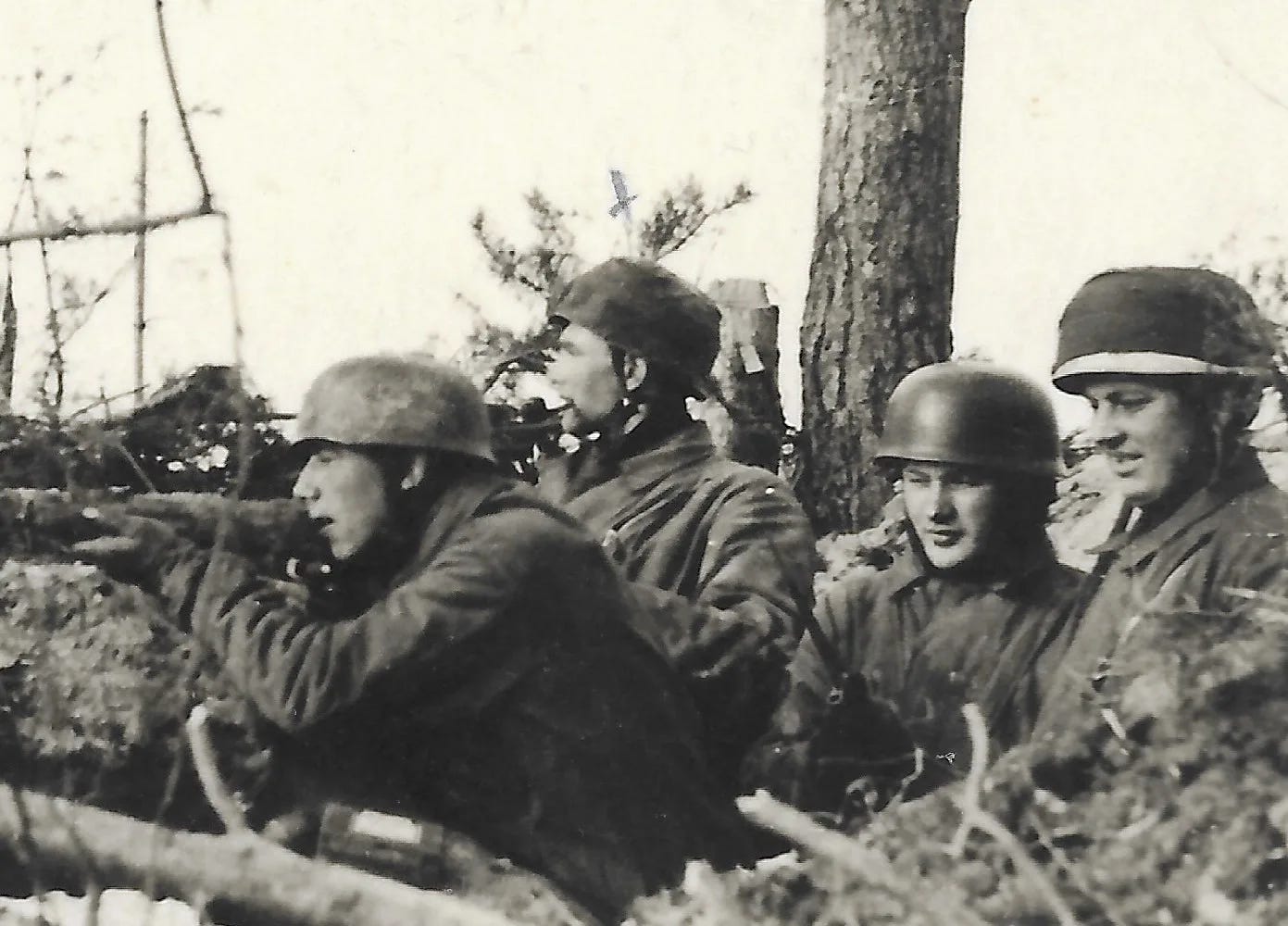
In the ruins of the Abbey and the immediate bunkers of the “Figure of Eight,” perhaps only 800 to 1,000 combat-effective paratroopers remained to hold the line. On the evening of May 17, Field Marshal Kesselring finally pulled the pin, issuing the order to withdraw before the French and Polish pincers snapped shut.
The 2nd Polish Corps under General Władysław Anders was waiting for this moment. These were men fueled by a volatile mix of burning patriotism and a cold, hard desire for revenge. Since their costly first attack on May 12, the Poles had become the reluctant experts of the mountain. They now knew the geometry of every bunker, and it was the Poles who discovered the “Figure of Eight” defensive system and how to overcome it by overrunning more than 50% of it at a time.
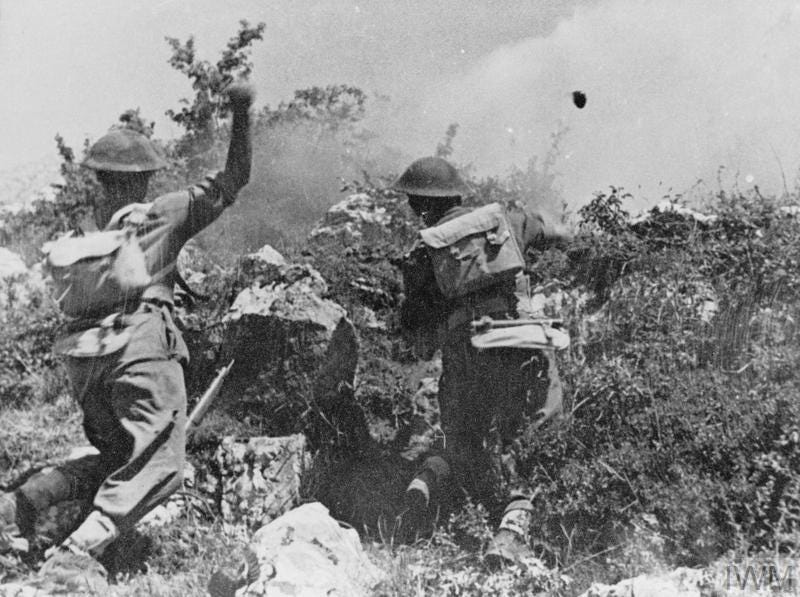
On the night of May 17, Anders launched his final, decisive crusade. It was a night of horrific, close-quarters combat—a chaotic, midnight brawl where the air was thick with the smell of cordite and the screams of dying men. The Poles used grenades and bayonets to clear the jagged “Phantom Ridge” and crucially swamped Point 593.
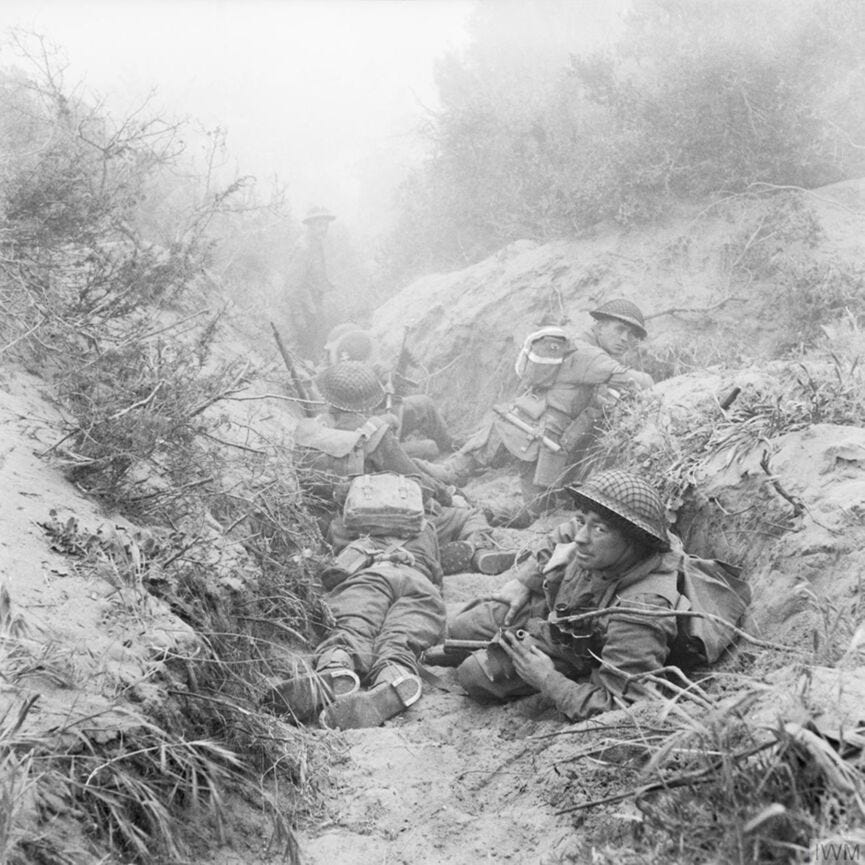
But as the Polish bayonets were busy in the dark, the main body of the German paratroopers was slipping away. This wasn’t a panicked flight; it was a disciplined withdrawal. Firing off their remaining mortar ammunition to keep the Poles’ heads down, the “Green Devils” conducted a silent retreat toward the Senger Line. They moved in tiny groups of ten or twelve, abandoning their heavy gear and carrying only their ammunition and their survivable wounded. They left behind a small, sacrificial rearguard—tiny platoons tasked with a suicide mission to keep the MG-42s barking to buy the rest of the survivors time.
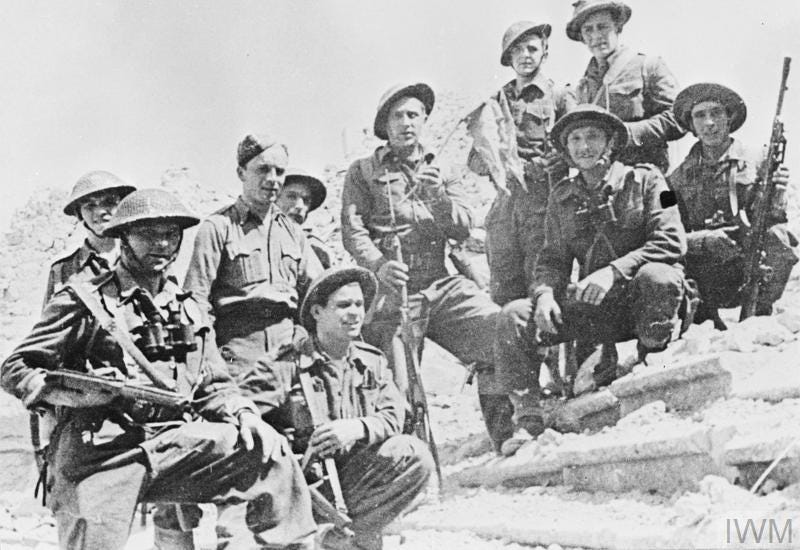
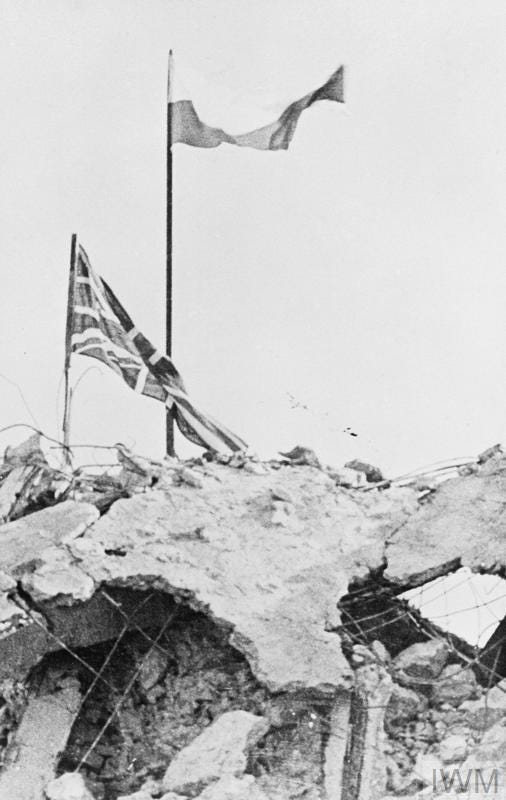
By dawn, the mountain had gone eerily silent. At 10:20 AM on May 18, 1944, a patrol of the 12th Podolski Lancers finally reached the summit of Monastery Hill. They didn’t find a garrison waiting for a last stand; they found a landscape of absolute desolation—craters, unburied dead, and just three wounded Germans left behind in the rubble, physically unable to crawl away. There, among the ruins of a monastery that had survived a thousand years only to be pulverised in four months, they raised a makeshift Polish flag. The “God’s Eye” that had watched the Allies die for six months was finally closed, and the Via Casilina road to Rome was open.
With the Gustav Line shattered at Cassino and the German 10th Army in full retreat, the “cork” at Anzio didn’t just pop—a massive Allied sledgehammer blew it out. On the morning of May 23, 1944, the US VI Corps launched Operation Buffalo. This was no longer the sleepy force that had waded ashore in January; it was a coiled spring of six full divisions, backed by an industrial output the German defenders could no longer match. A “Corps” only in name, this was a dense concentration of material and manpower that only the Allies could assemble on such a narrow front.
General Lucian Truscott, brought in after Lucas was sacked, was now commanding VI Corps. He had spent the stalemate months turning the beachhead into a springboard platform of 150,000 men. The assault was a five-division “hammer” punch, with the primary weight carried by the US 1st Armoured Division (“Old Ironsides”), the US 3rd Infantry Division, and the US 45th “Thunderbird” Division. Protecting the mountainous right flank was the elite 1st Special Service Force, while the British 1st and 5th Divisions provided the pivot and holding pressure on the left. The US 34th “Red Bull” Division stood poised in reserve, ready to exploit the inevitable gap. Facing this was the remnants of the German 14th Army, commanded by Eberhard von Mackensen. His units, like the 362nd and 715th Infantry Divisions, were hollowed out and exhausted. While they were dug into deep, sophisticated trench systems and deadly minefields, they were critically short on fuel, armour, manpower, and the ammunition required to stop a breakout of this scale.
They didn’t stand a chance.
While the infantry and armour did their thing on the ground, the war was being decided in the blue skies above. With the swift capture of the Foggia airfields earlier in the campaign, the Allies had secured a strategic blessing in the rare flat land of Italy. By the launch of Operation Buffalo, the Mediterranean Allied Air Forces (MAAF) had swelled into a leviathan of nearly 16,000 aircraft—the largest and most versatile air armada the world had ever seen.
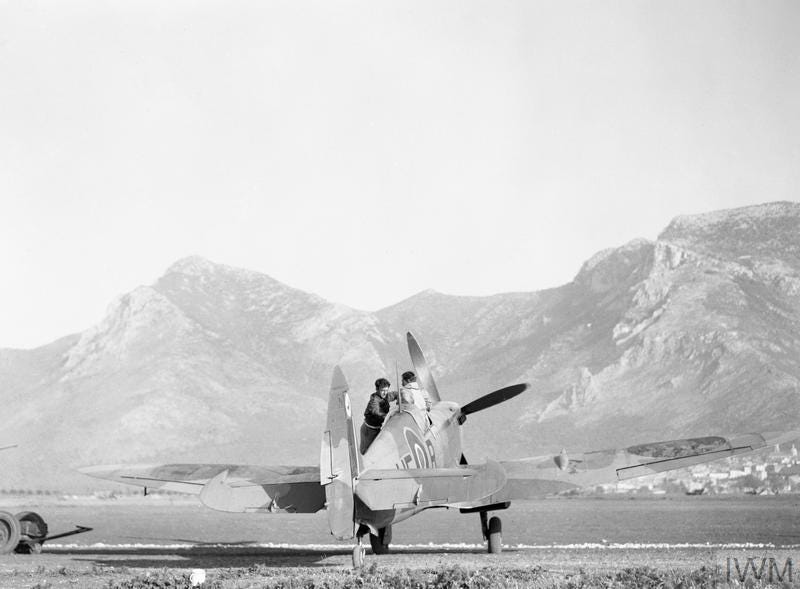
As the spring weather cleared, this force unleashed a relentless campaign of “interdiction” that effectively paralysed the German Heer. Under the umbrella of Operation Strangle, Allied P-47 Thunderbolts, Spitfires, and Mustangs maintained an aluminium ceiling over the battlefield. They weren’t just attacking front-line trenches; they were hunting. Anything that moved on a road or rail line north of Rome was systematically shredded. German logistics became charred wrecks; German tanks, already a nightmare to maintain and supply, were forced to remain hidden under haystacks or in olive groves during the day, moving only in short, panicked bursts under the cover of night.
This air supremacy transformed the tactical reality for the Germans. While the Allies could funnel thousands of tons of supplies into Anzio and Cassino with impunity, the German 10th and 14th Armies were being starved out. By the time the breakout began, the German Luftwaffe had been swept from the sky, leaving their ground troops to endure relentless attacks from above, severely impacting morale. The sight of endless waves of B-24 Liberators and B-17 Flying Fortresses droning toward the industrial hearts of Northern Italy, Austria, and the Balkans served as a constant, crushing reminder to the German soldier: the Allies didn’t just have more men; they owned the very air they breathed.
At Anzio, with his feet firmly on the ground, Truscott didn’t believe in subtle probes (he didn’t need to); he believed in crushing weight. At 05:45 AM, nearly 1,500 Allied guns—one for every 20 yards of the front—opened up in a synchronised roar. This was a sophisticated “Time on Target” barrage in which shells from various batteries, despite being at different ranges, all impacted the German lines at the same second. Unlike the cumbersome, static barrages of the First World War, this was a precision-engineered storm. They would concentrate their fire on a specific sector, plaster it into oblivion, and move immediately to the next. Over 20,000 rounds were fired in the first hour alone. Behind every blast was the staggering industrial might of factories across the Atlantic and the immense shipping to get it to the front; the Germans, huddled in their musty bunkers, could only weep at the sheer disparity of resources.
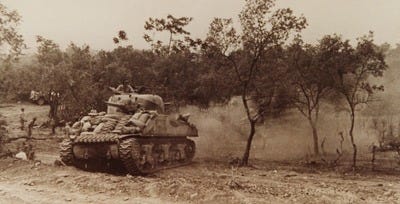
The primary tactical objective was the town of Cisterna, a labyrinth of reinforced cellars that had anchored the German defence for 123 days. To break it, the 1st Armoured Division utilised Shermans equipped with “Culin” hedge cutters to tear through thick vineyards and irrigation ditches that had previously bogged down Allied movement. Moving across the grain of the country with close support from the GIs, they showed they had learned from their past errors. As the tanks punched forward, the 1st Special Service Force—the “Devil’s Brigade”—operated as the lethal shadow to this armoured hammer. These elite American and Canadian mountain men, armed with V-42 stiletto knives and Johnson light machine guns, scaled the jagged ridges of the Artena Gap under the cover of darkness. They blackened their faces with shoe polish and moved silently through the heights, clearing outposts and leaving “death cards” on neutralised sentries. By seizing the high ground, they ensured the German Hermann Göring Division couldn’t shift reinforcements down to plug the massive breach in the valley.
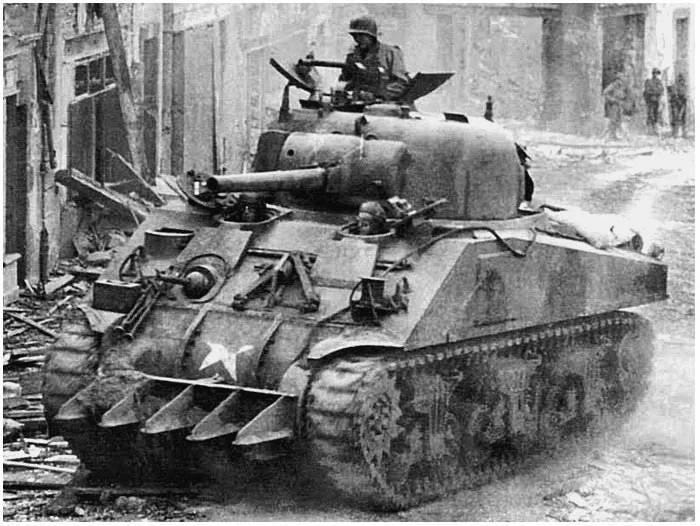
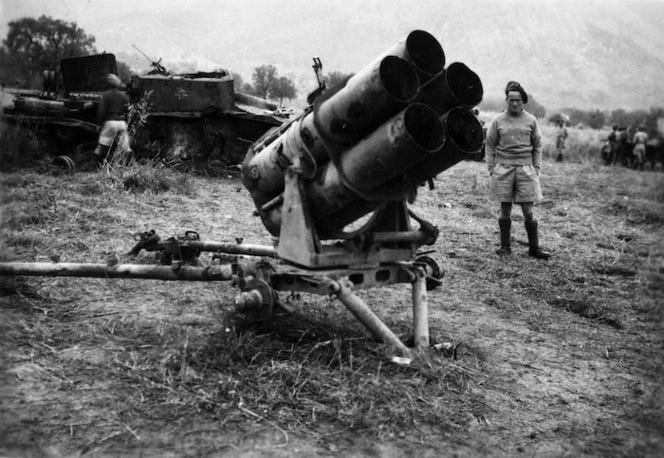
However overwhelming the Allied superiority, the fighting on the valley floor remained intimate and horrific. The 3rd Infantry Division bore the brunt of the frontal assault on Cisterna, weathering a typhoon of steel from German Nebelwerfer rockets and blistering MG-42s. The violence was so concentrated that on the first day of Buffalo alone, the 3rd Division suffered nearly 1,000 casualties—more than they had taken during the entire Anzio landing in January. By May 25, the crushing weight of Allied armour and air support finally broke the German back; Cisterna fell, and the 14th Army was split in two. The Allies pushed on, with a plan in mind…
General Alexander’s plan for Buffalo was the most ambitious strategic move of the campaign. The US VI Corps was to strike northeast toward Valmontone, a town that sat directly atop Highway 6 (the Via Casilina). If the Americans could reach Valmontone, they would close the main escape route for the German 10th Army as it retreated from Cassino. It was designed to be a “Stalingrad on the Tiber”—a giant pocket where the bulk of German forces in Central Italy would be trapped and destroyed between the 8th Army coming from the south and the Americans holding the road in the north. This move had the potential to end the war in Italy in a single week.
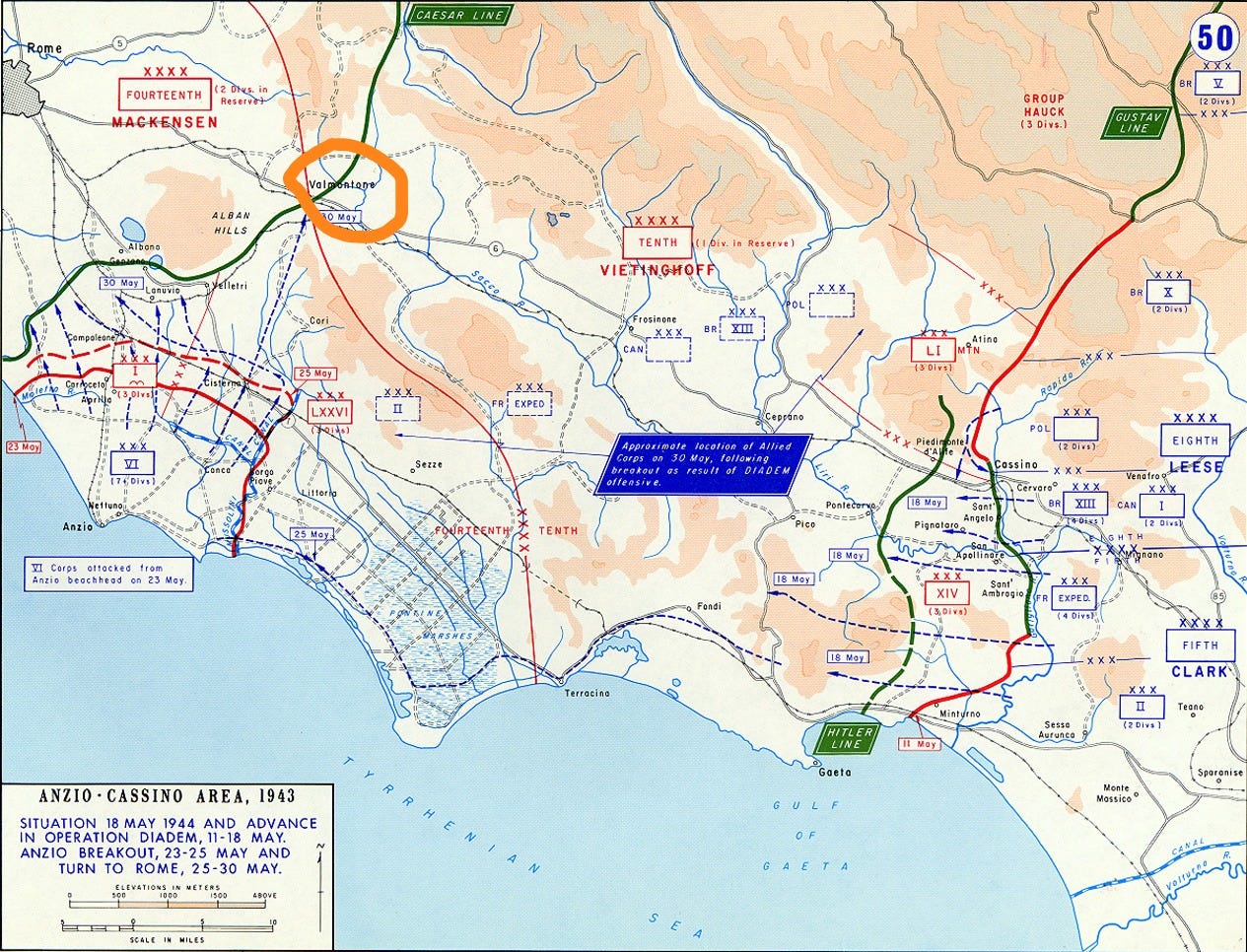
This brings us to the most controversial moment of the war: General Mark Clark’s decision to pivot the US 5th Army away from Valmontone and head directly for Rome. History has often painted Clark as a vainglorious “headline-hunter” obsessed with being the first man into the Eternal City. While this may be true, it does not necessarily affect his judgment as a battlefield commander; the tactical reality on the ground painted a different picture.
The German 10th Army wasn’t retreating in a neat column on Highway 6 as expected. Realising the danger, they had already abandoned the main road for multiple sub-Apennine mountain passes and narrow tracks to the north. These troops, being in the infantry, could scarper away up goat paths the Shermans couldn’t follow. The “Valmontone Trap” was largely a theoretical pocket; the Germans had already filtered past it.
“Not a single German soldier retreated up Highway 6.” — James Holland.
Clark was smart enough to know that plans change; there was no point sending everyone up to Valmontone. He instead chose to send the bulk of his forces to the eternal city of Rome. While Rome had been designated an “open city” by the Germans, they were not to be trusted; they could easily change their minds. It would be unacceptable to pulverise the city in a street-by-street fight. It is worth remembering that although we often discredit the Italians (sometimes fairly), they were a founding member of the Pact of Steel, and this was their capital city—the first capital of the Axis to be captured by the Allies, a grand prize indeed. By pivoting, Clark ensured Rome was captured swiftly and decisively. He wasn’t just chasing a headline; he was securing the important political trophy of the campaign before the window of opportunity slammed shut.
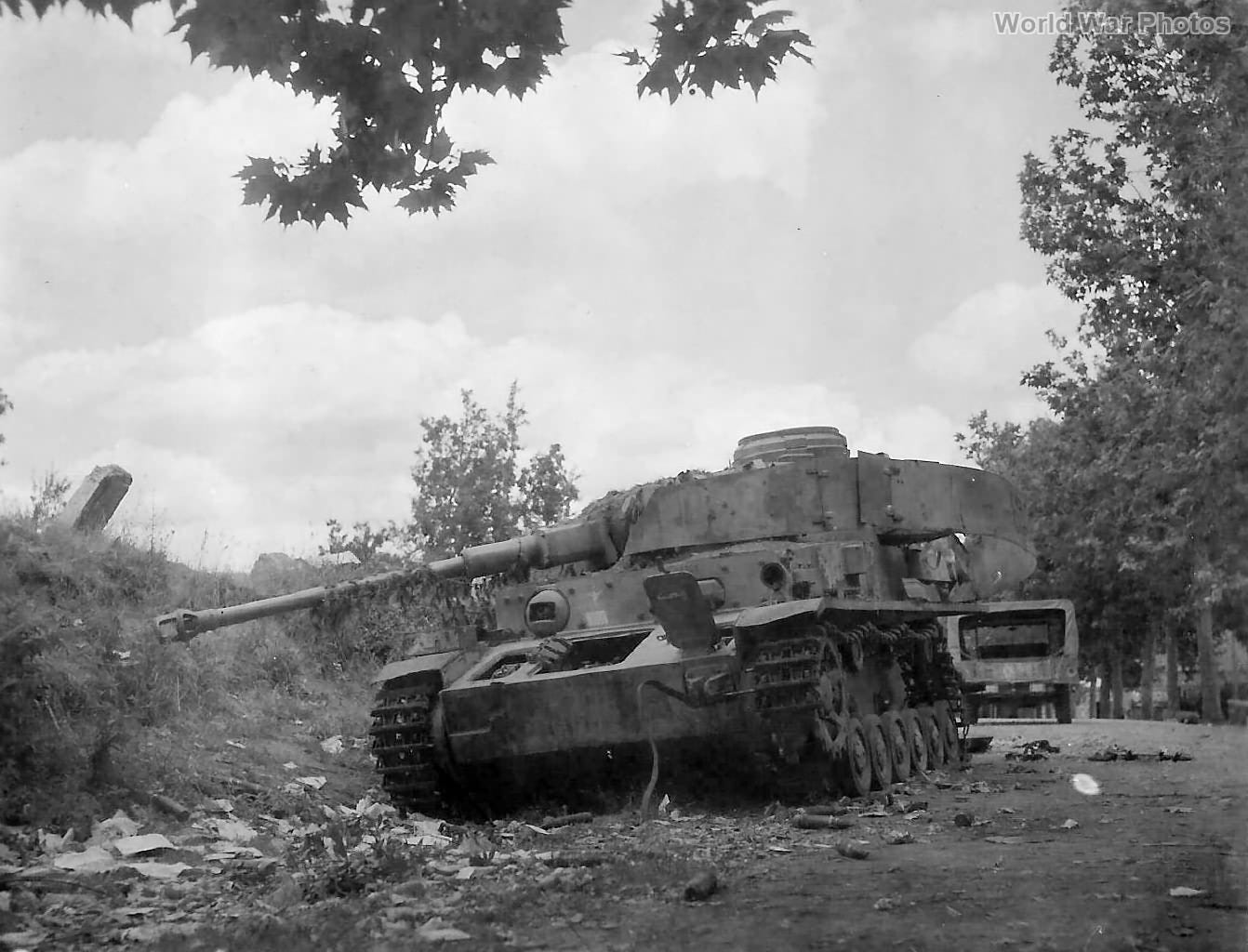
The final collapse was only a matter of time. Thanks to Operation Strangle, the German logistical network was in total ruin. The German 10th Army was limping on a mere 1,357 tonnes of supplies per day across the entire front. Meanwhile, the Allies were pumping 4,000 tonnes a day into the Anzio front alone. Enough said, you get the point!
On June 4, American tanks clattered through the streets of Rome. Miraculously, the city remained intact. The Colosseum and the Vatican stood as silent witnesses to a liberation that felt like a miracle. The crowds were ecstatic, showering the liberators with flowers as if they were pop stars on a world tour.
The celebration lasted exactly 48 hours. On June 6, 1944, the news of the D-Day landings in Normandy hit the airwaves. In an instant, the Italian campaign—the most ferociously technical and brutal theatre of the war so far—became a “Forgotten Front.”
But the victory was absolute. Strategically, the sacrifice at Cassino certainly helped the Normandy and Soviet offensives. Because of the “typhoon of steel” ripping its way up Italy, the Germans had been forced to keep nearly 30 divisions pinned down in the South. Every German paratrooper dying for a ridge in the Aurunci was one less soldier guarding the Atlantic Wall. The Allies had shattered the “impassable” line so that the men in Normandy would have a fighting chance.
This is the end of the casino series. Who knows where we will go next, but I do fancy a bit of Operation Overlord, which would fit in nicely with this. Stay tuned, and remember any feedback is always appreciated.
All the best.
RU
No posts
Comments
Nothing yet. Say the first thing.
Sign in to join the conversation.