
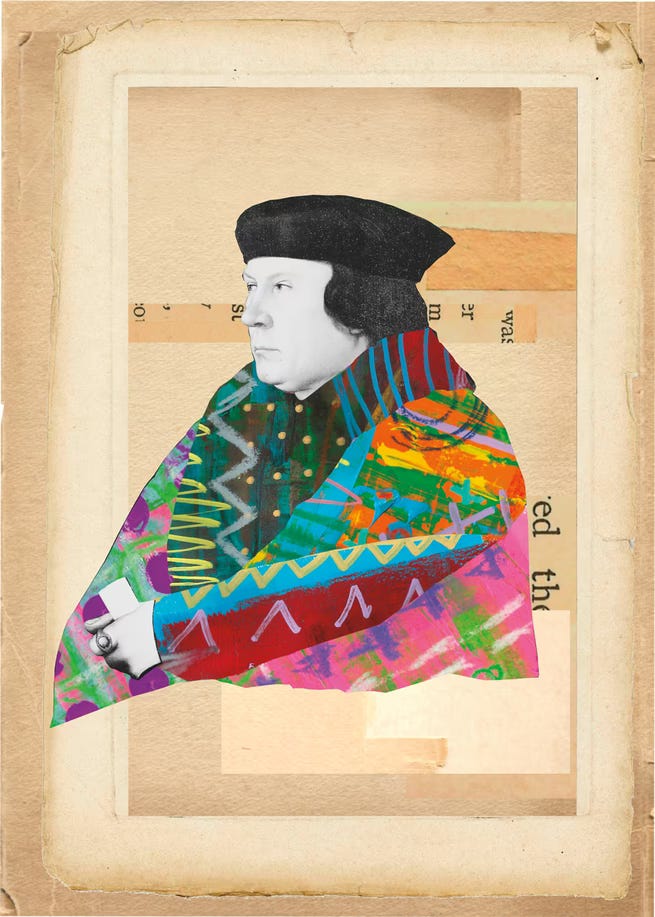
In Part I of this series we began with Diarmaid MacCulloch’s short and very revealing video on G. R. Elton, and in Part II we moved from Elton’s broad claim about a “revolution in government” to the actual statutes and administrative changes of the 1530s. MacCulloch’s own summation of Elton’s achievement was that he restored Cromwell to
“an unassailably central place in the story of early Tudor England and the Reformation”,
and that in so doing he altered the way this “archipelago” could be understood.
In this final post, I want to turn to the Cromwell Hilary Mantel inherits. Because by the time Mantel begins Wolf Hall, one part of the work has been done for her. She does not need to prove that Cromwell mattered to those who have studied the history of those times; Elton has already done that.
Mantel says so herself, in one of the most important sentences she ever wrote about the trilogy:
“The Tudor scholar G.R. Elton had established Cromwell as a statesman of the first rank, but Elton’s work had done nothing for his popular image.”
Mantel is not pretending that she discovered Cromwell in a vacuum. She knows perfectly well that modern historiography had already altered his standing. She identifies a gap — and it is precisely in that gap that Wolf Hall begins. Elton had changed Cromwell’s scholarly status; he had not changed the imaginative furniture of Tudor memory. Holbein’s portrait was still there. Robert Bolt was still there. The villain of the old story, the man with the hard eye and the cold hand, was still there. Mantel’s task was not to make Cromwell important. It was to make him imaginable and that is a much stranger and more ambitious project.
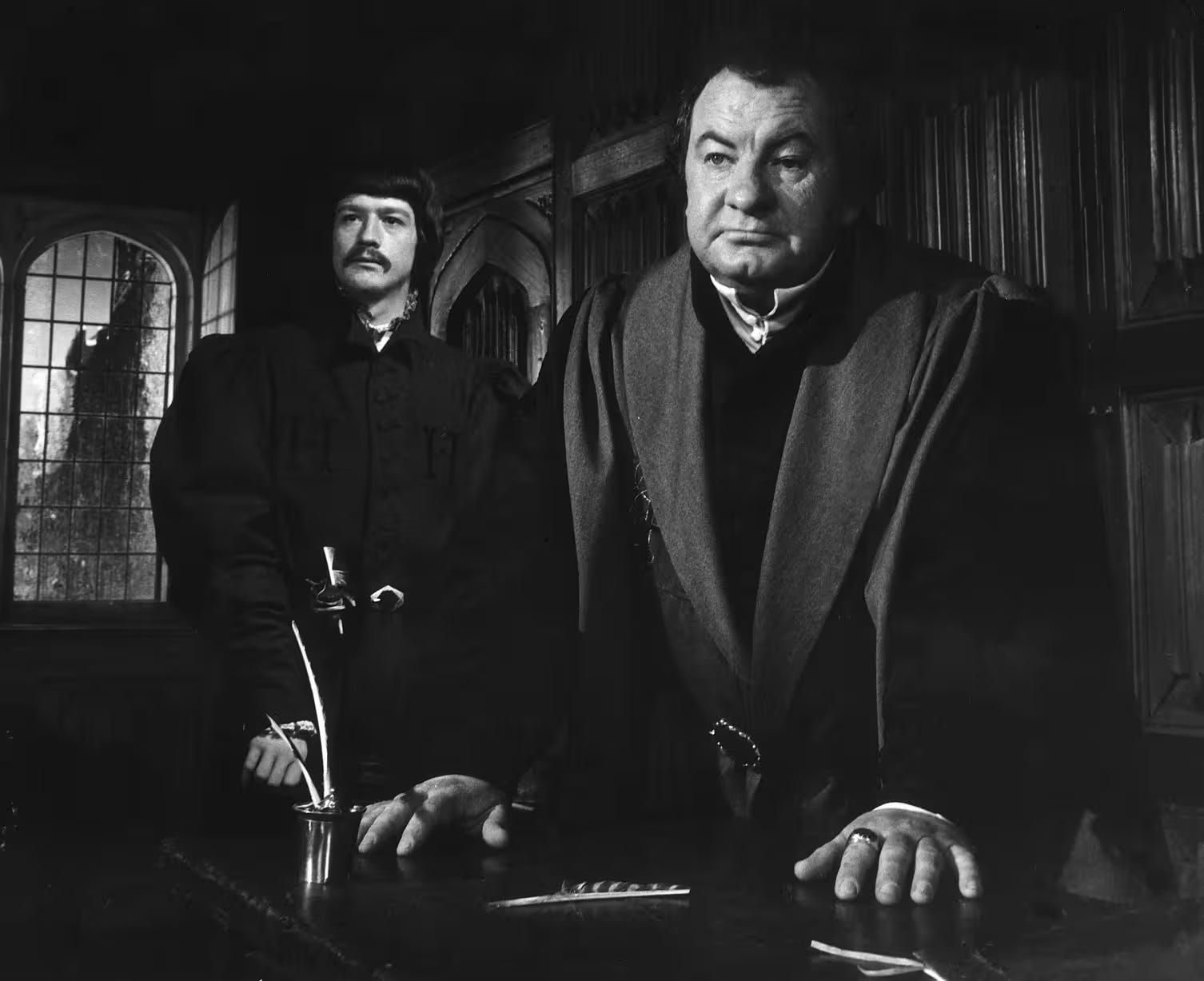
Elton had made Cromwell central to a transformation in government. Mantel makes him the medium through which an entire world is perceived. She does not begin with statute. She begins with a body in motion: the beaten child in Putney, the son of a blacksmith and brewer, the boy who survives. The shift is immediate and radical. Cromwell is no longer a name in a footnote to Henry or More; he is a sensorium, a memory-bank, an instrument for registering pressure, danger, and opportunity. The old question — what did Cromwell do? — is not abandoned. It is simply joined by a more difficult one: what did it feel like to be the man who did it?
Continue reading…
Comments
Nothing yet. Say the first thing.
Sign in to join the conversation.