
Readers of Hilary Mantel’s Wolf Hall Trilogy often say the novels feel intensely physical — you know when you’ve crossed a threshold, moved parish, stepped into danger — even if you couldn’t immediately point it out on a modern map.
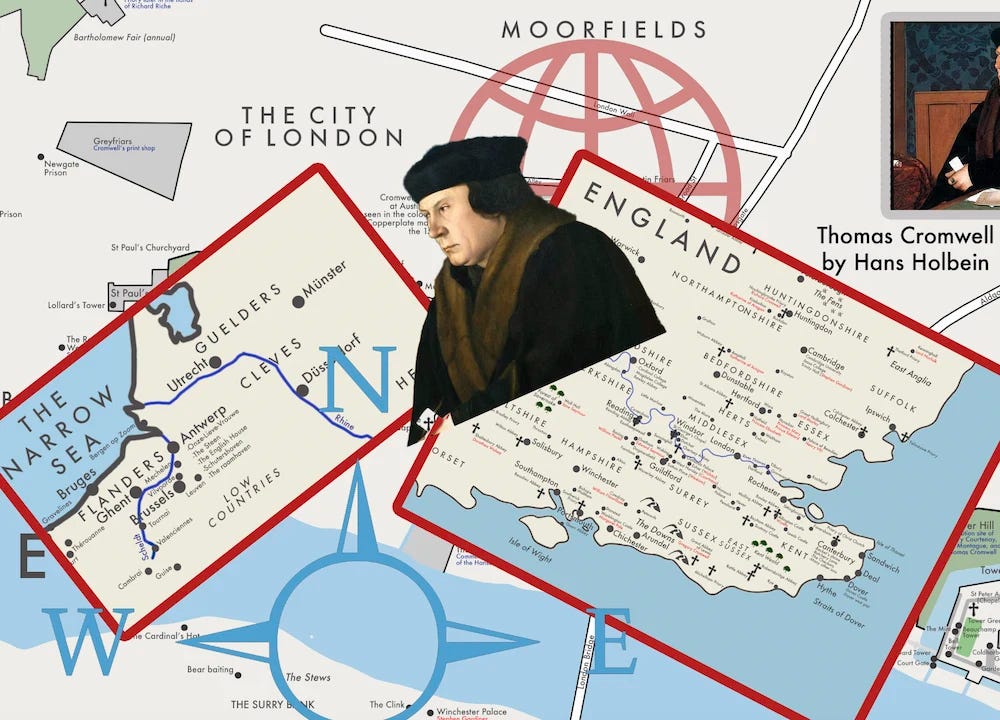
Matt Brown who is editor-at-large and former editor of londonist.com - the ultimate guide to what to see and what’s on in the nation’s capital - and the incredibly popular Londonist: Time Machine has meticulously searched out all the geographic places Mantel named in London, England, Ireland, Scotland, Wales, and beyond, and has mapped them into three amazing visual aids. Matt’s decision to include only places Mantel explicitly names has resulted in an essential companion for anyone reading her Cromwell novels.
At our Wolf Hall Weekend June 6/7, 2026, Matt will join our city ramble, walking places named in the trilogy from the Tower area through the City and up towards Austin Friars, Cromwell’s long-time London base. Ahead of that, I wanted to ask Matt about his ‘obsession’ with mapping literary works - including those of Charles Dickens and Sherlock Holmes.
WHW - Welcome Matt and thanks for taking the time out to tell us more about your Wolf Hall maps. Once you applied your rule — “if Mantel doesn’t mention it, it’s not on the map” — were you surprised about what she included and what disappeared from the London of Thomas Cromwell altogether?
Matt - Thanks! I’d say “yes, and no”. Some major locations are entirely absent from the novels. The most glaring is Holborn (an important route out of the City, and home to two of the legal Inns of Court, which are mentioned). Likewise, Ludgate never gets a mention, despite being a key part of the route from the City to Whitehall and Westminster. On the whole, though, I was more surprised by just how much Mantel did cram in.
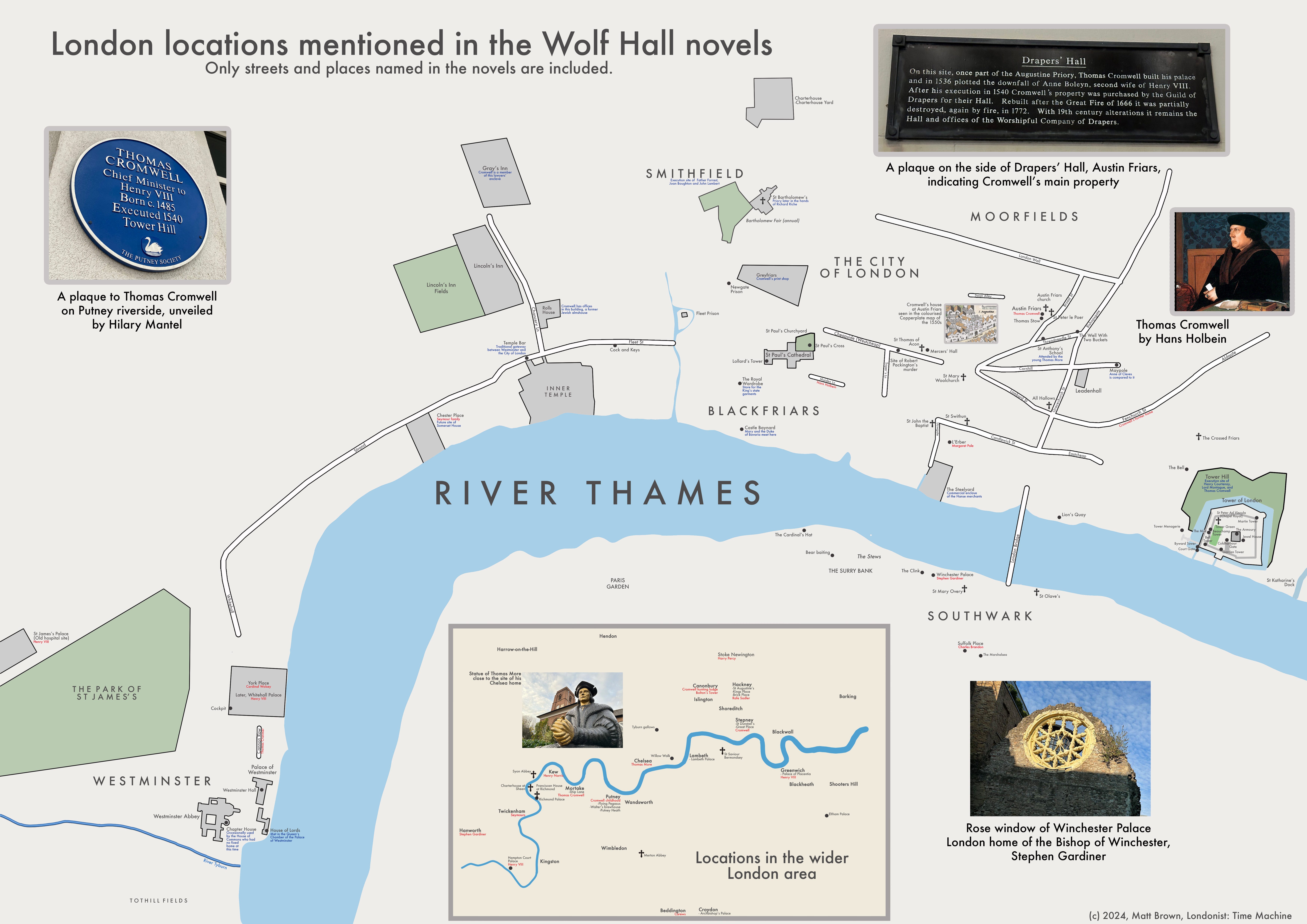
WHW - When you look at the finished London map, the Thames dominates everything. Did mapping it make you realise its greater significance in the past compared to today and how rarely people in the novels move without the river being involved?
Matt - You’re right, the Thames is the dominant feature of the map. Most of the King’s palaces (Hampton Court, Richmond, Westminster, Whitehall, Greenwich) are right beside it. Roads were unpaved and unreliable at the time, so those with money travelled by boat whenever they could. It was the great highway of the day. I think I was already aware of this from many years writing about London history, but the map brought this aspect to life visually. It also occurred to me that the Thames is a cypher for Cromwell’s life. His childhood is spent upriver in Putney. As a man, he flows downriver to York House to work for Wolsey, and then spends much of his time in Whitehall and Westminster with the King. His days flow inexorably onward and, still farther downriver, he meets his end overlooking the Thames at Tower Hill.
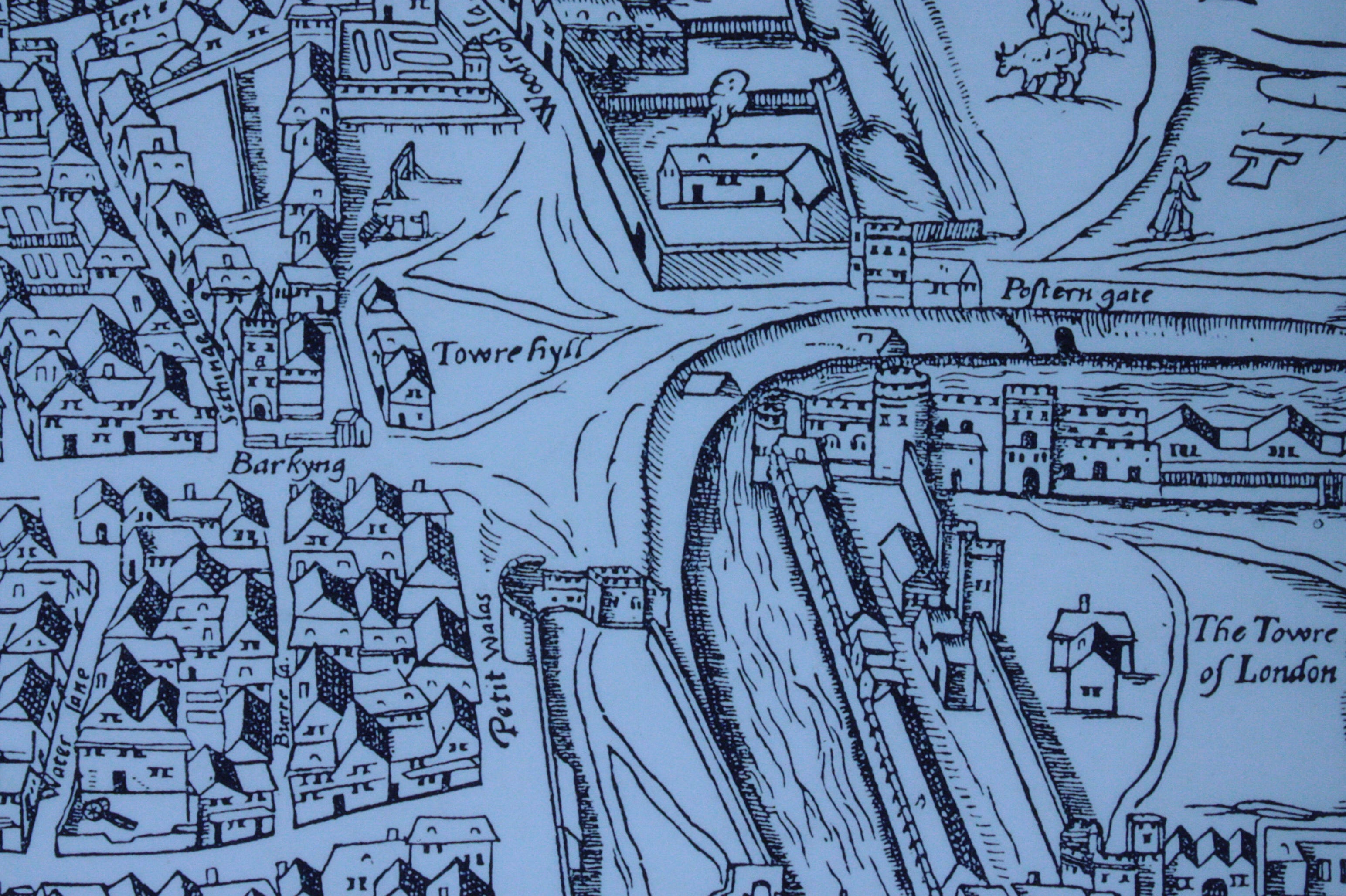
WHW - You’ve said the Tower of London is the most fully realised building in the trilogy. Were you tempted to map the buildings and rooms Mantel includes and are there any that stand out to you for their poignancy to the story.
Matt - I did, in fact, go some way to doing this, by adding the names of separate towers and other ares (like the menagerie) as they were mentioned in the text. 12 places within the Tower are namechecked in the books. I don’t think we quite get enough information to map the building at any greater resolution. Oddly, the bit I found most poignant was not the executions or tortures, but a detail from the very end of the last novel. As Cromwell is about to be escorted out to meet the axeman, his final thoughts are on another continent. He ponders William Hawkins’s expedition to Brazil: “I would have liked to know how that works out,” he muses. Mantel’s Cromwell was curious about the world to the final chop… and it’s details like that which make the character feel so real.
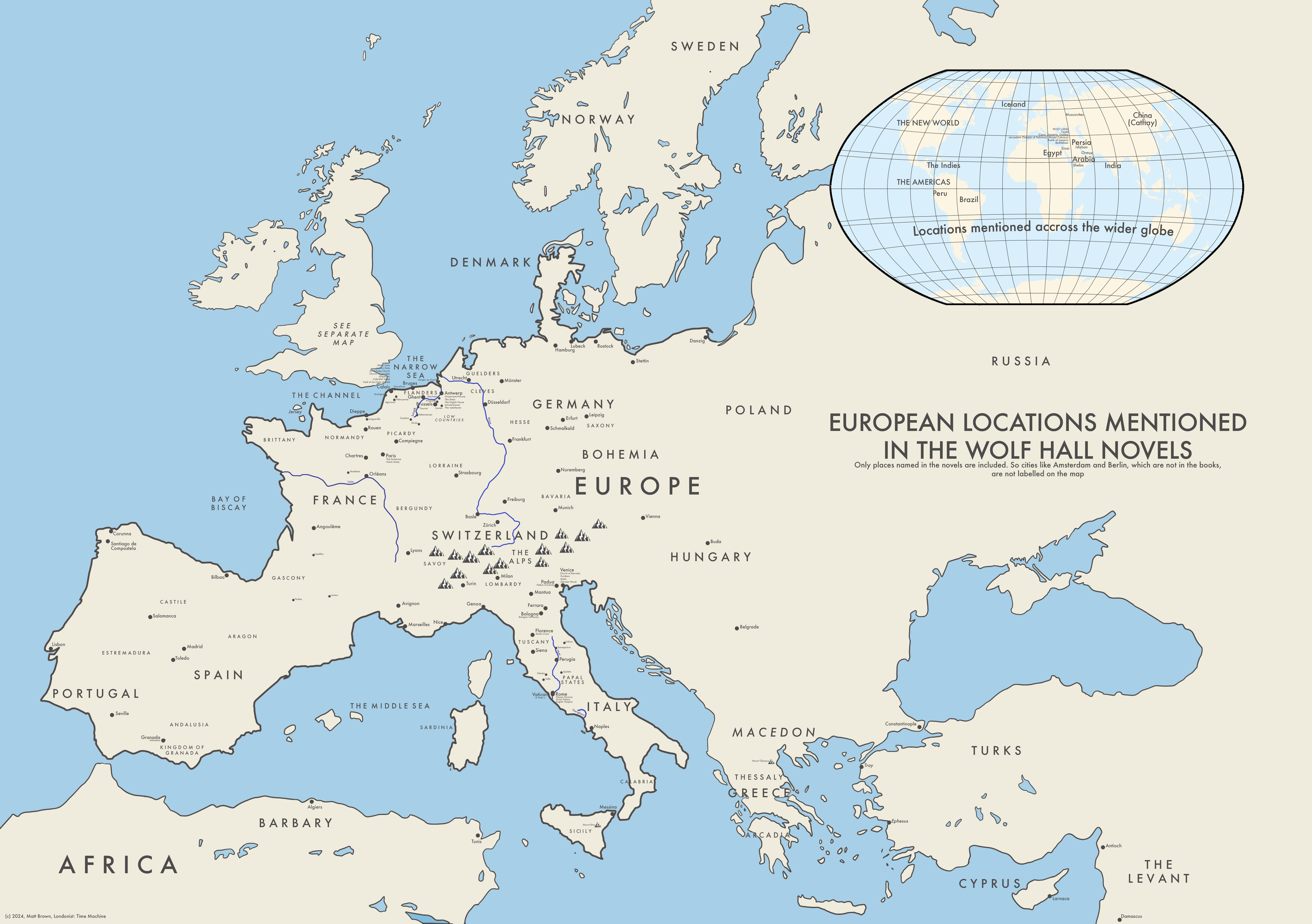
WHW - On the wider map of Britain, apart from the first novel’s namesake royal progress to Wolf Hall, the home of the Seymour’s in Wiltshire, am I right in thinking that most of the place names are associated with either the Dissolution of the Monasteries and The Pilgrimage of Grace, rather than journeys Cromwell made?
Matt - That’s right. Cromwell doesn’t do a great deal of travelling throughout the novels, and most of the place names are either related to the events you mention, or else mentioned in passing by various characters. Cromwell was at the centre of an intricate network of communications, and received missives from many locations, all captured on the map if they are mentioned. I did think about using different fonts or pins to indicate if a place is an actual setting, or if it’s just mentioned in passing, but from past experience this can get too messy.
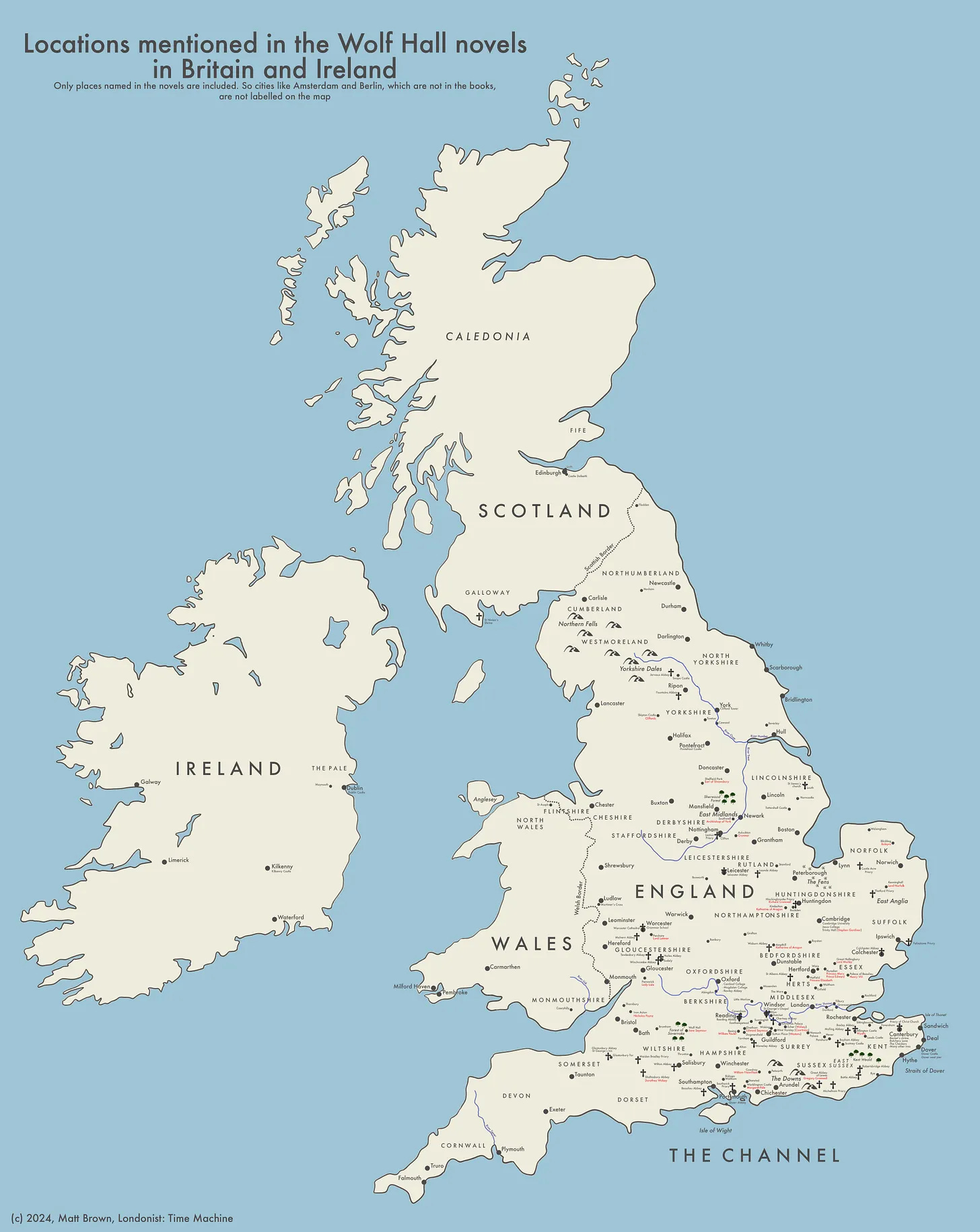
WHW - You say that some places Mantel includes stubbornly refuse to be pinned down - unnamed taverns for example, and not forgetting the mysterious “Tilney Abbey” - how did you connect that to Jane Austen and will you find the time to map all the places in her novels - real and imagined?
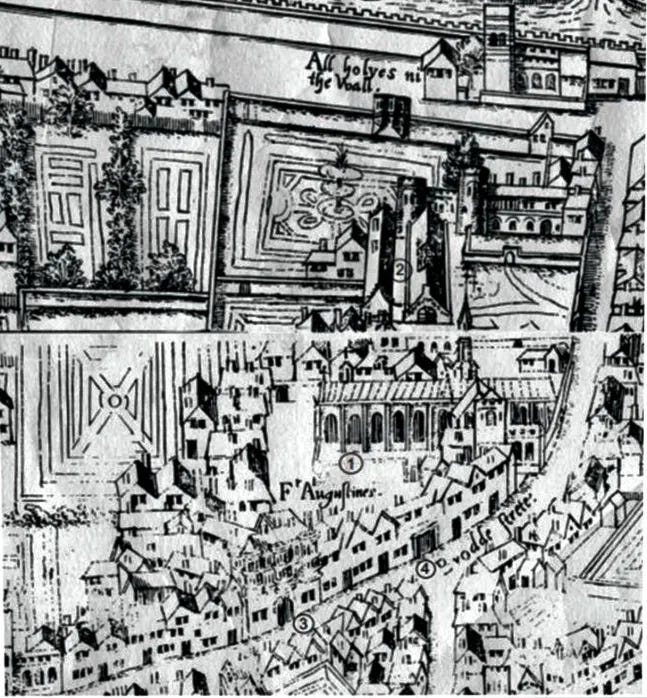
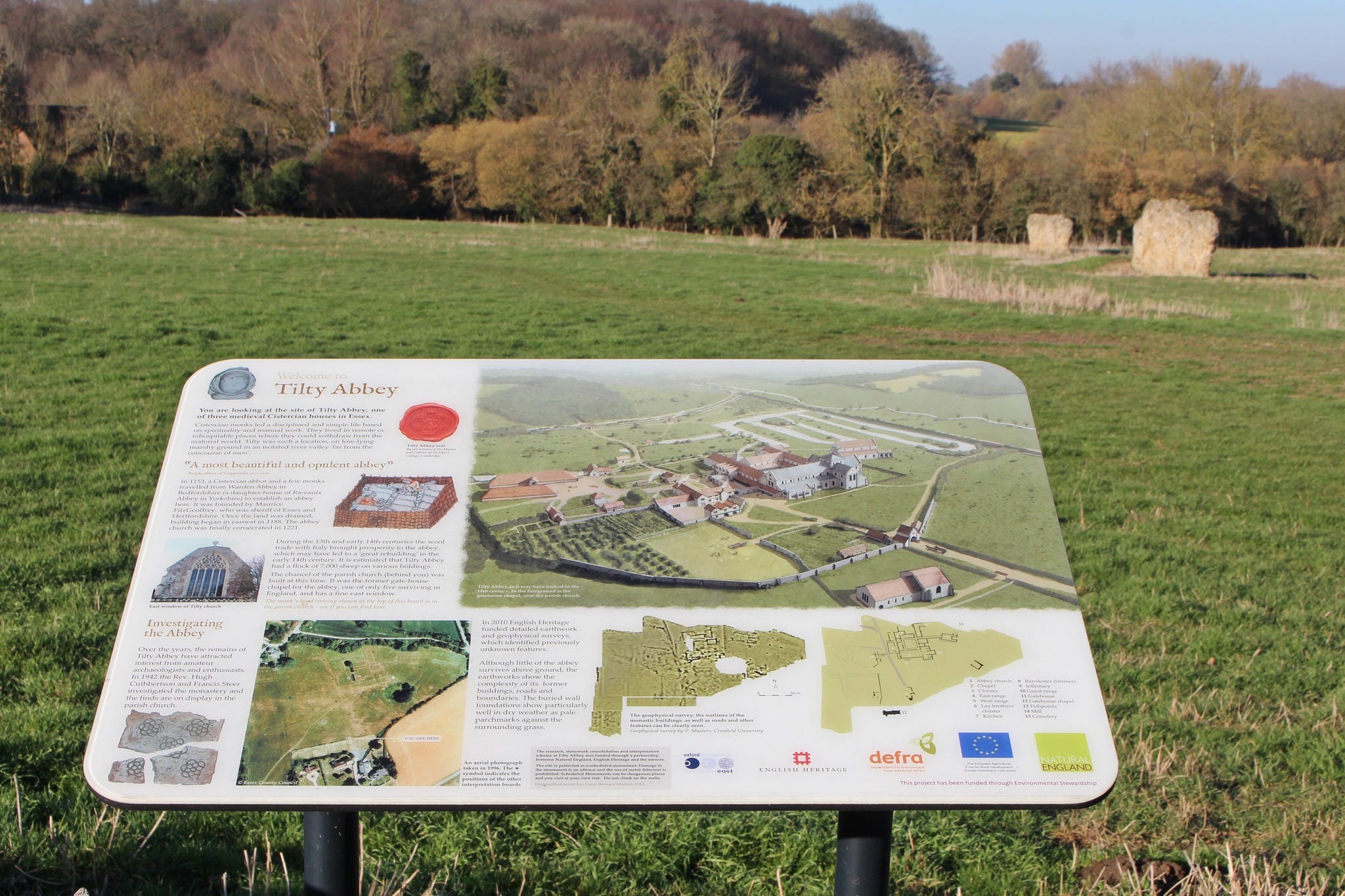
Matt - Most historical novels weave in a few fictional locations among the historical ones (see my book Atlas of Imagined Places for discussion of this. Mantel is relatively light-touch in this respect, to the point where I’m never sure if she has made a place up, or if she’s riffing on something real from the archives that I’ve not been able to trace. Tilney Abbey is a particularly intriguing one. Mantel mentions dozens of threatened abbeys in the course of the novels, and all are real apart from this one. I’m not sure what she’s doing here. It could be a misprint for the real Tilty Abbey in Essex – perhaps deliberately misrepresented by Mantel to show how records were sometimes poorly transcribed. However, it occurred to me (having written a couple of books about fictional locations) that this could be a reference to the fictional estate of Tilney Abbey in Jane Austen’s Northanger Abbey. If so, then perhaps Mantel is making a highly subtle pun here, with a reference to Austen’s friars in mirror to Cromwell’s Austin Friars. Probably not, but I do love a bit of wordplay!
And, yes, I have started a project to map every location from Jane Austen’s novels, which will see the light of day at some point.
You can read Matt’s original post about his mapping of Wolf Hall HERE and discover his maps of London from the works of Charles Dickens, Virginia Woolf and Arthur Conan Doyle’s Sherlock Holmes.
Book Now, and join our celebration of Dame Hilary Mantel’s life and work while there are still seats available, where we will be led by an array of celebrity speakers and experts and a staged reading performance of Hilary and Ben Miles’ adaptation of The Mirror and The Light.
Comments
Nothing yet. Say the first thing.
Sign in to join the conversation.