
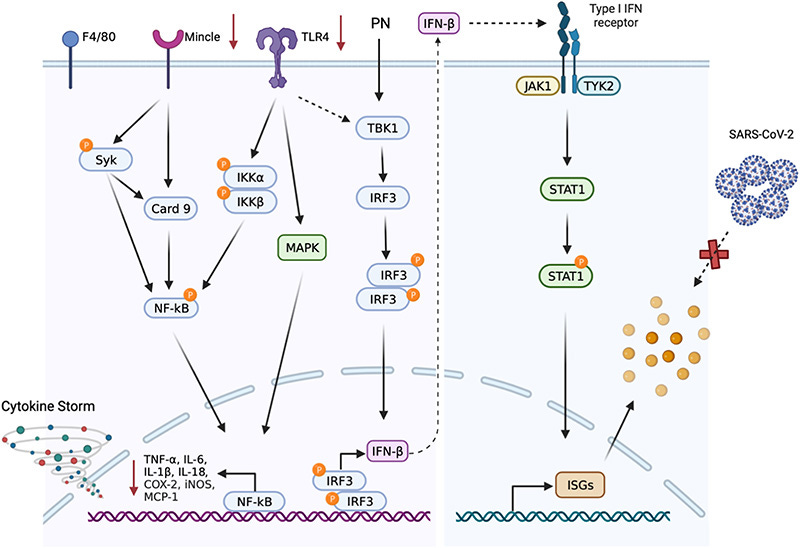
This schematic diagram illustrates the mechanisms of the potential of Panax notoginseng against COVID-19 infection.
As readers of this Substack know, I have, from the beginning, proposed that the Spike Protein induces a vascular disease which I have called Spike Protein Endothelial Disease (SPED). My continual search for therapeutics for this disease brings me to an especially interesting TCM herb:
Panax notoginseng.
Also known as Sanqi or Tianqi, P. notoginseng has been used for centuries in traditional Chinese medicine. Its major bioactive compounds include a collection of steroidal saponins known as notoginsenosides and ginsenosides.
The literature I have found suggests that this plant may do something particularly valuable: help protect the endothelium while supporting the body’s ability to repair damaged blood vessels. This could potentially reverse the damage done by SPED.
One of the papers I found particularly compelling examined P. notoginseng in models of diabetes-associated vascular dysfunction.
Researchers found that both P. notoginseng extract and its total saponins protected endothelial function. They improved endothelium-dependent relaxation while reducing oxidative stress and endoplasmic-reticulum stress.
Importantly, the effect was associated with activation of the AMPK/eNOS pathway.
AMPK is an important regulator of cellular energy and vascular health, while eNOS produces nitric oxide—a critical molecule that allows blood vessels to relax and maintain normal vascular function.
In other words, P. notoginseng wasn’t simply acting as an antioxidant. It was influencing a pathway intimately involved in maintaining endothelial function.
The present study used multiple approaches to elucidate and compare the effects of PNS and PNE on endothelial dysfunction in diet-induced obese mice. Treatment with either PNS or PNE rescued the impaired endothelial function in a hyperglycemic condition and in diabetic obese mice, accompanied by enhancement of vascular AMPK/eNOS activities with inhibition of ER stress and oxidative stress. PNS (total saponin) was found to be more potent ex vivo and in vitro but PNE (ethanolic extract of P. notoginseng) was more effective in vivo.
Panax Notoginseng Protects against Diabetes-Associated Endothelial Dysfunction: Comparison between Ethanolic Extract and Total Saponin
https://pmc.ncbi.nlm.nih.gov/articles/PMC8437594/
This is where the story gets even more interesting.
A 2013 study investigated P. notoginseng saponins in mice with atherosclerosis. The researchers found that treatment reduced atherosclerotic lesion size and the intima-to-media ratio while increasing endothelialization. But there was another remarkable finding. The treatment increased circulating and bone-marrow populations of endothelial progenitor cells. The authors concluded that the vascular benefits appeared to involve mobilization of progenitor cells, potentially through the SDF-1α/CXCR4 signaling system.
That suggests something more than simply protecting existing endothelial cells. It raises the possibility that P. notoginseng may help the body repair vascular injury.
Results: PNS (Panax notoginseng saponins) significantly reduced the lesion area and intima-to-media ratio compared to vehicle treatment. PNS also augmented endothelialization and reduced the smooth muscle cell (SMCs) content of the lesions. The number of c-kit and sca-1 double-positive progenitor cells and flk-1 and sca-1 double-positive progenitor cells were significantly increased in the BM and the peripheral blood of the PNS-treated groups. PNS treatment increased the plasma levels of SDF-1α and SCF as well as the BM levels of matrix metalloproteinase-9 (MMP-9). Moreover, the mRNA levels of SDF-1α and protein levels of CXCR4 were both increased in the BM of mice treated with PNS, while SDF-1α expression decreased.
Conclusion: PNS reduce the size of atherosclerotic plaques, and this effect appears to involve progenitor cell mobilization. SDF-1α-CXCR4 interactions and the possible modulatory role of PNS in this process may contribute to the increased progenitor cell mobilization.
Panax notoginseng saponins promote endothelial progenitor cell mobilization and attenuate atherosclerotic lesions in apolipoprotein E knockout mice
https://pubmed.ncbi.nlm.nih.gov/24080960/
A 2023 mini-review specifically examined the potential of P. notoginseng against COVID-19.
The authors point to experimental evidence suggesting that P. notoginseng may help modulate the excessive inflammatory response associated with SARS-CoV-2 infection, including the cytokine cascade sometimes described as a cytokine storm. They also discuss its potential relevance to post-COVID symptoms.
Here, we have discussed the pharmacological potential of P. notoginseng; the material may control the cytokine storm. Accumulating evidence points to an anti-viral potential of P. notoginseng both in vitro and in vivo. In China, TCM formulae including Lianhuaqingwen, Jinhuaqinggan and Xuebijing are used to treat COVID-19 infection; natural products may be valuable in this context. P. notoginseng, a representative herbal medicine, and the various extracts thereof and mixed P. notoginseng compounds, inhibit the actions of proinflammatory cytokines (IL-1β, IL-6 and TNF-α) by modulating signaling pathways including the MAPK, Mincle/NF-κB and JAK/STAT pathways. In addition, P. notoginseng can also relieve post-COVID-19 symptom.
The potential of Panax notoginseng against COVID-19 infection
https://www.sciencedirect.com/science/article/pii/S1226845323000313
This is important—but it needs to be interpreted carefully.
We do not yet have clinical evidence demonstrating that Panax notoginseng treats or prevents COVID-19 in humans. The COVID-specific evidence remains largely experimental and mechanistic. It is my hope that clinicians and those with labs reading this will conduct trials.
However, the point is that the hypothesis is fascinating because its potential benefits overlap with several biological processes implicated in COVID-19:
Inflammation.
Oxidative stress.
Endothelial dysfunction.
Vascular injury.
Impaired vascular repair.
And P. notoginseng appears to have biological activity across several of these pathways and may actually be a therapeutic that could reverse the damage caused by SPED.
Thank you, as always, for keeping me going. I appreciate all of your support and am grateful to everyone in our community. Please have a blessed weekend.
One-Time Donation
https://buy.stripe.com/6oUbJ0auFaWkcLs2ZXeUU00
No posts
Comments
Nothing yet. Say the first thing.
Sign in to join the conversation.