
Last weekend I watched the movie Say Anything for the first time in years. It was, of course, gorgeous - and I’ve been thinking about it ever since, especially in the light of big news for young people this week.
So, be warned - there will be spoilers!
Anyhow, I’d remembered it as a sweet, slightly cheesy 1980s rom-com - perfect Sunday night viewing basically. And it was, but Say Anything is also a beautifully profound story about identity, authenticity, and what it actually means to become yourself.
19 year-old Lloyd Dobler, John Cusack’s character, is written off from the start as a bit of a loser. He doesn’t know what he wants to do with his life, and in the eyes of the world - especially those of Diane’s (Ione Skye) father Jim (played by the late great John Mahoney) - that makes Lloyd worthless. But Lloyd is relentlessly positive and knows exactly who he is already. He’s kind, he’s genuine, he shows up. Whilst other characters are performing to hypocritical social norms, or hanging onto the past, he’s the only one who’s actually real, free and pursuing his dreams.
Then there’s Diane’s dad Jim - who has, so it seems, devoted his life to his daughter. He’s a hard-working single parent: everything he does is for her. Except - as we come to discover - he’s been stealing from the elderly residents in his care home, justifying every act of theft with the story he tells himself about it being all for Diane. He’s a fraud, and his daughter has built her entire sense of safety and possibility on his lies - and missed out on connecting with her peers as she’s lived up to his expectations.
I couldn’t stop thinking about this afterwards, and how Jim - charming, apparently caring but quietly corrupt - is like an 80s version of an algorithm.
I know - that seems a stretch, but think about it. These platforms are embedded in our personal lives - privy to our private and vulnerable selves. We’ve trusted them (to a greater or lesser extent). Social media claims to be there for us - connecting us, enriching us, giving us community and belonging and a space to be seen. And we believed them, because it felt true.
Well, we did believe them. Now we know what they’re actually doing. Feeding us opinions that don’t serve us. Disconnecting us from one another. Systematically, relentlessly, undermining us - all while pushing the line that they have our best interests at heart.
Just like Jim.
Which leads me to the social media ban for under sixteens in the UK that was announced this week. Predictably the debate is already noisy. Critics aren’t wrong that it’s imperfect. What happens the moment a teenager turns sixteen - does the algorithm suddenly become safe? Is it right for digital natives to be also denied good quality information and ideas? Of course not. And a ban without a genuine rethinking of how these platforms are built and what they’re incentivised to do is only ever going to be a partial answer.
But I think this decision is an important step. Not because it solves the problem, but because it names it. It says out loud what we’ve been tiptoeing around: that these platforms, as currently designed, are not built for human flourishing. Certainly not for the flourishing of young people still in the beautiful, delicate, full-of-potential work of figuring out who they are.
And that work - that real, messy, in-person work of becoming yourself - is exactly what Say Anything captures so perfectly. Lloyd and Diane and their friends sit around and talk to each other. They have actual conversations. They make mistakes in real time, support each other without any digital undermining, and feel the consequences in real time. There’s no scrolling, no algorithm deciding what they see next, no carefully curated highlight reel of everyone else’s apparently better teenage experience. Just young people, bumping up against the world and each other, finding out what they’re made of.
That’s not nostalgia talking - well, not just nostalgia! It’s the recognition, available to those of us who’ve lived both with and without the digital world, of what gets lost when real-world relating gets replaced by platform-mediated performing.
We all - at every age - need to grow in relationship. We need friction and genuine connection and the experience of being truly seen by another person, not by an algorithm that’s decided what version of us is most profitable. The social media ban is a blunt instrument. But sometimes a blunt instrument is what it takes to start a conversation that actually needs to be had.
Diane’s father got found out in the end. His daughter had to grieve the story she’d been told - and then, freed from it, she got to build something real.
We’re at that moment now. The story the platforms told us is unravelling.
What we build next is up to us - how exciting might that be for us all?
If you’re up for building something new and exciting in your life - why not check out my simple guided visualisation to help you reconnect with the things that really sing to you?
Just hit reply/email wendy@wendylloyd.com - with the words ‘Visioning Visualisation’ - and I’ll send you a link.
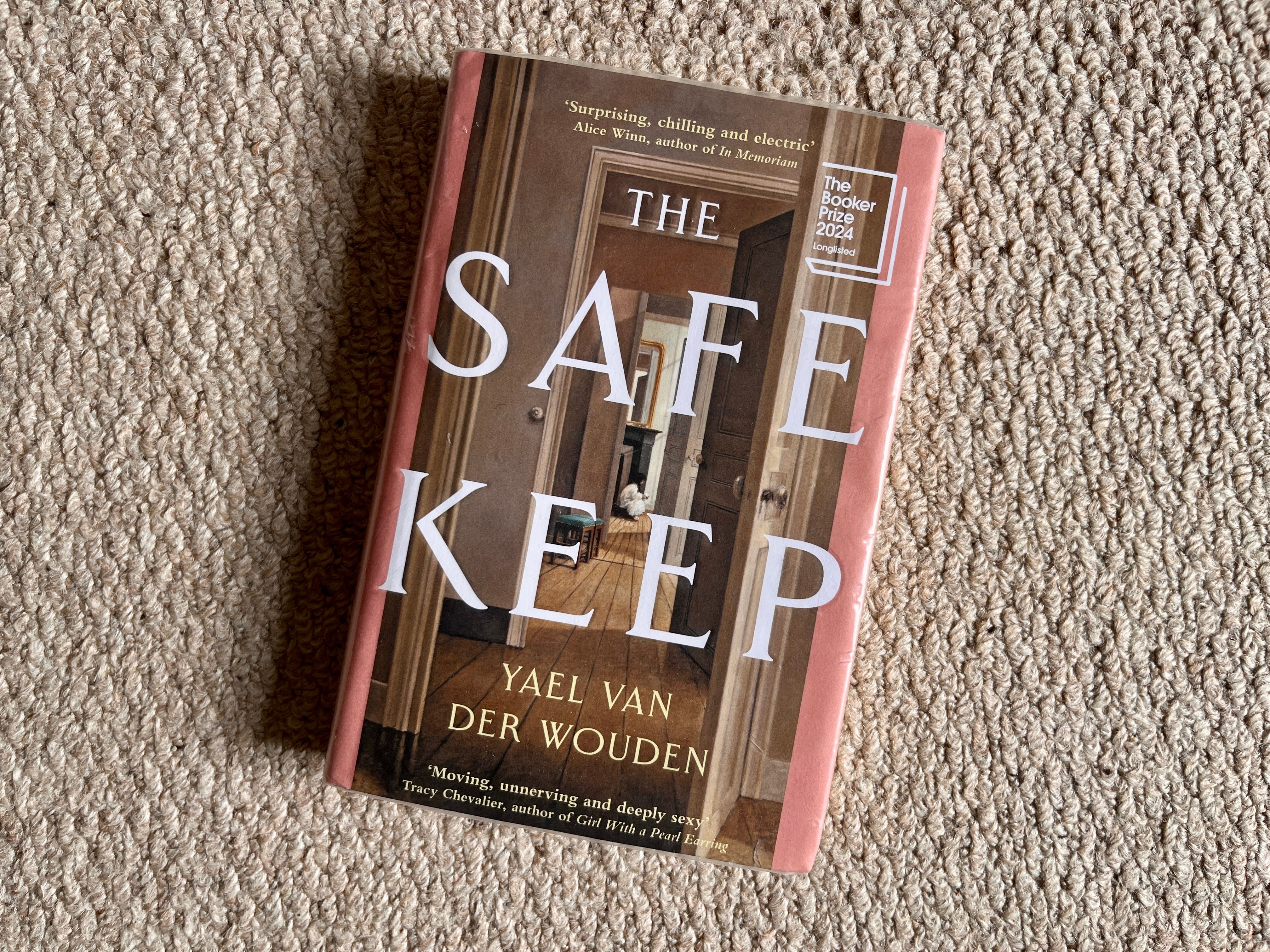
I read every night before I go to sleep - no matter what - and some stories have me looking forward to duvet-land more than others. This novel The Safekeep was definitely one of those. I was so sad when I finished it!
Set in the early 60s in the Netherlands, it’s the intriguing story of Isabel, whose quiet rural life gets upended when her brother’s brash girlfriend becomes an unwanted guest. What unfolds is a story of family secrets, sapphic awakening and shamefully overlooked holocaust injustice.
The Safekeep was nominated for the Booker Prize and is the 2024 debut of Dutch author Yael van der Wouden. It’s also possibly my favourite book I’ve read this year.
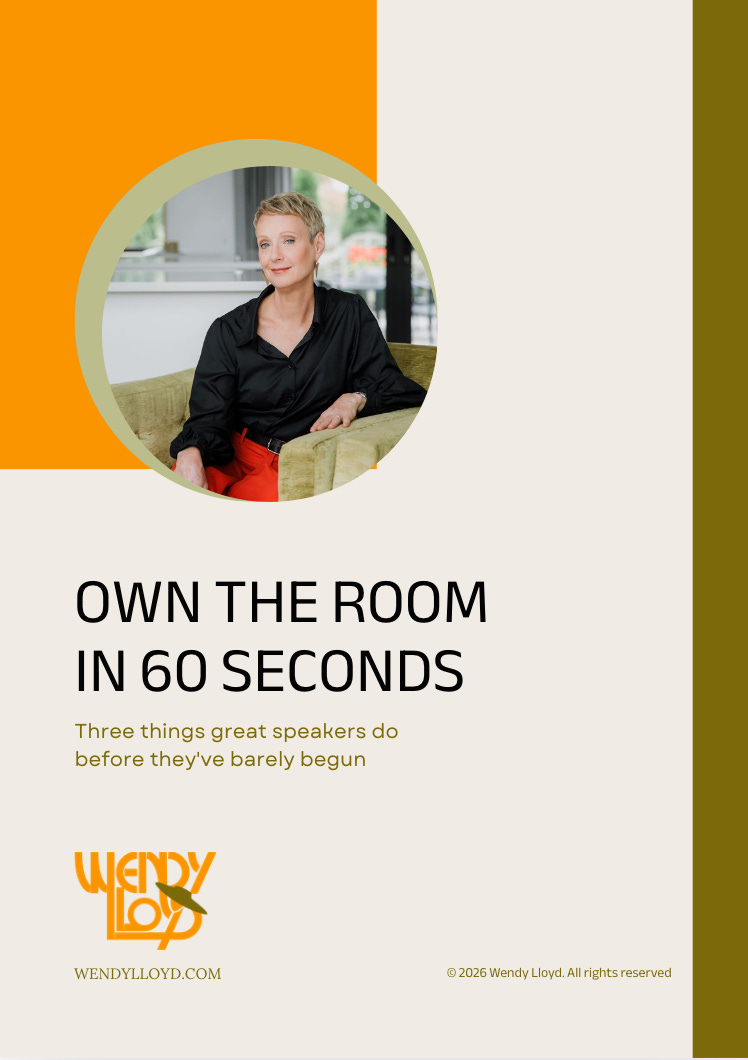
My FREE inside track on Public Speaking
If you want to improve your public speaking - or just find ways to make a dent in your speaking anxiety - there’s a LOT of information out there.
Which is great.
But it’s really hard to know: which advice will really up your game - and which is just nice theory from people who don’t fully understand the dynamics in the room - or in your nervous system.
As a speaker with 40 years professional experience broadcasting, presenting, hosting - you name it - I’ve accrued one hell of a toolkit of practices, skills, and strategies.
And not only have I been a public speaker across multiple platforms for decades, for a long time I suffered relentless speaking anxiety and panic attacks…
…turns out, this is a distinct asset when it comes to helping others.
Because in overcoming my own public speaking fear, I gained a unique perspective into the ways speaking specifically scares women, how we can overcome it, and why we should.
I know first-hand how being able to confidently say yes to speaking opportunities is a career game changer. When we can step up and present our ideas and expertise to multiple people, we get to showcase our value and be seen by people who matter.
Put simply, public speaking - be that onstage, in meetings, on podcasts, on panels, whatever - makes us visible to those with the power to hire us, promote us - and buy what we’re selling.
So how do we get to that point of being confident and capable speakers?
Well, in my experience - all the fears people have around speaking - from being overwhelmed by nerves, to failing to engage the audience, to doubting the credibility and authority we’re projecting, can all be addressed in the first 60 seconds.
That’s right - just one minute.
Clearly this doesn’t mean you don’t need to work on the rest of your presentation or talk! But once you know how to master the top, it opens up the world of speaking and it all becomes much more doable.
And this is why I’ve created something to show you how to prepare for that opening minute. My new FREE Public Speaking guide “How to own the room in 60 seconds”.
I’ve created this guide to serve all speakers wherever you are on your journey. I’ve chosen three key things that make the difference when it comes to your confidence, audience engagement, and the impact you have - right out of the gate.
It’s detailed enough to be genuinely transformative - but concise enough so you won’t get bogged down.
Ultimately, I want you to feel inspired into taking simple but effective action to up your speaking game and boost your confidence.
If you’d like a copy - hit reply/email wendy@wendylloyd.com with “Own the Room”, and I’ll whizz it over.
Seriously, what have you got to lose?
That’s it for now - keep on reaching for your best self, and reaching out to those who might help you.
Because Drama belongs in the movies, not in your life.
Until next time,
Wendy
No posts
Comments
Nothing yet. Say the first thing.
Sign in to join the conversation.