
Initially, I didn’t expect this refrain of the Greek philosopher Heraclitus—essentially, “expect the unexpected”—to carry much weight during the first couple of years of my wine encore viticultural adventure.
Wisely or not, I did everything possible to limit the unexpected.
I had meticulously planned the vineyard’s planting requirements, as detailed in Chapter Three (Planning the Vineyard), and executed the plan as covered in Chapter Four (Planting the Vineyard).
There were a few unexpected events during the first growing season, but the consequences of the unknown becoming known were minimal—though my season-long muscle aches might argue otherwise.
That equation changed in the second and subsequent seasons.
The issue wasn’t that I stopped educating myself or applying what I learned; rather, the negative externalities—if left unchecked—could undermine the benefits. Put another way, failing to recognize and respond to the unexpected could have damaging consequences for the vines and grapes.
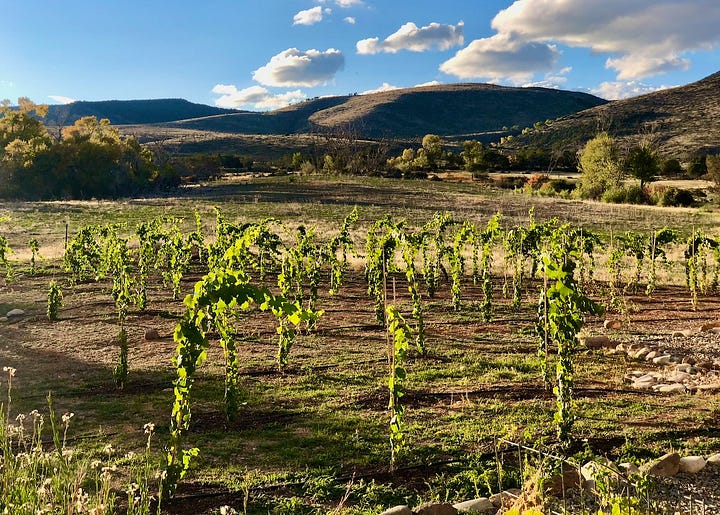
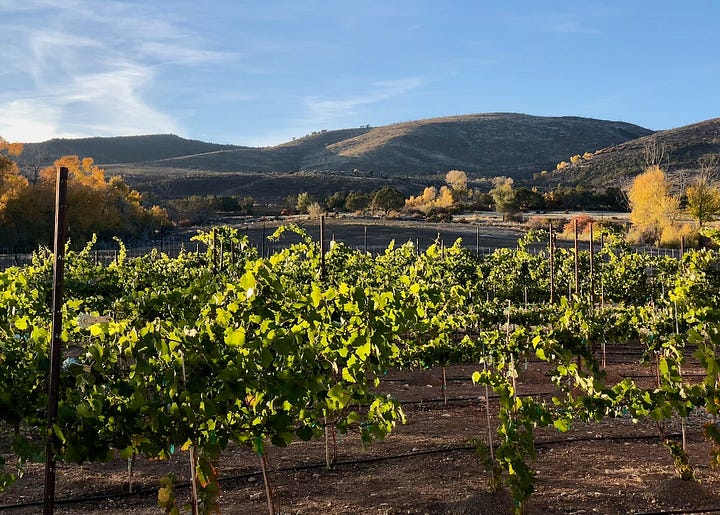
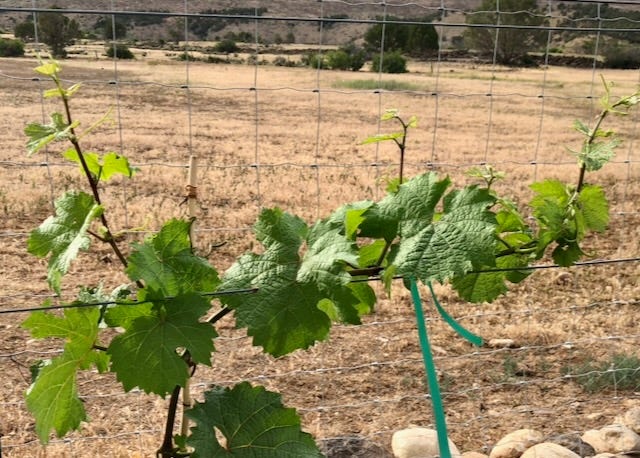
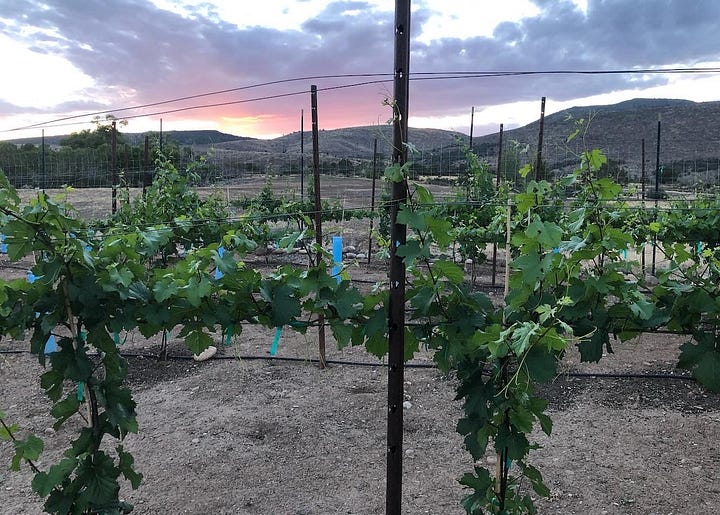
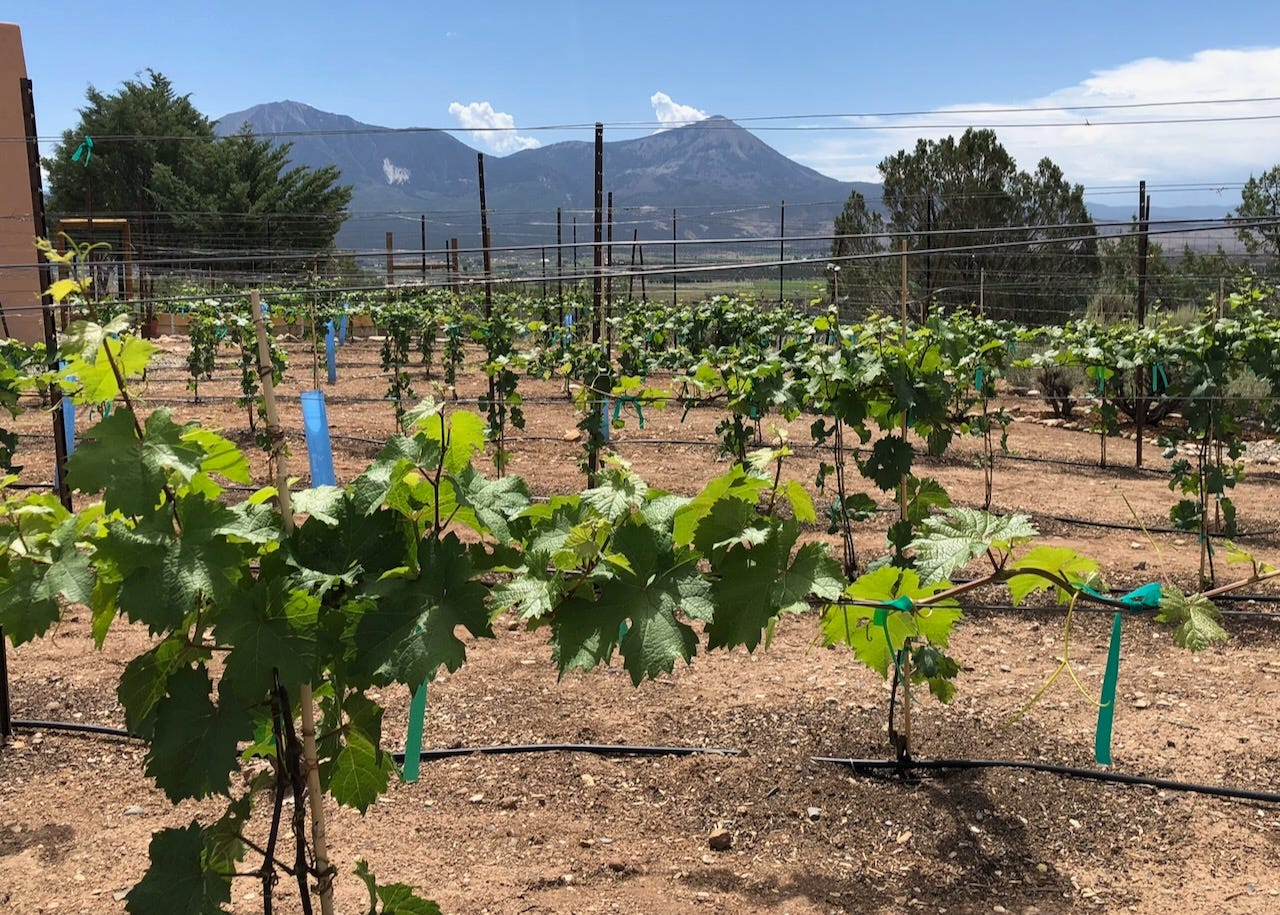
To be fair, the unexpected wasn’t always unwelcome. Exhibit one: the dramatic increase in vine growth during season two compared with year one, as shown in the end-of-season comparison images that open this chapter.
Hurrah!
My efforts in season two can be summed up by a single straightforward sentence: everything began and ended with pruning and training the vines. Although these tasks are part of every vineyard season, the second year is especially critical, as it establishes the structural foundation for the vine’s future growth and health.
The work is all-encompassing.
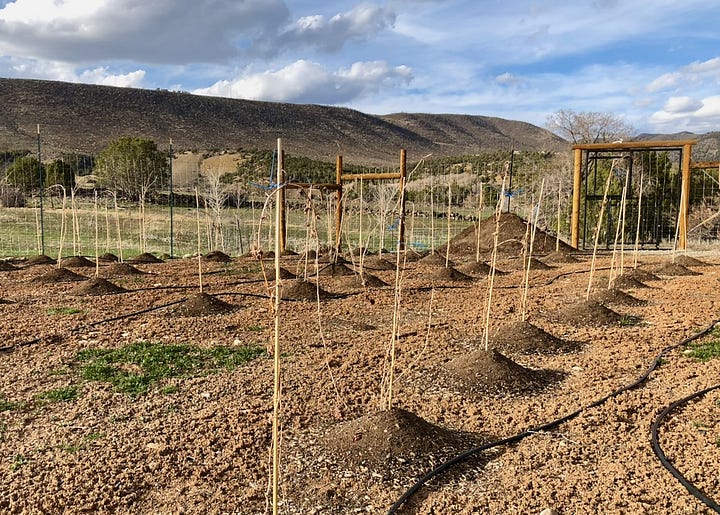
But first things first. A trellis was required before the vines awoke from winter, which had been deferred from season one.
Why a trellis?
Because if left on their own, grapevines grow wild and unruly. Long before humans began cultivating them, vines used trees for support as they climbed and spread—they’re vines, after all. Grape clusters grow only on new vine wood. When a vine becomes an overgrown tangle, the level of new growth is limited. This results in fewer, lower-quality grapes for eating and winemaking alike, as our ancestors discovered.
Enter stage right, the trellis.
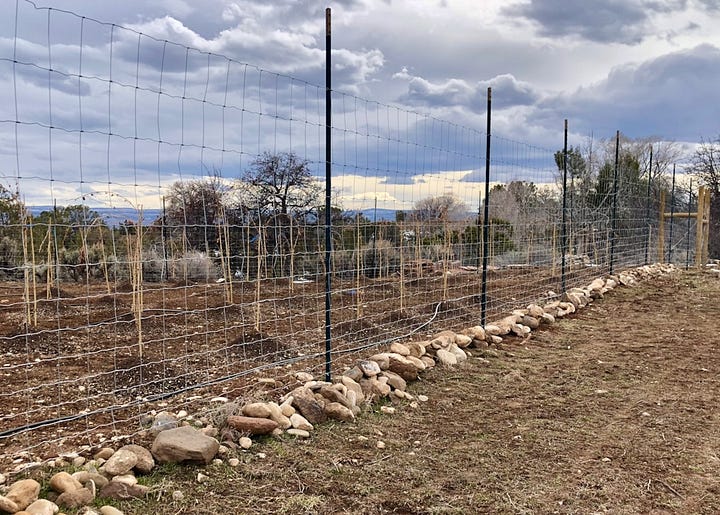
I had the required materials, purchased secondhand over the winter from a local grower. The two-person crew that installed the wildlife fence at the end of year one agreed to tackle the installation. Through my research and discussions, I chose a training system widely used for Vitis vinifera grapevines (in my case, Pinot Noir and Riesling) in North America called Vertical Shoot Positioning (VSP).
Numerous training systems are used worldwide. Each approach has historical roots tied to specific regions and climates, yet all share common aims: vine support, sunlight exposure, balanced fruit development, mitigation of disease, insect, and animal pressure.
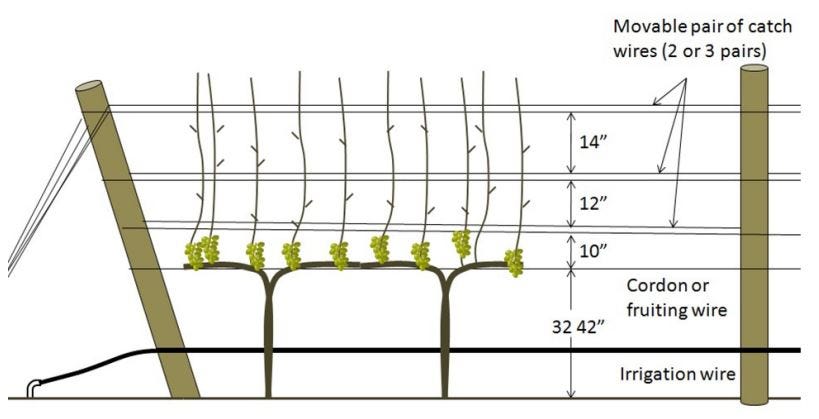
In summary, the structure and materials of a VSP trellis consists of wooden and/or metal posts that support at least three levels of a strong-gauge wire. The wires include a lower single “growth” wire for horizontal vine growth, and two or three levels of upper paired parallel wires to help secure the vine canopy.
The materials must be strong enough to support the vines as they grow throughout the season. They also must withstand the tension applied to the wires to keep them taut, including the weight and lateral stress from rain and wind.
A lesson I was to learn in spades in the coming years.
As the trellis was installed, I began the first pruning task of the season.
Before bud break, when the vines begin pushing green growth at the start of the growing season, I surmised much of the previous season’s growth needed to be removed. Although the vines had shown good vigor in the first season, there were too many thin, upward-growing shoots. The general rule of thumb is to prune back wood that is less than pencil-size in thickness.
It was best to cut the vines back close to the ground, leaving at least two strong shoots with a couple of buds on each for the new season’s growth.
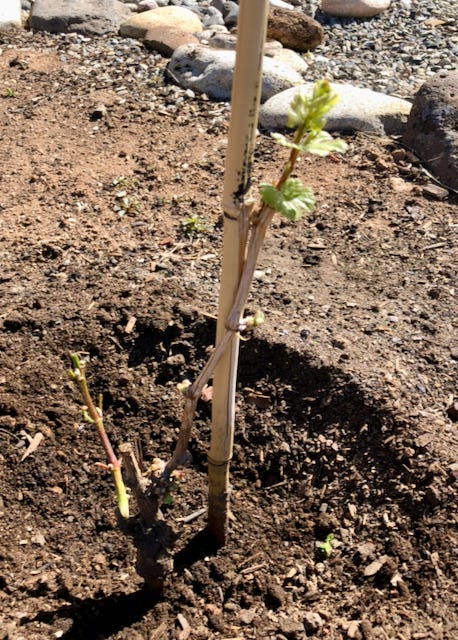
The vines began pushing new shoots in early May, after the trellis installation and the first round of pruning. These new shoots were much stronger and grew faster than those in the first season.
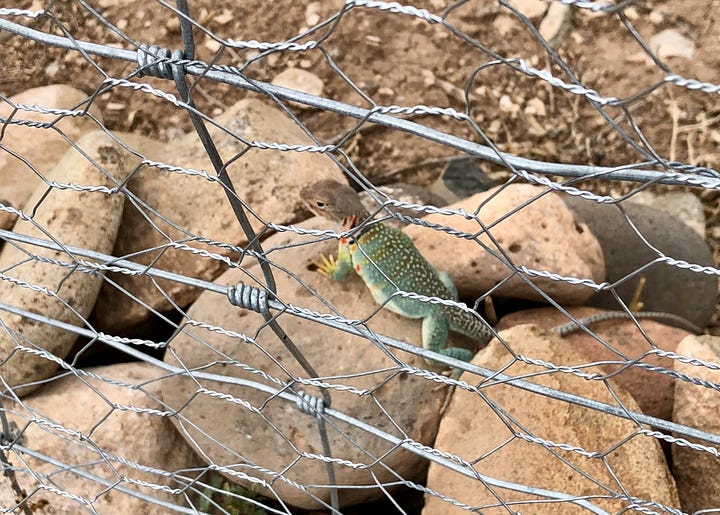
For a few days, I watched their progress with excitement—until that excitement turned to alarm. It soon became clear that small mammals were making themselves at home among the vines. Rabbits were nibbling the tender new shoots, and young prairie dogs were practicing their digging skills around the base of the plants.
This was the season’s first unexpected wake-up call. A wildlife fence alone, I learned, does little to stop smaller mammals, who easily slip through the openings.
What to do?
I headed to the hardware store and returned with several hundred feet of three-foot-high chicken wire. Using common wire, I attached the first 100-foot roll to the lower portion of the wildlife fence. But as I stepped back to admire my work, I quickly realized that the two-inch wire weave openings were still too large to be effective.
So it was back to the hardware store to return the remaining rolls and purchase one-inch-weave chicken wire instead. I also installed shortened grow cones as added protection to shield the tender lower shoots from determined rabbits. The vines could now begin their spring journey unmolested.
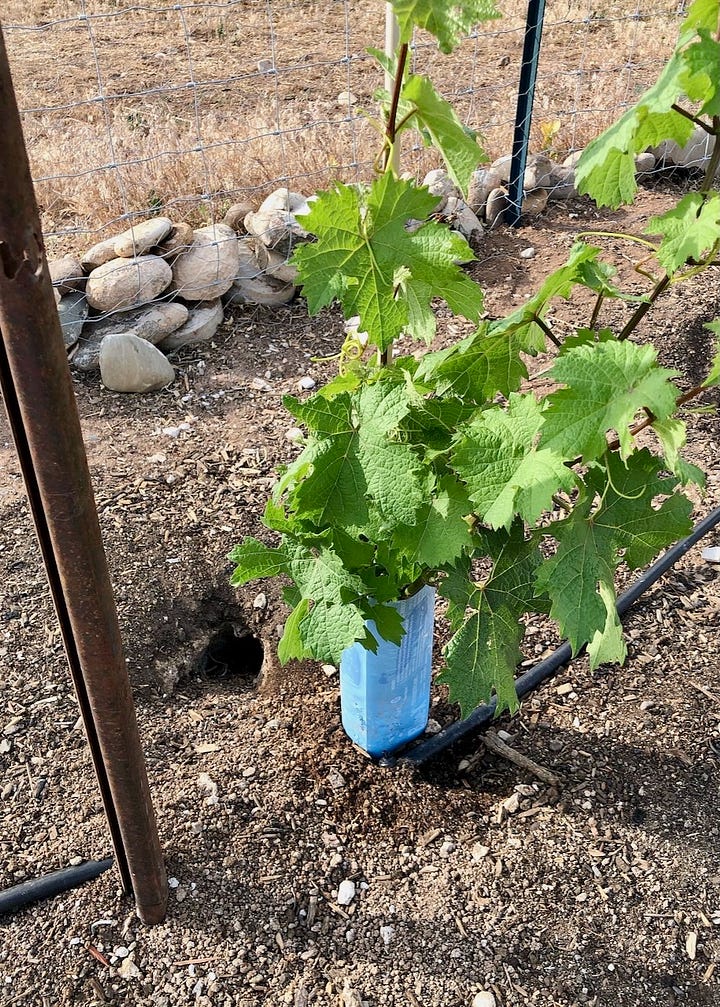
It was time to train the vines to the trellis as they grew.
To describe the training approach, I chose the two strongest shoots above the lower graft union as the vine’s trunks. As they grew past the lower growth wire, each was trained to lie horizontally, one to the right, the other to the left. At this point, the trunks become permanent horizontal arms along the growth wire called cordons.
Using ties, I secured the trunks to the bamboo support stake and fixed the cordons to the growth wire. The end lengths of the cordons were pruned back along the growth wire so that they didn’t encroach upon a cordon of a neighboring vine.
From buds along the cordon (in subsequent years, these buds are called spurs), shoots grow upward. As the spurs grew, I’d tuck them between two upper parallel wires for support, using wire clips to tighten the wires around the new growth.
As in the first season, the focus in season two remained on developing the vines’ root systems and leaf canopies rather than producing grapes. I diligently removed small flower clusters as they appeared.
Although I understood the VSP training approach, I still lacked a solid grasp of the finer pruning techniques needed as the vines grew. I had no firsthand experience to rely on.
Between vineyard tasks, I immersed myself in online videos about pruning young vines using the VSP system. The previous year, I had also gotten to know a local vineyard owner who generously mentored me. With guidance from both sources, my confidence grew as I applied what I was learning.
As the season progressed, the vineyard began to look and feel like the real thing—though the weather did its best to disrupt the peaceful scene.
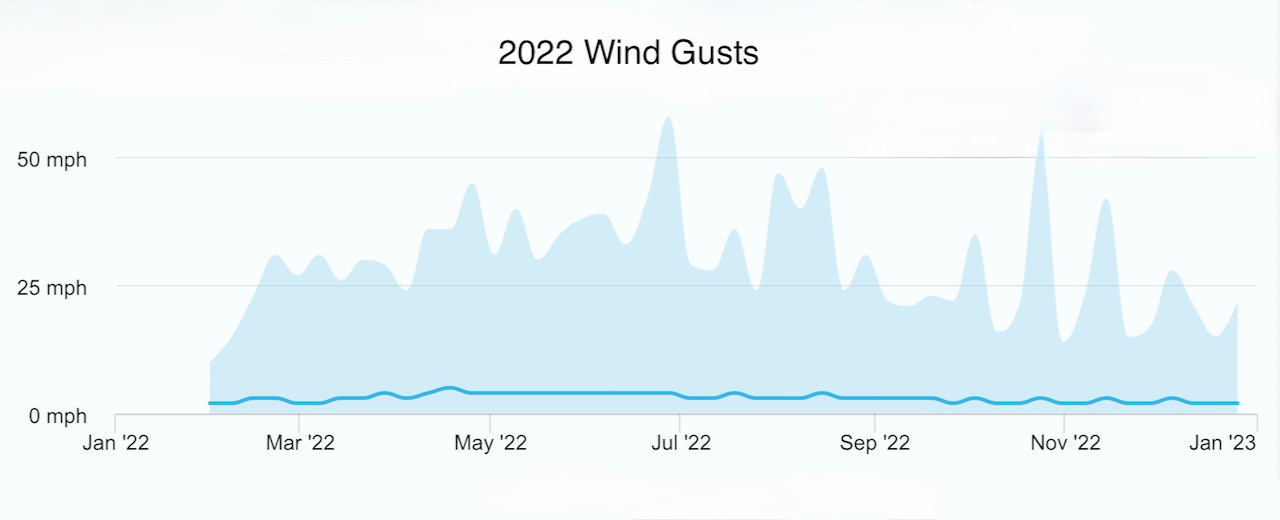
During the winter, I installed a weather station to track key vineyard data points, including the dates of the last spring and first fall freezes; seasonal temperature patterns (averages, highs, and lows); precipitation amounts; wind frequency and speed; and solar exposure.
As I soon learned, wind consistency stood out as both unexpected and highly aggravating.
On many days—if not most—the average wind speed ranged from 5 to 15 miles per hour. On a subset of those days, gusts of 25 mph or more were common, making any vineyard work nearly impossible. Because the site sits on the edge of a mesa, with a wide field to the west and higher hills beyond, the terrain effectively funnels wind across the vineyard and down into the valley 200 feet below.
Rain wasn’t about to let the wind have all the fun.
One mid-July storm dropped 1.5 inches of rain in just 35 minutes. Because the vineyard floor slopes from north to south, the downpour carved furrows into the soil and pushed large swaths of it downslope, where it accumulated along the flatter ground near the south edge of the wildlife fence.
Grumbling about the need for ground cover, I hauled the displaced soil back to its original spots and smoothed out the furrows to restore an even grade.
My single-minded focus on pruning and training the vines had caused me to unintentionally overlook several important vineyard tasks, including spraying for powdery mildew and insects.
Mildew and other fungal diseases are the bane of vineyards, especially in wet or humid climates. Although our region is arid, mildew can still develop on vines after cool, damp periods. It attacks leaves, shoots, and fruit, hindering photosynthesis, stunting growth, and causing grapes to crack.
Fortunately, the young vines showed only low levels of mildew. Insects were also minimal, though a few big, fat caterpillars appeared—and were easily managed by simply plucking them off by hand.
While I managed to avoid the worst consequences of neglecting some aspects of the vines’ health, I knew I couldn’t be so careless the following year—when the vines would be more mature, and grapes would finally become part of the vineyard’s equation.
Several tasks could not be left to chance, starting with weeding—the season-long chore that never quits. With a vineyard floor composed of soil and rock, I relied on hand-hoeing to keep things under control.
I also stayed committed to my vision of creating a small Garden of Eden within the wildlife fence. I built and planted three new raised beds, transplanted cacti from the surrounding acreage along the south wall of the shop, added rose bushes at the ends of several vine rows, and established a raspberry patch in one corner of the vineyard.
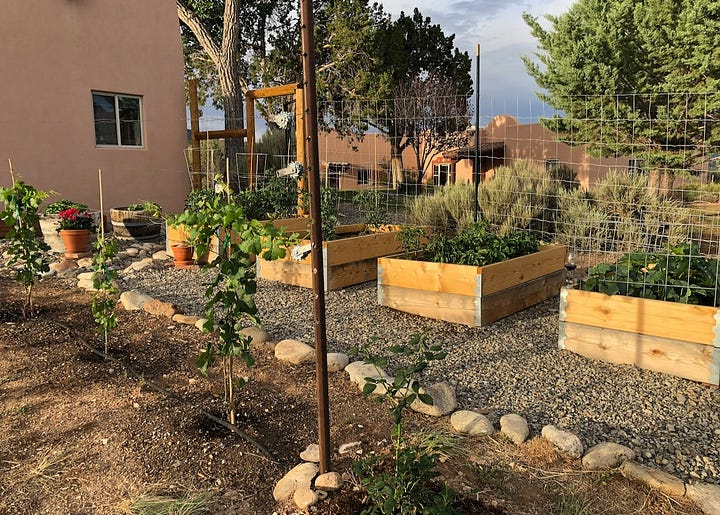
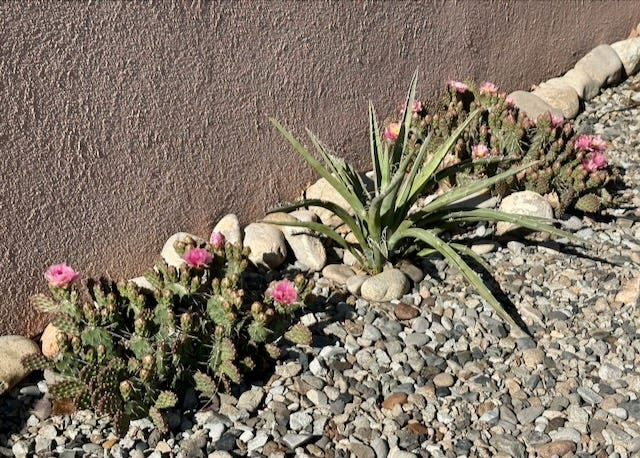
As the second season drew to a close, the vineyard looked great. The graft unions near the ground were now less vulnerable to winter temperatures, so mounding soil around them was no longer necessary.
There were a few gaps among the rows where vines hadn’t survived. Ordering new grafted rootstock to plant in season three was added to my list of winter chores.
I had allowed my first year in the valley to pass without making wine—a mistake I wouldn’t repeat. My viticultural mentor generously offered me the chance to harvest some of his Riesling, Pinot Meunier (for a rosé), and Pinot Noir. I already had the equipment for processing fresh grapes, including a bladder press, and earlier in the summer, I had purchased a crusher/destemmer.
Thank you, baby Jesus—this was my first season making wine in the valley with fresh, self-harvested grapes.
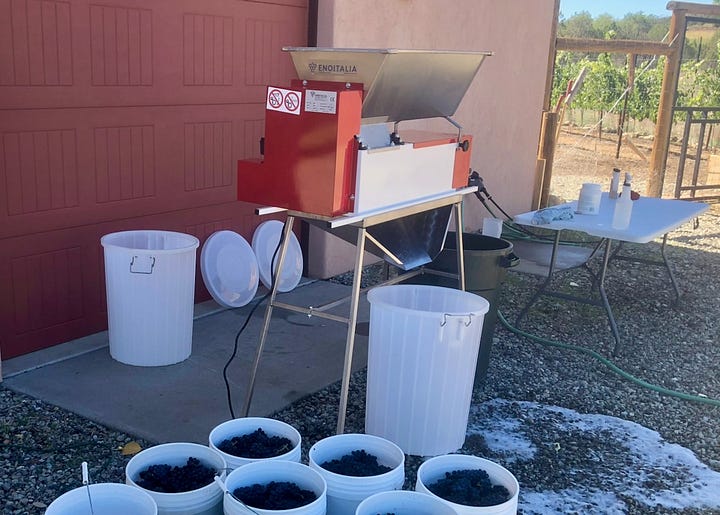
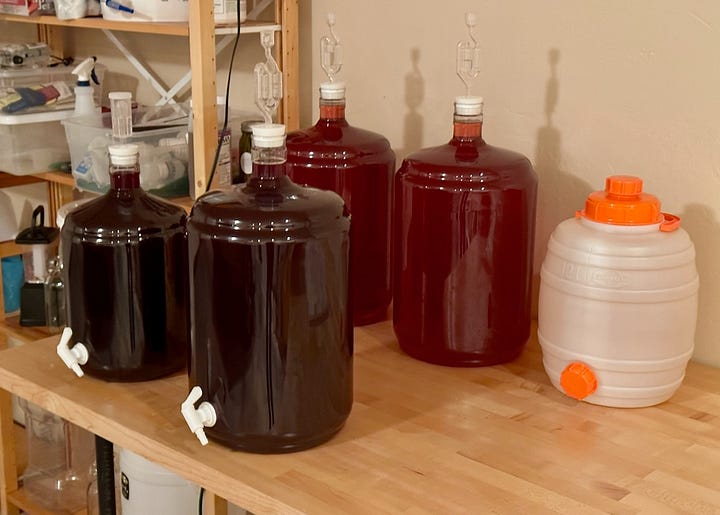
Winter is a time for reflection and planning. I felt good about the progress I had made in building relationships with local growers and winemakers, planting and tending a young, thriving vineyard, and producing wine from locally grown grapes. The knowledge gained and the hard work invested were immensely satisfying.
Still, I found myself questioning whether my wine encore was truly being fulfilled.
A primary aim of this encore was to have a vineyard and make wine from my own fruit. A related goal was to determine whether this could eventually evolve into a small commercial venture. Another was to stay engaged in a meaningful learning experience—one that required hands-on effort and, as I grew older, supported my health and personal well-being.
I had made progress on many of these fronts, but a new, previously unarticulated goal began to emerge: using my encore to educate others about my viticultural and winemaking experiences. I began this journey with very little knowledge and no practical experience in growing wine grapes. In theory, the learning path I followed—warts and all—could help guide others with a passing curiosity or similar aspirations by showing what it really takes to grow grapes and make wine.
From that idea, the concept of sharing my wine encore through a website was born.
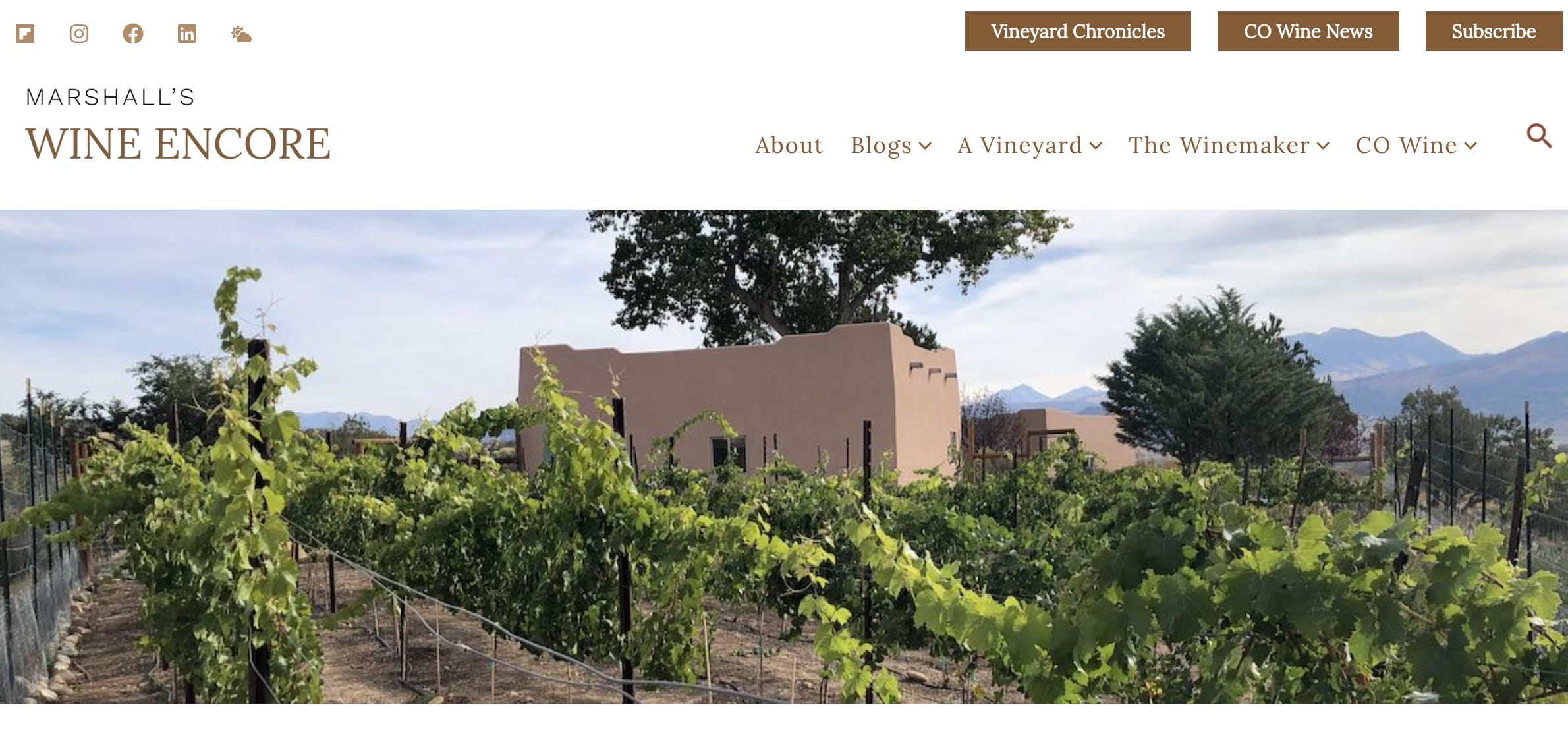
As it turned out, I had more time to pursue this new effort because Janine and I had recently decided to close a business she had owned and operated for more than 30 years. I had been responsible for the “back-office” side of that business and had been juggling those duties with vineyard work since we moved to the valley two years earlier.
At first, I imagined the website as a series of blog posts outlining my thought process, activities, and results. However, as I began writing and posting content, it became clear that a blog format wasn’t the most efficient way to present step-by-step details—especially since the timeline would soon stretch over several years.
To make the information more organized and accessible, I created two non-blog sections: one focused on winemaking and another on the realities of maintaining a vineyard. Each section was arranged into sequential process steps, from start to finish. For each step, I wrote an introduction and then provided a set of online resources that expanded on the topic.
Because I’ve long been attuned to the challenges of growing grapes and making wine at high elevations in Colorado—and increasingly impressed by the quality local winemakers achieve—I included information about Colorado wine country, along with relevant news.
Over time, I also began writing posts on broader wine topics.
The winter months evaporated as I built and wrote content on Marshall’s Wine Encore website.
With the advent of spring and the vineyard’s third growing season, I was excited and believed things were well-positioned for the first season with grapes.
The unexpected soon came upon me.
No posts
Comments
Nothing yet. Say the first thing.
Sign in to join the conversation.