
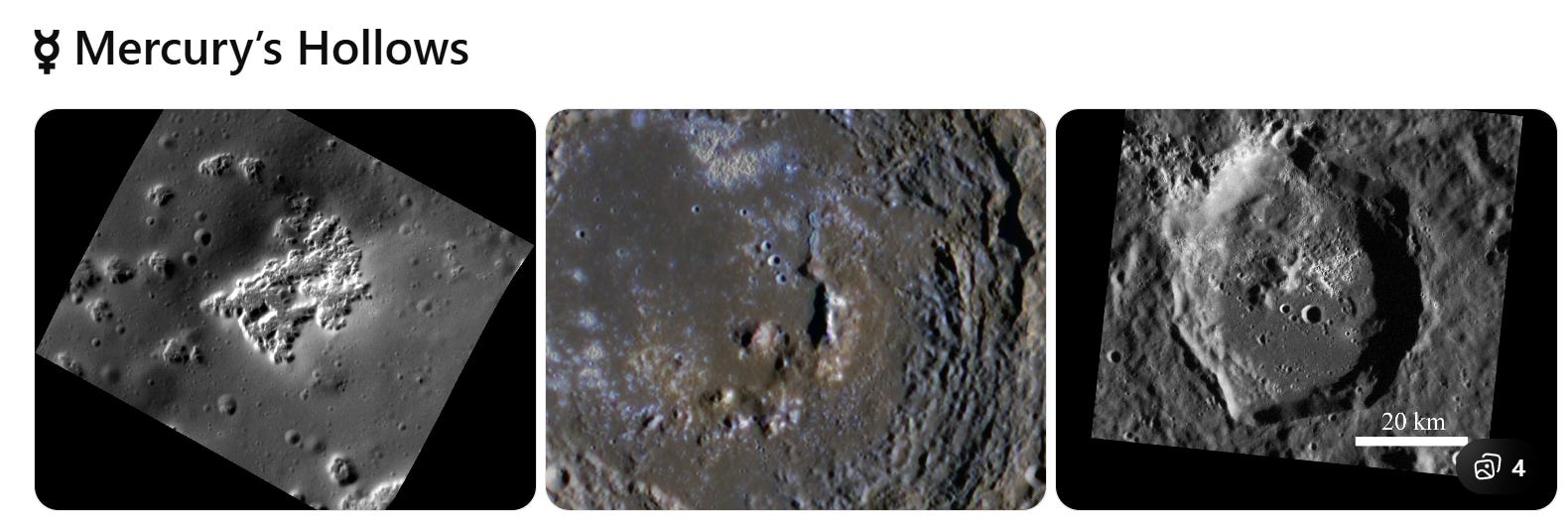
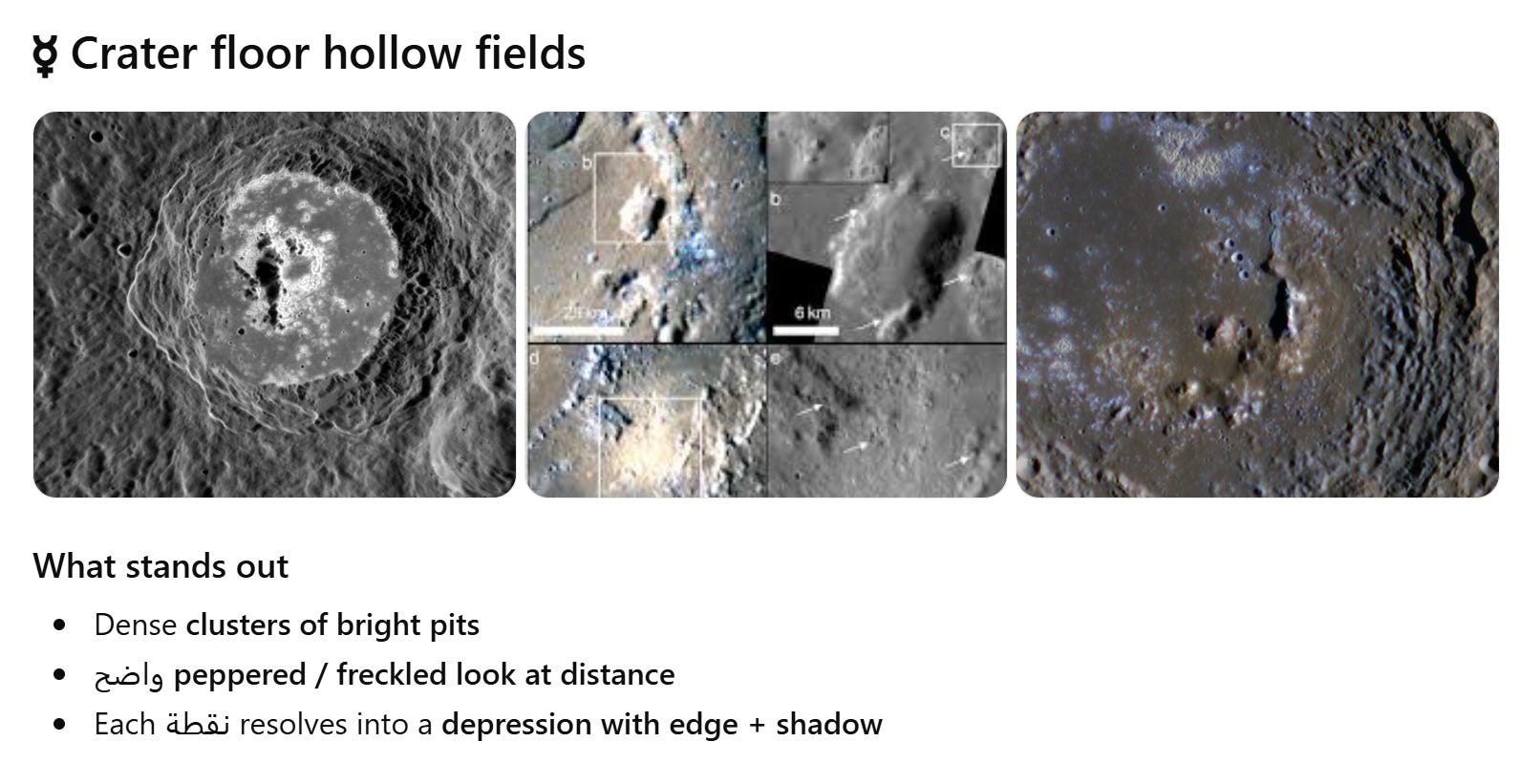
If the Hollows on Mercury are Small Comet impact evidence, then they corroborate Professor Louis Frank’s discovery that Small Comets are infalling into Earth’s atmosphere. Frank assumed the Small Comets would disintegrate long before they reached Mercury. He had good reason. The Small Comets’ hypothetical, thin, carbon mantles would have to be relatively fragile, at least according to classical planetesimal/cometesimal accretion models.
The Small Comet's temperature at Mercury's orbit is calculated to be ~600k, just a little lower than the 647k where H2O goes critical (becomes a super-critical fluid) and pressure peaks at 22 MPa. In comparison, a typical stove top pressure cooker will blow above 15 psi, (0.1 MPa). The Queen Mary's steam turbines working pressure was about 400 psi (2.75 MPa) The UP's Big Boy locomotives’ hit around ~2 MPa.
If you want to use Mercury's Hollows as impact evidence for Frank's Small Comets, you must postulate the Small Comets’ carbon mantles are functionally spherical and extremely heat resistant and strong. Inorganic carbons inherently have remarkable heat and strength properties. Frank’s carbon mantles have to in fact be hard, encapsulating, graphite-like, shells - spherical, exotic carbon pressure vessels.
The RCC, (Reinforced Carbon-Fiber Carbon) on the Space Shuttle heatshields handles 1500K and is both thin and reusable. Diamonds are pure carbon and are essentially the hardest substance known. Lonsdaleite is also pure carbon and it's harder than Diamonds. Lonsdaleite is formed by meteor impact.
Speculating about the origins of Frank’s exotic carbon mantles encapsulating the Small Comets is beyond the scope of this article. I am merely demonstrating Frank’s Small Comets could hypothetically make it Mercury with a robust carbon shell-mantle. If the Hollows are evidence of Small Comet impact on Mercury - then there has to evidence the Small Comets are also impacting the Moon's surface. But we should expect the impact evidence on the surface of the Moon to be different than on Mercury.
Temperature impacting the Moon: The Small Comet's black-body carbon mantle is estimated to be around +200°F at 1 AU (Earth's orbit distance from the Sun) and the icy/snowy core is estimated to be about a minus -160°F.
As noted earlier, The Small Comets’ temperature when impacting Mercury is ~600k = ~600°F.
Velocity differential:
Mercury at ~40–45 km/s
The Moon at ~15–22 km/s
The Small Comet impact velocity at Mercury is approximately twice as fast compared to the Moon. Mercury orbits the Sun every eighty-eight days, 1.59 times faster than Earth, the fastest of the inner planets. Twice the velocity at impact also means about four times the impact energy. The rule of thumb in physics regarding kinetic energy: KE = ½ × mass × velocity. If velocity (v) is doubled (2v), then (2v)² = 4v².
Conclusion: The combination of much higher Small Comet temperatures at Mercury and four times the impact energy explains the explosive characteristics seen in the images of Mercury's Hollows.
One of the most frustrating points of contention between Frank and his critics was the lack of evidence that the Small Comets were impacting the Moon. Frank's stroke in 2003 ended his career and it struck him down five years before Chandrayaan‑1 provided the first global, instrument‑verified evidence that water (H₂O) and hydroxyl (OH) are widespread on the Moon’s surface, and Chandrayaan‑1 confirmed water-ice is present in permanently shadowed polar craters. This overturned decades of assumptions that the Moon was bone‑dry. Since 2003 we have found a whole catalog of water-ice evidence on the surface of the moon. That watery evidence seems to grow with every passing year. For example, SOFIA - The Stratospheric Observatory for Infrared Astronomy - imaged actual H2O many places on the sunlit side of the moon. The H2O was imaged in startling concentrations of 100 to 400 ppm. No one has offered a reasonable explanation of how that could be.
The bone-dry part wasn't Frank's biggest problem with the Moon. You could perhaps explain the absence of lunar water because the Moon has no atmosphere to contain water vapor. Frank's bigger problem was the lack of impact evidence. Professor Alex Dessler did look for Small Comet impact evidence, comparing images of the same lunar terrain imaged repeatedly over lengthy time spans. Dessler found no evidence and Frank was convinced Dessler's image resolutions were not sufficiently detailed. Both men agreed, and all parties to the dispute agreed, the impact evidence on the Moon's surface has to be there if Frank's Small (thirty-ton) Comets are impacting the Lunar surface at 22 km per second. The fact they couldn't find impact evidence was not helping Frank persuade his critics.
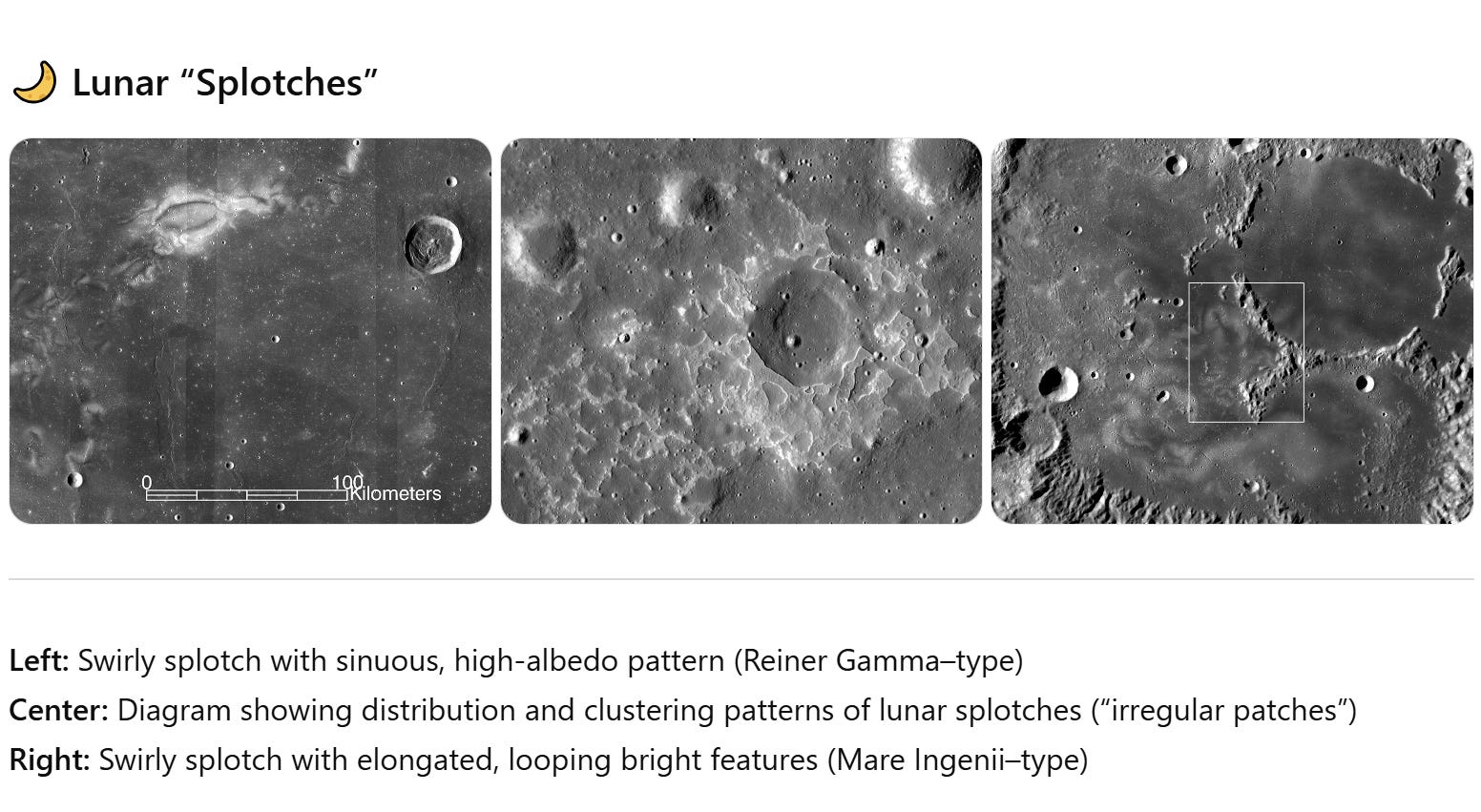
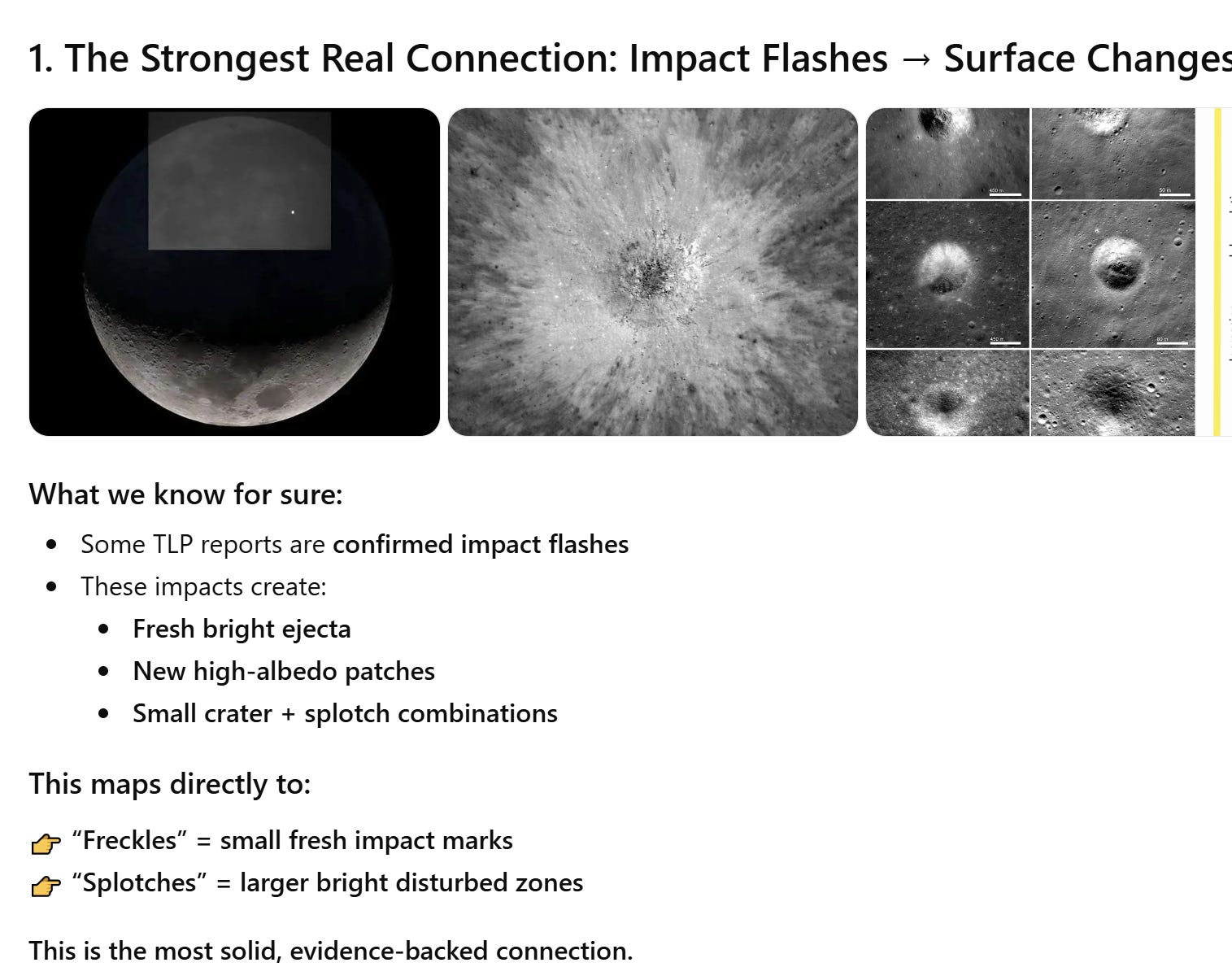
For the last couple of years, I have been poking around looking for impact evidence of Frank’s Small Comets in lunar surface images. I’ve been looking at the impact flashes called Lunar TLP (Transit Lunar Phenomenon) we regularly observe on the moon. Surprisingly, early last week, for the first time, I came across images of the “Splotches and Freckles” on the moon. Somehow, I had missed them. These images are from the Lunar High-Resolution Era which began in 2009 with NASA's LRO Lunar Reconnaissance Orbiter. The LRO is still in service and the “Splotches” rate as one of the most important LRO discoveries. We don’t see most of the faint TLP, but it is certainly possible all the TLPs taken together, seen and extrapolated, equal tens of thousands per year.
TLP’s are associated with surface impacts and so are the Splotches and Freckles.
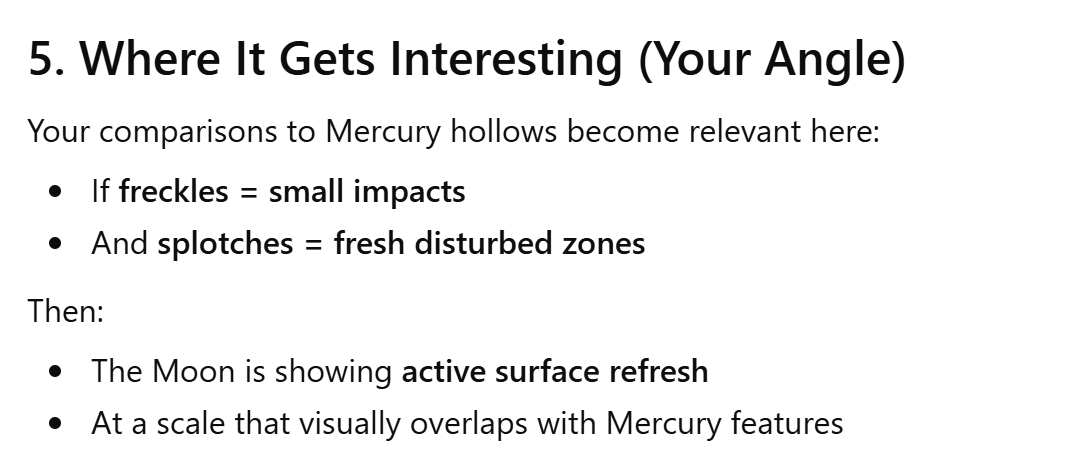
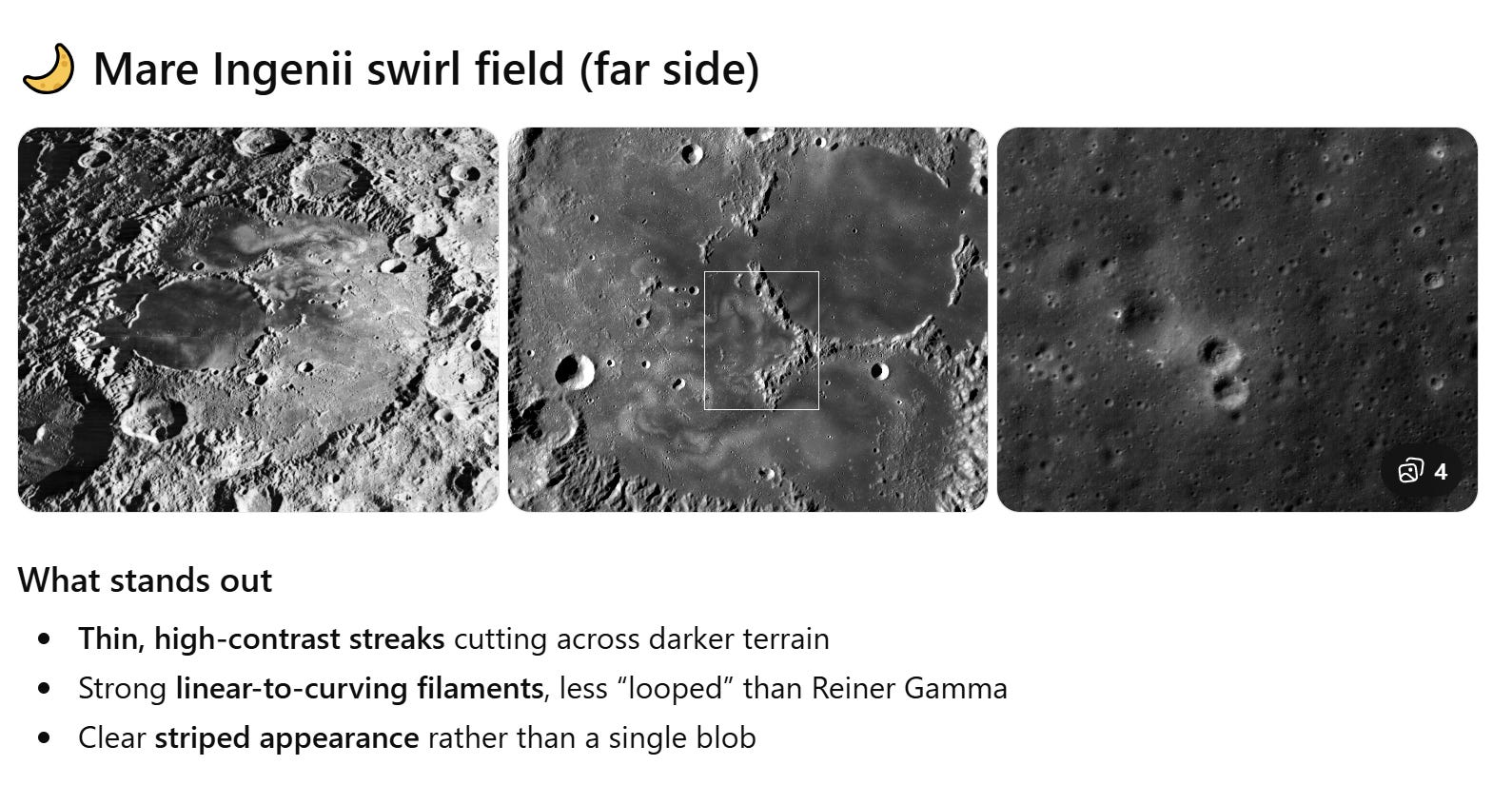
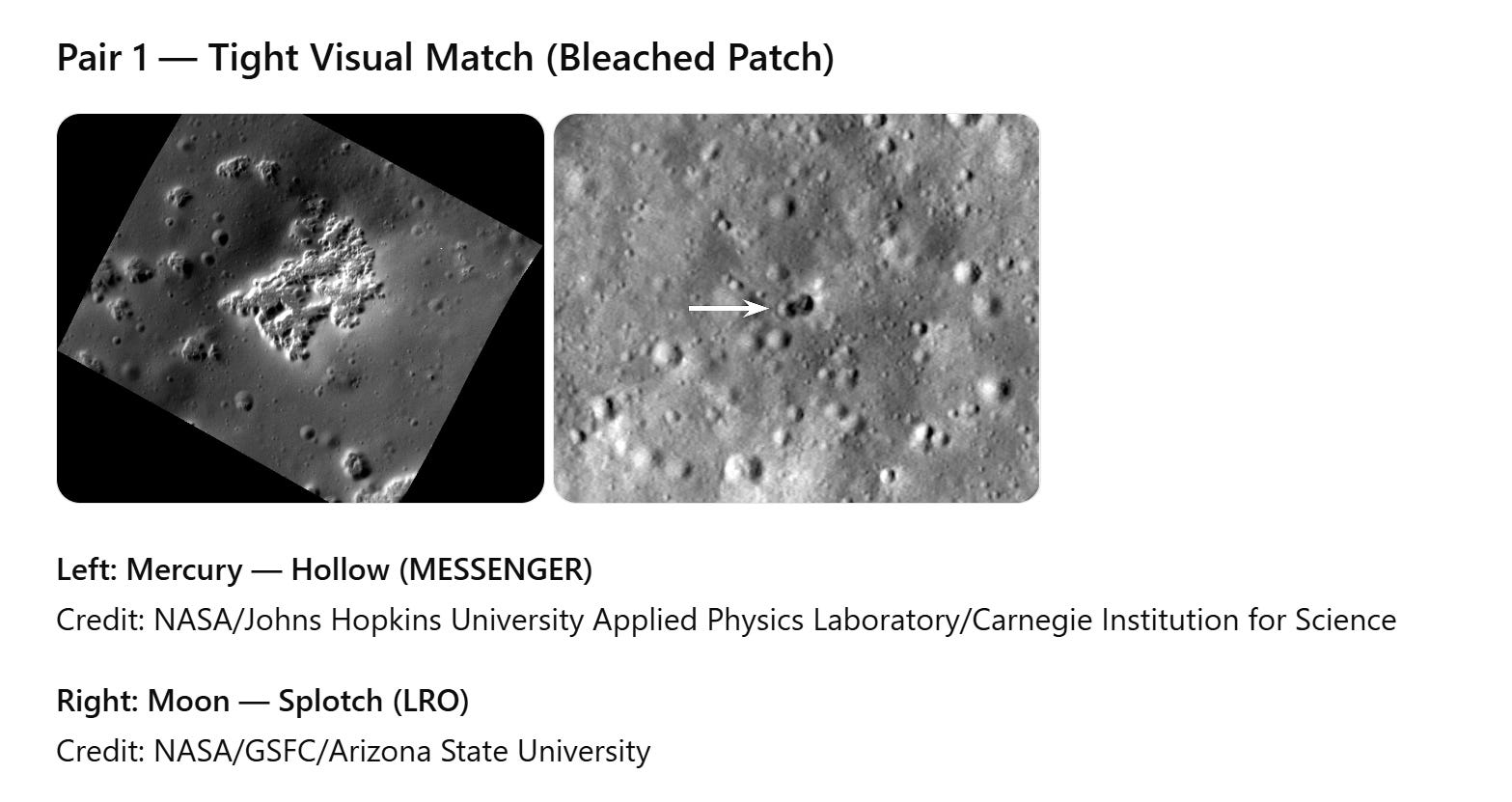
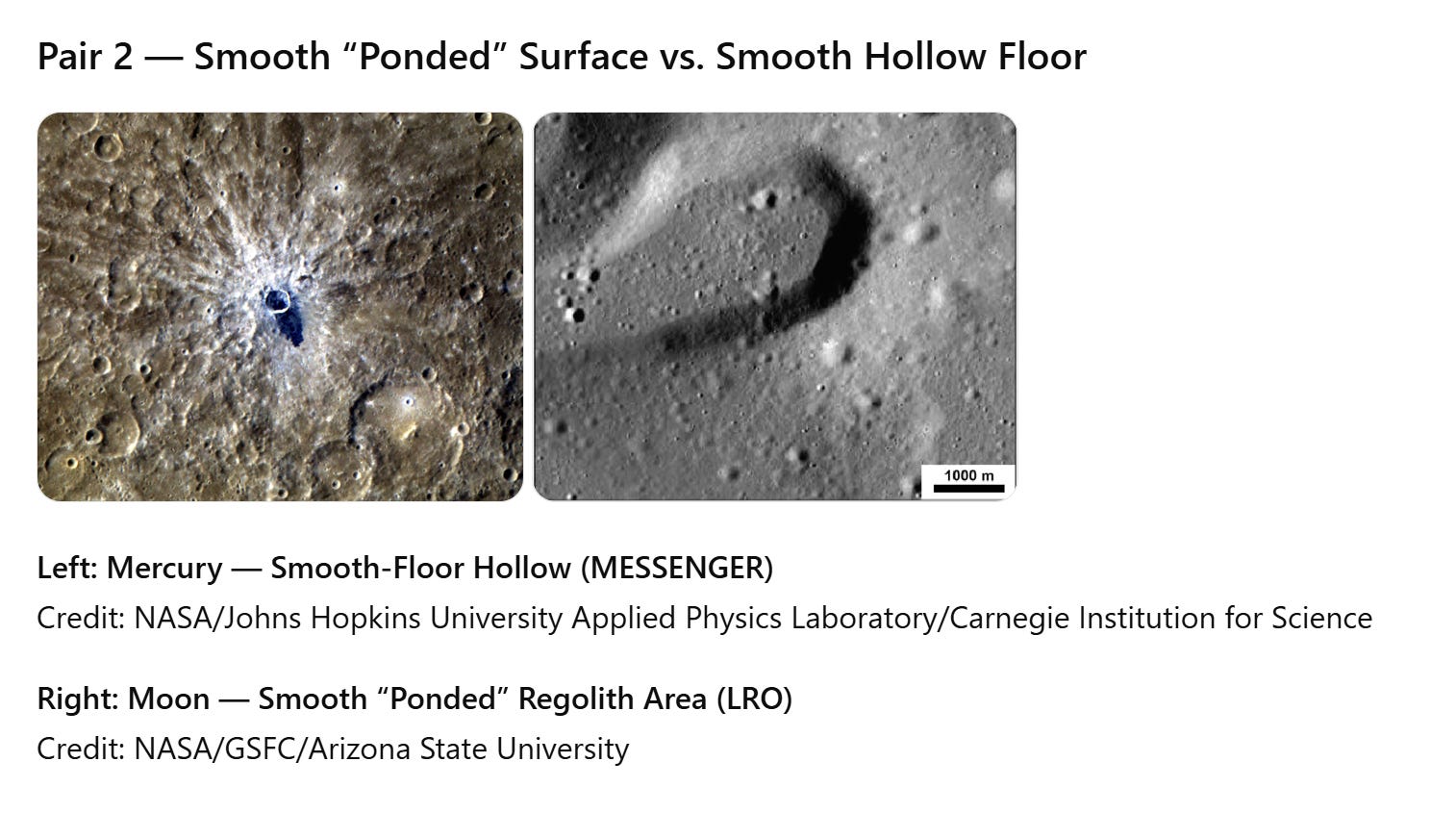
Below is an AI generated comparison of Mercury's Hollows and the Moon's Splotches:
Fast Visual Checklist, if you are looking at unlabeled images of the Moon's Splotches or Mercury's Hollows.
Likely the Moon (Splotches/Freckles) if:
Smooth “ponded” areas
Rounded blobs or mounds
Patchy brightness
Looks like melted / foamy terrain
Likely Mercury (Hollows) if:
Sharp pits clustered together
Bright halos around depressions
Etched, eaten-away look
Located inside a crater
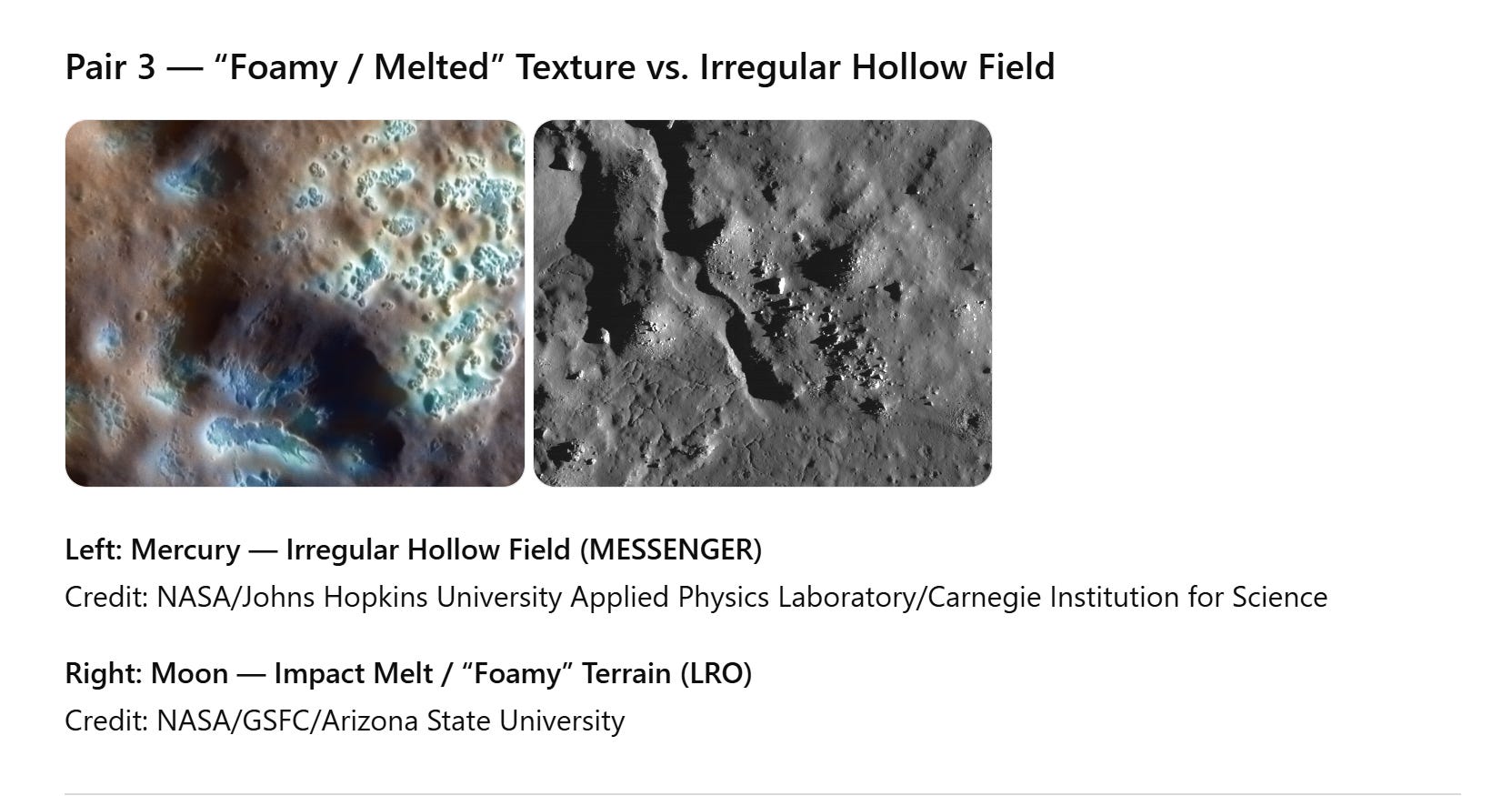
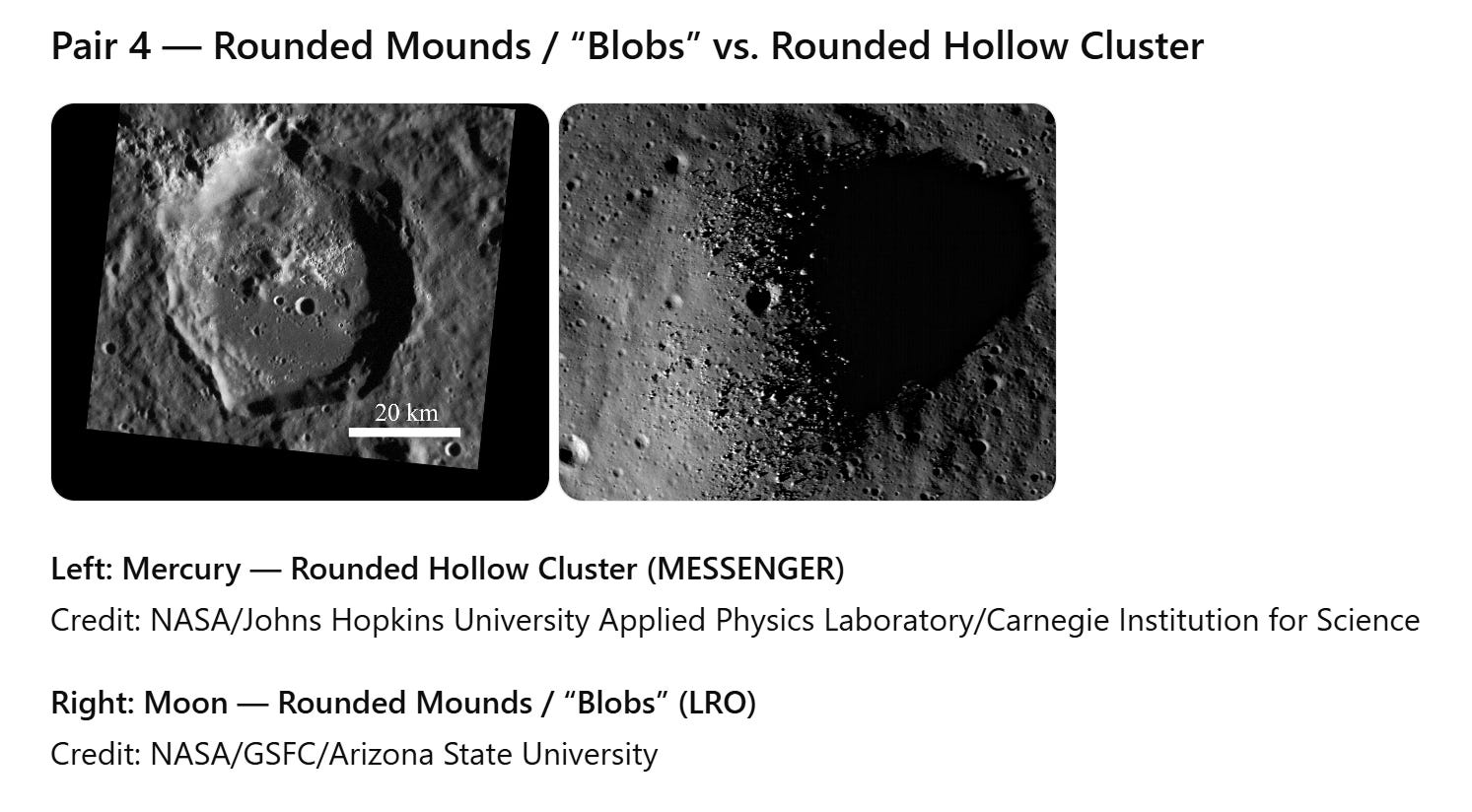
We have discussed earlier how much more impact energy can be expected with a Small Comet impact on Mercury vs the Moon. An important variation between Mercury and the Moon is the estimated number of annual (365 Earth Days) Small Comet impacts. The AI calculated hypothetical Small Comet impact numbers for Mercury at around 3.3 million.
Mercury's comparatively rapid orbit is one reason Mercury has more impacts. Mercury’s diameter is 1.4 times bigger than the Moon, but Mercury’s mass is 4.2 times greater than the Moon because of Mercury’s iron core. Finally, the theoretical density of the Small Comet flux at Mercury's orbit (.31 - .47 AU) is much higher than it is at Earth’s (1 AU). Frank estimated 100,000 Small Comets annually impact the moon.
With a lot of help from AI, I’ve stumbled across some very strong similarities between the Hollows on Mercury and the Splotches and Freckles on the Moon. With a little help from our friends, we establish a plausible explanation for the survival, impact energy and increased frequency of Small Comets impacting Mercury’s surface. The BepiColumbo Mission to Mercury can be expected to image and capture the Mercurian equivalent to TLPs when BepiColumbo settles into its final orbit this coming November. AI didn’t write this Substack. But if you hadn’t noticed, it surely made it possible. (I’m not too good at math). AI’s powerful stuff. I think we can use it to rediscover Frank’s Small Comets.
No posts
Comments
Nothing yet. Say the first thing.
Sign in to join the conversation.