
The consensus says Israel is advancing: settlements, Gaza, Lebanon, Capitol Hill, everything under control. The question, supposedly, is when Greater Israel will be completed, not whether it’s collapsing — but that assumption is precisely what’s keeping people from reading the map clearly.
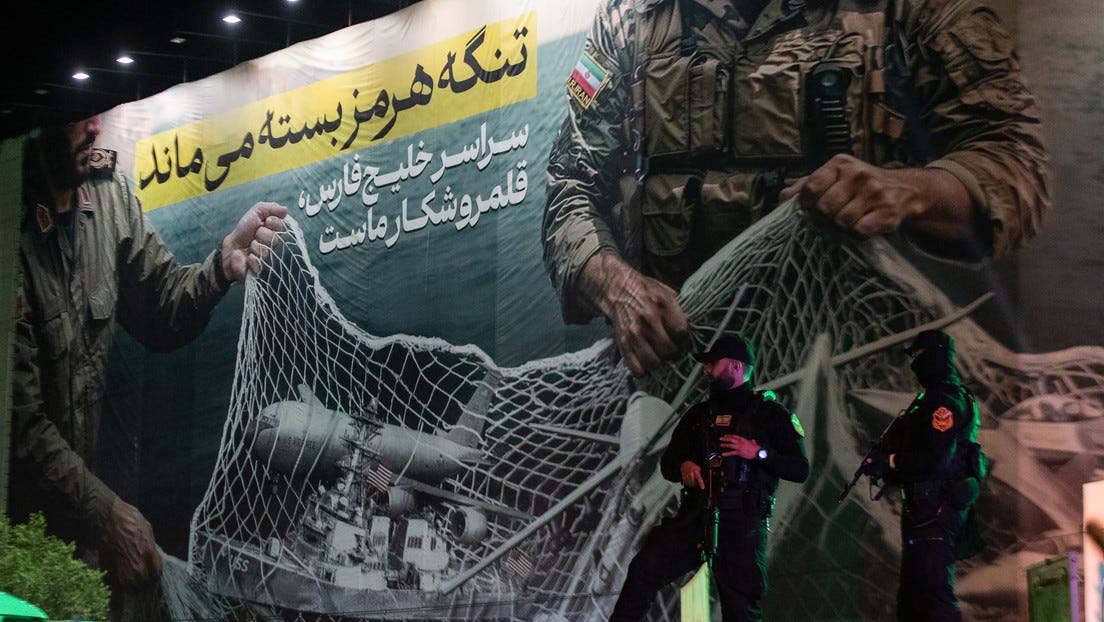
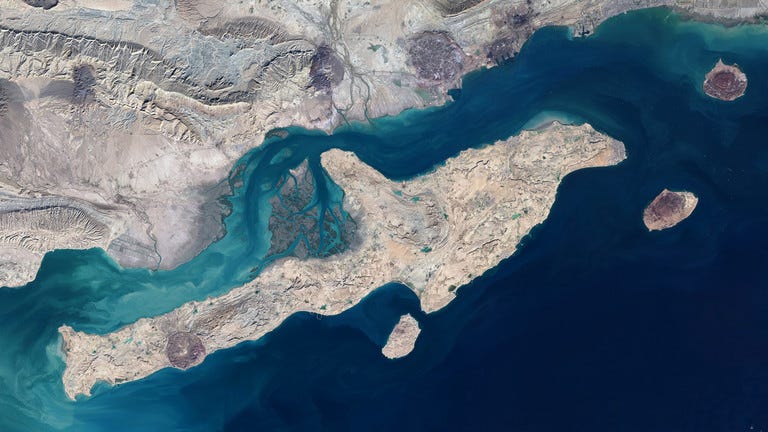
Last week, Iran suspended indirect negotiations with the United States, and within days rumors were already pointing to an imminent exit from the conflict. The condition Tehran set was not nuclear — it demanded a ceasefire in Lebanon and Gaza, plus Israeli withdrawal from southern Lebanon. The Iranians declared that “the blood of a Lebanese is equal to the blood of an Iranian,” and for the first time a regional actor is imposing territorial conditions before sitting down to negotiate the flow of 20% of the world’s oil supply. That fact doesn’t fit the map most analysts use to read the region — and yet it’s happening.
The first pillar has already given way, and it has done so on three mutually reinforcing levels.
At the political level, the U.S. Congress voted last week to invoke the War Powers Act against Trump. The resolution has loopholes — it allows wars in “defense of allies or partners,” and any country can be called a partner if you name it as one — but the political fact is new: Republicans and Democrats agree that the president cannot escalate against Iran without congressional authorization. At the same time, Europe is sanctioning Ben Gvir and Smotrich, Ireland has banned them, and France is considering doing the same. The European Union condemns Iranian attacks in the Gulf, but stays silent on the Israeli invasion of Lebanon. That silence is no longer unconditional complicity — it’s simply silence, and silence does nothing but breed resentments that get settled over time.
At the military level, the U.S. precision missile stockpile is at 55% capacity after three months of operations. Replenishing what was spent in the first 38 days of high-intensity combat would take five years, and half of the critical components come from China, with no short-term alternative. The United States has spent more arsenal defending and attacking than Israel itself. Iran knows this, and every week it prolongs negotiations without conceding is a week in which U.S. offensive capacity degrades with no possibility of recovery. Time is not neutral in this equation — it works for Tehran and against the project Washington sustains in the region.
The intelligence level is the deepest, and perhaps the hardest to reverse. The U.S. Defense Intelligence Agency has just elevated the counterintelligence risk associated with Israel to its highest level: “critical.” According to leaks to NBC and The New York Times, the seven-page report documents Israeli attempts to tap the phones of U.S. defense personnel and access internal Trump administration deliberations on negotiations with Iran. The named targets are Steve Witkoff, the president’s chief negotiator, and Elbridge Colby, the Pentagon’s top policy official. These are not low-ranking officers. An official quoted by the outlets described the aggressiveness of Israeli intelligence collection as “disproportionate.” The military ally is becoming an intelligence threat, and cooperation is beginning to rot from within as trust breaks down. Israel denies it, of course — but the DIA is not a hostile source. It is the agency whose job is to protect the United States from its adversaries. If it places Israel in the “critical” category, the message is clear: for U.S. intelligence services, the ally is now operating as an actor that needs to be contained.
The second pillar — Arab alliances — is more complicated, and that complexity is precisely the problem. The United Arab Emirates coordinates intelligence with Tel Aviv, as the Wall Street Journal reported, while simultaneously blocking UN Security Council resolutions that would favor Israel’s position in the Strait of Hormuz. This is neither betrayal nor loyalty — it is a survival calculation. Dubai’s financial model is incompatible with all-out war in the Gulf; a single Iranian missile on a desalination plant would disable the emirate within 48 hours. Saudi Arabia, meanwhile, is complaining to Washington that Emirati strikes are increasing risk to regional energy infrastructure, and is negotiating a new security framework with Pakistan, Egypt, and Turkey — without the United States, without Israel. That axis is not a formal alliance or a declared architecture; it is something more significant: three mid-sized powers with combined demographic and historical weight beginning to coordinate their regional security outside the two actors who for decades claimed that space. When these movements occur, it usually means no one expects the displaced protagonists to become indispensable again.
The third pillar is the most decisive. Before the escalation of early 2026, surveys from the Israel Democracy Institute recorded that nearly a third of Israelis between 18 and 34 were considering permanent emigration — the highest proportion since the indicator was first measured. Israel has weathered other crises of collective morale — the shock of ‘73, the grinding Lebanon campaign of the eighties, the years of the Second Intifada — and in all of them the founding contract held, because the state could offer security within the perimeter in exchange for territorial sacrifice and mandatory military service. What is happening now is different in its structure, not just in its intensity. Iran’s asymmetric damage capacity — saturation drones, precision missiles that have struck U.S. bases in the Gulf — has crossed the threshold at which Iron Dome and Israeli air superiority guaranteed a relative immunity. Northern Israel was preventively evacuated not because an attack occurred, but because the threat was credible enough to move a civilian population. When the state can no longer deliver what it promised in exchange for everything it demanded, people leave the land.
The most common analytical mistake is waiting for collapse as an event: a surrender, a treaty, a clear before and after. All evidence suggests it will not happen that way. The collapse of Greater Israel, if it is consummated, will be a cumulative process: Congress conditions military aid, Arab partners reconfigure their security architecture without Israel, the Defense Intelligence Agency treats Israel as a threat, and net Israeli emigration exceeds immigration for the first time since 1948. The first three are already underway. The fourth doesn’t require a war — it only requires the trend to continue.
Greater Israel is being quietly abandoned by the very conditions that made it possible.
[References in the comments]
No posts
Comments
Nothing yet. Say the first thing.
Sign in to join the conversation.