
During the Fourth of July weekend, an oppressive heatwave engulfed New York City. I skipped the usual patriotic rituals: fireworks (or at least seeing them in person—I caught a few moments on YouTube instead), backyard barbecues (I don’t have a backyard), and waving an American flag (that feels... gauche at the moment). Instead, I luxuriated indoors with the security blanket of air conditioning and watched a movie.
It wasn’t Citizen Kane or The Godfather. I chose Il sorpasso, Dino Risi’s 1962 comedy about two strangers who embark on a road trip from Rome to Tuscany. What stayed with me wasn’t simply its shocking finale, but how unmistakably Italian the film felt. Not just because of its language or setting, but because it was filled with distinct observations about the performance of masculinity, class as a form of social acceptance, postwar prosperity, and the trappings of the Sweet Life.
When the credits rolled, I found myself wondering: if a film can feel so matter of factly Italian, what makes an American film feel American?
As the United States marks its 250th year, that question has been lingering in my mind. It's also worth remembering that the histories captured by American cinema extend far beyond 1776.
Over the past few months, I’ve watched three films that unexpectedly offered three different answers: Todd Solondz’s Happiness, Horace B. Jenkins’ Cane River, and Jacques Tourneur’s Out of the Past. They span different decades, genres, regions, and even directors of national origins—Tourneur, after all, was born in France. I’m not proposing these as the definitive American films, nor do they pretend to capture the entirety of American life. Rather, each illuminated a different facet of the country: the belief in reinvention, its uneasy relationship with class, race, and power, and the false truth that happiness, however elusive, is something worth pursuing.
The American Dream is perhaps our nation's defining myth. Embedded within it is the pursuit of happiness—that our lives can be transformed for the better if we work hard enough, assimilate into society, and achieve our loftiest of goals. For some, that sense of personal fulfillment is measured through work, marriage, or home ownership. For others, it’s an insurmountable hill to die on. American filmmakers have long been fascinated by this promise. In Happiness, Solondz cracks the American Dream wide open to reveal something darker, more disturbed, and ultimately more humane.
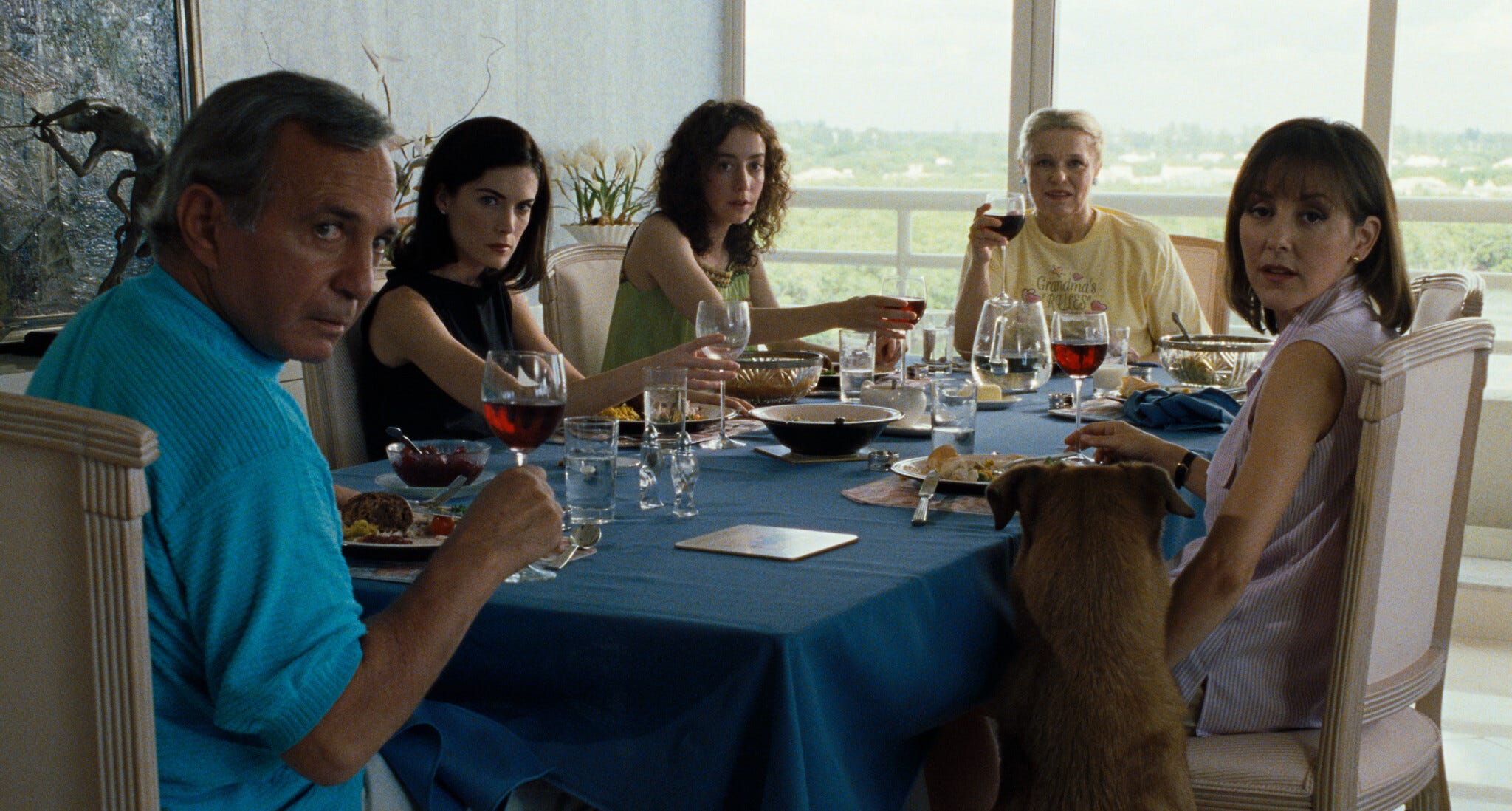
At the heart of Happiness is a family anchored by three sisters in suburban New Jersey, while their parents are adrift in retirement in Florida. Every character believes they understand what a happy life should look like, yet Solondz's cruel joke is that each has mistaken appearances for total satisfaction. Trish (Cynthia Stevenson), the eldest sister, embodies a confident suburban contentment, blissfully unaware that her seemingly perfect marriage conceals nasty secrets. Helen (Lara Flynn Boyle), a successful writer, has convinced herself that misery is a requirement for artistic greatness. Joy (Jane Adams), the youngest, is continually stuck in unsatisfying relationships and a dead end job, forever searching for a life filled with purpose and meaning. Even their parents, Mona (Louise Lasser) and Lenny (Ben Gazzara), find retirement less liberating than anticipated. How can people who appear to have achieved every marker of middle-class success remain so profoundly unhappy?
While Happiness is brimming with characters who are decidedly unhappy, I found the film to be emblematic of a certain kind of all-American spirit. Told largely through intimate conversations between two characters at a time, Solondz suggests that our friends and neighbors in the suburbs are quietly buckling under the weight of maintaining class identity, family structures, and the suppression of their deepest desires. The scenes involving graphic phone sex, masturbation, the realization of bleak sexual fantasies, and sexual violence are difficult to watch, yet they're about as funny as a bruise. Rather than exploiting these moments for shock, Solondz exposes the gap between the lives his characters perform and the ones they actually inhabit. Their desperation isn't simply sexual; it's existential. Happiness becomes less a satire of suburban America than a portrait of a society convinced it should have everything it needs, yet unable to recognize fulfillment when it arrives.
The suburbs as the idyllic stage of the American experience are no stranger to Solondz's cinematic oeuvre. His debut feature, Welcome to the Dollhouse, similarly pierced the veneer of middle-class respectability through the eyes of Dawn Wiener (Heather Matarazzo), a teenager navigating the humiliation of adolescence. Across the 1990s and early 2000s, Solondz repeatedly picked at the scab of suburban America, asking what families looked like once the performance of normalcy gave way to degradation and debasement. Though he hasn't directed a feature since Wiener-Dog in 2016, Happiness hasn't lost its sting. If anything, it reminds me that provocative subject matter is only worthwhile when it reveals something truthful about the human condition. Shock for its own sake is boring to watch. Solondz's discomfort endures because it is always in service of empathy.
Home and family as stable, if imperfect, institutions are central to Jenkins' Cane River. American cinema has long been fascinated by characters who leave home only to discover that they must eventually return. Think of The Wizard of Oz, The Deer Hunter, Five Easy Pieces, or even Young Adult. The journey away promises reinvention, but the journey back forces a reckoning with family, history, and the places that first shaped us.
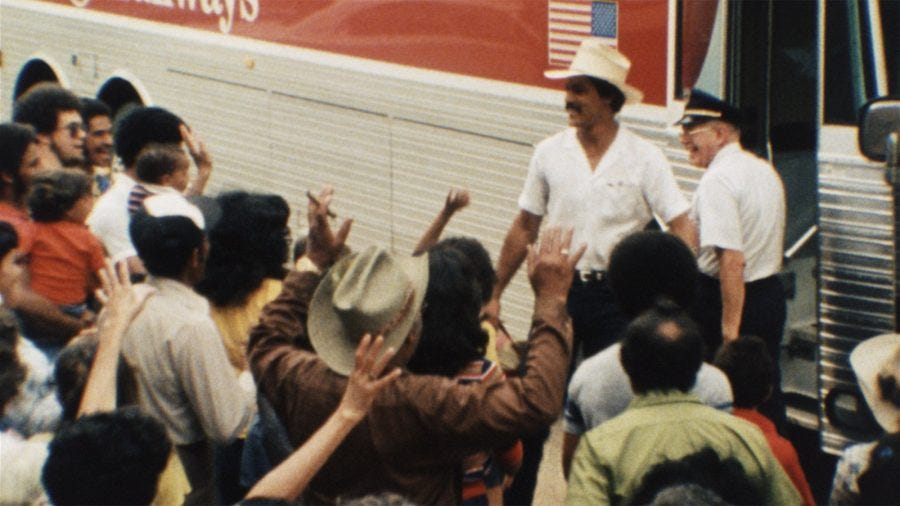
Peter Metoyer (Richard Romain) is a college athlete returning to his family home near Cane River in Natchitoches Parish, Louisiana. He's greeted warmly by family and friends the moment he steps off the bus, but Cane River quickly suggests there’s more to this return than general goodwill.
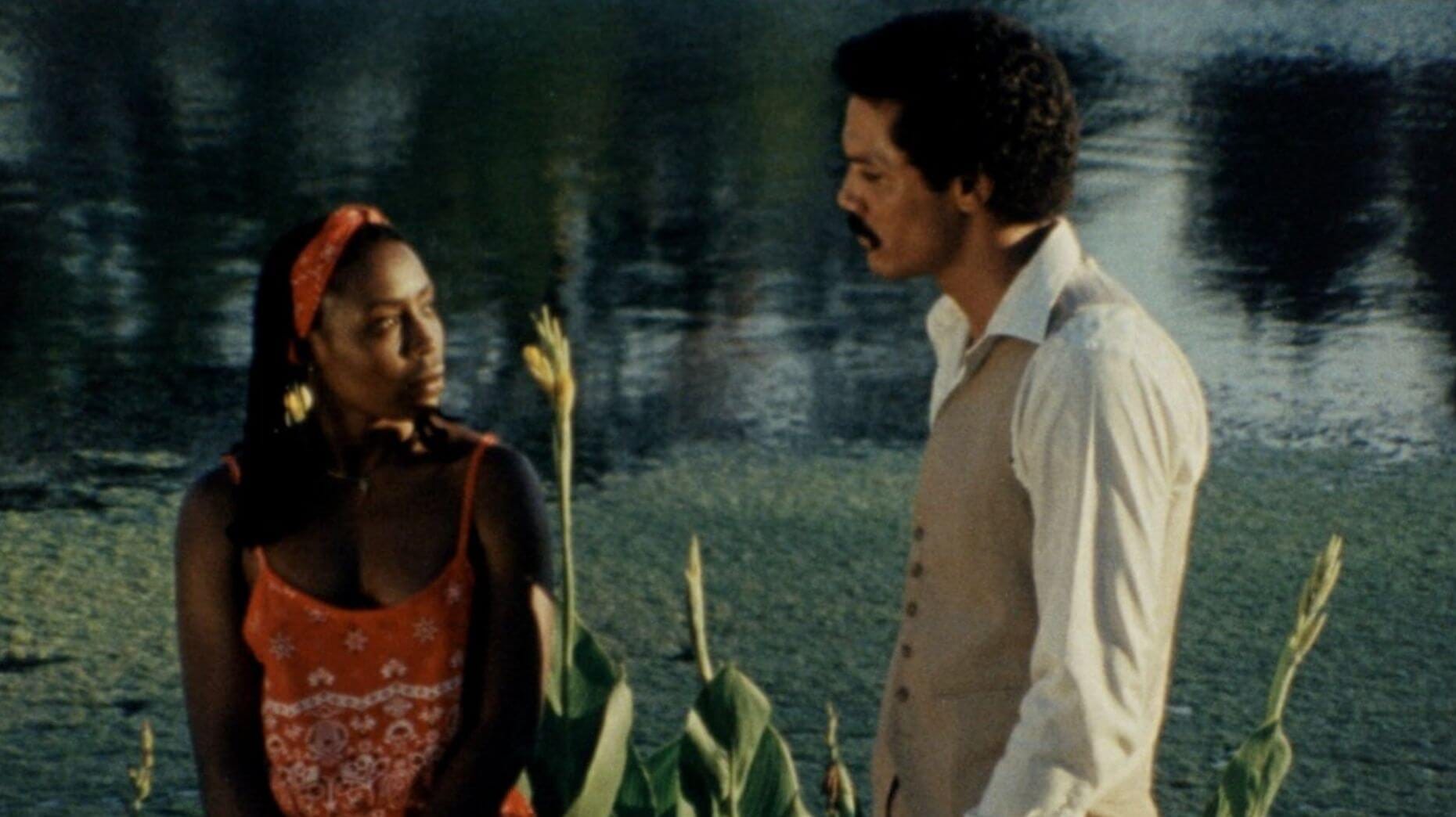
While exploring land that once belonged to his Creole family, Peter meets Maria Mathis (Tommye Myrick), a darker-skinned Black woman whose family history occupies a very different relationship to that same landscape. Maria is understandably wary of Peter. His ancestors owned slaves; hers lived with the consequences of that history. Their romance is continually shadowed by colorism, class divisions, and an inherited past neither of them created but both must navigate.
Much of what makes Cane River such a pleasure to watch is that, despite the historical weight of its themes, it remains first and foremost a beautifully observed human drama. Peter and Maria feel like people with lives extending beyond the edges of the frame. Rather than staging slavery as whitewashed spectacle, Jenkins is interested in how its legacy persists in everyday contemporary life for Black people.
The film's sense of place is equally important. The expansive Louisiana farmland, the tree-lined yard near the swimming pool where Peter and Maria cautiously circle one another, and the hazy skies of a humid Southern summer aren't simply beautiful backdrops. They root Cane River in a landscape where history feels inseparable from the present.
While Hollywood has long been one of America's greatest cultural exports, independent filmmakers have often been responsible for expanding the country's cinematic identity. Cane River was financed not by a major studio but by the Rhodes family of New Orleans, owners of one of the city's oldest Black-owned funeral homes. Their support allowed Jenkins to tell an intimate story about Creole life in Louisiana that almost certainly would have struggled to find studio backing in the early 1980s. There are no movie stars, no special effects, only ordinary people firmly planted in their lives in a corner of America rarely seen on screen.
Popular cinema has often reduced Louisiana to the iconography of New Orleans—Mardi Gras, jazz, voodoo, and the French Quarter. Cane River instead turns its attention to the rural communities of Natchitoches Parish, presenting a Louisiana that is more intimate, and no less historically significant.
Jenkins died before Cane River ever reached wide audiences, and the film remained unseen for decades until its restoration and release in 2018. Its eventual rediscovery serves as a reminder that America's cinematic history isn't limited to the films Hollywood chooses to celebrate.
This country has long imagined itself as a place where people can leave their past, move west, and become someone or something entirely new. American cinema has repeatedly returned to that fantasy, often only to question whether it's ever truly possible.
Tourneur's Out of the Past begins where so many American stories do: with a man who believes he has successfully started over. Jeff Bailey (Robert Mitchum), a former private investigator now living as a gas station owner, appears to have escaped whatever life came before. That illusion quickly fades when Whit Sterling (Kirk Douglas), a wealthy businessman, pulls him back into a web of deception involving Whit's former lover, Kathie Moffat (Jane Greer).
Much of Out of the Past unfolds across rural California, San Francisco, and Acapulco. The American West has long occupied a special place in the national imagination—a landscape where fortunes could made and life begun anew. Jeff Bailey seems to have achieved exactly that.
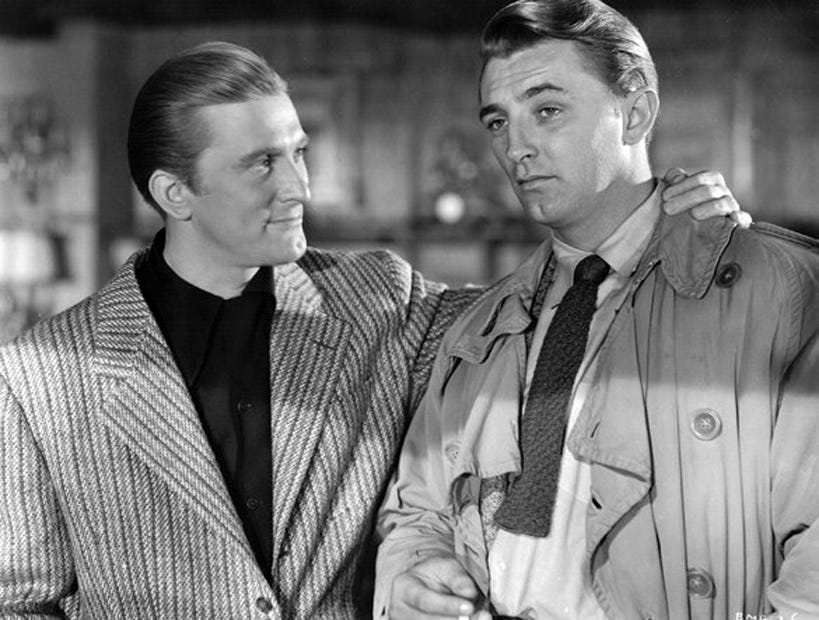
The forces that ultimately undo Jeff are money and power. Jeff is the perfect fall guy for Whit and Kathie's deception—the ordinary man caught in the games of the rich and powerful. Mitchum's permanently weary face makes him the ideal American everyman, forever one step behind the sleek confidence and inherited power embodied by Douglas.
Classic noir emerged during a period when America was renegotiating its own identity after World War II. Rather than celebrating prosperity, these films questioned its costs, repeatedly placing ordinary people in situations where money, desire, and power blurred the line between right and wrong.
Across all three films, ownership becomes a recurring American concern. Whether it’s owning a home, owning land, owning another person’s affection, or owning the narrative of your own life, these characters continually discover that possession rarely guarantees fulfillment or control.
In nearly a century of American filmmaking, every vision of what the country is—and what it might become—has likely found its way onto the screen. These films entertain, provoke, and move us, but they also become historical records of the nation's evolving identity. The Library of Congress preserves many of them in the National Film Registry because they are deemed culturally, historically, or aesthetically significant.
The best national cinemas don't simply record historical events. They preserve the emotional atmosphere of a country at a particular moment in time.
American films, regardless of genre or decade, repeatedly return to happiness, reinvention, ownership, class, family, race, and power. Happiness, Cane River, and Out of the Past might not teach an outsider a comprehensive history of the United States, but together they reveal the country’s anxieties, aspirations, and contradictions. In doing so, they become distinctly American.
A free subscription includes:
✓ Weekly essays delivered to your inbox
✓ Access to Notes and community discussions
✓ Occasional interviews and special features
A paid subscription gets you:
✓ Subscriber-only essays and series
✓ Select archive access to earlier pieces
✓ Recommendations, lists, and cultural deep dives
If you’ve been reading for a while, subscribing is the most direct way to support the work—and stay close to it.
Comments
Nothing yet. Say the first thing.
Sign in to join the conversation.