
Just the other day, a good friend asked if I’d watched the final season of The Bear.
“No,” I sighed.
“Ouch,” he replied.
I have to confess that I still haven’t watched Widow’s Bay, Margo’s Got Money Troubles, DTF St. Louis, or the last season of Euphoria. One has to choose wisely these days with the volume of freshly delivered television, films, exhibitions, concerts, and performances competing for our cultural attention. The midpoint of the year feels like the right time to assess what has stood out among all of those options.
Looking back over the first half of the year, the works that stayed with me all had one thing in common: they were aimed from the gut. They felt urgent, necessary, and reflective in a way that no one else, in another time or place, could have expressed.
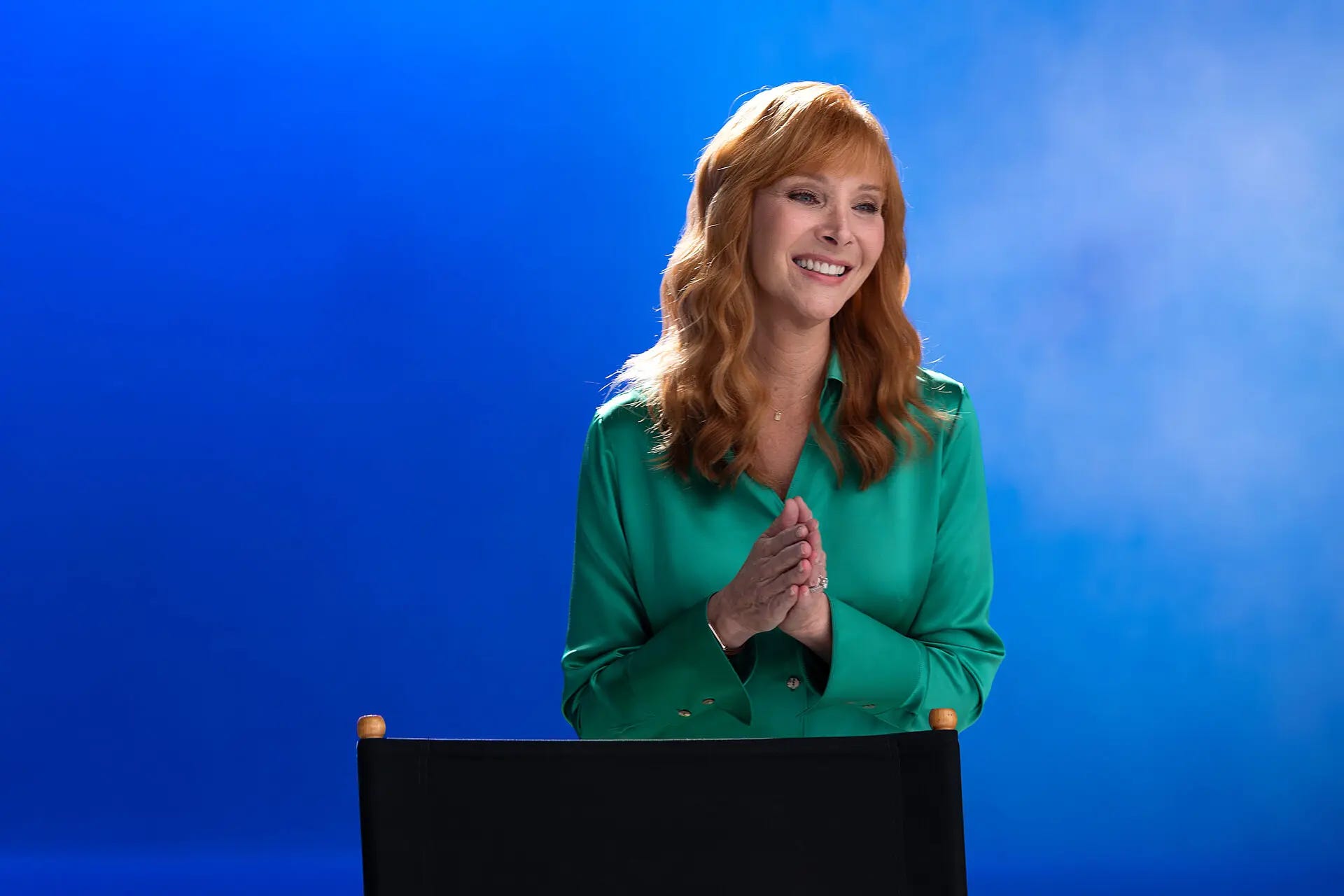
My sense of urgency to finish all the shows was low because why should I even bother when I watched perhaps the most sincere, of the moment, and hilarious gift in culture in the first half of 2026—the final season of The Comeback. Lisa Kudrow’s full bodied performance of Valerie Cherish is her total willingness to act her eyeballs out beneath that signature strawberry wig. She’s giving it her all before her curtain call on the series, as is Valerie the character. Her farewell to Valerie after more than twenty years and only three seasons was the thing I didn’t know I needed the most in 2026.
Here are the standouts in culture that left the biggest impressions on me in the first half of 2026:
FILM
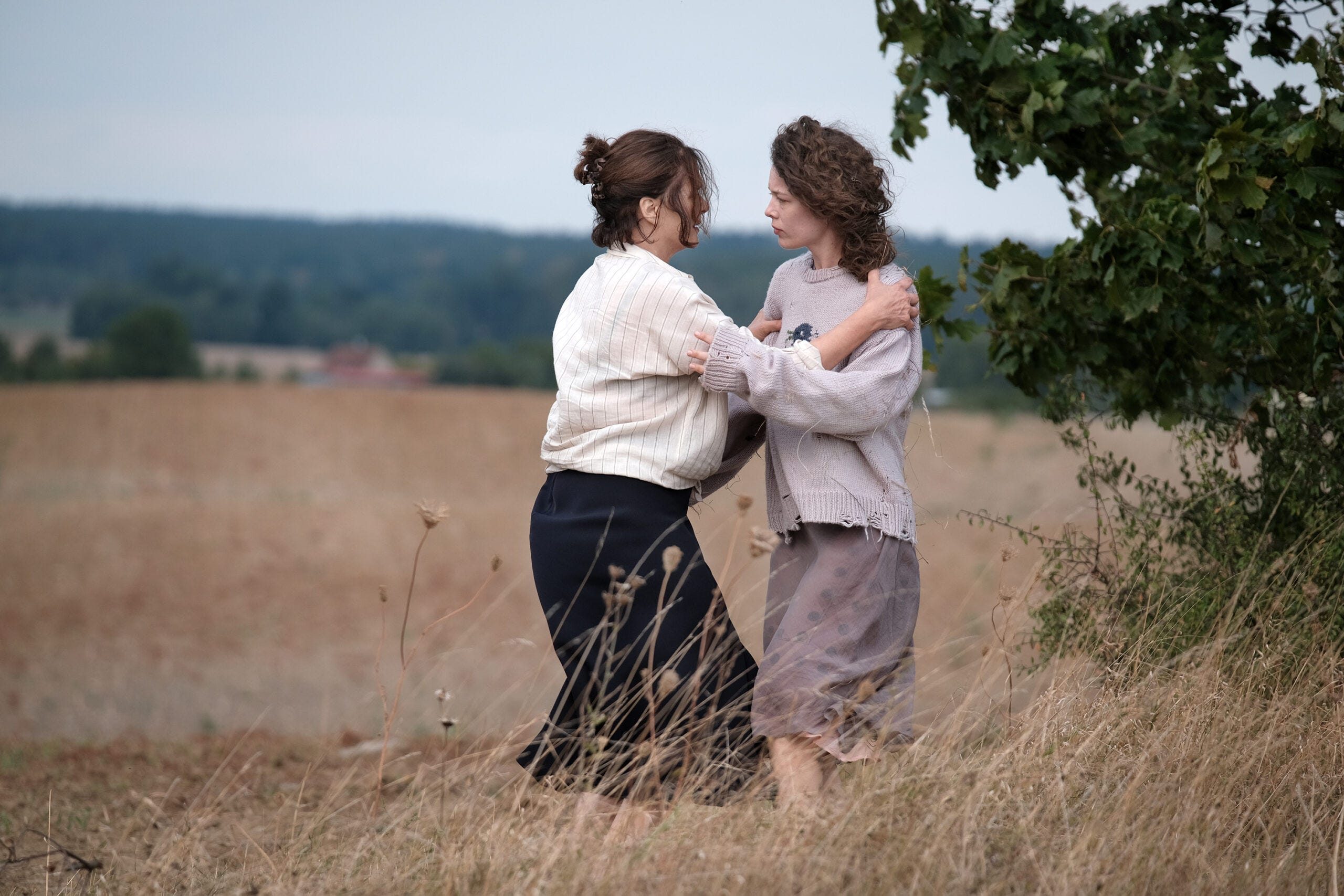
The opening credits of Christian Petzold’s Miroirs No. 3 fall on a brief shot of a river-like body of water, with ripples softly blowing in the wind. The lead character almost throws herself into its captivating waters. Instead, she is plunged into a life in the countryside with a total stranger. This was my first Petzold film and I still can’t stop thinking about how this lean, mean story was so detailed about chance collisions, ghosts, and the kindness of strangers. The warm cinematography of the German countryside reminded me of Agnes Varda's Le Bonheur, another deceptively pastoral film that slowly reveals the quiet horror of how replaceable we can become within a family. Paula Beer and Barbara Auer are a fantastic match in this slow burn and satisfying film.
Honorable mentions worth finding if you haven’t seen them already: Blue Film and Is God Is
ART
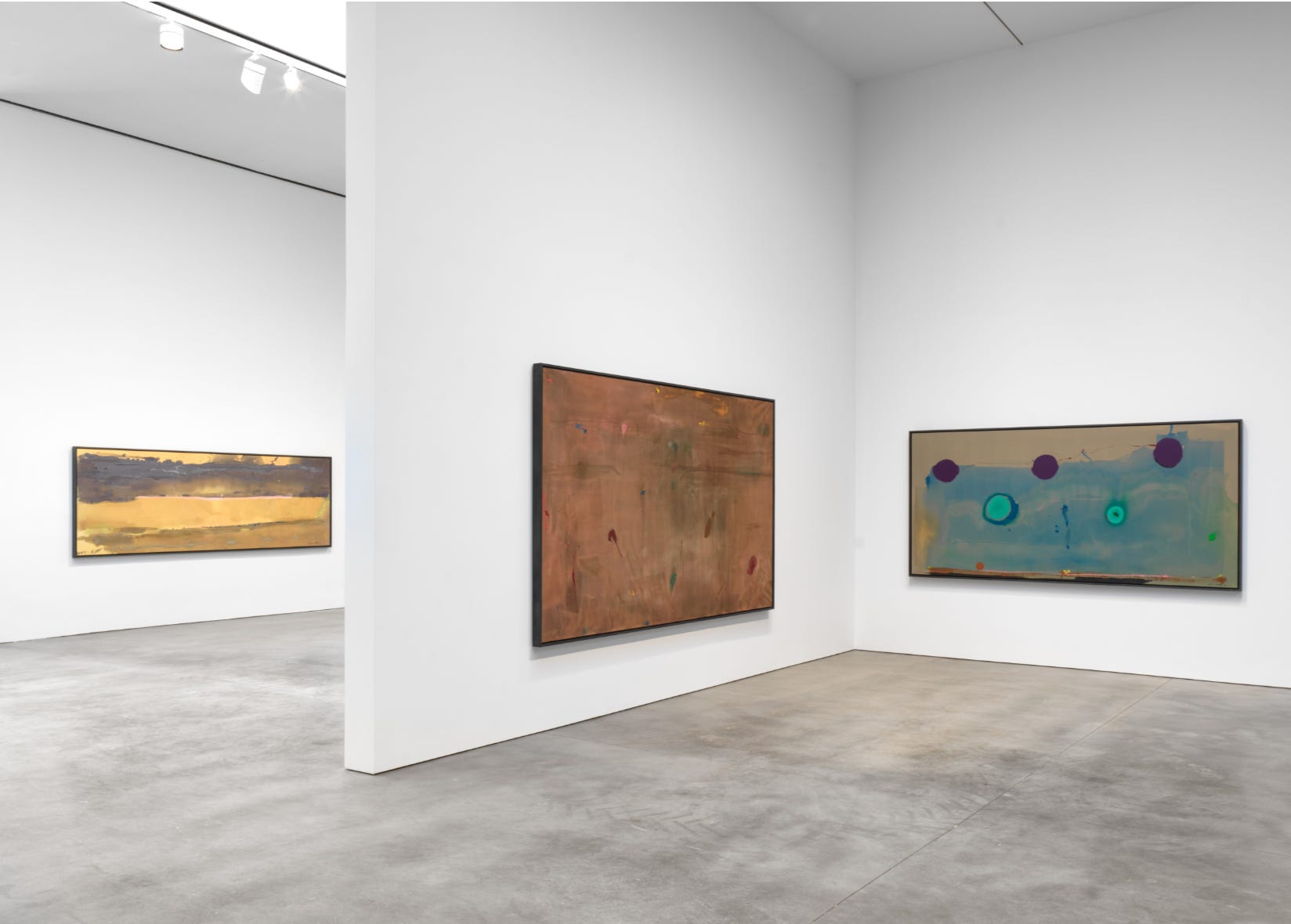
Vibrancy, scale, and intimacy are three words that come to mind when I think about a trio of exhibitions I saw this spring: Helen Frankenthaler: The Moment and the Distance, DanielleMckinney: Forest for the Trees, and Lynette Yiadom-Boakye: Many A Moonlit Caveat. Each artist’s work is so distinctly personal that you could recognize it from across the street. Taken together, these exhibitions reminded me that there’s no one way to tell a story in a painting.
The color combinations in Frankenthaler’s held me in front of her work, even at the busy opening in April. The dots of purple and aquamarine in a sea of sea foam and the way orange falls against clay and burnt brown were striking. There’s nothing soft at all about how Frankenthaller made her paintings and yet the colors seem to wash to and fro on the canvas with a light hand, inviting the viewer to be wrapped up in her interplay of color. Abstract and unsentimental, I loved seeing the evolution of her work in this mini retrospective at Gagosian.
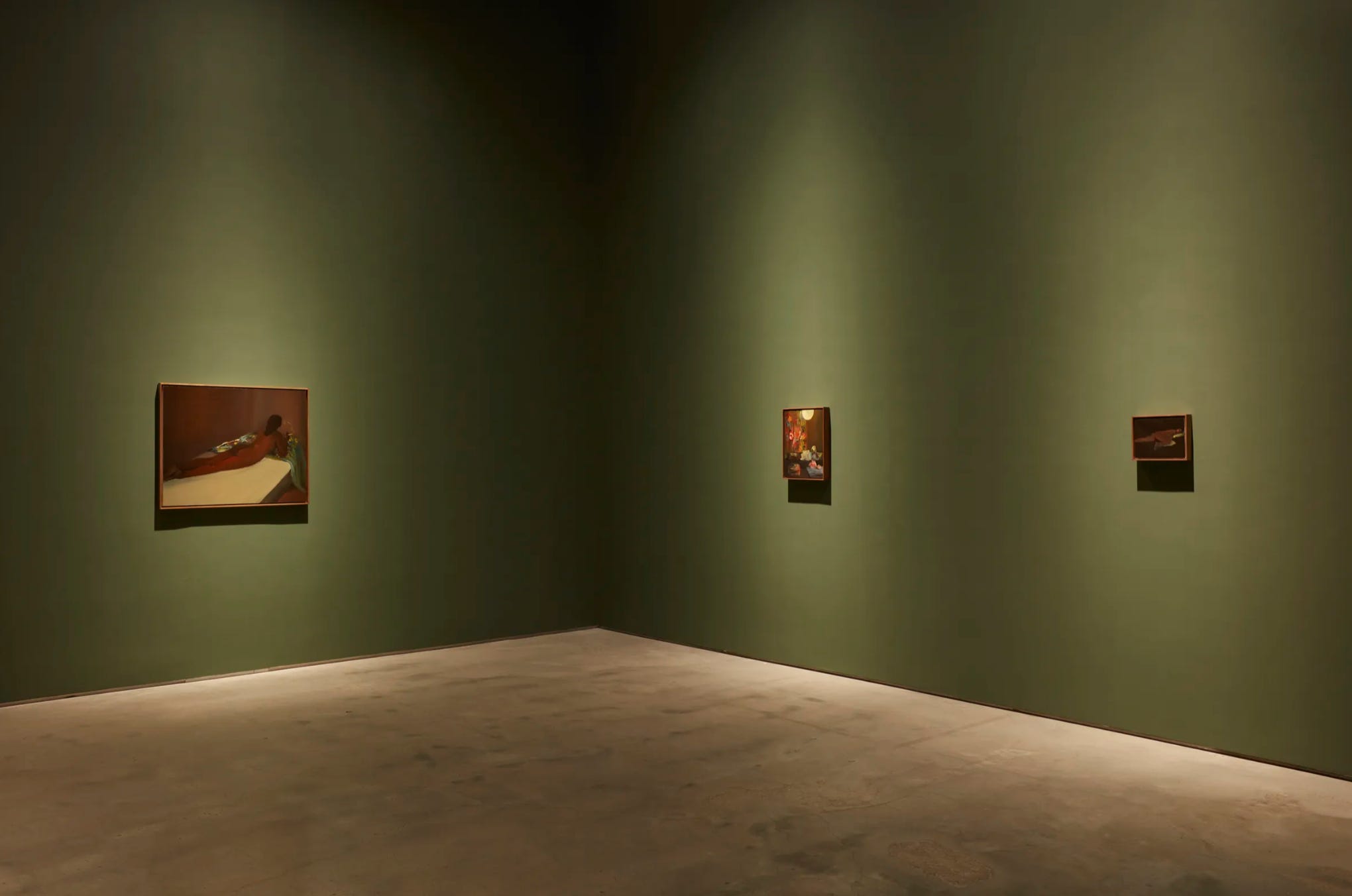
Openings are a gamble with crowds and how a work can be received. You could feel the palpably positive energy in the room at the opening of Mckinney’s show at Boesky Gallery. The justifiably ardent fans of her paintings quickly filled the gallery when the doors opened just before 6:00PM. Intimate in size and in gesture, Mckinney’s paintings present women whom she’s curious about in moments of repose, relaxation and in hopeful sighs of relief. They smoke topless in solitude or recline in a robe on a couch. Mckinney is exceptional at capturing the in-between moments that find her subjects full of thought and emotion, not just mystery and intrigue. The watercolors in the show felt new and refreshingly joyful.
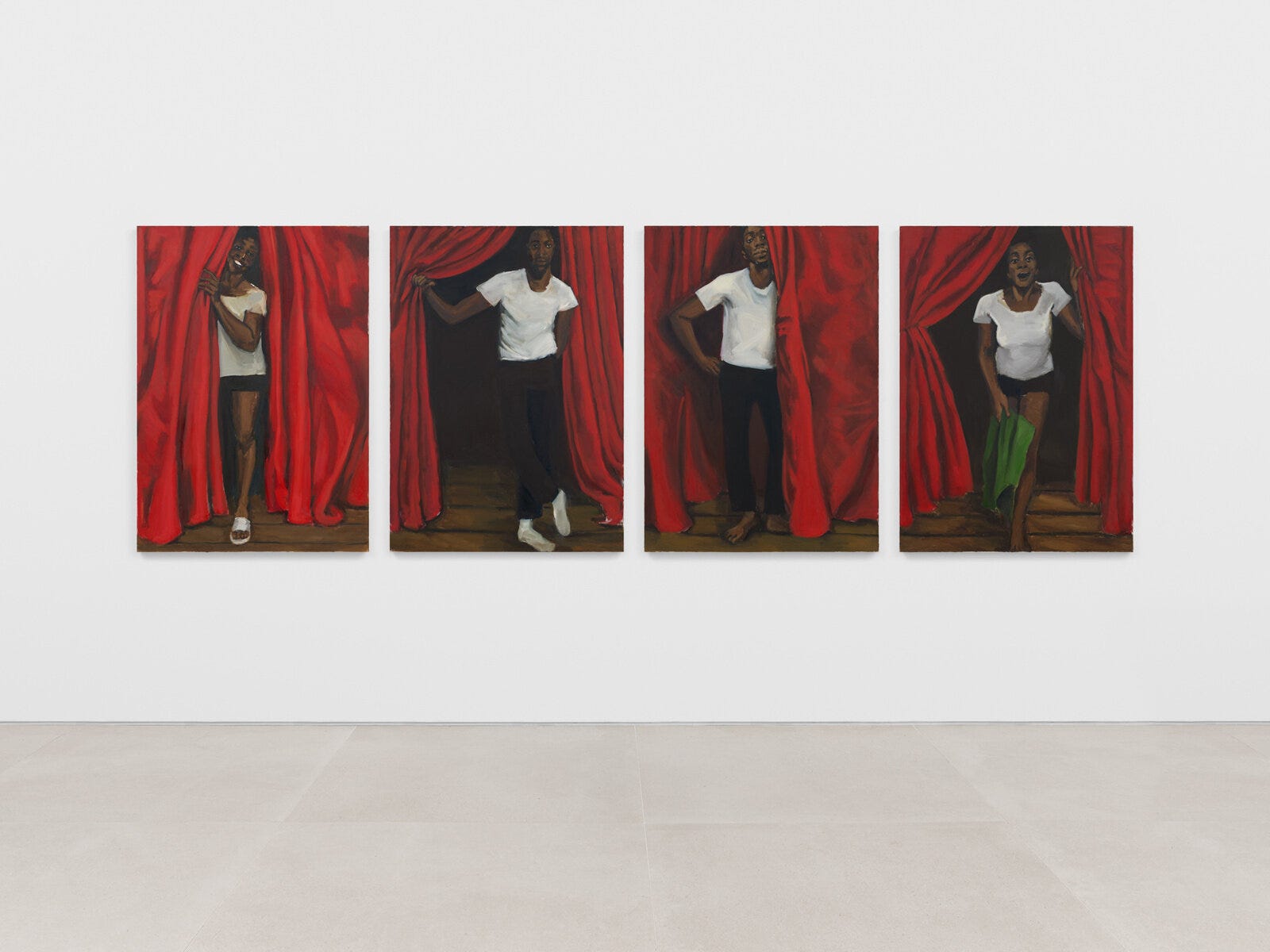
If there’s another painter who can tell narrative stories by framing Black people as centered objects in art, Yiadom-Boakye demonstrated it in her show at the dual Jack Shainman galleries. The men and women in her paintings at the Chelsea gallery dined solo or gathered in groups. The charcoal drawings at the Tribeca gallery flexed Yiadom-Boakye’s artistic might. The composition of figures in her work is always just slightly off center to express an unexpected view of Black people, as some look directly at the viewer and others don’t, their eyes looking at one another or averted entirely. Yiadom-Boakye’s subjects are always imagined figures, never real people, and yet her paintings are the real thing in beautiful matte tints of shaded blacks, creamy meringues, and hard citrus colors like yellow and orange-y reds.
MUSIC
In one of the final music performances on The Late Show with Stephen Colbert, Robyn contorted and writhed her Versace clad body on the floor of the Ed Sullivan theater to the sounds of her anthem "Sexistential." In under two and a half minutes, Robyn let us know she likes to go out at night, dating apps are the worst, and Adam Driver gives her a boner.
The pop music landscape this year has been dominated by major releases from Madonna, Olivia Rodrigo, Harry Styles, and Gracie Abrams, with new albums from Charli XCX and Ariana Grande still to come. It would be easy for Robyn's Sexistential to get lost among the fray, but it deserves the same attention. Horny, joyous, and emotionally perceptive, it's another reminder that few artists understand the intersection of dance music and introspection as well as she does. Audiences appear to be in dire need to feel something and Robyn gives permission on this album to let loose and embrace you inner freak.
“Talk to Me”, “Blow My Mind”, and "It Don’t Mean A Thing” are stand outs, and “Dopamine” will satisfy those craving a Robyn sound from the 2010’s. From start to finish, Robyn once again creates a memorable and unwieldy version of pop dance music. Bonus points for what's likely my favorite album cover of the year.
TELEVISION
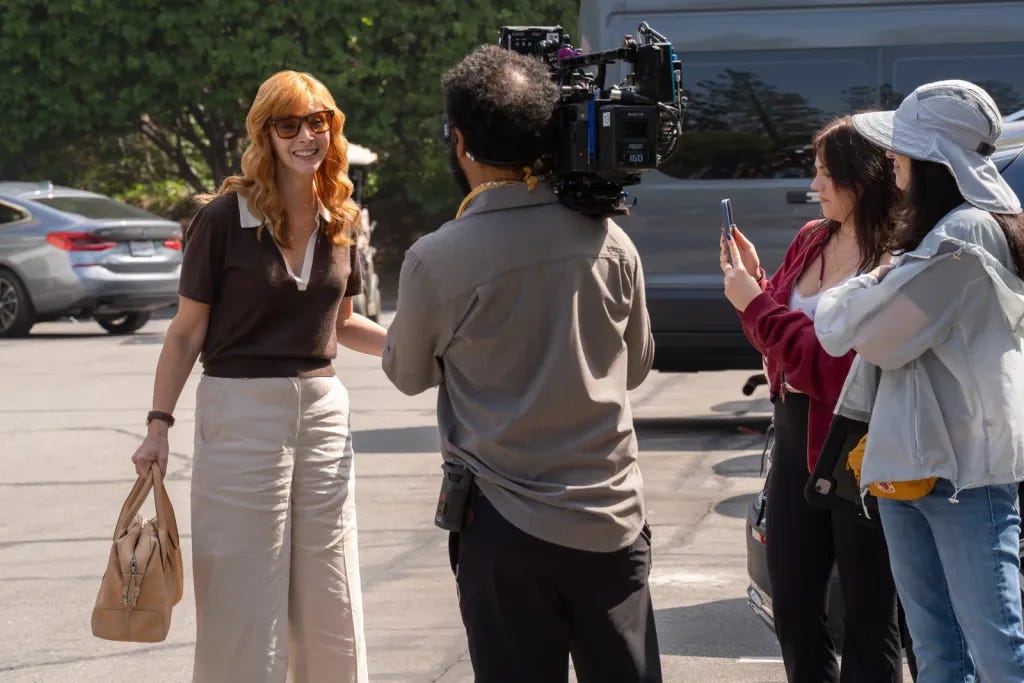
Being the completist that I am, I watched every episode of The Comeback for the first time before settling into its third and final season. Lisa Kudrow will go to the ends of the earth for a laugh, whether standing awkwardly beside two nude women in season two or sprinting after a bus in heels. Raunchy, funny, exposing, and never dull, The Comeback has always managed to meet the television moment in which it was made, from the dawn of reality TV in the early 2000s to today's entertainment industry unsure of what to do with AI.
Kudrow's performance is undeniably funny, in moments that are big and small. The way Valerie gifts each member of her cast inspirational candles or asserts herself during a wardrobe fitting is something to behold. I especially love the way Valerie is all hair, bright smile, oversized designer handbag, flowy blouse, jeans, and heels—an actress built from the outside in. Beneath the glamorous exterior is a woman who craves validation and attention, yet somehow keeps moving forward, even as she's cruelly dismissed by showrunners or humbled when she finally wins an Emmy in season two.
Michael Patrick King, Kudrow's co-creator, writer, producer, and occasional director, clearly loves actresses. Across The Comeback, Sex and the City, Murphy Brown, and even 2 Broke Girls, he returns again and again to women whose public lives conceal private disappointments. His writing delights in exposing the absurd expectations placed on actresses (and more broadly, women) and the men, children, executives, and coworkers who complicate their lives. He's also not above a fart joke.
A few scenes are worth revisiting: Valerie saying goodbye to Mickey (Robert Michael Morris) beneath a wistful sunset, Valerie and Juna's (Malin Akerman) brief reunion on the studio lot, and Valerie's final conversation with Jane (Laura Silverman), the documentary filmmaker who has followed the many ups and downs of her career for twenty years. After Jane tells her, "I feel like I'm seeing you for the first time," Valerie replies, "Maybe that's why you haven't been able to get this doc right. You've been telling the wrong story." It's a poignant ending for a character who finally gets to define herself on her own terms.
A Final Thought…
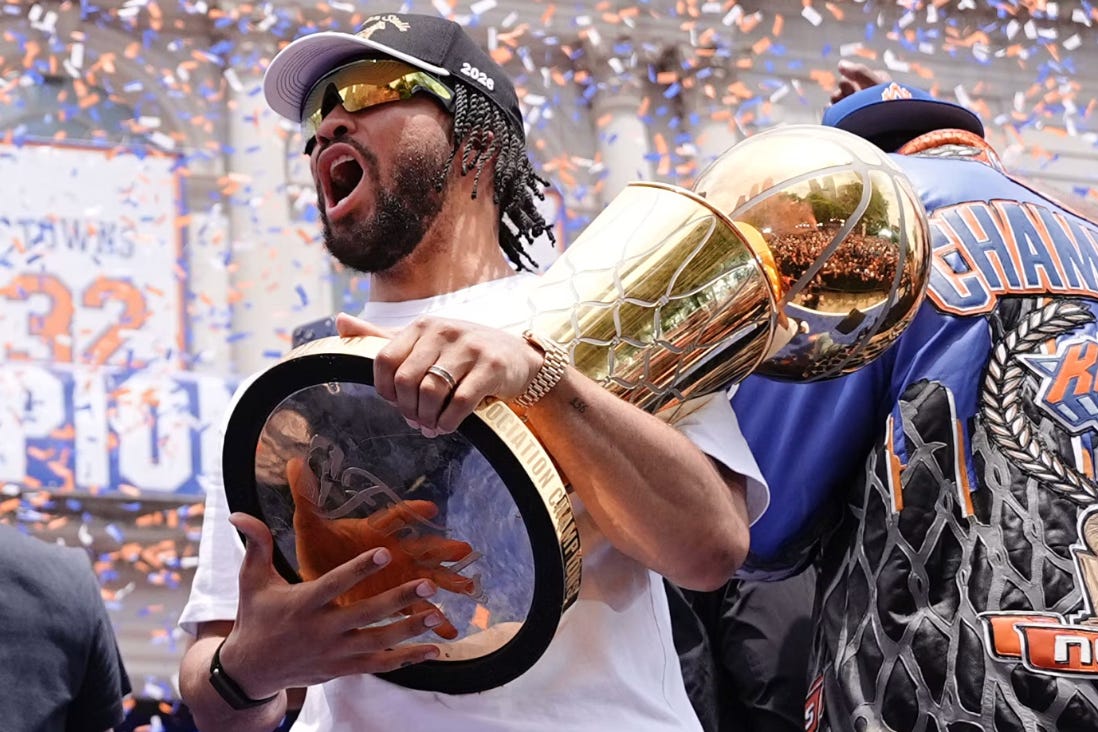
On a very hot Saturday night in June, I caught an evening screening of Theodore Witcher’s Love Jones at the Cherry Lane Theatre. For the dozen or so of us who watched Nia Long and Larenz Tate fall in, then out, and finally back in love, it was an ideal weekend night. When the theater doors opened and I stepped into the nighttime heat, I noticed far more people in the streets than usual. I had no idea why everyone was erupting with such unbridled enthusiasm as I left Love Jones on my own cultural high.
The city felt unusually alive—not that it ever really feels stale, or, God forbid, dead—but I sensed that something had happened to bring people together in a way I hadn’t witnessed in a very long time, possibly ever. That night, the New York Knicks won the NBA championship, and to say the city burst with joy would be an understatement.
I hadn’t watched a single game and could hardly name anyone on the team, but I could recognize that rare moment when culture provides both a much-needed release and the kinetic sensation of being connected to everyone around you. At a time when our attention spans are spread thin, perhaps that was the defining cultural experience of 2026: not a television show, movie, exhibition, or album, but the sound and electric feeling of an entire city celebrating the same thing together as one.
A free subscription includes:
✓ Weekly essays delivered to your inbox
✓ Access to Notes and community discussions
✓ Occasional interviews and special features
A paid subscription gets you:
✓ Subscriber-only essays and series
✓ Select archive access to earlier pieces
✓ Recommendations, lists, and cultural deep dives
If you’ve been reading for a while, subscribing is the most direct way to support the work—and stay close to it.
Comments
Nothing yet. Say the first thing.
Sign in to join the conversation.