
“What’s bio-art?”
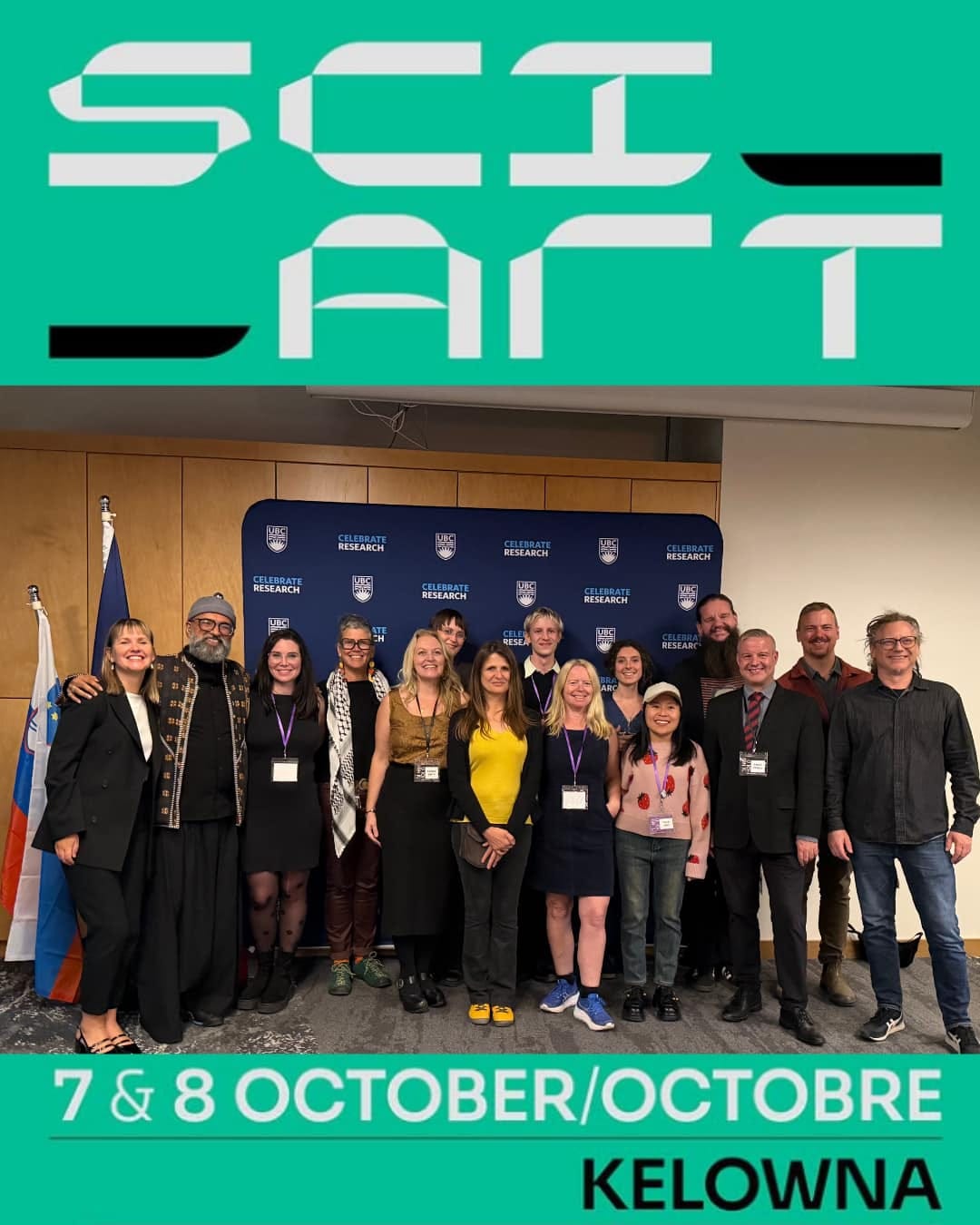
My inclusion in the recent SCI_ART Symposium1—hosted at the Critical Future Studio/ Lab at University of British Columbia (UBC) Okanagan—was preceded by this seemingly simple question: “What’s bio-art?” This was asked by someone, innocently enough, within an organizational capacity at the university. But, this simple question sits atop a deeper issue, which I’ll elaborate further in this post, including within the Canadian context.
I was one of few Canadians invited to present at this symposium, as it was an initiative by the European Union’s Delegation to Canada through several of its cultural diplomacy offices and embassies in Ottawa (and thus, focused on presenting European artists in Canada). I can tell you with certainty that such a question would scarcely be asked in Europe, nor in many other parts of the globe. The fact is that bio-art is still incredibly unknown and under-recognized in Canada—in both the art world and more broadly.
Given this lack of recognition of bio-art (and indeed, even of sci-art or art-sci) in Canada, which I have long complained about, I want to blend a field guide approach with personal reflection to frame the experiences I’ll share, of my exceptional interactions at the symposium. Beyond a reportage of the event to highlight some of the new human connections I made and the work I was exposed to, I want to begin with a brief, critical field assessment in order to demystify it for readers who might be confused about bio-art and various labels used to define this particular genre of “research-creation.”2
So, I’ll begin with a more interesting (to me) question: Sci-Art, Art-Sci and BioArt: what’s the difference? I find this more interesting because it is an historically loaded, politicized question around porous disciplinary boundaries, and one I’ve had to negotiate in my career. A short answer, but also reductive answer regarding the difference, is that it reflects hierarchies between art and science—hierarchies often reproduced in cross-disciplinary collaborations. In this sense, naming can become a contentious issue. This has very much been the case with Sci-Art/ Art-Sci, due to existing institutional prioritization of science and engineering research, to the detriment of artistic research resources.3 Art as an academic endeavour typically sits within the Humanities, the first to be on the chopping block when universities restructure for austerity. The Sciences, in contrast, are often last to be sacrificed, especially when they feed directly into resource industries (like mining) or reproductive labour to produce the next wave of workers.4
Interestingly, when we name contemporary art forms, they are typically categorized with a definitive precursor: Performance Art, Video Art, Sound Art, Interactive Art, Electronic Art, Computation Art, Biological (Bio) Art, and the like. These art forms are somewhat outside of, but often intersecting with the classical designations of ‘Fine’ Art and Design: Painting, Sculpture, Music, Dance, Literature, even Architecture, etc. In the case of Sci-Art, or Art-Sci, or more niche designations (like Bio Art, or Biotech Art), it becomes a little more complex, signifying an artificially dichotomous tension between utility and aesthetics, reason and passion, which are heightened due to the socioeconomic systems of valuation just mentioned. Not only has contemporary art overall often been deemed useless or problematic in (economically) advancing society versus groundbreaking and lifesaving scientific ‘discoveries’ and ‘cures’, ‘solutions’, ‘fixes’ but also, in the case of Sci-Art, (Bio Art, etc.) it transgresses the purposes of scientific experimentation. By contradicting or questioning solutionist and utilitarian aims, the merging of science and art becomes a political act whereby the foundations of science and technology are scrutinized, its cultures analyzed in terms of social structure and power dynamics, and its outputs reconfigured through theorized aesthetics, such as the “aesthetics of care” (fusing ethics with aesthetics).5
So, when one thinks of whether or not to call such works Sci-Art or Art-Sci, for example, one must understand the loaded political referents for doing so. As an artist, I have mostly stayed away from identifying as Sci-Art or Art-Sci because it has felt too generalized.6 Also, my work sits squarely in the middle. Sometimes, to be more specific than bio-artist, I call myself an artist and biosciences researcher.
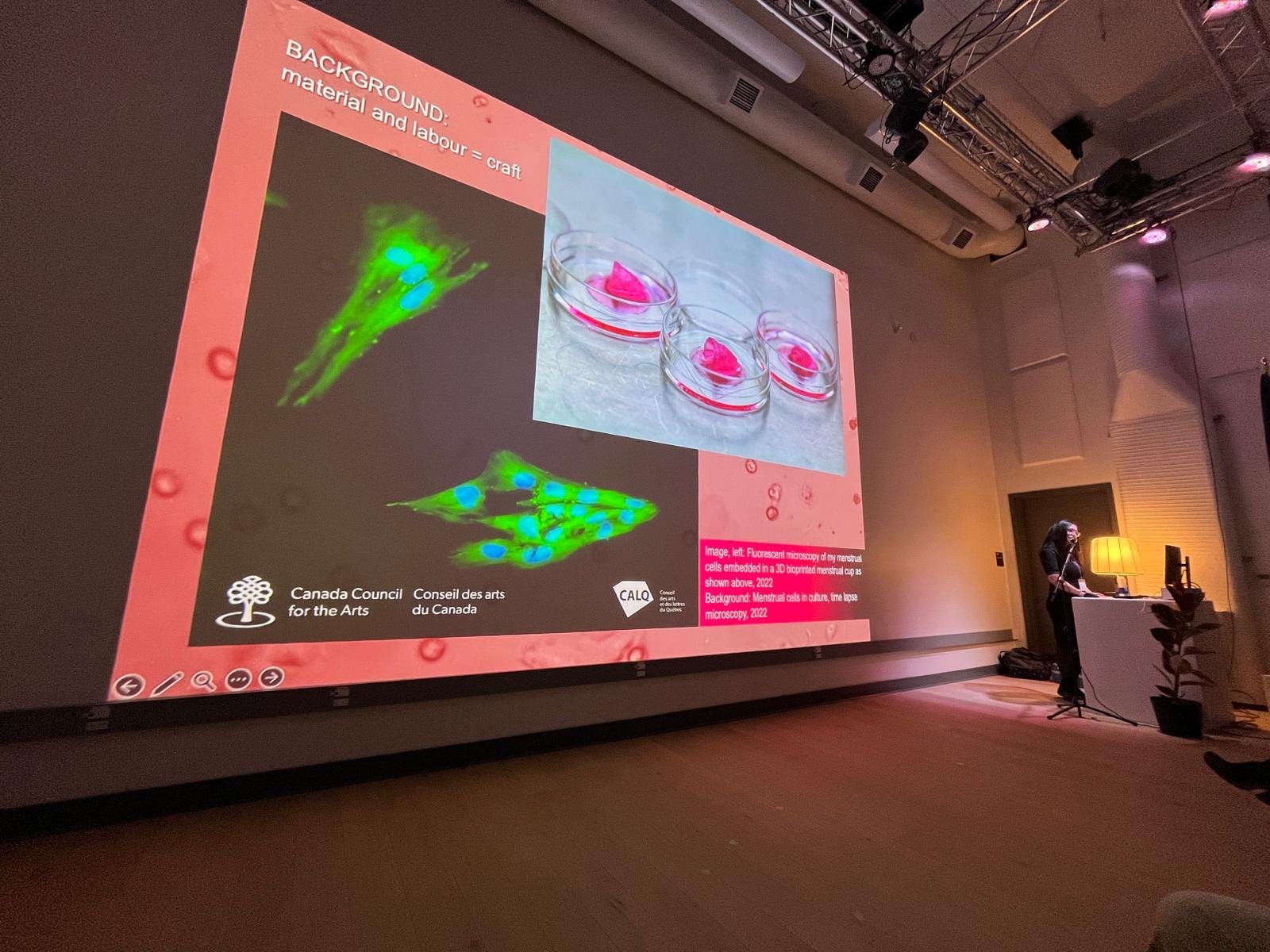
This deliberate positioning is merely to signify which field I originate from and how my approach might diverge from or align with other practitioners. Often with Sci-Art (with science positioned before art), the practitioner has originated in the sciences or engineering and later moved toward artistic expression. In very obvious cases of this, there may indicators of less (or no) art historical training and experience. Such may result in hyper-aestheticized outputs, resembling what is sometimes referred to as ‘tech porn’ presented as the work. For example, high-end microscopic or other sci-tech rendered imagery with augmented colour and scalar detail, but without any element of political positioning or inquiry whatsoever.7 In other instances, pop culture imagery is represented through microbiological streaking patterns and bacterial pigmentation on agar plates (e.g. yellow aliens, flowers arrangements, etc.). These can be beautiful, but mostly misses or only minimally includes a critical punch. There are large Sci-Art competitions that exist specifically for such outputs, where science jurors are exclusively interested in the attractive rendering of technical images rather than biopolitics. As someone who works proficiently in biotechnology and in a politically nuanced way through art, I can appreciate both—I have made my fair share of tech porn through sexy scanning electron and fluorescent microscopy (as shown in the image above of my presentation), but in my case, it is always toward biopolitical aims.
My participation in the SCI_ART event showed me that the hierarchical designation of such a term can be confounded by artists and organizers who work horizontally together, but its effects can still linger in this milieu: the art production emphasis may still lean strongly towards either technics or politics. In an ideal cross- or trans-disciplinary world, I think a work needs to do both. My fellow presenters and participants were a mixed bag of artists, ethnographers, and engineers. Most have mastered science and/or technological methods, some inventing or bastardizing apparatuses, and using their work to critique industry or the culture around industry. Some others are are more focused on rendering the sublime.
A tour that we had of the symposium venue, which is within the Faculty of Creative and Critical Studies introduced us to teams of engineering researchers who were actively compartmentalized as ‘innovators’ to design and build things (robots, e-textiles for robots, etc.) while the ethics were handed over to externalized experts. The result of this is that the creators had no opportunity to be challenged on nor to challenge the deeper societal effects of their work, which presents a training handicap. For example, a Honda robot was being tested for use in classrooms in order to prompt students to complete school tasks. This was to establish an affective reward system and expose them to uses of AI for self-tracking and performance improvements through interactions with the cute-faced, relational machine. What struck me the most about this project (among a few concerns) was the fact that this robot was to be piloted only at private schools, without any recognition or assessment of how class differences were being perpetuated by this privileging of fancy tech toys for rich kids only. For me, this represented a deficiency of critical thinking skills within creative industrial design, facilitated by disciplinary silos that are maintained through the compartmentalization of ‘making’ processes for these cultural objects. This is an extreme example of what I’m talking about, but normalized.
Within my cohort of presenters, one very compelling work was by Dr. John Desnoyers-Stewart, called Star-Stuff. For this project, John crafted an immersive world of starlight molecules of varying sizes that flow from the heart centre of the person using the VR headset; these molecules float as interactive elements that simulate a colourful and playful personal Milky Way.8 I loved experiencing this perceptual shift, and felt I wanted to wear the headset all day, every day, in order to augment my existence with such wonder. I appreciated the technical savvy in building such a fluid virtual space, as I waved my hands through the gentle wash of responsive, radiant dots.
What I also observed in the case of this project was a very latent underpinning of its relevant social issues that sit very close for me: namely, the ever-encroaching light pollution that causes a disappearing night sky (and hence, amplifies the wonder we feel with this work). This Anthropocenic tragedy is something I experienced in a most dramatic way while living in Western Australia. During my visit to the 150 year-old Perth space observatory, I learned that it had been moved in more recent years because the light pollution around the growing city compromised clear views of outer space, even with the most powerful of its giant telescopes. In contrast, I also remember the profound sensation of sitting on my campervan’s window ledge, staring out at astronomical phenomena such as the Magellan clouds whilst roadtripping through Western Australia’s northern outback. Such an unadulterated experience of visible galaxies and constellate markers impressed me for life—it was as if I could see the universe from 360 degrees, the earth dropping out below me into the depths of atmospheric darkness while I attempted to locate symbols of indigenous cosmologies: the celestial Emu, for example. In all the wondrousness of John’s VR project, I wanted to hear more about this inherent astropolitical (geopolitical) aspect of the work and see it further integrated, to trigger such introspection as part of the public experience.
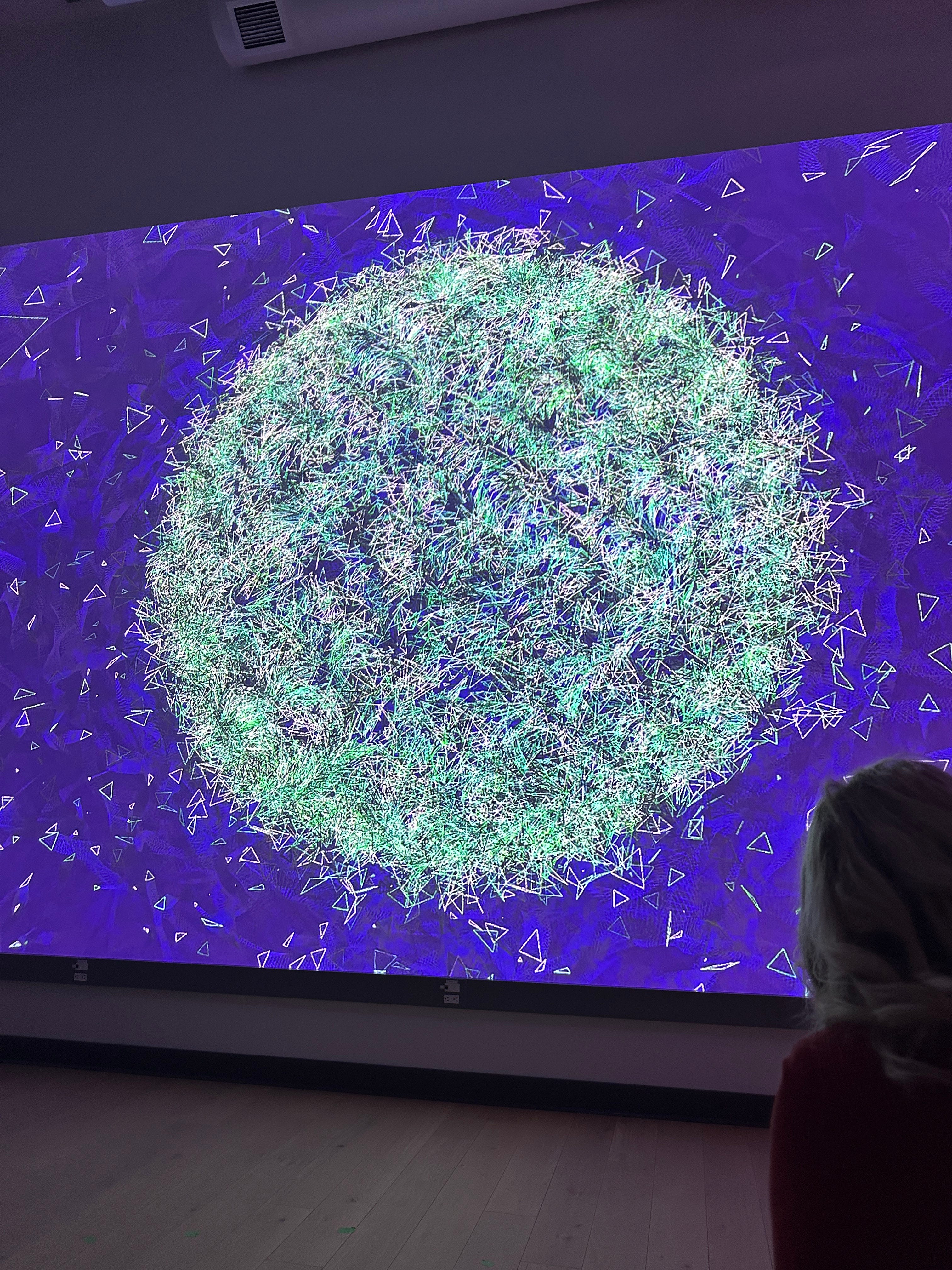
In that vein, a related work which horrified me—in a productive and aesthetically intriguing way—was Dr. Megan Smith and Dr. Gao Yujie’s immersive digital project titled All the Stars We Cannot See.9 This project, which visualizes N2YO data collected through satellite tracking, shows the magnitude of human-generated space junk circling the Earth: 31,724 active and abandoned satellites swarm in a miasma of glowing neon triangles in a rotating visual field (shown in the image below). I had been aware of increasing space traffic around us, often wondering if the lit objects I spied in the night sky (when I can actually see it) were shining stars or manufactured metal glint, especially thanks to recent eXcesses of a certain purveyor of satellites. But I had no idea the atmosphere was quite this glutted. In this sense, I loved the use of computational art to charm and alarm all at once.
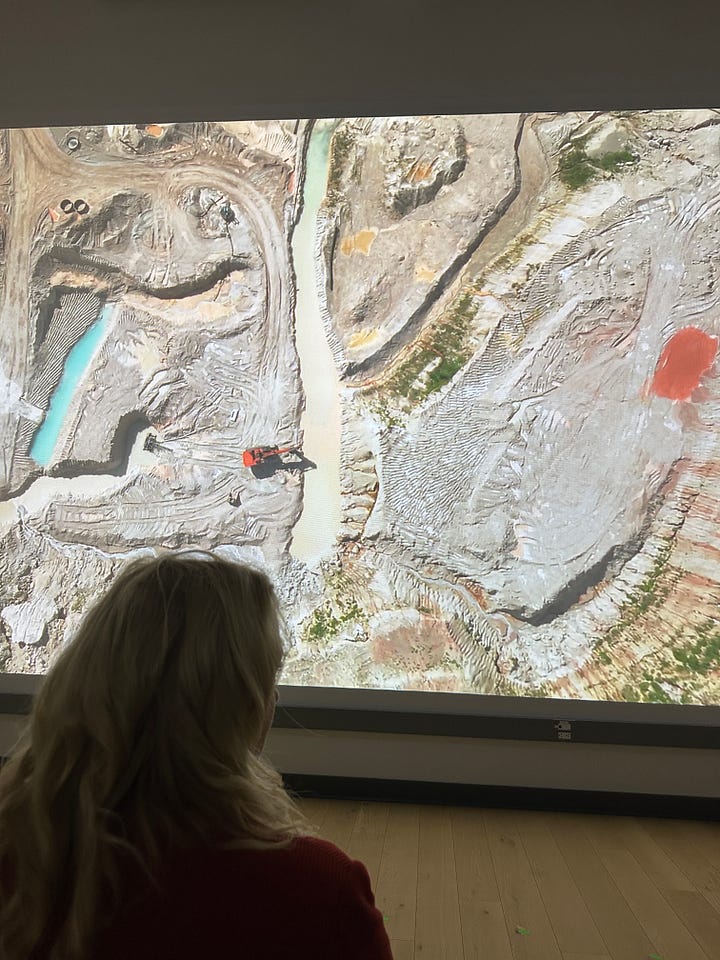
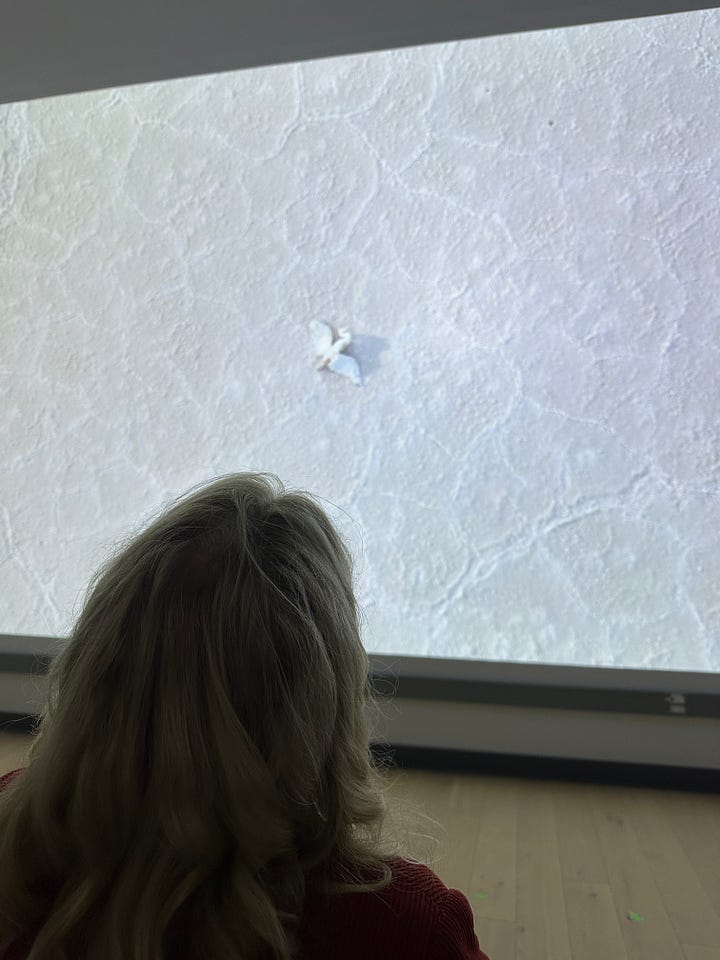
Speaking of geopolitical punches, I was completely mesmerized with Austrian artist (and keynote speaker), Felix Lenz’s film (and research) titled, Brute Force.10 In this film, Felix mixes long, scenographic sequences of industrialized and natural landscapes still with death, waste, monumental infrastructures, landmarks, and data centres that crystallize corruption in the various environments. The juxtaposition of this native and globalist industrial starkness forms a dizzying commentary on naturalized extraction and profound levels of pollution at sites like Silicon Valley and Chernobyl, along with the quietude of dried salt lakes and cracked deserts. In certain sequences, it wasn’t immediately apparent which was which: salt lake, or dessicated crust of toxic waste? Again, with Felix’s work, it was an alarming and stunning visual essay, ending with both a projection screen and mainframe set aflame. He infused overlapping, deeper messaging about the construction of reality, drawing from Barad’s theories of quantum entanglement and across the history of image making, but I was most struck by his successful abstraction of the natural to pinpoint man-made chaos.
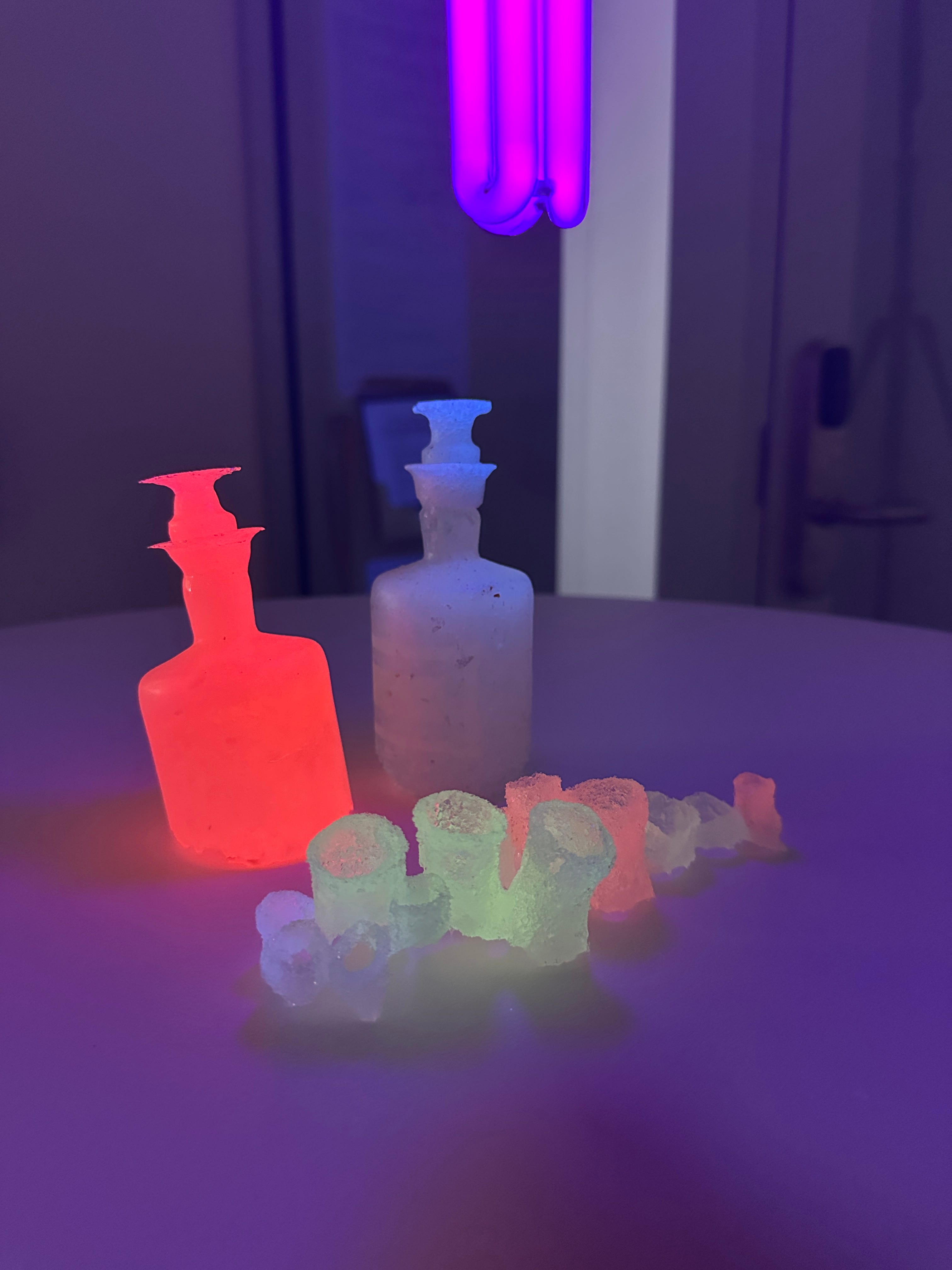
Other works presented that have stayed with me included Polish artist, Pzremysław Jasielski’s absurdist machines and robots, such as the Justice Control Unit, which administers shocks if the algorithm of the machine ‘decides’ that the user is somehow guilty of something after scanning their faces.11 I was delighted to be presenting my work alongside Slovenian duo, SWAMP_MATTER (Eva Garibaldi and Ana Laura Richter) and Canadian-Punjabi musician, composer, and artist, Ruby Singh. I’d just returned from presenting at another conference in Slovenia, where SWAMP_MATTER were also presenting, but we’d missed each other in Ljubljana so it was a treat to have another chance to experience their research on swamps and karst caves (and underground rivers).12 Meeting the warm and gregarious Ruby, who lives in Vancouver as well, was a delight—he is, among many things, a kick-ass beat-boxer. But, my favourite part of Ruby’s work was a participatory moment when he asked us to all stand together and hold hands, to demonstrate our bioelectric circuitry when connected to each other by using a bioacoustic tool to generate sounds from it.13 I held hands on one side with the stoic Slovenian cultural leader and head of PiNA,14 Borut Jerman, who I later chatted with about right wing politics in Slovenia and artists we both admire who are being targeted by it.15 I also had time to breakfast at the hotel with Irish eco-artist and researcher, Fiona McDonald, who presented her work around Irish peat bogs and their immense carbon sequestering capabilities—I hadn’t known that sphagnum moss was such an supreme carbon sink.16 I will be happy to visit with Fiona in Dublin early next year, when I return to Ireland to give a keynote lecture at the Atlantic Anthropological Workshop in Dingle (more on that to come in a later post). Funnily enough, I also connected with another Fiona McDonald at UBCO, a faculty member and CFI researcher who runs the Collaborative and Experimental Ethnography Lab. I hope to be working with this Fiona in some capacity during my time in BC, as she is deeply enmeshed with my amazing new research community here and is absolutely wonderful. Additional UBCO faculty I got to bond with include Astrida Neimanis, Canada Research Chair in Feminist Environmental Humanities.17 Astrida has an infectious, loud laugh and bold, but sensitive personality—and research profile. Her work around the performance of necropsy of aquatic mammals was deeply moving. We discussed possibilities for future collaboration, which left me quite enthusiastic about what’s to come, especially given our overlaps in the international bio-art communities where her work intersects through ecofeminism. As a more material treat, the studio/lab featured an installation of Portuguese artist-researcher, Dr. Teresa Almeida’s experiments with chemically produced fluorescent glassworks that change colour under different spectra of light. Dr. Almeida’s work leaned heavily towards scientific experimentation as creative process; in this regard, her works extend the scale of laboratory experimentation to create objects that push new materials beyond the hard goals of proving a scientific hypothesis: as a humorous analogy, she recounted how the large quantities of the varying chemical powders she needed to produce her work weren’t well understood by her science collaborators, who used only minimal amounts to demonstrate an experiment’s success. When they gave Teresa just enough to do the same, her response was that these powders in such tiny quantities would only have been valuable were it cocaine.
Aside from the scant recognition of Bio Art in Canada, I felt deeply validated, inspired and invigorated by these interactions with European and Canadian artist-researchers alike. Communing in person with kindred spirits is an important aspect of these symposia, and they have kept me intellectually alive—particularly since my field is so sparsely populated with peers in Canada. I emphasize this because I recently saw a social media post vehemently disparaging academic conferences (in the US) as colonial endeavours. I can understand the point of discussing certain conferences as excessive and problematic in terms of their taking place in contested territories within tropical resort locations (Hawai’i), while also blending work/vacation time to extract more academic labour—this was the main flash in the pan, with the post I saw. In terms of the small (intimate) symposium I recently attended, however, the artists were generously paid to be there and the host institution had been established with a Sylix Okanagan Nation naming ceremony to honour its importance in the community. A tiny gaggle of artists together may operate somewhat differently than in more traditional scholarly behemoths, but the rare chances for communalism around shared topics of interest reaps the same benefits: one feels less isolated, more motivated, and better integrated through the work that they do. Or at least, that should be the outcome. So, I deeply appreciate the model by which Dr. Megan Smith and the European Union delegation (predominantly SCI_ART founder, Simon Pribac) collaborated on, to very thoughtfully produce this cultural knowledge exchange. My conference swag bag even had a mason jar of local homemade apricot jam and some Okanagan apples. As you may guess from my stories here, our intimate scale meant that we bonded very tightly in a very short matter of time, and will continue to carry forward the human star-stuff of our shared critical creative work.
The shuttering of my research community at SymbioticA, by The University of Western Australia, during the last year of my PhD is one such lived example.
I understand that this is very different in the current American political climate, but I’m not talking about the US at this particular juncture in time. In fact, my intent is to privilege discussion of dwarfed Canadian culture over the more dominating US culture.
Indeed, even bioart is a wide field that encompasses anything from artists observing and/or instrumentalizing scientists, to dabbling in microbiology, to kitchen science, to technical proficiency in advanced biotechnolgies and other tech fields (or a mix of any of these).
To be clear, artists also employ plenty of tech porn. The difference is the expectation in the art world that it involve elements of critique.
More about PiNA here: https://www.pina.si/en/home/ Borut was presenting on the HEKA lab at PiNA, which develops spatial audio projects, among others.
Comments
Nothing yet. Say the first thing.
Sign in to join the conversation.