
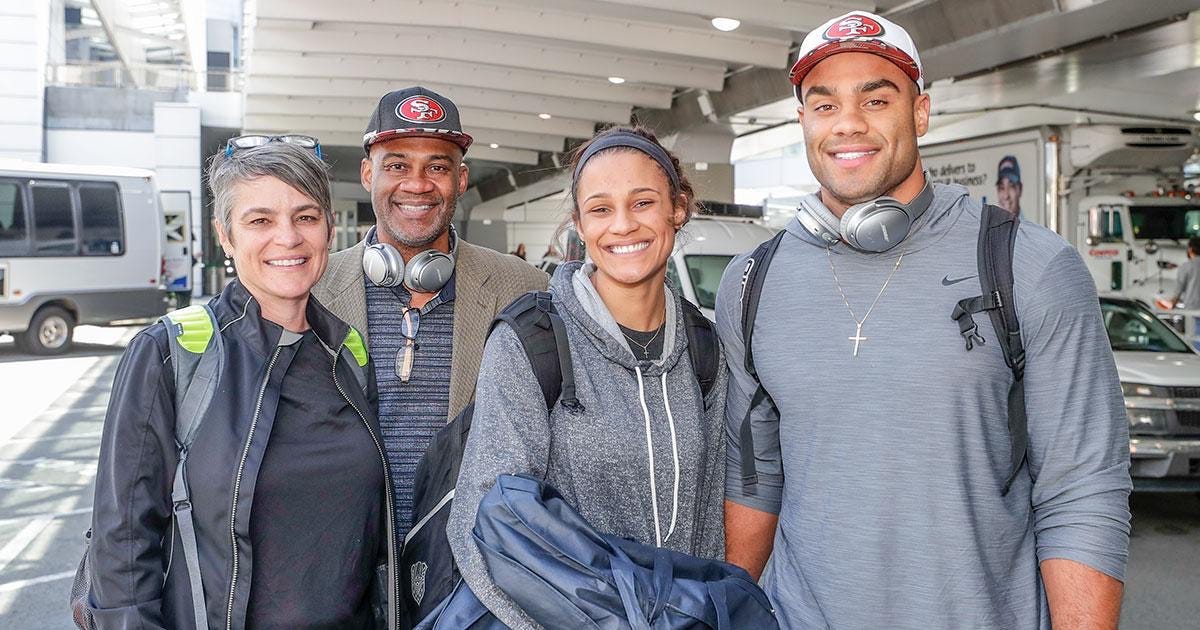
Solomon Thomas is a defensive tackle with the Tennessee Titans who’s previously played for the San Francisco 49ers, Las Vegas Raiders, New York Jets, and Dallas Cowboys. Solomon, or Solly, also played football at Stanford with my brother Casey. I got to know his parents, Chris and Martha, at family tailgates in Palo Alto. Solomon lost his sister Ella to suicide in 2018 when she was 24 years old. I talked to Solomon about his favorite memories of Ella and the journey he and his parents took to co-founding the suicide prevention organization The Defensive Line. We also talked about misconceptions about mental health, why The Defensive Line targets youth mentors like coaches and teachers, and how he talks to men about the importance of being vulnerable.
Kathleen: Solly, first, I was hoping that you could tell me about Ella as a person. Is there a story you like to tell that highlights some of the things you loved most about her?
Solomon: My big sister Ella was this loving, full of energy, very feisty person. One of her friends described her as a human narrator because she just had this ability to connect every group of people, whether it was the jocks, the cheerleaders, or the debate team at the local high school. Ella knew how to make everyone feel like they were supposed to be there. She made me feel validated. And it was a really addicting feeling. You wanted to be around Ella because she made you feel okay not being perfect. You didn’t feel judged by her. You truly felt that unconditional love, whoever you were.
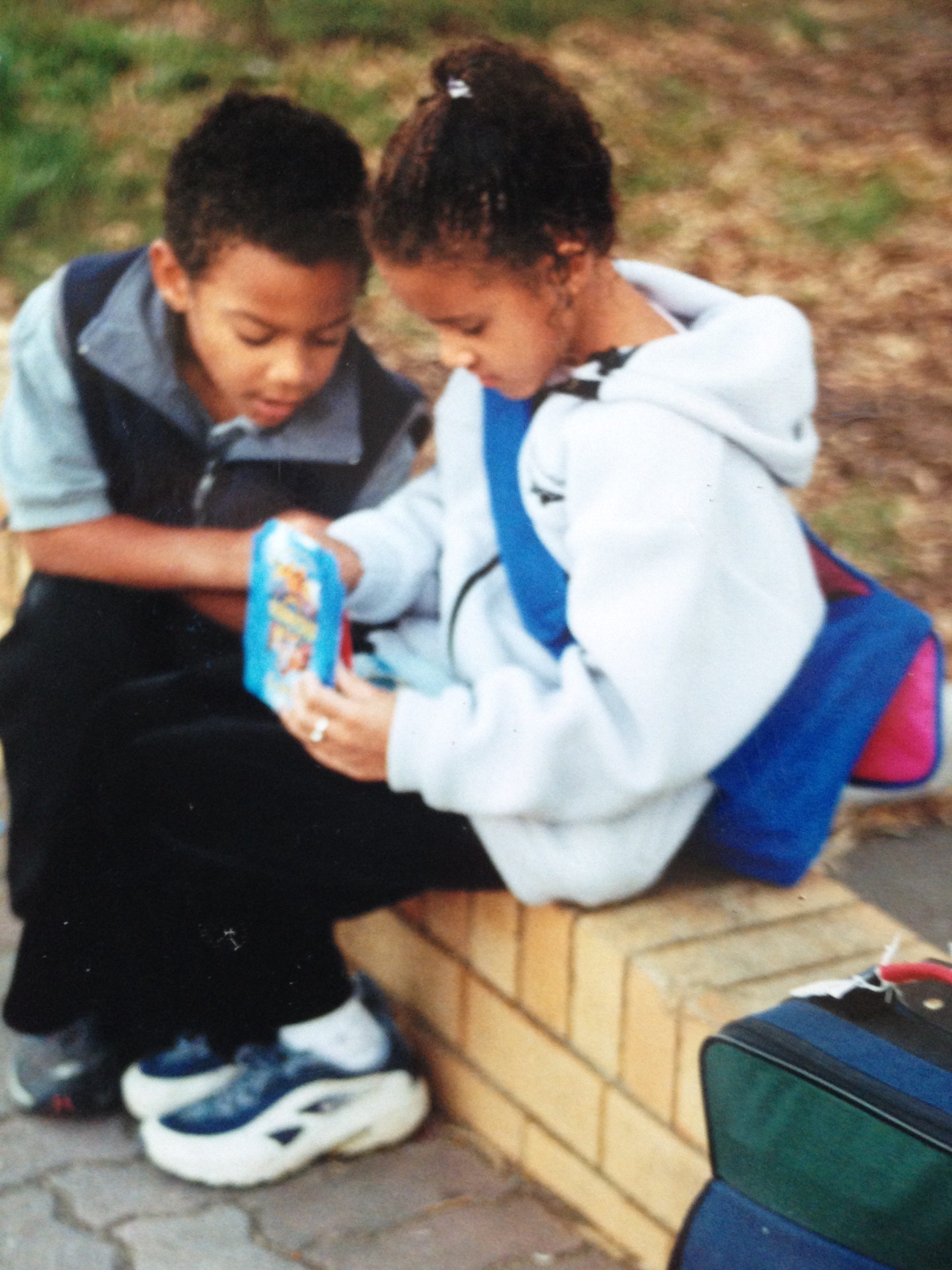
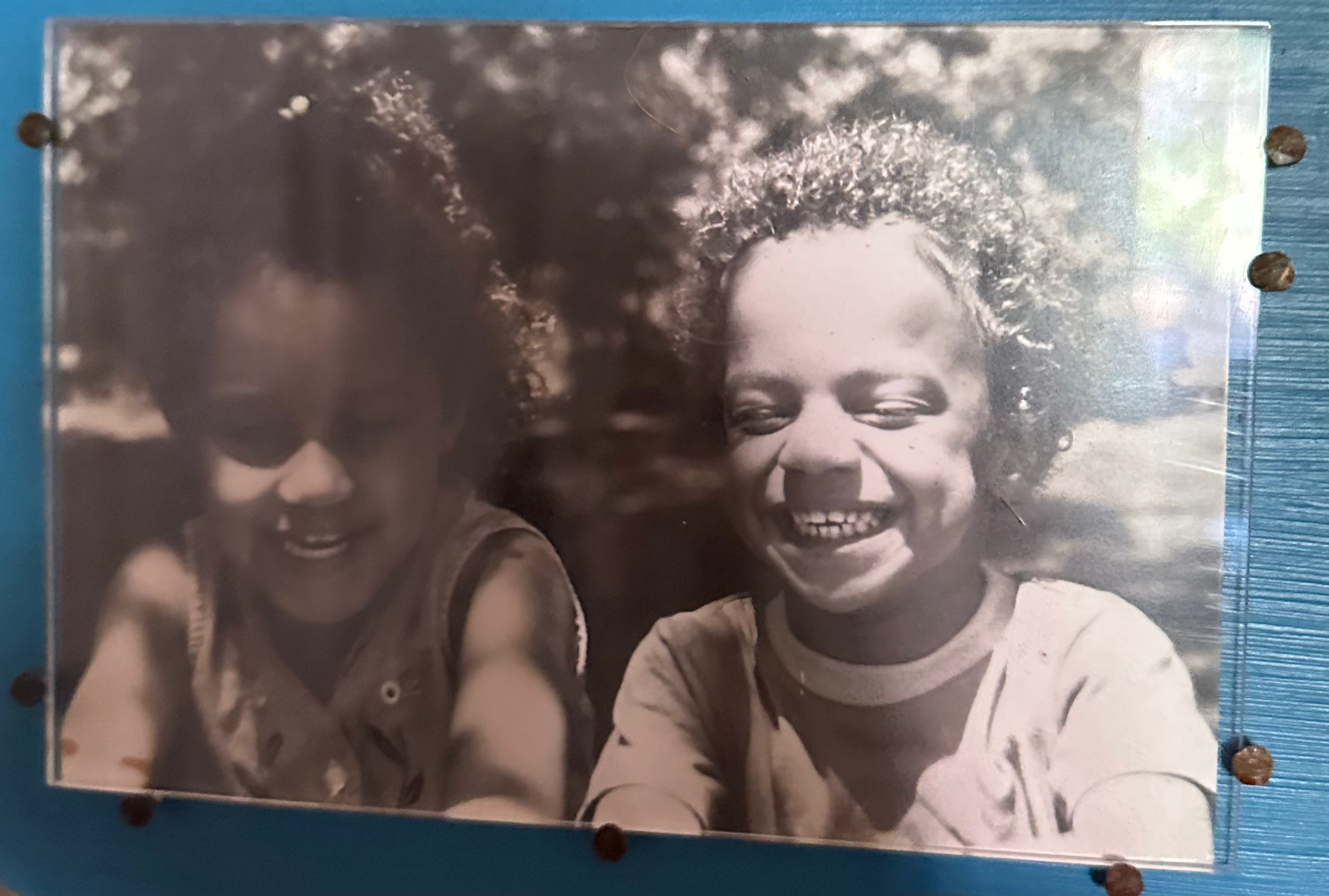
She was a great big sister. I grew up kind of awkward. I was always a little behind the eight ball, and Ella brought me up to speed. She taught me how to be in social situations. She taught me how to love myself and not just conform to how other people were. She was so protective of me and made me feel like I always had her on my side. The Easter when I was six and she was eight, we had an Easter egg hunt and Ella found all the eggs first. Ella took one egg out of her basket and said, one for me, one for you, one for me, one for you. She was just that kind of sister. Even though we were competitive all the time, she always wanted to lift me up and make me feel special. I’m very blessed for all the time I got to have with her.
Kathleen: That’s beautiful. Thank you for sharing that. I can’t imagine how hard it was for you and your parents in the days after you lost her. How did you ultimately all decide to channel that pain into co-founding The Defensive Line?
Solomon: It’s a great question. We definitely struggled. It was really hard. After Ella passed, we felt alone in the world of mental health. We were kind of thrown in the fire of it and we didn’t know how to move forward with our grief or even talk about Ella. We felt a little bit in the dark and even felt a little ashamed. We finally went to a Touched by Suicide support group. My parents had to basically pull me there—I really didn’t want to go. It was the first time we felt like it was okay to talk about it. It was very healing, being around people who had similar pain but different stories, all around the same type of tragedy. From there, we started working with American Foundation for Suicide Prevention. We did the overnight Out of Darkness Walk, which was in Dallas that year. We walked 21 miles overnight and we were around 3000 people who had lost loved ones by suicide.
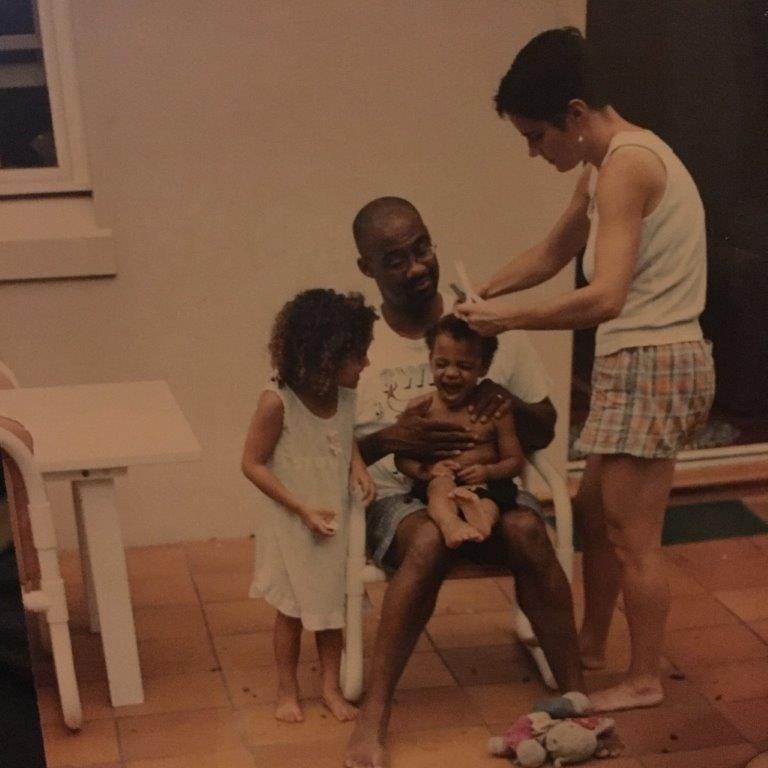
That was really the turning point for us where we were like, there are so many people who all have similar stories about being feeling like they couldn’t talk about it, feeling lost. From there, we really got to work. My parents really connected with suicide prevention work and learned from the people doing this work. Starting The Defensive Line helped us move forward with that grief and also do something in honor of her. Ella always talked about wanting to help young women who were victims of sexual assault and young women who struggled with mental health because those were things that she struggled with in her life. It’s been really hard work, but really good work that helps keep people alive and here on Earth.
Kathleen: That’s wonderful. And thank you for doing that. I’m sure it brings up challenging feelings all the time, but I think it’s an amazing tribute to Ella and her life. Tell me about the mission and the day-to-day work of The Defensive Line?
Solomon: Our mission is to end the epidemic of youth suicide, especially for young people of color, by transforming the way we connect and communicate over mental health. I always like to say, we are for everyone. We want to keep every single person here. We work with all communities, all people. But we saw the statistics and where suicide was affecting people worse, and that was in communities of color, the LGBTQ community, the indigenous community. If we can save at least one person a day, then we’re doing our job.
In terms of the day-to-day, we run suicide prevention programs in schools, businesses, Fortune 500 companies. We teach people who mentor youth the warning signs, teach how to talk about mental health, and how to write crisis action plans so they’ll be more prepared for those situations. Youth today are more in tune with mental health than some of the older generations, like my generation and above. We grew up with that archaic mindset of be tough, push through it. Mental health is just a feeling.
I would tell my parents, hey, when I would go to school at 7 a.m., by the time I got home after football practice or tutoring or whatever extracurricular activities I was doing, I was too tired to really be vulnerable with you or tell you how I was feeling. The people who really saw day-to-day changes in my mental health behavior were my teachers or my coaches, the people who I was with 7 or 8 hours a day.
Kathleen: It would be great if we as a society could remove some of the shame you touched on earlier. Whether it’s like people who are struggling actively with mental health or people who lost a loved one to suicide. So even that awareness broadening that you do is so important.
Along those lines, are there any misconceptions about suicide or mental health that you want to address?
Solomon: Growing up, I always heard people say the more suicide is talked about, the more likely it is to happen. And that’s not the truth. The more you talk about it, the more people are educated on it, the more normalized it is that these are not crazy feelings. Humans have these feelings. In terms of people saying mental health is just a feeling, it’s not. Your brain chemistry is imbalanced. You’re not getting the right chemicals to your brain, whether your body is not blocking enough cortisol or you’re not getting enough serotonin. Bipolar disorder, depression, anxiety—they’re all scientific illnesses.
I talk to a lot of men because I’m in the locker room and talking to NFL groups and have an NFL platform. I like to say that there is no strength in being silent. The strength is in vulnerability and telling someone how you’re really feeling, because that’s when you have that life-saving connection. When you’re vulnerable, someone might be vulnerable to you in return. And then you realize, hey, I’m not alone.
I was at my worst and struggling after Ella passed away. It was very easy for me to tell people, hey, I’m okay. But the hardest thing to do was to really look myself in the eye and tell myself how much I was struggling. To tell that to someone around me—whether it was a therapist or a friend—that was also really hard to do. That’s where I found the strength in vulnerability. I like to tell men, you know, men cry. Men have feelings.
Kathleen: You’re such a powerful messenger for that too, because you’re in this career that revolves around strength and not showing weakness. The fact that you can show how important it is to acknowledge feelings and be vulnerable and still be at the top of that particular career is really powerful.
Solomon: Thank you.
Kathleen: Relatedly, how have your teammates and coaches and other people in the NFL supported you in this mission?
Solomon: I really feel blessed by the amount of support I’ve had around the league from teammates, teammates who became best friends, teammates who have just been around for a moment. If I hadn’t gotten that response, it would be really hard to keep going in the mental health world and in this space. Guys like Arik Armstead have consistently checked in on me in support of my foundation and helped me level up. One of the coolest moments was when I started playing for the Raiders and it was maybe my second or third year of mental health work. I had a few teammates come up to me and say, hey, I’m looking to start going to therapy. How do I do that?
That was really motivating for me to keep speaking and keep telling my story. One of the coolest things of that year was one of my teammates credited his best NFL season to starting therapy and being mentally healthy. That was a powerful moment for me. From there, going to the Jets, which was probably one of the best mental health locker rooms I’ve been around. We had a great sports psychologist there, Amy, who really helped guys. Then in the locker room, we had a lot of mature guys who were very vulnerable. We would have maybe five vets in the corner talking about therapy, couples therapy, family therapy, whether guys were taking medication, and you would see younger players come up and start listening.
We were kind of setting the standard that it is completely okay to talk about these things and go to therapy and hopefully change some of the younger players’ minds who may have thought differently. That’s been so important because people look at us as these gladiators. But in reality, we’re humans. We have human feelings, we go through stress, and we’re not perfect. And just to show that, hey, if we’re going through a hard time, anyone can go through a hard time. I hope people who watch the NFL can see that and be like, it’s completely okay not to be okay.
Kathleen: If people want to get involved with The Defensive Line, what should they do? How can they help?
Solomon: You can check us out at TheDefensiveLine.org and on Instagram at @thedefensiveline. You can just follow us and see how hard my parents and our team are working to change the script of mental health. Anything would be helpful, whether it’s advocacy, putting our name out there, saying our name, saying my sister’s name, it’s all appreciated. We just want to keep doing good work and helping keep people here because I truly believe suicide is the most preventable death.

You’re not alone—if you’re struggling with mental health, you can call or text the Suicide Crisis Lifeline 24/7 at 988.
Comments
Nothing yet. Say the first thing.
Sign in to join the conversation.