
Gaby is a close friend of my close friend Sarah in Baltimore, who’s also doing wonderful things as the Executive Director of Midtown Academy—and whose daughter Elodie is a previous interview subject. Gaby and I talked about the school-based health center where she’s worked in West Baltimore for the past decade, which provides $4 of social returns for every dollar spent by preventing parents and teachers from having to miss work to take sick kids to the doctor or the emergency room. Gaby, who’s originally from Mexico, spoke about the fear Hispanic children are living with every day due to ICE raids and uncertainty over whether their parents will come home. We also talked about how, in the midst of this cruelty and fear, neighbors are banding together and supporting one another. Lastly, Gaby shared a powerful anecdote from a trip to see the northern lights in Alaska, an experience that reminds her what we all have in common.
HUGE thank you and shout-out to Gaby for translating this interview into Spanish so that it’s accessible to Spanish speakers. The Spanish translation lives here.
Kathleen: I would love for you to tell me about the work you’re doing in school health. What does that look like?
Gaby: One of our big projects right now is running a fully staffed pediatric clinic inside of our pre-K to eighth grade school in West Baltimore. We have a pediatrician, a nurse practitioner, two school nurses, a medical assistant, and a community health worker inside the school. We’re taking away the barrier of parents having to take time off work to take the kids to a doctor’s appointment. For example, a big number of our kids have chronic health conditions like asthma. For a long time, they would get asthma attacks because it is so easy to forget your medication or not have access to insurance to get your medication.
Often these kids would have asthma exacerbation during the day and then have to go to the emergency room because all of a sudden they were not able to fully breathe. That was taking a lot of time from the school staff and from the parents. The principal talks about going on 30 rides to the emergency room in an ambulance every year because she had to stay with the kids. And then as soon as we opened this fully staffed clinic, and the kids had access to health care at the school, her ambulance rides went down to zero.
Kathleen: Wow. That’s amazing.
Gaby: That is such a huge benefit for these kids. We work in a Title 1 with a high percentage of low-income students enrolled. And it is just such a wonderful thing that we’re able to do for the well-being of these kids and their families too. I have little kids, and I cannot imagine what it’s like to get a phone call that your kid got a little fever and all the things that need to happen after; you have to go get them from school, and then you have to lose your income for the day because you have to take the work off and this could make the difference on whether you’ll have enough for rent or even to feed your family for the month. Kids get sick all the time, so it was a lot of time that families were spending trying to seek health care for their kids, and we were able to help some with some of that.
I could talk about this for days, but there are still so many barriers to access to healthcare, barriers to access to insurance. But we’ve been doing this project for 11 years now and we are working to open a second health center in East Baltimore, which has a higher population of immigrants, and the majority of immigrants at the schools we’re looking at are Hispanic. I’m from Mexico, so this is very close to what I care about. This is my community and I’m very passionate and excited about it. We just need some money, if you know anyone who has some money and wants to use it to make the life of these children better, maybe they can even get their name on a building. Hit me up ;)
Kathleen: Maybe someone reading this has building name money! You mentioned barriers to access, and my understanding is that some of your research has focused on health disparities in the Hispanic community. Can you talk about what that looks like and how your work is seeking to combat these disparities?
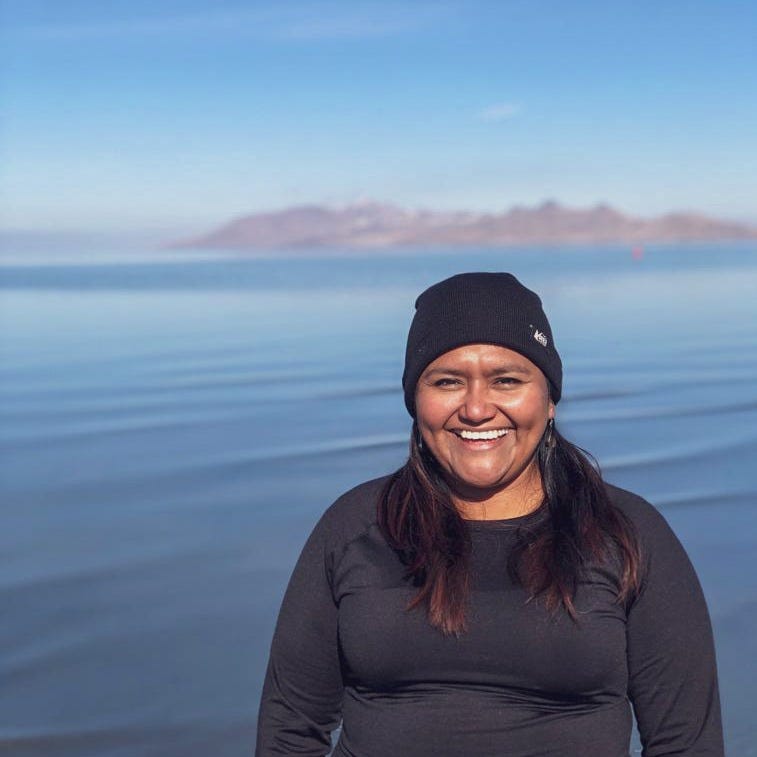
Gaby: One of the main barriers for Hispanic families, at least for new immigrant families in the community, is that they cannot access insurance. And because they don’t have access to health insurance, they cannot establish primary care providers. One of the schools where we’re working, I was talking to the families and they were telling me that whenever the kids get sick, they have to go to urgent care, because they don’t have a pediatrician they see regularly. Just to get seen at urgent care, it costs them $300 just to see the doctor, and they may have to wait for many hours.
Over the last ten years, we’ve been trying to prove that this system—having a fully integrated school-based health center—really helps the community. We did a cost effectiveness evaluation, and we saw that for every dollar that we invest in the school based-health center, we get $4 of social returns. This includes the time that the parents didn’t have to take off work, the teacher that didn’t have to go to the emergency room, the parent that didn’t have to make 10,000 appointments. We also have a community health worker who helps them navigate both social and health needs.
Seeing people getting picked up by ICE on their way to work is just devastating. These kids, many of them U.S. citizens, are being separated from their families and losing their support systems. It’s really hard also for the schools to have to deal with this in addition to all the other things that we are asking schools and teachers to do now.
Kathleen: It’s awful. I would hope that having these clinics in schools is not only one less thing for parents to have to worry about, but also for parents who might be fearful, it at least takes additional trips to the doctor’s office off their plate.
Gaby: Yes, exactly. We keep hearing from families who do not want to leave their neighborhoods because they are afraid. They’re afraid that they’re going to drive outside their neighborhood and they’re not going to come back to see their children. These people were just trying to have a better life. A lot of them have been trying to do it the right way through refugee status, and the system is not there to help them. The system right now seems to be more focused on increasing fear, and cruelty. Kids are really, really struggling with that. I’ve heard of families who are self-deporting and uprooting their family and everything the kids know, so they are not living in constant fear.
Kathleen: Have you seen examples of community members supporting each other through this time and this fear?
Gaby: Yes, 100%. There’s that Mr. Rogers quote, look for the helpers. He might not be the one who said that.
Kathleen: We can fact check, but I think you’re right.
Gaby: Look for the helpers. We have a church near us (The Church of the Guardian Angel, Remington) that does a collection of food for Hispanic families. The list of things that they asked for included spices and jalapenos, chilies, maseca, things that I’m sure made the Hispanic community feel like they belong and they’re being cared for. It’s a visual reminder that someone thought of you. It’s a very simple thing, but I’m sure it makes a difference in someone’s life to feel like not everyone is bad, not everyone wants you out of here. There are people who are standing up and caring for you. So yeah, there are a lot of helpers. There are a lot of people who are trying to do good and resist the system of oppression and the horrors that this administration is inflicting upon communities. And I love when I find them.
Kathleen: I like too that the resistance and the solidarity is community-based. The violence and the fear is state-sponsored, but the reaction to it is so localized. It’s networks of people using the tools at their disposal to try to help other people.
Gaby: Yeah, and I think the fact that people are building community is a political act of resistance, right? Just being able to be part of a community and sharing resources with your community, whether it’s looking for ways to help or to resist or asking for help. The way politics are happening right now, they want us to isolate us and pit us one against the other and make sure that we don’t talk to the other side because “they are the other side”. I think that is by design. Being able to have a community with shared interests where every now and then you can say, hey, these are your neighbors. These are the people who help our houses stay in shape and the people who are keeping our communities fed, is one of the more tangible ways in which we can prevent people from losing their humanity.
Kathleen: I’d love to pivot to the hiking. Tell me about the quest to hike all of the national parks with your husband.
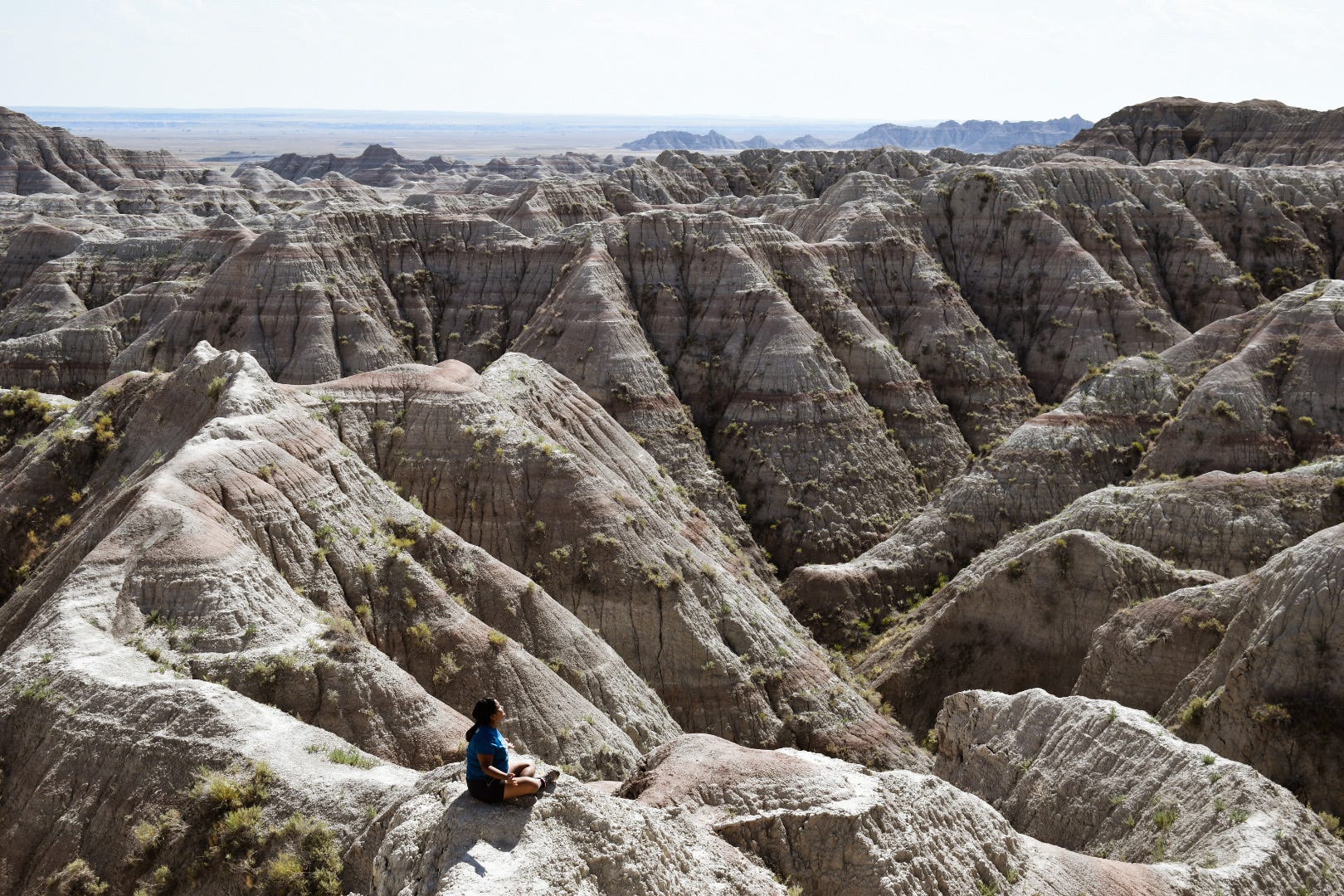
Gaby: When my husband and I met on the internet many, many years ago, one of the first things he told me was that he wanted to hike all of the national parks. We’ve now done 42 out of 63. Right now the only ones left are the ones that are really far, like American Samoa. We’ve made it to four out of the eight in Alaska.
There’s just so much beauty when you go on these adventures in national parks, not just because of the nature, but also the community and not knowing who you’re going to meet. We always meet people who are in different phases of their lives and that we probably would not encounter in our everyday communities.
One of my favorite things to remember, since we were talking about politics and division, was on one of our trips to Alaska. We were in Fairfax, on our way to a national park, and we stopped at this observatory area to see the northern lights. When you get there, they tell you to turn off your lights because everyone’s eyes have to adjust to the darkness so you can see the lights better. We had our professional camera out and it wasn’t working. It was even harder to figure it out because we couldn’t see well in the dark.
This guy came over and started talking to us and he was so friendly, so nice. He was like, here, set up your camera this way. He said, I do this every night. I just love it. I moved to Alaska because I love the northern lights and I wanted to be able to see them as much as possible. And he got great pictures of us, some of which are framed in my house. But when he headed back to his car, I noticed that he had a MAGA hat.
I think a lot about that moment because we had this great experience with this person. One of the things we had in common was our desire to admire this, this magical moment of the lights dancing in the sky. That was the one thing we had in common in that moment, and nothing else mattered. He had a clear statement of where his politics were. My husband is Black. I’m very much Mexican-looking. Normally, his MAGA hat would have probably prevented us from talking to him.
But that night, that didn’t exist. And that was pure humanity. In the darkness, we were just humans looking to find this beauty in the universe, and nothing else mattered.

Comments
Nothing yet. Say the first thing.
Sign in to join the conversation.