
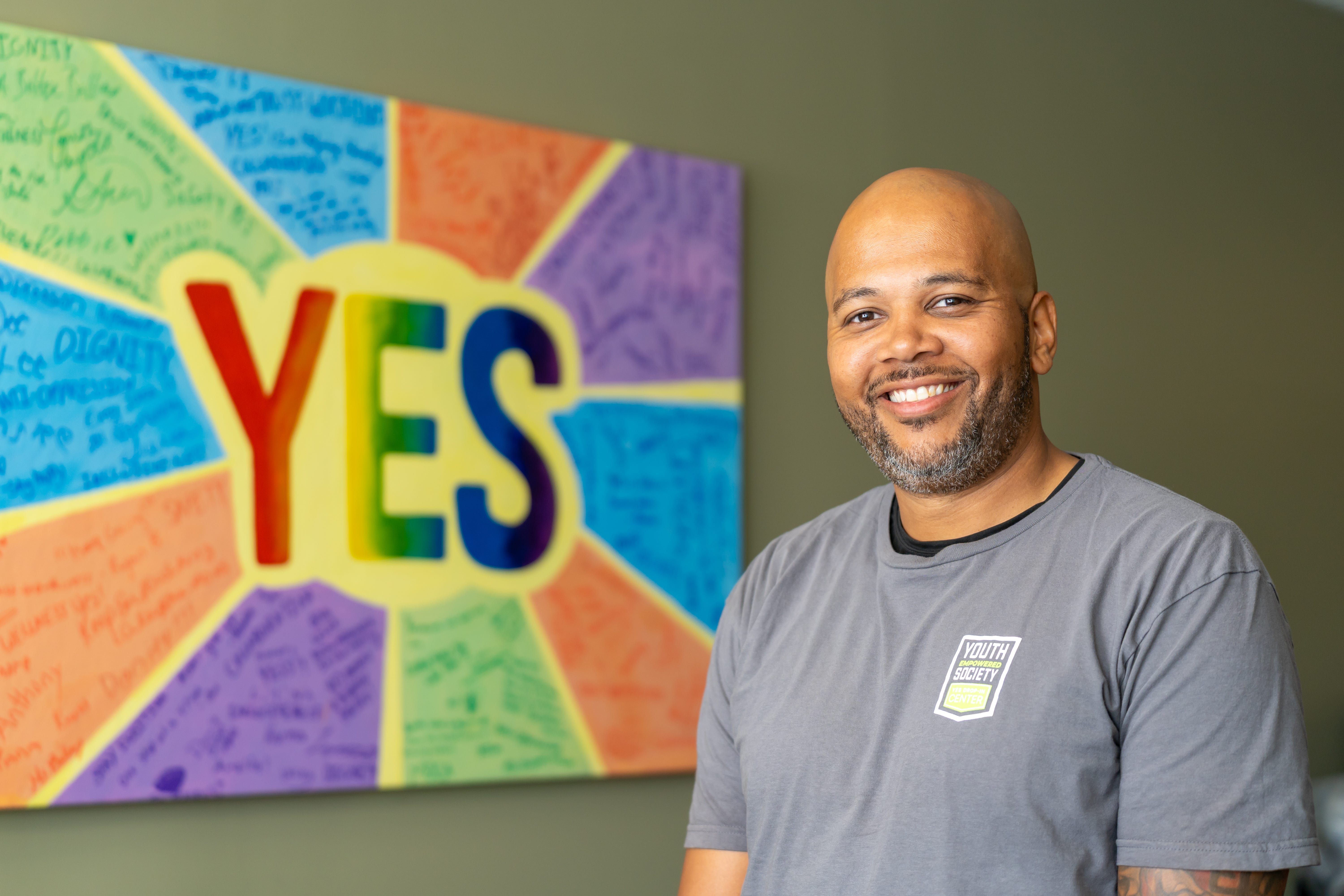
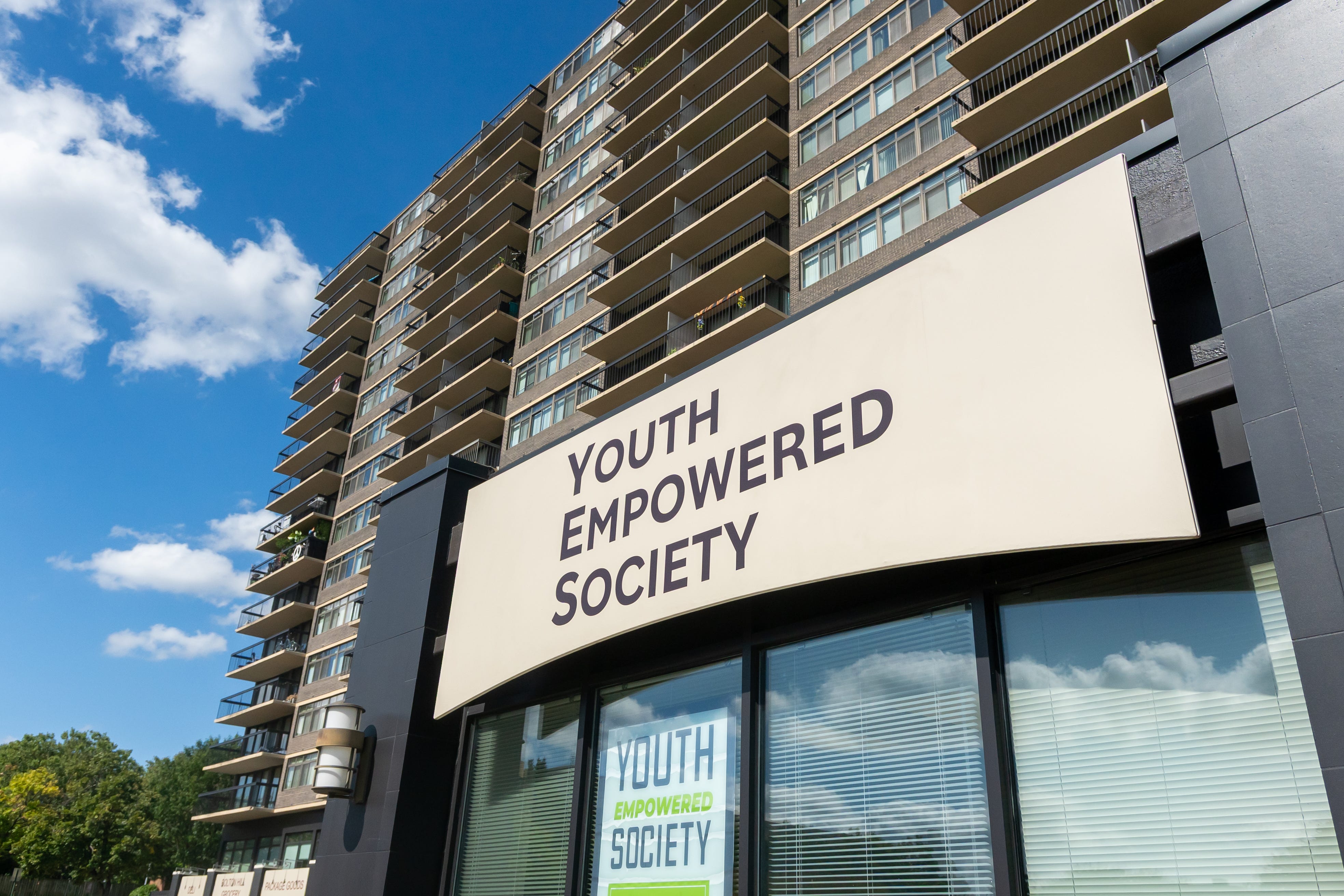
Allen is the executive director of Baltimore’s Youth Empowered Society (YES), the city’s first drop-in center focusing on the needs of homeless youth. Allen previously worked as an educator before leading districtwide efforts supporting students experiencing homelessness and involved with the foster care system. Allen and I chatted about the resilience of the youth population he works within a system that has failed them, and how he looks to youth to tell him what they need, rather than the other way around. Allen shared his emphasis on accountability that goes both ways and his efforts to encourage the young people he works with to recognize their worth and ask for what they deserve.
Kathleen: Can you talk a little bit about the mission of YES, and what your work looks like on a daily basis?
Allen: Youth Empowered Society is a drop-in center that supports young people between 14 to 25 who are experiencing homelessness. Our mission is to end that through a multi-layered approach, first starting with addressing basic needs. We provide food, clothing, and shelter initially. The food portion is our partnership with Salvation Army, the Casey Foundation, and the Franciscan Center. Our clothing is distributed through partnerships with local churches and donations that we receive that we distribute back out to the community. And then our housing portion is our partnership with the Mayor’s Office of Homeless Services, where we help navigate young people into housing.
Really our goal is to strengthen the community by leaning into the collectivism of the work and building those partnerships. One of my goals has always been to end gatekeeping, so I do a lot of coalition-building and partnership-building, because I know that no single organization is going to be able to do this work. But if we all collectively move in the right direction, then we should see changes as a society. I prefer to address the needs we’re seeing, and then we’ll seek the funding that helps us to get to a place that’s sustainable. Because that’s big for me, the sustainability of the work. Our young people who move into homes, are they staying in these homes, or are they ending up back in homelessness in the next 5 to 10 years?
Kathleen: I love that point about collectivism. It seems like sometimes nonprofits or advocacy groups in the same space can end up competing—I’m sure you’ve seen that all too often. And it’s not helpful for the ultimate mission. It’s great that you’re looking at that big picture rather than a narrower picture.
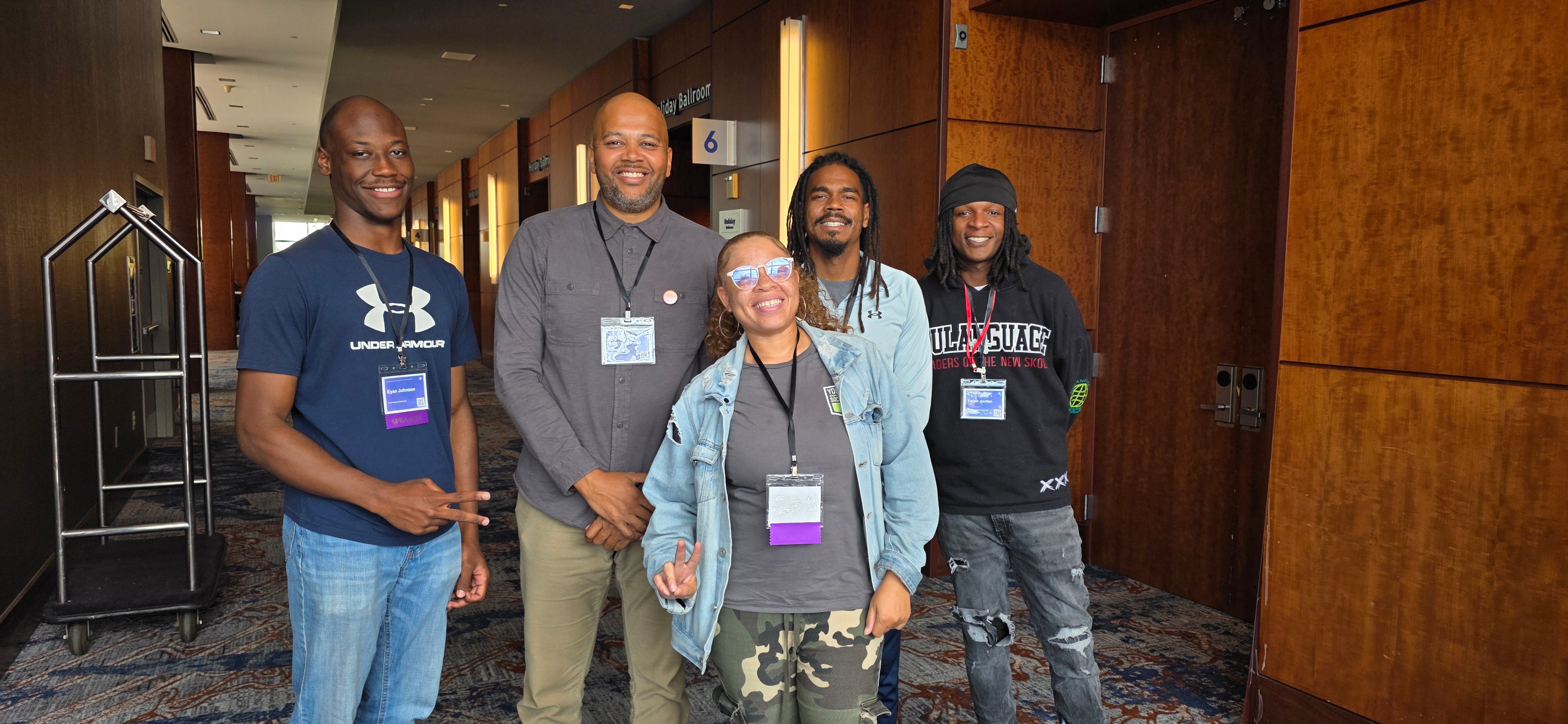
Allen: Yeah. And I think that if we’re just being honest about this work, there’s no way that we can do it on our own. At YES, we focus on the number of people we can serve and building up our alumni to run our programs. The lived experience portion is treated as an equivalency of a college education because you’re learning through practical learning, you’re actually doing the thing. Our staff members all have lived experience with housing instability. They started at the very bottom of the organization, which is our peer advocacy program, where we basically take you as is and really help build you up.
Our current peer advocate is with us through a partnership with the governor’s office, the service-learning year. We’re seeing not just his growth as a person, but we’re seeing he now has systems that support him. He has structure even to the point where we talk to him about, hey, I think you may have outgrown us. And that’s a great thing to tell someone: I think that we’ve met your basic needs and now we want you to thrive. We’re doing resume building with him, interview prep. Our goal is always that these young people will go into another industry or opportunity, and that they will open the door for other people to come in to. So not only are they benefiting, but they become a benefit to others as well.
Kathleen: That’s great. It seems like these youth who were previously served by YES and are now peer advocates are amazing success stories. Are there any other stories that come to mind of how youth have benefited from the work that YES is doing?
Allen: One of the things I lean on is asking people who have been impacted by homelessness to tell me what their issues are, rather than assuming I know what their issues are. We’re building out a Youth Advisory Board that will have a formal position on our board, where they can give direct feedback and hold me accountable to executing our vision and mission. I’m big on accountability and I think it works best both ways. Not only am I holding others accountable, others hold me accountable. I think that’s how I get better buy-in from staff and clients and also how we become more impactful as an organization.
We have a different level of conversations when young people walk through our door, and I think a large part of why that conversation is very amicable and very open is that the people we serve are our number one advocates. They will tell our story better than we do. We’ve been around since 2012. We’ve gone through multiple iterations. We’ve seen this organization transform in multiple ways over the years. But I think right now, one of our strengths is we’re leaning into the essence of who we are and letting the young people we serve lead that conversation.
When young people walk in our door, we are transparent and open with them. We say, if you need help, we’ll help to the best of our capacity. But we even have a better resource. We have some young people who will talk to you about what they’re going through. But let me not forget the one thing that is the most important for me. You have to pay them because their time is valuable. We pay them $25 an hour. That is the bare minimum. We negotiate the contract up front so they don’t have to negotiate, because I know they will undervalue themselves because I hear it all the time. I tell them, you can ask for what you deserve and what you’re worth. And if you don’t know what you’re worth, let me tell you.
Kathleen: That’s beautiful. I can’t even begin to imagine all the barriers these youth are facing to housing stability. What are some things that people might not expect that are keeping youth out of stable housing?
Allen: This is the outcome of the system itself when it’s not doing its job. Young people are already some of the most disenfranchised groups of people just because of their age. If we’re talking about under 18, they don’t even have rights. And if we’re saying over 18, we’re saying that the expectation is that they should have a lot of things—none of them are free, none of them are given, there are all things that they have to earn. And the system doesn’t tell them how it’s earned, right? We talk to young people and they want employment. But when I ask them about the skills that they have to be employed, they don’t have any, and then they don’t even have the places to go to get the skills.
As an organization, that’s where we come in. When a young person says to me, hey, I don’t have this resource, I’m already expecting that they’ve asked multiple people, so they don’t have to quantify, hey, I talked to five other people and told them I need this. So how we address that was we built a partnership with Baltimore City Community College (BCCC) because we were like, hey, our young people want skills. They just don’t have access. There are people who want to participate, right? But I would say the biggest issue is that none of this is free, everything has a cost associated. And if we are not addressing the cost and getting people to a place where they can just sustain, then you’re going to keep them in survival mode.
When you have a permanent underclass built into the system structure, this is what it’s going to look like. I’ve been around long enough that I know there’s probably an association with what systems they interact with, which is why they are where they are. Are they juvenile justice adjacent? Are they in schools that have lower performance? Are they in communities that are food deserts? These are external factors that are impacting these young people. I would say something that is not known is that they are the greatest example of resilience we have. They are the epitome of doing something with nothing because they’re finding us.
We say we’re centrally located, but being honest, we have young people that come to us from everywhere in this country. We just provided service to a young person from Georgia. We have young people that come to us from DC. We’ve had our fair number of young people from New York that are transient, that are just ending up at YES because they went somewhere and someone said, hey, this program will give you food. They showed up just for a meal.
Then once they’re here, we listen to their needs. Our men’s group that we have currently is built out of young men who are going through trauma, who are like, I don’t know, good men to talk to. And I was like, hey, there was a guy who just said that yesterday. Are you available Thursday at 3:00? I’ll bring food. And they go, food! And I go, yeah, yeah, just show up. Don’t worry about it. They show up, we bring in our board president, who is a mental health clinician, and they just talk.
They think it’s just, you know, building relationships, but they’re learning coping mechanisms. They’re learning de-stressing, they’re learning how to disengage in environments that are not welcoming to them. They’re getting the skills in a way that they can receive it in an environment that they want to be a part of. So they grow, because we’re meeting them where they are. And I’m big on if we address your basic needs, then you can start doing other stuff, and then we really get to see how great you are.
Comments
Nothing yet. Say the first thing.
Sign in to join the conversation.