
Last week I posted my first part of seeing the William Blake exhibition at the National Gallery of Ireland last May. I was really looking forward to seeing the show and there was so much to see that I certainly was not disappointed!
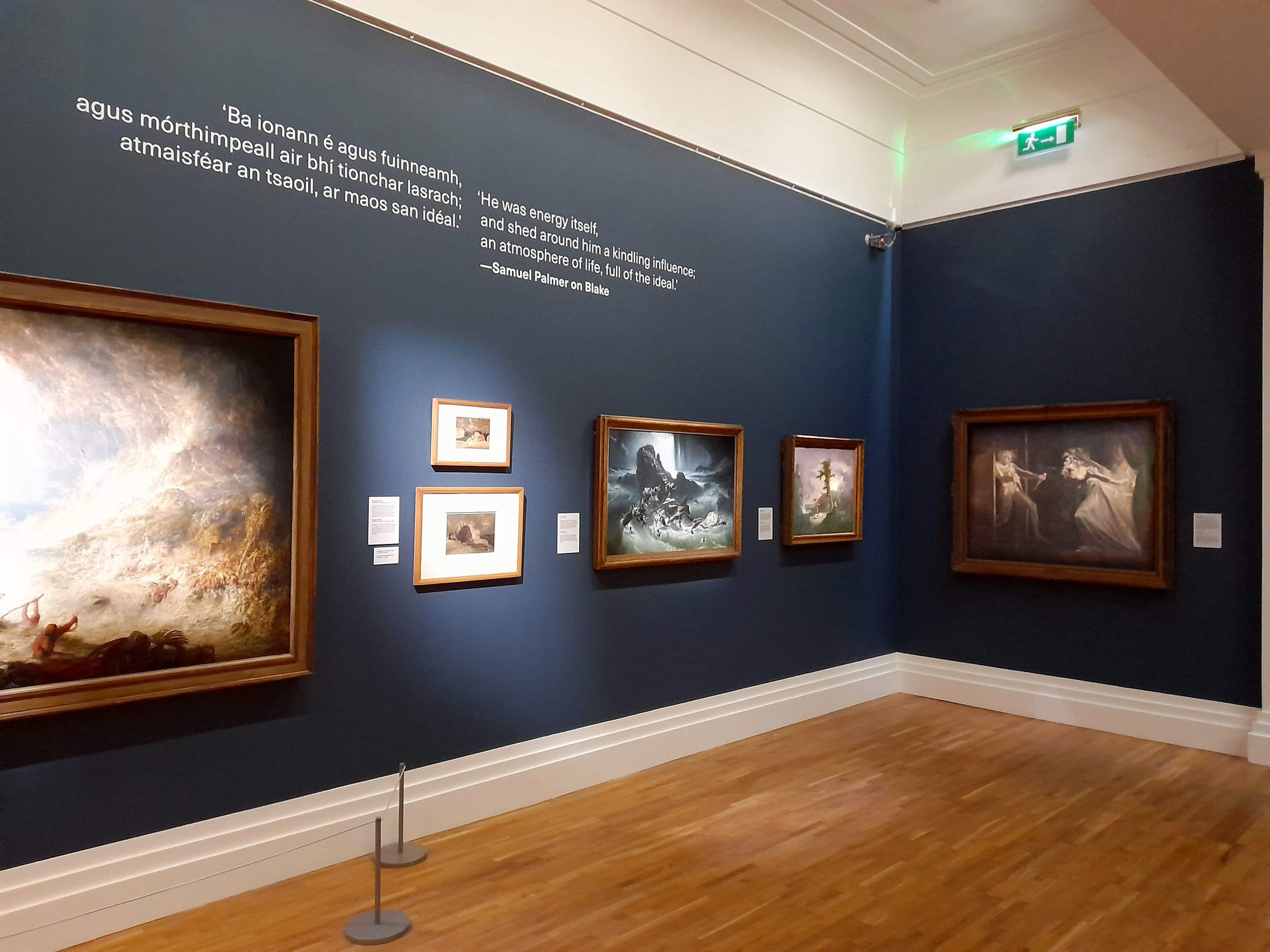
I enjoyed seeing the work of many other artists within this exhibition as it gave a great context for Blake’s work. I also enjoyed the quotes about Blake, prominent in each of the exhibition galleries.
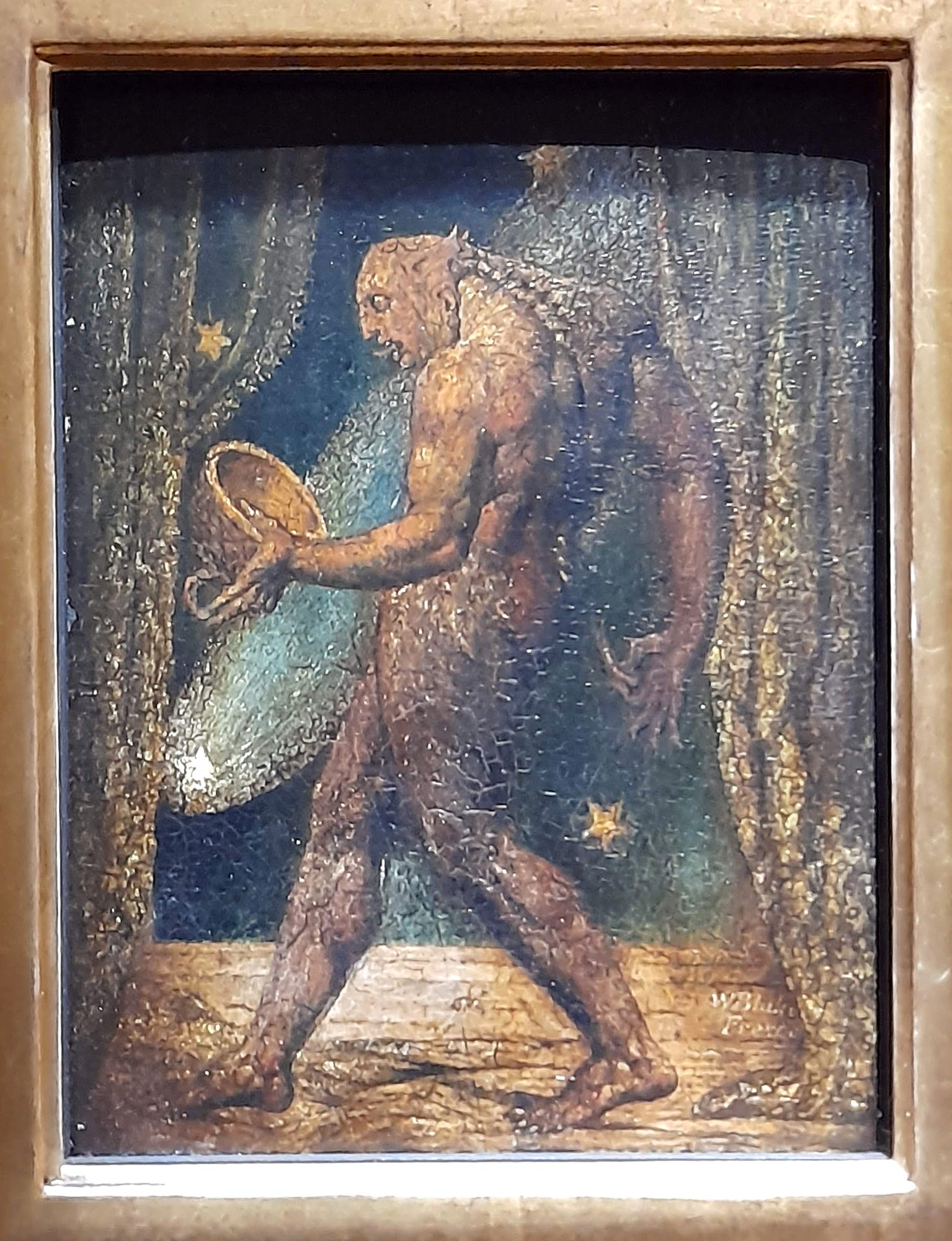
William Blake, The Ghost of a Flea, c 1819-20
Whether this was the result of a vision or dream or simply frustration at an infestation, Blake decided to personify the flea’s ghost, but certainly made it demonic!
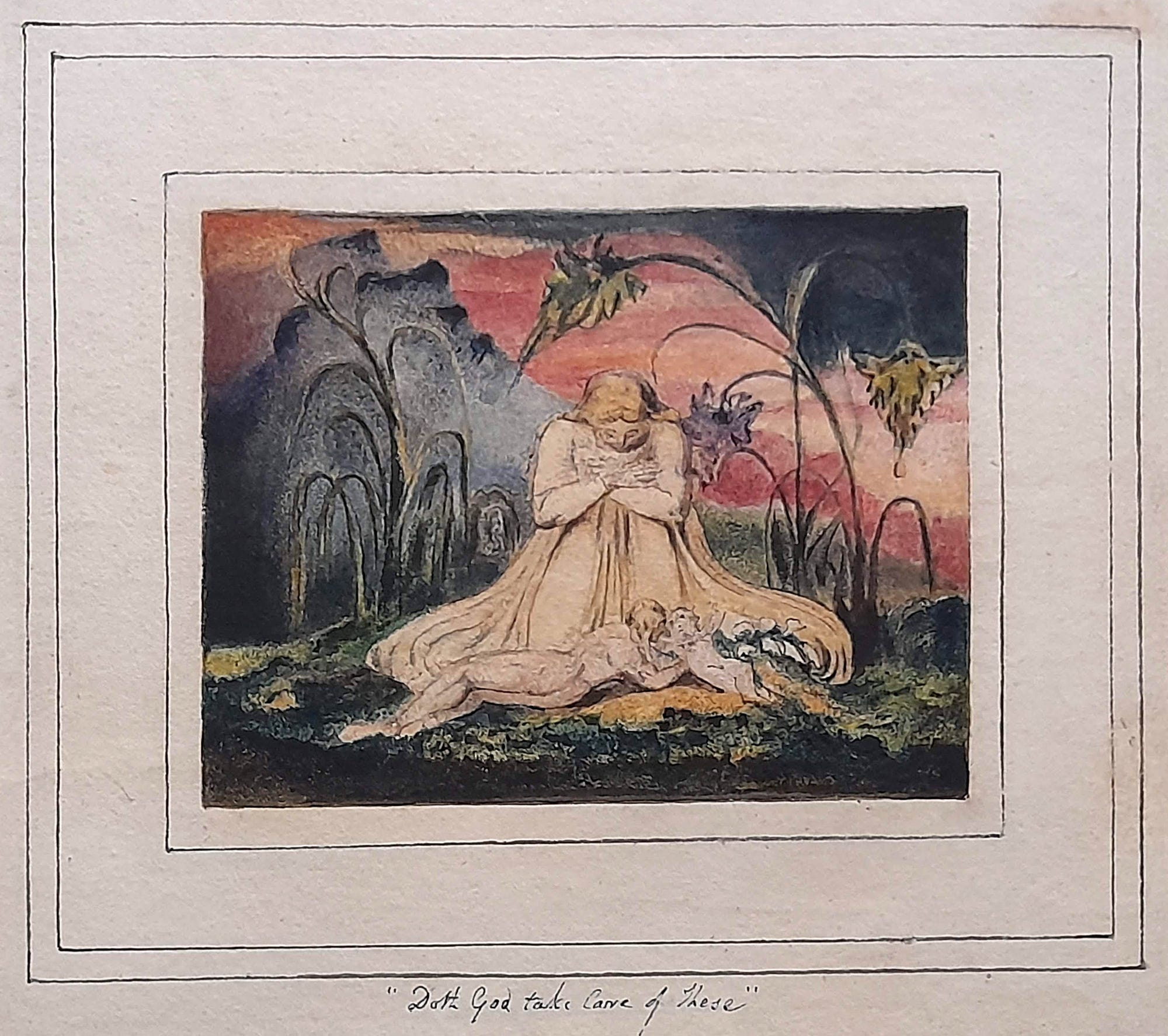
William Blake, The Book of Thel, plate 6, 1796, c 1818
Blake’s own mythology emerged in several illuminated books. His created fables provided fodder for a full, personal cosmogony.
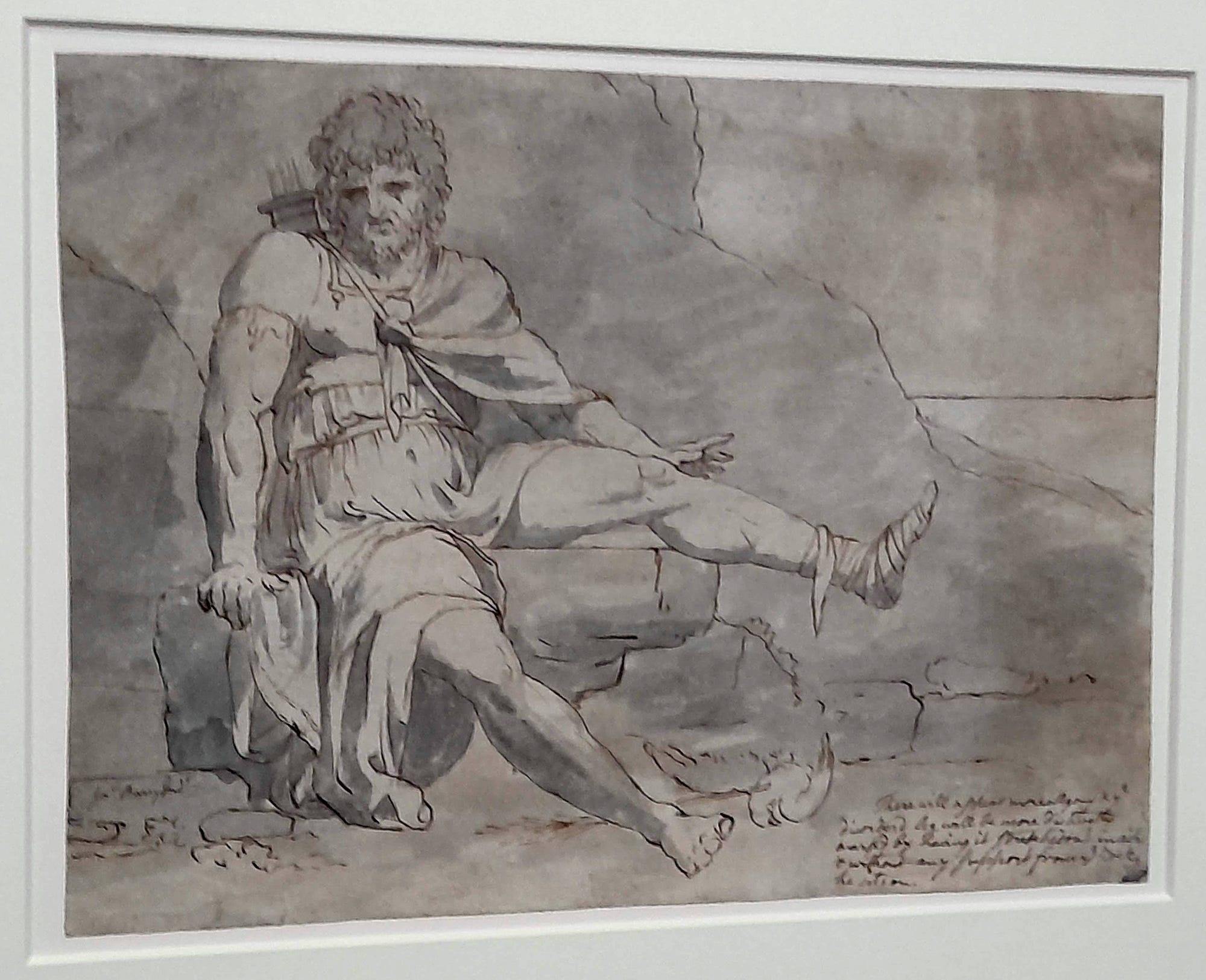
James Barry, Study for “Philoctetes on the Island of Lemnos”, 1770
There was a timeline on the wall of one of the galleries, so one got a quick overview of the artistic milieu surrounding Blake. Blake had studied art at the Royal Academy where he admired the work of one of his teachers, Irish artist James Barry.
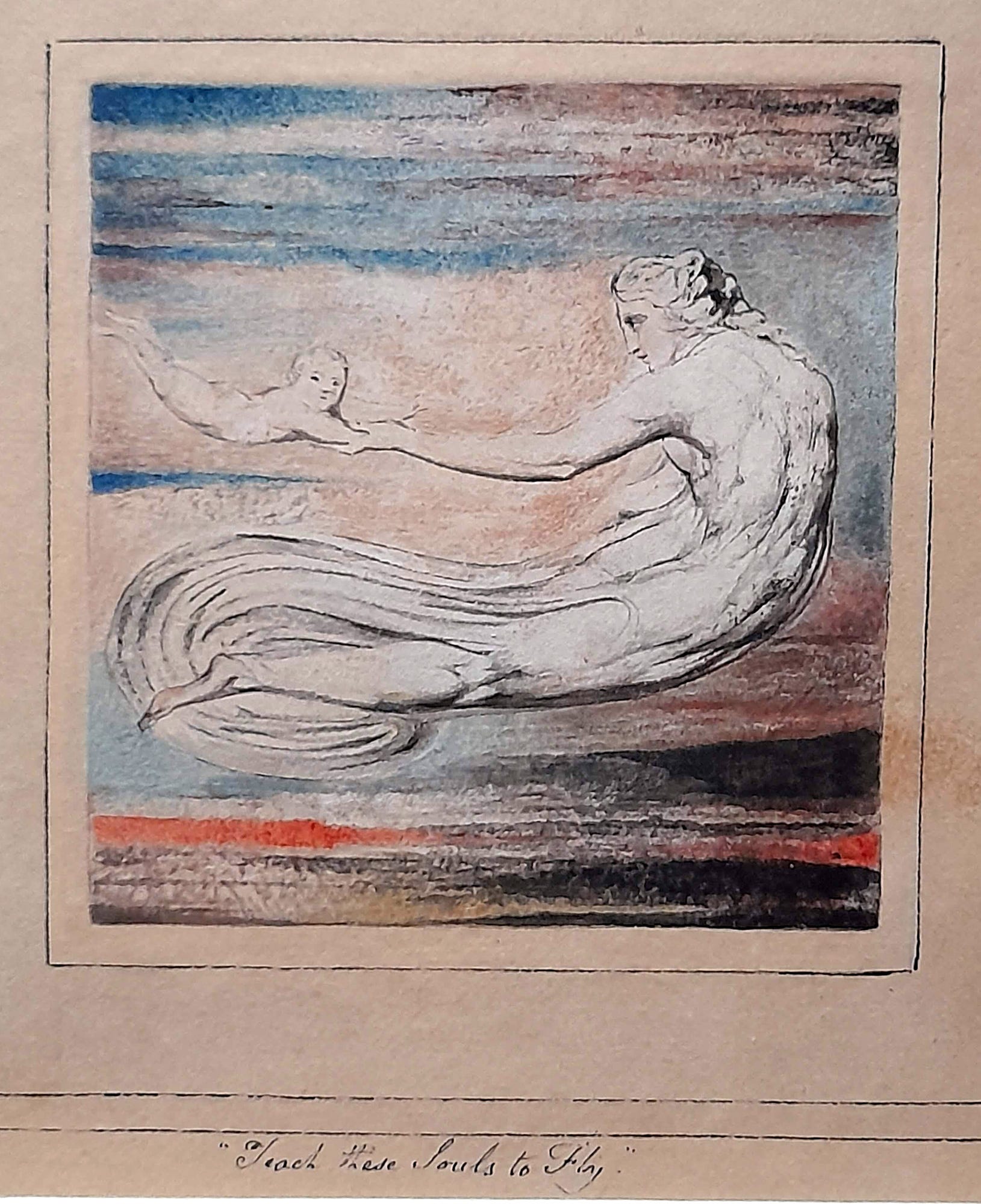
William Blake, The First Book of Urizen, plate 2, “Teach these Souls to Fly”, 1796
In Blake’s own mythological pantheon, characters represented traits. Here, “Orc”, representing revolution to Blake, is being taught to fly (freedom!) by his mother, “Enitharmon”, who represents pity, before he will be captured and put in chains by his father, “Los”.
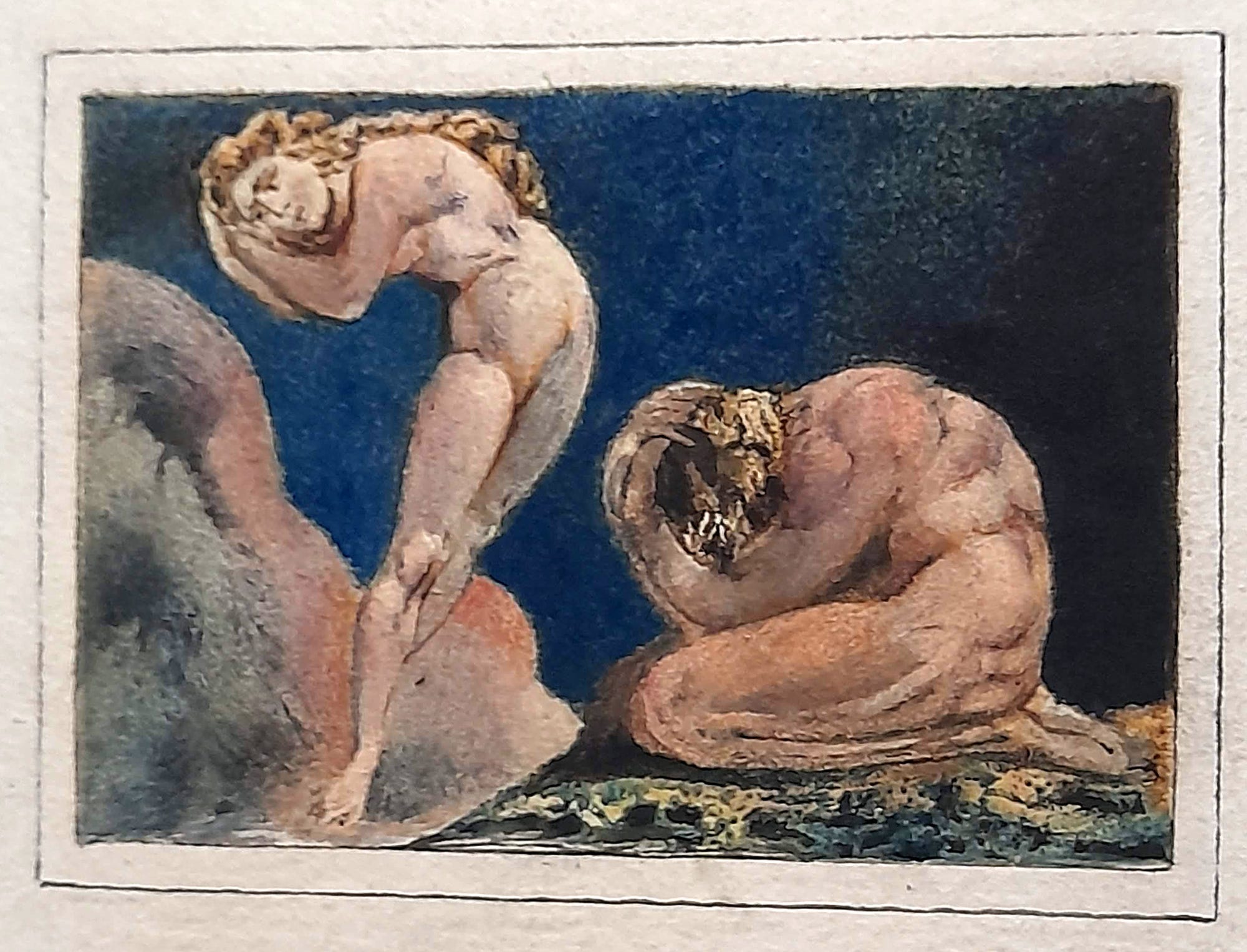
William Blake, The First Book of Urizen, plate 17, 1796 c1818
As well as being an artist and poet, Blake had apprenticed with a book publisher. He could print his work and publish his own books. He devised a new way of printing — relief etching (ie, the acid removed the background and left the areas to be printed raised from the plate), which was opposite to intaglio, thus allowing him to print text and image together.
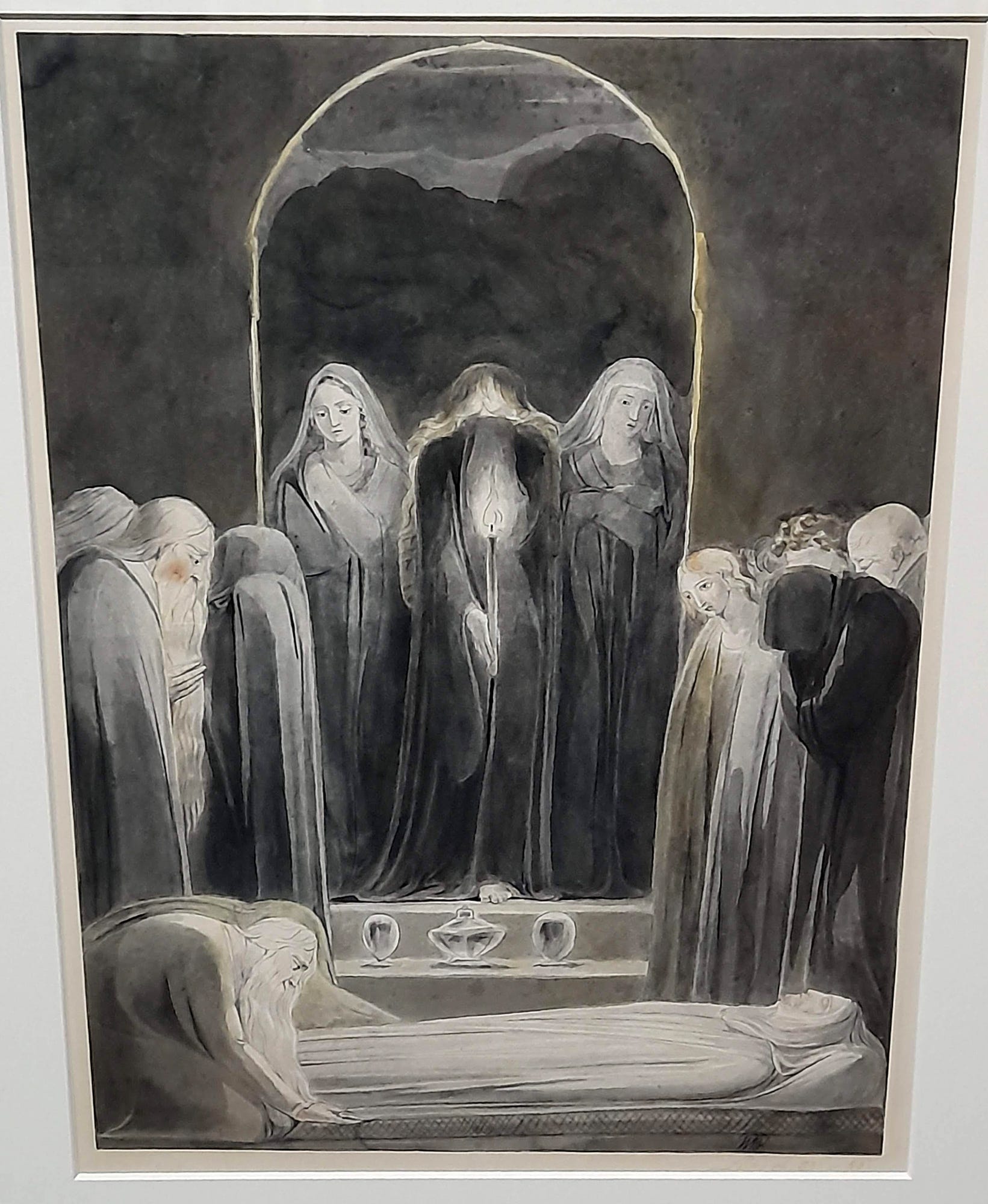
William Blake, The Entombment, c1805
Medieval art can be seen as a huge influence on the way Blake portrayed sculptural drapery on his figures. The dead Christ figure appears more like an effigy likeness carved on the outside of a medieval tomb.
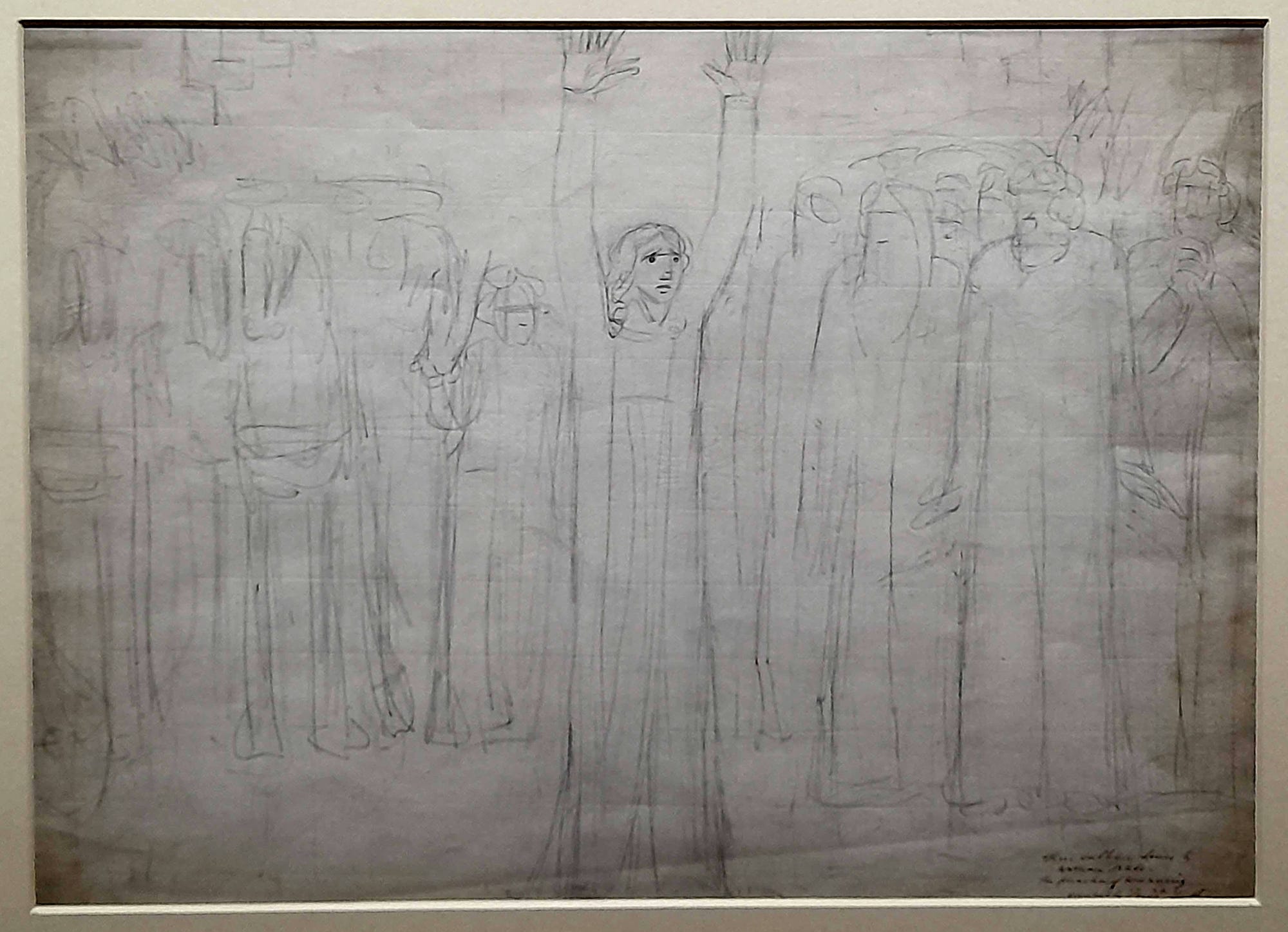
Robert Blake, The Preaching of Warning, c1785
It was also a pleasure to see this sketch by Blake’s beloved younger brother, Robert, who had died not long after this drawing was made. William spoke of as being in constant communication with Robert, seeing him in visions, and credited his brother with teaching him about the relief etching technique.
Comments
Nothing yet. Say the first thing.
Sign in to join the conversation.