
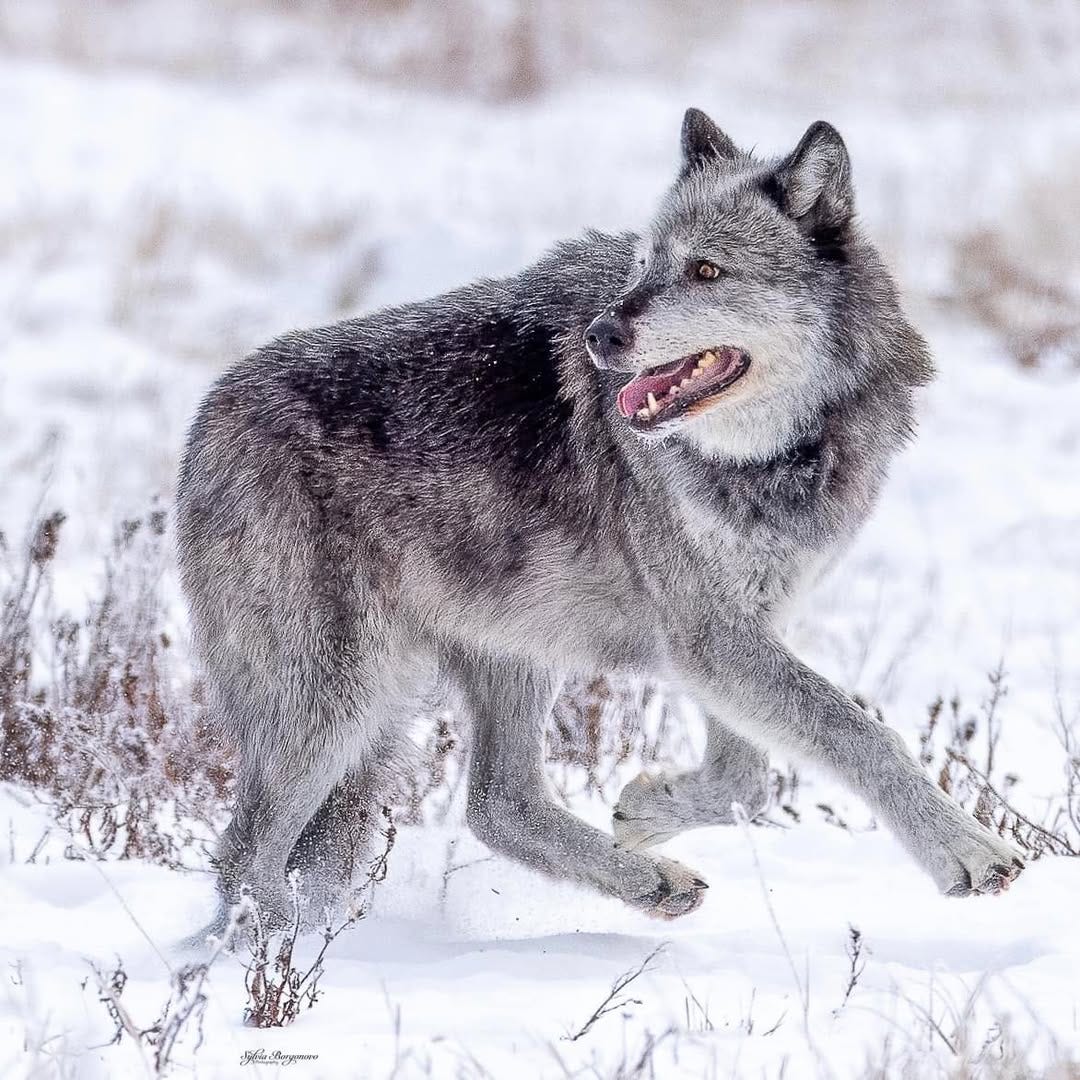
In 2017, an Indigenous-led wolf advocacy group, Protect the Wolves, petitioned the states of Wyoming, Idaho, and Montana to establish a Sacred Resource Protection Zone extending 50 kilometers (31 miles) around Yellowstone and Grand Teton National Parks. Within this zone, wolves “must be protected from any and all human-caused mortality to the greatest extent possible;” hunting and trapping would be prohibited. This added area of protection is necessary because, having been removed from the Endangered Species Act in these three states, the species is subject to the state management, so one step outside of the Parks and they can be shot and killed in accordance with state regulations.
Now that the wolves of Mollie’s Pack have ventured beyond the protective boundaries of Yellowstone National Park into national forest lands in Wyoming, they are in harm’s way, the very risk that the Sacred Resource Protection Zone proposal would have alleviated. The states, in what should surprise no one, never even responded to this Indigenous initiative much less granted it. If they had, there wouldn’t be another firestorm of controversy brewing. They should do so now.
Protect the Wolves proposed the zone because wolves are considered sacred by many Indigenous peoples. The Global Indigenous Council prepared a Wolf Treaty, which garnered more than 700 signatories, demonstrating the importance of wolves to Indigenous cultures. The introduction to the Treaty states, “The wolf (Canis lupus) is known by many names and for time immemorial has held an esteemed place in the cultures and lifeways of the original inhabitants of this continent. The wolf has guided and influenced indigenous people in a foundational way, literally since the beginning of time. The wolf brought knowledge and understanding of Mother Earth that is mirrored in the stars. The wolf has influenced indigenous societal structures through the pack, imparting the communal responsibility to sustain life. The wolf taught many to survive by the hunt and to live in a spiritual compact of reciprocity. The wolf provided guidance for environmental stewardship and ecological balance. The wolf is a teacher, a guardian, a clan guide – a relative.” Allowing them to be killed for crossing invisible boundaries is anathema to this reverence.
The fact that wolf packs residing in Yellowstone and Grand Teton National Parks do not have the freedom to roam beyond the National Park boundaries without the risk of being killed is problematic. It is both a testament to the limitations of National Parks to protect the nature within them, and to the callous disregard that neighboring state governments have for protecting those National Park wildlife that brings millions of tourists – and dollars – into their state economies. A 2006 study commissioned by the Yellowstone Park Foundation estimated that $35 million was pumped into local tourism economies from tourism directly related to the presence of wolves. That figure has only grown over time. According to a newer economic analysis for Idaho, Montana, and Wyoming, “direct spending by Yellowstone National Park visitors who would not have visited the park without the presence of wolves is likely at least $82.7 million. It must be noted that this value includes only direct spending and does not account for the ‘multiplier’ effect within the 3-state economy of re-spending portions of this amount by workers and business owners.” Thus, managing wolf packs within the Park boundaries means finding a way to protect wolves when they wander beyond them.
The wolves of the Mollie’s pack family have for generations lived their lives in the presence of clusters of Park visitors gathered along the roadsides, watching them through binoculars and spotting scopes. They are habituated to humans. They cannot be expected to recognize that hunters in Wyoming, come September, will be viewing them through their scopes with deadly intent. Due to the semi-tame nature of National Park wildlife, there is no fair chase or sporting chance that these wolves will have. Hunting them is a violation of hunting ethics, an authorizing a wolf hunt for Park wolves is a violation of wildlife management ethics.
But it’s not just the Mollies. The winter of 2021-2022 saw a record number of Yellowstone-based wolves killed outside the Park, about 20% of the Park population. A scientific study showed these killings were disrupting the natural social bonds of Yellowstone’s wolf packs, causing established Yellowstone packs to disintegrate. This undermines wolf recovery in their stronghold.
The Sacred Resource Protection Zone would provide a buffer between the Park populations and the states. Wyoming authorizes unlimited, unmanaged wolf killing throughout 86% of the state. After Montana admitted that it had been overestimating its wolf population for years, it still authorized the killing of 250 of its estimated 725 wolves – more than one-third the statewide population – in 2026. Idaho allows night hunting with night-vision equipment and tried to permit year-round wolf trapping before a federal court enjoined it.
We urge these states to take the first step toward responsible wolf management by applying the Sacred Resource Protection Zone around Yellowstone and Grand Teton National Parks. The least they can do is protect the wolves that live their lives inside our National Parks. And do it today.
Roger Dobson is the Director of Tribal Cultural Resources with Protect the Wolves, and is a Cowlitz Tribal Member. Erik Molvar is a wildlife Biologist and Executive Director of Western Watersheds Project.
No posts
Comments
Nothing yet. Say the first thing.
Sign in to join the conversation.